
Politics
Latino voters powered Trump’s comeback. Now they’re turning on his economy.

In 2024, economic anxiety and immigration concerns drove Latino voters to President Donald Trump. Those same issues are beginning to push them away.
Across the country, the cost-of-living woes and immigration enforcement overshadowing Trump’s first year back in office are souring Hispanic businesspeople, a key constituency that helped propel him to the White House. In a recent survey of Hispanic business owners conducted by the U.S. Hispanic Business Council and shared exclusively with Blue Light News, 42 percent said their economic situation is getting worse, while only 24 said it was getting better. Seventy percent of respondents ranked the cost of living as a top-three issue facing the country, more than double the number that selected any other issue.
That’s a particularly striking number from this group: nearly two-thirds of respondents in the organization’s final survey before the 2024 election said they trusted Trump more than then-Vice President Kamala Harris to handle the economy.
“The broader Hispanic community certainly feels let down,” said Javier Palomarez, the organization’s president and CEO. “It would be different if immigration and the economy had not been principal talking points for [Trump]. On both fronts, we didn’t get what we thought we were going to get.”
The combination of ongoing economic uncertainty and stubbornly high prices driven by Trump’s tariffs — coupled with the economic impact of the Trump administration’s ongoing raids in immigrant-heavy communities — makes the situation increasingly dire for some Hispanic business owners.
Trump and his allies argue that they’re just cleaning up the mess left by the previous president.
“Republicans are putting in the work to fix the Bidenflation mess we inherited. From lowering inflation to creating a housing plan, President Trump is fighting for the working families Democrats left behind,” said Republican National Committee spokeswoman Delanie Bomar.
Monica Villalobos, president and CEO of the Arizona Hispanic Chamber of Commerce, told Blue Light News about a South Phoenix restaurant hit hard by tariffs and labor shortages. Then, a series of ICE raids in the parking lot in front of the restaurant caused customers and workers to stop showing up and forced the owners to shut it down for several days. She predicted this kind of situation will blow back on Republicans in the next election.
“We certainly do sense that our members — our clients in Arizona and across the country — feel a sense of betrayal by this administration, given its excessive overreach,” Villalobos said. “Now that we’ve had a taste of [the Trump administration], I think you’re going to see a big shift [in the vote].”
In 2024, Trump won 48 percent of self-described Hispanic or Latino voters, the highest mark for a Republican presidential candidate in at least a half-century, driven largely by economic anxiety. But polling shows Trump’s approval among Latino voters cratering as their satisfaction with the economy and immigration enforcement plummet.
In a November Blue Light News Poll, a plurality — 48 percent — of Hispanic respondents said the cost of living in the U.S. is “the worst I can ever remember it being,” and a majority (67 percent) said responsibility lies with the president to fix it.
According to a November Pew Research poll, about two-thirds (68 percent) of U.S. Hispanics say their situation today is worse than it was a year ago, and just nine percent say it is better; 65 percent of Latinos disagree with this administration’s approach to immigration, and a majority (52 percent) said they worried they, a family member or a close friend could be deported, a ten-point increase since March.
Trump’s net favorability rating among Hispanics is now at 28 percent, per a recent The Economist/YouGov poll, 13 points lower than it was in February of last year.
“Small business owners are becoming a swing constituency, when you think about the midterms coming up,” said Tayde Aburto, president and CEO of the Hispanic Chamber of E-Commerce. “And not because their values have changed—it’s just because their costs did.”
Latino voters have swung hard back toward Democrats in recent elections as well. In Passaic County, New Jersey, Latinos voted narrowly for Trump in 2024 but in November backed Democratic Governor-elect Mikie Sherrill by double digits. And in Miami, where over 70 percent of residents are Hispanic, a Democratic mayor was elected last month for the first time in 28 years last month.
Those elections are a referendum on Trump’s economy, said Christian Ulvert, a Democratic strategist and adviser to newly-elected Miami Mayor Eileen Higgins’ campaign.
“[Trump’s] agenda literally does little to nothing to help Hispanic families,” Ulvert said. “Worse, it preys on Hispanic families. And what we heard on the campaign trail most pointedly is the old adage: is my life better today than it was yesterday under new leaders? And resoundingly, not only verbally, but through the ballot box throughout the year, Hispanic families are saying, ‘no, my life is actually worse.’”
Joe Vichot, the Republican Party chair in Lehigh County, Pennsylvania, said he knows many Hispanic Republicans in Allentown who are supportive of curbing illegal immigration and fighting crime. “But there’s also stories of people who have been here for 10 years or more with their family, but they’ve never been legal, that are now caught up into the [deportation] system,” he said.
“There should be a way to find some type of common ground where that won’t happen.”
The White House has tried to ease the ailing economic sentiment by sending Trump and Vice President JD Vance on the road, delivering a series of stump speeches on affordability in working-class areas, including Vance’s Dec. 16 stop in Lehigh County, Pennsylvania, which includes the Hispanic-majority city of Allentown. They insist the economy deserves an “A+++” grade, and are now buoyed by a December consumer price index report released Tuesday that showed inflation rising at a slower pace than expected.
“Joe Biden gave us a colossal catastrophe, but my administration has rapidly and very decisively ended that,” Trump said during a speech in Detroit Tuesday. “We have quickly achieved the exact opposite of stagflation — almost no inflation and super high growth.”
But cooling inflation rates just mean prices aren’t rising as fast as they had been — prices still remain much higher on many goods than they had been in recent years. And improving macroeconomic trends are not yet being felt by consumers, said Massey Villarreal, a business executive in Houston.
“I’m like most Americans. I hear the inflation number and I don’t translate it to my going to the grocery store, when I look at the cost of hamburger meat,” said Villarreal, a former chair of the Republican National Hispanic Assembly.
Palomarez, the U.S. Hispanic Business Council president, compared it to the Biden administration’s insistence that the post-Covid economy was healthy, even as consumer sentiment plunged. “While we were talking about GDP and unemployment and jobs growth rates, people were worried about the rent and the price of gas and the price of eggs. And we’ve got kind of the same thing here,” he said.
In Chicago, where some of the most-publicized immigration enforcement occurred last year, Hispanic-run businesses have been hit hard. Sam Sanchez, CEO of Third Coast Hospitality, said 2025 was the hardest period for business of his four decades in restauranteering, aside from the COVID pandemic.
“It sends a really negative message to the 48 percent of Hispanic voters that voted for President Trump,” Sanchez said. “Everything’s just starting to fall apart.”


Republicans are playing defense deep in their own territory as voter anger over price hikes puts more House and Senate seats in play in the midterms.
New rounds of big spending, visits from Trump administration officials and private conversations among top GOP officials overseeing the battle for control of Congress reveal a party rushing to shore up red seats and states President Donald Trump won handily in 2024.
In the House, the fight has expanded far outside the few-dozen seats considered the most competitive as Republicans start to unleash their massive warchest: Since Aug. 1, more than $110 million in ad bookings have gone toward Republican-held districts so red that Trump won them by double digits.
In the Senate, Republicans are racing to shore up Ohio GOP Sen. Jon Husted as the Midwest struggles under the weight of Trump’s tariffs and high diesel prices. Trump and Vice President JD Vance are both expected to travel to the state before the midterms to boost Husted, according to four people familiar with the matter who were granted anonymity to discuss not-yet-public plans.
GOP leaders are also trying to keep a handle on contests in Iowa and Kansas — and they’ve quietly begun deprioritizing Georgia and even North Carolina, which a growing number of Republicans are privately bracing for Democrats to flip.
“We need to stop the contagion,” said one senior GOP official, who, like others, was granted anonymity to speak candidly about the midterm landscape.
“The map is hilariously big right now,” said one national Republican pollster.
Since Aug. 1, nearly two-thirds of advertising funds in House races have been booked or spent in races with GOP incumbents, according to a Blue Light News analysis of data from AdImpact, which tracks political advertising.
That includes nearly $18 million to embattled Rep. Max Miller in Ohio’s 7th District; $14.6 million to Texas’ 15th District where Monica De La Cruz faces a challenge from Tejano Singer Bobby Pulido; $9.6 million in Alaska where Rep. Nick Begich faces a challenge from independent Bill Hill; and millions more to other districts that Trump carried by double digits two years ago.
The GOP holds a massive cash advantage over Democrats — which, for now, means they can afford to spend more broadly. Republican groups are dividing up the spending deluge in the final weeks ahead of the midterms, with Trump’s MAGA Inc. affiliated super PAC spending heavily to shore up safer red seats and deter Democrats from pushing into those races.
“The voter enthusiasm [for Republican voters] is not where it needs to be but that’s where a money advantage can make a really big impact,” said Mark Bednar, a GOP strategist and former communications director for then-Speaker Kevin McCarthy.
Republicans have adjusted their Senate map expectations: They’re still bullish about Maine, Michigan and New Hampshire. They’re not as optimistic about North Carolina — which Trump won in 2024 — but they are hoping to force Democrats to spend more there.
Republicans are more concerned about Alaska and Texas. And their worries about Ohio have escalated amid soaring diesel prices and backlash to tariffs — challenges they’re also confronting in Texas, Iowa, Michigan and Kansas.
Already two battleground candidates have called for ends to the Iran war, pointing to the high prices: Iowa GOP Senate nominee Ashley Hinson, whose team has grown increasingly wary of the tight race and Michigan GOP Senate nominee Mike Rogers. Both Hinson and Rogers use top Trump pollster Tony Fabrizio to guide their campaigns.
The White House did not respond to a request for comment on Hinson’s and Rogers’ remarks.
Senior GOP operatives’ own internal polling shows Trump’s approval underwater in deep red states across the country. And an Iowa poll conducted last week by a Democratic-leaning pollster found Democrat Josh Turek with a one-point lead in the Senate race and Trump’s approval at 43 percent in the state he won by more than 13 percentage points in 2024, according to a copy of the poll obtained by Blue Light News.
“As more races come online, it very clearly is a defensive map for Republicans across the country,” said a national GOP strategist working on multiple battleground races.
In Ohio, Republicans are optimistic that their attacks on former Democratic Sen. Sherrod Brown’s voting record are starting to break through, based on recent internal polling. But they’ve been conveying to outside groups for weeks that they need help reinforcing vulnerable incumbents like Husted. On Monday, the pro-crypto super PAC Fairshake said it planned to unleash $30 million against Brown, who was the top Democrat on the Banking Committee before losing reelection in 2024 — fueled in part by more than $40 million against him from Fairshake that year.
“The stakes go far beyond one Senate seat,” Amy Natoce, a Husted campaign spokesperson, said in a statement. “Control of the Senate will determine which agenda moves forward in Washington: Sherrod Brown’s out-of-touch socialist agenda, or Jon Husted’s agenda of lower taxes, a secure border, and an economy that rewards hard work.”
One Michigan Republican acknowledged the immense weight of the tariffs in races across the battleground state — including in the marquee Senate contest between Rogers and progressive Abdul El-Sayed, as well as across competitive House races.
“Everywhere we go, we are getting hammered on it,” the Michigan Republican said. “It’s crushing us.”

Even skeptical Republicans have been quietly checking in with their colleagues to see if the panic in redder territory is borne out in reality on the ground or just overblown polling. One GOP lawmaker who spoke to Hinson and her campaign team was somewhat surprised by their answers.
“It’s real,” that House Republican told Blue Light News.
And Blue Light News overheard a senior member of Kansas’ Republican party leadership complaining about their state’s tighter-than-expected race at the GOP’s midterm convention in Dallas earlier this month. GOP Sen. Roger Marshall, the person said, was in some trouble even as Republicans tried to dismiss the seriousness of his Democratic challenger, Adam Hamilton.
Trump and Vance, meanwhile, continue to travel to states they won by double digits in 2024 to stump for Republican candidates, as Trump-aligned super PACs hammer the airwaves in far more red territory than blue.
Recently-formed super PACs aligned with MAGA Inc. — Trump’s main spending vehicle that holds more than $400 million — have spent in 42 House districts so far, 30 defensive and 12 offensive. On average, they are spending in areas that voted for Trump by 7.9 points in 2024, according to a Blue Light News analysis.
The PACs are even spending in some districts Trump carried by 15 points as a way to shore up Republicans and deter Democratic advances, according to Republicans involved in the conversations.
Major Republican super PACs, including the Trump aligned-super PACs and party-linked groups, have spent in more than two dozen GOP-held seats where Trump won by at least 5 points in 2024.
“Republicans aren’t taking anything for granted this cycle and will deploy whatever resources necessary to protect our majorities and prevent Democrats from taking control,” RNC spokesperson Natalie Baldassarre said in a statement.
The NRSC argued that “Democrats lack quality candidates and a clear path to victory,” so the party is “feigning optimism” and looking to candidates who have lost before, including Brown, “to somehow deliver [a] majority.” The NRCC said their opposition is “too broke to fight back.”
The geography of the Senate map still favors the GOP this cycle: Democrats have to defend all of their seats, while flipping four Republican-held ones, to take control of the upper chamber.
Republicans believe they have a real shot at flipping New Hampshire, and public polling shows Minnesota’s Senate race closer than expected, forcing Democrats to pay some minor attention to a state Kamala Harris won in 2024.
And Republicans are still hopeful that their mid-decade gerrymandering push could still give them a structural advantage as they fight to defend the House. Republicans won the redistricting war that erupted last summer and will likely net at least six seats from it.
But as economic concerns continue to dominate — with little relief in sight — Democrats are growing increasingly bullish.
“You know, I look at places like Kansas where I never thought we’d have a chance, or South Carolina or even Mississippi, these places are longshots, but they look like they’re competitive,” Sen. John Hickenlooper (D-Colo.) said.
For their part, senior Republicans have been working the problem from two ends, trying to gently persuade Trump in private conversations to back off some of his recent policy moves and wind down the war in Iran — while also organizing a wave of cash reinforcements across the growing map to try to stem the bleeding.
GOP lawmakers pressed Trump officials at their Dallas convention and since then to take emergency actions around fuel prices and refinery capacity. A band of House Republicans led an unsuccessful attempt to vote on a federal gas tax suspension until after Election Day. And, over the weekend, Sen. Chuck Grassley (R-Iowa) posted several direct appeals to Trump, asking why he hasn’t put an embargo on diesel exports.
But many are convinced the bleeding won’t stop until voters get some relief at the pump.
“The question is: How much longer can we go?” one senior House Republican said.
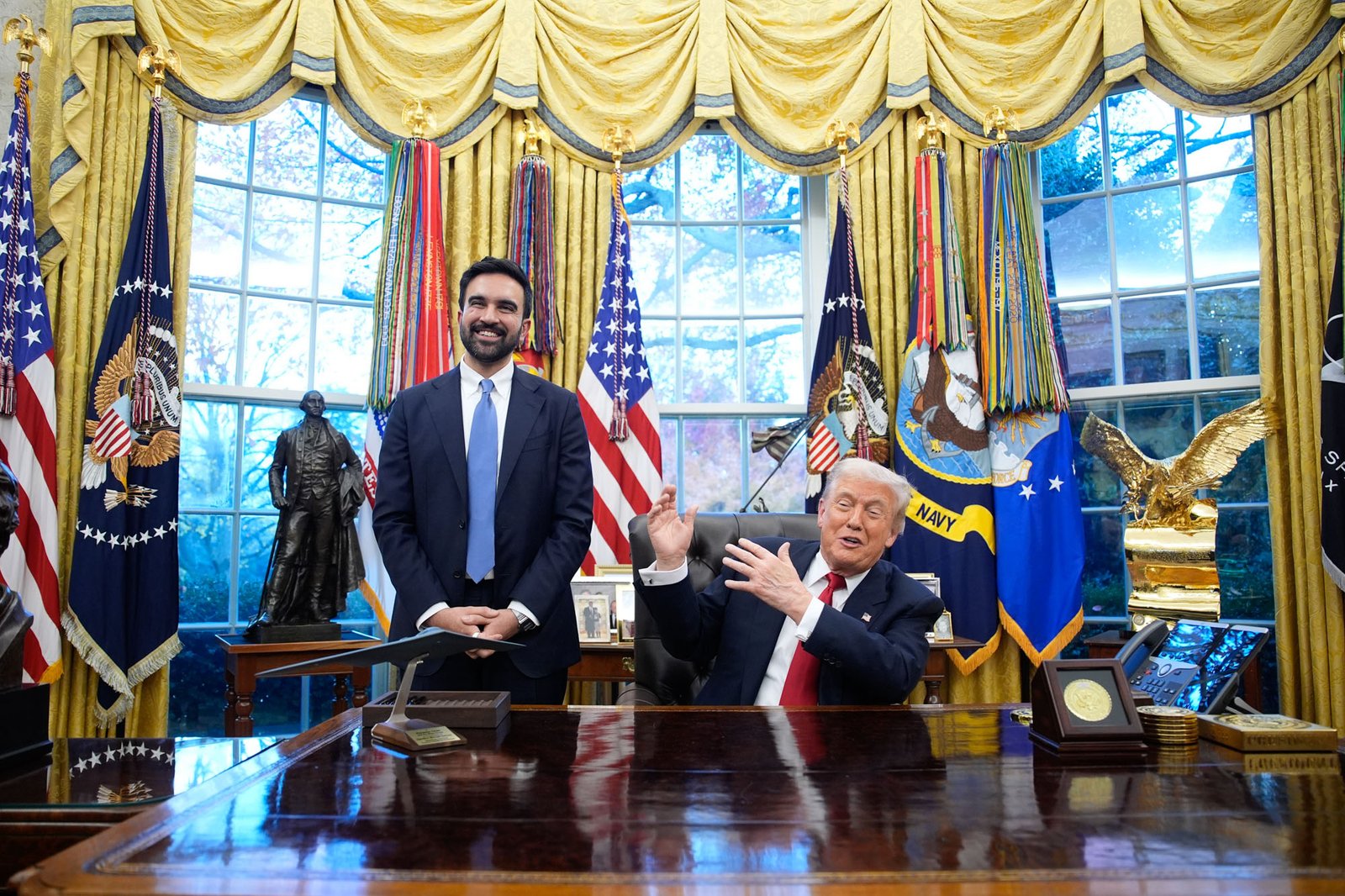
ALL EYES ON GRACIE: Mayor Zohran Mamdani is expected to sit down with President Donald Trump at Gracie Mansion this afternoon, their third in-person meeting in less than a year and the latest wrinkle in one of the strangest relationships in American politics.
Since Mamdani’s first, shockingly cordial meeting with Trump at the White House last November, political observers have scratched their heads about the democratic socialist mayor playing nice with the Republican president despite their deep disagreements on … just about everything. Ostensibly, Mamdani is putting his personal distaste for Trump aside and betting it’s best for New York City to keep things cordial so as to avoid drawing the president’s ire.
But as resistance to Trump remains animating for Democrats nationally ahead of November’s midterms, Mamdani’s strategy for engaging with him stands out.
Earlier today, Gov. Kathy Hochul made clear that she, for one, has no plans to meet with Trump while he’s in New York. “I speak to him on the phone whenever I need to,” she told reporters in Manhattan.
Hochul, who’s facing reelection in November and tends to directly criticize Trump more frequently than Mamdani, said it was her understanding that the mayor agreed to host the president at Gracie Mansion during a previous conversation at the White House.
“The mayor and [Trump] said that when he’s back in town again, he would go to Gracie Mansion,” the governor said. “I don’t have a Gracie Mansion to invite him to.”
Still, Hochul said there’s an opportunity for Mamdani to use the Gracie confab to push Trump on releasing federal funding for New York, including for law enforcement, that she said the president’s administration has been withholding.
“We have to continue fighting for what New York needs,” she said.
Mamdani’s office wouldn’t say who requested today’s meeting or share specifics about the expected focus in advance, only saying the mayor will talk to Trump about “issues affecting New York City.” A Mamdani spokesperson said the mayor will elaborate on what was discussed at a post-meeting press conference that Trump isn’t expected to attend.
After the appointment at Gracie, Trump is slated to meet with French President Emmanuel Macron before headlining a couple Republican fundraisers. By contrast, after his Trump tête-à-tête, Mamdani will have dinner with Vermont Sen. Bernie Sanders, who’s in the city to headline a United Nations Charter event this evening that will also feature pro-Palestinian activist Mahmoud Khalil, a person familiar with the plans who was granted anonymity to discuss them told Playbook.
The Queens-born Trump is in town ahead of his Tuesday address to the United Nations General Assembly.
Maintaining a relationship with Trump isn’t without risk for Mamdani.
As Trump remains deeply unpopular amid the war in Iran and other controversies, some Democrats are privately questioning why the mayor sees a need to keep interacting with the president. But so far, Mamdani hasn’t faced any significant pushback from his hard-left base over his engagements with Trump, with leaders of the local chapter of the Democratic Socialists of America largely viewing it as the mayor acting in the city’s best interests. — Chris Sommerfeldt and Madison Fernandez
From the Capitol
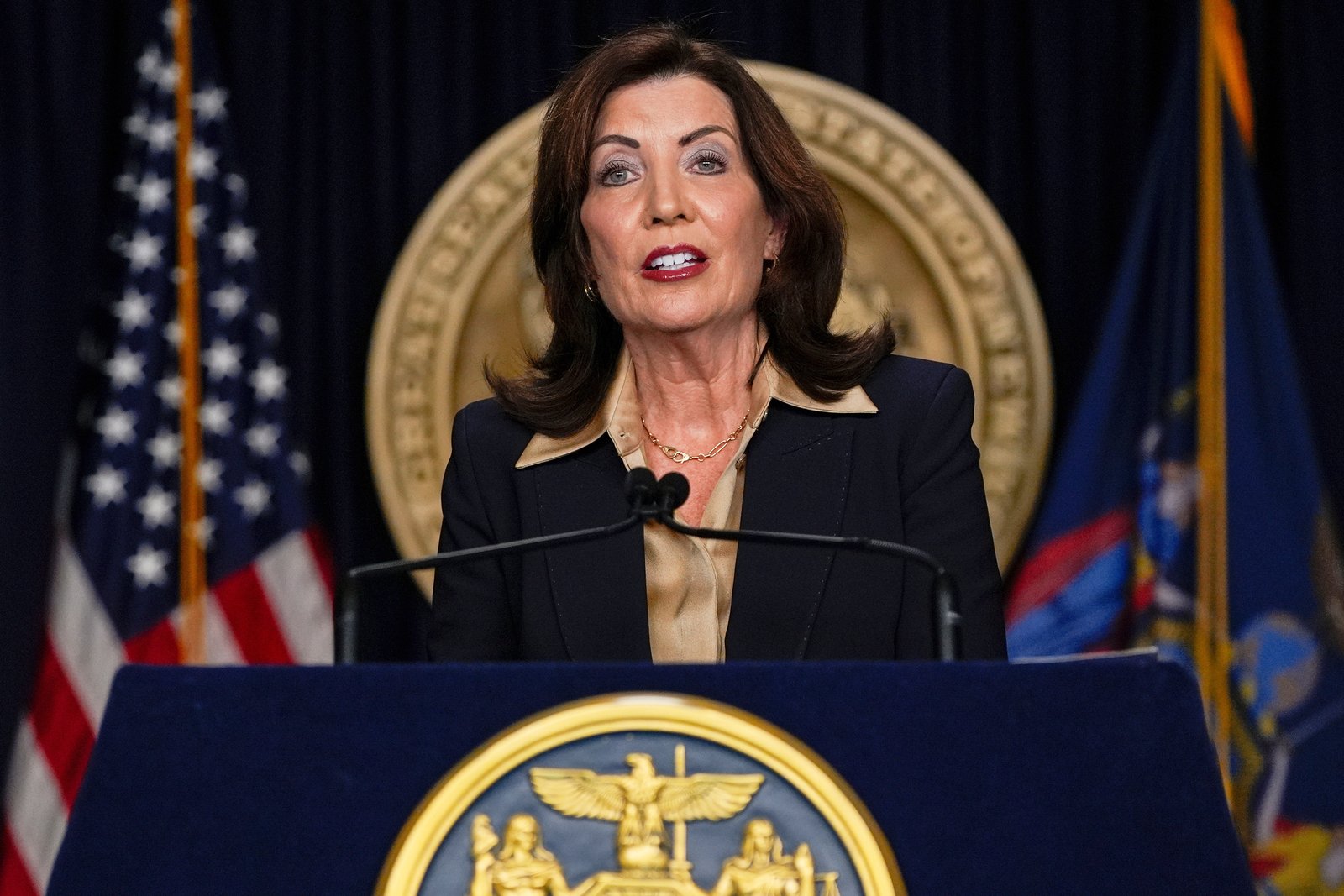
EYES ON AI: Hochul floated requiring safeguards like an artificial intelligence “kill switch” as part of state-level interventions to address the rapidly evolving technology.
During a Monday event in Manhattan rolling out next steps for enacting the RAISE Act, New York’s landmark AI safety law that is set to go into effect in January, the governor said she’ll “look closely at additional ways to build on” the legislation — including AI kill switches “if they’re deemed feasible and in the best interest of our state.”
The governor in recent days has vowed to take additional AI-related actions beyond the RAISE Act, but has not specified what that might look like. Her suggestion of a kill switch comes days after California Gov. Gavin Newsom issued an executive order to explore such a requirement for AI companies’ most-advanced models.
Some in the tech industry have argued implementing one is not technically feasible. Federal legislation to enact a kill switch requirement is currently stalled in Congress.
When asked to expand on the prospect of requiring a kill switch, Hochul said that “all options are on the table,” but wasn’t making a commitment.
“We’re going to do the research and make the decisions that are thoughtful to protect New Yorkers,” she said. “We’ll go as far as we need to to protect people of this state and ultimately this country in the absence of other leadership.”
Read more from Madison Fernandez in Blue Light News Pro.
MORE BLAKEMAN MONEY: Billionaire former casino developer Steve Wynn has donated $1 million to the main super PAC supporting Republican Bruce Blakeman’s gubernatorial bid, records filed with the state Board of Elections this morning show.
The committee, Strong and Safe New York, has now raised $5.3 million since July.
Wynn has been a top donor to national Republican causes for over a decade. His most recent large donations in New York came last year, when he gave $361,000 to the state GOP and $500,000 to a super PAC boosting Andrew Cuomo’s mayoral bid. — Bill Mahoney
FROM THE CAMPAIGN TRAIL
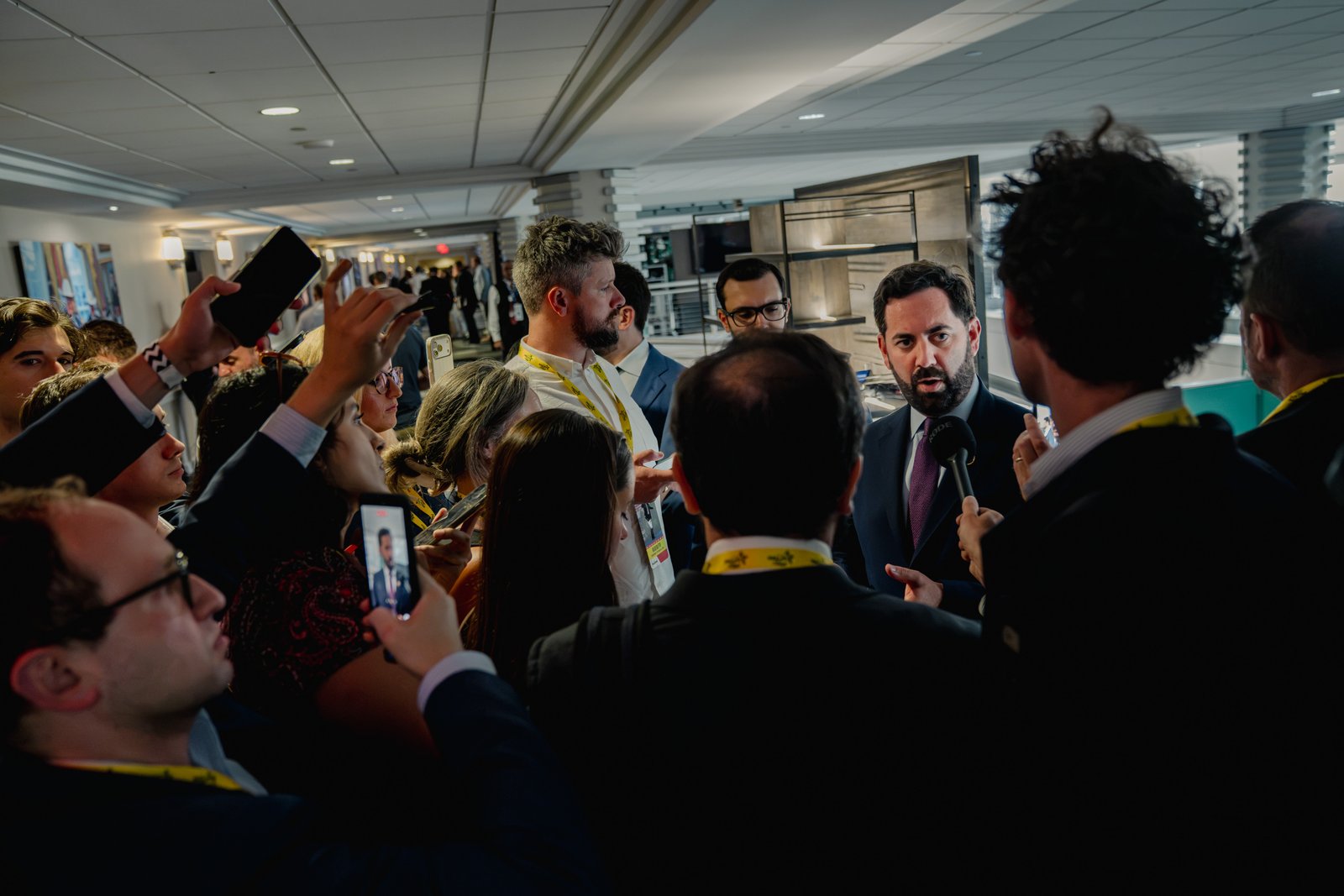
ENDORSEMENT CORNER: Rep. Jared Golden (D-Maine) endorsed GOP Rep. Mike Lawler in his reelection campaign in suburban New York, Golden wrote in an opinion article published Monday.
Lawler is facing a tough reelection campaign against Democrat Cait Conley in one of the biggest House battlegrounds this November. The lawmakers have previously collaborated to advance the Northeast Lobsterman Protection Act, and are both members of the centrist Problem Solvers Caucus.
Golden, who is not running for reelection, was one of two House Democrats to break with the party and twice vote in favor of the Republican legislative agenda earlier in September.
“Mike Lawler has been a true partner to me and a friend to fishing families he will never represent,” Golden wrote. “I strongly back him, and I hope voters send him back to work. Wherever you live, find the members who pass laws with the other party, and keep them.”
House Minority Leader Hakeem Jeffries called the cross-aisle endorsement a “smoke and mirrors ploy” that “will do nothing to change the outcome of the race.”
“In desperation, [Lawler] is peddling an 11th hour endorsement from a retiring Congressmember who represents an out of town district more than 400 miles away,” Jeffries said in a statement. “Mike Lawler is an unadulterated phony who has never shown bipartisan courage when it matters.”
Read more from Blue Light News’s Elleiana Green.
ON THE AIRWAVES: With fewer than 50 days to go before Election Day, House Democrats’ main super PAC is making its first TV ad buy in support of Conley on Monday.
The House Majority PAC said it is reserving $1.2 million on cable in the Hudson Valley contest. (An additional $1.2 million is going toward fighting Republican Rep. Tom Kean Jr.’s re-election in New Jersey, which is also covered by the New York City media market.) HMP said earlier this year that it didn’t include the high-dollar NYC media market in its initial reservations because it was “prioritiz[ing] markets where rates increase significantly.”
Republicans have been largely outpacing Democrats in NY-17 on the ad spending front, thanks to significant buys from super PACs backed by the president and House leadership. From the beginning of September through Election Day, the GOP has placed $15 million on ads across broadcast, cable, CTV and digital platforms, according to ad tracker AdImpact.
The new HMP spend is the biggest from an outside Democratic group so far, but still leaves a large gap between the parties. Democrats have placed around $3 million on advertising in the period between September and Election Day, with the largest chunk coming from the Conley campaign. — Madison Fernandez
IN OTHER NEWS
IN OTHER NEWS:
— JUDGES CASH IN: Brooklyn Democratic Party leaders have raked in $190,000 in contributions from judges and judicial candidates since 2012, raising some ethical and legal concerns. (New York Post)
— AFFORDABILITY AHEAD: Anthony Shorris, the mayor’s new pick for the president of the New York City Economic Development Corporation, laid out a vision for solving the city’s affordability crisis that goes beyond Mamdani’s vision for five city-owned grocery stores. (The New York Times)
— BUY NOW, PAY LATER: The Mamdani administration is pushing Albany for tougher ‘buy now, pay later’ regulation, as many New Yorkers use the plans to pay for basic essentials, sinking deeper into debt. (amNY)
Missed this morning’s New York Playbook? We forgive you. Read it here.
CHICAGO — Illinois Gov. JB Pritzker revealed Monday that he was diagnosed with Type 2 diabetes two years ago and began taking a GLP-1 medication, resulting in an 80-pound weight loss that he says has transformed his health and daily life.
The disclosure marks the first time the Democrat has publicly disclosed that he has diabetes, as well as officially acknowledging that he is on GLP-1 medication, which is prescribed both for diabetes treatment and weight loss. The governor told CBS News he started taking the medication after doctors warned that he would likely need insulin for the rest of his life.
Pritzker is viewed as a likely 2028 presidential candidate and has spent two years batting away questions about his visibly slimmer appearance, though he did hint at his weight loss during the Gridiron Club and Foundation’s annual white-tie dinner in Washington, D.C., earlier this year.
“I’m JB Pritzker, governor of the great state of Illinois, and if you’re seeing me in person for the very first time, yes, I’m the guy who put ‘gov’ in ‘Wegovy,’” he told the high-profile crowd.
The 61-year-old governor said he has struggled with his weight since childhood, dating back to when he was a 7-year-old. That’s about the time his father, Donald Pritzker, suffered a fatal heart attack at age 39 while playing tennis.
President Donald Trump has made Pritzker’s weight an issue, often commenting about it in personal attacks. Asked about his weight loss during an interview with Blue Light News in the spring of 2025, Pritzker said, “How about, just for health.”
In Monday’s CBS interview, the governor said he closely monitored his cholesterol, triglycerides and other health markers for years because of his family history. But after becoming governor, he acknowledged the stress of leading the nation’s sixth-largest state contributed to additional weight gain.
Two years ago, that concern became more urgent when doctors diagnosed him with Type 2 diabetes, he told CBS. “My doctor said, ‘Oh no, you’ll never come off of it. You’re going to have to do this the rest of your life, and I recommend that you take a GLP-1,’” Pritzker recalled about being told he’d have to take insulin.
His wife, MK Pritzker, encouraged her husband to proceed on GLP-1. “I want him to be around for a really long time,” she told CBS.
The governor’s office confirmed that as a result of the GLP-1, plus improved diet and exercise, Pritzker “is no longer on insulin and down to levels that indicate no diabetes/prediabetic levels.”
Pritzker said the effects were almost immediate. Within days, he said, he didn’t feel the appetite urges. “It was the strangest feeling.”
The governor also has gained local attention for taking walks along the Lake Michigan walking path in Chicago. Along with adopting the healthy habit, it’s allowed him to talk regularly to constituents.
During Monday’s interview, Pritzker side-stepped questions about whether he was running for president. “I honestly am focused on what’s best for the people of Illinois,” he said.
The governor also talked about being proud of Illinois’ decision to cover GLP-1 medications for people with diabetes, becoming emotional describing a woman who approached him and told him access to the medication had saved her life.
The announcement about his weight comes as Pritzker is taking a more prominent role in the 2026 midterms, chairing a political action committee focused on investing at least $20 million in Democratic House races. The move has added to speculation about a potential presidential bid, where the demands of a national campaign would put his health and stamina in sharper focus.
- Appeals court’s Capitol steps ruling may signal trouble for Trump on media ban
- Ohio stations ignore Max Miller’s legal threat, run Democratic challenger’s ad
- GOP Senator wants to subpoena Donald Trump Jr. over Russian-funded wedding
- Capitol agenda: Senate GOP eyes exit plan as trail calls
- ‘We need to stop the contagion’: GOP ramps up midterms defense in Trump states
- Abbott slaps halt on Texas data center permits
- Top House Oversight Dem demands answers to Trump’s media ban
- Mike Rogers says Iran war needs to “end quickly” amid rising prices
- The art of dealing with Trump
- Collins slams Trump plan to ‘politicize’ grants as defying Congress
-

 Politics2 years ago
Former ‘Squad’ members launching ‘Bowman and Bush’ YouTube show
-
Uncategorized2 years ago
Bob Good to step down as Freedom Caucus chair this week
-

 The Josh Fourrier Show2 years ago
DOOMSDAY: Trump won, now what?
-

 Politics2 years ago
Former Kentucky AG Daniel Cameron launches Senate bid
-

 The Dictatorship2 years ago
Luigi Mangione acknowledges public support in first official statement since arrest
-

 The Dictatorship2 years ago
Pete Hegseth’s tenure at the Pentagon goes from bad to worse
-

 Politics2 years ago
Blue Light News’s Editorial Director Ryan Hutchins speaks at Blue Light News’s 2025 Governors Summit
-

 The Dictatorship1 year ago
Mike Johnson sums up the GOP’s arrogant position on military occupation with two words