
Politics
Kat and Zo’s affordability goooooaaaals


DAYS THE BUDGET IS LATE: 27
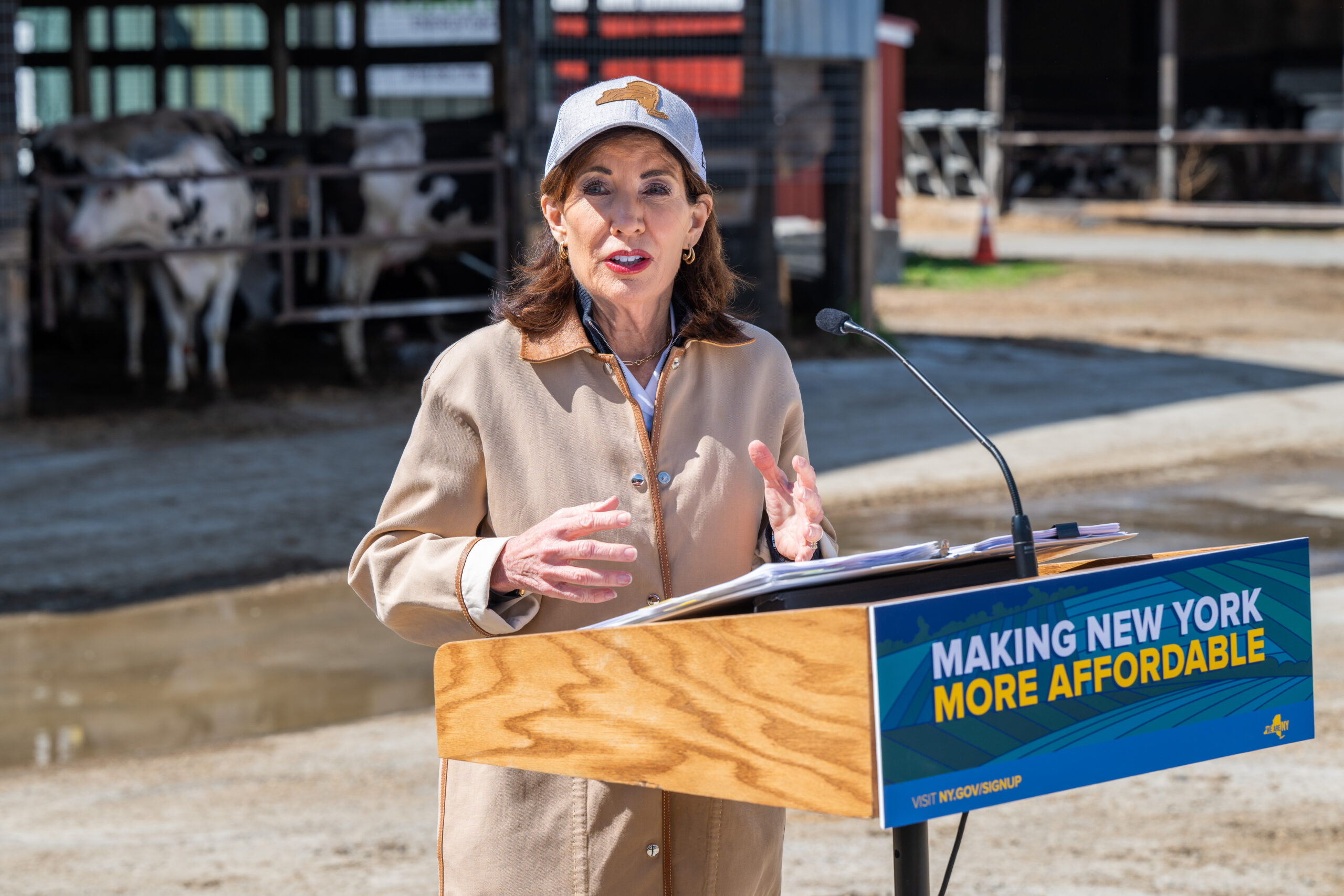
FREE KICKS: After days of headlines about exorbitant costs to get to the World Cup, Gov. Kathy Hochul and Mayor Zohran Mamdani on Monday unveiled a series of free watch parties in each borough.
The public events are a sign that the Democrats, who appeared together at Staten Island University Hospital Community Park, are trying to make the tournament affordable for fans who can’t afford to watch in person.
“Every fan should be able to watch the greatest tournament on earth without dipping into their savings,” said Mamdani, who attended the 2010 World Cup in South Africa.
Several of the events, dotted around the city, will have daily programming, even when matches aren’t being played.
Hochul has worried the high fares New Jersey Transit is charging to get fans to matches at MetLife Stadium will throw “cold water” on the tournament. She said that while MetLife will only fit 80,000 people, “this moment belongs to millions of New Yorkers.”
“If you can’t get to the World Cup, the World Cup is coming to you,” she said.
The announcement comes amid heightened security concerns because of several overlapping events, including a naval review President Donald Trump is likely to attend on July 4.
At the press conference, Mamdani used a question about security concerns to denounce this weekend’s attempted attack at the White House Correspondents Dinner, saying there’s “no room for this kind of political violence.”
“What we saw at the press correspondents dinner is one part of a very troubling reality across this country, which is how political violence has become part of our politics,” he said. “It is something that we are taking into consideration whenever we are planning anything in our city.”
The World Cup events took years of planning. Hochul has also announced other events upstate. And New Jersey is rolling out events in each of its 21 counties.
Mamdani teased further events in the city, including Department of Transportation “watch parties,” despite a moratorium on certain public events in parks that came at the request of the NYPD amid staffing concerns. — Ry Rivard
From the Capitol
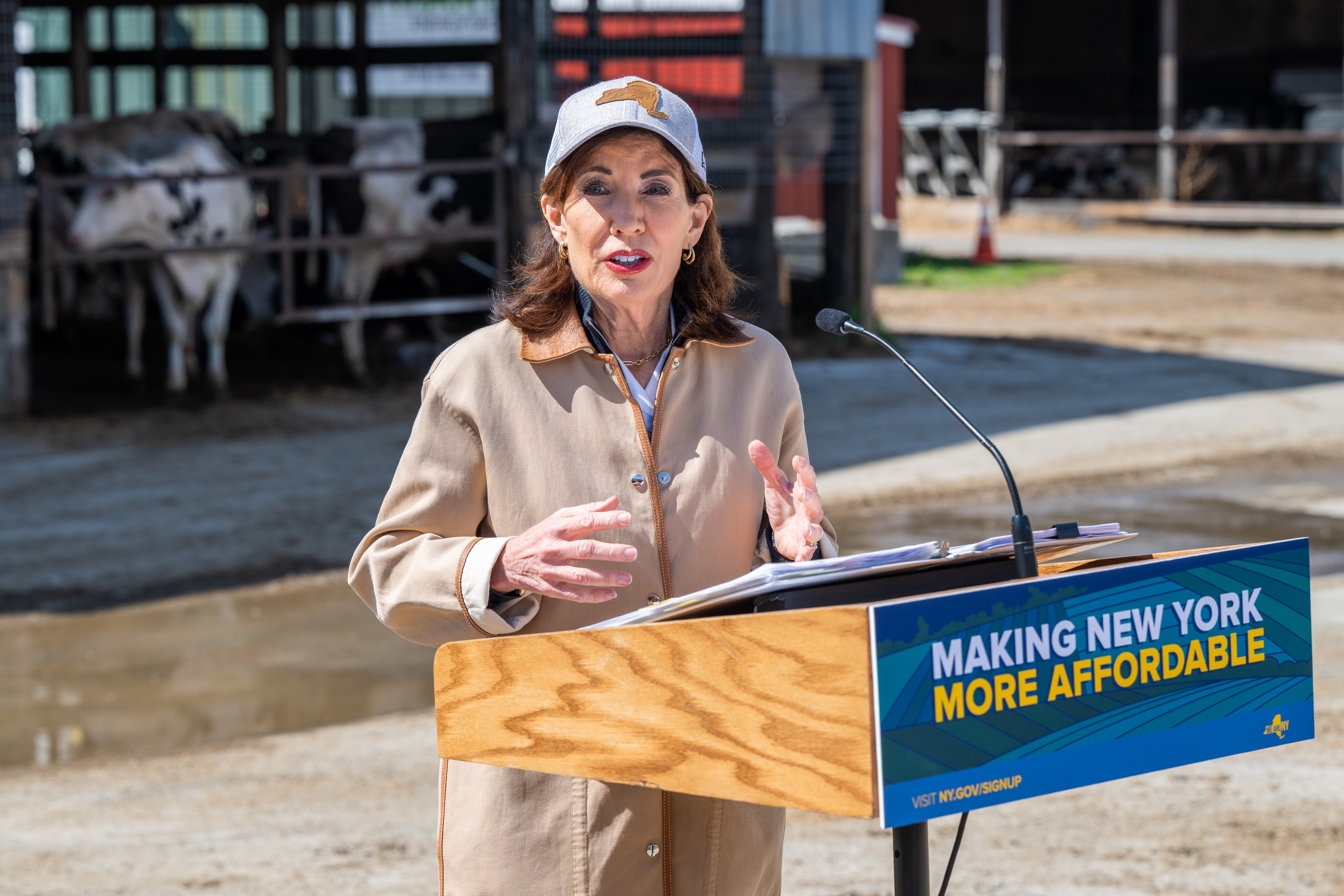
PIED-À-PUSH: Hochul adopted some populist rhetoric with a video released today pitching her pied-à-terre tax plan as one that impacts “billionaires and oligarchs.”
The language is striking for a governor who has opposed broader tax hikes like raising rates on income for rich New Yorkers and large corporations.
Yet Hochul is contending with sustained left-flank pressure to raise those taxes in the state budget, which is now nearly a month late.
The governor’s proposal, which would apply an annual surcharge on non-primary New York City residences worth $5 million and more, is expected to generate some $500 million. The money would help close a $5.4 billion city budget gap.
In her explainer video, Hochul asserts the surcharge would affect investors who “are not paying some of the same taxes as the people who live here year round.” It’s worth noting, though, that these owners are paying city property taxes.
Business leaders, including the Real Estate Board of New York and the Partnership for New York City, are concerned that the tax would hinder investment in the city. — Nick Reisman
SEE MY VEST: State Capitol security personnel have started wearing tactical vests — a move the State Police said was done as “a proactive safety measure.”
State Police spokesperson Beau Duffy told Playbook on Monday that the introduction of ballistic vest carriers, which are designed to hold armor plates, at the Capitol complex isn’t connected to a specific incident or threat.
The change comes as the state Capitol and surrounding state office buildings have tightened security in recent months, which includes a visible State Police presence at entrances. — Nick Reisman
PAY DELAY PERK: A new bill would let state legislators stop paying their personal utility bills whenever there’s a late budget.
The measure from Assemblymember Larinda Hooks would allow state workers and “elected officials” whose checks are delayed due to a delinquent spending plan to immediately stop paying their utility and internet bills. Under the legislation, they would not have to resume payments until two months after the budget is passed.
Practically every state employee has been paid since lawmakers missed the March 31 budget deadline — that’s why members have passed seven budget extenders.
The one exception? State legislators, who are statutorily barred from collecting checks until the oft-tardy spending plan is finalized.
“It’s clear who the main beneficiaries of this bill are,” Assembly Minority Leader Ed Ra said. “There hasn’t been a situation in recent memory where state employees had paychecks withheld as a result of a late budget.”
Hooks’ office did not return a request for comment.
Senate Finance Chair Tom O’Mara characterized the bill as “one of the most ridiculous ideas I’ve ever heard.”
“These legislators that are worried about not paying their utility bill while the budget’s late should be worried about lowering peoples’ utility bills,” O’Mara said. “Everything we do around here makes them more expensive.” — Bill Mahoney
DOH STEPS UP: As the Centers for Disease Control and Prevention scales back its testing for pathogens, the state Department of Health said today it’s stepping in to fill the gap. The state’s Wadsworth Center will take on testing paused by the CDC, a role it’s already been filling for 23 states that lack the resources to test pathogens.
The state lab announced that it’s now working with the CDC on testing for viruses such as influenza, pox and rabies. The Health Department noted that a pause in testing by the CDC has created a public health risk across the country, particularly for states that don’t have the necessary resources for robust testing. The CDC did not immediately respond to a request for comment.
“The New York State Department of Health’s Wadsworth Center stands at the forefront of innovation, protecting the health of New Yorkers and communities far beyond the State’s borders,” State Health Commissioner James McDonald said in a statement. “Under the leadership of Governor Hochul, New York State continues to lead in disease surveillance – work that is critical to responding effectively to public health threats.”
Read more here in Blue Light News Pro from Katelyn Cordero.
FROM CITY HALL
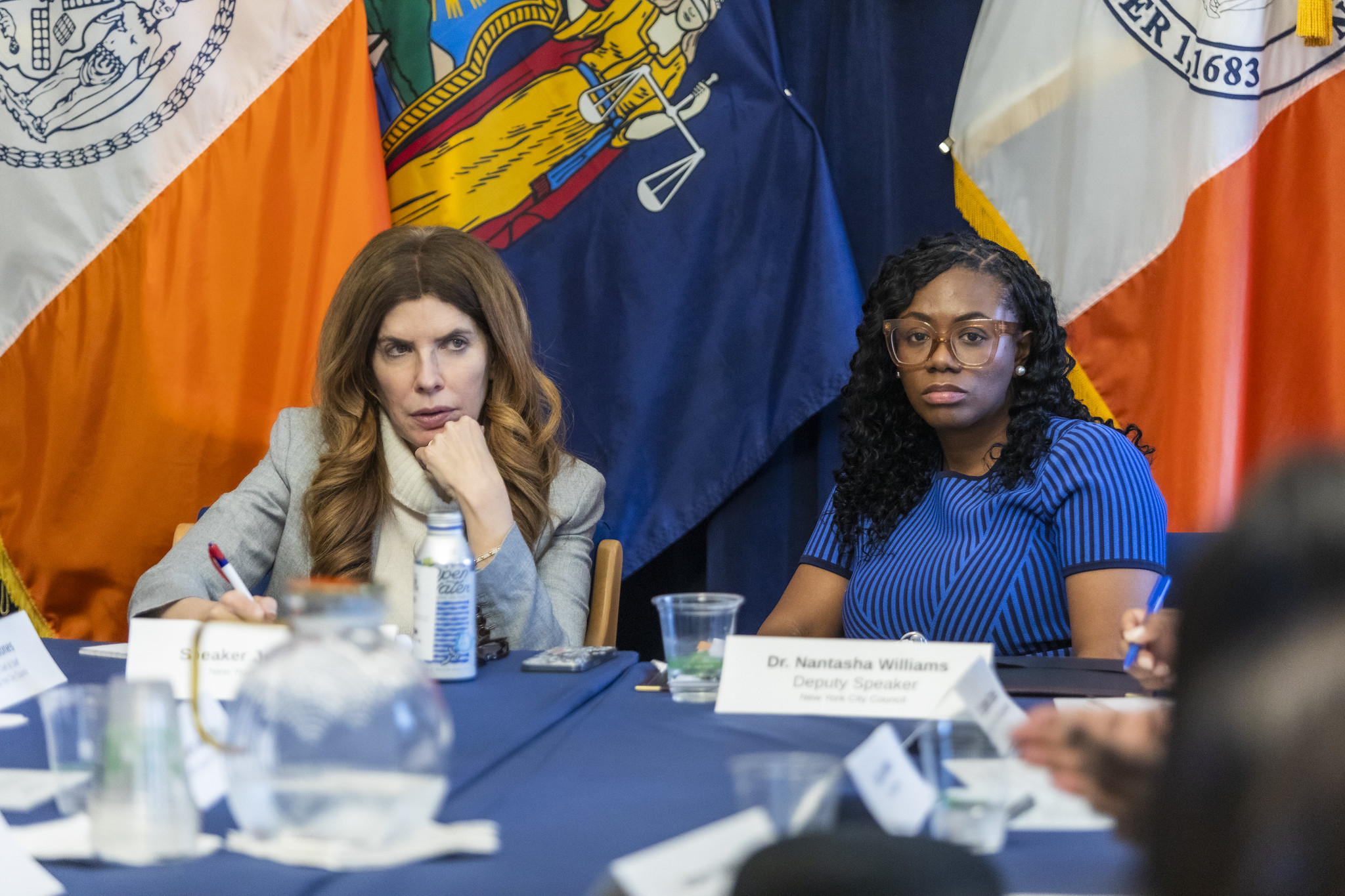
BREAKING RANKS: A key member of the City Council Progressive Caucus has quietly resigned from the bloc, a departure that comes amid a wider rift between the chamber’s lefties and Council Speaker Julie Menin.
Council Member Nantasha Williams, who serves as the body’s deputy speaker and is part of Menin’s leadership team, stepped down from the Progressive Caucus last week, a spokesperson told Playbook. The spokesperson suggested serving on the caucus is incompatible with Williams’ leadership responsibilities, given she has “shifted to supporting priorities across the full Council alongside the speaker.”
In a statement, Williams confirmed she left “to focus on my broader leadership role in the Council.” Despite departing, she said she remains committed to the “values” of the caucus.
“I look forward to continuing to partner with colleagues to advance shared priorities for New Yorkers,” said Williams, who has served as deputy speaker since Menin tapped her for the post in January.
Council Members Sandy Nurse and Tiffany Cabán, the Progressive Caucus’ co-chairs, lauded Williams for her “years of service within our caucus.”
“Her decision to step back due to the new structural expectations that come alongside her role within Council leadership is not an easy one, but it is understandable,” they said. “We will continue to advocate for budget justice and the protection of civil liberties, which are our shared priorities. We hope to do so in continued partnership with our deputy speaker.”
Williams’ exit leaves the Progressive Caucus with 23 members, most of whom are aligned with Mamdani. That puts the caucus just shy of a majority in the 51-member Council.
Menin, a more moderate Democrat, has increasingly embraced her role as a foil to Mamdani, clashing with him over how to address the city’s budget deficit and other policy matters.
Given their alignment with Mamdani, Progressive Caucus members have also had more frequent clashes lately with Menin.
A recent example: Last week, Progressive Caucus leaders praised Mamdani for vetoing a bill that would permit the NYPD to set up buffer zones outside educational facilities during protests.
By contrast, Menin, a key supporter of the bill, condemned the veto and signaled she might try to whip votes to override Mamdani to force the legislation into law. Despite still being a Progressive Caucus member at the time, Williams voted for the school buffer zone bill when it first passed the Council in late March.
In an X post on Friday, Cabán, the caucus co-chair, encouraged her colleagues to vote against any override attempt by Menin.
“I trust that my colleagues will sustain this veto so that we can protect our civil liberties and work together to address the root causes of hate violence,” Cabán wrote. Menin would almost certainly need the support of a handful of Progressive Caucus members to pull off a successful override of the mayor’s veto of the protest-related bill. — Chris Sommerfeldt
SUCCESS HEADS TO SUNSHINE STATE: New York City’s largest charter network announced Monday that it will open five elementary schools in Miami next year, marking its first expansion outside of New York.
Success Academy will co-locate with five schools across Miami-Dade County, specifically Hialeah-Miami Lakes Senior High School, Homestead Senior High School, Miami Jackson Senior High School, North Miami Senior High School and Westland Hialeah Senior High School.
The schools are slated to open during the 2027-28 school year, serving 1,500 students in kindergarten through first grade, according to a Success spokesperson. They will add an additional grade each year.
“Success Academy is excited to bring our proven, high-quality educational model to Miami’s families,” Eva Moskowitz, Success founder and CEO, said in a statement. “We look forward to serving these communities, partnering with parents and delivering on the promise of an exceptional education for every child.” — Madina Touré
IN OTHER NEWS
— ALL BETS ARE OFF: Attorney General Letitia James sued cryptocurrency exchanges that allow users to trade, joining the fight over federal and state regulations for prediction markets like Kalshi and Polymarket. (Gothamist)
— THAT’S NOT FAIR: The Montgomery County fair promoted a post by Republican congressional candidate Anthony Constantino, whose company has sponsored the fair, urging people to sign nominating petitions to get him on the ballot. (Times Union)
— ON SECOND THOUGHT: New York City’s public school system announced it was pulling controversial plans to open an AI-focused high school and to relocate three middle schools following community backlash. (POLITICO Pro)
Missed this morning’s New York Playbook? We forgive you. Read it here.


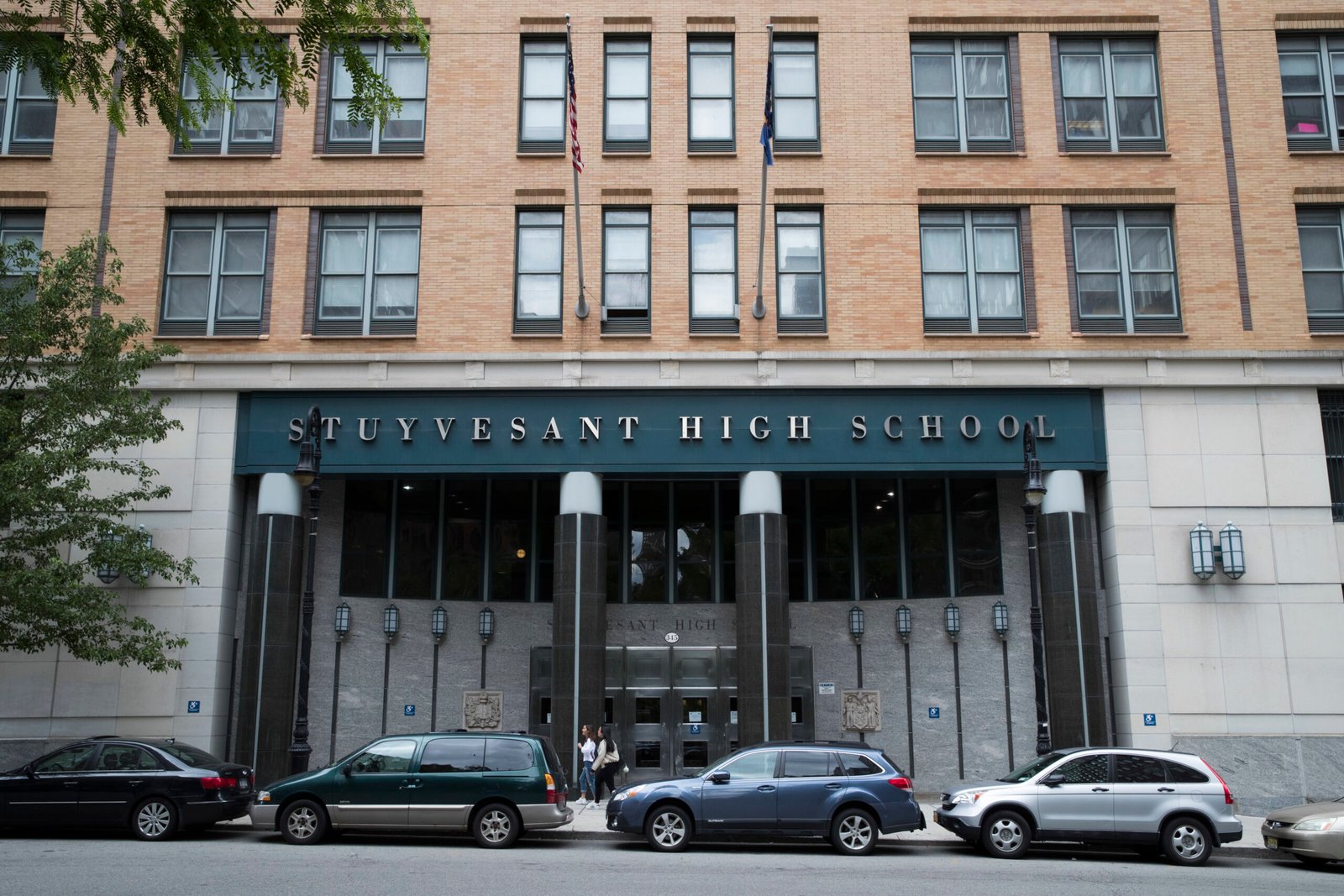
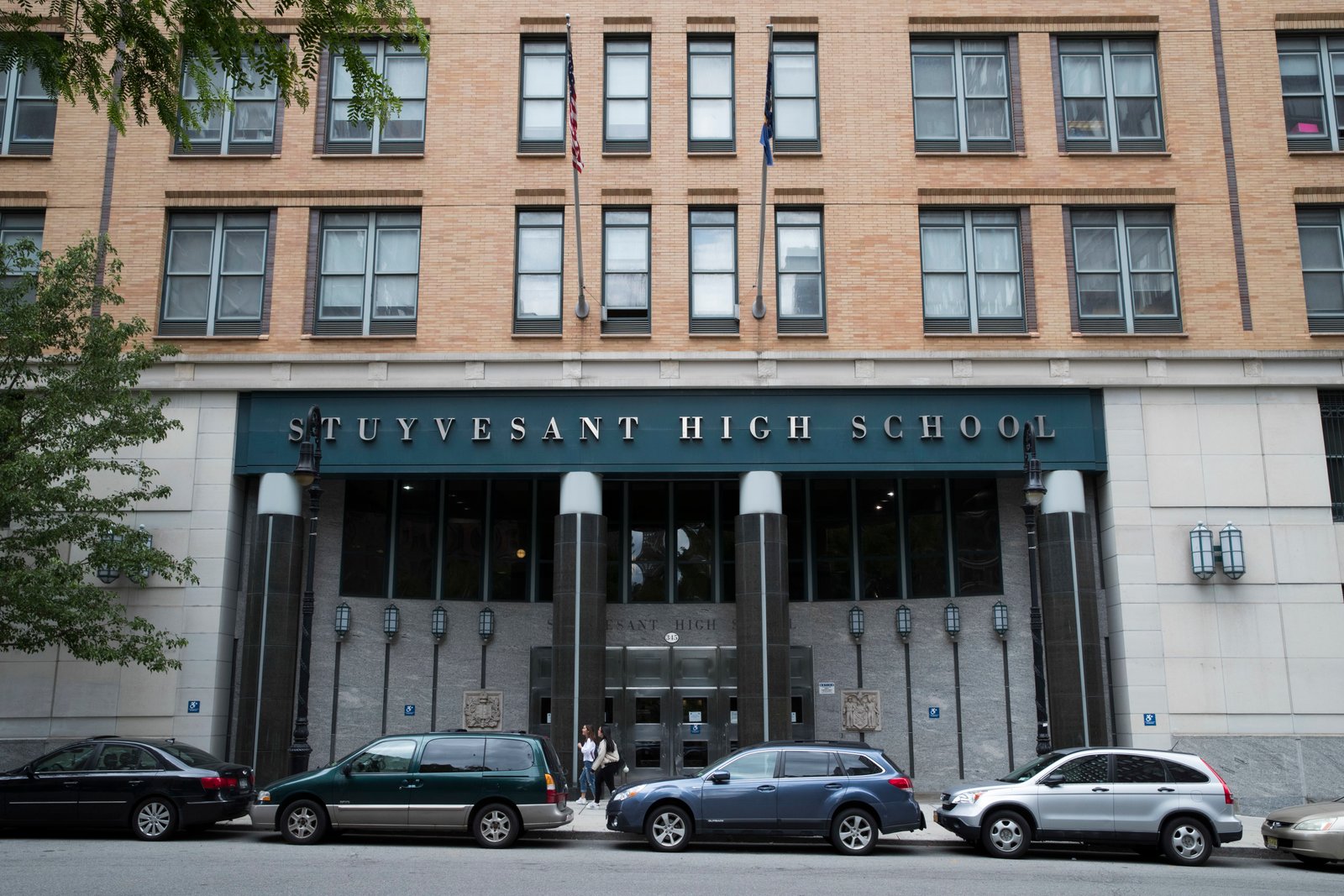
INTIFADA FLARE UP: One of New York City’s most prestigious public high schools is facing backlash because a school-based socialist youth group co-signed a social media post declaring “Intifada Until Victory!”
The Young Democratic Socialists of America chapter of Stuyvesant High School — along with YDSA chapters at Hunter College, the New School, City College and Lehman College — all signed onto an Oct. 8 Instagram post that accused the Democratic Socialists of America’s New York City chapter of silencing student activists who wanted to protest Mayor Zohran Mamdani over Israel.
The groups accused the democratic socialist mayor of betraying the Palestinian cause and blasted his decision to keep NYPD Commissioner Jessica Tisch in her position, referring to her as a “Zionist billionaire.”
The term intifada — which refers to violent uprisings against Jews in Israel — is viewed by many Jews as a call to violence against them.
Moshe Spern, president of United Jewish Teachers — an advocacy group representing Jewish teachers and students across the city — is demanding the posts be removed immediately and that the YDSA group provide a public apology to the school community.
“NYC public schools have seen hundreds of antisemitic and anti-Israel incidents since October 7, 2023,” he wrote in an email yesterday to Stuyvesant Principal Seung Yu and New York City Schools Chancellor Kamar Samuels. “When a school-recognized club amplifies this rhetoric, it risks contributing to a hostile environment.”
In the missive, Spern invoked Title VI — the federal law that bans discrimination based on race, shared ancestry and national origin — and demanded a review of the YDSA chapter’s charter, faculty adviser and recent activities for compliance.
Spern also cited a chancellor’s regulation that states that student clubs operate under the principal’s supervision and must remain consistent with the school’s educational goals.
Yu did not respond to requests for comment. Mamdani’s Department of Education also did not respond to Playbook.
Spern told Playbook today that he has yet to receive a response from Yu.
“To flat out ignore it is extremely irresponsible,” he said.
The NYC-DSA defended the organization.
“We support the right to organize,” NYC-DSA co-Chair Gustavo Gordillo said in a statement. “NYC-DSA did not organize or endorse this particular rally, but red scare tactics have never been effective tools for engaging with student movements.”
The social media uproar is the latest flashpoint in ongoing tensions in the city over Hamas’ Oct. 7, 2023, attack on Israel and the war that followed.
Mamdani, a longtime critic of Israel, was reluctant to condemn the term “globalize the intifada” on the campaign trail last year before finally saying he will not use the term. He also drew bipartisan backlash over his statement marking the third anniversary of the attack. Israeli Prime Minister Benjamin Netanyahu labeled the mayor an antisemite, which Mamdani has denied.
Mamdani, though, has also simultaneously faced backlash from pro-Palestinian activists who accused him of betraying the Palestinian cause by retaining Tisch, who’s Jewish and a self-described Zionist. Those critics have also criticized him for not doing enough to prevent local synagogues from holding events that promote land sales in Israel, some of them in the occupied West Bank. — Madina Touré
From the Capitol

Q’S LATEST: Gov. Kathy Hochul has a 55-41 lead over Republican challenger Bruce Blakeman, a Quinnipiac University poll released this afternoon found.
That 14-point advantage is narrower than the 19-point lead Quinnipiac gave Hochul last month. But it’s more in line with the numbers from other pollsters: Marist found Hochul up by 11 two weeks ago, Emerson had Hochul up 12 in early October, and Siena measured her lead at 9 points last month.
Despite Hochul’s lead, the Q Poll concluded Blakeman has an enthusiasm advantage. A total of 65% of his backers were “very enthusiastic” to support him, while only 33% of Hochul’s supporters said the same. — Bill Mahoney
FROM THE CAMPAIGN TRAIL

LANDER DETAINED: Democratic congressional candidate Brad Lander was detained today by Israeli security officials while harvesting olives in the West Bank.
Lander, a self-described liberal Zionist and critic of Israel, said he went to the West Bank as part of the “Protect the Harvest” coalition to support Palestinians gathering crops.
Rabbi Jill Jacobs, CEO of T’ruah, a progressive rabbinical organization, said she was also detained Wednesday, along with “approximately 80 American, Israeli, and international volunteers providing a protective presence for Palestinian farmers.” According to a press release from T’ruah, there were “approximately two hours of peaceful harvesting” until “Israeli forces declared the area a closed military zone” and detained them to transport them to a police station, despite the volunteers agreeing to leave.
An Israeli military official told Blue Light News that officers from the Israel Defense Forces and Border Police, along with local police, arrived at the scene because Palestinians did not submit a request to coordinate harvesting in that area, which is required ahead of time. The official added that the farm in question “requires only a small number of harvesters to collect its produce” and “the security establishment views the arrival of dozens of activists as an act intended solely to provoke, which undermines the harvesting process.”
Lander was released “once the matter was brought to our attention” that he is a congressional candidate, the official said.
Lander confirmed in a social media post that he was released with a “warning” because of his “public profile.”
Read more from Madison Fernandez in Blue Light News.
IN OTHER NEWS
— MUSK: Elon Musk has spent more than $500,000 to support Rep. Mike Lawler’s reelection bid against Democratic challenger Cait Conley. (Gothamist)
— STOP: New York City deployed 600 red light cameras to intersections, the maximum number allowed under state law. (New York Daily News)
— MEASLES: In the wake of a measles crisis, the state Health Department remains locked in a court battle with Amish schools over religious vaccine exemptions. (The New York Times)
Missed this morning’s New York Playbook? We forgive you. Read it here.
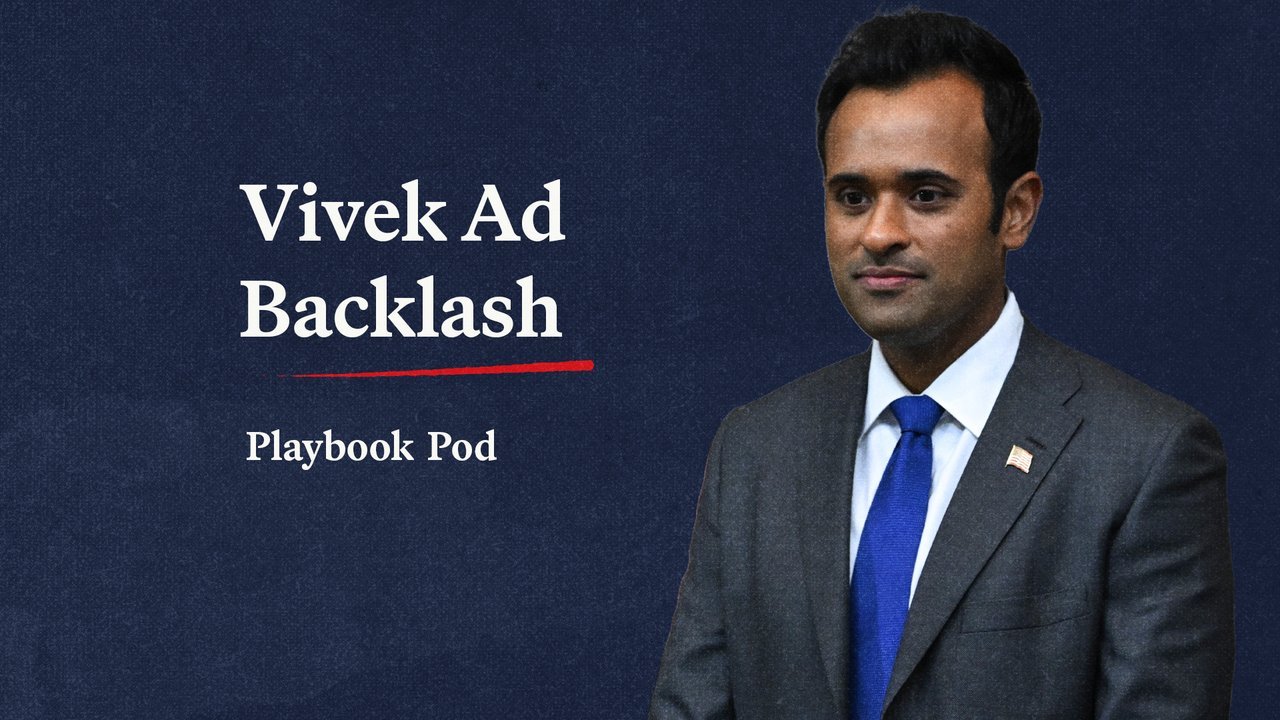
The GOP has a midterm messaging problem. Ramaswamy isn’t helping
lead image
Republicans are banking on a massive cash edge to help save their majority in Congress. But they are losing much of that advantage in an important arena: broadcast TV ads.
Republicans have spent $677 million on those ads across 10 key Senate battleground states, compared to $479 million by the Democrats. But the GOP’s money isn’t going nearly as far because they’re more dependent on outside groups that pay much higher rates than candidates.
The disparity has helped Democrats stay in the fight for Senate control amid an onslaught of GOP outside spending.
In Ohio’s Senate race, Republican groups make up 63% of the $218 million spent. But in spite of their nearly two-to-one spending advantage, they make up just over half of ads that are on the airwaves, according to data from the tracking service AdImpact. In Texas, Republicans have outspent Democrats by a three-to-one margin, but have aired just 58% of the ads. And in Michigan, the GOP accounts for 60% of the spending but just over half of the ads.
A large part of this discrepancy comes down to the mechanics of broadcast advertising. Candidates, and now political parties thanks to a recent Supreme Court ruling, are entitled to significantly lower rates. That has allowed Democratic candidates — who have posted bonkers fundraising hauls — to offset much of the GOP advantage in super PACs. Republican Senate candidates, on the other hand, struggled overall with their fundraising. And some GOP outside groups bought their ad time later, when it was even more expensive.
“There are limitations to the impact of ‘big money’ in politics,” said Sean Cooksey, a Republican former FEC commissioner. “It’s a good demonstration of the economics of campaign fundraising. Hard dollars really just go so much further.”
The disparity also shows “the Republican overreliance on outside groups,” said Ian Russell, a Democratic admaker.
“You get an eye-popping dollar amount, but it doesn’t actually translate into as many spots as you would think relative to a well-financed candidate,” Russell said. “[Republicans] were just hoping that they could spend their way out of everything that was going wrong for them. But the problem is, their issues run much deeper than a few ad buys can fix. Especially when you’ve got monster fundraising hauls from the Democratic side.”
Republicans in House and Senate races have long been more dependent on outside groups and megadonors, and for multiple cycles have seen their cash advantage undercut by fundraising strength from individual Democratic candidates. But that trend is particularly pronounced this year given the combination of Republican super PAC money and their candidates’ struggles.
In 2024, Republican outside groups spent only about 15% more than Democrats on TV ads across House and Senate general election contests, according to a Blue Light News analysis of AdImpact data. This cycle, GOP outside groups have spent 7% more.
In a few states, the discrepancy between dollars and airtime is less stark. Republicans account for 60% of the spending in Maine’s Senate race and an equal percentage of the ads, according to AdImpact. That’s in part because Sen. Susan Collins has outraised her Democratic opponent Troy Jackson over the whole cycle, although Jackson, who didn’t launch his campaign until July, raised far more in the third quarter.
The numbers show the shifting dynamics of campaign strategy after the Supreme Court opened the floodgates to more spending from parties by granting them the lower advertising rate.
Republicans have been faster to take advantage of the new rules: Major coordinated spending efforts from the NRSC and RNC have helped their side significantly this cycle.
Republicans have far outspent Democrats on Senate party-coordinated Senate advertising, $90 million to $34.6 million across TV, radio and digital ads, according to data from AdImpact.
“If I were the leader of either party, I would say you shouldn’t give a dollar, you shouldn’t give a single penny to these super PACs until you’ve maxed out to the party committee,” Cooksey said.
Some Republicans say that strategic errors have contributed to erasing their cash edge. A number of GOP strategists have also privately griped that MAGA Inc. — one of the major outside groups backing their candidates — bought TV airtime too late, forcing them to pay even higher rates and further draining resources and increasing the price of reaching voters. Republicans fretted for months about whether Trump’s well-financed super PAC, MAGA Inc., would get involved. The group has since spent heavily, but only launched its first general election ad buys in September.
“There is no question MAGA Inc. should have bought ads earlier in the cycle,” said one national GOP operative who was granted anonymity to discuss party strategy, noting that rates across the country increase as Election Day nears. Other top GOP outside groups, like the Senate Leadership Fund and the Congressional Leadership Fund, made their early advertising reservations much earlier in the cycle than MAGA Inc.
Trump allies waved away that criticism. A person familiar with the Trump operation’s midterm planning, granted anonymity to discuss strategy, said it’s “indisputable that the spending from the Trump political effort has kept us competitive in many Senate races.”
MAGA Inc. declined to comment.
Still, GOP outside groups are utilizing their cash advantage in some underappreciated ways.
Republican super PACs have massively outspent their Democratic counterparts on mail — roughly $157 million to $35 million for the general election — according to a Blue Light News analysis of independent expenditure filings submitted to the Federal Election Commission. That’s led by a whopping $44 million in spending on mail across 24 races from the Trump-aligned No Going Back PAC, along with $23.8 million across 20 races from Elon Musk’s America PAC.
GOP-aligned super PACs have also spent more than Democratic ones on phone calls and text messages, the data shows.
- NYC high school faces backlash over ‘intifada’ post
- Trump releases heating oil to the northeast to reduce surging prices
- Sen. Whitehouse says wind attacks threaten permitting deal
- The other Michigan race corporate America is watching
- Scalise heads to Florida to boost several GOP candidates
- ‘Very limited choice’: Data centers confront new constraints
- The GOP has a midterm messaging problem. Ramaswamy isn’t helping
- This member is so frustrated with Congress he wants voters to sidestep it
- Capitol agenda: The unknowns of a Sherrod Brown return
- Rick Jackson is Georgia Republicans’ best hope. Donald Trump may get in the way.
-

 Politics2 years ago
Former ‘Squad’ members launching ‘Bowman and Bush’ YouTube show
-
Uncategorized2 years ago
Bob Good to step down as Freedom Caucus chair this week
-

 The Josh Fourrier Show2 years ago
DOOMSDAY: Trump won, now what?
-

 The Dictatorship2 years ago
Pete Hegseth’s tenure at the Pentagon goes from bad to worse
-

 Politics2 years ago
Former Kentucky AG Daniel Cameron launches Senate bid
-

 The Dictatorship2 years ago
Luigi Mangione acknowledges public support in first official statement since arrest
-

 Politics2 years ago
Blue Light News’s Editorial Director Ryan Hutchins speaks at Blue Light News’s 2025 Governors Summit
-
 Politics1 year ago
John Legend advises Trump to drop the ‘dictator s‑‑‑’ if he wants Nobel Peace Prize