
Politics
Jules Feiffer, Pulitzer-winning cartoonist and writer known for lacerating wit, dies at 95

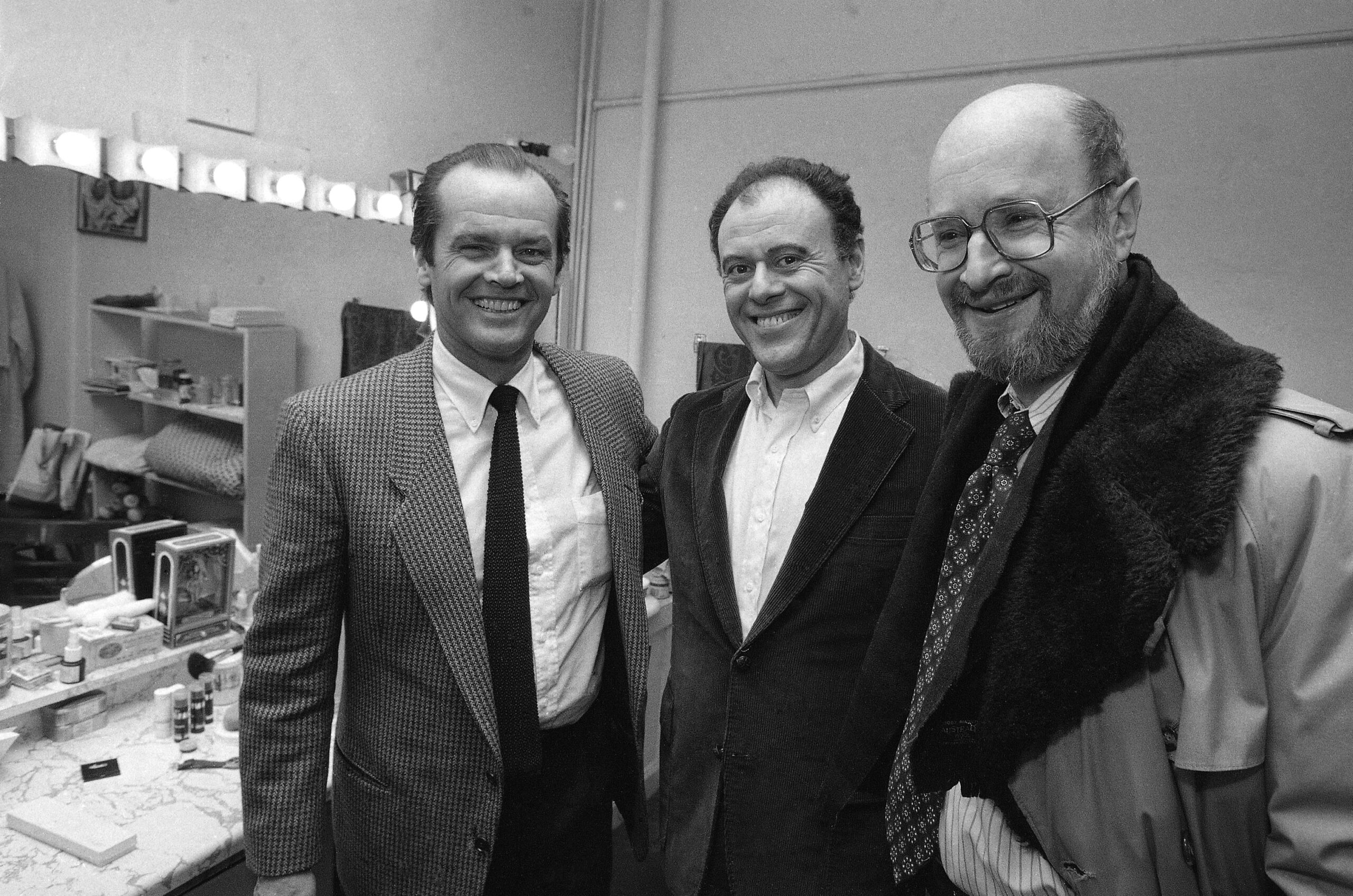
NEW YORK — Jules Feiffer, a Pulitzer Prize-winning cartoonist and writer whose prolific output ranged from a long-running comic strip to plays, screenplays and children’s books, died Friday. He was 95 and, true to his seemingly tireless form, published his last book just four months ago.
Feiffer’s wife, writer JZ Holden, said Tuesday that he died of congestive heart failure at their home in Richfield Springs, New York, and was surrounded by friends, the couple’s two cats and his recent artwork.
Holden said her husband had been ill for a couple of years, “but he was sharp and strong up until the very end. And funny.”
Artistically limber, Feiffer hopscotched among numerous forms of expression, chronicling the curiosity of childhood, urban angst and other societal currents. To each he brought a sharp wit and acute observations of the personal and political relations that defined his readers’ lives.
As Feiffer explained to the Chicago Tribune in 2002, his work dealt with “communication and the breakdown thereof, between men and women, parents and children, a government and its citizens, and the individual not dealing so well with authority.”
Feiffer won the United States’ most prominent awards in journalism and filmmaking, taking home a 1986 Pulitzer Prize for his cartoons and “Munro,” an animated short film he wrote, won a 1961 Academy Award. The Library of Congress held a retrospective of his work in 1996.
“My goal is to make people think, to make them feel and, along the way, to make them smile if not laugh,” Feiffer told the South Florida Sun Sentinel in 1998. “Humor seems to me one of the best ways of espousing ideas. It gets people to listen with their guard down.”
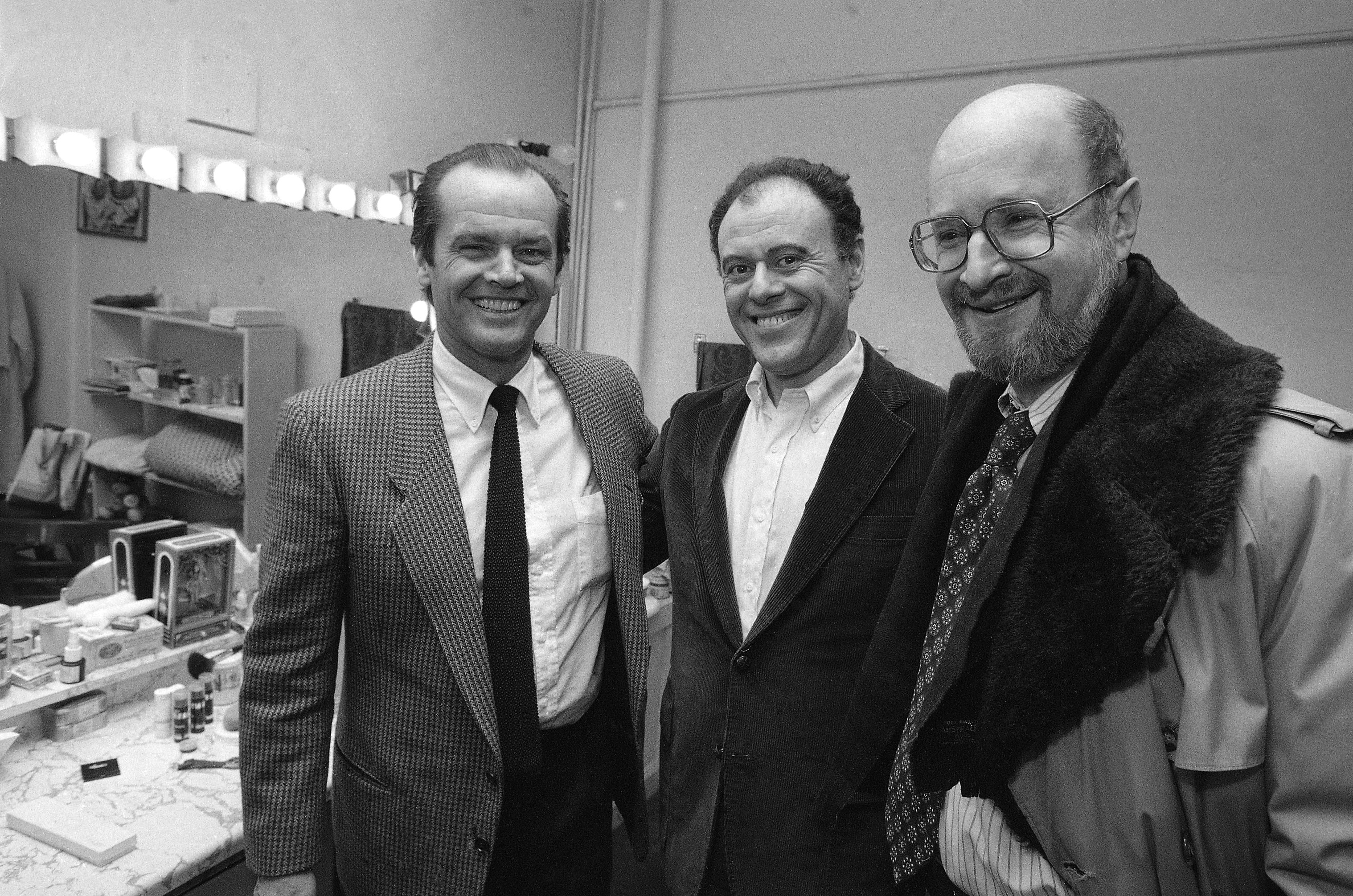
Feiffer was born on Jan. 26, 1929, in the Bronx. From childhood on, he loved to draw.
As a young man, he attended the Pratt Institute, an art and design college based in Brooklyn, and worked for Will Eisner, creator of the popular comic book character The Spirit. Feiffer drew his first comic strip, “Clifford,” from the late 1940s until he was drafted into the Army in 1951, according to a biography on his former website. He served two years in the Signal Corps, according to the online biography.
After the Army, he returned to drawing cartoons and found his way to a then-new alternative weekly newspaper, The Village Voice. His work debuted in the paper in 1956.
The Voice grew into a lodestar of downtown and liberal New York, and Feiffer became one of its fixtures. His strip, called simply “Feiffer,” ran there for more than 40 years.
The Voice was a fitting venue for Feiffer’s feisty liberal sensibilities, and a showcase for a strip acclaimed for its spidery style and skewering satire of a gallery of New York archetypes.
“It’s hard to remember what hypocrisy looked like before Jules Feiffer sketched it,” Todd Gitlin, who was then a New York University journalism and sociology professor, wrote in Newsday in 1997. Gitlin died in 2022.
Feiffer quit the Voice amid a salary dispute in 1997, sparking an outcry from readers. His strip continued to be syndicated until he ended it in 2000.
But if “Feiffer” was retired, Feiffer himself was not. He had long since developed a roster of side projects.
He published novels, starting in 1963 with “Harry the Rat with Women.” He started writing plays, spurred by a sense of sociological upheaval that, as he later told Time magazine, he felt he couldn’t address “in six panels of a cartoon.”
His first play, 1967’s “Little Murders,” went on to win an Obie Award, a leading honor for Off-Broadway and Off-Off-Broadway productions.
He ultimately wrote over a dozen plays and screenplays, ranging from the 1980 film version of the classic comic “Popeye” to the tougher territory of “Carnal Knowledge,” a story of two college friends and their toxic relationships with women over 20 years. Feiffer wrote the stage and screen versions of “Carnal Knowledge,” which was made into a 1971 movie directed by Mike Nichols and starring Jack Nicholson, Art Garfunkel, Candice Bergen and Ann-Margret. Feiffer also contributed to the long-running erotic musical revue “Oh! Calcutta!”
But after disappointing reviews of his 1990 play “Elliot Loves,” Feiffer looked to the gentler realm of children’s literature.
“My kind of theater was about confronting grown-ups with truths they didn’t want to hear. But it seemed to me we’ve reached the point, at this particular time, where grown-ups knew all the bad news. … So I hunted around for people I could give good news to, and it seemed to me it should be the next generation,” Feiffer told National Public Radio in 1995.
Having illustrated Norton Juster’s inventive 1961 book “The Phantom Tollbooth,” Feiffer brought a wry wonder to bear on his own books for young readers, starting with 1993’s “The Man in the Ceiling.” A musical version premiered in 2017 at the Bay Street Theater in Sag Harbor, New York.
The theater threw a surprise 90th birthday party for Feiffer in February 2019, when he did an on-stage interview to accompany a screening of “Carnal Knowledge.”
In recent years, Feiffer also painted watercolors of his signature figures and taught humor-writing courses at several colleges, among other projects. He published a graphic novel for young readers, “Amazing Grapes,” last September.
His wife said he had great fun writing it, relishing the drawings and story.
“He was,” she said, “a 5-year-old living in a 95-year-old’s body.”


Under the political radar, the country’s food stamps program is undergoing a slow-motion transformation. The ramifications could bubble up into the midterms.
Changes to the Supplemental Nutrition Assistance Program from Republicans’ One Big Beautiful Bill Act are rolling out in phases, from tougher work requirements to restrictions on non-citizens. Food stamp rolls already shrank by more than 5 million people nationwide as of this summer, as the hardest-hit state, Arizona, saw an outright majority of its food stamp recipients lose benefits.
The latest alteration clicked into place Oct. 1, when the share of administrative costs states and counties have to pay rose to 75% from 50%. An even bigger financial shift looms in a year, when states with high payment error rates will have to assume some benefit costs for the first time, a scenario that’s already rippling through state and local budget planning.
It all adds up to a new era in federal-state relations — and in the size and nature of the welfare state.
In a year when affordability worries top voters’ priority lists and grocery prices strain their wallets, Democrats think the SNAP shift gives them an opening to make Republicans pay politically after the GOP used social safety net cuts to food aid and Medicaid to help pay for last year’s tax cuts.
“People are getting kicked off these programs at the very moment they’re going to the polls to vote,” House Agriculture ranking member Angie Craig (D-Minn.) said. “I sure wouldn’t want to be a Republican headed into the November ballot.”
But Republicans think they have a compelling story to tell voters, trying to right-size a program that spends millions of dollars on erroneous payments. The SNAP changes align with the Trump administration’s broader push to crack down on fraud and make the government smaller or more efficient. Implementing stricter work requirements for welfare often polls well, and trying to move people toward work gets at the root causes of poverty, they argue.
“The premise is simple: Let’s make sure that this program is preserved for those truly in need, and that we aren’t squandering taxpayer dollars,” a senior USDA official told Playbook in an interview. “And let’s make sure that if folks are able-bodied, they are work training or volunteering for 20 hours per week.”
That doesn’t mean Republicans in competitive races are putting SNAP and Medicaid cuts front and center on the campaign trail. When they tout last year’s megalaw, new tax breaks typically lead the messaging. And 10 frontline GOP House campaigns didn’t respond to requests for interviews about how they can win on SNAP.
At the state and county level, some governments are scrambling to prepare for a massive cost shift, hitting at the same time as significant Medicaid changes. The resulting bureaucratic jumble has contributed to some of the SNAP losses this year, as recipients struggled to get through overtaxed call centers, some states cut staff, and others tightened their processes.
“It really sets up a change in the federal responsibility, and I view it as a slippery slope,” warned Barbara Guinn, New York’s commissioner of the Office of Temporary and Disability Assistance. Her state is staring down a possible $1 billion added burden next year, though they’re advocating for a repeal of the benefits change. “Once they implement any kind of cost shift, I think it will be easier for them to take similar actions in the future.”
Whether to delay next year’s cost shift has already generated tensions over the farm bill in the Senate, where Democrats are demanding a longer postponement than Republicans’ offer of one year. Some Minnesota counties are considering significant property tax increases to pay for the extra costs, Craig said: “We’re going to be pushing hard for a two-year delay — at the request of, frankly, many of my Republican county commissioners, not just Democrats.”
Conservatives see the new calculus as a long overdue change to improve efficiency and incentivize program integrity. Improper payment rates are high in many states (though they comprise both over-payments and under-payments, and error rates are different from fraud). Those that reduce errors enough won’t have to take on paying the benefits. And even opponents of the changes think lower error rates are a worthy goal. SNAP rolls often ebb and flow with the economy, and the recent drop could reflect the job market pulling people out of need — or the removal of people who shouldn’t have been getting food stamps in the first place.
“There needs to be some level of accountability,” the USDA official said. States with high error rates “need to start to have skin in the game.”
But at a time when many households are already squeezed by inflation, the SNAP changes have correlated with higher numbers of Americans turning to charities to ward off hunger. The surge in people losing food aid came more quickly than expected. The unemployment rate hasn’t meaningfully changed. And the vast majority of large food banks in a recent NBC survey said they were grappling with higher demand, in part due to food stamp changes. Another rule kicking in the day after the midterms could lead to many retailers being bumped out of SNAP as places where low-income people can use their benefits.
For state governments, a set of sweeping operational changes are now underway to conform to new policy demands, often requiring more money or staffing at already under-resourced offices. And the budgetary stakes to get error rates lower are sky-high.
“It’s a really complicated, nuanced and confusing time for states who are trying to administer SNAP,” said Lauren Kallins, a senior legislative director at the nonpartisan National Conference of State Legislatures, which has advocated for a delay in the benefits costs shift.
National Democrats are increasingly shifting their attention away from North Carolina’s Senate race as polls show former Gov. Roy Cooper ahead, eyeing once long-shot races as possible pickups. But a veteran Democratic strategist who helped deliver the party’s last presidential victory in the state is urging donors not to take a win for granted.
David Plouffe, who managed behind Barack Obama’s narrow 2008 victory in North Carolina, urged Democratic donors and supporters not to grow complacent in the final weeks of Roy Cooper’s Senate campaign, according to audio obtained by Blue Light News.
“I think that this race … has I think been the best run race in the country,” Plouffe said on the call. “But that doesn’t mean that we can rest easy.”
He warned about North Carolina’s relatively fixed partisan makeup as a purple state, making it difficult for a candidate to dramatically expand their base of support.
“There’s certain states that elections happen within a bound, and this one will be that way as well,” he said.
In public polling, Cooper leads Republican Michael Whatley, who has struggled to boost his name recognition against the much better-known former governor. And as Democrats grow increasingly bullish on their candidate’s chances of flipping the seat — one of four pickups they need to take control of the Senate — national groups have begun shifting their money and attention to other contests, including most recently to Kansas.
But Plouffe said North Carolina needs to remain a priority.
“We have to win the ones we have to win,” he said on the call to Cooper’s finance committee.
Just days before Plouffe’s remarks, Senate Democrats’ top super PAC pulled back some of its spending in North Carolina, following a much bigger retreat by Republicans’ top super PAC in the state.
Plouffe cautioned that North Carolina has historically been a tough state for Democrats at the federal level, especially in recent years. The party hasn’t won a Senate race there since 2008, when Obama became the last Democratic presidential candidate to carry the state, winning by fewer than 15,000 votes. He lost the state in 2012.
“Even though we carried the electoral votes back then, we only did so by I think 14,000 votes. So it was our narrowest victory,” Plouffe said. “And in 2012, we tried to win North Carolina again with the help of so many people on this phone, and we just couldn’t get it done. And that tells you how difficult the state is.”
Plouffe also cast the stakes of Cooper’s race as extending beyond November, arguing that a Cooper victory could provide a blueprint for the party’s eventual 2028 presidential nominee.
“Democrats need to compete and win in North Carolina in 28,” he said. “And it’s one thing to look how a governor can win a state. The best route, the best scout that you receive, is how someone in a federal race won in a tough state, and that can show you the way.”

Byron Donalds says he is not a ‘yes man’ to Trump
lead image
-

 Politics2 years ago
Former ‘Squad’ members launching ‘Bowman and Bush’ YouTube show
-
Uncategorized2 years ago
Bob Good to step down as Freedom Caucus chair this week
-

 The Josh Fourrier Show2 years ago
DOOMSDAY: Trump won, now what?
-

 The Dictatorship2 years ago
Pete Hegseth’s tenure at the Pentagon goes from bad to worse
-

 Politics2 years ago
Former Kentucky AG Daniel Cameron launches Senate bid
-

 The Dictatorship2 years ago
Luigi Mangione acknowledges public support in first official statement since arrest
-

 Politics2 years ago
Blue Light News’s Editorial Director Ryan Hutchins speaks at Blue Light News’s 2025 Governors Summit
-

 The Dictatorship1 year ago
Mike Johnson sums up the GOP’s arrogant position on military occupation with two words