
Politics
Jules Feiffer, Pulitzer-winning cartoonist and writer known for lacerating wit, dies at 95

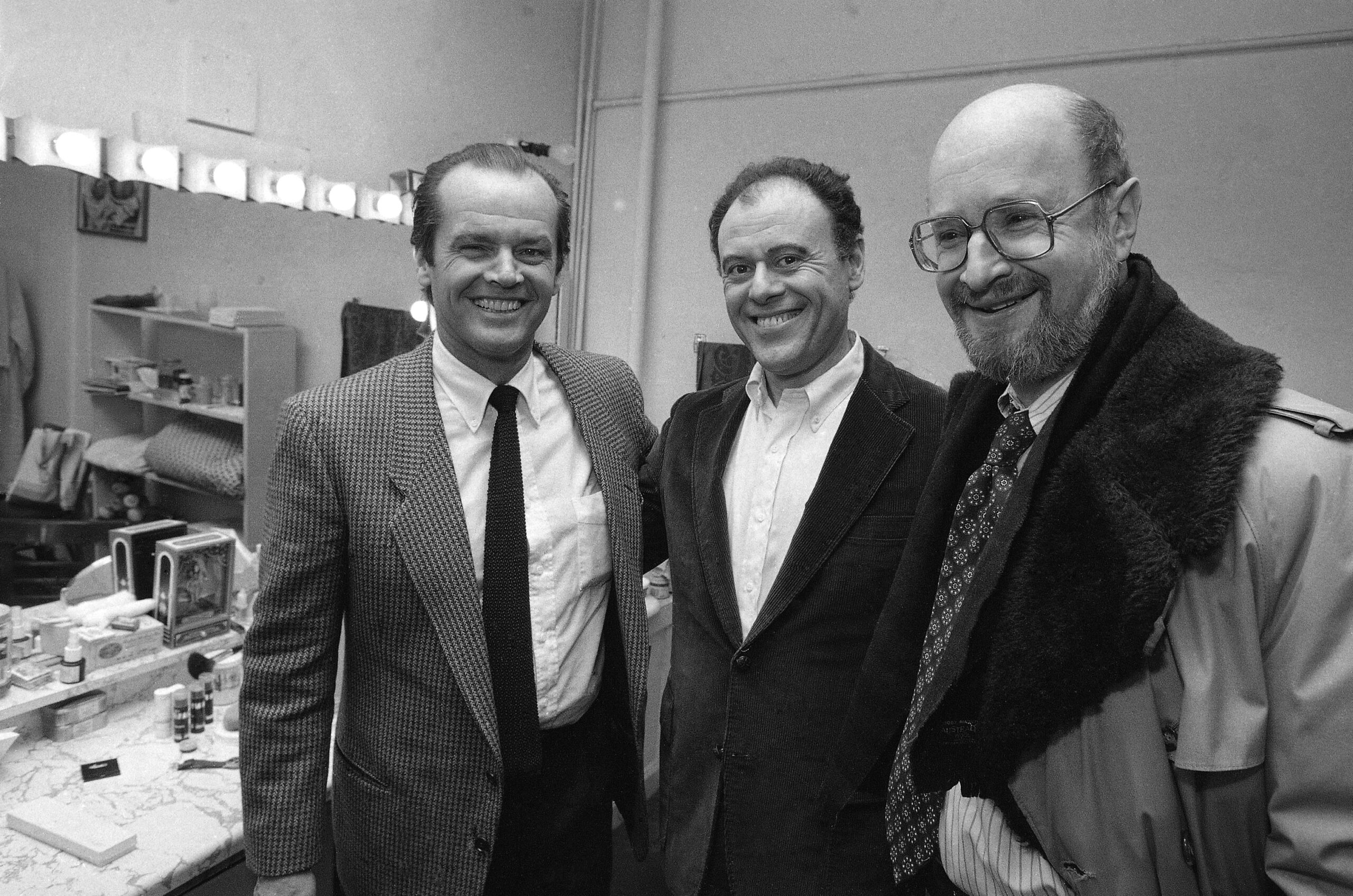
NEW YORK — Jules Feiffer, a Pulitzer Prize-winning cartoonist and writer whose prolific output ranged from a long-running comic strip to plays, screenplays and children’s books, died Friday. He was 95 and, true to his seemingly tireless form, published his last book just four months ago.
Feiffer’s wife, writer JZ Holden, said Tuesday that he died of congestive heart failure at their home in Richfield Springs, New York, and was surrounded by friends, the couple’s two cats and his recent artwork.
Holden said her husband had been ill for a couple of years, “but he was sharp and strong up until the very end. And funny.”
Artistically limber, Feiffer hopscotched among numerous forms of expression, chronicling the curiosity of childhood, urban angst and other societal currents. To each he brought a sharp wit and acute observations of the personal and political relations that defined his readers’ lives.
As Feiffer explained to the Chicago Tribune in 2002, his work dealt with “communication and the breakdown thereof, between men and women, parents and children, a government and its citizens, and the individual not dealing so well with authority.”
Feiffer won the United States’ most prominent awards in journalism and filmmaking, taking home a 1986 Pulitzer Prize for his cartoons and “Munro,” an animated short film he wrote, won a 1961 Academy Award. The Library of Congress held a retrospective of his work in 1996.
“My goal is to make people think, to make them feel and, along the way, to make them smile if not laugh,” Feiffer told the South Florida Sun Sentinel in 1998. “Humor seems to me one of the best ways of espousing ideas. It gets people to listen with their guard down.”
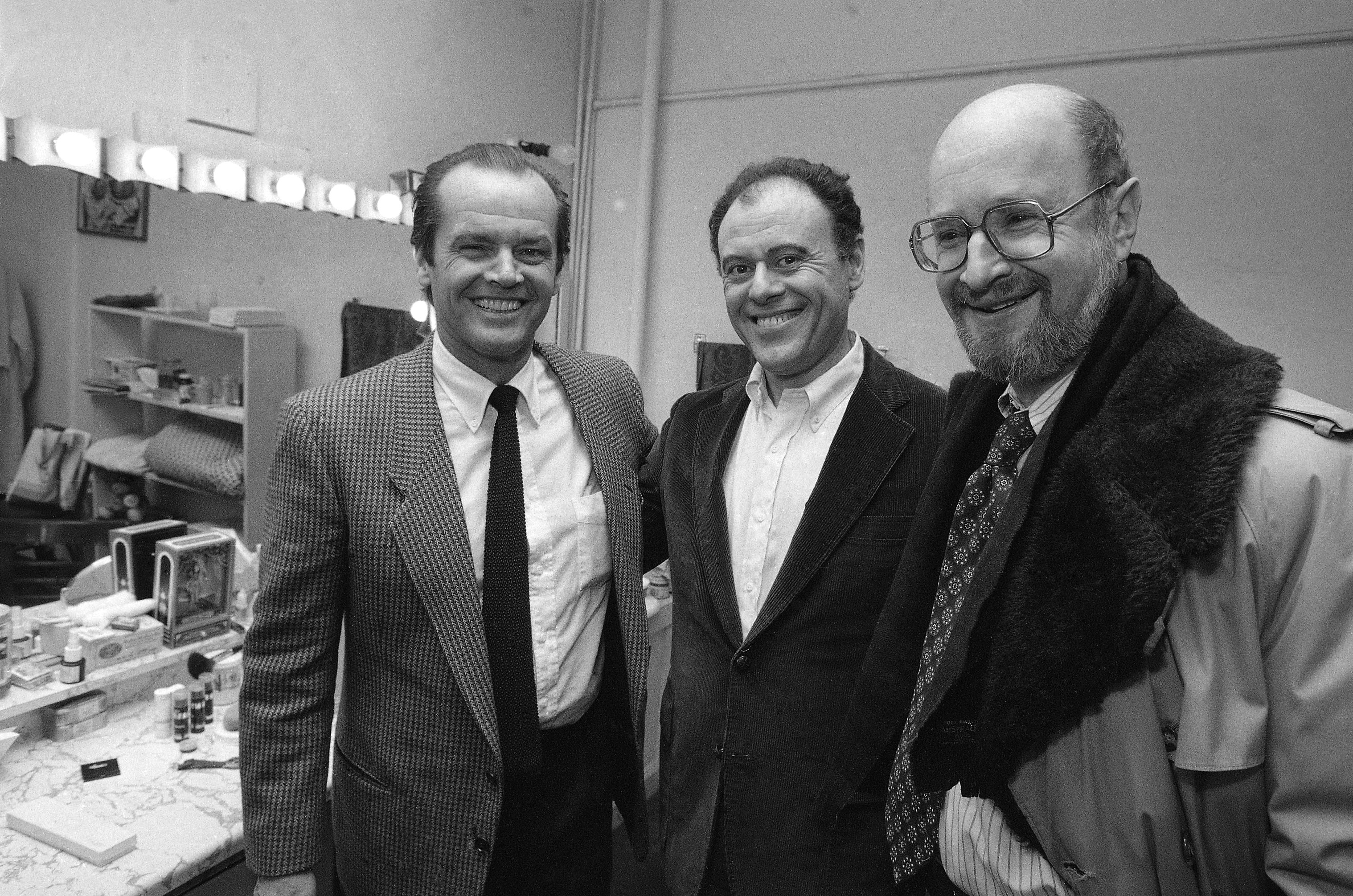
Feiffer was born on Jan. 26, 1929, in the Bronx. From childhood on, he loved to draw.
As a young man, he attended the Pratt Institute, an art and design college based in Brooklyn, and worked for Will Eisner, creator of the popular comic book character The Spirit. Feiffer drew his first comic strip, “Clifford,” from the late 1940s until he was drafted into the Army in 1951, according to a biography on his former website. He served two years in the Signal Corps, according to the online biography.
After the Army, he returned to drawing cartoons and found his way to a then-new alternative weekly newspaper, The Village Voice. His work debuted in the paper in 1956.
The Voice grew into a lodestar of downtown and liberal New York, and Feiffer became one of its fixtures. His strip, called simply “Feiffer,” ran there for more than 40 years.
The Voice was a fitting venue for Feiffer’s feisty liberal sensibilities, and a showcase for a strip acclaimed for its spidery style and skewering satire of a gallery of New York archetypes.
“It’s hard to remember what hypocrisy looked like before Jules Feiffer sketched it,” Todd Gitlin, who was then a New York University journalism and sociology professor, wrote in Newsday in 1997. Gitlin died in 2022.
Feiffer quit the Voice amid a salary dispute in 1997, sparking an outcry from readers. His strip continued to be syndicated until he ended it in 2000.
But if “Feiffer” was retired, Feiffer himself was not. He had long since developed a roster of side projects.
He published novels, starting in 1963 with “Harry the Rat with Women.” He started writing plays, spurred by a sense of sociological upheaval that, as he later told Time magazine, he felt he couldn’t address “in six panels of a cartoon.”
His first play, 1967’s “Little Murders,” went on to win an Obie Award, a leading honor for Off-Broadway and Off-Off-Broadway productions.
He ultimately wrote over a dozen plays and screenplays, ranging from the 1980 film version of the classic comic “Popeye” to the tougher territory of “Carnal Knowledge,” a story of two college friends and their toxic relationships with women over 20 years. Feiffer wrote the stage and screen versions of “Carnal Knowledge,” which was made into a 1971 movie directed by Mike Nichols and starring Jack Nicholson, Art Garfunkel, Candice Bergen and Ann-Margret. Feiffer also contributed to the long-running erotic musical revue “Oh! Calcutta!”
But after disappointing reviews of his 1990 play “Elliot Loves,” Feiffer looked to the gentler realm of children’s literature.
“My kind of theater was about confronting grown-ups with truths they didn’t want to hear. But it seemed to me we’ve reached the point, at this particular time, where grown-ups knew all the bad news. … So I hunted around for people I could give good news to, and it seemed to me it should be the next generation,” Feiffer told National Public Radio in 1995.
Having illustrated Norton Juster’s inventive 1961 book “The Phantom Tollbooth,” Feiffer brought a wry wonder to bear on his own books for young readers, starting with 1993’s “The Man in the Ceiling.” A musical version premiered in 2017 at the Bay Street Theater in Sag Harbor, New York.
The theater threw a surprise 90th birthday party for Feiffer in February 2019, when he did an on-stage interview to accompany a screening of “Carnal Knowledge.”
In recent years, Feiffer also painted watercolors of his signature figures and taught humor-writing courses at several colleges, among other projects. He published a graphic novel for young readers, “Amazing Grapes,” last September.
His wife said he had great fun writing it, relishing the drawings and story.
“He was,” she said, “a 5-year-old living in a 95-year-old’s body.”



CHARLESTON, S.C. — Hours after the American military strikes in Iran started, Third Way co-founder Matt Bennett scrambled to write up a presentation on how centrist Democrats should talk about foreign policy in 2028.
On stage during Third Way’s “Winning the Middle” conference, Bennett described focus groups before the war in Iran started, where “the appetite for ongoing war among the voters we talked to was zero.”
Even though Americans usually default to Republicans on national security, they’re concerned about President Donald Trump’s “erratic” and “unstable” foreign policy, he told a crowd of early-state strategists, Democratic consultants and aides for prominent moderates and 2028 contenders. That, he added, gives Democrats the opening they need to win.
“Voters are going to ask, ‘who can steady the ship? Who’s going to avoid another endless war? Will we demand fairness from our allies?’” Bennett said during his presentation. “You must be decisive and you must be clear that American self-interest will drive your foreign policy.”
The American strikes in Iran reverberated through what was meant to be a domestic-focused conference on Monday, as the party starts to grapple with how to respond to a military maneuver that could become a flashpoint in the midterms. So far, Democrats have been largely united in attacking Trump for authorizing the attacks without Congress’ approval — or a clear exit strategy.
It’s a notable departure for moderates, some of whom backed the Iraq War in 2003, including then-Sen. Hillary Clinton. Her vote, and then-Sen. Barack Obama’s vote against it, would define much of the 2008 presidential primary.
“Democrats don’t want a replay of the Iraq War and they are heeding the calls of the American people to focus on issues here at home,” Doug Thornell, a Democratic strategist who advised Maryland Gov. Wes Moore’s campaign, said at the conference in an interview. “This administration has done very little to make the case that this is something worth the blood and treasure of the United States.”

There’s early evidence voters broadly disapprove of the Iran strikes: A Reuters/Ipsos poll found that only one in four Americans support Trump’s decision — a data point that zinged around Democrats’ group chats during the afternoon’s presentations.
Mentions of Iran were limited during the conference’s panels, which drilled in on domestic issues: “‘Affordability’: Buzzword or Breakthrough,” and “Elevating Moderate Voices Online.” But within minutes of kicking off the event Sunday night, Third Way president Jon Cowan addressed the war.
“You can hate the regime in Iran and you can celebrate their downfall, but you can also have legitimate skepticism about the war because you can have doubts about Trump’s truthiness,” he said.
Online and in TV interviews, some fractures have begun to emerge.
Several progressives, including Rep. Alexandria Ocasio-Cortez (D-N.Y.) and Sen. Bernie Sanders (I-Vt.) have pushed for an immediate end to the war. Rep. Eric Swalwell (D-Calif.), who is running for governor, called for “values-based arguments against war with Iran,” and “NOT process (‘Come to Congress’) ones,” in an X post on Saturday. That’s an apparent reference to Democrats like House Minority Leader Hakeem Jeffriees and battleground lawmakers who’ve taken a more measured response.
Jeffries, in his initial statement, condemned Trump for failing to seek congressional authorization and called for Iran to be “aggressively confronted.” Jeffries said Monday morning on BLN that “nothing has been presented to justify what’s taken place up until this point.”
“The crutch that the moderate, corporate wing of the party is using is a process argument,” said Usamah Andrabi, Justice Democrats’ communications director. “It’s not just that Trump didn’t come to Congress first, we need to oppose this war no matter the process and Democratic leadership has not done that clearly enough.”
One adviser to a potential 2028 candidate, granted anonymity to speak candidly, defended the more nuanced approach from moderate Democrats as a reflection of “people’s understanding that just opposing every single thing that [Trump] does, from a foreign policy standpoint, just because it was him doing it, is not a sufficient approach.”
The two-day confab was primarily focused on doling out tough-love guidance to allies, consultants and early-state strategists, some of whom are aligned with centrist potential 2028 presidential candidates, including Michigan Gov. Gretchen Whitmer, Kentucky Gov. Andy Beshear, Arizona Sen. Mark Kelly and California Gov. Gavin Newsom.
With an eye toward 2028, Third Way’s senior vice president Lanae Erickson presented polling dataon Democratic primary voters. She said three-quarters prefer a candidate who compromises to achieve their goals and two-thirds worry that nominating someone too far left risks losing the general election.
“If we’re going to be the ‘abolish police,’ ‘abolish ICE,’ virtue-signaling party, I don’t care who they nominate, we’re going to lose,” said Jim Messina, who served as Barack Obama’s campaign manager. “We continue to want to be ideological purists at exactly the wrong time to do that.”
The Democratic National Committee is canceling plans to host a midterm convention, as the party faces a fundraising crunch.
The DNC also announced Monday that it would hold the 2028 presidential convention from Aug. 7 to Aug. 10, 2028. Five cities — Atlanta, Boston, Chicago, Denver and Philadelphia — are under consideration to host it, officials said.
The committee announced its decisions to DNC members during a phone call Monday afternoon, according to two people who participated and were granted anonymity to describe a private meeting. DNC Chair Ken Martin said he’d received feedback from Democrats, urging the party committee to focus its resources on campaign work in states, one of those people said.
The DNC is facing a staggering fundraising problem, with the Republican National Committee holding a $100 million cash edge over them at the start of 2026. Last fall, the DNC took out a $15 million loan to invest in the Virginia and New Jersey elections, a move that raised concerns among Democrats about the party’s financial health.
In a statement on the decision to cancel the midterm convention, DNC’s executive director Roger Lau said they’d “baited” Republicans “into wasting time and money on a midterm convention,” while the DNC has “put resources where they’re needed most.”
Jessica Piper contributed to this report.
- Centrist Dems met to plot 2028. Then Iran happened.

- Republicans took shots at Hillary Clinton — and she came ready to fight back
- No sign of Democratic surrender on DHS funding after Iran strikes
- Josh Hawley says he’ll oppose Iran war powers resolution
- Rubio says Congress is in the loop on Iran attacks
- Rubio: Trump administration has plan to calm oil markets
- DNC scraps midterm convention plans
- House Ethics panel probing Nancy Mace over alleged improper reimbursements
- Iranian ‘regime will be defeated,’ White House tells Hill Republicans
- House panel releases Bill and Hillary Clinton’s depositions on Epstein
-

 The Dictatorship1 year ago
Luigi Mangione acknowledges public support in first official statement since arrest
-

 Politics1 year ago
Former ‘Squad’ members launching ‘Bowman and Bush’ YouTube show
-

 Politics1 year ago
Blue Light News’s Editorial Director Ryan Hutchins speaks at Blue Light News’s 2025 Governors Summit
-

 The Dictatorship6 months ago
Mike Johnson sums up the GOP’s arrogant position on military occupation with two words
-

 Politics1 year ago
Former Kentucky AG Daniel Cameron launches Senate bid
-

 The Dictatorship1 year ago
Pete Hegseth’s tenure at the Pentagon goes from bad to worse
-
Uncategorized1 year ago
Bob Good to step down as Freedom Caucus chair this week
-

 Politics11 months ago
Democrat challenging Joni Ernst: I want to ‘tear down’ party, ‘build it back up’