
The Dictatorship
Joe Manchin has learned nothing

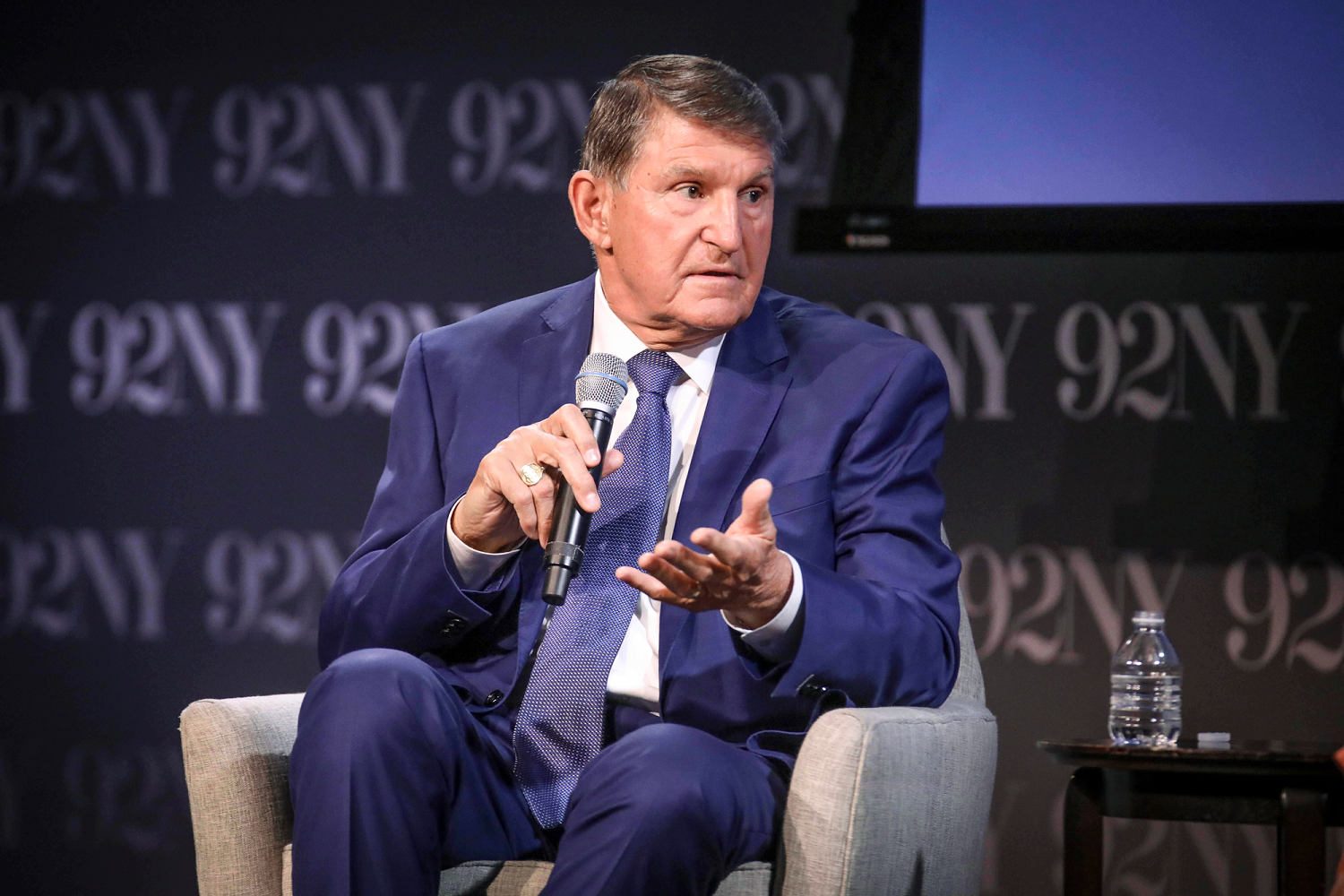
Joe Manchin is back! It’s not clear who was asking him to return, but the former West Virginia senator and governor has that most noble of post-retirement goals: a book to sell.
The book’s title, “Dead Center: In Defense of Common Sense” tells you much of what you need to know. Manchin spent the last few years of his political career subverting and annoying his fellow Democrats, and he wants to take a few last potshots at those who displeased him. Alas, while there are some important lessons to learn from Manchin’s career, they aren’t the ones he wants to impart.
Based on the pre-publication excerpts his publisher released and his media appearances, Manchin’s message is unchanged from his time in Washington: There’s too much partisanship in politics, and we can solve our problems if we reach across the aisle and try to get along.
Manchin has been one of the foremost advocates for centrism, the most hollow of political approaches.
In the abstract, that’s a perfectly noble sentiment. But politics doesn’t happen in the abstract. This is the problem with so much of what Manchin advocates: He talks far more about process and building cooperation than he does about the substance of politics — the decisions that affect people’s lives. Too often he glosses over the policy details as though they are of only marginal interest.
And his I’m-just-a-small-town-West-Virginia-boy act conceals an ambitious politician who was skilled at maximizing his own influence. That was never more true than after the 2020 election, when the Senate was divided 50-50 and Democrats held control only with the tie-breaking vote of Vice President Kamala Harris. That put Manchin at the fulcrum of the Senate, able to dictate the terms of legislation and kill whatever he didn’t like. Much of the time, that meant keeping Democrats from being too ambitious about shoring up the safety net or addressing climate change.
In fairness, Manchin stayed a mostly-loyal Democrat to the end, even after he officially changed his registration to Independent in 2024. He voted to confirm the vast majority of Joe Biden’s judicial and executive branch nominees, he signed on to most of Biden’s signature bills in the end and he secured his share of federal funding for his constituents, all of which is to his credit.
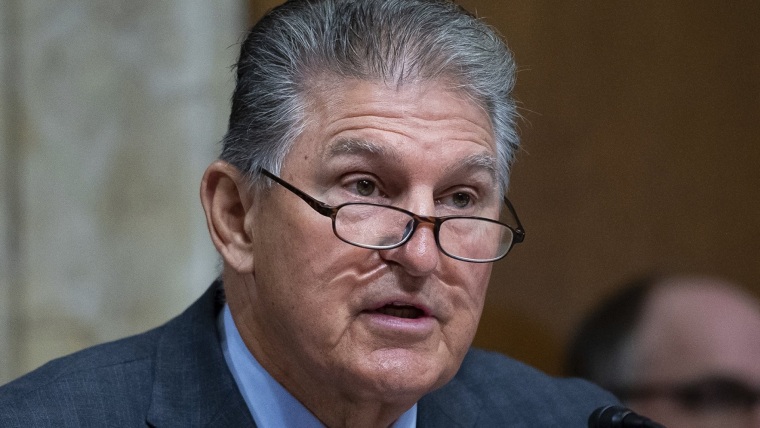
But throughout, Manchin has been one of the foremost advocates for centrism, the most hollow of political approaches.
The trouble with centrism is that it isn’t really about anything — and Manchin is case in point. Centrism defines itself not by a set of policy goals or basic principles, but simply in relation to the right and left.
A rare case of principle for Manchin was the filibuster.
The centrist’s position depends on what Democrats and Republicans believe — only once that is known does the centrist position themselves in the middle.
A rare case of principle for Manchin was the filibuster, which enables the minority party to stop legislation from happening. He even says he hoped Republicans would win control of his chamber in 2024, since it was “the only hope for preserving the Senate as an institution” — i.e., preserving the filibuster.
“I don’t say this lightly,” he writes in the book, but since the Obama presidency, “Democrats have systematically tried to weaken the very guardrails that have protected our democracy for generations — all in the name of advancing their agenda.” First of all, “advancing their agenda” is what political parties do. What else would they be doing? If you’re not advancing an agenda, what did you get elected for?
Second, when Manchin speaks of protecting democracy, what precisely does he want to protect it from? The answer appears to be: too much legislating.
In the end, Manchin didn’t represent any national constituency of centrists. He talked about “common sense” and “bipartisanship,” which flatter the simple-minded belief that there are wonderful solutions to complex problems just waiting to be grasped if we cast off the pettiness of ordinary politics. But he seldom explained what those solutions were. Most of the time, what he advocated was nothing more than warmed-over conservatism. If that’s your jam, that’s fine. But for most voters, it isn’t all that compelling.

That helps explain why, for all the power he wielded in a divided Senate, Manchin’s appeal was so limited outside that context. He was reasonably popular in West Virginia, but when he flirted with a presidential run in 2023 under the auspices of the vacuous political group No Labels, it was clear there would be no Manchin groundswell. He helped his daughter start a group called Americans Together to advance the cause of centrism, insisting that there is a broad majority of voters in the middle just waiting to be turned into a powerful movement.
Haven’t heard of it? Exactly.
Telling people that “common sense” is the answer to policy conflicts where the parties have incompatible goals is an insult to voters’ intelligence. What’s the “common sense” solution to whether abortion should be legal that Democrats and Republicans could agree on? Republicans are trying to destroy Medicaid, while Democrats would like to expand it. Does “common sense” tell us the best answer to that conflict?
It does not, because politics cannot happen without conflict. It’s where we disagree and argue and organize and try to shape the world more to our liking. Yes, bipartisanship is sometimes possible, and you can do politics in ways that are civil and respectful. But you can’t take the politics out of politics, much as Joe Manchin might like to. That’s just common sense.


The Dictatorship
It remains to be seen if Trump’s order to pay TSA officers shortens passenger wait times

Even after President Donald Trump ordered emergency pay for Transportation Security Administration agents to ease long security linesmajor U.S. airports on Sunday were still urging travelers to arrive hours early — and federal immigration officers brought in to help may not be leaving anytime soon.
Trump’s executive order on Friday instructed the Department of Homeland Security to pay TSA officers immediately, though it’s unclear how quickly travelers will see an impact. The move comes during a busy travel stretch, with spring breaks underway and Passover and Easter approaching.
Tens of thousands of TSA employees have been working without pay since DHS funding lapsed on Valentine’s Day. The department’s shutdown reached 44 days on Sunday, eclipsing the record 43-day shutdown last fall that affected all of the federal government.
Trump deployed Immigration and Customs Enforcement agents to some airports a week ago to help with security as TSA callouts rose nationwide — the same officers who may now remain in place if TSA staffing strains continue.
When will ICE’s deployment at airports end?
Making the rounds on Sunday morning news shows, White House border czar Tom Homan said it depends on how many TSA employees would be returning to work after they start receiving their pay.
“ICE is there to help our brothers and sisters in TSA. We’ll be there as long as they need us, until they get back to normal operations and feel like those airports are secure,” he told CBS’ “Face the Nation.”
Speaking on BLN’s “State of the Union,” Homan said it also depends on how many TSA agents “have actually quit and have no plan on coming back to work.”
Nearly 500 TSA officers have quit since the shutdown started, according to DHS.
When will TSA officers get paid?
Homan, in his BLN interview, said he hopes TSA officers will be paid by Monday or Tuesday.
“It’s good news because these TSA officers are struggling,” Homan said. “They can’t feed their families or pay their rent.”
Also on Sunday, Charlotte Douglas International Airport said in a post on X that backpay could arrive for its 600 local TSA workers beginning Monday.
“While this action provides critical relief, CLT supports long-term solutions to ensure continued stability for this essential workforce,” the airport said.
Johnny Jones, secretary-treasurer of the American Federation of Government Employees’ TSA chapter, said Sunday that he has heard from workers worried they may not receive their full back pay because TSA management was given very short notice to begin processing payments. He also said TSA agents are concerned they could miss pay for time they were unable to work because they couldn’t afford to report for duty.
“It is a disaster in progress,” Jones said.
What’s the current situation on the ground?
Some of the busiest airports in the United States continued to ask travelers to arrive hours before their departure time in order to get through security lines.
Baltimore-Washington International Airport, for example, said Sunday that checkpoint wait times had improved from Saturday but “remain longer than normal.” The airport continued to recommend passengers show up several hours early, along with airports such as Atlanta’s Hartsfield–Jackson International Airport and Louis Armstrong International Airport in New Orleans.
“Security wait times are significantly longer than normal and can change quickly,” according to an advisory posted Sunday on the website of LaGuardia Airport.
Maryland Gov. Wes Moore said in a post on X Saturday evening that more ICE agents were being deployed to BWI to assist at TSA security checkpoints to “speed up the clearance process for passengers — not immigration enforcement.”
How soon will this help with airport delays?
It’s hard to tell.
Caleb Harmon-Marshall, a former TSA officer who runs a travel newsletter called Gate Access, said the staffing crisis won’t improve significantly until officers are confident that they won’t be subjected to more skipped paychecks.
“It has to be an extended pay for them to come back or want to stay there,” he said, estimating longer lines could linger for another week or two.
Jones, the TSA union leader, offered a more optimistic outlook on Sunday, saying he’s hopeful that passengers could see wait times ease closer to typical levels once workers are able to afford basic expenses like gas to get to work.
TSA will also have to decide whether to reopen checkpoints or expedite service lanes they closed or consolidated at airports due to inadequate staffing, which led to passengers standing in screening lines that clogged check-in areas or showing up far too early for their flights.
A handful of airports have experienced daily TSA officer call-out rates of 40% or higher. Nationwide on Thursday, more than 11.8% of the TSA employees on the schedule missed work, the most so far, DHS said Friday.
___
Sedensky reported from New York, Yamat from Las Vegas and Raby from Charleston, West Virginia. Associated Press journalist Julie Walker contributed from New York.
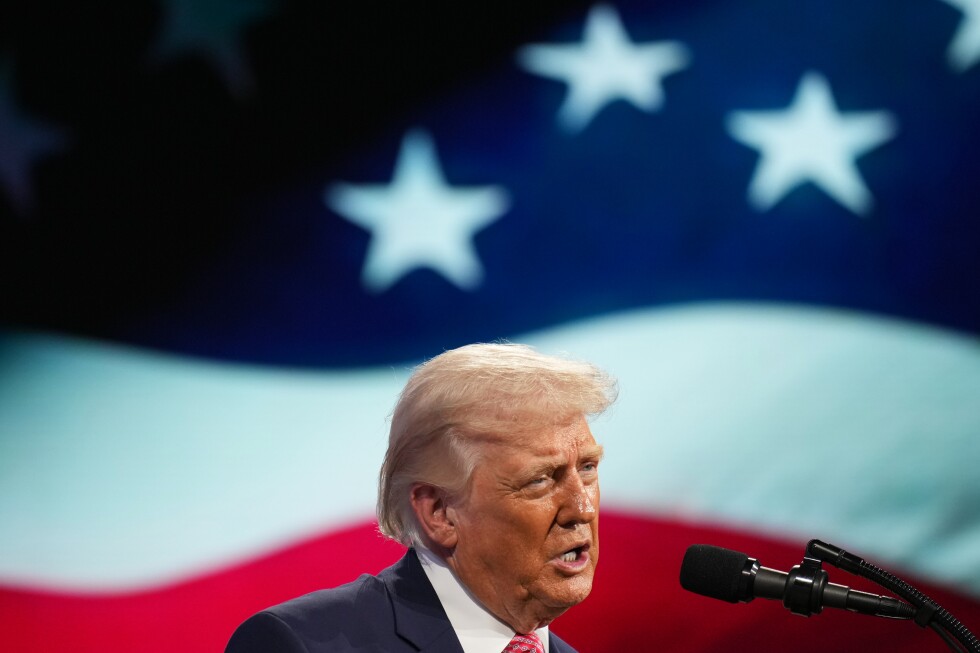
WASHINGTON (AP) — President Donald Trump says the United States is winning the war with Iran even as thousands of additional American troops deploy to the Middle East.
He has pilloried other countries for not helping the U.S., only to say later he does not need their assistance. He has twice delayed deadlines for Iran to reopen the Strait of Hormuz. He has both threatened to “obliterate” Iran’s energy plants if the vital waterway remains largely shuttered and said the U.S. was “not affected” by the closure.
At one point this month, Trump said one of his predecessors — who, he strongly suggested, was a Democrat — privately told him he wished he had taken similar action against Iran. Representatives for every living former president quickly denied that such a conversation happened.
As the war entered its second month on Saturday, Trump’s penchant for embellishments, exaggerations and falsehoods is being tested in an environment where the stakes are much higher than an isolated political fight.
A president who has long embraced bluster and salesmanship to shape narratives and focus attention is confronting the unpredictability of war.
Leon Panetta, who served Democratic presidents as defense secretary, CIA director and White House chief of staff, said he has “seen enough wars where truth becomes the first casualty.”
“It’s not the first administration that has not told the truth about war,” he said. “But the president has made it kind of a very standard approach to almost any question to in one way or another kind of lie about what’s really happening and basically describe everything as fine and that we’re winning the war.”
Michael Rubin, a historian at the American Enterprise Institute who worked as a staff adviser on Iran and Iraq at the Pentagon from 2002 to 2004, said Trump is “the first president of any party in recent history that hasn’t self-constrained to live within rhetorical boundaries.”
“So of course it creates a great deal of confusion,” he said.
The zigs and zags are the point
To his critics, Trump’s style is a sign that doesn’t have a coherent long-term strategy. But for Trump, the zigs and zags seem like the point, a method that keeps his opponents — and pretty much everyone else — always on their heels.
The approach was clear this week in the hours before he announced the second delay of the deadline for Iran to reopen the strait. Asked what he would do about the deadline, Trump said he did not know and that he had a day before he had to decide.
“In Trump time, a day, you know what it is, that’s an eternity,” the Republican president said to laughter from members of his Cabinet.
But investors are unimpressedwith U.S. stocks closing out their worst week since the war began. To some on Capitol Hill, the freewheeling is more frustrating than amusing.
Rep. Gregory Meeks of New York, the top Democrat on the House Foreign Affairs Committee, lamented that Trump is “going back and forth and constantly contradicting himself.”
“The administration is winging it,” he said. “So how can you trust what the president says?”
Republicans were not willing to go that far, but their concern was apparent heading into a two-week break from Washington. Sen. John Kennedy of Louisiana said his constituents “support what the president has done.”
“But most of my people are also equally or even more so concerned about cost of living,” he said.
Republican Rep. Chip Roy of Texas, who sits on the House Budget Committee and is a member of the conservative House Freedom Caucus, said his constituents were on board with “blowing some crap up.” Nonetheless, he expressed reservations about the prospect of ground troops and said the administration has not provided enough details in briefings for lawmakers. Such sessions, he said, only reveal information you “read in the papers.”
“Taking out bad guys, taking out conventional (weapons), taking out or at least working to take out nuclear capability, pressing to keep the straits open, all those are good things and I’ve been supportive and will continue to be supportive,” Roy said. “But we’ve got to have a serious conversation about how long this is going to go, boots on the ground, all those things, press for further briefings and understanding of where it’s all headed.”
Republicans back Trump but there are risks
While Trump has maintained deep support among Republicans, a poll this week from The Associated Press-NORC Center for Public Affairs Research indicates that the president risks frustrating his voters if the U.S. gets involved in the kind of prolonged war in the Middle East that he promised to avoid.
Although 63% of Republicans back airstrikes against Iranian military targets, the survey found, only 20% back deploying American ground troops.
That reflects the political challenges ahead for Trump, who did not prepare the country for such an extensive overseas conflict. If the war drags on or escalates, pressure on Republicans could build before the November elections, when their majorities in Congress are at risk. Some in the party have said sending in ground troops would be a red line that Trump should not cross.
The administration also will likely need congressional support for an additional $200 billion to support the war. That amount of money, which Trump has said would be “nice to have,” even as he said the war was “winding down,” would be a tough vote at any time. But it poses particular risks for budget-conscious Republicans in an election year.
White House spokesperson Anna Kelly said in a statement that Trump is “right to highlight the vast success of Operation Epic Fury.”
“Iran desperately wants to make a deal because of how badly they are being decimated, but the President reserves all options, military or not, at all times,” she said.
There could be some ‘logic’ to Trump’s approach
Rubin, the former Iran and Iraq adviser at the Pentagon, said there could be some “logic” to the president’s ever-evolving rhetorical approach to the war. He said Trump’s initial comments about ongoing negotiations, which Iran denied, could “spread suspicion and fear within the regime circles.”
“Perhaps Donald Trump or those advising him simply want the Iranians to grow so paranoid they refuse to cooperate with each other or perhaps they even turn on each other,” he said. “But then again, there’s always a danger with Donald Trump of assuming that his rhetoric is anything more than shooting from the hip.”
Rep. Adam Smith of Washington state, the top Democrat on the House Armed Services Committee, said Trump is not going to be able to fully achieve his objectives, including the complete elimination of Iran’s nuclear program, “in the current trajectory.”
And if that is the case, Smith said, the president has the option to rely on his rhetorical skills to simply say the U.S. won — and end the war.
“As I’ve jokingly said, nobody I have ever met or heard of in human history is better at exaggerating his own accomplishments than Donald Trump,” Smith said. “So go knock yourself out and claim this was some great success.”
The Dictatorship
Trump’s overlapping troubles are starting to resemble a set of political Russian nesting dolls
With tariffs fueling inflation, inflation driving up prices and rising costs deepening public frustration with the White House, President Donald Trump’s troubles at home and abroad are starting to resemble a set of political Russian nesting dolls. Each overlapping challenge grows larger and swallows the next.
Now, U.S. intervention in Iran is adding another layer to Trump’s stack of challenges — a pile so large it seems increasingly impossible to unpack it all before November.
A slew of new polls underscores how compounded these issues have become. A Fox News poll released Wednesday shows that 47% of respondents disapprove of Trump’s presidency, while a Reuters/Ipsos poll released Tuesday reports his approval at a record low of 36% — down from 40% last week. Meanwhile, the latest AP-NORC poll shows that around half of U.S. adults have little to no trust in the president when it comes to foreign policy decisions, while nearly a third say they have little trust in his approach to nuclear weapons, military deployments and relationships with other nations.

Taken together, the numbers illustrate how the White House is facing a complex war beyond the borders of Iran — as well as the public’s growing skepticism of Trump’s judgment at home and abroad.
As Operation Epic Fury drags into its fifth weekTrump has scrambled to make the case that military intervention in Iran is a net positive for the American public, if only the public can withstand the short-term economic effects. But while foreign intervention has, for some presidents, distracted the public’s attention from political troubles on the home front, Trump’s maneuvers in the Middle East are having the opposite effect.
Past presidents have often benefited from the “rally around the flag” effecta concept in political science in which a leader sees a temporary uptick in support during war. President George H.W. Bush enjoyed a nearly 80% approval rating during the 1991 Persian Gulf War, while nearly three-quarters of Americans supported President George W. Bush’s initial invasion of Iraq in 2003.
But as the American electorate has changed, so has its approach to foreign intervention. Now, public support for war hinges as much on a president’s credibility and domestic management as on threats abroad.
Rather than the abstract concept of far-off battlefields, Americans are enduring the tangible and immediate consequences of Trump’s foreign agenda every time they open their wallets.
Rather than rally around, nearly 6 in 10 Americans say U.S. military action in Iran has gone “too far,” according to the AP-NORC survey. Nearly the same number of voters surveyed by Fox News say they disapprove of the president’s foreign policy agenda, while 64% disapprove of his handling of Iran.
With the conflict estimated to cost a whopping $1 billion a dayit’s also impossible for the administration to shield voters from feeling the costs of war at home. Rather than the abstract concept of far-off battlefields, Americans are enduring the tangible and immediate consequences of Trump’s foreign agenda every time they open their wallets.
Already stressed by rising grocery costs and utility bill spikes, the average American is now pulling up to the pump to find that the national gas average has jumped $1 in just a month, for AAA. Meanwhile, the labor market has taken some significant hits since January, and a partial government shutdown has only created more trouble for federal workers and travelers alike.
America’s cost concerns are only growing. The AP-NORC poll found that 45% of Americans are “extremely” or “very” concerned about affording gas in the next few months, while three-quarters of Republicans and about two-thirds of Democrats say it’s “highly important” to keep oil and gas prices from rising. Reuters/Ipsos found that just 29% of Americans approve of Trump’s leadership on economic issues.

The White House is scrambling to assuage the growing concern, just as it worked to downplay Trump’s global tariff war and rising inflation. But Trump’s bullish approach to negotiations — including his recent insistence in a Cabinet meeting that he “doesn’t care about” reaching a deal with Tehran — is far from reassuring.
Instead, it’s clear that the messaging is falling flat with voters, who were already facing economic uncertainty before Operation Epic Fury ever made headlines. Now, with pain points coming from all sides, the White House is staring down an electorate caught in a feedback loop of frustration, mistrust and a widely unpopular foreign war.
Trump has weathered bad poll numbers before and come out on top. But for now at least, the administration’s global agenda has put its own party in a precarious position as it stares down a challenging midterm cycle.
Make no mistake: While Tehran may dominate today’s headlines, it will be the crisis at American checkout counters and kitchen tables that matters most come November.
Bethany Irvine is a Washington-based political reporter who has written for Blue Light News and The Texas Tribune.
- It remains to be seen if Trump’s order to pay TSA officers shortens passenger wait times

- Embellishments, exaggerations, falsehoods…

- A month into Iran, the GOP’s political reality sinks in
- She was one of AIPAC’s top targets last election. Now she wants back in Congress.
- One month into Iran, the GOP’s political reality sinks in
- ‘We love you!’: The MAGA base gives RFK Jr. a rousing welcome
- DHS stopgap set for quick House action after Rules Committee vote
- Rand Paul weighs a 2028 presidential bid
- Trump to send Congress his budget request April 3
- ‘Meltdown’: DHS shutdown set to drag on after House GOP rejects Senate deal

-

 The Dictatorship1 year ago
Luigi Mangione acknowledges public support in first official statement since arrest
-

 Politics1 year ago
Former ‘Squad’ members launching ‘Bowman and Bush’ YouTube show
-

 Politics1 year ago
Former Kentucky AG Daniel Cameron launches Senate bid
-

 Politics1 year ago
Blue Light News’s Editorial Director Ryan Hutchins speaks at Blue Light News’s 2025 Governors Summit
-

 The Dictatorship7 months ago
Mike Johnson sums up the GOP’s arrogant position on military occupation with two words
-

 The Dictatorship1 year ago
Pete Hegseth’s tenure at the Pentagon goes from bad to worse
-
Uncategorized1 year ago
Bob Good to step down as Freedom Caucus chair this week
-

 Politics11 months ago
Democrat challenging Joni Ernst: I want to ‘tear down’ party, ‘build it back up’