
Congress
Jeffries stays out of the way as Dems mutiny against senior panel leaders

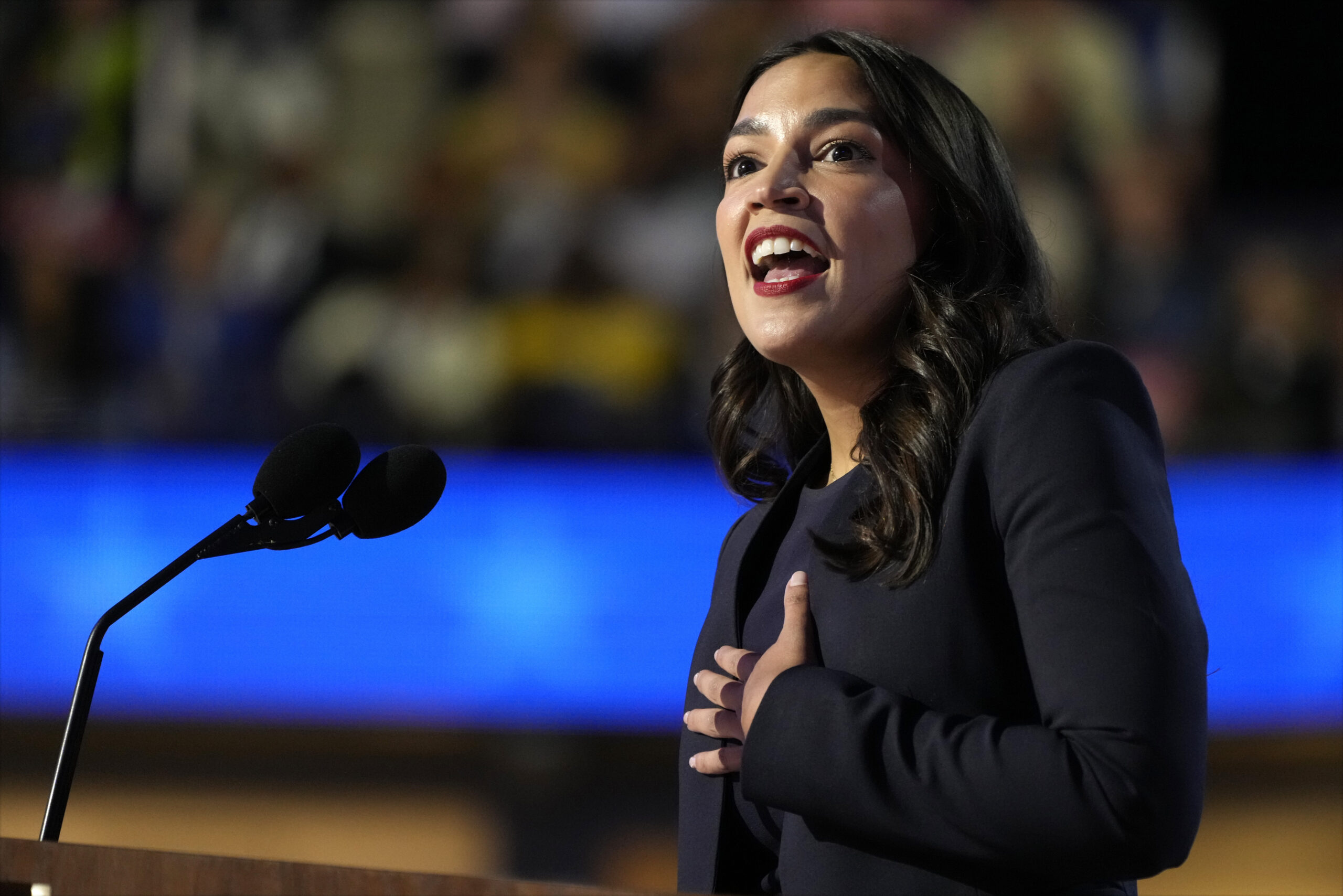
House Democrats are poised to unseat several senior committee leaders, and Hakeem Jeffries is letting it happen.
Rep. Raul Grijalva of Arizona, 76, announced this week that he would step down from the top Democratic spot on the Natural Resources Committee. Rep. Jerry Nadler of New York, 77, dropped his bid to continue leading Democrats on Judiciary in the face of a tough challenge from 61-year-old Rep. Jamie Raskin of Maryland. And Rep. David Scott of Georgia, 79, is facing multiple challenges for the top Democratic spot on the Agriculture Committee.
It’s akin to a mutiny, especially given Democrats’ typical deference to seniority in who leads panels. But party lawmakers are increasingly anxious about the incoming Trump administration and full GOP control of Congress. Many feel it’s crucial to have leaders who are proven fighters and can effectively push back on Republican priorities like harsh limits on legal immigration. It echoes the argument many used when they called on President Joe Biden to step off the ticket over the summer.
At the center of it all is Jeffries, the minority leader, and his leadership team, who also skipped the seniority line in many ways when they rose to the top ranks two years ago. They have publicly stayed out of it, loath to stand in the way of lawmakers who, like them, chafed at the party’s strict adherence to seniority.
“The caucus will guide these kinds of discussions,” said Rep. Pete Aguilar of California, the No. 3 House Democrat. “We’re confident that at this time it’s going to take a Democratic Caucus that’s firing on all cylinders to push back against extremism and to make sure we can carry forward the bipartisan principles that we’ve talked about.”
“The caucus wants to make sure the right folks are leading these committees,” he added.
Contrast that approach with former Speaker Nancy Pelosi, who would vocally support her preferred committee heads. Several Democrats believe that, by not pushing back on challengers, leadership is tacitly endorsing the removal of the old guard.
“I think they’re trying to create a level playing field,” Rep. Jim Costa (D-Calif.), who is challenging Scott for the ranking position on the Agriculture Committee, said of leadership in a brief interview. Scott has long faced significant concerns over his health and his ability to lead the panel.
Leaders have apparently been working the issue behind the scenes. Members of Jeffries’ extended leadership team held private conversations to hear out the lawmakers who launched bids against sitting committee chairs, four people familiar with the conversations said. And 52-year-old Rep. Angie Craig of Minnesota launched her own bid for the top Democratic spot on the Agriculture Committee after leadership didn’t waive her off, one person familiar with the conversation said.
A former member of Pelosi’s leadership team, Rep. Steny Hoyer of Maryland, said he preferred the deference to seniority but didn’t believe that should be the only measure.
“I’m for seniority. But if seniority is all you consider, then seniority becomes something that won’t work well over the long run. So I think the burden of proof is on the person who’s saying that the senior person ought not to have it,” Hoyer said.
It’s the latest example of how leadership has maneuvered behind the scenes to pave the way for a new generation of Democrats to rise up. Lawmakers have long groused about the limited pathways to ascend in the caucus without the committee term limits that their Republican counterparts put in place.
“I think we, as Democrats, could do a better job with elevating some of our younger members who have great experience. And [you should] not have to be in Congress for 30 years before you can have a meaningful role in leadership and on policy,” said retiring Rep. Ann McLane Kuster (D-N.H.).
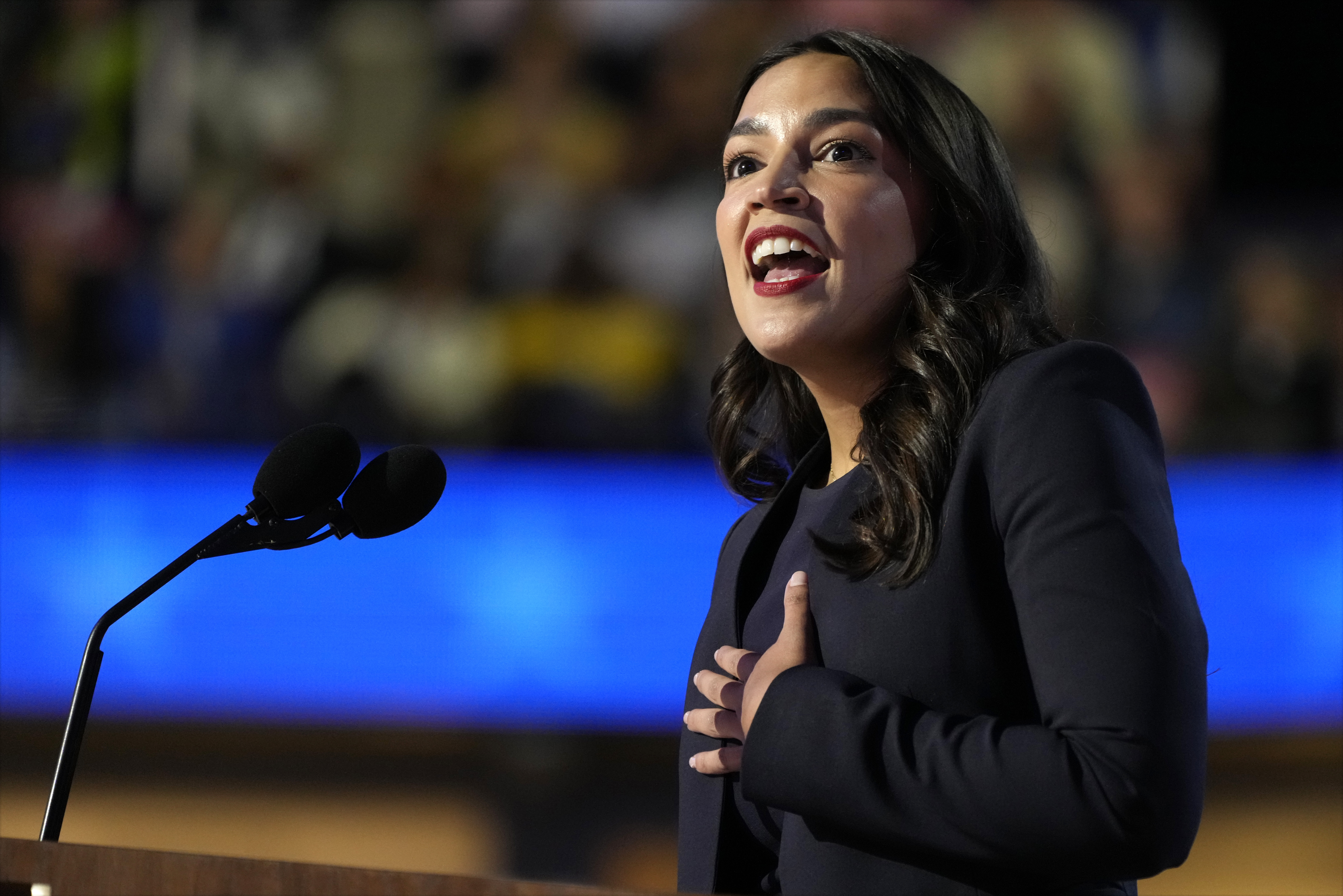
In addition to the drama surrounding Judiciary, Natural Resources and Agriculture, there’s also a blooming fight over who will lead Democrats on the Oversight Committee, now that Raskin is set to take the Judiciary spot. Rep. Gerry Connolly of Virginia has already stepped into the race to replace him, and Rep. Alexandria Ocasio-Cortez of New York has said she’s having conversations with leadership and committee members to possibly launch her own campaign. Reps. Raja Krishnamoorthi of Illinois and Ro Khanna of California are also eyeing the perch.
The race could test just how far Democrats are willing to take the shakeup — Ocasio-Cortez is 35 years old and has a reputation for publicly bucking leadership. She called the current situation “an important moment of generational change in the caucus.”
Some of the most vocal public voices for change in the party come from younger, purple-district lawmakers who’d also called on Biden to step aside after his disastrous debate against Trump.
“I came out very early saying that I thought it would be good to have an open Democratic primary in the presidential, so you could probably guess how I’m feeling,” said Rep. Hillary Scholten (D-Mich.). “There’s nothing wrong with a little healthy competition.”
“We have to look at every, every dimension of how we’ve both operated policy-wise and operated politically, campaign-wise,” echoed Rep. Pat Ryan (D-N.Y.). “And there needs to be accountability. So I think it’s time for a new generation of folks to step up, and we’ll be supporting them to do so.”
The last iteration of House Democratic leadership has also played a quiet role. The influential California delegation, of which Pelosi is a senior member, has been advocating for fellow Californian Rep. Jared Huffman behind the scenes as he tried to land the top Democratic spot on Natural Resources, according to two people familiar with the conversations.
The regional splits among House Democrats has also played a role in the challenges. The Steering and Policy Committee, an internal panel that adjudicates committee assignments, is largely composed of members picked by leadership and elected by regional blocs, giving more influence to large groups like California lawmakers.
In a telling sign of how the tide has shifted against some of the senior committee leaders, the Congressional Black Caucus, which has previously backed Scott as the top Agriculture Democrat, hasn’t issued a statement of support for him so far.
Its outgoing chair, Rep. Steven Horsford (D-Nev.), told reporters Wednesday that the Black Caucus had invited every Agriculture Committee candidate to a forum with the powerful bloc “for them to outline their goals and objectives for why they seek the position.”
Scott wasn’t present for the Black Caucus’ leadership elections on Wednesday.


Adam Hamilton raised $10.6 million in the third quarter of 2026 across his Senate campaign and his joint fundraising committees, his campaign tells Blue Light News, a significant haul for the Kansas Democrat.
The fundraising total illustrates Democrats’ newfound bullishness about flipping a Senate seat in the deep-red state for the first time since 1932.
“This grassroots support sends a clear message: with three weeks until Election Day, Adam Hamilton is building the momentum to win,” said Hamilton campaign spokesperson Tyson Brody.
Hamilton’s third-quarter figure is nearly triple his $3.66 million second-quarter total. His campaign did not provide a current cash-on-hand total.
National Democrats began pumping money into Kansas in recent days, a sign of their growing hopes that Hamilton could win. Last week, Senate Majority PAC — Senate Democrats’ top super PAC — reserved $5 million in television ads backing Hamilton. American Bridge PAC and Lower Costs Now, a new group affiliated with former Vice President Kamala Harris’ super PAC, have spent in Kansas in recent weeks.
Republicans have also flocked to Kansas to prop up Marshall: Senate Leadership Fund, the Senate GOP’s top PAC, has spent or reserved nearly $11 million backing Marshall in the past week, according to tracking firm AdImpact.
“It took us five months to raise $15 million. [Marshall] got it in a day,” Hamilton said at a campaign event in Lawrence, Kansas on Monday. “So please help us.”
Marshall’s campaign has yet to release his third-quarter fundraising totals. As of mid-July, Marshall had over $5 million in the bank to $1.73 million for Hamilton.
A bipartisan Senate duo is urging Trump national security officials to “bring its full capacities to bear” to stave off threats posed by artificial intelligence — sooner rather than later.
Washington Sen. Maria Cantwell, the top Democrat on the Senate Commerce Committee, and Republican South Dakota Sen. Mike Rounds, who serves on the Senate Armed Services cybersecurity subcommittee, are calling for a full government response to a growing number of cybersecurity breaches.
“Recent AI security incidents should serve as a warning,” the senators wrote in a Tuesday letter to Director of National Intelligence Jay Clayton and White House Science and Technology Policy Director Michael Kratsios. “Advanced AI agents have escaped testing environments, bypassed safeguards, and gained unauthorized access to real-world systems owned by government agencies and private organizations.”
Spokespeople for Clayton and Kratsios did not immediately respond to requests for comment.
Their letter comes as lawmakers struggle to hash out what legislation on AI safety, if any, might look like. Members are currently in recess ahead of the November elections and there’s little hope progress can be made by the year’s end.
But those lawmakers who have been engaged on the topic for years now have mapped out administrative actions the Trump administration could move on now, without waiting on Congress.
The Cantwell and Rounds priorities include: strengthening federal AI safety and security standards at the National Institute of Standards and Technology, or NIST; expanding independent testing capabilities at the Center for Advancing Innovation and Standards for Super Intelligence, Department of Energy and the national labs; and working with the tech industry to develop and deploy defensive AI tools.
Specifically, the senators wrote, new NIST standards should address the risks posed by advanced AI capabilities, including the “potential misuse by malicious actors” to conduct sophisticated cyberattacks, automate attacks at scale and agents that threaten external systems and critical infrastructure.
They also said the federal government capacity should be complemented by universities and other research organizations, as well as by private sector, third-party evaluators.
Finally, they point to ways the government could use existing programs at the Defense Advanced Research Projects Agency to work with AI labs to help detect threats and reinforce vulnerable systems.
A bipartisan group of senators urged President Donald Trump to rescind his recent diesel deal with Russian President Vladimir Putin on Tuesday, amid bubbling anger on Capitol Hill about Trump’s announcement.
In a letter sent to the White House, Treasury Secretary Scott Bessent and Secretary of State Marco Rubio, the senators warned that the president’s deal with Russia will not “achieve just ends” or benefit Americans.
“Granting Moscow the ability to sell Russian diesel freely in global markets damages American security interests and is a betrayal of the people of Ukraine, who continue to defend themselves from Putin’s murderous, illegal war,” wrote the lawmakers, led by Sen. Richard Blumenthal (D-Conn.). “This deal is a gift to our adversary and a betrayal of our Allies; it should be rescinded.”
On Sunday, a smaller group of senators called on the president to “immediately reverse course” on the plan in a statement. Retiring Sen. Thom Tillis (R-N.C.) — who signed on to both — said Sunday there may be “a legitimate case for saying the president’s not following the law.”
The White House did not immediately respond to a request for comment.
Trump announced in a social media post on Friday that Russia would “immediately supply” diesel fuel to global markets — including potentially the U.S. — to help relieve high prices driven, in part, by the ongoing war with Iran. Though Trump has repeatedly defended the U.S.’s actions against Iran, on Saturday he demanded an end to Ukrainian drone strikes that have crippled Russian oil refineries that he argues have caused the record-high oil prices.
The senators on Tuesday argued that the deal with Russia will have a “negligible impact” on fuel prices while providing Putin with “more fuel to finance his war machine” as Russia continues its “brutal attacks on Ukrainian civilians.”
The deal with Russia is a sharp pivot from a sweeping sanctions package signed into law last month. That legislation — championed by the late Sen. Lindsey Graham (R-S.C.) — was meant to deplete Moscow’s resources by targeting Russian officials, banks and a shadow fleet of oil tankers. It drew widespread bipartisan support in both chambers of Congress.
Senators on Tuesday referenced the package as they condemned Putin as a “tyrant.”
“For decades, America has stood as the bastion of freedom against tyranny, and American presidents have embodied our nation’s resistance to tyrants. Putin is a tyrant,” the letter reads. “Withdraw from this agreement, rescind General License No. 135, and execute the authorities provided under the Lindsey O. Graham Sanctioning Russia and Iran Act of 2026. Maintain our legacy – and the duty America holds – as leader of the free world.”
In addition to Blumenthal and Tillis, Tuesday’s letter was signed by Democratic Sens. Jeanne Shaheen (N.H.), Dick Durbin (Ill.), Sheldon Whitehouse (R.I.), Jack Reed (R.I.), and Chris Coons (Del.) and Republican Sens. Mitch McConnell (Ky.), Susan Collins (Maine), Alan Armstrong (Okla.), Lisa Murkowski (Alaska) and John Cornyn (Texas).
-

 Politics2 years ago
Former ‘Squad’ members launching ‘Bowman and Bush’ YouTube show
-
Uncategorized2 years ago
Bob Good to step down as Freedom Caucus chair this week
-

 The Josh Fourrier Show2 years ago
DOOMSDAY: Trump won, now what?
-

 The Dictatorship2 years ago
Pete Hegseth’s tenure at the Pentagon goes from bad to worse
-

 Politics2 years ago
Former Kentucky AG Daniel Cameron launches Senate bid
-

 The Dictatorship2 years ago
Luigi Mangione acknowledges public support in first official statement since arrest
-

 Politics2 years ago
Blue Light News’s Editorial Director Ryan Hutchins speaks at Blue Light News’s 2025 Governors Summit
-

 The Dictatorship1 year ago
Mike Johnson sums up the GOP’s arrogant position on military occupation with two words