
Politics
Jan. 6 should’ve disqualified Trump. The Supreme Court disagreed.

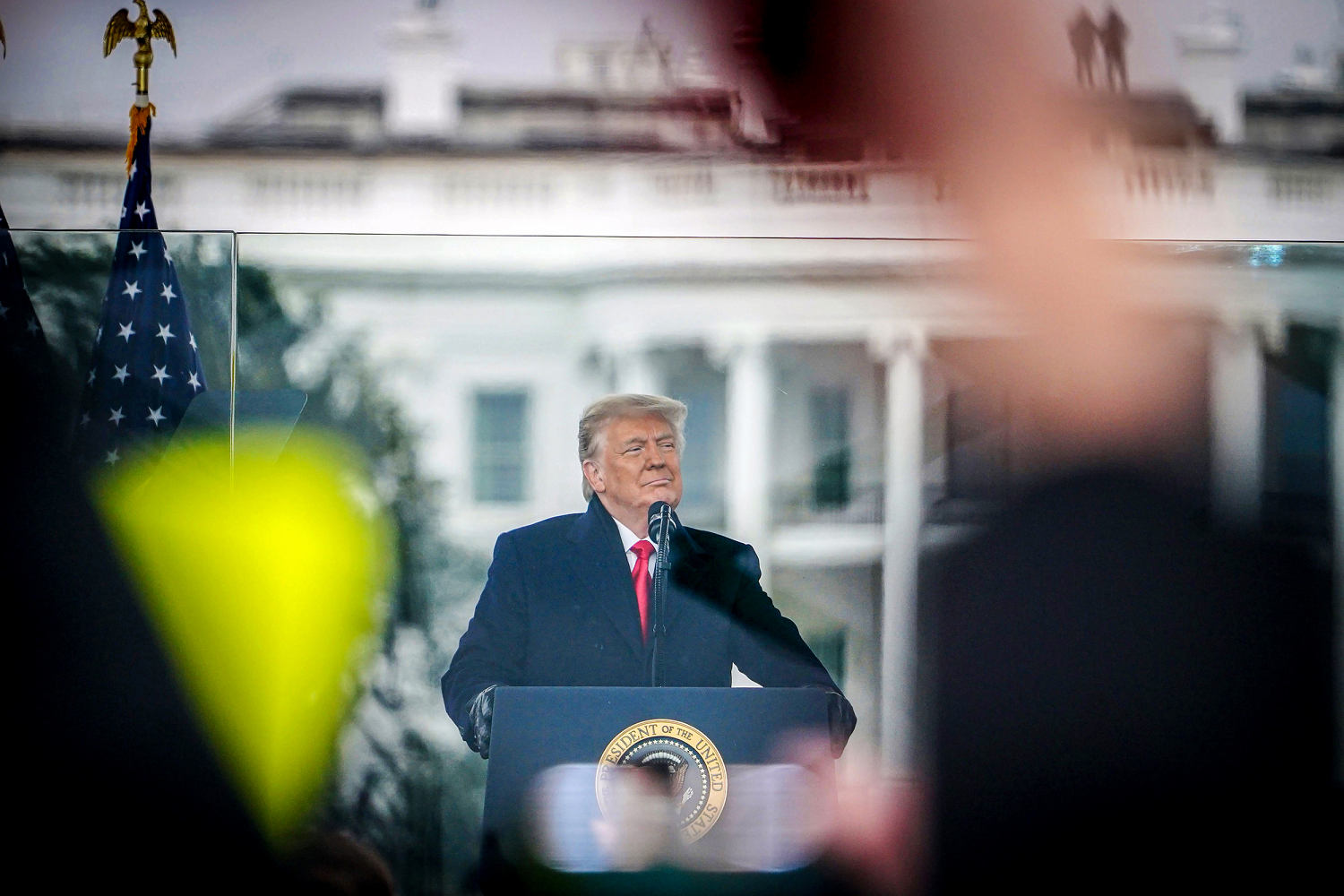
This article is the second in a five-part series called “Protecting the Election.” As former President Donald Trump and many of his allies refuse to concede his defeat in the 2020 election, this BLN Daily series brings election law and policy experts to explore the many threats to certifying election results at both the state and national levels.
With former President Donald Trump on the precipice of possibly becoming president again, let’s recall that he’s on the 2024 ballot thanks partly to the Supreme Court.
I’m not talking about the ruling granting him broad criminal immunity. Though the Roberts Court’s handling of that appeal helped Trump push off a trial in the federal election interference case — possibly forever, if he wins the election and deploys his reacquired presidential power to crush it.
I’m talking about another Jan. 6-related appeal from the last Supreme Court term, one that more directly positioned the Republican to take office again: Trump v. Anderson.
It was there that the justices reversed the Colorado Supreme Court’s decision to keep the former president from the ballot. The case was technically about one state during the primary process, but the U.S. Supreme Court’s ruling effectively scrapped nationwide efforts to enforce the constitutional provision barring oath-breaking insurrectionists from office.
As a reminder, here’s what that post-Civil War provision, Section 3 of the 14th Amendment, says:
No person shall be a Senator or Representative in Congress, or elector of President and Vice-President, or hold any office, civil or military, under the United States, or under any State, who, having previously taken an oath, as a member of Congress, or as an officer of the United States, or as a member of any State legislature, or as an executive or judicial officer of any State, to support the Constitution of the United States, shall have engaged in insurrection or rebellion against the same, or given aid or comfort to the enemies thereof. But Congress may by a vote of two-thirds of each House, remove such disability.
In a lengthy December decision, a majority of Colorado’s top court cited that language in agreeing that Trump “engaged in” the Jan. 6 insurrection after having sworn to support the Constitution as president.
“We are mindful of the magnitude and weight of the questions now before us,” the state court said Dec. 19, adding: “We are likewise mindful of our solemn duty to apply the law, without fear or favor, and without being swayed by public reaction to the decisions that the law mandates we reach.” The public reaction included threats against the Colorado judges.
Maine’s secretary of state reached the same conclusion later that month (and was likewise threatened), raising the stakes for the high court’s inevitable intervention.
The justices seemingly saw a Trump-friendly ruling as inevitable, too. During the Feb. 8 hearing in Washington, Chief Justice John Roberts worried about the “plain consequences” of permitting states like Colorado to disqualify insurrectionist candidates. He mused:
In very quick order, I would expect … a goodly number of states will say, ‘Whoever the Democratic candidate is, you’re off the ballot,’ and others, for the Republican candidate, ‘You’re off the ballot,’ and it will come down to just a handful of states that are going to decide the presidential election. That’s a pretty daunting consequence.
That could be an understandable reaction from a random person not versed in the law or the facts. But this is the chief justice of the United States. For one thing, casual observers know that a handful of states basically do decide elections in our skewed Electoral College system. And more to the point, if any Democratic insurrectionists are blocked from the ballot, too, then that’s their problem. Even if Roberts’ stated concern was well-founded, it didn’t grapple with the law.
But the consequentialist view would prevail. It was just a matter of the court figuring out how to legally accomplish the practical goal of keeping Trump on the ballot. The decision came just ahead of the Super Tuesday primary voting day in March. It was an unsigned “per curiam” ruling, though it was actually authored by Roberts, according to a New York Times report that wasn’t confirmed by NBC News or BLN.
While the justices were unanimous on the bottom line that states couldn’t disqualify presidential candidates, the Times reported on the internal machinations:
four of the conservatives were pushing to go beyond that and rule that the Constitution’s prohibition would require congressional action to take effect. Such a decision would provide greater protection for Mr. Trump: To prevent him from taking office if he won re-election, Congress would have to vote to enforce the insurrectionist ban.
Roberts joined those four Republican appointees in the opinion that sparked two separate ones, both of which highlighted the lack of unanimity on the court. One of them came from the three Democratic appointees. Though styled a concurrence “in the judgment” (meaning on the bottom line), it reads at points more like a straight-up dissent, accusing the majority of needlessly resolving “novel constitutional questions to insulate this Court and petitioner [Trump] from future controversy.”
The other separate opinion came from Trump appointee Amy Coney Barrett. Adding her own bizarre thoughts to the affair, she agreed with the Democratic appointees that the majority went too far but nonetheless chided the trio for “stridency” in how it expressed disagreement.
Getting back to the substance of the matter, consider the view of conservative law professor William Baude. He previously clerked for Roberts and co-authored key scholarship before the ruling explaining why Trump is disqualified and, intriguingly, maintained in a post-ruling piece that Trump is still disqualified. He wrote in an op-ed after the decision that the Supreme Court:
swiftly overruled the [Colorado] decision without even confronting the question of whether Mr. Trump had engaged in an insurrection or was therefore disqualified from office. Instead it concocted an argument, not raised by any of the parties, that states specifically lack the power to consider this part of the Constitution in making ballot access decisions.
Trump v. Anderson’s holding lacked any real basis in text and history and also is at odds with the basic structure of the Electoral College, in which states have primary authority to decide how their slates of electors are chosen. The ruling’s real function was to let the court reverse the Colorado Supreme Court and avoid the political firestorm that might have ensued, without requiring the court to take sides on what happened on Jan. 6.
Indeed, the available evidence — the hearing, the decision, the investigative reporting — suggests the court started from the conclusion that Trump just had to stay on the ballot and then attempted to reason backward from there.
And no doubt, it’s probably an understatement that a “political firestorm” would’ve ensued had the court held Trump to the Constitution. Look no further than the threats against judges and election officials who dared to rule against him on this issue and others. Look no further than the Trump-backed violence of Jan. 6.
So, what about the “plain consequences,” to use the chief justice’s concerned phrase, of an oath-breaking insurrectionist potentially running the country again, this time knowing he’d have broad criminal immunity heading into a second term? That consequence apparently was not “daunting” enough to move this court.
Subscribe to the Deadline: Legal Newsletter for expert analysis on the top legal stories of the week, including updates from the Supreme Court and developments in Donald Trump’s legal cases.


In the 15 days since President Donald Trump launched Operation Epic Fury on Iran, Sen. Ruben Gallego (D-Ariz.) is approaching nearly a dozen media appearances, offering his often visceral reaction to the conflict.
Gallego, a 46-year-old combat veteran who deployed to Iraq as an infantryman in 2005, has emerged as a blunt, clear voice for the Democratic Party on foreign policy, speaking as someone whose own generation experienced the forever wars.
There he was on BLN’s “The Source with Kaitlin Collins” saying Secretary of State Marco Rubio was doing “CYA” and noting that the “MAGA base is pissed.” There he was sitting down with the AP speaking “as someone who lives with PTSD,” adding “it’s not been an easy week.” And there he was on Derek Thompson’s podcast, speaking about “going town to town searching for insurgents” 21 years ago, “but there was no clear direction of what victory looked like, what the end goal was, what was going to be the after-action report on Iraq.”
Gallego isn’t alone. Sen. Mark Kelly (D-Ariz.), a Navy captain who flew combat missions during Operation Desert Storm in 1990, has also racked up a run of high-profile media appearances, as has former Transportation Secretary Pete Buttigieg, a U.S. Navy Reserve intelligence officer who deployed to Afghanistan. Maryland Gov. Wes Moore, who served in Afghanistan in the Army’s 82nd Airborne, went on local radio this week to link Americans’ affordability woes to the war.
In a year after many Democrats pined for a metaphorical fighter, the party is now having a conversation with itself about whether it needs a literal fighter — a veteran who can speak with credibility on issues of war and national security.
In an interview with Blue Light News, Gallego spoke of “dodging bullets, IEDs, RPGs, clearing towns and then coming back to the same towns with insurgents” and of “losing friends and still not understanding what the end goal was the whole time.”
“It leaves a mark on you, and you start seeing it happening again, you know, you don’t really think about the politics,” Gallego said. “You think about the people who are going to be potentially dying. And that’s why I think I was not hesitant to speak my mind on that.”
Later this month in San Antonio, Texas, Gallego will join VoteVets Action for its third town hall featuring potential 2028 Democratic presidential candidates, promising “fresh voices to the national conversation — those who have worn the uniform and served alongside us, who connect with everyday Americans others can’t,” according to a promotional video. (They’ve also done town halls with Buttigieg and Michigan Sen. Elissa Slotkin.)
“On foreign policy, the Dems need a candidate who is seen as strong/tough — not in rhetoric or bravado political platitudes but who conveys a sense of judgement and resolve with which voters connect instinctively,” said Doug Wilson, the former assistant secretary of Defense for Public Affairs during the Obama administration and co-lead of Buttigieg’s 2020 foreign policy team.
The “Iran war underscores the need” for such a candidate, Wilson added.
Whomever the Democrats select as their nominee could potentially face a Situation Room-steeped ticket deep with national security credentials, including a Marine Iraq war veteran in Vice President JD Vance or Rubio, with his secretary of State experience.
Depending on how the many conflicts the U.S. is engaged in at the moment resolve, that experience could cut against them.
But right now, Democrats who can match those bona fides have some currency others without them can’t.
“That’s obviously going to be helpful to them,” said Matt Bennett, co-founder of the center-left think tank Third Way. “It’s gonna be a big part of what they’re talking about for the next little while. But you know, how long does it last? We just don’t know, right? In my professional lifetime, foreign policy stuff and national security has mattered in a presidential race once — in 2004. That’s it. Otherwise, it comes up, but it’s not driving the conversation.”
Some potential Democratic candidates without such credentials have still managed to break through amid the Iran news cycle. Sen. Jon Ossoff (D-Ga.) has said the White House has treated aspects of the war “as a video game,” in a clip gaining traction on X. “When American service members killed in action are returning to the United States in flagged-draped coffins, and even more Americans have lost limbs or suffered terrible brain injuries or are fighting for their lives, this White House treats war like a game, and it’s a disgrace,” Ossoff said.
When asked whether military service is an essential for the party’s eventual nominee, Gallego acknowledged there is a benefit for someone who can “speak with that type of credibility.”
“I’m not the type of person that’s like, ‘you have to be a veteran — Iraq War veteran,’” Gallego said. “This is a democracy. We’re still one, and there’s a lot of people that can bring valuable experience and knowledge. But you know, someone that actually has a nuanced understanding of foreign policy; that doesn’t go to the total knee-jerk reactionism that sometimes we see where we go to the point of, you know, isolationism; or the other way, where we go to full neocon. There needs to be a very balanced way to how we approach the world.”
Like this content? Consider signing up for Blue Light News’s Playbook newsletter.

A longshot elections bill and an uphill reconciliation fight dominated the yearly policy conference…
Read More
The president has called on Republicans to pass the SAVE America Act…
Read More
- The Latest: US hits pro-government demonstration in Iran as war threatens global economy

- 2028 Dem veteran? Uncle Sam wants you.
- House Republicans find it difficult to focus on rising costs as they plot 2026 agenda

- Cornyn backs ending filibuster as he courts Trump’s endorsement

- Capitol agenda: GOP wants to move past the SAVE America Act

- Data center moratorium gains traction among Hill progressives

- ‘I’m glad I’m not on the ballot’: Senate GOP worries about its midterm edge
- House Republicans find it difficult to focus on rising costs as they plot 2026 agenda
- One month later, White House and Democrats no closer to ending the DHS shutdown
- House Republicans find it difficult to focus on rising costs as they plot 2026 agenda
-

 The Dictatorship1 year ago
Luigi Mangione acknowledges public support in first official statement since arrest
-

 Politics1 year ago
Former ‘Squad’ members launching ‘Bowman and Bush’ YouTube show
-

 Politics1 year ago
Blue Light News’s Editorial Director Ryan Hutchins speaks at Blue Light News’s 2025 Governors Summit
-

 Politics1 year ago
Former Kentucky AG Daniel Cameron launches Senate bid
-

 The Dictatorship6 months ago
Mike Johnson sums up the GOP’s arrogant position on military occupation with two words
-

 The Dictatorship1 year ago
Pete Hegseth’s tenure at the Pentagon goes from bad to worse
-

 Politics11 months ago
Democrat challenging Joni Ernst: I want to ‘tear down’ party, ‘build it back up’
-
Uncategorized1 year ago
Bob Good to step down as Freedom Caucus chair this week