
Congress
‘I’ve been taking a ton of risk’: Inside Jim Himes’ mission to save a key spy authority

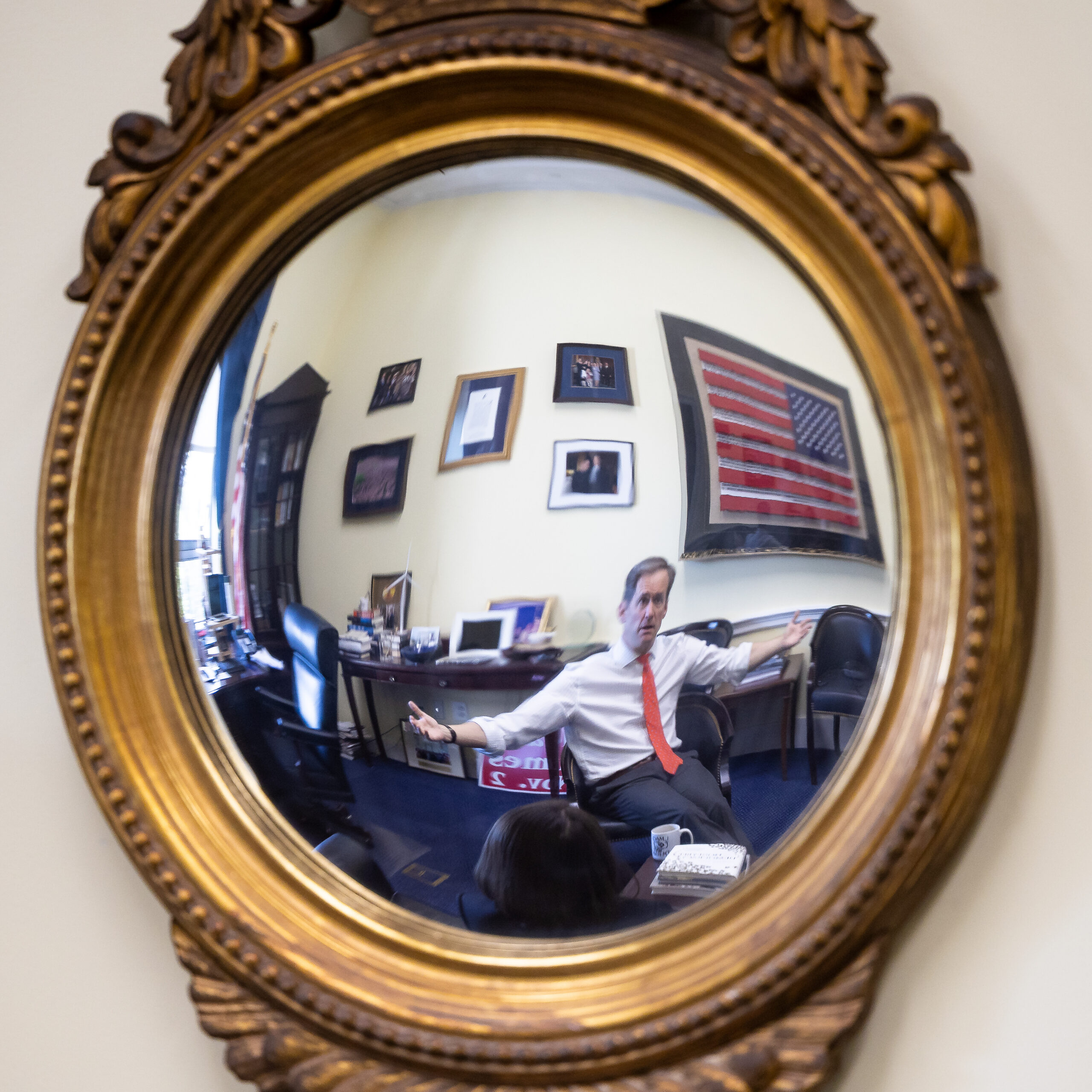
Jim Himes wants to reauthorize a controversial surveillance law. He knows it comes with big risks.
The top Democrat on the House Intelligence Committee has been seeking a bipartisan deal to extend Section 702 of the Foreign Intelligence Surveillance Act while Republicans are busy fighting among themselves over how to prevent the government spy power from expiring April 30.
Fearing a lapse would be an existential crisis, he’s been empowered by House Minority Leader Hakeem Jeffries to share his perspective with fellow Democrats who are skeptical of reauthorizing Section 702 without guardrails to protect Americans from being targeted by the Trump administration. And despite his own preferences for modifying the spy authority, he’s facing criticism from progressives in his district for being open to a clean extension.
Himes has also been talking to the White House — but often finds himself out of the loop of negotiations with House Republican leaders, who are more focused on trying to squeeze a deal through their ultrathin margins than find common ground with Democrats.
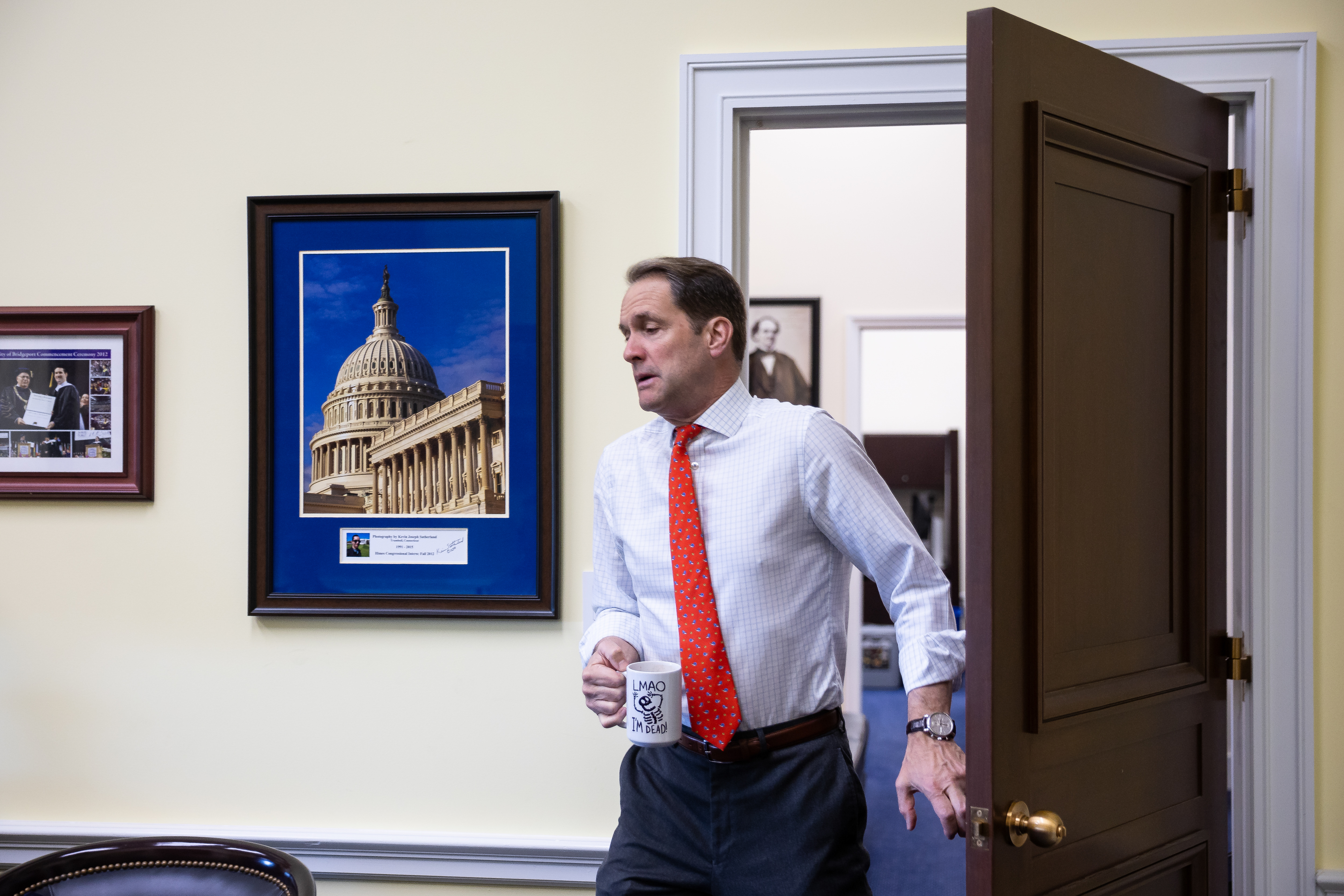
“There’s been a shit ton of outreach to me” on this issue, Himes, of Connecticut, said in a lengthy interview in his Capitol Hill office Thursday. “None of it has been, ‘Come to this room to negotiate this deal today.’”
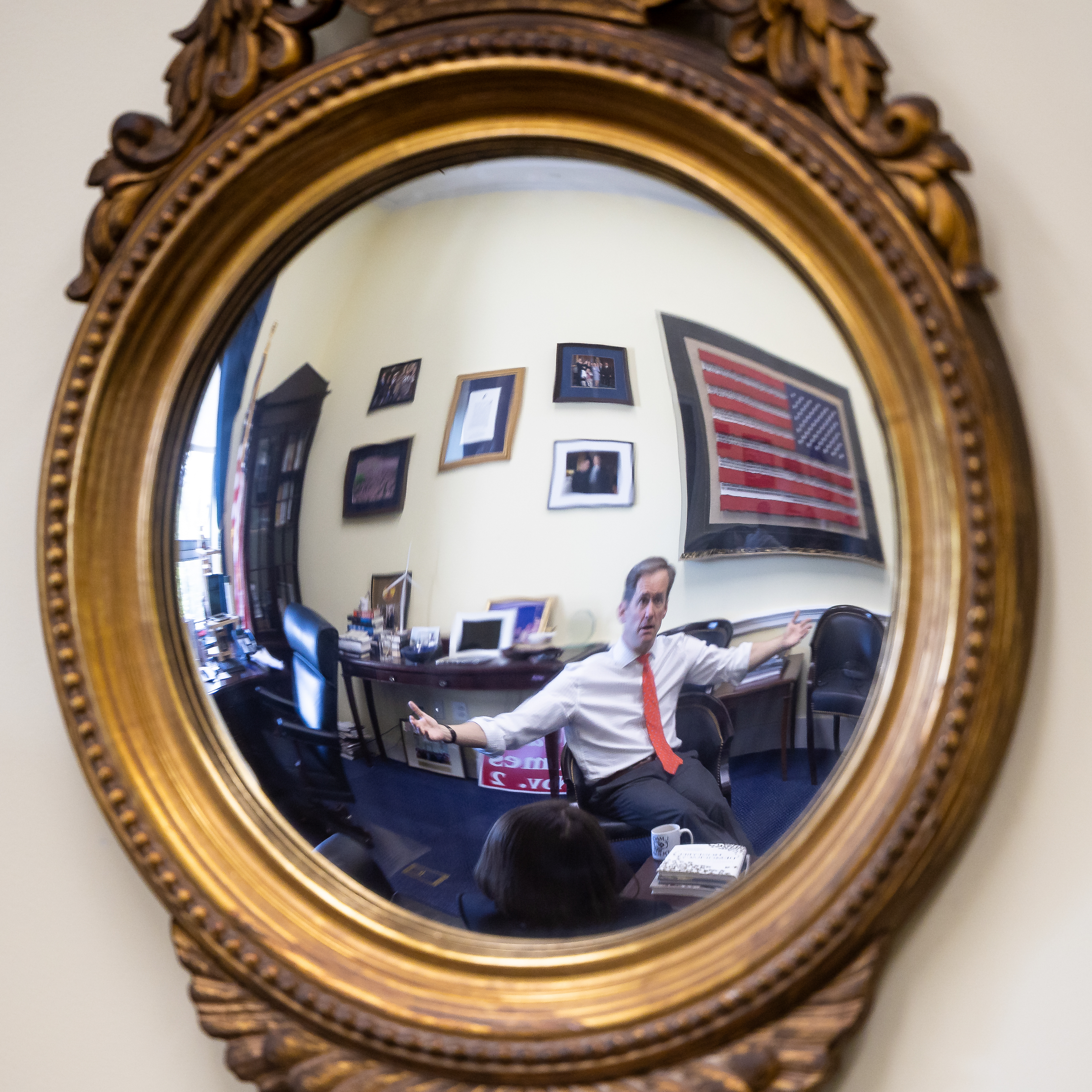
The stakes are high for Himes as he navigates the difficult politics around a surveillance law viewed with deep suspicion by many progressives and conservatives. And in attempting to broker cross-party consensus around the spy law, he has embarked on a potentially thankless mission.
He’s challenging Republicans’ appetite for bipartisan dealmaking in the Trump era — and so far, he’s being largely ignored by the GOP leaders. He’s also testing whether Democrats would attach their names to any legislation that gives even the appearance of emboldening an administration they view as corrupt — and it’s getting more difficult by the day.
“I’ve been taking a ton of risk, I’ve been doing a ton of explanations,” Himes said later Thursday.
If he succeeds in stitching together some fractured coalition to extend Section 702 with meaningful guardrails, he will have pulled off a feat of political compromise rarely seen these days. But if he is unable to help land a deal and must instead back a clean extension in the interest of protecting national security, he will undoubtedly take fresh heat from progressives, perhaps in the form of a credible primary challenger.
One long-shot candidate looking to unseat Himes in the Democratic primary based on the incumbent’s FISA stance — Joseph Perez-Caputo, a local activist — has been leading constituent protests against the lawmaker back home.
“We’ve kind of watched in abject horror,” Perez-Caputo said in an interview of Himes’ scramble to land a Section 702 agreement.
A new letter from half a dozen groups in Connecticut, shared first with Blue Light News, is calling on Himes to step down as the Intelligence Committee’s ranking member, saying he has “betrayed” obligations to his constituents and the Constitution — including by “actively lobbying other Democrats and Republicans to support the administration’s FISA agenda.”

Himes is cognizant of the dynamics, recalling that he got his “head blown off” by frustrated participants during a demonstration in his district last month, adding, “there’s an immense amount of misinformation out there that needs to be addressed.”
Ultimately, Himes says, he’s driven in this fight by a sense of duty. Over the course of the Thursday interview, he insisted — repeatedly — that he prefers extending the spy authority with policy changes, like seeking judicial review for searches under the program, to continuing on with the status quo.
Rather, Himes explained, his perch on the Intelligence panel uniquely positions him to understand the scope and stakes of a Section 702 expiration. And if it were to come down to a choice between passing a clean extension or letting the program expire, a lapse would be a nonstarter.
“Three months from now, if FISA 702 is dark and there’s a bomb in Grand Central, there will be very little doubt in my mind … that that occurred because we shut down our most important counterintelligence,” Himes said.
“So I don’t blame them,” he added of those members who would prefer the program lapse than support a clean extension. “But I just see with some granularity — actually, more granularity than pretty much anybody around here — what the risks are that we face.”
Despite Himes’ entreaties, many House Democrats remain skeptical. Rep. Stephen Lynch of Massachusetts said in an interview Thursday he will vote against a reauthorization for the first time in his 25-year tenure in the House if the legislation does not institute new guardrails on warrantless government surveillance.

Congressional Progressive Caucus Chair Rep. Greg Casar (D-Texas) said he respects Himes and appreciates that he has attended caucus meetings to share his perspective on the issue. But, he said in an interview, the decision was an easy one: “We should unify now to say, ‘No, Trump does not use power responsibly.’”
Himes said his senior role on the House Intelligence Committee means he’s inclined to never trust any administration — and he “particularly” doesn’t trust this one. But he emphasized he has not, in his role on the panel, ever been presented with any evidence that President Donald Trump or senior White House officials have sought to interfere with Americans’ privacy.
“In the last 14 months,” he said, “there has not been a single example of their attempt to abuse this database. I am conscious of something that is hard to get people to understand, which is, there is no program that is more overseen than this one. None.”
Rep. Gregory Meeks of New York, the top Democrat on the Foreign Affairs Committee who is also privy to classified information not shared with the majority of his colleagues, had a similar point of view.
“I don’t want it to be on my conscience that something happens that we could have stopped,” Meeks said in an interview. “That’s the responsibility that Jim has and the burden at times of being the ranking member, and the former chair, of Intel.”
Some Republicans downplayed Himes’ role in the FISA talks as GOP leaders go down a partisan path. House Intelligence Chair Rick Crawford questioned how much Himes is backchanneling with Republicans, while noting he considers the ranking member a friend.
“We try to be considerate of him and his concerns, and I think he extends me that courtesy as well,” the Arkansas Republican said in an interview Thursday. “So we have a good working relationship. And I think that’s helpful.”
As the April 30 deadline to extend the FISA spy authority draws nearer, Himes is continuing to make the rounds with colleagues of both parties but also think strategically about what could pass the House, and how.
He and the senior House Judiciary Democrat, Rep. Jamie Raskin of Maryland, have been workshopping possible backup plans with policy changes that could attract more Democratic support in case Republicans fail to pass their partisan bill.
He’s now also interested in finding a set of reforms that could get the support of a two-thirds majority of the House so that the legislation could advance under an expedited floor procedure known as a suspension, which doesn’t first require clearing a party-line “rule” vote.
Himes said there was a “real opportunity” to pass a bill under suspension last week, when Speaker Mike Johnson instead attempted, unsuccessfully, to pass an 18-month extension bill through the regular order process in the middle of the night. But Johnson’s failure, Himes continued, only emboldened Democrats to stand back and watch the GOP flounder.
Calling himself an “emissary” during that overnight vote, Himes was frank: “A bunch of members at two in the morning, watching the speaker fall flat on his face, does not help me.”


The Senate on Tuesday voted to cut off the U.S. military campaign against Iran, handing a fresh loss to President Donald Trump despite his attempts to convince lawmakers and the public that a deal to end the war is at hand.
Four Republicans broke ranks to help approve a resolution to block further military action unless it is green-lighted by Congress.
The war powers measure is largely symbolic — the resolution cleared Tuesday doesn’t go to the president to sign or veto. But the bipartisan 50-48 vote is a damaging milestone for the Trump administration: Both the Senate and House have now weighed in against the Middle East conflict that’s stretched on for more than 100 days. The same measure passed the House in early June after months of close calls.
The long-anticipated bipartisan housing bill is under threat from a Florida Republican who threatened to “shut the floor down” if House GOP leaders move forward with passing it Tuesday.
Rep. Anna Paulina Luna said Republicans instead need to prioritize passage of the SAVE America Act, the GOP elections bill that has been stuck in the Senate for months. Speaker Mike Johnson has scheduled a Tuesday evening vote on the housing bill in hopes of sending it to President Donald Trump for a planned Wednesday signing at the White House.
Luna posted her threat on social media Tuesday afternoon and later specified in an interview that she would oppose procedural measures teeing up GOP-backed legislation going forward if party leaders didn’t abandon their plans to hold the housing bill vote via special fast-track procedures that would effectively sideline Republican hard-liners.
Luna cannot single-handedly block those procedural votes, but she said there is “a group” of lawmakers who would join her. She separately called on Trump to veto the housing bill in a bid to force the SAVE America Act to be added to it.
Johnson plans for now to proceed with the Tuesday evening vote on the housing bill, according to two people granted anonymity to discuss internal conversations. If Luna and her unnamed allies follow through with their threats, they could derail a pair of appropriations bills set for House consideration this week and potentially freeze the floor indefinitely given the GOP’s razor-thin majority.
“I have been telling them,” Luna said of her complaints to GOP leaders.
The Senate Judiciary Committee is tentatively planning to have top tech executives testify at a July 28 hearing, according to five people with knowledge of the committee’s plans granted anonymity to discuss private negotiations.
Judiciary Committee Chair Chuck Grassley (R-Iowa) had previously summoned the CEOs of Meta, TikTok, Snapchat and Google to a hearing, originally scheduled for Tuesday, to discuss their online child safety practices, AI safety and other topics.
“Chairman Grassley looks forward to a productive hearing as he continues his bipartisan efforts to get lifesaving child safety legislation signed into law,” a spokesperson for Grassley told Blue Light News.
The hearing, which remains provisional, comes at a pivotal moment for the tech sector. Congress is actively debating legislation aimed at protecting children online, while courts and state attorneys general are intensifying pressure on social media companies over allegations that their platforms harm young users.
The list of tech executives the committee is eyeing to testify remains in flux but currently includes head of Instagram Adam Mosseri and YouTube CEO Neal Mohan, according to the five people. Three of the people said Snapchat CEO Evan Spiegel and CEO of TikTok’s U.S.-based joint venture company Adam Presser may also be called to attend.
The four companies did not immediately comment on the proposed hearing.
- Dead ducks add to Trump’s reflecting pool drama
- Hormuz evacuation plans emerge after months of gridlock
- Senate votes to halt Iran war despite Trump’s push for peace deal
- Housing bill threatened in GOP elections-bill spat
- Top tech executives expected to testify at July 28 Senate hearing
- Supreme Court chips away at remaining cases
- Mexico’s cartel violence down during World Cup: analyst

- Trump doubles down on Reflecting Pool vandalism claims

- National Guard, Park Police patrolling Reflecting Pool

- Expanding the Supreme Court isn’t court-packing

-

 Politics1 year ago
Former ‘Squad’ members launching ‘Bowman and Bush’ YouTube show
-

 The Dictatorship1 year ago
Luigi Mangione acknowledges public support in first official statement since arrest
-

 Politics1 year ago
Former Kentucky AG Daniel Cameron launches Senate bid
-
Uncategorized2 years ago
Bob Good to step down as Freedom Caucus chair this week
-

 The Josh Fourrier Show2 years ago
DOOMSDAY: Trump won, now what?
-

 The Dictatorship1 year ago
Pete Hegseth’s tenure at the Pentagon goes from bad to worse
-

 Politics1 year ago
Blue Light News’s Editorial Director Ryan Hutchins speaks at Blue Light News’s 2025 Governors Summit
-

 The Dictatorship10 months ago
Mike Johnson sums up the GOP’s arrogant position on military occupation with two words