
Congress
Is the Democratic brand toxic? A growing number of Dems wonder if going ‘independent’ will help them win

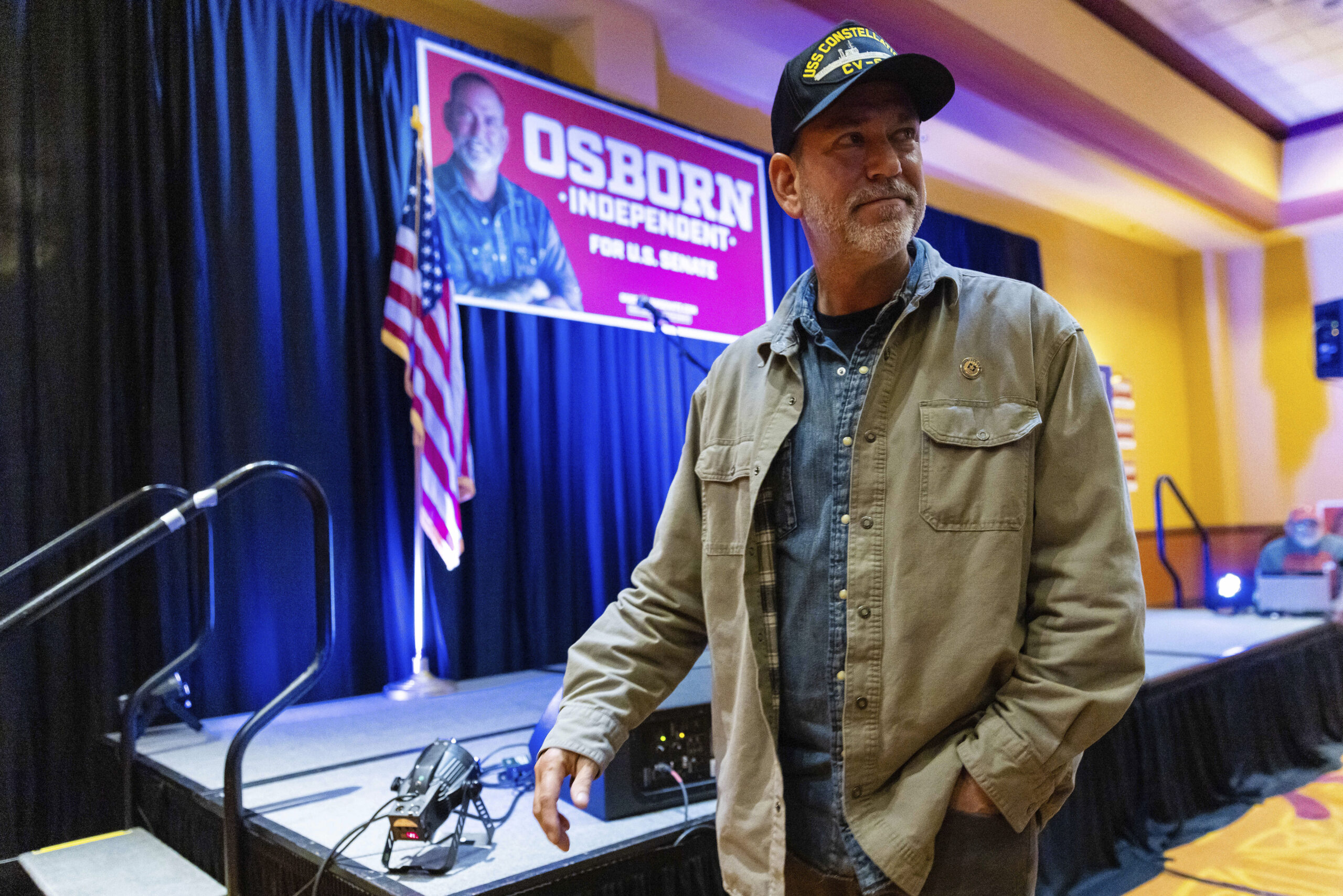
Losing to a twice-impeached convicted felon has left a small, but growing, number of Democrats wondering if their party brand is so toxic that they should shed the label — particularly in battleground and red states.
Mike Duggan, the longtime Democratic mayor of Detroit, is pursuing an independent campaign for governor in the wake of Donald Trump’s victory in his state. Democratic strategists are studying this year’s bid by independent Dan Osborn, who as a Senate candidate in Nebraska overperformed the top of the ticket, as a model to win the upper chamber. And a Joe Biden mega-fundraiser is floating a gubernatorial run in Florida on what he calls the “Capitalist Party” ticket.
The deliberations, some of which are taking place in private, reflect the extent to which Trump’s win has made the party unsure of what to do next. Few Democrats are dismissing Trump as a fluke anymore after he carried the popular vote and expanded his support among key parts of their base.
Democrats who have jumped ship are making the bet that voters are so frustrated with the existing political parties that they will reward them for shaking things up.
“I reached the conclusion that if you call yourself a Democrat, all the Republicans automatically line up against it. You call yourself a Republican, all the Democrats automatically line up against it,” Duggan said in an interview. “And I really don’t think there’s a path forward for this state if you don’t get the reasonable folks in both parties to work together.”
A group of operatives at major Democratic media firms are in talks about creating a company that would help elect left-leaning independents, according to a person familiar with the discussions who was granted anonymity to talk about internal planning. The business would also back populist Democrats.
Independent candidates face enormous logistical challenges, however. They lack major parties to bolster them financially and structurally. Voters often worry that supporting them is a waste of a ballot, even as a growing number of Americans identify as independent themselves.
Still, some Democrats eye Osborn’s 14-point overperformance in Nebraska as proof that independent candidates who embrace economic populism can win back voters who are turned off by the Democratic Party.
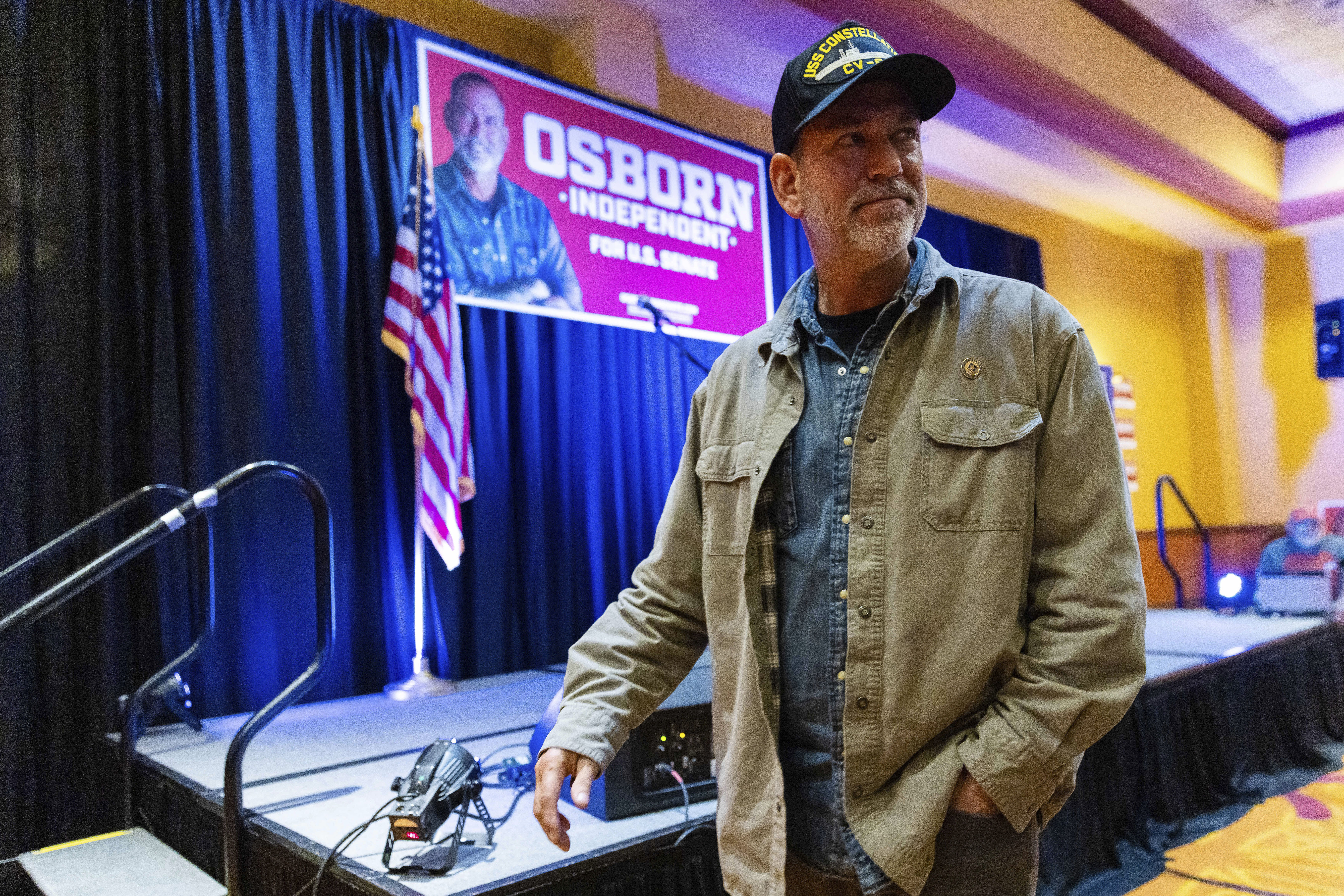
A mechanic and former union leader, Osborn railed against big corporations during his campaign while also speaking positively about Trump’s border wall. He said on the trail that he wouldn’t caucus with either party, but even so, his victory would have helped Democrats by unseating the Republican incumbent, Deb Fischer. In fact, the Senate Democrats’ top super PAC quietly boosted Osborn.
With the Senate map in 2026 favoring the GOP — and many seats once held by Democrats looking out of reach for the foreseeable future — some Democrats are thinking about fielding more Osborns.
“Anyone looking at the Senate map, not just in 2026 but over the next six years and beyond, sees that we need a path to chipping into the Republican majority,” said a Democratic strategist who was granted anonymity to speak frankly. “And it doesn’t necessarily mean electing Democrats. But it means changing what the denominator is that we need to get to a majority.”
Osborn, who has not ruled out another run in 2026, hopes more people run for office as independents. “That’s really what the country needs,” he told Blue Light News.
John Morgan, the Florida-based Biden fundraiser considering a gubernatorial run, said he may launch a bid under a new party called the “Capitalist Party.” Morgan changed his registration from Democratic to independent a few years ago because he objected to the party’s left flank and how some describe themselves as “Democratic socialists.”
Morgan, who bankrolled an amendment in Florida to raise the minimum wage, said he would campaign as a “compassionate capitalist.” And Florida, he said, could be where a new third party germinates.
“I don’t know if Trump is a stable genius, but he’s a fucking genius,” Morgan said. “He tapped into something the Republicans never saw, which was anger and populism on that side.”
Some on the center-left have already abandoned the Democratic Party. In recent years, two Democratic senators, Joe Manchin of West Virginia and Kyrsten Sinema of Arizona, switched their party registrations to independent after feuds with their party. Afterward, Manchin continued to caucus with Democrats, while Sinema said she didn’t, though she obtained her committee assignments through them. Both opted against running for reelection this year.
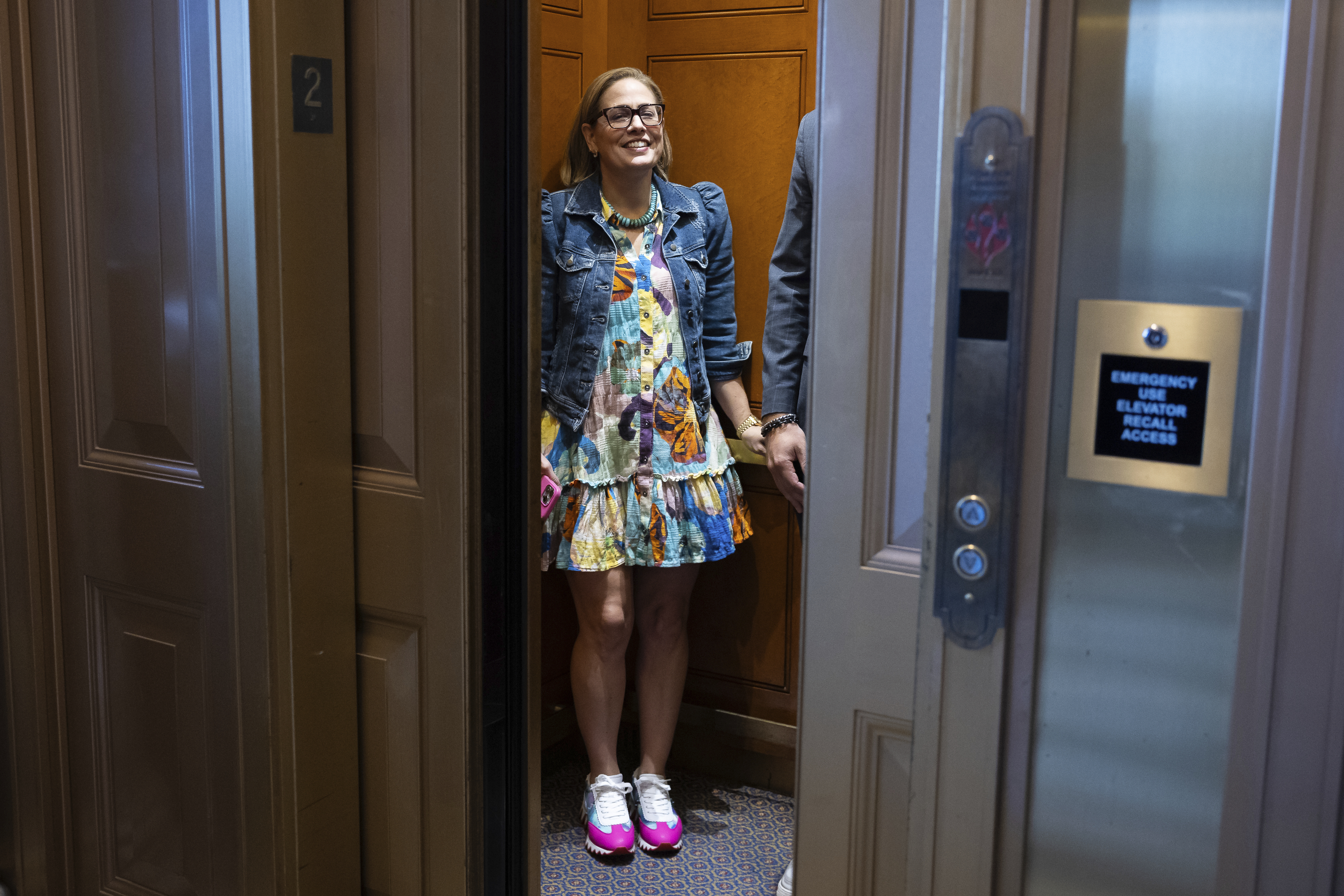
Sinema, who made the shift in 2022 after infuriating Democratic activists for opposing their efforts to eliminate the filibuster and other liberal priorities, called Duggan’s own switch “smart.”
Others see it as an opportunistic move that Duggan made to avoid competing in Democratic primary that is expected to be crowded.
“We’re going to have some very strong candidates in the Democratic primary,” said Lavora Barnes, chair of the Michigan Democratic Party. “I think what it speaks to is a mayor who has looked at the field and looked at the prospects going forward and made the calculation that his best path to victory is to not run in the Democratic primary.”
Sen. Bernie Sanders (I-Vt.), an independent who caucuses with Democrats and ran twice for the party’s presidential nomination, recently floated an effort to back more candidates like himself. In an email to allies after Trump’s November victory, Sanders asked, “Should we be supporting Independent candidates who are prepared to take on both parties?”
Another independent who caucuses with Democrats, Maine Sen. Angus King, said the Senate map is evidence of just how far the Democratic Party has slipped with voters outside of coastal states and major urban centers. It’s a starkly different picture compared to when he took office nearly 12 years ago.
“When I came to the Senate, we had Democratic senators from North Dakota, South Dakota, Iowa, two from Montana, Florida, Arkansas, Indiana and about four or five more,” King said, adding those states are now viewed as out of reach for today’s Democratic Party.
King said the 2026 midterms favor the GOP because Vice President Kamala Harris only carried one of the states held by Republicans who will be up for reelection. It happened to be Maine.
But, King cautioned, campaigning for office as an independent is no easy task. He abandoned the Democratic Party in 1993 when he ran for governor of Maine. He said he built support “coffee by coffee” during that bid.
“Running as an independent is a difficult job because you don’t have a party apparatus,” he said. “I think there may come a time when there will be more people running as independents. But right now, the structure does not lend itself.”
Kimberly Leonard contributed to this report.


House Republicans are heading into a chaotic two-week sprint to try and make real legislative headway before a subsequent two-week recess — and prove that their narrow and deeply fractious majority can still get something done.
Hard-liners are already signaling this exercise won’t be easy. Here are the revolts to watch in the next two weeks:
— First, there’s FISA: Republican leaders want to pass a straightforward extension of Section 702 of the Foreign Intelligence Surveillance Act, or FISA, next week, to give the Senate enough time to reauthorize the key spy authority before the April 20 deadline. The White House supports this path forward.
But conservatives want to add additional privacy guardrails to the existing law that allows the government to collect the data of noncitizens without a warrant.
Speaker Mike Johnson can only afford to lose one Republican on party-line procedural votes without grinding floor operations to a halt. At least two of his members, Reps. Anna Paulina Luna of Florida and Keith Self of Texas, aren’t ruling out opposing a “clean” FISA bill.
“We’ve got several must-pass bills, all of which need amending,” Self told Blue Light News. “And FISA is one of them.”
— Housing challenges: Hard-liners are also posing problems for the GOP’s ability to respond to voter concerns about higher costs of living as the midterms approach. Many are refusing to advance a Senate-passed affordable housing package because it doesn’t contain key policies they fought for on their side of the Capitol, such as a permanent ban on a central bank digital currency.
Now these holdouts want a bicameral conference to negotiate changes and strip out “socialist” provisions secured by Sen. Elizabeth Warren (D-Mass.) — an unrealistic demand that would serve as a de facto death knell for the entire effort.
“I don’t have anything to add to what’s been discussed already,” House Financial Services Chair French Hill (R-Ark.) told Blue Light News on Monday when asked about the status of talks.
— The “SAVE” revolt: Hanging over all these quagmires are threats from some hard-line Republicans to oppose any Senate-passed bill, for any reason, until the Senate passes the SAVE America Act — the GOP’s partisan elections package that stands little chance of becoming law (more on this below).
“I don’t care what the bill is,” Luna told Blue Light News. “If they can’t do their job, they can’t pass bills.”
She plans to start her blockade Tuesday by voting against a Senate-backed measure on the House floor that would extend the Small Business Innovation Research program.
What else we’re watching:
— “SAVE” debate begins: The Senate is set Tuesday to launch a dayslong debate over the SAVE America Act, which President Donald Trump calls his “No. 1 priority.” But don’t expect a “talking filibuster” that some conservatives hope would force Democrats to relent to a simple majority final passage despite their unified opposition. Instead, Republicans will start with a vote to begin consideration of the House-passed bill that would institute new citizenship and photo ID requirements in order to participate in elections.
— Friends of Ireland on Blue Light News: The speaker will host Trump and Taoiseach Micheál Martin for the annual Friends of Ireland luncheon at noon.
— AIPAC on the ballot: Tuesday’s primary elections in Illinois will serve as a critical test of whether the historically powerful American Israel Public Affairs Committee still has clout.
Jordain Carney, Meredith Lee Hill, Elena Schneider and Shia Kapos contributed to this report.
Senate Majority Whip John Barrasso told reporters Monday the chamber will vote Tuesday to take up a House-passed elections bill known as the SAVE America Act.
The Wyoming Republican, whose job it is to help round up support, said he is “doing everything I can to make sure we get on this bill tomorrow.”
Republicans will need a simple majority to begin debate on the partisan legislation; they can lose three members and still let Vice President JD Vance break a tie.
So far, Sen. Thom Tillis (R-N.C.) has said he’s a “no,” while Republicans are also watching GOP Sens. Lisa Murkowski of Alaska and Mitch McConnell of Kentucky.
The family of the late Rev. Jesse Jackson walked back a posthumous endorsement of Illinois Lt. Gov. Juliana Stratton’s Senate campaign on Monday, after the family said Jackson’s endorsements for Tuesday’s primaries were not completed before his death.
On Saturday, Stratton’s campaign touted an endorsement from Jackson, who died last month, and his son Yusef. The announcement came after Stratton saw Rainbow PUSH Coalition, the Jackson family’s organziation, passing out sample ballots — which were also obtained by Blue Light News — that recommended Stratton.
“[Jackson’s] example has been a north star for me, and I’m deeply honored to have received his trust, support, and endorsement before his passing,” Stratton said in a statement on Saturday.
But on Monday, Yusef Jackson, who is the organization’s COO, said the draft sample ballot was “released without authorization” and that the Jackson family and Rainbow PUSH Coalition are not making political endorsements this cycle.
His father “began the process of reviewing candidates and identifying those he intended to support in the upcoming primary election,” Yusef Jackson said in the statement. “However, given his passing just over a month ago, the process was never fully completed. Out of respect for my father, we decided not to publicly release his intended selections given the process had not been finalized.”
The Stratton campaign said on Monday that officials with Rainbow PUSH Coalition said she had been endorsed by Jackson.
“Juliana spoke on Saturday at Rainbow PUSH for a Women’s History Month event and officials told her she received the endorsements. Organizers shared the sample election ballot that was already being distributed and encouraged her to share the news,” the Stratton campaign said in a statement.
The endorsement mix-up draws further scrutiny on the split among Black Democrats in Illinois between Stratton and Rep. Robin Kelly (D-Ill.), who are both seeking to succeed retiring Sen. Dick Durbin. Some Democrats in the state have expressed concern that Stratton and Kelly could split the vote in Tuesday’s primary, creating a path for Rep. Raja Krishnamoorthi (D-Ill.) to win the nomination.
Rep. Jonathan Jackson (D-Ill.) told Blue Light News prior to the family’s statement that his father “never got in on Black-on-Black fights.”
Jonathan Jackson added that the races the late Jesse Jackson “was excited about” were himself and former Rep. Jesse Jackson Jr.’s comeback bid.
“He wouldn’t do that. He was always pushing the community forward,” Jackson said. “This smells of desperation.”
- Capitol agenda: House hard-liner headaches ahead
- Poland is a model for economic growth

- Trump says he may delay China trip as Iran war roils oil prices

- 5 things to watch in Tuesday’s Illinois primaries
- AIPAC faces its biggest test this year in Illinois
- Right-wing Muslim activist resigns from Trump’s Religious Liberty Commission

- Monday’s Mini-Report, 3.16.26

- Right-wing Muslim activist resigns from Trump’s Religious Liberty Commission
- Jesse Jackson’s family grapples with Illinois Senate endorsement controversy
- Johnson on Trump’s Hormuz plan
-

 The Dictatorship1 year ago
Luigi Mangione acknowledges public support in first official statement since arrest
-

 Politics1 year ago
Former ‘Squad’ members launching ‘Bowman and Bush’ YouTube show
-

 Politics1 year ago
Blue Light News’s Editorial Director Ryan Hutchins speaks at Blue Light News’s 2025 Governors Summit
-

 Politics1 year ago
Former Kentucky AG Daniel Cameron launches Senate bid
-

 The Dictatorship6 months ago
Mike Johnson sums up the GOP’s arrogant position on military occupation with two words
-

 The Dictatorship1 year ago
Pete Hegseth’s tenure at the Pentagon goes from bad to worse
-

 Politics11 months ago
Democrat challenging Joni Ernst: I want to ‘tear down’ party, ‘build it back up’
-
Uncategorized1 year ago
Bob Good to step down as Freedom Caucus chair this week