
The Dictatorship
I’m a food scientist. Here’s what RFK Jr. gets (mostly) right about food dye.


On April 22, the Department of Health and Human Services and the Food and Drug Administration announced measures designed to phase out all remaining petroleum-based synthetic dyes from the American food supply.
Leading the charge is Robert F. Kennedy Jr., who has pledged to Make America Healthy Again as President Donald Trump’s controversial HHS secretary. “Nobody wants to eat petroleum,” noted Kennedy recently. And petroleum-based food dyes — typically just called synthetic food dyes — are indeed derived from crude oil, the naturally occurring substance formed over millions of years from decaying plants and animals under intense heat and pressure. Part of phasing out these synthetic dyes involves transitioning to natural alternatives and accelerating their review and approval.
This shift reflects growing consumer recognition that our food system needs reform. That’s not a bad thing.
This shift reflects growing consumer recognition that our food system needs reform. That’s not a bad thing. However, real change demands more than simply removing synthetic additives. It requires a fundamental rethinking of how we produce, market and consume food in America — and a commitment to prioritizing public health over company profits.
Currently, only a handful of certified color additives are approved by the FDA to use in food. Under the Delaney Clauseof the Federal Food, Drug, and Cosmetic Actthe FDA is prohibited from approving any color additive that has been found to cause cancer in humansoranimals. And the FDA asserts that color additives are safe for consumption when used in accordance with its regulations.
The FDA plans to ban the two rarely used dyes — Citrus Red 2 and Orange B — in the upcoming months while working with the food industry to voluntarily eliminate six commonly used dyes (Red 40, Yellow 5, Yellow 6, Blue 1, Blue 2 and Green 3) by the end of next year. The three most popular remaining dyes — Red 40Yellow 5 and Yellow 6 — account for 90% of all food dye consumption in the U.S.
Under the Biden administration, the FDA had already initiated phasing out of Red No. 3. Advocates had argued for years that the dye should be banned because of research linking it to cancer in male rats at high doses.
And there are already efforts underway in various states to cut down or eliminate the dyes.
In October, California became the first state to prohibit school cafeterias from serving foods that contain six commonly used synthetic dyes. The law will go into effect in 2027, requiring manufacturers to replace these dyes with natural alternatives. West Virginia will ban the same dyes from schools this August and from all foods sold in the state in 2028. Utah and Arizona have also enacted similar laws.
There are plenty of reasons to be wary of foods that rely on synthetic dyes. Such products are typically ultraprocessed and high in fat, sugar and sodium. The cumulative effects of repeated exposure over a lifetime aren’t well understood. Additionally, there is limited research on how different additives interact with one another — and with other ingredients in the food matrix — during processing.
The concept of “dosage makes the poison” applies here, as combinations of dyes can complicate the assessment of how much artificial dye is being consumed. But at least some studies have shown worrying impacts on kids.
In the 1960s and the 1970s, U.S. tobacco companies conducted extensive market research with children and found that they preferred red products.
A systematic review of epidemiologic research on synthetic food dyes and neurobehavioral outcomes found a correlation between synthetic food dye exposure and adverse neurobehavioral effects in some children. Furthermore, the review suggested that the FDA’s Acceptable Daily Intake levels for synthetic food dyes may not adequately protect children from behavioral effects. The study also found that children and lower-income populations tend to have higher exposures, highlighting the need to improve access to healthier food options.
Compounding this problem is the fact that children are particularly attracted to colorful snacks. This isn’t a coincidence. In the 1960s and the 1970s, U.S. tobacco companies conducted extensive market research with children and found that they preferred red products. These companies later played a leading role in shaping U.S. food marketing from 1980 to 2001, developing “hyper-palatable foods” that became staples in the American diet.
Given this research and the actions being taken in some states, many U.S. food companies have already been reformulating their products. In 2015, General Mills removed artificial colors from some of its cereals — but it reinstated them two years later following consumer complaints. General Mills now offers schools a lower-sugar, artificial color-free version of Trix cerealcomplying with the new food additive laws in California and West Virginia. Kraft Heinz removed artificial preservatives, flavors and dyes from its signature macaroni and cheese recipe in 2016. To maintain its signature yellow-orange hue, Kraft replaced artificial colorsincluding Yellow 5 and Yellow 6, with natural spices like paprika, annatto and turmeric.
At the same time, “natural” doesn’t automatically mean safer or better. For example, carmine — or the less concentrated cochineal extract — is a widely used natural red dye derived from the dried bodies of female Dactylopius coccus insects. It’s also a known allergen. Because natural colors are categorized as “exempt” from certification requirements, they are subject to less rigorous safety testing compared with synthetic dyes. Natural dyes also may require higher quantities to achieve the same vibrant colors, and they are often significantly more expensive than their synthetic counterparts. As a result, both the dosage of additives and the cost of food products may increase with new formulations.
To truly “Make America Healthy Again,” we must make nutritious foods more accessible and affordable while also reducing the overwhelming presence and consumption of ultraprocessed foods. The overconsumption of these foods is directly linked to all sorts of health problems like weight gain, obesity, diabetes and cardiovascular disease. Meanwhile, healthy, whole foods remain out of reach for far too many families. Programs like Farm to Schoolwhich introduce students to locally grown produce and promote healthier eating habits, should be protected rather than halted.
But we must also resist falling into chemophobia — an irrational fear of chemicals — which only fosters unnecessary fear among consumers, makes them more vulnerable to misinformation and distracts from evidence-based solutions. Instead of superficial changes, we must confront the systemic barriers that make healthy eating a privilege rather than a basic human right.
Selina C. Wang is an associate professor in the food science and technology department at the University of California, Davis.


The Dictatorship
Judge orders federal government to restore funding for $16B New York-New Jersey rail tunnel project

NEW YORK (AP) — A federal judge ordered the Trump administration to restore funding to a new rail tunnel between New York and New Jersey on Friday, ruling just as construction was set to shut down on the massive infrastructure project.
The decision came months after the administration announced it was halting $16 billion in support for the project, citing the then-government shutdown and what a top federal budget official said were concerns about unconstitutional spending around diversity, equity and inclusion principles.
U.S. District Judge Jeannette A. Vargas in Manhattan approved a request by New York and New Jersey for a temporary restraining order barring the administration from withholding the funds while the states seek a preliminary injunction that would keep the money flowing while their lawsuit plays out in court.
“The Court is also persuaded that Plaintiffs would suffer irreparable harm in the absence of an injunction,” the judge wrote. “Plaintiffs have adequately shown that the public interest would be harmed by a delay in a critical infrastructure project.”
The White House and U.S. Department of Transportation did not immediately respond to emails seeking comment Friday night.
New York Attorney General Letitia James called the ruling “a critical victory for workers and commuters in New York and New Jersey.”
“I am grateful the court acted quickly to block this senseless funding freeze, which threatened to derail a project our entire region depends on,” James said in a statement. “The Hudson Tunnel Project is one of the most important infrastructure projects in the nation, and we will keep fighting to ensure construction can continue without unnecessary federal interference.”
The panel overseeing the project, the Gateway Development Commission, had said work would stop late Friday afternoon because of the federal funding freeze, resulting in the immediate loss of about 1,000 jobs as well as thousands of additional jobs in the future.
It was not immediately clear when work would resume. In a nighttime statement, the commission said: “As soon as funds are released, we will work quickly to restart site operations and get our workers back on the job.”
The new tunnel is meant to ease strain on an existing, over 110-year-old tunnel that connects New York and New Jersey for Amtrak and commuter trains, where delays can lead to backups up and down the East Coast.
New York and New Jersey sued over the funding pause this week, as did the Gateway Development Commission, moving to restore the Trump administration’s support.
The suspension was seen as way for the Trump administration to put pressure on Democratic Senate Minority Leader Chuck Schumer of New York, whom the White House was blaming for a government shutdown last year. The shutdown was resolved a few weeks later.
Speaking to the media on Air Force One, Trump was asked about reports that he would unfreeze funding for the tunnel project if Schumer would agree to a plan to rename Penn Station in New York and Dulles International Airport in Virginia after Trump.
“Chuck Schumer suggested that to me, about changing the name of Penn Station to Trump Station. Dulles Airport is really separate,” Trump responded.
Schumer responded on social media: “Absolute lie. He knows it. Everyone knows it. Only one man can restart the project and he can restart it with the snap of his fingers.”
At a hearing in the states’ lawsuit earlier in Manhattan, Shankar Duraiswamy, of the New Jersey attorney general’s office, told the judge that the states need “urgent relief” because of the harm and costs that will occur if the project is stopped.
“There is literally a massive hole in the earth in North Bergen,” he said, referring to the New Jersey city and claiming that abandoning the sites, even temporarily, “would pose a substantial safety and public health threat.”
Duraiswamy said the problem with shutting down now is that even a short stoppage would cause longer delays because workers will be laid off and go off to other jobs and it’ll be hard to quickly remobilize if funding becomes available. And, he added, “any long-term suspension of funding could torpedo the project.”
Tara Schwartz, an assistant U.S. attorney arguing for the government, disagreed with the “parade of horribles” described by attorneys for the states.
She noted that the states had not even made clear how long the sites could be maintained by the Gateway Development Commission. So the judge asked Duraiswamy, and he said they could maintain the sites for a few weeks and possibly a few months, but that the states would continue to suffer irreparable harm because trains would continue to run late because they rely on an outdated tunnel.
___
Collins reported from Hartford, Connecticut.
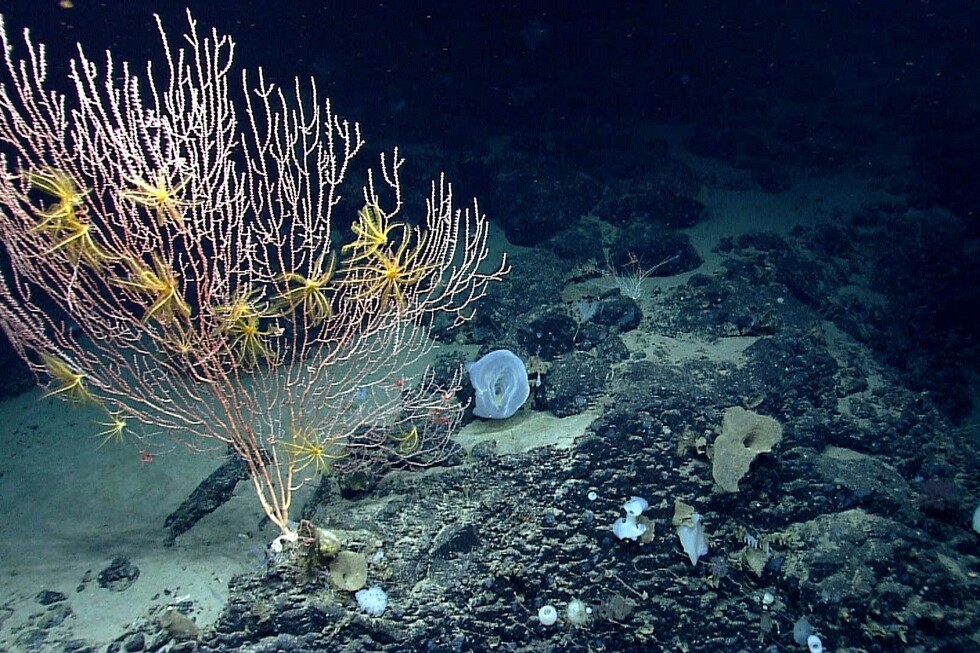

PORTLAND, Maine (AP) — President Donald Trump issued a proclamation on Friday reopening a huge swath of protected sea in the Atlantic Ocean to commercial fishing.
Trump said the move would reestablish fishing in Northeast Canyons and Seamounts Marine National Monument off the New England coast, a nearly 5,000-square-mile preserve east of Cape Cod that was created by former President Barack Obama. Trump rolled back protections in the area in 2020 and President Joe Biden later restored them.
Trump’s proclamation is his latest move to try to strengthen U.S. fishing while rolling back existing conservation measures. He signed a broader order earlier this year that calls on the federal government to reduce the regulatory burden on fishermen in the coming weeks.
Trump has long been critical of the marine monument, which Obama described at the time as a chance to protect vulnerable undersea corals and ecosystems. Trump has described it as an unfair penalty on commercial fishermen.
The president wrote in Friday’s proclamation that he believed “appropriately managed commercial fishing would not put the objects of historic and scientific interest that the monument protects at risk.”
Trump signaled that he would restore fishing in the area in May. The White House said at the time the move would “support the vital Maine lobster industry by ensuring unfettered access to the coastal waters of the United States.”
Trump has frequently linked his support of fishing rights in the monument to Maine fishermen, though the protected area is located southeast of Cape Cod.
Commercial fishing groups have long sought the reopening of the protected area and voiced support on Friday.
“We deserve to be rewarded, not penalized,” said John Williams, president and owner of the New Bedford, Massachusetts-based Atlantic Red Crab Company. “We’re demonstrating that we can fish sustainably and continue to harvest on a sustainable level in perpetuity.”
Environmental groups have been highly critical of the move to reopen the monument to fishing. Some have vowed to fight it in court.
“The Northeast Canyons and Seamounts Marine National Monument was created to provide strong protections for the wide range of marine life that live in these unique habitats,” said Gib Brogan, fisheries campaign director at environmental group Oceana.
Environmentalists also challenged a Trump move last year that they say removes important protections from the Pacific Islands Heritage Marine National Monument off Hawaii. That is a much larger marine monument created by President George W. Bush in 2009 and later expanded by Obama. A judge blocked commercial fishing in the area in August.
___
This story has been corrected to say that President Donald Trump’s declaration on reopening protected parts of the Atlantic Ocean to commercial fishing was a proclamation, not an executive order.
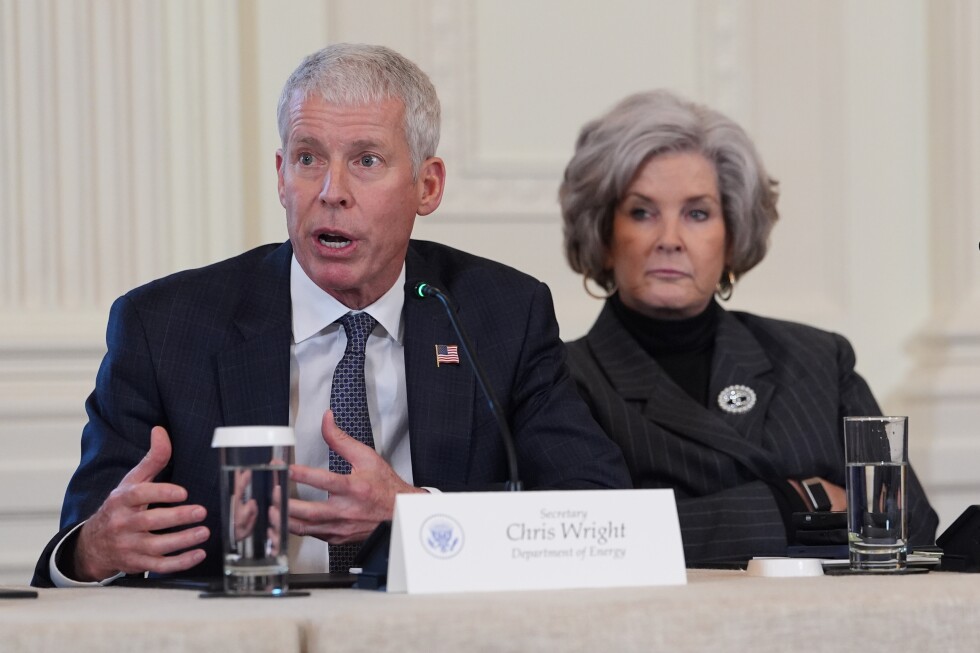
WASHINGTON (AP) — The Trump administration said Friday that its use of emergency orders to keep aging coal-fired plants operating helped prevent a major blackout from power shortages during the brutally frigid weather that has gripped most of America for the past two weeks.
Scattered outages occurred because of ice accumulation that felled local power lines, leaving hundreds of thousands without power, at least briefly. But the nation’s regional power grids generally maintained reliable electricity service, with natural gas and coal leading the way, Energy Secretary Chris Wright and other officials said.
“The big picture story is where we actually got energy from during this storm,” Wright said at a news conference at the Energy Department. “In fact, we had times where our existing capacity couldn’t deliver anything and the lights would have gone out if not for emergency orders.’’
Critics said Wright’s comments understated the role that wind and solar power played during the storm, adding that the administration’s orders over the past nine months to keep some oil and coal-fired plants open past their planned retirement dates could cost U.S. utility customers billions of dollars over the next few years.
In the lead-up to the storm and cold temperatures, Wright also excused utilities from pollution limits on fossil fuel-fired plants and ordered that backup generators at data centers and other large facilities be available to grid operators and utilities to supply emergency power.
Trump administration’s ‘way of doing business’
Deputy Energy Secretary James Danly drew a contrast with the grid performance during a similar severe storm in 2021, calling the Trump administration’s approach a “new way of doing business” during power emergencies.
“The bottom line here is that we managed to ensure that there was sufficient capacity,” Danly said. “Not one area had a blackout or a forced outage due to loss of capacity.”
There were nearly 1 million outages during the storm’s peak, but most were not long-lasting, Danly said. Nearly 55,000 customers were without power as of Friday, including more than 17,000 in Mississippi and 7,000 in Texas, according to the outage tracking website poweroutage.us.
Wright cited statistics showing that natural gas — long the nation’s leading source of electricity — provided 43% of electric power at peak generation during the storm, followed by coal at 24% and nuclear at 15%. Renewables such as wind, solar and hydropower provided a combined 14%, Wright said.
Wright and President Donald Trump have frequently made the case for their fossil fuel-friendly orders, blaming the Biden administration and Democratic-leaning states for policies they say threaten the reliability of the nation’s electric grid and drive up electricity bills.
The proportion of coal and natural gas power rose substantially during the storm, while the proportion of wind power used during the storm dropped by 40%, Wright said. Solar stayed flat at a fraction of the amount of coal and natural gas power.
Wright dismissed solar as “meaningless” during a severe storm in certain regions and said, “It’s not an all-weather power source.”
Pushback on orders to keep coal plants running
Some state and utility officials have chafed at Wright’s orders to keep plants operating, saying they’re not necessary for emergency power and are simply raising electric bills for regular ratepayers to keep relatively expensive plants operating.
Preventing the nation’s coal plants from retiring over the next three years could cost consumers at least $3 billion per year, according to a report from Grid Strategies, a consulting firm.
“A lot of these plants were retiring because they’re no longer economic to operate,” said Michael Goggin, an executive vice president at Grid Strategies. “It’s expensive to keep them going.”
Opponents have challenged the coal orders in court, arguing that Congress intended for emergency powers to be used only in rare, temporary cases.
The nonprofit owners of the Craig Generating Station in Colorado, the Tri-State Generation and Transmission Association and Platte River Power Authority, last week filed a protest with the Energy Department seeking to reverse Wright’s order to keep its Unit 1 operating. The Dec. 30 order came one day before it was to shut down.
In its request for a rehearing, the nonprofits said its members and communities were unfairly being forced to pay to keep a costly and unreliable plant operating and that the department didn’t even comply with the law requiring it to show why this was the best alternative. They also said the department’s order unfairly punished them for the mistakes of other utilities.
Wright brushed off the criticism, saying there would be “far larger costs from blackouts.”
Solar and wind said to save consumers ‘billions’
Clean energy advocates said that renewable sources saved consumers billions during the storm and helped ensure the lights stayed on, especially in regions that have significant investments in wind, solar, and energy storage.
In Texas, wind, solar and storage provided about 25% of power for the grid’s 27 million customers — a major increase over 2021 and a key reason blackouts were largely avoided, said John Hensley, a senior vice president at the American Clean Power Association, an industry group.
Wind and solar also accounted for significant power in the Midwest and Southwest, Hensley said. In the mid-Atlantic region served by grid operator PJM, only 5% of power came from wind and solar generation, a fact Hensley blamed on lack of investment in renewables in the region, as well as hostility by the Trump administration to new wind and solar power.
Blaming renewables for not performing during the storm “is like trying to blame someone on the bench for losing the game,” Hensley said. “They didn’t get a chance” to play.
- How Oura Ring won over Washington
- Energy secretary plans visit to Venezuela — but says Trump isn’t focused on its oil riches
- Inside the ‘Cigar SCIF:’ How Tom Cole pulled off a House appropriations miracle

- Musk jumps back into political fray with big midterm donations
- America’s Christian revival is a hoax

- Fetterman ‘absolutely’ expects government shutdown over DHS funding

- Jeffries says GOP ‘finally showed some backbone’ in criticizing Trump for racist video of Obamas
- Trump rips Olympic skier over remarks about representing US

- Trump cut science funding. Small businesses are paying the price.
- No filibuster deal with House conservatives, Thune says
-

 The Dictatorship12 months ago
Luigi Mangione acknowledges public support in first official statement since arrest
-

 Politics12 months ago
Former ‘Squad’ members launching ‘Bowman and Bush’ YouTube show
-

 The Dictatorship5 months ago
Mike Johnson sums up the GOP’s arrogant position on military occupation with two words
-

 Politics12 months ago
Blue Light News’s Editorial Director Ryan Hutchins speaks at Blue Light News’s 2025 Governors Summit
-

 The Dictatorship12 months ago
Pete Hegseth’s tenure at the Pentagon goes from bad to worse
-

 Politics12 months ago
Former Kentucky AG Daniel Cameron launches Senate bid
-
Uncategorized1 year ago
Bob Good to step down as Freedom Caucus chair this week
-

 Politics10 months ago
Democrat challenging Joni Ernst: I want to ‘tear down’ party, ‘build it back up’