
The Dictatorship
ICE arrests over 250 in North Carolina immigration crackdown during ‘Operation Charlotte’s Web’

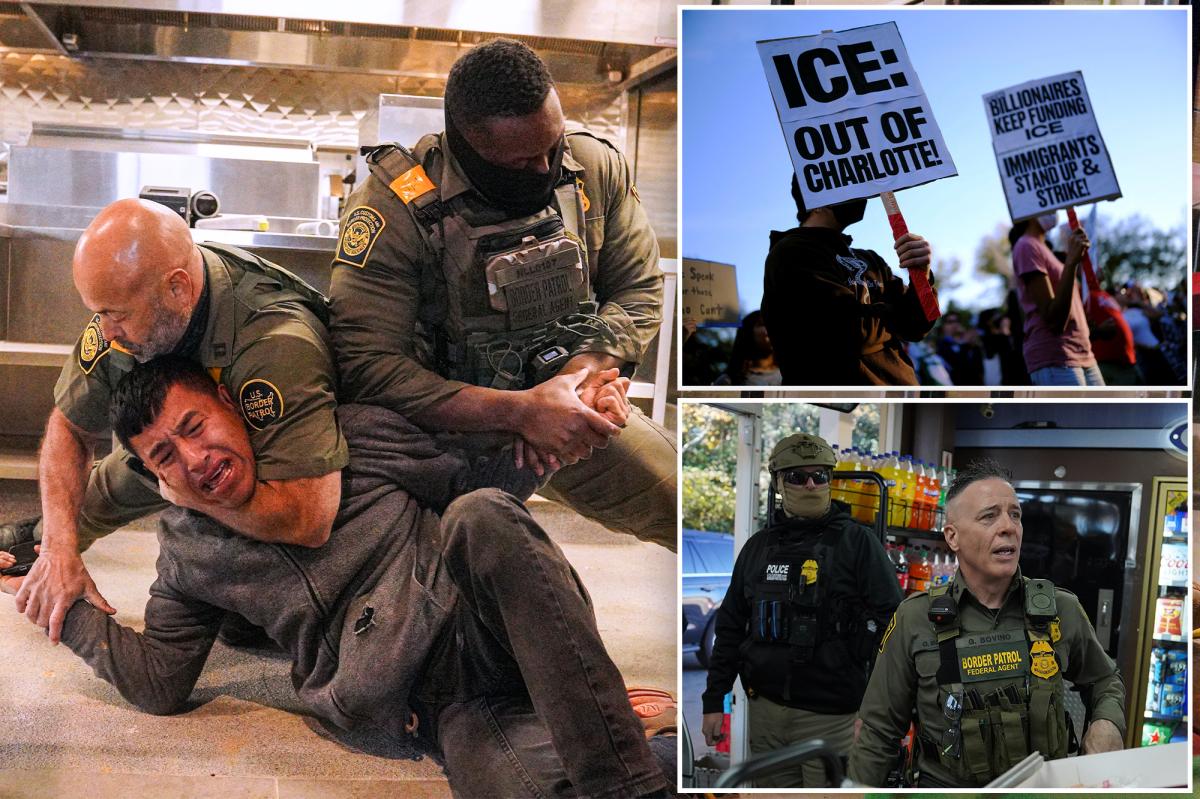
RALEIGH, N.C. (AP) — Federal agents have now arrested more than 250 people during a North Carolina immigration crackdown centered around Charlotte, the state’s largest citythe U.S. Department of Homeland Security said Wednesday.
The operation that began over the weekend is the latest phase of Republican President Donald Trump’s aggressive mass deportation efforts that have sent the military and immigration agents into Democratic-run cities — from Chicago to Los Angeles.
Immigration officials have blanketed the country since January, pushing detention counts to all-time highs above 60,000. Big cities and small towns across the country are targeted daily amid higher-profile pushes in places such as Portland, Oregon, where more than 560 immigration arrests were made in October. Smaller bursts of enforcement have popped up elsewhere.
The push to carry out arrests in North Carolina expanded to areas around the state capital of Raleigh on Tuesday, spreading fear in at least one immigrant-heavy suburb.
AP AUDIO: Arrests now top 250 in immigration crackdown across North Carolina
Federal agents in North Carolina are expanding their immigration crackdown. AP correspondent Donna Warder reports.
Late Wednesday, Raleigh Mayor Janet Cowell said via the social platform X that “border patrol enforcement appears to have been suspended” in the city. DHS did not announce a change to its presence and did not immediately respond to a request for comment.
The number of arrests around Charlotte and beyond during what the government has dubbed “ Operation Charlotte’s Web ” was about double the total announced by DHS officials earlier this week. The department said in a statement that agencies “continue to target some of the most dangerous criminal illegal aliens.”
Stay up to date with the news and the best of AP by following our WhatsApp channel.

Their targets include people living in the U.S. without legal permission and those who allegedly have criminal records.
Federal officials have offered few details about those arrested. They’ve also remained quiet about the scope of the enforcement operations across North Carolina and where agents will show up next, keeping communities on edge.
The crackdown in Charlotte has been met with pockets of resistance and protests.
About 100 people gathered outside a Home Depot store in Charlotte on Wednesday, where federal agents have been spotted multiple times since the surge started. Protest organizers briefly went inside the store with orange and white signs that read, “ICE out of Home Depot, Protect our communities.”
Arrests in Charlotte and the Raleigh area have created a chilling effect in immigrant neighborhoods — school attendance dropped, and small shops and restaurants closed to avoid confrontations between customers and federal agents.
Customers at a laundromat left behind their clothes in washers and dryers and haven’t returned after agents showed up at a Charlotte shopping center on Sunday, said David Rebolloso, who owns the business.
Agents didn’t target his laundromat, but it still impacted his bottom line and shut down the neighboring shops, said Rebolloso, a Mexican American born in Brownsville, Texas.
“We’re only open because I’m an American citizen, so it doesn’t bother me,” he said. “But of course, business is down. I have no customers.”
Just days after beginning the crackdown in North Carolina, Border Patrol agents were expected to arrive in New Orleans by the end of the week to start preparing for their next big operation in southeast Louisiana, according to documents obtained by The Associated Press and three people familiar with the operation.
Around 250 federal border agents are set to descend on New Orleans in the coming weeks for a two-month immigration crackdown expected to begin in earnest on Dec. 1.
Gregory Bovino, the Border Patrol commander tapped to head the Louisiana sweep, has been on the ground in North Carolina this week, leading the operation there as well.
Louisiana Republicans voiced their support on Wednesday. The chair of the state party, Derek Babcock, said it shows a commitment from Trump and Republican Gov. Jeff Landry to “keeping our citizens safe.”
The head of the state’s American Civil Liberties Union chapter said they were compiling information to help people know their rights and coordinating with legal services and groups connected with the immigrant community.
“We urge those with privilege and the opportunity to risk it to stand up for their neighbors and friends,” said Alanah Odoms with the ACLU of Louisiana.
___
Associated Press reporters Erik Verduzco in Charlotte, Elliot Spagat in San Diego, Safiyah Riddle in Montgomery, Alabama, Sara Cline in Baton Rouge, Louisiana, and John Seewer in Toledo, Ohio, contributed.


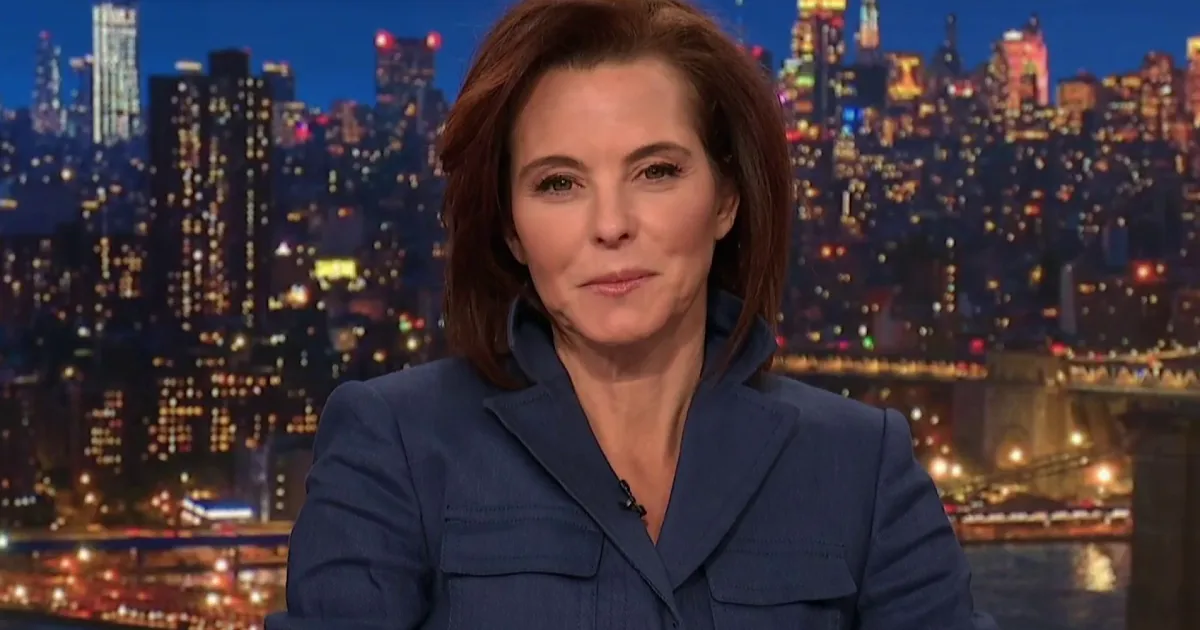
MS NOW’s Stephanie Ruhle set the facts straight on Tuesday’s “The 11th Hour,” after Donald Trump’s National Economic Council Director Kevin Hassett tried to downplay the effect the Iran war is having on American consumers.
During an interview with CNBCHassett said the U.S. economy was “fundamentally sound” and that if the war continued, it “wouldn’t really disrupt the U.S. economy very much at all.” While he acknowledged that a prolonged conflict would “hurt consumers,” he said that was “the last of our concerns right now.”
“We are now in the third week of the war,” Ruhle said after playing a clip of the Trump official’s comments. “Kevin Hassett says the war would not disrupt the economy very much at all. But for facts’ sake, it already has.”
“Everybody from Wall Street to Main Street is trying to navigate the growing economic risks created by the war with Iran,” she said, noting that while markets finished strong on Tuesday, the price of oil was still climbing.
“If you have been watching this show, then you already know what it means for your wallet. Higher oil prices translate to higher prices for gas, diesel and even jet fuel, all the things that keep our economy — not just our economy, but the global economy — humming along,” she explained.
If Trump officials want to understand the reality many Americans are facing, the MS NOW host advised them simply to “walk outside.”
“Look at gas prices,” she said. “We have had farmer after farmer on this network warning what increased diesel prices do for their tractors, what increased fertilizer prices do. And not to mention, there’s loads of businesses that have nothing to do with the Strait of Hormuz, but they’re in this moment where they’re like, ‘I’m not hiring, I’m not growing. We’re at war. I don’t know what’s ahead.’”
While Ruhle assured viewers that the U.S. economy is “resilient,” she said the war comes as many Americans are already struggling with inflation due to Trump’s tariffs. “When you have this kind of stress, even strong economies can start to buckle,” she warned.
You can watch Ruhle’s full analysis in the clip at the top of the page.
Allison Detzel is an editor/producer for MS NOW. She was previously a segment producer for “AYMAN” and “The Mehdi Hasan Show.”

This is the March 18, 2026, edition of “The Tea, Spilled by Morning Joe” newsletter.Subscribe hereto get it delivered straight to your inbox Monday through Friday.
QUOTE OF THE DAY
“Trump promised to get the U.S. out of ‘stupid wars.’ But now he and John Bolton are on the brink of launching us into a very stupid and costly war with Iran.”
— Tulsi Gabbard, the current director of national intelligence, while running for president as a Democrat in 2019
JOE’S NOTE
David Drucker, writer for The Dispatch and an opinion columnist for Bloomberg News, joined us today to break down the voter dynamics among registered Democratic voters amid the results from Tuesday’s elections in Illinois.
JS: David, what did last night’s election results in Illinois say about the strength of moderate candidates in the Democratic Party?
DD: Well, a Democratic poll for Third Way, a centrist think tank, found that the typical Democratic primary voter is a white woman over 55 without a college degree. Most Democratic primary voters end up being white, female, older, and not college-educated.
JS: What was your takeaway?
DD: It confirms a familiar pattern. In both parties, the most pragmatic presidential candidate usually wins the nomination. Voters may like passion, but when it’s time to choose, they go with electability.
The poll also showed voters want a fighter willing to take on Republicans, but their own views aren’t far left.
JS: After rarely discussing faith on the campaign trail for years, Democrats seem more comfortable doing so now. Is this why?
DD: One surprise to me was that 57% of Democratic primary voters identify as Christian, many as evangelical or born-again. It’s a reminder that most Democratic voters resemble mainstream America. If you want to win in 2028, you need to appeal to that middle, not just the progressive fringe.
JS: I noticed the same divide during the 2020 Democratic debates — candidates focused on Twitter instead of voters. [Joe] Biden was the lone moderate, and he swept the primaries after South Carolina.
MB: Why do you think that happened when the energy seemed to be with other Democratic candidates?
JS: Younger voters are more left-leaning. But for now, the average Democrat is a 55-year-old white woman who makes up a centrist coalition with voters of color who tend to be moderate, especially Black women and many Hispanic voters. Despite the online noise, Democrats still win from the middle.
Elisabeth Bumiller: Exactly. Every Democratic president for decades — Biden, Obama, Clinton, Carter — has been a moderate. That could change, with younger progressives like Rep. Alexandria Ocasio-Cortez or New York City Mayor Zohran Mamdani energizing the base. But for now, the center still defines the party.
It is striking, though, that the average primary voter isn’t college-educated, given Democrats’ reputation as the party of the educated class.
DD: Right. These are self-identified primary voters. The party’s base has become more college-educated overall, but this shows how the primary electorate differs. Democrats have moved somewhat left over time, but the average voter still sees themselves as center-left, pragmatic, and tolerant of disagreement. They want fighters who focus on priorities, not purity tests. Biden’s success in 2020 proves that dynamic still holds.
JS: And to be clear, no one’s saying Democrats are conservative — just that they may be less progressive as a whole than social media suggests.
CHART OF THE DAY

EYES WIDE SHUT

It happens to all of us: You snap awake in the middle of the night, the room still dark, your alarm hours away — and you just can’t get back to sleep.
About 1 in 5 Americans experiences this kind of middle-of-the-night insomnia, according to The Washington Post. If you’re one of them, a simple breathing trick may help.
Try the 4-7-8 method: Inhale for four seconds, hold for seven, then exhale slowly for eight. Repeat until your body starts to settle.
If that doesn’t work, you might try a cognitive shuffle or progressive muscle relaxation. And, of course, leave your phone alone.
ON THIS DATE

In 1990, thieves posing as police officers slipped into Boston’s Isabella Stewart Gardner Museum and made off with 13 works of art — among them paintings by Rembrandt and Vermeer — valued at more than $500 million.
More than three decades later, it remains the largest unsolved art heist in history and is the subject of the Netflix docuseries “This Is a Robbery,” directed and co-produced by the Barnicle boys!

A CONVERSATION WITH SEN. MARK KELLY
was. Sen. Mark Kelly of Arizona joined “Morning Joe” ahead of the briefing to discuss his views on the conflict — and the answers he says the American people deserve.
JS: Senator, you know what it’s like to go into combat. What’s on your mind today when you think about those serving in the U.S. military?
MK: We’ve got the most incredible men and women serving this country, and I think it’s fair to say their family members are serving as well. It’s challenging to live that life. They deserve to have a government that’s looking out for their best interests, and I’m not sure that’s the case right now.
JS: What would you tell loved ones watching the news, nervous about their sons or daughters being deployed in the Middle East?
MK: It’s challenging, because the president entered this war without a strategic goal, without a plan, without a timeline.
I tell them I’ve got their backs — I’ll keep pushing this administration to make better decisions and hold them accountable when they don’t.
JS: You’re heading today into a major intelligence briefing. What’s the key question you need answered?
MK: I want to know how these decisions are actually making Americans safer — because right now, it doesn’t look that way. The president is surrounded by people who won’t challenge him, and that’s dangerous, especially on matters of national security.
When I was in charge of the space shuttle, I used to tell my crew members that they were required to question my decisions, especially when it came to safety or mission success.
JL: There are now real questions about whether Iran was an imminent threat. How do you plan to address that today?
MK: I want clarity on what intelligence was presented to the president — and whether anyone raised concerns about the risks, including in the Strait of Hormuz.
The president doesn’t seem to fully understand the military’s capabilities or how it operates.
JS: Senator, let’s talk about the SAVE Act. People on social media keep pushing the lie that it’s the only way to save America. What’s really going on here?
MK: This goes far beyond voter ID. People would have to re-register, and many wouldn’t even be able to use a military ID. It puts real barriers in front of working people and seniors who may not have the documents required.
We’re going to do everything we can to stop this. The SAVE Act is horrible legislation that would take our country back decades.
This conversation has been condensed and edited for brevity and clarity.
EXTRA HOT TEA
1 IN 9.2 QUINTILLION
— The mathematical odds of successfully predicting an entire March Madness bracket
ONE MORE SHOT

Willie Nelson performs in concert during the 11th Annual Luck Potluck at Luck Ranch last night in Spicewood, Texas.
CATCH UP ON MORNING JOE


The Dictatorship
Top counterterrorism official Kent resigns over Trump’s Iran war, says Iran posed no imminent threat
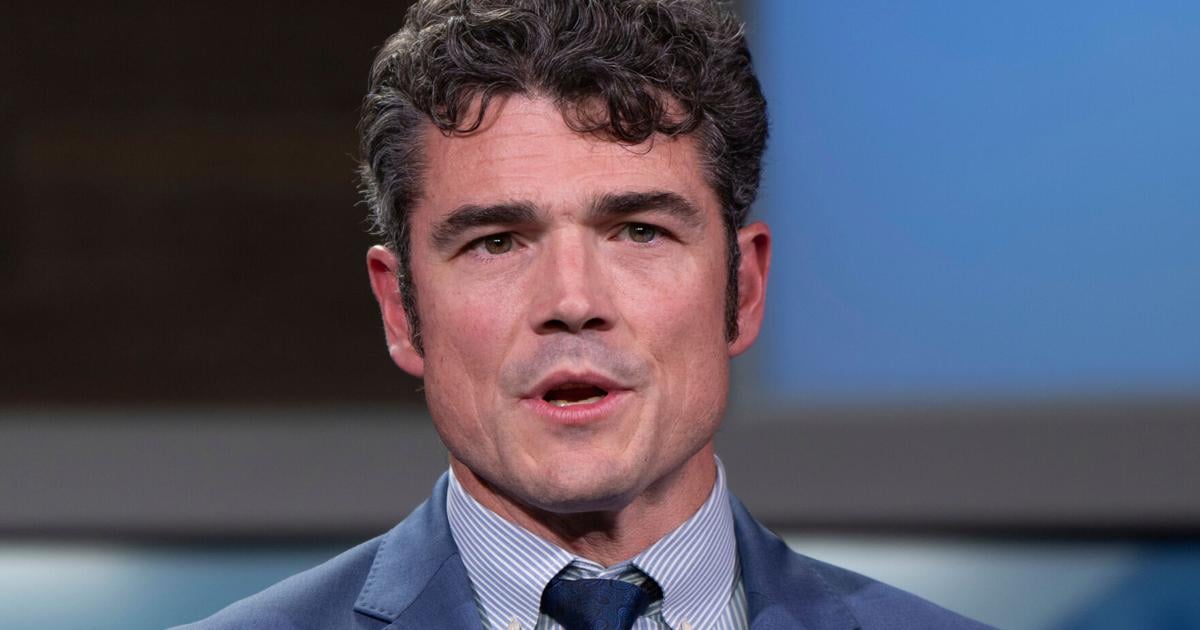
WASHINGTON (AP) — Joe Kent, the director of the National Counterterrorism Center, announced his resignation on Tuesday, citing his concerns about the justification for military strikes in Iran and saying he “cannot in good conscience” back the Trump administration’s war.
“Iran posed no imminent threat to our nation, and it is clear that we started this war due to pressure from Israel and its powerful American lobby,” Kent said in a statement posted on social media, making claims President Donald Trump has denied.
Kent, a former Green Beret and political candidate with connections to right-wing extremistswas confirmed last July on a 52-44 vote. As head of the National Counterterrorism Center, he was in charge of an agency tasked with analyzing and detecting terrorist threats.
His resignation demonstrates that the unease about the war within Trump’s base extends to at least one senior member of his Republican administration.
The leadership change comes at a time of heightened concern about terrorism following several recent violent attacks in the U.S.
President Donald Trump pauses after signing an executive order in the Oval Office of the White House, Monday, March 16, 2026, in Washington. (AP Photo/Julia Demaree Nikhinson)
President Donald Trump pauses after signing an executive order in the Oval Office of the White House, Monday, March 16, 2026, in Washington. (AP Photo/Julia Demaree Nikhinson)
Justification for Iran strikes at heart of resignation
AP AUDIO: Top counterterrorism official Kent resigns over Trump’s Iran war, says Iran posed no imminent threat
AP Washington correspondent Sagar Meghani reports on the National Counterterrorism Center’s director resigning over the Iran war.
Kent’s decision came down to the reasoning behind the strikes on Iran, he wrote in his resignation letter.
Trump has offered shifting reasons for the strikes and has pushed back on claims that Israel forced the U.S. to act. House Speaker Mike Johnson has suggested the White House believed Israel was determined to strike on its own, leaving the Republican president with a “very difficult decision.”
Speaking with reporters in the Oval Office on Tuesday, Trump said he always thought Kent was “weak on security” and if someone in his administration did not believe Iran was a threat, “we don’t want those people.”
“They’re not smart people, or they’re not savvy people,” Trump said. “Iran was a tremendous threat.”
A year ago, in nominating Kent, Trump praised him as a man who had “hunted down terrorists and criminals his entire adult life.”
Director of National Intelligence Tulsi Gabbard, whose office oversaw Kent’s work, wrote in a social media post Tuesday that it was up to Trump to decide whether Iran posed a threat.
“After carefully reviewing all the information before him, President Trump concluded that the terrorist Islamist regime in Iran posed an imminent threat and he took action based on that conclusion,” Gabbard wrote in the post. She did not mention her own views of the strikes.
Democrats strongly opposed Kent’s confirmation because of his past ties to far-right figures and conspiracy theories. But following his resignation, Sen. Mark Warner of Virginia, the top Democrat on the Senate Intelligence Committee, said Kent’s concerns about the war in Iran were justified.
“I strongly disagree with many of the positions he has espoused over the years, particularly those that risk politicizing our intelligence community,” Warner said. “But on this point, he is right: There was no credible evidence of an imminent threat from Iran that would justify rushing the United States into another war of choice in the Middle East.”
Johnson, though, pushed back on Kent’s claims at a press conference on Tuesday.
“I got all the briefings. We all understood that there was clearly an imminent threat that Iran was very close to the enrichment of nuclear capability and they were building missiles at a pace no one in the region could keep up with,” Johnson said.
Johnson said he is convinced that if Trump had waited “we would have mass casualties of Americans, service members and others, and our installation would have been dramatically damaged.”
Departure follows three recent acts of violence
In New York City, two men who federal authorities say were inspired by the Islamic State group took powerful homemade bombs to a far-right protest outside the mayoral mansion.
In Michigan, a naturalized citizen from Lebanon rammed his vehicle into a synagogue, where he was shot at by security before he fatally shot himself.
And in Virginia, a man previously imprisoned on a terrorism conviction opened fire in a university classroom. Officials said the attack ended when he was killed by students.
Gabbard, CIA Director John Ratcliffe and FBI Director Kash Patel are scheduled to testify before lawmakers this week about threats facing the U.S., an annual hearing likely to be dominated this year by questions about the Iran war and the revelation that outdated intelligence likely led to the U.S. firing a missile that hit an elementary school in Iran and killed more than 165 people.
A veteran and former congresswoman from Hawaii, Gabbard has previously criticized talk of military strikes in Iran. Six years ago she said that “an all out war with Iran would make the wars that we’ve seen in Iraq and Afghanistan look like a picnic. It will be far more costly in lives, American lives, and American taxpayer dollars — and all towards accomplishing what goal? What objective?”
A spokesperson for Gabbard declined to answer questions about Gabbard’s views on the current strikes.
A popular figure among Trump supporters
Kent’s military background and his personal story of sacrifice made him a compelling figure among Trump supporters.
Before joining Trump’s administration, Kent ran two unsuccessful campaigns for Congress in Washington state. As a Green Beret, he saw combat in 11 deployments before retiring to join the CIA. He also endured tragedy: His wife, a Navy cryptologist, was killed by a suicide bomber in 2019 in Syria, leaving him with two young sons. Kent, 45, has since remarried.
During the United States’ chaotic withdrawal from Afghanistan in 2021, Kent criticized what he said was a misguided desire for nation building by some in Washington, D.C.
“It speaks to our hubris,” Kent told reporters while campaigning for Congress. “For us not to have learned from all this just shows that there are people making money and making their careers at the other end of it. They’ve been doing it on the backs and dead bodies of U.S. soldiers.”
During his 2022 congressional campaign, Kent paid Graham Jorgensen, a member of the far-right military group the Proud Boys, for consulting work. He also worked closely with Joey Gibson, the founder of the Christian nationalist group Patriot Prayer, and attracted support from a variety of far-right figures.
Early during his first campaign, Kent acknowledged that a political consultant set up a call intended to broaden his social media reach that was joined by Nick Fuentes, a popular right-wing influencer who has said that Jews are holding the U.S. “hostage” and once proclaimed that “Hitler was awesome, Hitler was right.”
Kent later disavowed those ties and stated that he rejected all “racism and bigotry.”
During his Senate confirmation hearing, Kent refused to distance himself from a conspiracy theory that federal agents instigated the Jan. 6, 2021, attack at the Capitol, as well as false claims that Trump won the 2020 election over Democrat Joe Biden.
Republicans praised Kent’s counterterrorism qualifications, pointing to his military and intelligence experience.
Sen. Tom Cotton, the GOP chair of the Intelligence Committee, said in a floor speech that Kent had “dedicated his career to fighting terrorism and keeping Americans safe.”
___
Associated Press writers Kevin Freking and Brian Slodysko contributed to this report.
- ‘Warrants or bust’: House hard-liners deliver ultimatum ahead of spy powers vote
- House Ethics will forge ahead with Cherfilus-McCormick trial
- Stephanie Ruhle rips Trump official for downplaying war’s economic impact
- The Tea, Spilled by Morning Joe: ‘The SAVE Act is horrible legislation’
- House rejects effort to force a balanced budget in the US
- Inside the White House plan to sell the Iran war online
- Estonia ‘ready to talk’ on Strait of Hormuz backup
- Kiley switches parties, loses committees
- Top counterterrorism official Kent resigns over Trump’s Iran war, says Iran posed no imminent threat
- White House applying pressure to media…

-

 The Dictatorship1 year ago
Luigi Mangione acknowledges public support in first official statement since arrest
-

 Politics1 year ago
Former ‘Squad’ members launching ‘Bowman and Bush’ YouTube show
-

 Politics1 year ago
Blue Light News’s Editorial Director Ryan Hutchins speaks at Blue Light News’s 2025 Governors Summit
-

 Politics1 year ago
Former Kentucky AG Daniel Cameron launches Senate bid
-

 The Dictatorship6 months ago
Mike Johnson sums up the GOP’s arrogant position on military occupation with two words
-

 The Dictatorship1 year ago
Pete Hegseth’s tenure at the Pentagon goes from bad to worse
-

 Politics11 months ago
Democrat challenging Joni Ernst: I want to ‘tear down’ party, ‘build it back up’
-
Uncategorized1 year ago
Bob Good to step down as Freedom Caucus chair this week