
Politics
I used to be friends with JD Vance. Here’s what happened to him.

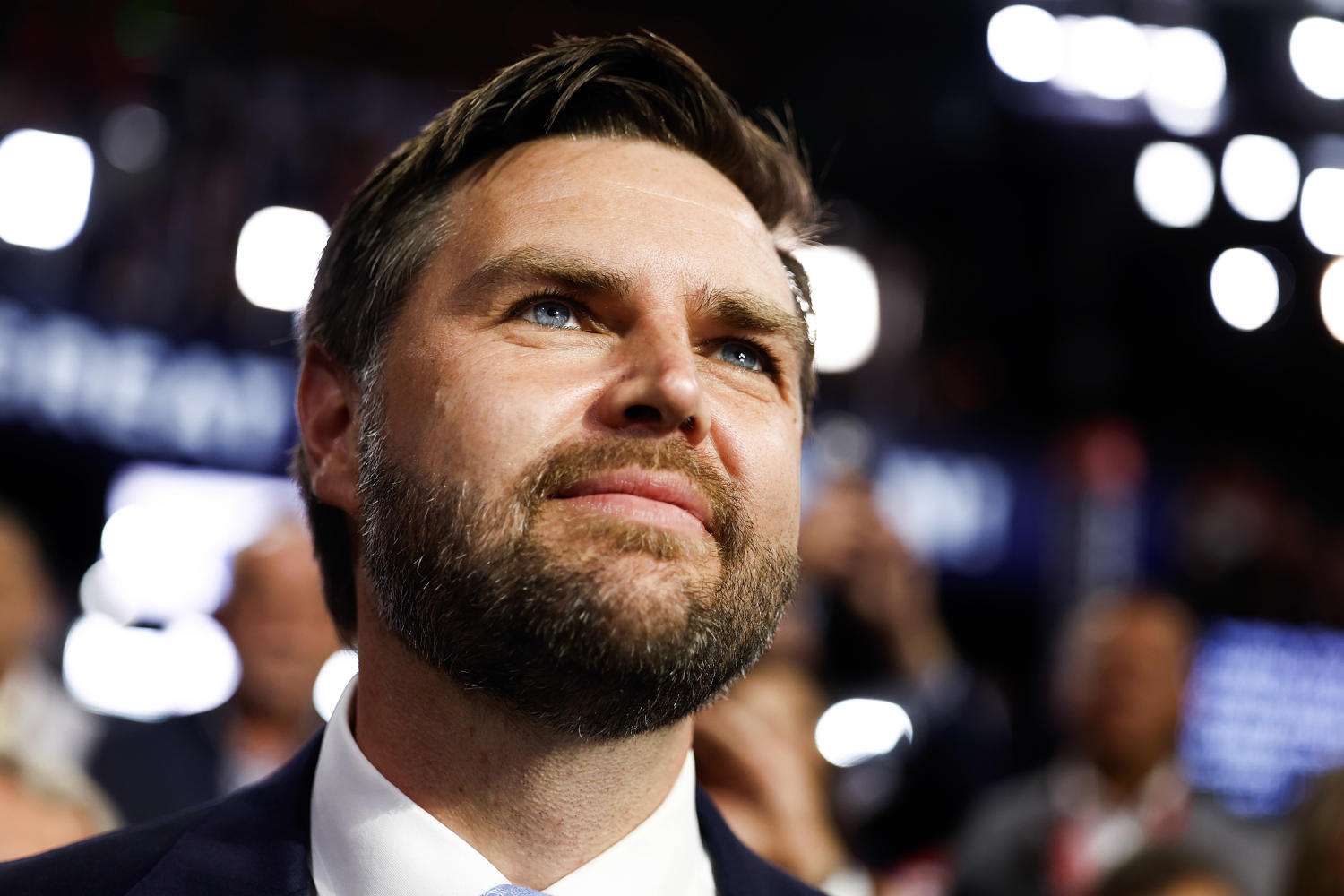
Most Americans haven’t heard of the post-liberal right, the small but influential group of conservative, mostly Catholic men who have declared that liberal democracy, the animating principle of America’s founding, has failed and want to bring about a new social order where there is no separation of church and state and men and a hyperconservative Catholicism reign supreme. They are disdainful of secularism and individual liberty. Just like Republican presidential nominee Donald Trump illustrated during Tuesday night’s debate against Vice President Kamala Harris, these men idolize the authoritarian Viktor Orbán, the prime minister of Hungary.
My former friend JD Vance is a prominent voice of this fringe movement, as so many of his regrettable podcast interviews have demonstrated
They’re also nostalgic for Spain as it was run by the dictator Franco and see Orbán’s government and Franco’s as potential models for the kind of regime they wish to install in the United States. The group’s political priorities — which include restricting access to contraception and divorce and banning marriage equality and pornography — are wildly unpopular. And yet the Republican nominee for vice president, my former friend JD Vance, is a prominent voice of this fringe movement, as so many of his regrettable podcast interviews have demonstrated.
To repeat, I once considered Vance a friend. We were in the same class at Yale Law School, he knew me as an openly trans person, and we remained in communication until 2021. That’s the year that he announced he would be running in the U.S. Senate race in Ohio the next year. Before running in post-liberal and neoreactionary circles, Vance was far less angry and extreme. He was also, as everybody will remember, riding the attention from his memoir “Hillbilly Elegy” and was a vocal and unambiguous critic of Trump, using words like “idiot” to describe Trump and “reprehensible” to describe his views on “Immigrants, Muslims, etc.”
Despite the time we spent as friends, I have no real insights (other than political expediency) into what drew him to post-liberal men like the academic Patrick Deneencolumnist Sohrab Ahmarilegal scholar Adrian Vermeule and expat journalist and author Rod Dreher, who was present for Vance’s baptism into the Catholic Church in 2019. What I do know is that Vance used to condemn Trump’s racism and be empathetic to how such rhetoric made Americans feel unwelcome in their own country. But these men have had an obvious and heartbreaking effect on Vance’s worldview.
The leaders in the post-liberal movement are elites steeped in classical and Catholic philosophy who fancy themselves warriors for the average man. Vermeule, for example, is explicitly against the separation of church and stateand believes the Catholic Church should have ultimate control over all moral questions. (Well, maybe not the church as it’s run by Pope Francis.)
Vance and his intellectual mentors like Deneen are benefiting from the conflation of MAGA and post-liberalism, because if Americans truly understood post-liberalism, they’d realize it seeks to strip them of individual freedom.
There is some policy overlap between MAGA and post-liberalism in their shared opposition, for example, to immigration and transgender rights. But the ideological overlap between the groups is a shared affinity for authoritarianism. The post-liberal right, which has goals that even MAGA Republicans would find extreme, is attempting to hijack the MAGA movement to push its own agenda.
Consider: Trump, who has been married three times and divorced two times, proudly appeared on the cover of Playboy magazine. He was convicted of 34 counts of falsifying business records in a case that prosecutors successfully argued was about him trying to cover up an adulterous affair he had with an adult film star. He is not exactly an exemplar of Christian morality.
More importantly, Trump’s positions change with the tides of public opinion. They aren’t rooted in any religious or ideological convictions. ABC News’ Linsey Davis, a moderator at Tuesday night’s presidential debate, pointed out that, according to Vance, Trump “explicitly” said he’d veto a national abortion ban. That’s after Trump suggested in March that he’d support such a ban. But not only did Trump not state a clear position at the debate, he said, “I didn’t discuss it with JD.” This comes on the heels of him first indicating he would vote in favor of an abortion rights ballot initiative in Florida, only to say he would vote against it the next day.
The post-liberal right, which has goals that even MAGA Republicans would find extreme, is attempting to hijack the MAGA movement to push its own agenda.
Unlike the MAGA movement, which is led by a candidate who is defiantly amoral, post-liberalism is steeped in a revolutionary religiosity. Its goals include replacing our social and political power structures with a new social order rooted in a misogynist understanding of gender, sexuality, marriage and reproduction closely tethered to Catholic social teachings. This is reflected in Vance’s obsession with birth rates and the way he belittles women without children.
Some of the post-liberal right’s priorities are reflected in Project 2025but not even the Heritage Foundation, which is behind that project, has set its sights on trapping people in violent marriages by repealing no-fault divorceas Vance and the post-liberal right seek to do.
Post-liberalism, unlike MAGAhas no grassroots following. Most Americans aren’t Catholicand most Catholics support the separation of church and state. But post-liberalism, despite its ideological and moral disdain for Trump, needs MAGA. To accomplish any of its goals, it must leech off of a populist movement. The movement needs to exploit Trump’s popularity for its own unpopular aims. This may explain why Vance, who had more integrity when I knew him, abruptly flipped from calling Trump “cultural heroin” to the greatest president of his lifetime.
Prior to MAGA gaining control of the Republican Party, the leaders of this movement, most notably Vance, were staunchly anti-Trump. And while the post-liberal right is excited one of its own has quickly risen through MAGA’s ranks — most leaders of post-liberalism still aren’t Trump fans.
But they understand that it’s more feasible for them to co-opt the MAGA base than to organically organize a political base of their own. MAGA is far from a majority of the country, 42% of self-identified Republicans or roughly 14% of the countybut it’s a larger political force than post-liberalism could ever hope to build on its own given the unpopularity of its policy priorities.
Post-liberalism further seeks to confuse the American people through its rhetorical support for labor unions, a definite break from mainstream Republican orthodoxy. However, Vance was booed by a group of union firefighters when he stated he sought to be part of the “most pro-worker Republican ticket in history.” Nobody who’s pro-worker, as Vance claims to be, would team up with Trump, the candidate who laughed with Elon Musk about union busting. Nor would he oppose the Protecting the Right to Organize (PRO) Act, which would expand the right to organize. Hardworking union firefighters recognize Vance’s support for organized labor for what it is: hollow political rhetoric.
A post-liberal devotee like Vance knows how to talk a populist game, but, like Trump, he has no interest in delivering for working people.
A post-liberal devotee like Vance knows how to talk a populist game, but, like Trump, he has no interest in delivering for working people. His real devotion is to the culture wars.
Instead of persuading Americans to support their ideas, leaders of the post-liberal right are covertly positioning themselves within MAGA to be the heirs of Trump’s political base when he’s off the scene. They seek to transform the GOP into a pro-theocracy party willing to ignore the Constitution and democratic norms.
Those of us who don’t want to live in a theocracy must look beyond just defeating Trump and must also seek to vanquish a post-liberal right. That also means defeating the ambitions of a classmate whom I once considered a friend.
Sofia Nelson
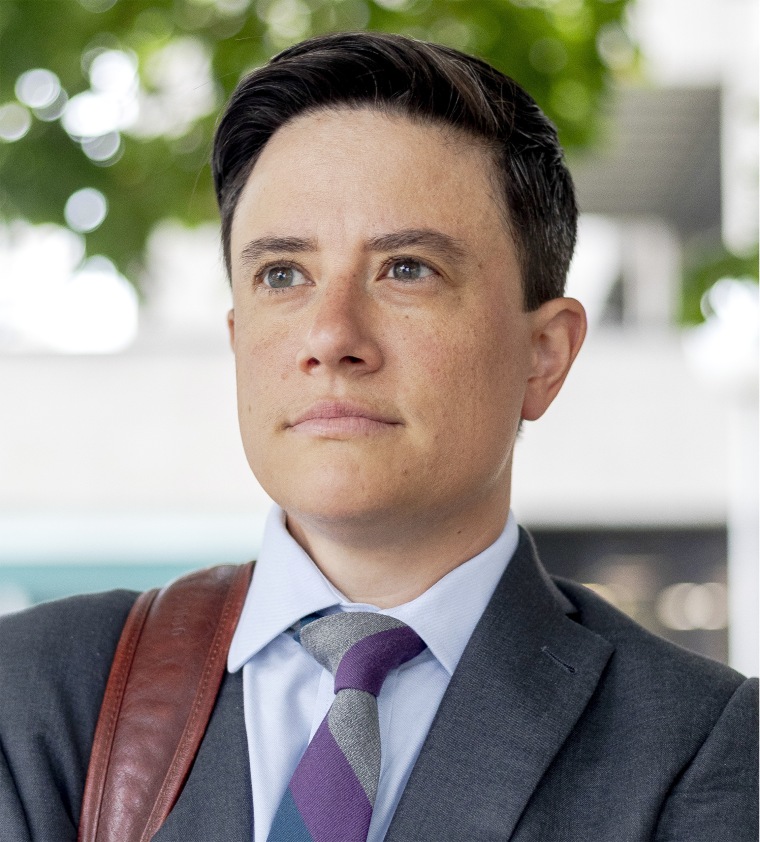
Sofia Nelson, who works as a public defender in Detroit, grew up in rural West Michigan and went on to graduate from Yale Law School in 2013.




- ‘We love you!’: The MAGA base gives RFK Jr. a rousing welcome
- DHS stopgap set for quick House action after Rules Committee vote

- Rand Paul weighs a 2028 presidential bid

- Trump to send Congress his budget request April 3

- ‘Meltdown’: DHS shutdown set to drag on after House GOP rejects Senate deal

- Troop deployments test Republicans’ nerves on Capitol Hill
- Trump’s overlapping troubles are starting to resemble a set of political Russian nesting dolls
- A ‘Love Story’ that feels more like an invasion of privacy

- The Epstein class thinks it runs America. Today, No Kings protesters send their response.
- Israel says it faces an incoming missile from Yemen, the first such launch of the war

-

 The Dictatorship1 year ago
Luigi Mangione acknowledges public support in first official statement since arrest
-

 Politics1 year ago
Former ‘Squad’ members launching ‘Bowman and Bush’ YouTube show
-

 Politics1 year ago
Former Kentucky AG Daniel Cameron launches Senate bid
-

 Politics1 year ago
Blue Light News’s Editorial Director Ryan Hutchins speaks at Blue Light News’s 2025 Governors Summit
-

 The Dictatorship7 months ago
Mike Johnson sums up the GOP’s arrogant position on military occupation with two words
-

 The Dictatorship1 year ago
Pete Hegseth’s tenure at the Pentagon goes from bad to worse
-
Uncategorized1 year ago
Bob Good to step down as Freedom Caucus chair this week
-

 Politics11 months ago
Democrat challenging Joni Ernst: I want to ‘tear down’ party, ‘build it back up’