
Politics
‘I just had flashbacks’: Portland looks to avoid repeat of 2020 protests

Before Los Angeles, there was Portland, Oregon.
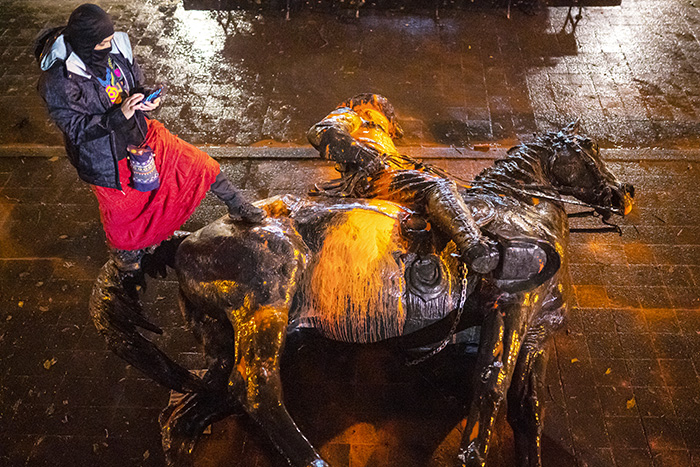
For more than 170 days in 2020, thousands of Portlanders gathered to protest police violence. They lay peacefully in the middle of the city’s most iconic bridge and marched with a local NBA star — but also tore down statues and looted shops. Police launched tear gas canisters into crowds, while the 750 Department of Homeland Security agents President Donald Trump dispatched to the city without the approval of local or state officials grabbed protesters at night and loaded them into unmarked vehicles.
As anti-Trump protests ramp up — with major rallies taking place across the country on Saturday — Portland officials are anxious to avoid a repeat of 2020.
“The Portland Police and then the feds overreacting in the way that they did, I think it brought even more people out because it was such injustice,” said Ali King, a veteran social organizer in Portland who worked for now-retired Rep. Earl Blumenauer (D-Ore.) at the time. “When I saw the LA thing, I just had flashbacks. I did feel some PTSD.”
The impact of those protests and riots on Portland was massive. Voters completely overhauled the city’s government structure, the county elected a more tough-on-crime district attorney, and the police department reformed the way it deals with protesters.
Five years later and 1000 miles away, President Trump again deployed federal officers into a city beset by protests against the will of state and local officials. Those recent events in Los Angeles have put Portland back on edge. Protests this week in the Rose City have been largely peaceful, but as tensions grow, officials hope policy changes will be enough to avoid a repeat of 2020’s violence and prevent federal involvement.
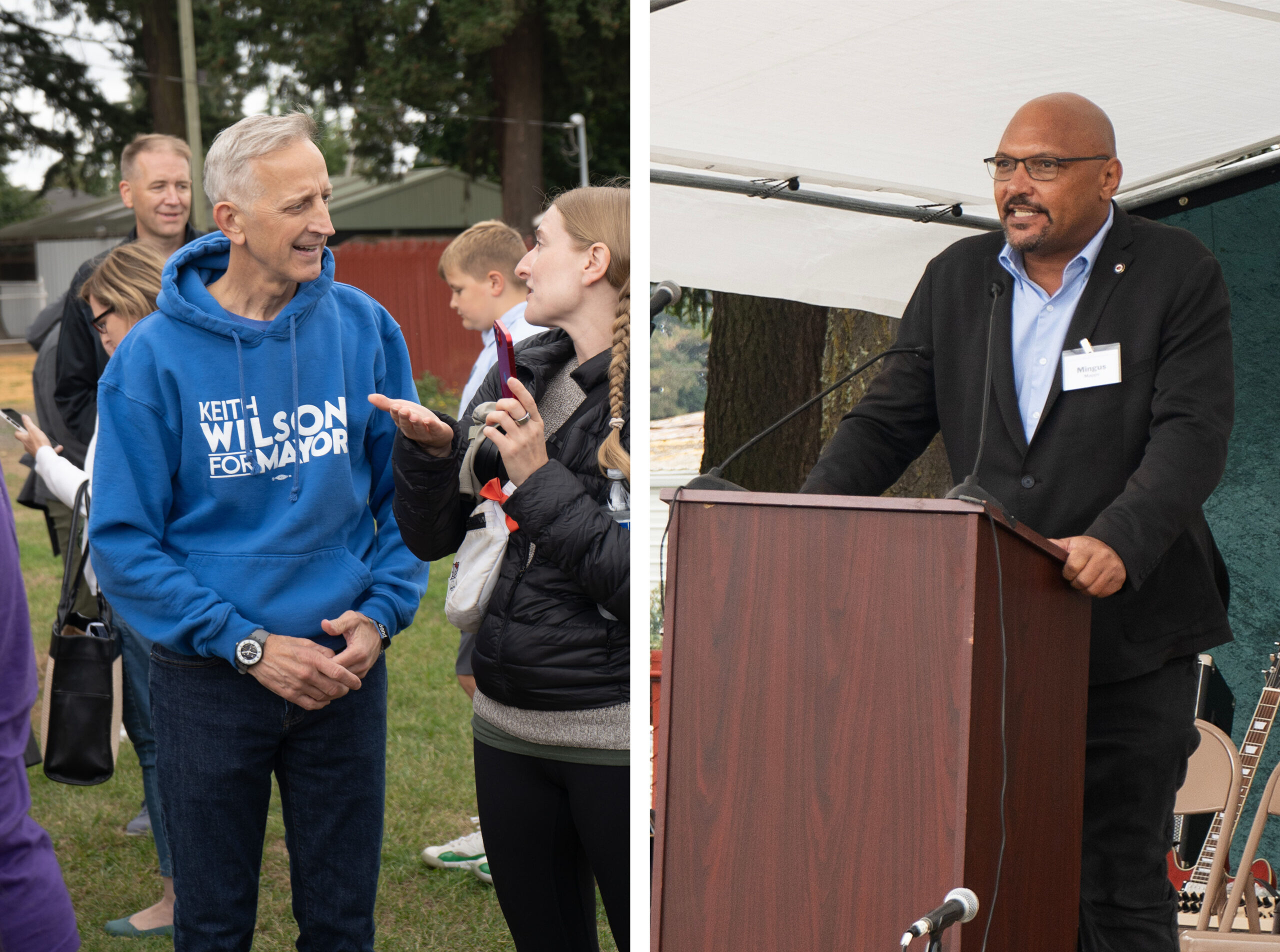
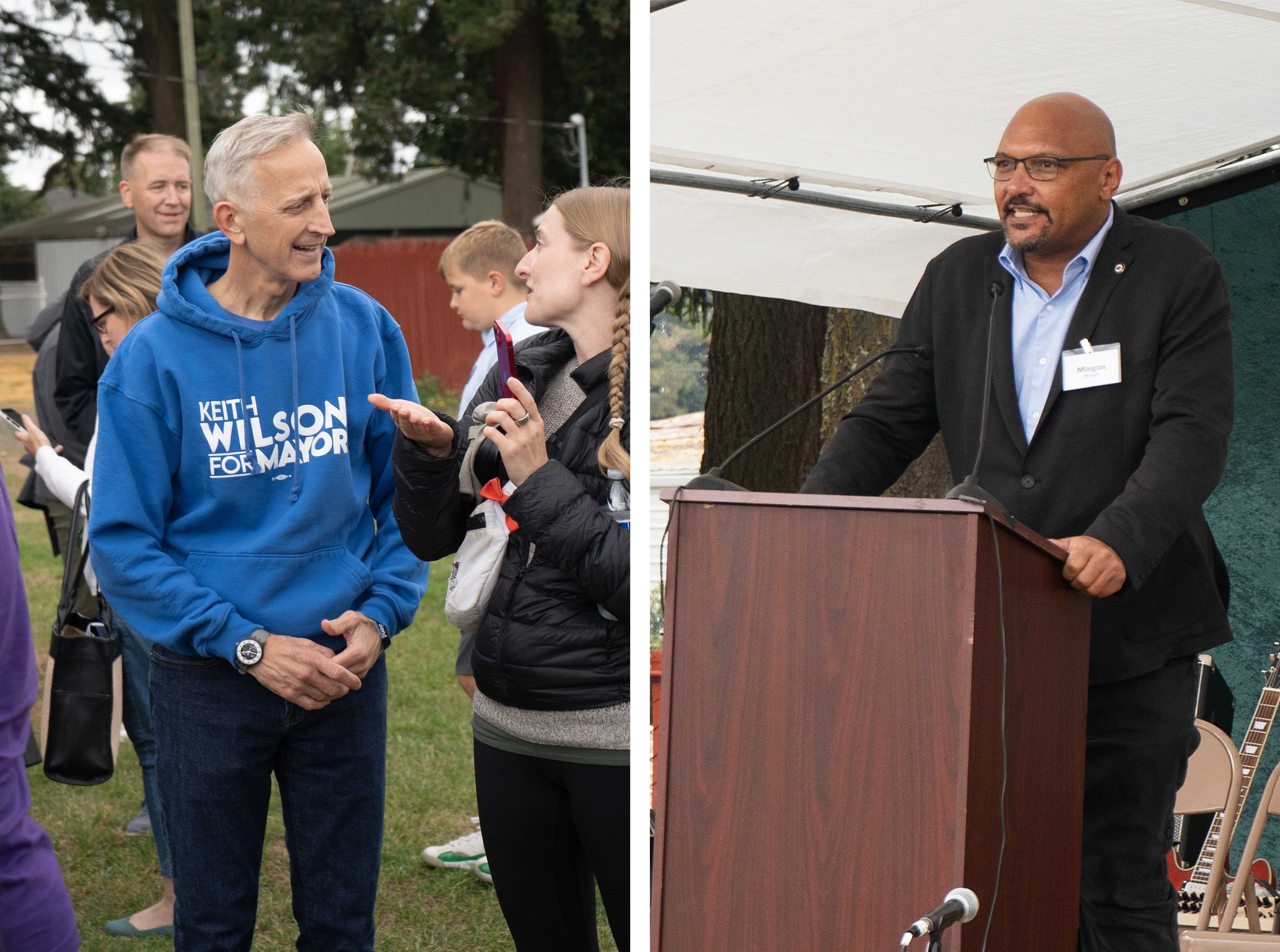
“We’ve changed so much since 2020,” Mayor Keith Wilson, a trucking company owner and political outsider who was elected in 2024 on a progressive platform of fixing the city’s homeless problem and improving public safety, told Blue Light News earlier this week. “But federal overreach is something we’re concerned about, and we’re prepared to sue.”
A review conducted by an independent monitor after the 2020 protests found failings by the city and the police department ranging from poor communication with the public to inadequate training in deescalation tactics and insufficient guidance about when and how to use force. These problems, the review found, led to mistrust between the public and the police and escalated — rather than deescalated — the situation.
In the wake of that review and a handful of lawsuits brought against the police department for actions taken during the 2020 protests, significant changes were made to the city’s policing policies. Wilson and Portland Police Chief Bob Day told Blue Light News those changes include reducing use of tear gas and militarized gear, overhauling the department’s rapid response team and establishing liaison officers to build relationships with community organizers. Members of the department also attended training in Cincinnati and London to learn from experts in deescalation and crowd control, Day added.
“We’re looking at large-scale events much differently than we’ve done in the past,” said Day, a former deputy chief who was called out of retirement in 2023 to be interim chief by then-mayor Ted Wheeler. “What you want to bring, from a public safety standpoint, is you’re not adding to the chaos.”
Most protests in Portland since these changes were instituted have been peaceful, but Sergeant Aaron Schmautz, president of Portland’s police union, says the city hasn’t faced a situation like 2020 that would put the new tactics to the test.
“There’s just a lot of nervousness right now,” he said.
Portland is not alone in the Northwest. Tensions are also growing in Seattle and Spokane, neighboring Washington’s two largest cities, in light of anti-ICE protests and the federal government’s response in Los Angeles. Seattle Police Chief Shon Barnes said Tuesday he will do anything in his power to protect Seattleites “from anyone who comes to the city with the intention to hurt them or inhibit their First Amendment rights,” and was willing to risk arrest to do so. Then on Wednesday, at least eight demonstrators were arrested by Seattle police after a dumpster was set on fire. In Spokane, meanwhile, Democratic Mayor Lisa Brown instituted a curfew after more than 30 people, including a former city council president, were arrested during protests.
King said protesters in Portland are willing to put their bodies in the way to stop ICE actions, like physically blocking agents’ path or distracting them. And she says trust between protesters and the Portland Police Bureau is still really low. But she added that the community has been having its own conversations about remaining peaceful and deescalating within the ranks at protests.
Terrence Hayes, a formerly incarcerated local community organizer who is on the city’s criminal justice commission and supports giving the police more resources, said the city’s mood has changed since 2020. The months of violence, tear gas, looting and arrests by federal officers are something residents are not excited to revisit.
“I just don’t think we’re looking for that fight,” Hayes said. “If ICE start pushing certain lanes, of course people are going to stand up and protest — but I don’t think they’re going to be inner-city destructive.”
King added that “if somebody is kidnapping an innocent person off the streets … [we] might have to physically get involved.”
Over the last week, there have been protests across the city, including outside the local ICE office. The vast majority have been peaceful, Schmautz said, with minor instances of violence or destructive behavior like arson. The department has arrested about 13 people over the last week. For a city so renowned for its protests that it was once called “Little Beirut” by a staffer for George H.W. Bush (a moniker a local band proudly took as their own), the last week has been notably quiet.
Day said this week shows the new policies are already helping deescalate. But 2025 is very different from 2020 in a key way: Then, Portlanders were protesting their own police department. Now, the target is the federal immigration apparatus. The police department will not assist ICE, Day explained, but needs to prevent violence or lawbreaking all the same. He calls the gray area for local police “a very complex, nuanced challenge.”
The chief gave two examples: Earlier this week, Portland Police removed debris piled by protesters that was preventing ICE contractors from entering a parking lot — receiving criticism from city residents for doing so. At the time, the department contends, the contractors were not engaged in enforcement actions and officers believed that moving the debris would reduce tensions. But on another day, police watched passively nearby and did not help federal officers clear a path through a similar group of protesters for a van carrying detained immigrants to pass.
Day said in a normal situation, they would clear a blocked street. But with ICE, they “are not going to actively enforce some of these laws” that are hindering ICE’s operation, Day said. But, he added, “we can’t say that the ICE facility, in itself, as it stands, is free game, that anybody can do whatever they want to that building or to that area.”
The wild card, according to everyone involved, is the small portion of people who show up and try to escalate conflict and encourage illegal behavior. Nearly everyone who spoke to Blue Light News for this article mentioned groups on the right and left who are suspected of coming to peaceful protests in order to incite violence.
“Law enforcement may be called to navigate criminal activity on the fringes of a free speech event, which creates a lot of challenges,” Schmautz said.
And at the core of the conversation is Portland’s collective identity as a city that is always willing to fight back. Chief Day noted Portland’s longstanding protest culture. Free speech demonstrations are one of the city’s core values, Schmautz added. King said she and her fellow protesters expect to become a target of the Trump administration in the coming days or weeks.
But perhaps Hayes put it best: “If you push, Portland pushes back,” he said. “If they come to Portland acting up, Portland’s gonna return that LA energy.”


Former President Barack Obama will campaign in Detroit with Michigan Democrats later this month, giving the party a high-profile boost ahead of the start of the state’s early voting period.
Obama is set to join Democratic Senate nominee Abdul El-Sayed, gubernatorial nominee Jocelyn Benson and other candidates on Oct. 24, the state party announced Monday.
“It is my honor and privilege to announce that President @BarackObama is joining us on the trail in Detroit on Saturday, October 24,” El-Sayed wrote on social media. “Get. Ready.”
The event comes 10 days before Election Day, with Democrats defending an open Senate seat and the governor’s office.
El-Sayed faces Republican former Rep. Mike Rogers in the race to succeed retiring Democratic Sen. Gary Peters. Benson, Michigan’s secretary of state, faces Republican Rep. John James in the open governor’s race.
Since leaving the White House, Obama has remained one of the party’s most popular figures, both nationally and among the party grassroots. He has campaigned in past cycles, but he’s made few public stops on the trail this year.
He previously campaigned in Texas with Democratic Senate nominee James Talarico and gubernatorial nominee Gina Hinojosa, and appeared in a campaign ad with Iowa Senate nominee Josh Turek.
The former president is also set to headline a Washington-area fundraiser Wednesday for the Democratic Senatorial Campaign Committee, his first with the party’s Senate campaign arm this election cycle.
Ken Paxton is less than a month out from the conclusion of a D.C.-outsider campaign for a Texas U.S. Senate seat that he privately admitted is being run by Washington.
“I’ve never been in a race where I felt less control over the campaign and, like, what issues are going to matter because it’s all coming — you know — from D.C.,” Paxton said during a small fundraising event last month, according to an audio recording obtained by Blue Light News from a person in the room who does not support Paxton, and verified by another attendee.
“I don’t control message or what we’re doing.”
The lunch, hosted Sept. 24 in Washington by Chris Brinson and Susan Hirschmann of the D.C.-based lobbying firm Williams & Jensen, was attended by about a dozen people including Scott Kopple, VP of government relations at defense contractor BWXT.
“Texas is a big state, and some of these issues obviously resonate with real — I’ll call real people — you know, like back home,” Kopple, who did not respond to a request for comment, said to some chuckles in the room. “I know you need money to get the message out and stuff, but how does this stuff translate?”
Paxton replied saying: “I miss the days when I could go to, get around with all the people. But we have 32 million people, so let’s just say for the next 40 days I’m in front of 1,000 people a day — which I’m not — and that’s 40,000 people. Ten to 10.4 million people are gonna vote.”
“But then it comes down to your messaging,” he continued, “which in a federal race comes from other people a lot of times, which you don’t control.”
One attendee granted anonymity to discuss the private meeting said that Paxton never explicitly said he was referring to Trump’s team controlling his campaign, but “everybody knew what he was talking about.” The person said Paxton’s comments came amid a broader discussion about the national political environment.
“I don’t have ability to change anything,” Paxton went on. “So I have to live with whatever I’ve got. So it is a challenge.”
Paxton campaign adviser Nick Maddux said, “Campaigns don’t coordinate with super PACS and that’s obviously what AG Paxton was referring to,” in a statement to Blue Light News. “AG Paxton is thankful for the support and knows how important Texas is to keeping the majority which is why he’s on the ground every day talking to Texas, raising money, and taking his message directly to the people including with his statewide television buy that started over this past weekend.”
Neither Hirschmann nor Brinson responded to a request for comment.
In an audio recording of the same meeting obtained by The New York Times, Paxton told attendees the midterm convention hosted by Trump in Texas last month “dropped our numbers. Everybody’s numbers dropped. Right now, yeah, not good.” Maddux described the article as “manipulated nonsense.” Playbook hasn’t heard the contents of the rest of the hourlong meeting.
The most recent New York Times/Siena poll has Paxton running 6 points behind Democratic challenger James Talarico.
The private comments follow a bitter primary campaign waged against Republican incumbent John Cornyn, whom Paxton framed as a “Washington insider” and “RINO” while publicly aligning himself with Trump.
“His money is coming from the D.C. establishment,” Paxton said of Cornyn while campaigning in Texas before the primary, the AP reported. “That’s how they always try to convince us from Washington with their money that we should select their person. Well, I’m not their person and I’m never going to be their person.”
Paxton maintains a cash advantage heading into November and announced a $20 million ad buy last month. The Senate Leadership Fund, a top GOP super political action committee closely aligned with Senate Majority Leader John Thune, pledged millions to back Paxton earlier in September.
Like this content? Consider signing up for Blue Light News’s Playbook newsletter.
President Donald Trump made major gains among Latino voters in 2024. Now, those same voters might cost Republicans control of Congress.
Fifty-nine percent of Latino registered voters prefer a Democratic-controlled Congress, compared with 35% who favor Republican control, according to a new NBC News/Telemundo poll released Sunday. That 24-point gap for Democrats is twice the party’s lead compared to the September 2024 version of the poll.
A separate CBS News/YouGov poll released Sunday also found Democrats ahead among Hispanic likely voters, with 60% backing a Democratic House candidate and 39% supporting a Republican.
The findings threaten gains the GOP made in 2024, when Trump narrowed Democrats’ long-standing advantage among Latino voters. A POLITICO analysis of that year’s election results found that Trump improved his vote share by an average of more than 6 percentage points in majority-Hispanic counties, compared with 2020.
With the midterms approaching, Republicans have made those gains central to their push to maintain control of the House. When Texas Republicans revealed their redistricting proposal last year, four of the five potential GOP pickup opportunities were in majority-Hispanic districts.
Meanwhile, Trump’s overall approval rating among Latino registered voters stands at just 27% in the NBC/Telemundo poll, while 69% disapprove. On the economy specifically, 74% of Latino voters disapprove of Trump’s handling, while 78% disapprove of how he’s dealt with cost-of-living concerns.
Nearly two-thirds, 65%, say Trump’s policies have hurt economic conditions. Inflation and cost of living rank as the most important issues facing the country for 33% of respondents, followed by government corruption at 22%. Another 10% named jobs and the economy.
Economic frustration helped drive Latino voters toward Trump in 2024, with Democrats across the country suggesting in the aftermath of his victory that he was better able to connect with the voting bloc on financial issues.
But now, Latino voters seem to favor Democrats over Republicans on the economy, 48% to 27%, and the cost of living, 45% compared to 26%.
The war with Iran, now in its seventh month, is also weighing on voters’ perceptions of energy costs. In September, the average price of diesel hit a record $6.53, according to AAA.
In the CBS survey, 91% of Hispanic registered voters attributed rising U.S. oil and gas prices to the conflict.
Trump’s immigration crackdown is also putting vulnerable Republicans on the defensive. Rep. María Elvira Salazar (R-Fla.) released an ad in English and Spanish criticizing the administration for going “too far” on immigration and saying Hispanics who backed Trump in 2024 feel “betrayed.”
In the days immediately following her ad, Trump told reporters that he still supported Salazar. “I’m very strong on the borders — and she isn’t,” Trump said. But the president later reposted a flurry of social media messages criticizing Salazar on Truth Social, including one calling for the Florida Republican’s replacement ahead of the midterms.
In the NBC/Telemundo poll, 67% of Latino voters say Trump’s immigration enforcement has gone too far, compared with 22% who say he has taken the right approach.
The White House did not immediately respond to a request for comment.
Dissatisfaction with Trump and Republicans has not translated into broadly positive views of Democrats. According to the NBC poll, Latino voters remain nearly evenly divided on the Democratic Party, with 41% viewing it positively and 42% negatively. Negative views of the GOP, meanwhile, have climbed to 62%, up from 46% in September 2024.
The NBC/Telemundo survey of 800 Latino registered voters was conducted Sept. 21-28 and has a margin of error of ±3.46%. The CBS/YouGov survey of 2,166 adults was conducted Sept. 30-Oct. 2, with a margin of error of ±2.5 points.
-

 Politics2 years ago
Former ‘Squad’ members launching ‘Bowman and Bush’ YouTube show
-
Uncategorized2 years ago
Bob Good to step down as Freedom Caucus chair this week
-

 The Josh Fourrier Show2 years ago
DOOMSDAY: Trump won, now what?
-

 The Dictatorship2 years ago
Pete Hegseth’s tenure at the Pentagon goes from bad to worse
-

 Politics2 years ago
Former Kentucky AG Daniel Cameron launches Senate bid
-

 The Dictatorship2 years ago
Luigi Mangione acknowledges public support in first official statement since arrest
-

 Politics2 years ago
Blue Light News’s Editorial Director Ryan Hutchins speaks at Blue Light News’s 2025 Governors Summit
-

 The Dictatorship1 year ago
Mike Johnson sums up the GOP’s arrogant position on military occupation with two words