
Politics
How Democrats will try to block Trump’s promise of mass deportations


Democratic attorneys general are preparing a raft of legal actions to prevent Donald Trump from carrying out mass deportations of undocumented immigrants, setting the stage for a series of showdowns over one of his central campaign pledges.
In interviews with Blue Light News, six leading blue-state prosecutors said they are girding to take Trump to court over misusing military troops on domestic soil, attempting to commandeer local or state law enforcement to do the job of the federal government and denying people’s constitutional right to due process.
The attorneys general also said they would move to challenge Trump if he tries to federalize the National Guard — or attempts to direct active-duty military units or National Guard troops from red states into blue states. They are bracing to push back against his administration sending immigration agents into schools and hospitals to target vulnerable populations.
And they are preparing to fight Trump over withholding federal funding from local law enforcement agencies in an attempt to induce them into carrying out deportations, as he did unsuccessfully in his first term.
The attorneys’ preparations underscore the depth of concern among blue-state leaders about Trump’s deportation plans and foreshadow the major role state prosecutors will continue to play in shaping the country’s immigration policy. Following a rash of red-state challenges to President Joe Biden’s immigration agenda over the last four years, it’s now blue-state attorneys who are positioned to set off another round of legal clashes — this time intended to stymie Trump on his signature issue.
“There are ways to [handle immigration] that are in line with American values and conform to American law. But they don’t seem to be interested in pursuing that,” New Mexico Attorney General Raúl Torrez, a former federal prosecutor who has experience in immigration enforcement, said of Trump and his allies. “And that’s where someone like me has an important role to play.”
MOVES AND COUNTERMOVES
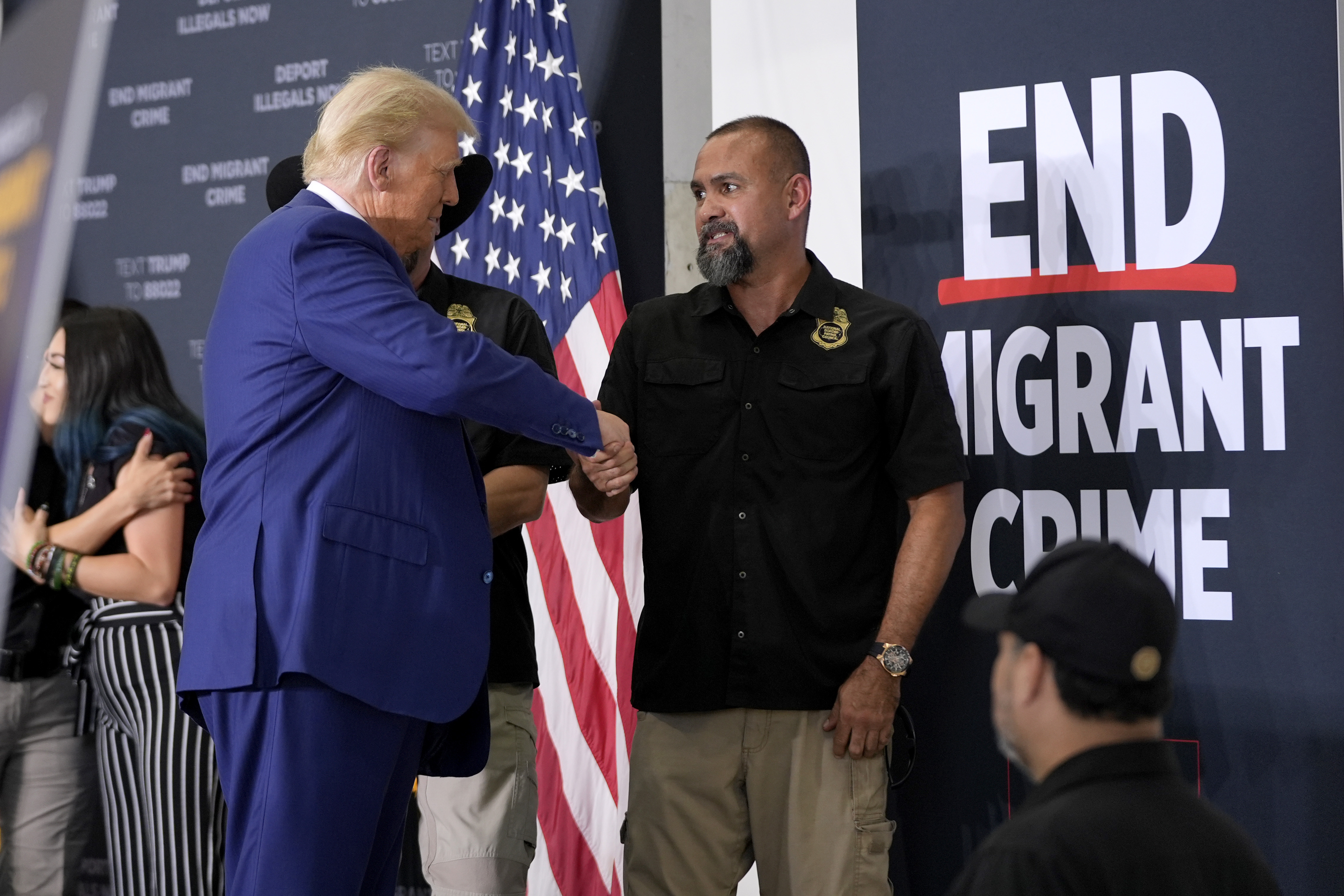
While some have dismissed Trump’s pledge to carry out the largest deportation in American history as infeasible, Democratic attorneys general are taking the incoming president at his word. They are preparing briefs and analyses and even identifying courts in which to file their lawsuits as they brace for him to begin rounding up undocumented immigrants, who number some 11 million, en masse.
It is setting up a legal chess match between a president-elect looking for new ways to press the limits of executive power and a cadre of state prosecutors already familiar with his playbook and adapting to changes in his approach. And it is unfolding amid broader shifts in the politics of border security.
The incoming president’s policy team is already thinking about how to craft executive actions aimed to withstand the legal challenges from groups and state prosecutors — all in hopes of avoiding an early defeat like the one that shuttered his 2017 travel ban targeting majority-Muslim nations.
But each step Trump takes during his transition — stacking his Cabinet with immigration hardliners who have pledged to carry out his calls for large-scale deportations, and confirming he intends to both declare a national emergency and use the military in some form to aid his plans — gives Democrats more clues about how to attempt to block his efforts once he takes office.
Trump pledged on the campaign trail to invoke the Alien Enemies Act of 1798 to expedite the removal of immigrant gang members. He is expected to end parole for people from Cuba, Haiti, Nicaragua and Venezuela, and deactivate a mobile phone application called CBP One that migrants could use to set up appointments to seek asylum.
His border-czar-in-waiting, former acting Immigration and Customs Enforcement director Tom Homan, has vowed to ramp up workplace raids. His incoming deputy chief of policy, Stephen Miller, has spoken of deputizing the National Guard as immigration enforcement officers and even sending troops across state lines to circumvent any resistance efforts. While federal law largely prohibits using military forces for domestic law enforcement, Miller last year identified a workaround — the clause in the so-called Insurrection Act that gives the president power to deploy the military on domestic soil in times of turmoil.
And on Monday, Trump confirmed in a social media post that he intends to declare a national emergency and marshal military assets to help execute deportations.
State prosecutors argued in interviews that those plans are on shaky legal ground. And talk of using the military has already spurred policy divides between the incoming president and Republican lawmakers, with libertarian-leaning GOP Sen. Rand Paul (R-Ky.) saying this week that Trump’s plan to carry out mass deportations with the military’s help would be a “huge mistake” — an early sign that Democrats might have some allies on this front.
“I don’t think the theories that they have comport with federal laws, so there would be a direct challenge to the legal basis the president would use to deploy the United States military,” Torrez said.
“Separate and apart from the legal arguments that we would be advancing in court, I think there’s a broader context that most Americans are simply not comfortable and do not support utilizing military assets in that way,” Torrez added.
WHERE TO PUSH BACK — OR NOT

Attorneys general aren’t planning to stand in the way of lawful immigration enforcement. In many cases they will work with federal authorities to address public safety threats and to help catch and deport criminals — as they have in the past. And even as they prepare for what they cast as potential overreach from a second Trump administration, they note that their next steps largely depend on how the president-elect implements his plans, which is difficult to predict.
Trump’s advisers have suggested the Republican administration will take a more “targeted” approach to deportations, starting with those who are known or suspected national security threats and who have criminal records. But attorneys general are skeptical he will stick to that. And they are fearful he could begin targeting both undocumented immigrants who have been in the country for a decade or more and have established roots, or those who entered the country through legal pathways — scenarios they warn could lead to family separation and cause chaos in some communities.
“If he’s going to want to achieve that type of scale, the largest deportation in U.S. history, as he says, by definition he’s going to have to target people who are lawfully here and … go after American citizens,” New Jersey Attorney General Matthew Platkin said. “And we’re not going to stand for that.”
Trump pledged on the campaign trail to begin his deportation push in Aurora, Colorado, the Denver suburb he routinely depicted — despite pushback from locals — as a “war zone” that had been “invaded and conquered” by members of the Venezuelan gang Tren de Aragua. Phil Weiser, the state’s attorney general, said he will be “laser-focused” on determining whether Trump’s immigration officials are denying people due process — a move he called “unAmerican.”
Attorneys general from Colorado to California are also preparing for repeat battles over federal funding. Trump threatened throughout his first term to withhold funding from states and cities with so-called sanctuary policies that limit local law enforcement’s interactions with federal immigration authorities. His administration also attempted to attach immigration-enforcement conditions to grants for local law enforcement — and lost in court.
“We won’t take that lying down, just as we didn’t last time,” California Attorney General Rob Bonta said.
In response to a request for comment for this story, Steven Cheung, Trump’s communications director, said in a statement that the president-elect has “nominated the most highly qualified and experienced attorneys to lead the Department of Justice” and “focus on enforcing the rule of law.”
Democratic prosecutors’ resistance will extend beyond the courtroom. Advocacy groups such as the ACLU are already pushing attorneys general to use other tools at their disposal — such as issuing guidance to state and local agencies about how to handle immigration requests from the federal government — to attempt to slow implementation of Trump’s immigration actions.
And attorneys general are already embarking on a messaging campaign both against Trump’s broad characterizations of migrants as “blood thirsty” criminals and in support of immigrants who are contributing to local communities. They are also joining other Democratic leaders in starting to cast Trump’s deportation plans as potentially harmful for the economy he has pledged to improve, drawing a direct line between the immigrant workforce that helps drive the nation’s agriculture industry and higher prices at the grocery store.
Trump has created the narrative “that every immigrant who is here in, say, Massachusetts, or this country, illegally is committing crimes,” said the state’s attorney general, Andrea Campbell. “It’s just not true.”
Shia Kapos and Josh Gerstein contributed to this report.


MIDLAND, Michigan — Pete Buttigieg is known for going everywhere to get his message out in the media. In 2026, he’s taking that strategy offline, too, traveling virtually everywhere.
A source close to Buttigieg tells Playbook he’s spent half of 2026 on the road, hitting 10 states so far — including battleground states Georgia, Nevada, Pennsylvania, Wisconsin and his adopted home state Michigan, plus a multiday swing across for-now-first-in-the-nation New Hampshire. And he’s not yet hawking books like some of his would-be 2028 rivals. He’s stumping for candidates up and down the ballot.
While potential 2028ers like Illinois Gov. JB Pritzker and Pennsylvania Gov. Josh Shapiro focus on flexing midterm-year dominance in their own backyards, Buttigieg is embarking on a more national project to position himself as a super surrogate not confined to specific geography or demographics. It’s a strategy that could help him counter the base of power that comes from holding elected office.
Buttigieg laid out his midterm strategy to Playbook in an exclusive interview after gripping and grinning and taking selfies along a ropeline: “The basic idea is to make myself useful to candidates and causes that I care about and that we all need to succeed,” he said at Mi Element Grains & Grounds, a combination microbrewery, bakery and coffeehouse, after launching a canvassing effort backing Chedrick Greene in a special election to determine control of the Michigan state Senate.
“Every kind of state, red, blue and purple, there are races going on and fights going on that I want to make sure I’m part of,” Buttigieg told Playbook. “And they are all often very different from each other, but what they have in common is leaders who are very rooted in a sense of place. They’re very much of where they’re from, and I think represent a big part of what the future for Democrats is going to look like.”
Buttigieg has increased his engagement with Black candidates like Greene and the community more broadly, addressing a perceived weakness. In Alabama, Buttigieg joined civil rights leaders and community members in Selma for the Bridge Crossing Jubilee and Anniversary of Bloody Sunday, and made remarks at a unity breakfast and Tabernacle Baptist Church. In Birmingham, he joined a roundtable with business owners from the Historic 4th Avenue Business District.
A source familiar with Buttigieg’s past outreach to the Black community described his efforts a “natural extension” of his work on his 2020 presidential campaign and in the Biden administration.
“It’s a recognition that engagement in those spaces and showing up in 2026 is going to be a huge indicator of who’s going to be the leader of this party,” this person, granted anonymity to candidly appraise Buttigieg’s approach, told Blue Light News. “I think it’s really smart to think along those lines, and to show, right? Not just talk about it, but to actually show and demonstrate it.”
He also campaigned for Shawn Harris in former Rep. Marjorie Taylor Greene’s deep-red Georgia congressional district, and gave an interview to Black creator Hood Anchor Ye alongside Rep. Nikema Williams. He also attended Sen. Raphael Warnock’s Ebenezer Baptist Church, where he received a very warm welcome.
“I’m very focused on coalition right now, and that includes pillars of our Democratic coalition, like the building trades workers I was with in Toledo or in Nevada, and certainly Black voters who were so vital to the past, present and future of the party,” Buttigieg said.
A February Emerson poll found Buttigieg had about 6 percent support among Black voters; California Gov. Gavin Newsom had 17 percent and former VP Kamala Harris had 36 percent.
“He had a remarkable run in 2020 and ultimately, one of the, perhaps the greatest obstacle, is that he didn’t have much of a relationship with African American voters,” David Axelrod, the former strategist for former President Barack Obama and longtime Buttigieg ally, told Playbook. “And the fact that he’s spending a lot of time communing with Black voters across the country even if in the service of the midterm elections, is a reflection that he’s not headed for early retirement.”
There is also, of course, the fact that Buttigieg has a newly crafted stump speech that walks an average voter through their day and overlays his policy hopes for them, something reminiscent of James Joyce’s “Ulysses”. “I don’t want to overdo that, but yes, as you know, my whole thing is the politics of everyday life. And one way to get that across is to just literally walk through everyday life and all of the hundreds of moments in that day that are shaped by political choices.”
Asked about whether he thought the narrative of his struggles with Black voters matched the
reality of what he was seeing on the ground, Buttigieg redirected. “This year is very much not about me,” he said. “What it’s really all part of for me is where are there leaders that I can help and where it’s going to make a difference to engage.”
Beyond that, Buttigieg’s travels and how he’s talking is revealing about his potential trajectory: For starters, he’s laser-focused on building a majority Democratic governing coalition. He used the word no fewer than 10 times.
Buttigieg insisted that Democrats “should be able to build a supermajority coalition” based on the party’s platform. He has noted in the past most Americans support paid family leave, raising the federal minimum wage, raising taxes on the wealthy, universal background checks, and a public health insurance option. “If we can’t get those two-thirds supported positions over 50 percent that means we’re missing something in terms of the coalition we built.”
But as potential candidates like Newsom seek to emulate Trump’s smashmouth social media style, Buttigieg is more focused on creating a Democratic version of MAGA’s sweeping coalition. That means Buttigieg’s 2026 project is to build a big tent in nature — not a matter of pure ideology. In Pennsylvania, for example, Buttigieg held a well-attended event with Bob Brooks, the bellwether Lehigh Valley Democratic congressional candidate running to flip Pennsylvania’s 7th Congressional District. Brooks, a Pennsylvania firefighter, supports Medicare for All, which Buttigieg opposed in his presidential run.
“It is really important that we understand what it means that this president stitched together this very unlikely crew that includes traditional Republicans, Libertarians, authoritarians and white nationalists,” Buttigieg said. “We have to have a bigger, better, different coalition.”
In the next few weeks, Buttigieg is expected to cross another battleground off his list, with a stop in North Carolina where he’ll campaign for Democrats, as well as two redder states: a town hall in Oklahoma and a stop in Montana, where he is planning to boost “The Montana Plan,” a ballot initiative to curtail corporations from spending money on political candidates or ballot issues.
“We’re trying to get everywhere we can,” Buttigieg said. “Including places in the same way that — you know, I think Fox News is this kind of place — places where people don’t hear enough from us, because I think there are potential members of our coalition to be found.”
Like this content? Consider signing up for Blue Light News’s Playbook newsletter.
Politics
Congress must ‘adequately’ fund defense, Johnson says, amid talk of $200 billion war request
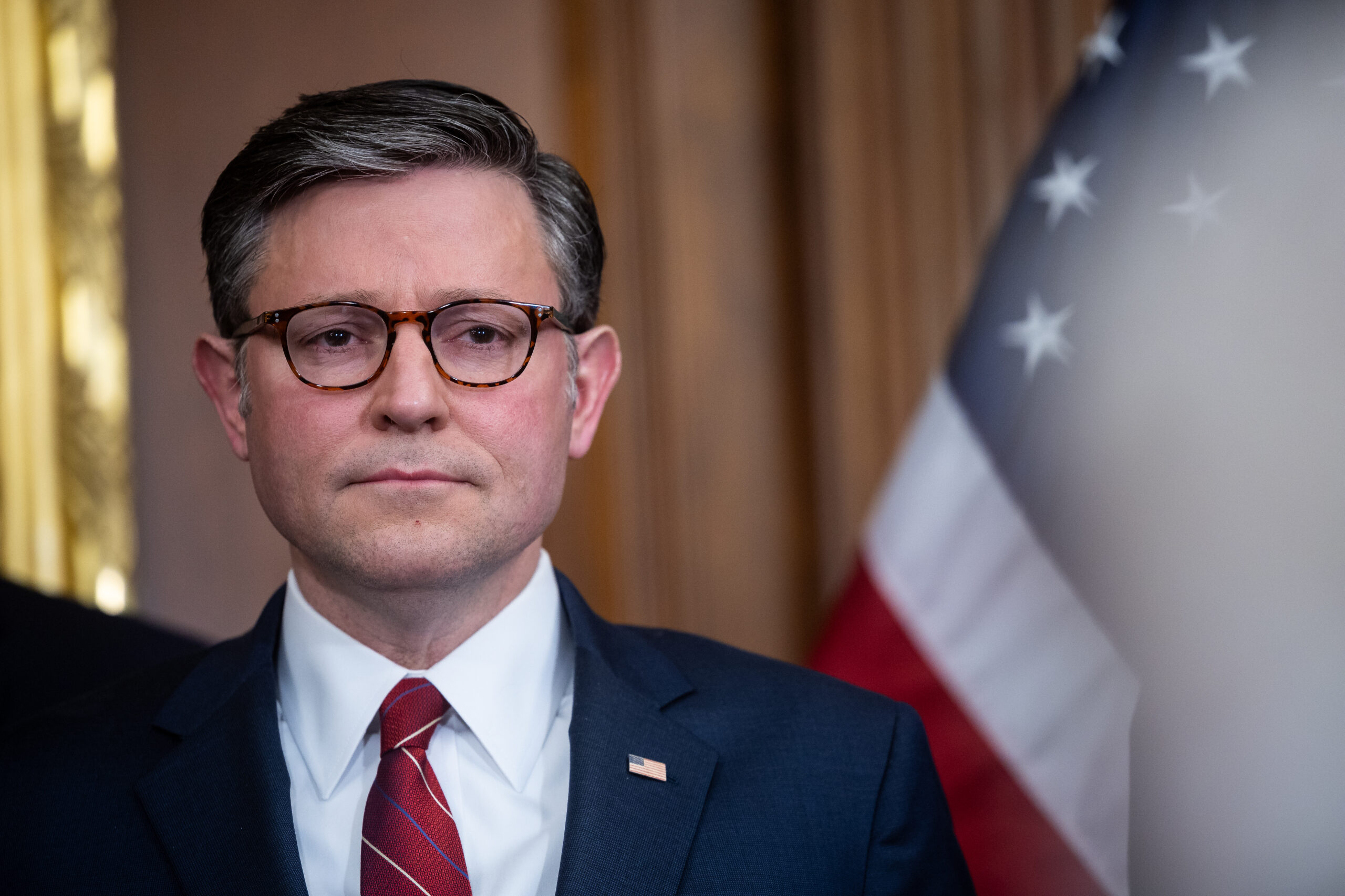
House Majority Leader Steve Scalise declined to say if such a request could pass the House…
Read More
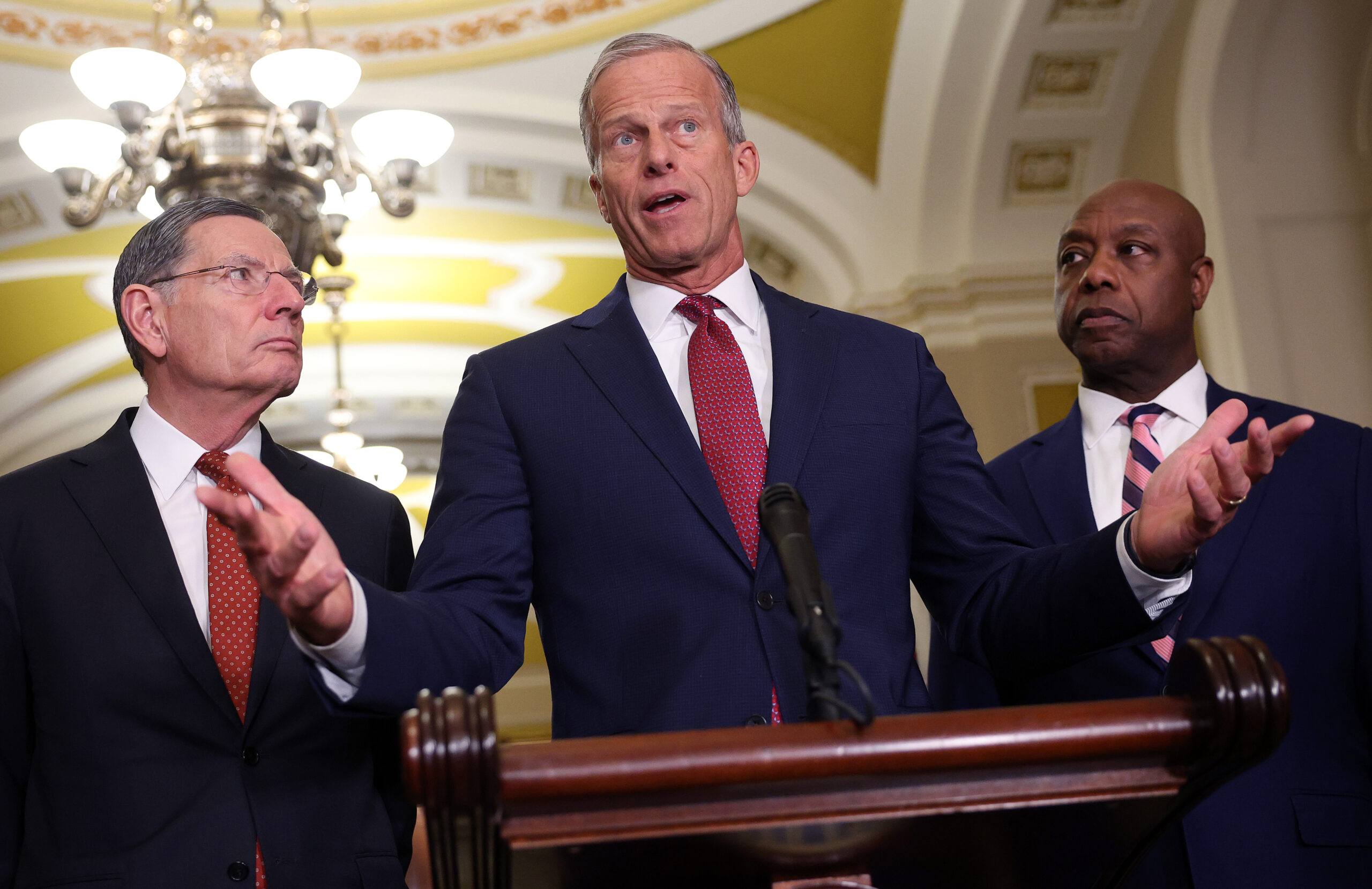
Trump had already endorsed him as he seeks to replace Markwayne Mullin…
Read More
- Another DHS funding vote coming to House floor
- The decades-long resilience of Cuba’s government in jeopardy over Trump administration’s siege

- The states where higher gas prices could shape the midterms
- House GOP leaders punt controversial FISA vote to April
- ‘Hormuz has to reopen’: Why the oil industry can’t help Trump tame rising gasoline prices
- White House sends blueprint for national AI rules to Congress
- Capitol agenda: Senate heads into a weekend grind
- Pete Buttigieg’s 2026 project
- Congress must ‘adequately’ fund defense, Johnson says, amid talk of $200 billion war request

- Thune, Tim Scott endorse Hern for open Oklahoma Senate seat
-

 The Dictatorship1 year ago
Luigi Mangione acknowledges public support in first official statement since arrest
-

 Politics1 year ago
Former ‘Squad’ members launching ‘Bowman and Bush’ YouTube show
-

 Politics1 year ago
Blue Light News’s Editorial Director Ryan Hutchins speaks at Blue Light News’s 2025 Governors Summit
-

 Politics1 year ago
Former Kentucky AG Daniel Cameron launches Senate bid
-

 The Dictatorship6 months ago
Mike Johnson sums up the GOP’s arrogant position on military occupation with two words
-

 The Dictatorship1 year ago
Pete Hegseth’s tenure at the Pentagon goes from bad to worse
-
Uncategorized1 year ago
Bob Good to step down as Freedom Caucus chair this week
-

 Politics11 months ago
Democrat challenging Joni Ernst: I want to ‘tear down’ party, ‘build it back up’