
Congress
House Oversight interviews Epstein prison guard

Tova Noel, the prison guard on duty the night of Jeffrey Epstein’s death, is the latest witness to give testimony as part of the House Oversight and Government Reform Committee’s investigation into the late convicted sex offender.
The circumstances surrounding Epstein’s death have dramatically fueled conspiracy theories around the case, despite the fact that the Justice Department determined that Epstein died by suicide behind bars.
Noel, who appeared for a closed-door interview Monday with the committee, has said she believes she was the last person to see Epstein alive.
“Jeffrey Epstein got special treatment in that facility,” Rep. Suhas Subramanyam (D-Va.) said Monday. “He got access to medications in a way no one else did. He got access to extra bed linens, which helped him commit suicide. He got access to a CPAP machine, which had a long cord. And so Jeffrey Epstein — just like Ghislaine Maxwell, right now — was given special treatment in incarceration.“
Maxwell, the only co-conspirator in Epstein’s schemes to be convicted, was transferred to a minimum-security prison camp in Texas after she sat for questioning with then-Deputy Attorney General Todd Blanche — a move that was highly criticized.
Few lawmakers on the Oversight panel attended the transcribed interview with Noel, as there are no votes scheduled in the House until Wednesday. Committee chair James Comer (R-Ky.) was unable to participate due to family obligations back home, according to a committee spokesperson.
Rep. Melanie Stansbury (D-N.M.), who attended part of the interview Monday, blamed the poor attendance on the “chaotic majority” and “the constant changing of the schedule.”
She added that she believed Noel had been forthcoming with the panel.
Noel and a co-worker were previously charged with falsifying records at the Metropolitan Correctional Center in what the DOJ called an effort to hide the fact that they were not performing their jobs. The charges were ultimately dropped after the two abided by the terms of a deferred prosecution agreement.
A spokesperson for Noel did not return a request for comment.


Democrats may be rooting for Sherrod Brown’s comeback, but they are not exactly prepared for what’d happen next.
If Brown wins on Election Day, Democrats likely face an uncomfortable choice: break longstanding party rules to restore his seniority on powerful committees like Banking, Agriculture and Finance or potentially make him start over at the bottom.
Complicating the issue: Brown will immediately need to prepare for a grueling re-election fight in 2028 and his campaign could greatly benefit from two years with a high-profile gavel. That’s because this midterm is Ohio’s special election where voters are selecting a senator to serve out the remainder of Vice President JD Vance‘s term.
Brown’s post, therefore, may not only deeply impact Democrats’ policy agenda but could also play a key role in the party’s success in winning the battleground seat in 2028.
Some members are already suggesting the party should try to find a middle ground.
“Some accommodation that recognizes he would not be a rank freshman would make sense. But that’s distinct from handing him back a leadership role at Banking,” said Sen. Chris Coons.
The Ohio Democrat served as the top Democrat on the Banking panel for a decade. He was also a longtime member of Finance as well as Agriculture, where he would also be the most senior member if his previous service counted.
To give Brown a gavel on Agriculture or Banking could set up clashes with the Democrats now expected to lead their party on the panels: Sens. Michael Bennet and Elizabeth Warren, respectively.
It would also break Senate Democrats’ caucus rules, and precedent is not on Brown’s side when it comes to making exceptions.
Still, aides and lobbyists around the panels expect Democrats will be eager to give Brown some sort of perch.
Those close to him have been encouraging him to seek the Agriculture gavel. It’d allow him to deliver valuable policy wins for Ohio’s rural areas, influence the farm bill if it gets punted to next year and help guide the direction of cryptocurrency regulation.
Another possibility that avoids an intraparty clash: hand Brown a seat on Appropriations, which could potentially give him a subcommittee gavel and federal funding clout.
Minority Leader Chuck Schumer has avoided any firm commitments on Brown’s seniority, saying last month when asked: “Let’s win back the Senate first.”
What else we’re watching:
— OMAR RAID RAISES QUESTIONS FOR GOP: House Republicans — including Majority Whip Tom Emmer — have publicly cheered on the Trump administration’s investigation of GOP boogeyman Rep. Ilhan Omar. But the raid raises thorny questions for GOP leaders about how aggressively Congress wants to defend itself — regardless of party — from encroaching federal prosecutors. Lawmakers’ work communications are protected from prosecutors’ scrutiny, with few exceptions, under the Constitution’s “speech or debate” clause. That draws into question whether the emails, texts, and materials on Omar’s phone, which was seized in the raid, could legally be reviewed by Trump officials. So far, Speaker Mike Johnson has yet to weigh in on how the House’s legal team may defend Omar.
— TRUMP’S TRICKY FARM MONEY PROMISE: Trump’s move Monday to turn out GOP voters by promising to send farmers $8 billion in taxpayer money is already facing a reality check. The internal USDA taxpayer-funded account Trump is tapping doesn’t actually have enough money in it right now to make the payments, meaning Congress will have to approve new funds or the administration will have to take it from another program, according to three Trump officials granted anonymity to discuss private conversations. Plus, farmers wouldn’t receive the payments until late November or early December at the earliest — well past Election Day, according to three people close to the plans.
Jasper Goodman, Grace Yarrow, Kyle Cheney and Meredith Lee Hill contributed to this report.
At the end of one of the least productive Congresses in modern history, freshman Rep. Johnny Olszewski is so sick of the gridlock on Capitol Hill that he wants voters to bypass it entirely.
“It’s been a long two years,” the Maryland Democrat said in a Tuesday interview.
“One of the things that’s made it difficult as a new member is to see not only the dysfunction, but also the missed opportunities,” he added. “There are so many issues out there that Americans support that this Congress and frankly prior Congresses have failed to act on.”
Fed up with the lack of progress on popular policies like banning congressional stock trading, equipping police with body cameras or protecting in vitro fertilization, Olszewski is introducing a constitutional amendment Thursday, first shared with POLITICO, that would create a mechanism for voters to make federal law directly.
The measure would give voters 18 months to gather signatures from at least 5% of people who participated in the most recent presidential election in 25 states. Then any qualifying direct-democracy measure would be put on ballots for the next national election and need a 60% national majority to pass.
Votes to declare war or direct federal spending would not be eligible under the proposal.
“If we were acting, there’d be no need for this to come into play,” Olszewski said. “It would create a really important backstop for the American people to say, ‘You know what … irrespective of which party is in power, Congress is failing to meet not just our everyday needs but act on issues that we overwhelmingly support and want to see acted upon.’”
The amendment — which itself would require support from two-thirds of the House and Senate as well as three-quarters of states — is an incredible longshot and would create serious implementation headaches, but Olszewski — a former civics teacher — hopes his proposal will spark a discussion about congressional reform.
“I understand that any constitutional amendment is going to be difficult,” Olszewski said. “But I’m hopeful that at least for the lame duck session, this is an opportunity to create a conversation around the fact that we have been so gridlocked that we have failed to address the needs of the American people.”
House Republicans have publicly cheered on the Trump administration’s investigation of Rep. Ilhan Omar. But underneath the posturing, the raid raises thorny nonpartisan questions about how aggressively Congress wants to defend itself from encroaching federal prosecutors.
The Department of Homeland Security investigators who raided Omar’s Washington home last week were searching for evidence related to the Minnesota Democrat’s immigration history. But they also emerged in possession of her personal phone, which likely includes a trove of records related to Omar’s work at the Capitol — records that both parties have a strong interest in keeping private.
Lawmakers use their cellphones and computers to communicate with aides about upcoming votes, committee hearings and drafting or filing legislation. They text and email colleagues about the work of the House. And they talk to constituents, advisers, attorneys and experts about crucial congressional decisions. The Constitution’s “speech or debate” clause makes such material absolutely immune from scrutiny by federal prosecutors, with few exceptions.
The founders adopted those protections to ensure the executive branch could not use its law enforcement power to punish or coerce opponents in Congress. That principle has united Democrats and Republicans, even in this hyperpolarized era.
Speaker Mike Johnson has yet to weigh in on the speech-or-debate implications of the Omar raid, but the House has sometimes taken weeks or months to articulate a position in other recent investigations.
A letter from Omar’s attorneys to the Justice Department, reviewed by Blue Light News, suggested that the magistrate judge who approved the search ordered investigators to contact the House’s top lawyer, Matthew Berry, giving him a chance to intervene on behalf of the institution. Berry’s office has been in contact with Trump administration counterparts in recent days, according to two people familiar with the investigation.
The people, who were granted anonymity because they are not authorized to discuss the probe publicly, say investigators have not yet accessed Omar’s phone. If they choose to attempt to access it, they must first give Omar a chance to review its contents and assert speech-or-debate protections, with a court ultimately deciding which materials investigators may access.
A representative for the Justice Department declined to comment. Representatives for Minority Leader Hakeem Jeffries, Johnson and Omar did not respond to requests for comment.
The administration’s targeting of Omar comes amid a series of actions the Trump-led Justice Department has taken against Democratic members of Congress: a failed effort to indict Sens. Mark Kelly of Arizona and Elissa Slotkin of Michigan, along with several House members, over comments encouraging members of the military to refuse unlawful orders; criminal charges against Rep. LaMonica McIver for allegedly assaulting an ICE officer during a visit to a New Jersey detention facility.
It also comes amid continued GOP outrage over former special counsel Jack Smith’s decision to gather some material related to Republican members of Congress in the aftermath of the 2020 election.
The House’s official legal positions are determined by an obscure five-member body known as the Bipartisan Legal Advisory Group, or BLAG. The BLAG is made up of the speaker, majority leader, majority whip, minority leader and minority whip. That panel, always controlled by the majority party, charts the House’s course in court. And while most of the BLAG’s recent decisions have broken 3-2 along partisan lines, speech-or-debate issues have sometimes resulted in unanimous agreement.
Berry has seen this movie before: In 2022, federal investigators seized the phone of Rep. Scott Perry (R-Pa.) to scrutinize his role in President Donald Trump’s bid to subvert the 2020 election. The Justice Department’s aggressive action drew a bipartisan response from House leaders, who demanded access to the sealed proceedings to ensure prosecutors didn’t cross any constitutional lines. And shortly after Republicans returned to the majority in 2023, Jeffries and Minority Whip Katherine Clark joined GOP leaders and supported Berry’s filing of a 36-page brief demanding robust protection of materials seized from lawmakers’ cellphones.
That case resulted in a new precedent that treats lawmakers’ personal cellphones as an extension of their private offices. It took more than a year of litigation before those investigators, later led by Smith, were able to access a subset of Perry’s records that were deemed to fall outside of Congress’ constitutional protections.
Stan Brand, a former House counsel who represented Perry in the legal battle against Smith’s team, noted that the backdrop of Omar situation is strikingly similar to one of the most significant constitutional clashes between the House and Justice Department: the 2006 raid of then-Democratic Rep. William Jefferson’s congressional office by George W. Bush-era prosecutors. At the time, GOP House leaders joined Democrats in outrage over the raid.
Notably, the DHS investigators who carried out last week’s search presented Omar with a “speech or debate” waiver that she refused to sign, according to the letter from Omar’s attorneys. Courts have expressed skepticism about whether individual members can waive protections that were intended to safeguard the separation of powers for the entire institution.
“This is just one more example of excess in the Department of Justice under both Democrats and Republicans,” Brand said.
Senate Republicans have also accused the Justice Department under President Joe Biden of violating their speech-or-debate protections when Smith subpoenaed their phone records — which don’t include the content of texts or emails — from third-party telecom companies like Verizon. One GOP senator is suing Smith and the Justice Department over the matter, and DOJ has since adopted new policies for third-party subpoenas related to members of Congress.
Riley Rogerson and Mia McCarthy contributed to this report.
- The GOP has a midterm messaging problem. Ramaswamy isn’t helping

- This member is so frustrated with Congress he wants voters to sidestep it
- Capitol agenda: The unknowns of a Sherrod Brown return
- Rick Jackson is Georgia Republicans’ best hope. Donald Trump may get in the way.
- Why Republicans’ massive cash advantage is evaporating on the airwaves
- The House GOP’s imminent decision on the Omar raid
- NRSC takes on $20M in loans
- Blakeman’s uptown fracking fiesta
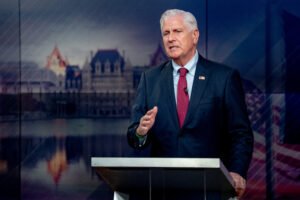
- FEMA chief tells states to prepare to handle disasters on their own
- Trump is promising farmers $8B. Republicans are praying it will save their campaigns.
-

 Politics2 years ago
Former ‘Squad’ members launching ‘Bowman and Bush’ YouTube show
-
Uncategorized2 years ago
Bob Good to step down as Freedom Caucus chair this week
-

 The Josh Fourrier Show2 years ago
DOOMSDAY: Trump won, now what?
-

 The Dictatorship2 years ago
Pete Hegseth’s tenure at the Pentagon goes from bad to worse
-

 Politics2 years ago
Former Kentucky AG Daniel Cameron launches Senate bid
-

 The Dictatorship2 years ago
Luigi Mangione acknowledges public support in first official statement since arrest
-

 Politics2 years ago
Blue Light News’s Editorial Director Ryan Hutchins speaks at Blue Light News’s 2025 Governors Summit
-

 Politics1 year ago
John Legend advises Trump to drop the ‘dictator s‑‑‑’ if he wants Nobel Peace Prize