
Politics
Home state paper: Hawley is possibly ‘the worst sitting senator’

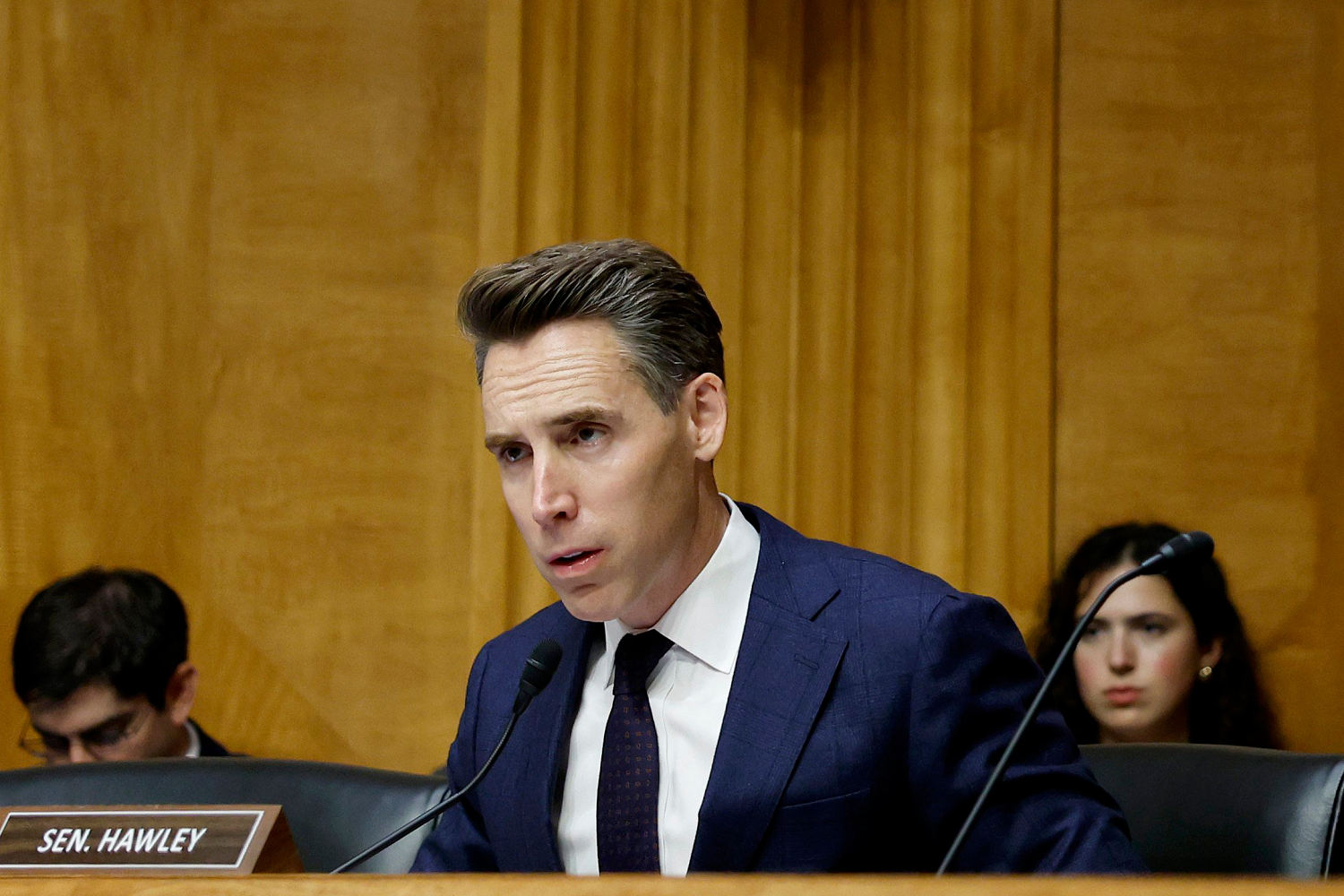

As 2021 got underway, Sen. Josh Hawley did not find himself in a good position. After the Missouri Republican helped take the lead in trying to overturn President Joe Biden’s victory, Hawley was briefly seen as a political “pariah.”
As regular readers knowthe GOP senator was denounced by former allies; prominent businesses distanced themselves from him; several independent media outlets called on Hawley to resign in disgrace; and several of his Senate colleagues filed an ethics complaint against him.
Even many Republicans balked. The Washington Post’s Michael Gerson, a former George W. Bush speechwriter, concluded“The ambitions of this knowledgeable, talented young man are now a threat to the republic.” Then-Sen. Ben Sasse of Nebraska addedin reference to Hawley, “Adults don’t point a loaded gun at the heart of legitimate self-government.” Then-Sen. Pat Toomey of Pennsylvania said Hawley would be “haunted“ by his actions.
A year later, the Missouri senator’s reputation had not improved. Then-Republican Rep. Adam Kinzinger of Illinois called Hawley “one of the worst human beings” and a self-aggrandizing “con artist.” Soon after, the editorial board of The St. Louis Post-Dispatch told readers that Hawley is “grossly unfit” for office.
The Republican incumbent, of course, is seeking a second term anyway, and he’s very likely to win in spite of his record. But the Post-Dispatch’s editorial board isn’t just eager to remind local voters about Hawley’s on-the-job performance, it’s also urging Missouri’s electorate to vote for his opponent.
Hawley’s role in Jan. 6 would, in itself, merit his expulsion from the Senate by Missouri voters even if there weren’t so many other reasons to reject his reelection bid: his shortsighted and obtuse quest to nix Ukrainian aid; a Senate term almost completely devoid of substantive accomplishments; an unparalleled record of demagoguery on the Senate floor, where he endlessly spews faux-populist sound and fury signifying nothing. For reasons above and beyond any partisan considerations, Josh Hawley is quite possibly the worst sitting senator in America right now.
Ouch.
It’s important to emphasize that the newspaper’s editorial didn’t just slam the incumbent, it also celebrated his challenger: Lucas Kunce, a Democratic attorney and retired Marine.
Raised in Jefferson City, his working-class family went bankrupt because of immense medical bills from his ailing sister’s multiple open-heart surgeries. Kunce has talked extensively about how the surrounding community came together to help his family. Despite those modest roots, Kunce went on to obtain degrees from Yale (on a Pell Grant), Mizzou law and Columbia law. He subsequently joined the Marine Corps’ Judge Advocate division, serving one tour in Iraq and two in Afghanistan. Later, he negotiated arms control agreements for the Pentagon involving Russia and NATO.
In theory, given Kunce’s impressive background and Hawley’s record on Capitol Hill, this should be one of the nation’s most competitive Senate races.
In practice, Missouri has become a ruby-red state, and while there haven’t been many polls in the Show Me State lately, the available data suggests the Republican incumbent is ahead by double-digits — even if Hawley is “quite possibly the worst sitting senator in America right now.”
This post updates our related earlier coverage.
Steve Benen is a producer for “The Rachel Maddow Show,” the editor of MaddowBlog and an BLN political contributor. He’s also the bestselling author of “Ministry of Truth: Democracy, Reality, and the Republicans’ War on the Recent Past.”


WASILLA, Alaska — Three weeks out from Election Day, President Donald Trump took a helicopter to a plane to another helicopter to a motorcade to an ice hockey rink in Alaska’s Matanuska-Susitna Valley, traversing nearly 4,000 miles over more than eight hours to turn out his base here to help Republicans defend the Senate.
But Trump’s trek might not be enough to save Sen. Dan Sullivan, who’s running in a tougher-than-expected race against Democrat Mary Peltola in a state where the president’s approval rating is underwater and independents outnumber both Republicans and Democrats.
Alaska strategists and voters who spoke to Blue Light News acknowledged that Sullivan faces a difficult path to reelection, despite Trump’s time investment and the outside money pouring in.
“Very conservative MAGA voters can’t vote for you harder,” said Scott Kendall, a veteran political strategist who worked on two of Alaska GOP Sen. Lisa Murkowski’s campaigns and was chief of staff to former Alaska Gov. Bill Walker. “Donald Trump’s support in this current climate is both a blessing and a curse.”
Even some Trump supporters at the Tuesday night rally admitted the outlook appeared bleak.
“I think Alaska’s turning blue,” said Matt Niessink, a 45-year-old general contractor from Wasilla. He said he had voted for Trump three times and planned to support Republicans this year.
What did he wish the president would do differently? “I wish he’d shut his mouth sometimes and not be such a pompous ass,” Niessink said.
The president was in Wasilla — population 10,556 — because the outlook is darkening for his party in a state he carried by 13 points just two years ago. In a midterm year defined by the cost of gas and groceries, the Last Frontier has been hit particularly hard, with the average price of diesel nearing $7 per gallon. In the Senate race, Peltola is flush with cash and leads Sullivan in most polls. MAGA Inc., the cash-rich Trump-aligned super PAC, is increasingly focusing on Alaska as one in a slate of states that can help Republicans hold the Senate.
Enter Trump, who has been spending the cycle’s crucial final weeks holding rallies in red states to juice support among his base, which tends to see depressed turnout in years when he’s not on the ballot.
“That was a lot of flying,” the president said at the top of his remarks. “In fact, they were thinking about canceling. They said, ‘Sir, you’re very busy, this is very tough.’” But, Trump continued, he refused to cancel for a state he won three times.
Echoing his comments at other red-state rallies, Trump asked the roaring crowd for “one big favor” — to “pretend that I’m on the ballot, because every time I’ve been on the ballot, we win.” He repeated his promise that Americans will receive $5,000 dividends if Republicans hold both chambers.
“What this is about is getting out the vote,” Sullivan told reporters before Trump’s speech. “A rising tide of enthusiasm lifts all the candidates.”
Unlike some other Republican candidates in tight races, Sullivan has shied away from distancing himself from the least popular aspects of Trump’s presidency.
Sullivan proclaimed on stage at the rally that “the conflict in the Middle East is temporary. The true forever war is the national Democrats’ war against Alaska oil and gas and our jobs.” And although a campaign aide released a statement condemning Trump’s move to import Russian diesel, Sullivan did not join four of his Republican Senate colleagues, including Murkowski, who called on Trump to reverse the decision.
Art Hackney, a veteran Republican strategist in Alaska, said that “most of the people who support” Sullivan “think that he should” break more with the president.
Hackney, who runs a pro-Sullivan super PAC called “We Stand with Dan,” attributed that choice to loyalty — but suggested the president’s demand of fealty, and treatment of frequent dissenter Murkowski, could also be part of Sullivan’s calculus.
“A lot of his longtime supporters and the people who are in the industries that would benefit from that wish he would be more blunt,” Hackney said. “But with what Murkowski has done, if Dan did something considered a disrespectful trigger or something, what do you think would happen? It could well have implications for things that affect Alaska’s economy.”
Like this content? Consider signing up for Blue Light News’s Playbook PM newsletter.
Some top congressional Republicans have privately concluded that it is likely impossible for them to keep control of the House of Representatives in the midterm elections, and they are now focused on limiting the scale of the defeat and salvaging the party’s Senate majority.
Five senior Republican lawmakers, all granted anonymity to speak candidly about their party’s dire position, told Blue Light News the House had all but slipped away.
One senior House Republican said the GOP’s goal at this point was to “save as many Republican seats as we can.” The president, this person said, was not helping.
“President Trump has made this election all about himself,” the lawmaker said. “Now we have to survive that political storm.”
A second Republican member of Congress said the movement of campaign advertising made plain which side was in control of the midterms. This lawmaker predicted Democrats would pick up about 10 seats, more than enough to take control of the chamber.
Even in newly redistricted red states like Florida and Texas, this person said, Republican candidates were “hanging on with their fingernails.”
Republicans have already fallen back from several contested House districts that they feel are no longer winnable, including those held by Rep. Mariannette Miller-Meeks of Iowa and Tom Kean Jr. of New Jersey. Trump carried their districts just two years ago. The party last week gave up on an Omaha-based district held by retiring Rep. Don Bacon.
Trump officials and other top GOP operatives say more candidates may be cut off in the coming days, in order to shift advertising money to races where it can make more of a difference. Republican groups have already given up on multiple races where they once hoped to unseat Democratic lawmakers.
The Republican Party is under extreme pressure across the Midwest, where it is now spending heavily to defend Senate seats in once-reliably MAGA states like Iowa, Nebraska and Kansas.
Bacon, a maverick often at odds with the White House, said there was no mystery in his party’s political tribulations.
“I’ve talked to some who are making these decisions: The biggest problem is the president’s polling numbers and unfavorables,” Bacon said.
White House officials insist they’re not giving up on either chamber of Congress. In a statement, White House spokeswoman Liz Huston said Trump remained “committed to maintaining Republican majorities in both the House and Senate.”
As he departed on Tuesday to campaign in Alaska for embattled GOP Sen. Dan Sullivan, Trump professed optimism about the midterms but acknowledged that sitting presidents typically see their party lose seats in the off year.
“But I’m doing a tour right now and I’m doing rallies,” Trump added. “The level of enthusiasm for the Republican Party is way up.”
House Speaker Mike Johnson went even further, flatly declaring during a campaign stop in deep-red Texas that “the polling is wrong” in showing his party on the brink of a broad defeat.
Yet at a tactical level, the Republican Party’s moves to shift money away from defending the House and toward saving the Senate are clear enough. In recent days, the Congressional Leadership Fund, the top super PAC for House Republicans, canceled advertising for key House candidates in Nebraska and Iowa and allowed the Senate Leadership Fund – a Republican group focused on the upper chamber – to swoop in and claim the airtime to support Nebraska Sen. Pete Ricketts and Rep. Ashley Hinson, who is running for Senate in Iowa.
“These are not the moves of a party that’s going to keep the House,” a third Republican lawmaker said.
In statements to Blue Light News, both CLF and the National Republican Congressional Committee said they had no intention of giving up on the fight for control of the House.
NRCC spokesperson Mike Marinella said districts are won “one by one,” and that the GOP has “the financial firepower and ground game needed to win.”
Chris Winkelman, president of CLF, said his group would keep moving money around to maximize the impact nationally.
The goal, he said, was to “keep the pressure on the most vulnerable Democrats and preserve a path to 218 seats.”
Former Rep. Carlos Curbelo, a Florida Republican who lost his swing seat in Trump’s first midterm election eight years ago, said his former colleagues were clear-eyed about where the election seemed to be headed.
“The environment is about as tough as one could expect,” Curbelo said. “There is no one who has privately stated that they believe Republicans can hold the House — not in recent weeks, anyway.”
Megan Messerly, Lauren Fedor, Lisa Kashinsky and Myah Ward contributed to this report.
Democratic Sen. Jon Ossoff said Tuesday he will not run for president in 2028 and committed to serving a full six-year Senate term if reelected.
“I have zero interest in running for president. I’m not running for president. I’m running for reelection to the Senate,” Ossoff said during a Georgia Senate debate against Republican Rep. Mike Collins.
Asked by Greg Bluestein of The Atlanta Journal-Constitution whether he would serve his full term if he wins in November, Ossoff replied: “Yes, I will.”
The remarks are Ossoff’s most forceful rejection yet of a potential 2028 presidential bid even as his name has repeatedly surfaced in national Democrats’ conversations about possible contenders for the party’s nomination. His public commitment to a full Senate term on Tuesday is the latest of his campaign’s many efforts to tamp down that speculation.
Ossoff gained national attention this year given his strong fundraising numbers, his consistent lead in public polling against Collins and his ability to generate viral moments on the campaign trail, particularly through his attacks on President Donald Trump. Democrats are bullish about Ossoff’s ability to hold onto his Senate seat — so much so that the Democratic-aligned Senate Majority PAC said Tuesday it was removing its ad spending in Georgia for the week.
He’s also taken steps to boost the state Democratic party in Georgia, a perennial battleground that has been and will be key to winning the presidency. If November brings historic wins up and down the ballot, Ossoff will get some of the credit — and he’ll have confirmed his status as a leader in the swing state.
-

 Politics2 years ago
Former ‘Squad’ members launching ‘Bowman and Bush’ YouTube show
-
Uncategorized2 years ago
Bob Good to step down as Freedom Caucus chair this week
-

 The Josh Fourrier Show2 years ago
DOOMSDAY: Trump won, now what?
-

 The Dictatorship2 years ago
Pete Hegseth’s tenure at the Pentagon goes from bad to worse
-

 Politics2 years ago
Former Kentucky AG Daniel Cameron launches Senate bid
-

 The Dictatorship2 years ago
Luigi Mangione acknowledges public support in first official statement since arrest
-

 Politics2 years ago
Blue Light News’s Editorial Director Ryan Hutchins speaks at Blue Light News’s 2025 Governors Summit
-

 The Dictatorship1 year ago
Mike Johnson sums up the GOP’s arrogant position on military occupation with two words