
Politics
GOP health care chaos spills into battleground midterm races

Republicans’ failure to get on the same page on expiring Obamacare subsidies is creating significant rifts between GOP primary contenders and causing heartburn for some of the party’s most vulnerable incumbents heading into November’s midterms.
With just weeks left before Covid-era subsidies lapse, causing steep health insurance rate spikes for millions of people, Republicans are all over the spectrum about what to do — with many of the party’s top candidates ducking when asked about the thorny issue.
In Michigan, the subsidies have emerged as an early policy difference between President Donald Trump-backed Senate candidate Mike Rogers and his new challenger, former state GOP co-chair Bernadette Smith. Sen. Bill Cassidy’s (R-La.) proposal to replace the subsidies with federally funded health savings accounts is facing pushback from his primary opponents. In Georgia, a state with an especially high reliance on the Affordable Care Act, all three Republicans vying to take on Democratic Sen. Jon Ossoff have refused to commit to any specific health care proposal — a sign of just how reluctant Republicans are to take a firm position.
Out of the 24 candidates Blue Light News surveyed across key GOP Senate primaries and general election battlegrounds, 10 did not respond to repeated requests for comment on their health care policy preferences, while others gave vague answers.
But as some Republicans dodge, other lawmakers in tough races are practically begging their leadership to fix the issue, which Democrats are already making a key focus of the 2026 midterm elections.
“I know my people back home care tremendously about this,” swing district Rep. Brian Fitzpatrick (R-Pa.), who is leading an effort to go against his own party leaders and force a vote on the expiring credits, said in an interview. “I would assume that’s the case in every district in America.”
There are already warning signs of political pitfalls for Republicans.
Most Americans want Congress to extend the subsidies, polls from health policy think tank KFF and Morning Consult show. And they’re already feeling the strain: Fifty-two percent of respondents to The Blue Light News Poll in November reported that their health insurance premiums have risen over the past two to three years — and they’re equally as worried about being able to afford an unexpected health care bill. Nearly half of respondents who said health care is difficult to afford blamed the Trump administration for those struggles.
Health care is a flashpoint in the crowded primary Cassidy is facing back in Louisiana that was fueled in large part by his 2021 vote to impeach Trump. The former physician also chairs the Senate Health Committee and co-authored one of the GOP proposals to try to address the surging rates.
“I want people to have coverage,” Cassidy said after the failed vote on his proposal. “I spent my medical career in a hospital for the underinsured and the poor and the uninsured. My life’s work is: How do you get care to those who otherwise cannot afford it? I understand where people are. The Democratic plan does not.”
His bill failed to advance Thursday afternoon — while giving his primary opponents new fodder for attacks.
St. Tammany Parish Councilmember Kathy Seiden said before the vote that the senator’s proposed health savings accounts are “out of touch” and called for a “time-limited extension” of the subsidies, while Public Service Commissioner Eric Skrmetta described Cassidy’s bill as a “step in the right direction” but said he wants the funding to be “supercharged.”
Republicans more worried about the general election than primaries sound much different on this issue, however.
Sens. Susan Collins (R-Maine) and Dan Sullivan (R-Alaska), who are both facing potentially tough races, were among the four Republicans who crossed party lines to support Democrats’ three-year subsidy extension Thursday in the Senate. It failed, alongside Cassidy’s plan.
“My state’s hurting on this,” Sullivan said after both bills tanked.
Republicans have struggled ever since Obamacare’s 2010 passage to craft a functional, politically palatable alternative, even as health insurance rates have surged under the program. Now, Covid-era subsidies are set to expire, and they’re struggling once again to respond.
The nonpartisan Congressional Budget Office estimates 4 million fewer people would have health insurance by 2034 if the subsidies lapse. And premium payments would increase from an average of $888 this year to $1,904 next year if the subsidies expire, according to KFF.
Republican candidates vary widely in their suggestions for a policy fix.
In Michigan, where Republicans are looking to flip retiring Democratic Sen. Gary Peters’ seat, Rogers said “we can’t just put another bandaid” on a “broken health care system” and called for a “new system that works.” Smith advocated for a two-year subsidy extension while also working toward a new health care model.
In New Hampshire, where Republicans are chasing another retiring Democrat’s seat, former Sen. John E. Sununu called to modernize “outdated” regulations and give states more power over their Medicaid programs while ensuring lower-income people are “protected against price spikes.” His rival, former Sen. Scott Brown, said in a statement that “any meaningful solution is going to have to address the underlying cost drivers … and not just temporarily subsidize an unaffordable product.”
In Georgia, where Republicans have their best shot to unseat a Democratic incumbent, two of the three leading GOP candidates — Reps. Mike Collins and Buddy Carter — could soon run out of rope to avoid addressing the issue if a health plan hits the House floor. Derek Dooley, the former football coach backed by GOP Gov. Brian Kemp, said in a statement, “We should be focused on transparency, incentivizing doctors to deliver high-quality care, real market competition, and lowering healthcare costs for hardworking Americans—while making sure we put patients first.”
Democrats are yoking GOP candidates to the lapsing subsidies. Senate Democratic campaigns lambasted their GOP opponents for their votes Thursday, and Protect Our Care, a liberal health care advocacy group, signaled a deluge of attack ads to come.
“I’m worried about my colleagues,” Rep. Jeff Van Drew, a Republican who holds a safe red seat in blue New Jersey, said Wednesday at the Capitol. “Do I think this issue is worth a couple of points in an election? Yeah, I do.”
Erin Doherty contributed to this report.


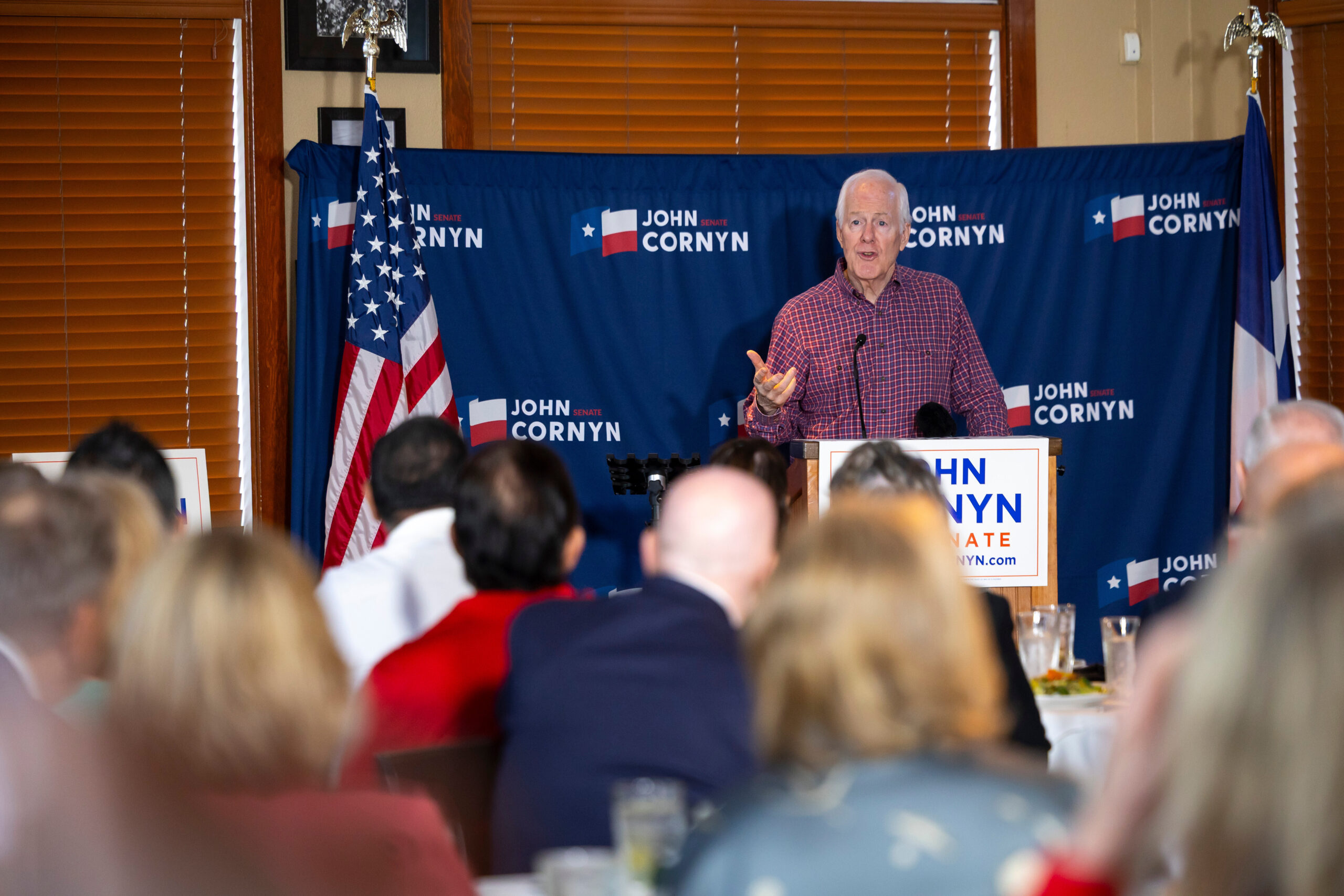
On Jan. 6, 2021, Texas Attorney General Ken Paxton declared to a raucous crowd of President Donald Trump’s supporters, many of whom were moments away from storming the U.S. Capitol: “We will not quit fighting.”
Five years later, Paxton’s fighting spirit has him poised to unseat a 24-year incumbent.
It’s been a steady journey. As Texas’ top lawyer, Paxton became a hero of the far right by using rapid-fire lawsuits to spearhead their most important causes, from expanding religious influence in schools to attempting to overturn the results of the 2020 election. He presented himself as a foil to the Obama and Biden administrations, filing more than 100 lawsuits over issues like immigration and environmental regulations. And he continues to steer the power of his office toward investigating alleged election irregularities, particularly in Democratic-led cities like Houston.
On Tuesday, the MAGA grassroots that fueled his rise will reach its apex of influence so far: Paxton is well-positioned to finish first against John Cornyn in the GOP primary for his Senate seat, despite being saddled with tons of political baggage and targeted by millions of dollars in attack ads.
The bare-knuckle Senate primary is likely headed to a runoff, dragging out the party’s own angst over generational change.
For the far-right in Texas, Paxton’s arc shows the ascendent strength of their movement, which has pushed Republican leaders toward adopting increasingly conservative positions. For Cornyn, it means the potential end of his long career in the Senate, and the near-extinction of establishment Republicans within the party.
“Ken Paxton is more than just an attorney general that’s been MAGA. He is a symbol of the heart of the grassroots MAGA movement,” said Steve Bannon, the former senior adviser to Trump and War Room host who has been broadcasting his popular show from a rented ranch in North Texas in the days leading up to the election.
“He’s resilient because folks here know he has fought the good fight for years and years and years,” Bannon said. “He has resilience because people know where his heart is, and he’s a fighter.”
Cornyn is in serious trouble
The MAGA movement is tenacious in protecting its own and knifing its Republican rivals. Paxton has survived an impeachment by the GOP-controlled state House, a federal securities fraud investigation and slew of ethics complaints. Three months after beginning his Senate campaign last year, Paxton’s wife filed for divorce, alleging an extramarital affair. His competitors — including Cornyn, who has said Paxton is too unethical to serve in public office — have hammered his trail of scandals.
And still he’s the front-runner.
Paxton has continued to lead in polling — from even before he launched — despite a concerted effort by Republicans in Washington to boost Cornyn.
“Ideally you want a saint to be your elected leader, and that is something we all hope and pray for one of these days,” said Bo French, former chair of the Tarrant County Republican party, who is running for a seat on the Texas Railroad Commission. “But until that happens, we need people who are going to be warriors for the cause. And he is seen and beloved among Republican primary voters in Texas as a warrior.”
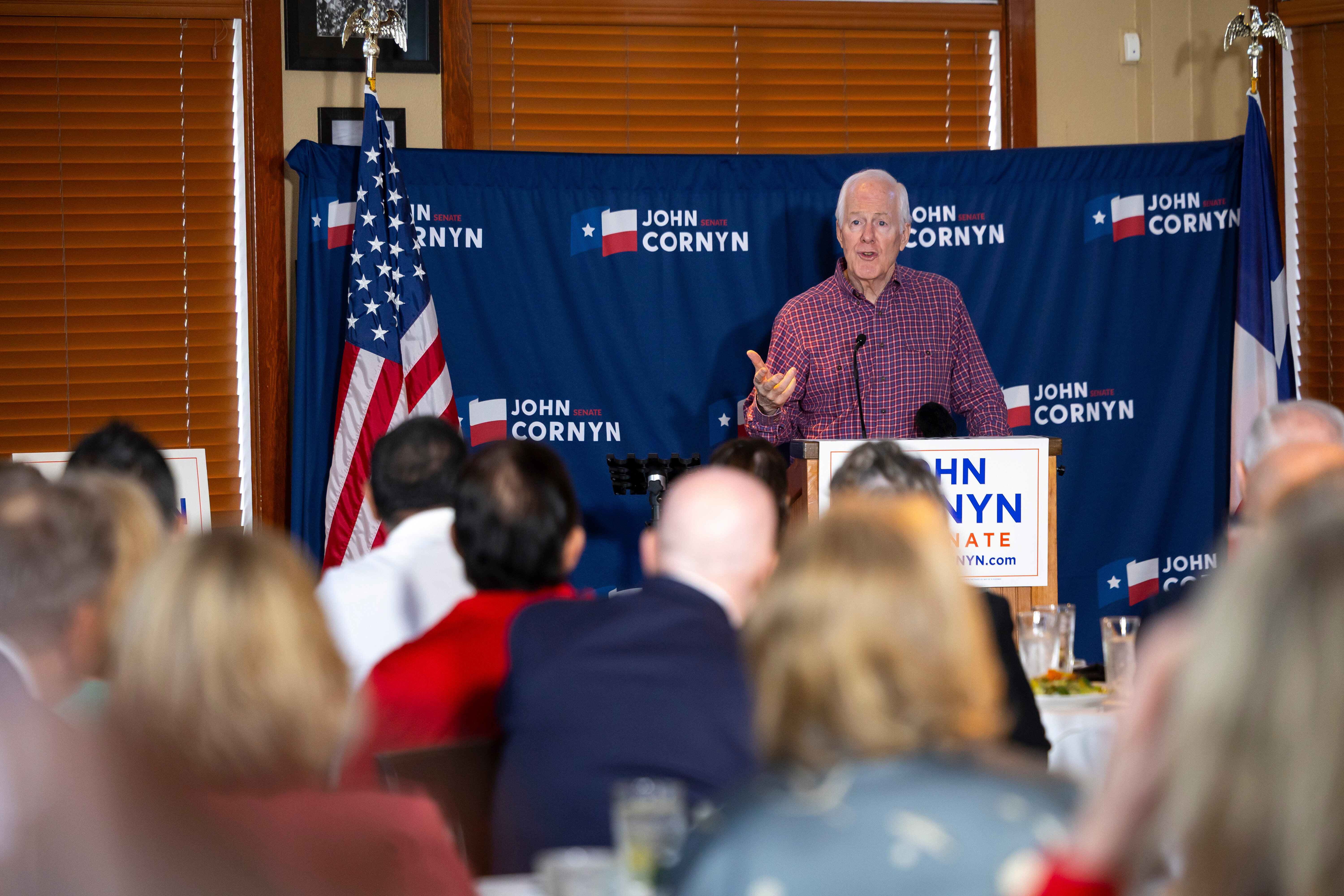
Cornyn knows the strong headwinds he’s facing, conceding that the composition of primary voters doesn’t reflect his usual base of support. Many Texas Republicans remain angry with the senator for voting in favor of a bipartisan gun control package after the Uvalde school shooting that left 19 children and two teachers dead. Cornyn was famously booed onstage at the Texas GOP convention in 2022.
“If only the most radical people show up in the primary … then I think that’s going to be a challenge,” Cornyn said in an interview Saturday with CBS. His other primary opponent, Rep. Wesley Hunt, who is also running a campaign appealing to the far right, said on X that Cornyn’s comments show he has “lost touch with the people you’re supposed to represent” and “your contempt for the voters of Texas is exactly why your career is coming to an end.”
Trump has not endorsed in the race, throwing a wrench into any MAGA pickup Cornyn could get — or that could put Paxton over the line. At an event in Corpus Christi last week, Trump said he had “pretty much” decided who to support, but did not reveal that pick.
Democrats believe Paxton’s baggage makes him beatable in the general election, a view shared by many national Republicans, including Senate Majority Leader John Thune, who is working to keep Cornyn in the GOP caucus.
Kendall Scudder, chair of the Texas Democratic Party, said Paxton jeopardizes Republicans at every level of the ticket. “Every one of these top-tier Republicans in the state is wildly unpopular, and they’ll be led by Ken Paxton,” he said. “That’s what puts a lot of these different seats in interesting hands.”
The MAGA vs. establishment fight has been years in the making
Paxton has endured years of legal and personal scrutiny. He also kept winning.
Texas Republicans have repeatedly reelected both Cornyn to the Senate and Paxton as attorney general, backing the leaders of both wings of the party. But recent elections have shown the growing strength of the MAGA faction.
Paxton’s reelections have been aided by the deep coffers of Texas megadonors like Tim Dunn and the Wilks brothers in addition to his hyper-conservative supporters. In 2022, he was challenged by Land Commissioner George P. Bush — the relativegrandson of former Presidents George H.W. Bush and George W. Bush.
Bush tried to sell conservative voters on his vision to restore integrity to the attorney general’s office at a time when Paxton was facing years of securities fraud investigations and bribery allegations. It’s a playbook Paxton allies say Cornyn is reusing.
Voters seemed to prefer Paxton’s combative style. Paxton thumped Bush by a two-to-one margin in that year’s run-off, the clearest sign yet that voters were siding with the MAGA wing and rejecting the old-school establishment.
In 2022, Paxton agreed to pay restitution and perform community service to settle the securities fraud case, which was brought over allegations that he duped investors in a tech startup. The Justice Department, in the final weeks of the Biden administration, decided not to prosecute Paxton over the remaining bribery charges. That eventually led the GOP-heavy Texas House to impeach him before the Senate voted to acquit.
As scrutiny over Paxton intensified within the Texas Republican Party, he cast himself as a martyr, a victim of spurious probes that not only threatened him, but also the integrity of the MAGA base. For the far-right, Paxton’s impeachment acquittal only further strengthened his parallels to Trump.
The onslaught energized his supporters. State Rep. Gary Gates, a Republican, learned that firsthand when he publicly recanted his vote to impeach Paxton after dealing with blowback from the base.
“There was a certain faction of those that support him that were rather upset,” said Gates, who represents a suburban district outside of Houston. “You have to deal with that political reality.”
Paxton often brags that he was one of the few Republicans to attend Trump’s campaign launch at Mar-A-Lago in 2022, when many in the party had abandoned him following the violent insurrection in the U.S. Capitol.

“When you try to take out somebody like those two guys who have fought for our values, and the whole world is weaponized against them, the people are ride-or-die,” said Aaron Reitz, a former deputy in Paxton’s office who, with his backing, is running to succeed him.
“I hope that the establishment wing of the GOP would learn a similar lesson when they have tried to take out Trump, which is they are not in control of this party,” Reitz said. “The grassroots, the people, are in control of the party, and they have to stop spending their millions.”
How Paxton got here
Paxton’s deep base of support is built in part from his lawsuits against frequent targets of the right — high-profile cases that were splashed on the front pages of local newspapers from Beaumont to Amarillo. Throughout his decade as Texas’ top lawyer, Paxton oversaw the Lone Star State’s transformation into an incubator for ultra conservatives issues, from defending abortion restrictions to warning that Muslims will attempt to introduce Islamic law in Texas.
At a recent campaign event in the Houston suburbs as early voting was underway, Paxton ticked off his courtroom successes to a group gathered at a “safari ranch” in Richmond with roaming peacocks, zebras and goats.
Paxton, speaking to the crowd of about 75 supporters, recounted the beginning of his career, starting with when he decided to run for attorney general during his first term in the state legislature because he viewed former President Barack Obama as “a really epic threat” who relied excessively on executive orders to bypass Congress.
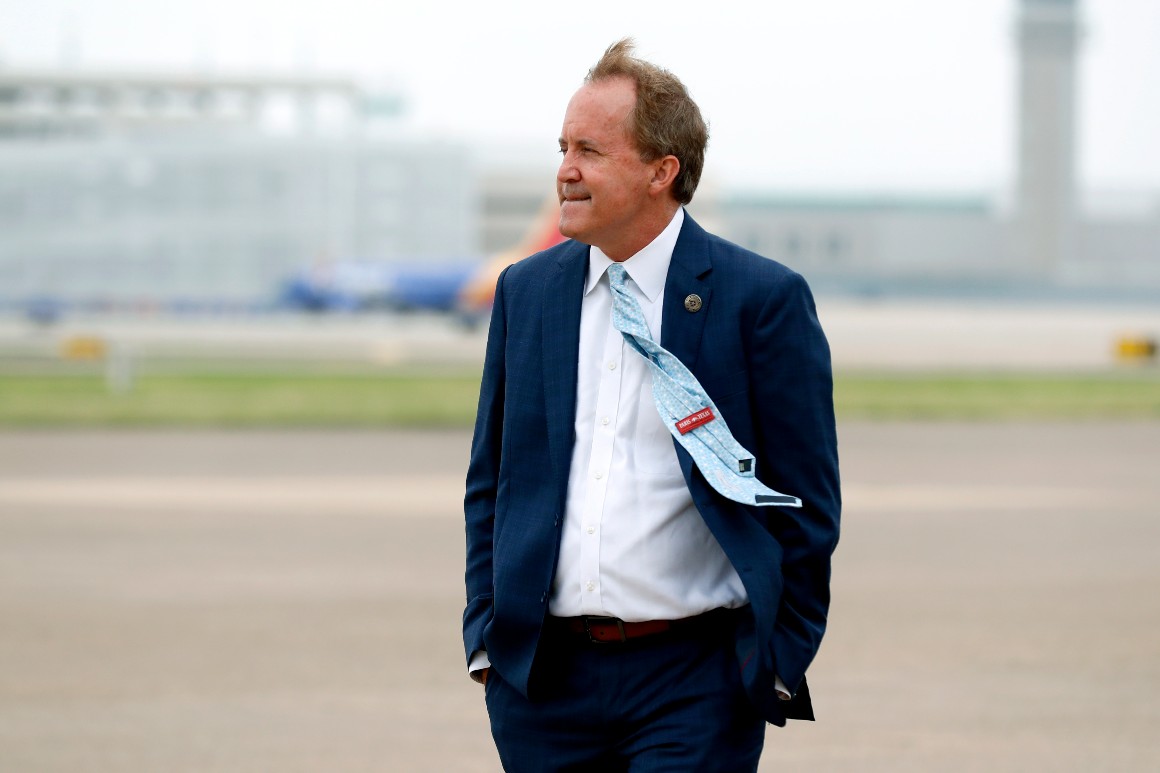
In his first AG race, Paxton rode the wave of the Tea Party insurgency to topple an establishment Republican backed by former President George W. Bush. Paxton told the audience, to chuckles, that he sued Obama 27 times in the 22 months they overlapped.
After Obama left office and Trump took his place, Paxton turned his sights away from the White House and toward Silicon Valley. He sued Google (“who was doing really bad things”), Facebook (“we got a lot of money from them”), Twitter (“before Elon”) and Pfizer (“they lied about the vaccine”).
Then Paxton became fixated on probing voter fraud allegations, making him an instrumental figure in Trump’s unsuccessful efforts to overthrow the results of the 2020 election. He even filed a case directly with the Supreme Court seeking to invalidate election results in Pennsylvania and other battleground states — though the justices rejected his attempt, ruling Texas did not have standing.
When Joe Biden was sworn in, Paxton picked back up his onslaught against the federal government. Then Trump was reelected in 2024, Paxton said, and he “felt like I didn’t have a mission. I’d done my three different missions. I felt like 12 years was enough.”
“And I looked around,” Paxton told the crowd, “and I saw a guy: John Cornyn.”
Adam Wren contributed reporting.

Texas Gov. Greg Abbott (R) on Monday warned that the possibility of Iranian “sleeper cells” is being “seriously” evaluated in the Lone Star state. Sleeper cells are foreign actors who live under the radar until called on to carry out a mission or attack. In Texas…
Read More

Washington, D.C., lifted its recreational advisory for the Potomac River on Monday after a large-scale sewage spill earlier this year. “Consistent water quality testing shows bacterial levels are now within safe ranges for recreation,” Mayor Muriel Bowser wrote in a Monday post on the social platform X…
Read More
- How Ken Paxton MAGAfied Texas in his rise to the top

- Texas Gov. Abbott warns Iranian ‘sleeper cells’ must be taken ‘seriously’

- DC lifts recreational advisory for Potomac River

- Trump slams Democrats over criticism of Iran strikes

- Vance says ‘there’s no way’ Trump will let US get into multiyear conflict

- US embassy in Riyadh struck by drones

- Centrist Dems met to plot 2028. Then Iran happened.

- Republicans took shots at Hillary Clinton — and she came ready to fight back
- No sign of Democratic surrender on DHS funding after Iran strikes
- Josh Hawley says he’ll oppose Iran war powers resolution
-

 The Dictatorship1 year ago
Luigi Mangione acknowledges public support in first official statement since arrest
-

 Politics1 year ago
Former ‘Squad’ members launching ‘Bowman and Bush’ YouTube show
-

 Politics1 year ago
Blue Light News’s Editorial Director Ryan Hutchins speaks at Blue Light News’s 2025 Governors Summit
-

 The Dictatorship6 months ago
Mike Johnson sums up the GOP’s arrogant position on military occupation with two words
-

 Politics1 year ago
Former Kentucky AG Daniel Cameron launches Senate bid
-

 The Dictatorship1 year ago
Pete Hegseth’s tenure at the Pentagon goes from bad to worse
-
Uncategorized1 year ago
Bob Good to step down as Freedom Caucus chair this week
-

 Politics11 months ago
Democrat challenging Joni Ernst: I want to ‘tear down’ party, ‘build it back up’