
Politics
Former President Jimmy Carter dead at 100

Jimmy Carter had such confidence in his improbable path to the White House that he bet Americans worn down by Vietnam and Watergate would welcome a new kind of president: a peanut farmer who carried his own bags, worried about the heating bill and told it, more or less, like it was. And for a time, the voters embraced him.
Yet just four years later, in the aftermath of a presidency that was widely seen as failed, it sometimes seemed as if all that was left of Carter was the smile — the wide, toothy grin that helped elect him in the first place, then came to be caricatured by countless cartoonists as an emblem of naïveté.
But it was Carter’s great fortune to enjoy a post-presidency more than 10 times as long as his tenure in office — in March 2019, he became the longest-lived president ever — and by the time he died at 100, he had lived to see history’s verdict soften.
Carter entered home hospice care after a series of hospital stays, the Carter Center confirmed Feb. 18. His wife, Rosalynn Carter, passed away Nov. 19, 2023.
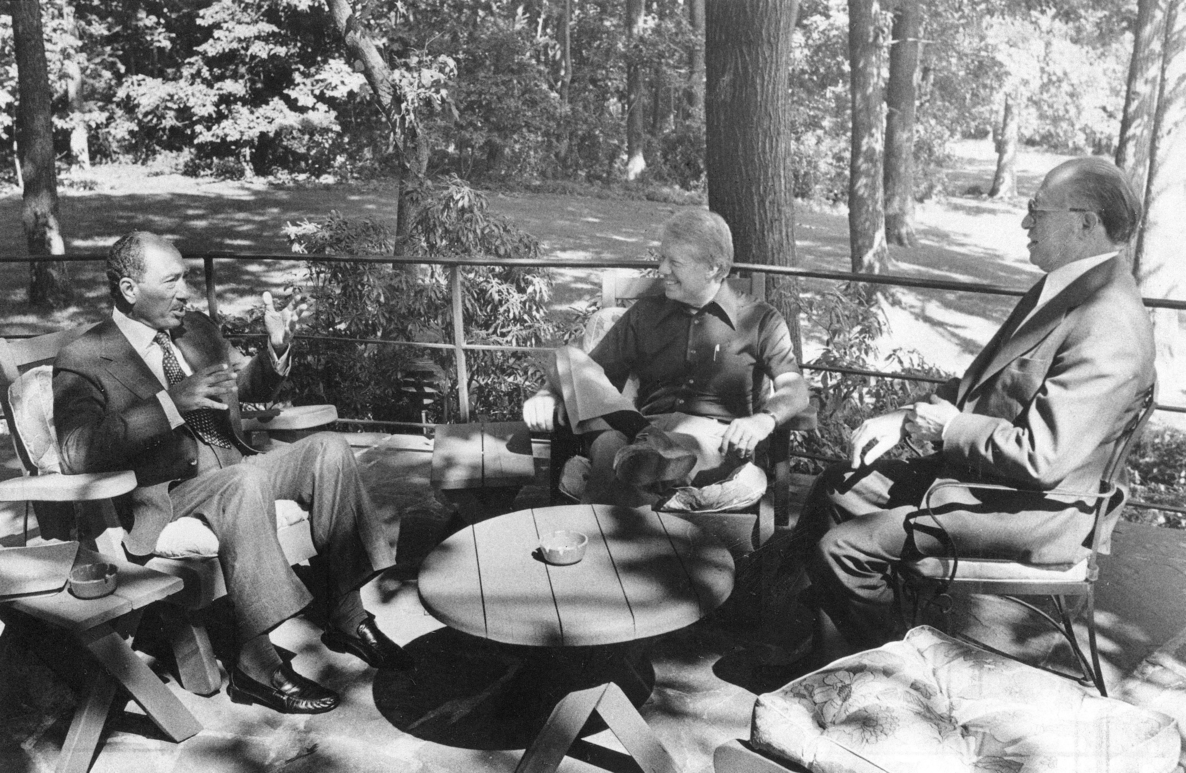
If the 39 th president did not achieve all he sought in four years in the White House — and he did not — his abiding concern for human rights in international affairs, and for energy and the environment as a defining challenge of our time, can now be seen as prescient. If, in later years, his unyielding support for Palestinian rights (and his frequent sharp criticisms of Israel) drew many detractors, his brokering of the 1978 Camp David Accords between Israel and Egypt stands as a milestone of modern diplomacy.
If he was the first president to confront what we now call “Islamic extremism,” he was far from the last. And if he sacrificed his re-election to the super-powerlessness of the Iranian hostage crisis — and a botched military raid to rescue the captives — his administration’s persistence nevertheless brought all 52 diplomats safely home in the end.
At a time when only six women had ever served a president’s Cabinet, Carter had appointed three of them — along with three of the five women ever to serve as departmental undersecretaries, and 80 percent of those to serve as assistant secretaries. There is almost no battle over policy or public image that Hillary Clinton or Michelle Obama ever faced as first lady that Carter’s trusted wife, Rosalynn, did not fight first — whether campaigning for mental health, or sitting in on Cabinet meetings.
James Earl Carter Jr. could be pious (“I’ll never lie to you,” he pledged while campaigning in 1976). He could be petty (his micromanagement of the White House tennis court was roundly mocked). He could be tone-deaf (lecturing his countrymen on a national “crisis of confidence” in a way that only accented the problem, and dispensing with some of the pomp of the presidency that ordinary people actually liked and expected).
But he could also be disarmingly candid, in a political culture that almost never rewards that trait (who can forget his confession to Playboy magazine that he had lusted after women not his wife and committed adultery many times in his heart?) And he had a gift for improbable friendships — not least with the man he so narrowly and bitterly defeated, Gerald Ford, and with John Wayne, the arch-conservative whose support nevertheless helped him pass the 1977 treaty surrendering the Panama Canal.
He grew up in a house without indoor plumbing, on a dirt road in rural Georgia, surrounded by poor blacks, and was the only president ever to live in public housing — upon his discharge from the Navy, when he went home to take over his family’s peanut business after his father’s death. He was the son of a staunch segregationist, and in his early career, right up to his election as governor of Georgia in 1970, he often finessed the issue of race. But on taking office in the state house, he proclaimed that “the time for discrimination is over,” and Time magazine hailed him on its cover as the face of America’s New South.
Carter’s life had a classic Horatio Alger arc. As a teenager, he joined the Future Farmers of America and cultivated, packed and sold his own acre of peanuts. He fulfilled his dream of an appointment to the United States Naval Academy at Annapolis, and went on to become a protégé of Hyman Rickover, the father of the nuclear Navy, in the post-World War II submarine fleet. He married a childhood friend of his sister Ruth, and raised four children.

His first political post was that quintessential American office: chairman of his local school board, where in the early 1960s, he first spoke up in favor of integration. Two terms in the Georgia State Senate and an unsuccessful run for governor in 1966 paved the way for his election as governor in 1970. By the end of 1972, he had become determined to launch a presidential campaign, but the long odds against him were exemplified in a 1973 appearance on “What’s My Line,” where none of the celebrity panelists recognized him and only the movie critic Gene Shalit eventually guessed he was a governor.
But Carter’s status as an unknown outsider was a distinct advantage in the wake of Watergate — an edge understood early by the late R.W. Apple Jr. of The New York Times — and he quickly became the front-runner for the Democratic nomination, winning the Iowa caucuses and New Hampshire primary. In 1976, he published his campaign manifesto-cum-memoir, the self-confidently titled, “Why Not the Best?” and the rest is history.
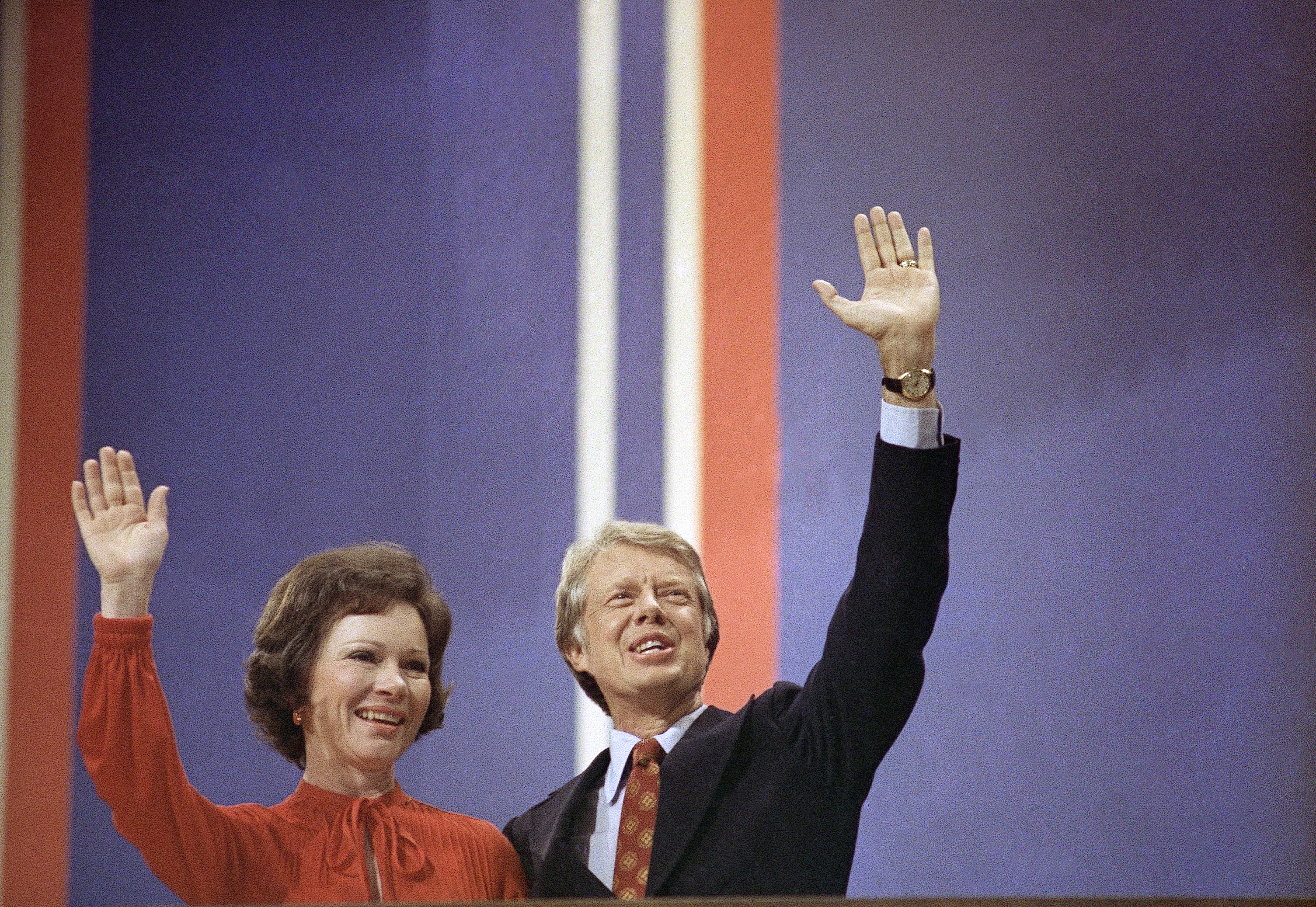
At his inauguration, Carter brought a bracing fresh breeze to Washington, walking from the Capitol to the White House after his swearing-in. But soon enough he brought a stern and scolding tone as well, ordering the White House thermostats to be set at a frigid 65 degrees (a move he ostentatiously announced in a televised “fireside chat,” wearing a tan cardigan), selling off the presidential yacht Sequoia, banning hard liquor from White House parties and limiting the playing of “Hail to the Chief” at official functions.
Much of the national media and Washington’s chattering class quickly pronounced the new president a rube, out of his depth and surrounded by a “Georgia Mafia” equally unschooled and uncouth. He requited with prickly disdain for his critics. The very style that had seemed unpretentious and refreshing now seemed sanctimonious and crabbed, and on the substance, he just couldn’t seem to catch a break. He was saddled with a national economy stuck in “stagflation,” and by June 1978, Stephen Hess of the Brookings Institution was analyzing why his presidency had failed: because it lacked an overriding vision.
In an afterword to excerpts from his White House diaries, published in 2010, Carter would write: “As is evident from my diary, I felt at the time that I had a firm grip on my presidential duties and was presenting a clear picture of what I wanted to accomplish in foreign and domestic affairs. The three large themes of my presidency were peace, human rights and the environment (which included energy conservation).” But, he added, “In retrospect, though, my elaboration of these themes and departures from them were not as clear to others as to me and my White House staff.”
In 1980, Carter faced a challenge for re-nomination from Sen. Ted Kennedy, and then lost the November election to his polar opposite, Ronald Reagan. He sulked for a while, then bought a $10,000 Lanier word processor, composed the first of the more than two dozen books he would write on leaving office, and set about establishing his presidential library and Carter Center in partnership with Emory University in Atlanta.
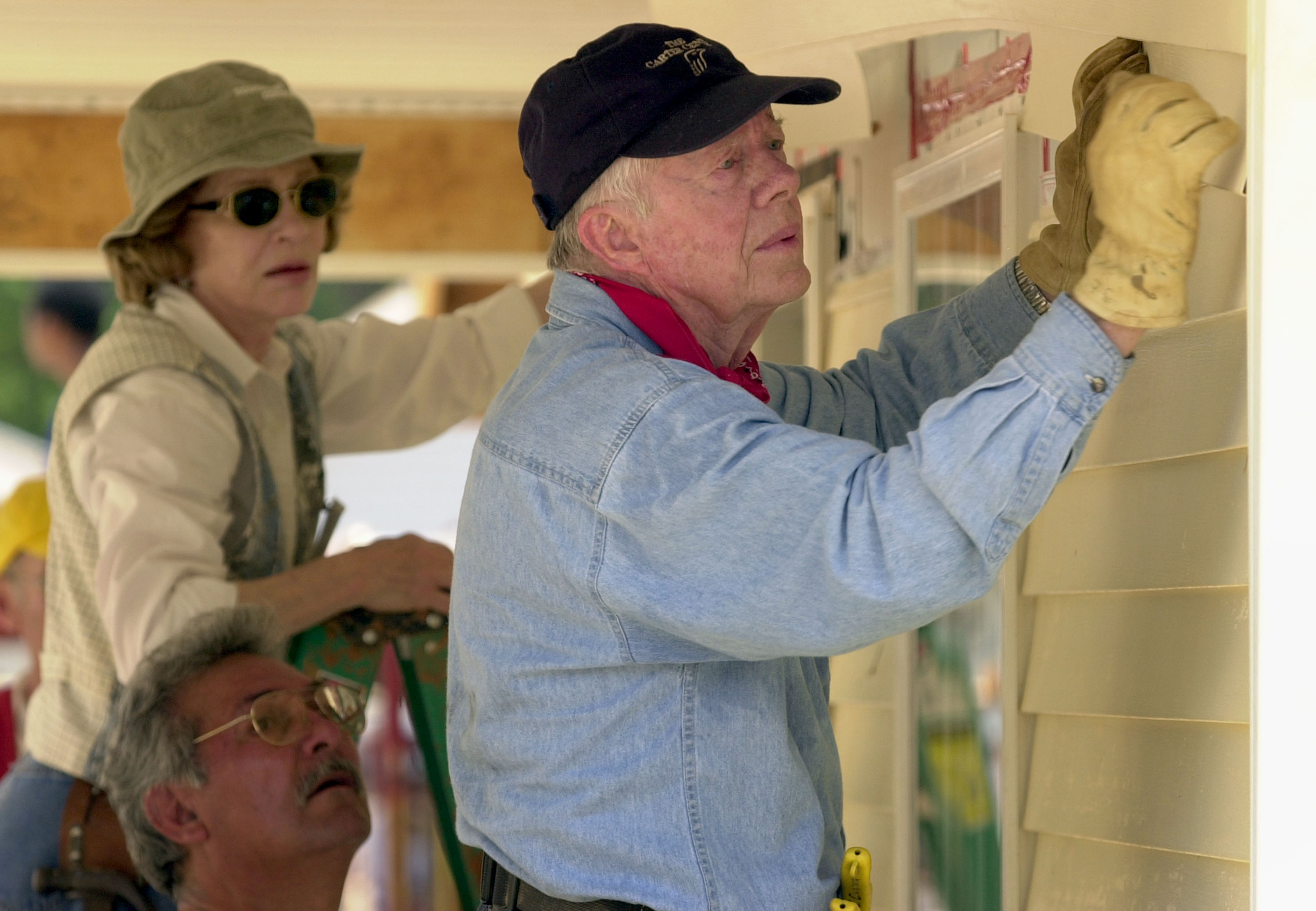
Over the ensuing decades, he would build houses Habitat for Humanity, monitor foreign elections, conduct semi-sanctioned (and sometimes unsolicited) diplomacy, and continue to offer various unvarnished assessments of his successors of both parties. Posing in 2009 in the Oval Office with all the living members of the presidential club just after Barack Obama’s election, he could not restrain himself from leaving a conspicuous physical distance between himself and his fellow southerner Bill Clinton, an old frenemy whose extramarital affair in office so offended Carter, long the nation’s Sunday school teacher-in-chief. (He continued to live the part: Carter kept teaching Sunday school in Georgia year after year, taking a picture afterward with everyone who attended.)
Most surveys of professional historians still rank Carter in the third quartile of effective presidents (as it happens, on par with his friend Jerry Ford). Carter himself preferred the simple summary of his vice president, Walter Mondale: “We obeyed the law, we told the truth, and we kept the peace.”
In the long line of the presidency, that’s not the best boast ever. But it’s far from the worst.


Democrats may be discovering the political power of calling something rigged.
They’re leaning hard into anti-corruption messaging in the final weeks of the campaign as new research suggests that linking corruption to Americans’ economic struggles can boost Democrats into the home stretch.
Messaging from Democrats that tied corruption to housing, health care and the cost of living increased voter support for Democratic congressional candidates by about 3 percentage points, according to a national survey last month conducted by Blue Rose Research and Democratic-aligned Winning Jobs Narrative Action, which was obtained by POLITICO.
The findings align with a shift in how Democrats are talking about corruption — and help explain why that message has exploded on the campaign trail. From Sen. Jon Ossoff in Georgia to James Talarico in Texas and Abdul El-Sayed in Michigan, Democrats have zeroed in on a common argument: Washington is rigged to benefit the wealthy at the expense of everyday Americans.
“We have a corruption crisis in this country, and it is leading to an affordability crisis,” Iowa Democratic state Rep. Josh Turek said during his Senate debate against Rep. Ashley Hinson last week.
It’s a message that is reverberating across campaigns. In a recent presentation delivered to Democratic groups on Capitol Hill, longtime Democratic strategist Jesse Ferguson offered a succinct playbook: “Corruption is why your costs are high,” according to the presentation viewed by Blue Light News.
His presentation also encouraged Democrats to lead with the acknowledgement that costs are high and then go into corruption, acknowledge that it happens across parties and avoid making President Donald Trump the sole focus of their attacks. “Trump works as an example of corruption that raises costs, not as the whole case,” the presentation said.
Since April, Democratic candidates and outside groups in House and Senate races have spent roughly $104 million on advertising mentioning corruption, according to ad tracking firm AdImpact. Republicans, meanwhile, have spent $36 million across House and Senate campaigns over the same period.
“It’s not just like, ‘oh, look at what’s happening with the ballroom,’ or ‘boy, Donald Trump’s made a lot of money on crypto,’” Democratic strategist Chris Meagher said. “You have to be able to tie it to the impact on people’s lives.”
“The narrative works best when it’s an outsider candidate who is linking a rigged economy to a rigged political system,” longtime Democratic pollster Celinda Lake said of the anti-corruption messaging.
Running against corruption is not new. But as Democrats looked for a way out of the political wilderness after 2024, they began turning a familiar attack — anti-corruption — into a broader message tied to voters’ economic pain. What once was an attack largely focused on Trump has become a more expansive argument for candidates trying to connect it to why Americans are struggling financially, potentially providing a blueprint for the party beyond November.
“Democrats used to talk about corruption as a crime. Now corruption is the explanation for costs,” Ferguson, the Democratic strategist, said.
The issue — and messaging around it — is also coming to the fore in a cycle when anger over the suppression of Epstein files hit a fever pitch and public pressure to ban Congress from trading stocks continues to mount.
And it’s not just the research by Blue Rose that shows the potential potency of that message.
In another recent survey from the Democratic group Navigator Research, obtained by Blue Light News, the vast majority of Americans — both Democrats and Republicans — say corruption is driving up their costs. That same survey of registered voters, conducted in August, found majorities, including roughly a quarter of Republicans, say Trump is bringing more corruption to Washington than fixing it.
And new results from the nonpartisan Center Square’s Voter Voice Poll, conducted this month by Noble Predictive Insights and shared first with Blue Light News, show 10% of voters ranking government corruption as the second most important issue facing Americans, tied with the economy and jobs, and only behind inflation and price increases.
In some instances, Democrats have wrested the word “rigged” away from Trump who has used it in the context of unproven election fraud and turned it into a mobilizing political talking point. That’s a departure from March 2024 when Democrats criticized then Rep. Katie Porter for accusing special interests of spending money to “rig” the California Senate race after she lost in the state’s primary. But now some Democrats are embracing that language as a way to rail against what they see as a corrupt system.
“They’re rigging the rules to benefit their wealthy donors and corporate special interests,” former Ohio Democratic Sen. Sherrod Brown said in a message to supporters announcing the launch of his campaign to return to office.
But the corruption resonates across parties. Republicans who spoke with Blue Light News said Democrats do not own the issue — voters everywhere are animated by it. While polling shows that voters in both major parties believe the government is corrupt, Republicans accuse Democrats of lacking credibility on the issue.
“Americans have been disgusted by the level of self-serving corruption that spread like herpes through the slimy politicians who run the Democrat Party, and now they’re suddenly changing their tune because it’s an election year,” National Republican Congressional Committee spokesperson Mike Marinella said in a statement. “Voters see through the facade, and they know Republicans are cleaning up the rot left behind by Democrat leaders.”
On the Senate side, National Republican Senatorial Committee spokesperson Bernadette Breslin pointed Blue Light News to a poll in Minnesota — a rare offensive opportunity for Senate Republicans this cycle — that shows there are just about as many voters who blame Democratic Gov. Tim Walz for widespread fraud of federally-funded government programs in the state as there are who blame the criminals. Walz’s lieutenant governor, Peggy Flanagan, is running for Senate against Republican Michele Tafoya, and corruption under Democratic rule is a key theme for Republicans in the race.
“The overwhelming majority of Minnesotans blame the Walz-Flanagan administration — and the criminals it aided and abetted — for plundering their hard-earned taxpayer dollars,” Breslin said. “They’ll vote for Michele Tafoya to right the ship this November.”
Steve Pierce, executive director at Winning Jobs Narrative Action, said one of the biggest shifts for Democrats this cycle on corruption has been a move away from a message largely rooted in concerns over democratic norms, which have struggled to break through in a way that moves voters in past cycles.
“You’ve seen Democrats, rather than connecting corruption to democracy, connecting it to affordability, connecting it to the top concern that voters have,” said Pierce. “It’s connecting it in a way that’s meaningful to voters around the things that they are thinking about every day.”
The anti-corruption message has played out across the country, and as an explanation for frustration against different economic pain points, including rising electric bills and local data center projects.
A recent memo on data centers from House Majority PAC, the main super PAC working to elect House Democrats, noted the “message environment in the 2026 election cycle has been dominated by costs, with an important secondary theme around corruption that began to emerge last year.” The group’s spokesperson, CJ Warnke, told Blue Light News that “every single poll and every single focus group shows affordability to be voters’ number one issue, and they specifically point to corrupt politicians as being responsible for driving up prices.”
Next month’s midterms will offer the clearest test yet of whether Democrats can turn this message into votes. But Democratic operatives increasingly see anti-corruption messaging as more than just a short-term political weapon — as long as they try to do something about it if they win control next year.
“I think the thing for Democrats, if they do want to keep it on the radar heading into 2028, and I think they should because I think it is a really potent issue for them, they are going to have to also deliver on it,” said Pierce.
“They have to be able to show up to get caught trying,” he said.
MAGA Inc. is planning to trim the map in a homestretch bid to cling to power in November.
The President Donald Trump-aligned super PAC, with several hundred million dollars still in the bank, is planning a series of major money moves coordinated with other leading GOP super PACs in the final three weeks before Election Day. The push includes cutting off spending to a group of less attainable House races, piling in money to shore up others and training its focus on key Senate seats to salvage Republicans’ Senate majority.
Ohio, Alaska and Iowa are the Senate races that Trump officials view as increasingly critical to keep their majority in the chamber, according to three GOP officials familiar with MAGA Inc.’s strategy, granted anonymity to candidly assess the midterms.
One of the people said MAGA Inc. and a leading House GOP super PAC would pull spending out of Michigan’s 8th District by the middle of this week. The move effectively acknowledges Democratic Rep. Kristen McDonald Rivet’s strength over GOP challenger Tom Smith. They have similar plans for a group of other House races in the coming days that are trending away from Republicans.
The official stressed the tacking would amount to “re-allocating, not cutting” the total planned spend.
MAGA Inc. and its affiliates are still competing in all of the Senate battlegrounds, including Texas, where they expected to add at least $5 million and potentially more in the coming days, according to the official.
For the Senate, winning two out of those three states of Ohio, Alaska and Iowa would make it “hard” for Democrats to take the Senate, one of the senior GOP officials projected, adding that a three-state sweep would decisively put it out of reach for Democrats. That, however, would require Republicans to win Texas and a handful of other at-risk red states, while also flipping Michigan or another blue state. The same senior Republican official said there’s confidence GOP Rep. Ashley Hinson “probably pulls through” in the Iowa Senate race.
Texas, however, remains a massive headache for Republicans — and the GOP official is pointing to Ken Paxton as the problem.
The senior Republican official said MAGA Inc. would do what it can to help candidates and vowed to “unload the tank” — a promise the group has been making for months even as it’s only spent more than half of the half-a-billion-dollar war chest with three weeks to go.
But the onus for standing up a winning campaign is shifting. Ultimately, the official said, “it’s up to the candidates, not the outside groups” to “bring it home and have a reason to get a few more points of swing voters their way.” They also need to maximize their votes with Republicans, this person said.
“Over the next week to 10 days you will see a lot of moves — a lot of coordinated moves — that are around trimming the map for the home stretch,” the senior GOP official familiar with MAGA Inc.’s plans said. “It’ll be all over the place. It’ll just just be moving on from districts that we don’t think it’s the right time for, and piling in further on ones we think it is the right time for.”
That would force top House GOP groups to decide whether to shift their own cash to take over key spending from MAGA Inc. as they work to defend a host of once-safely red House seats Trump won by more than 10 points in 2024 that are now at risk. That includes key districts across the Midwest, North Carolina, Nevada, along with a seat in Kentucky, which Trump won by 15 points.
In Ohio, where Trump is traveling for a rally on Monday, Republicans have privately worried about GOP Sen. Jon Husted for months. The former lieutenant governor, who was appointed to serve out Vice President JD Vance’s Senate term, has been trailing former Democratic Sen. Sherrod Brown in public and private polling for months. The top Senate GOP super PAC, Senate Leadership Fund, has unloaded close to $100 million in Ohio and a slew of outside groups have joined, making it one of the most expensive Senate contests in the country. Just in the last week, Husted notched his first narrow lead over Brown in one recent poll.
“We want a maximum spend,” Ohio GOP Chair Alex Triantafilou, who played host to Vance on Friday in Lima and will reprise that role as the president lands in Youngstown, said in an interview. “We want as much attention. I mean, the president’s coming, the vice president. Look, I’m the chair of the Republican Party — I want full resources in this state. We welcome it very much.”
And while Texas has emerged as an unexpectedly expensive headache for Republicans, another GOP operative familiar with MAGA Inc.’s thinking suggested Ohio could end up costing Republicans more spending from all sides, despite its smaller size.
Democrats see the same final battlefield taking shape. Senate Majority PAC, the top Democratic-aliied PAC, is injecting $2.5 million in Iowa and $7 million in Ohio for television ads, according to plans shared first with Blue Light News, “injecting new resources to help close the gap in those battleground states,” a spokesperson said. They’ll also continue to back aggressive digital campaigns in each state. This comes on the heels of SMP dropping $5 million in Kansas.
Beyond Ohio, other senior Republicans are busy trying to staunch the bleeding in red states across the map.
Top Senate GOP groups have already cut off spending in North Carolina, where Republicans are struggling to defend a GOP-held seat. They have also pulled some money back in Georgia but are still planning to unload millions more in the Peach State.
Senate Leadership Fund expects to keep spending broadly across the map in the final weeks. The group plans to pour even more money into Texas as a potential lifeline to Paxton, hitting a total of nearly $200 million. They’re also dropping dough in Kansas to defend Sen. Roger Marshall, whose tough race against Democrat Adam Hamilton blindsided top Republicans in the final weeks, along with a crop of other endangered GOP incumbents, according to two Republicans with direct knowledge of the plans. And, SLF is expected to keep unloading money into the Michigan Senate race, which Senate Republicans view as their top flip opportunity.
The senior GOP official familiar with MAGA Inc.’s strategy defended the group’s spending decisions, despite waves of criticism from some Republicans who wanted it to unleash all its $400-million-plus war chest, and sooner. So far, MAGA Inc. and its affiliates have spent just over $200 million this cycle, including future ad reservations, according to data from AdImpact.
The cash the wider MAGA Inc. operation deployed last month, which was close to $100 million, shielded candidates from further losses as the environment worsened for Republicans, the official argued.
“The money’s working,” the official said. “The money stopped everybody from getting killed in September when the environment rapidly deteriorated further. The money held the line.”
The campaigns that received the September spending were able to “stay afloat,” one of the other officials said. “There are more candidates in a position that they can still win their race today that wouldn’t have been had that not happened.”
Many of those GOP candidates, however, privately argue it was Trump’s poor approval rating and his decisions around the ongoing war with Iran, tariffs and sky-high fuel prices that are sparking voter backlash.
It was during that September panic that GOP officials became increasingly worried about the growing map.
At one point, Trump officials believed they may need to start intervening to boost even Sen. Ashley Moody in ruby-red Florida as warning signs shot up across the Sunshine State, according to two Trump officials with direct knowledge of the matter.
But recent internal polling for Moody has turned a corner, alleviating many of those concerns and prompting Trump officials to stand by plans for the president to visit the state — but more as a way to boost Rep. Byron Donalds, who is running for governor, and several key House races that Republicans are worried about, according to the people.
Jessica Piper contributed to this report.
Under the political radar, the country’s food stamps program is undergoing a slow-motion transformation. The ramifications could bubble up into the midterms.
Changes to the Supplemental Nutrition Assistance Program from Republicans’ One Big Beautiful Bill Act are rolling out in phases, from tougher work requirements to restrictions on non-citizens. Food stamp rolls already shrank by more than 5 million people nationwide as of this summer, as the hardest-hit state, Arizona, saw an outright majority of its food stamp recipients lose benefits.
The latest alteration clicked into place Oct. 1, when the share of administrative costs states and counties have to pay rose to 75% from 50%. An even bigger financial shift looms in a year, when states with high payment error rates will have to assume some benefit costs for the first time, a scenario that’s already rippling through state and local budget planning.
It all adds up to a new era in federal-state relations — and in the size and nature of the welfare state.
In a year when affordability worries top voters’ priority lists and grocery prices strain their wallets, Democrats think the SNAP shift gives them an opening to make Republicans pay politically after the GOP used social safety net cuts to food aid and Medicaid to help pay for last year’s tax cuts.
“People are getting kicked off these programs at the very moment they’re going to the polls to vote,” House Agriculture ranking member Angie Craig (D-Minn.) said. “I sure wouldn’t want to be a Republican headed into the November ballot.”
But Republicans think they have a compelling story to tell voters, trying to right-size a program that spends millions of dollars on erroneous payments. The SNAP changes align with the Trump administration’s broader push to crack down on fraud and make the government smaller or more efficient. Implementing stricter work requirements for welfare often polls well, and trying to move people toward work gets at the root causes of poverty, they argue.
“The premise is simple: Let’s make sure that this program is preserved for those truly in need, and that we aren’t squandering taxpayer dollars,” a senior USDA official told Playbook in an interview. “And let’s make sure that if folks are able-bodied, they are work training or volunteering for 20 hours per week.”
That doesn’t mean Republicans in competitive races are putting SNAP and Medicaid cuts front and center on the campaign trail. When they tout last year’s megalaw, new tax breaks typically lead the messaging. And 10 frontline GOP House campaigns didn’t respond to requests for interviews about how they can win on SNAP.
At the state and county level, some governments are scrambling to prepare for a massive cost shift, hitting at the same time as significant Medicaid changes. The resulting bureaucratic jumble has contributed to some of the SNAP losses this year, as recipients struggled to get through overtaxed call centers, some states cut staff, and others tightened their processes.
“It really sets up a change in the federal responsibility, and I view it as a slippery slope,” warned Barbara Guinn, New York’s commissioner of the Office of Temporary and Disability Assistance. Her state is staring down a possible $1 billion added burden next year, though they’re advocating for a repeal of the benefits change. “Once they implement any kind of cost shift, I think it will be easier for them to take similar actions in the future.”
Whether to delay next year’s cost shift has already generated tensions over the farm bill in the Senate, where Democrats are demanding a longer postponement than Republicans’ offer of one year. Some Minnesota counties are considering significant property tax increases to pay for the extra costs, Craig said: “We’re going to be pushing hard for a two-year delay — at the request of, frankly, many of my Republican county commissioners, not just Democrats.”
Conservatives see the new calculus as a long overdue change to improve efficiency and incentivize program integrity. Improper payment rates are high in many states (though they comprise both over-payments and under-payments, and error rates are different from fraud). Those that reduce errors enough won’t have to take on paying the benefits. And even opponents of the changes think lower error rates are a worthy goal. SNAP rolls often ebb and flow with the economy, and the recent drop could reflect the job market pulling people out of need — or the removal of people who shouldn’t have been getting food stamps in the first place.
“There needs to be some level of accountability,” the USDA official said. States with high error rates “need to start to have skin in the game.”
But at a time when many households are already squeezed by inflation, the SNAP changes have correlated with higher numbers of Americans turning to charities to ward off hunger. The surge in people losing food aid came more quickly than expected. The unemployment rate hasn’t meaningfully changed. And the vast majority of large food banks in a recent NBC survey said they were grappling with higher demand, in part due to food stamp changes. Another rule kicking in the day after the midterms could lead to many retailers being bumped out of SNAP as places where low-income people can use their benefits.
For state governments, a set of sweeping operational changes are now underway to conform to new policy demands, often requiring more money or staffing at already under-resourced offices. And the budgetary stakes to get error rates lower are sky-high.
“It’s a really complicated, nuanced and confusing time for states who are trying to administer SNAP,” said Lauren Kallins, a senior legislative director at the nonpartisan National Conference of State Legislatures, which has advocated for a delay in the benefits costs shift.
-

 Politics2 years ago
Former ‘Squad’ members launching ‘Bowman and Bush’ YouTube show
-
Uncategorized2 years ago
Bob Good to step down as Freedom Caucus chair this week
-

 The Josh Fourrier Show2 years ago
DOOMSDAY: Trump won, now what?
-

 The Dictatorship2 years ago
Pete Hegseth’s tenure at the Pentagon goes from bad to worse
-

 Politics2 years ago
Former Kentucky AG Daniel Cameron launches Senate bid
-

 The Dictatorship2 years ago
Luigi Mangione acknowledges public support in first official statement since arrest
-

 Politics2 years ago
Blue Light News’s Editorial Director Ryan Hutchins speaks at Blue Light News’s 2025 Governors Summit
-

 The Dictatorship1 year ago
Mike Johnson sums up the GOP’s arrogant position on military occupation with two words