
Politics
Florida voters, hungry for change, snub Dem establishment and even Trump

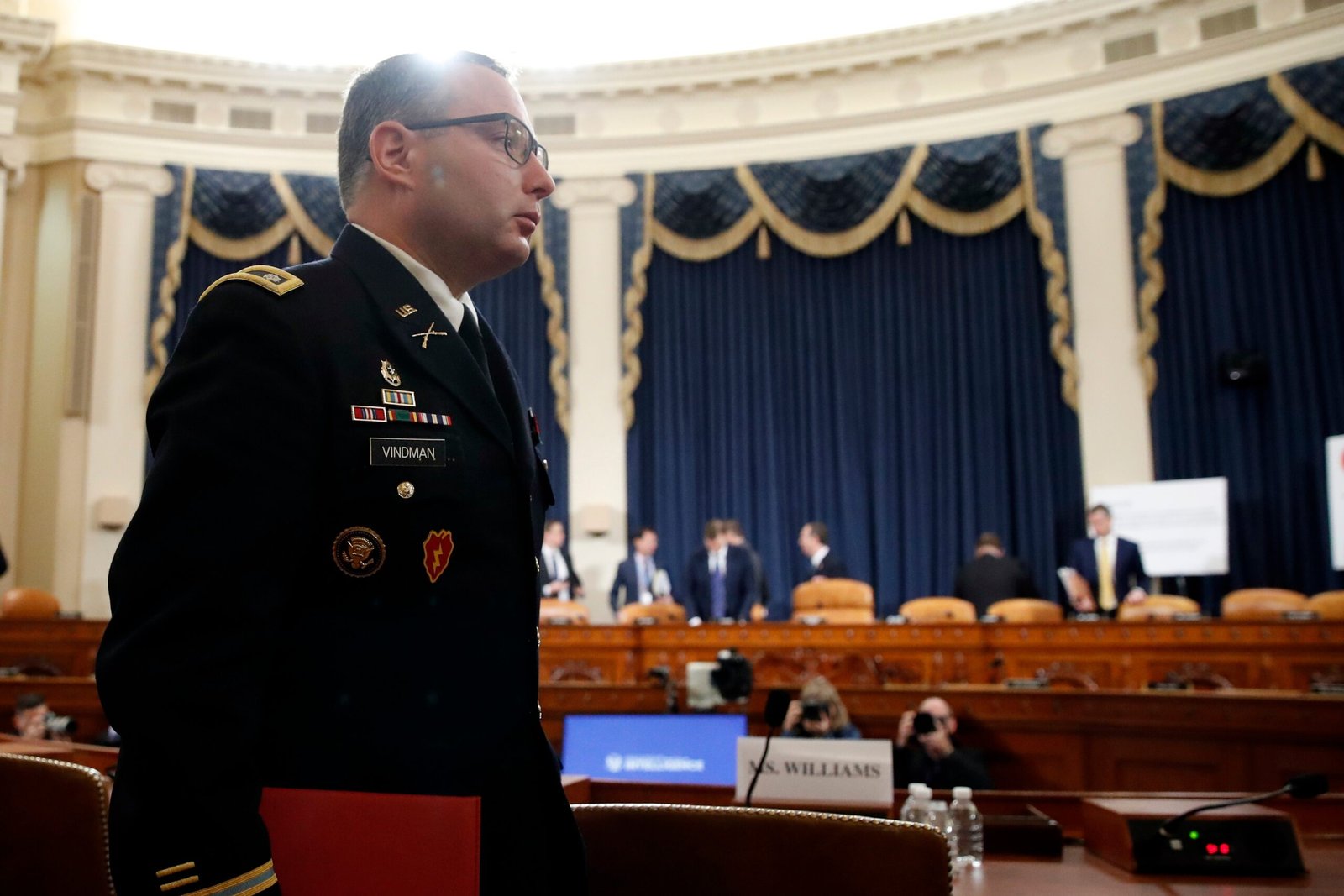
TALLAHASSEE, Florida — Million-dollar fundraising advantages and even endorsements from President Donald Trump did little to sway Florida voters Tuesday as they rattled the state’s parties by opposing candidates backed by the establishment.
Newly minted Democratic socialist Angie Nixon scored a massive upset — and notched a win for progressives — by beating retired Lt. Col. Alex Vindman, who had a huge fundraising edge. And, in another major development, two candidates endorsed by Trump, scandal-plagued Rep. Cory Mills and former administration official Catalina Lauf, lost their bids for Congress.
Taken together, the results show Democratic and Republican voters in solidly red Florida are hungry for change amid dissatisfaction with the economy, an ongoing war in Iran and restlessness over the status quo.
“People are frustrated, frankly, with both parties,” said Florida’s Chief Financial Officer Blaise Ingoglia, who is a former legislator and chair of the Republican Party of Florida. “They’re frustrated with people not delivering. … They want people to deliver for Floridians. They want people to deliver for Americans.”
National Democrats scrutinized states throughout the country during the primary season, looking for every opportunity they could find to pick up seats and flip the upper chamber come November. The one thing they may not have been betting on: A progressive who sorely lagged in fundraising scoring an upset in Florida. But that’s just what they got with Nixon’s win.
A state lawmaker and Jacksonville community organizer who recently joined the Democratic Socialists of America — but notably did not have DSA’s endorsement — Nixon ended up handily winning with more than 55 percent of the vote, surprising the state as she’s now positioned to campaign against GOP Sen. Ashley Moody, the former state attorney general appointed to the Senate by Gov. Ron DeSantis to replace Secretary of State Marco Rubio.
On Tuesday night, Nixon told supporters who gathered to hear her victory speech in Jacksonville that her win sent “shockwaves” to the Washington establishment.
“And they better get ready,” Nixon said. “When we realize that we are each other, we are not each other’s enemies, and that we are all struggling.”
In the state Legislature, Nixon was an adversary of DeSantis and his fellow Republicans, as she notably opposed Florida’s rare mid-decade redistricting push by railing on the newly drawn maps on the House floor in a pink jumpsuit and shouting through a pink megaphone. Nixon campaigned on progressive policies like free childcare and freezing rent nationally, helping her score support from national progressives like Democratic Reps. Maxwell Frost of Florida, Ilhan Omar of Minnesota, Rashida Tlaib of Michigan and Ayanna Pressley of Massachusetts.
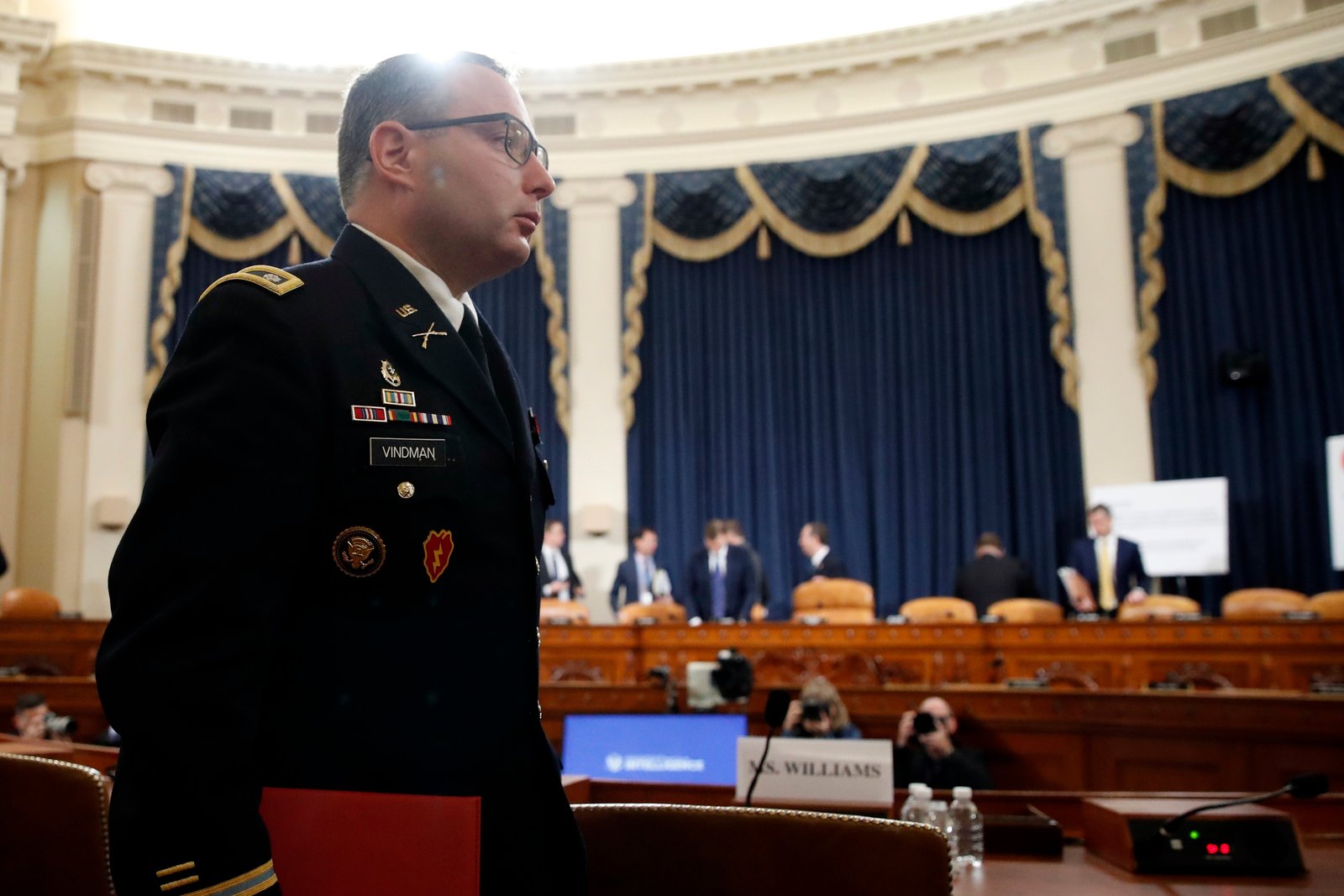
Vindman had a prominent profile as a National Security Council whistleblower who testified in Trump’s first impeachment trial and secured a massive fundraising advantage surpassing $20 million largely from small-dollar donors. Nixon, meanwhile, didn’t scratch $1 million. But being outgunned proved not to be a factor for Nixon.
State Rep. Anna Eskamani, a progressive Democrat from Orlando, said Nixon’s campaign centered around the needs of the working class, from affordability to health care. Those concerns generated enough momentum for Nixon’s campaign to overcome the millions of dollars spent by Vindman.
“It really just speaks to saying that money doesn’t determine everything,” Eskamani said. “They’re tired of health care not being affordable and one job not being enough.”
Some Florida Republicans celebrated Nixon’s victory, believing a progressive will be easier for the GOP to overcome in November.
“It was a wild night in Florida politics,” GOP Rep. Randy Fine said at the victory party for Rep. Byron Donalds after he won his own crowded primary. “I mean, the Nixon win is the greatest gift ever. She’s crazy and should be in jail for the stuff she pulled on the House floor.”
But Fernand Amandi, a Democratic strategist for both David Jolly, who won the Democratic primary for governor, said that Nixon’s win shows frustration with longtime GOP control in Florida.
“It tells me that Democrats are uniting behind a message that holds a Republican Party that has total control over Florida government for 30 years responsible for the cost-of-living crisis that Floridians from all walks of life are suffering through,” Amandi said. “It doesn’t matter which wing of the party — they are uniting behind the message.”
On the Republican side, Trump’s endorsement didn’t prove to be the deciding factor in two races. In Florida’s 19th District, Trump’s endorsed candidate, Lauf, a former adviser at the U.S. Department of Commerce during the president’s first term, lost to Jim Schwartzel, a media executive and owner of a conservative talk radio station, by about 7 points.
It was a crowded field, with several former congressmen, including former North Carolina Rep. Madison Cawthorn and New York Rep. Chris Collins also running.
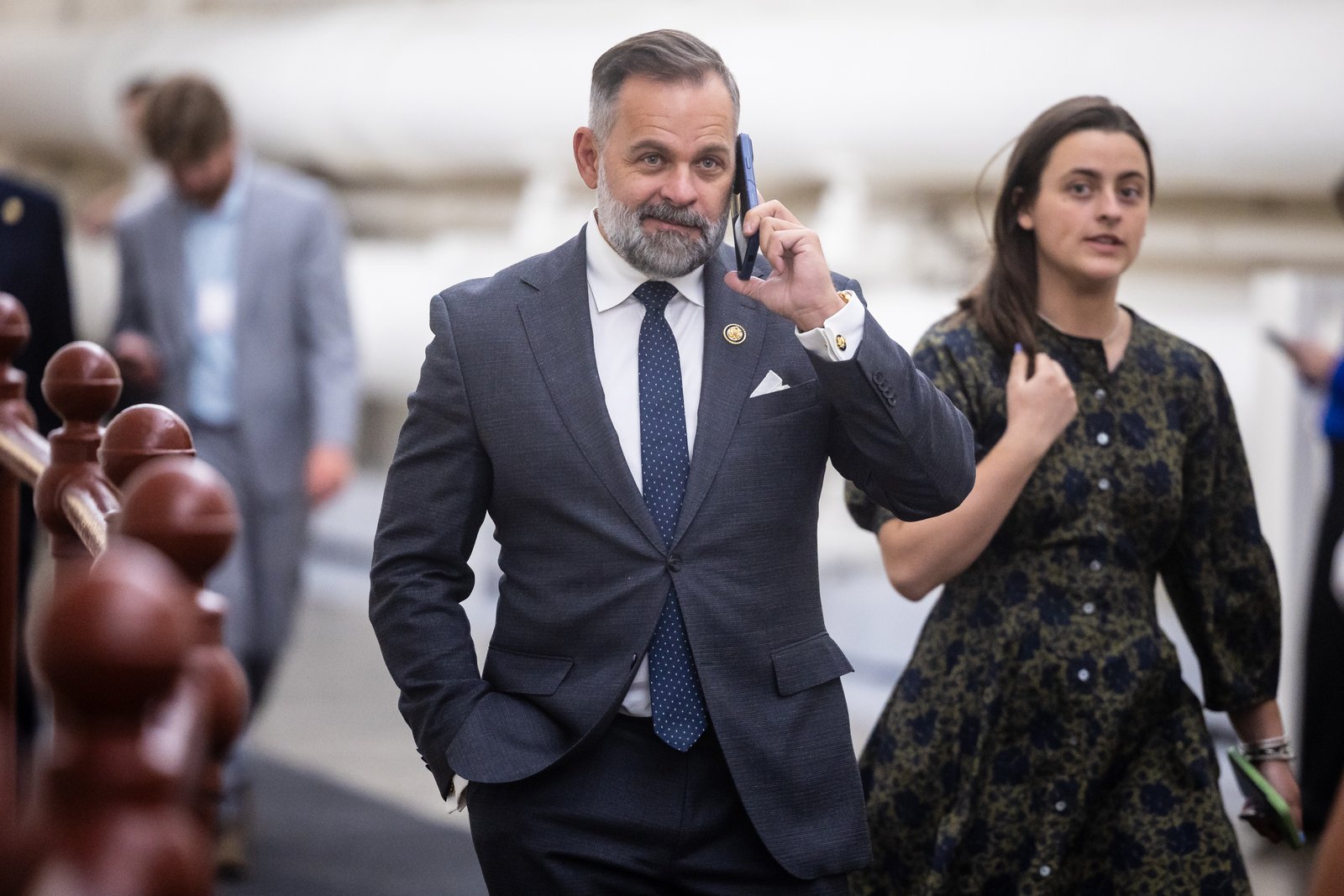
In Florida’s 7th District, Mills fell short of his bid to hold on to his seat, even with the president’s early backing. Instead, former television anchor Ryan Elijah defeated him by about 12 percentage points.
Under investigation by the House and shunned by some of his GOP colleagues in Congress, pressure has been building on Mills for weeks and only intensified recently as Republicans like DeSantis and Rep. Anna Paulina Luna came out against him. Mills has remained adamant that he has done nothing wrong amid a long line of incidents — including a restraining order placed on him at the request of a former girlfriend — and had defied calls from other Republicans to step down from his central Florida congressional seat.
Mills hoped Trump’s endorsement would put him over the line with voters, but it wasn’t enough. Elijah, who outraised Mills and other GOP contenders, tried to make the case during the campaign that a Mills win would make the seat an easier target for Democrats.
During his victory speech Tuesday night, Elijah highlighted the support he got from rank-and-file House Republicans, particularly Rep. Mike Haridopolos, with whom he said he has had a long relationship. And he noted the risk those GOP members took in balking against a Trump-endorsed candidate.
“To have those leaders jump on board with us a couple weeks ago, against an incumbent and against a presidential endorsement, and they did that anyway.” Elijah said. “That is courage right there, and I applaud them for that.”


GIRDWOOD, Alaska — Dan Sullivan isn’t running away from President Donald Trump like so many other vulnerable Republicans. He’s betting that walking the line instead will help him reap reelection in November.
During a candidate debate, speaking at an economic forum and in an interview with Playbook this week, Sullivan repeatedly denied chances to put distance between himself and Trump’s most unpopular policies and positions.
Has the economic pain from the war with Iran been worth it for Alaskans? “The real economic pain is when Democrats get control,” Sullivan told Blue Light News, sitting in the shadow of a well-antlered taxidermy moose head, next to a roaring fire, at a ski resort tucked up in the mountains off the Turnagain Arm southeast of Anchorage.
What about the $5,000 dividends Trump has promised voters if Republicans hold control of Congress, as he did at a rally for Sullivan in Wasilla on Tuesday? “I’ve got to look at the legislation. I don’t know,” Sullivan said. “That was the first time I heard it from him, and I would just evaluate that if and when it happens.”
Does he want to see data centers — which Trump has pushed for further development despite some pushback from local communities — pop up on Alaska’s undeveloped land? He’s not putting his foot down. “They definitely got to pay their own way in terms of energy,” Sullivan said. “They have to have local input and approval, and we’ll see.”
Still, Sullivan bristled on some issues that touch closer to home.
In light of Trump’s decision to import Russian diesel, did Sullivan think the Trump administration was being too friendly with Russia? “I thought you were asking me campaign stuff,” Sullivan replied. “Is this like a hit piece or what?”
Though his office put out a statement decrying the move, Sullivan didn’t sign a bipartisan letter calling on the president to reverse the decision, instead taking his concerns straight to the White House. “I speak to the administration all the time on the issues of high energy costs,” Sullivan said.
Art Hackney, a veteran Republican strategist in Alaska who runs a pro-Sullivan super PAC called “We Stand with Dan,” said in an interview that another part of the calculus is that Murkowski has provided a straightforward example of how Trump treats Republicans who publicly disagree with him.
“If Dan did something considered a disrespectful trigger or something, what do you think would happen? It could well have implications for things that affect Alaska’s economy.”
But Trump, for better or worse, is a centerpiece of races like Sullivan’s. The president has pleaded with voters at rallies to “pretend I’m on the ballot” — just as he did alongside Sullivan on Tuesday.
And Alaska’s tighter-than-expected Senate race is poised to be a linchpin for deciding which party holds control of the chamber. Alaska, Ohio and Iowa are the races that Trump officials view as increasingly critical to keep their majority, according to three GOP officials familiar with the Trump-aligned super PAC MAGA Inc.’s strategy, granted anonymity to candidly assess the midterms.
Sullivan only sees Trump’s presence as a boon. “I think the rally certainly helps in terms of energizing the base,” Sullivan said.
He’s proud to have the president campaign alongside him, plus Vice President JD Vance, HHS Secretary Robert F. Kennedy Jr. and Sen. Ted Cruz (R-Texas).
“I’m bringing up my people,” Sullivan said. “I’m not afraid of that.”
Polls show Sullivan tied with or trailing former Rep. Mary Peltola, one of Democrats’ top hopes to help flip the Senate. On paper, this contest shouldn’t be close: Peltola lost her House seat after just one term.
“It was Trump plus-13 two years ago, so it is not the position we’d love to be in, but we’re doing what we do to help get him across the finish line,” said Kevin Greene, the state director for Americans for Prosperity-Alaska, which has knocked on tens of thousands of doors for Sullivan.
On one such door-to-door trip with Greene in Anchorage on Thursday morning, voters across approximately a dozen houses were about evenly split between supporting Sullivan or Peltola. Only one agreed to speak on the record to Blue Light News: John Baker, a 67-year-old retiree who said he used to be a Republican but would be supporting Peltola this year.
What happened? “Donald Trump happened,” Baker said. He added that his support for Peltola was 70% because he wanted to see Democrats take the Senate and 30% because he liked her as a candidate.
Peltola, the first Alaska Native to represent the state in Congress, has centered her campaign around “fish, family, and freedom” while capitalizing on voters’ frustrations with the high cost of energy and goods, particularly in remote communities. She has focused on outreach to villages in the Alaskan bush and has largely shied away from national attention, including from the media.
The former congresswoman has some major liabilities that Sullivan often slams. Just two years ago, she lost her reelection bid after only one full term. She has sought to distance herself from the Biden administration, which remains unpopular in the state. She has a reputation for missing meetings and votes. And a New York Times report last month alleged that she created a hostile work environment and regularly used slurs and other offensive language.
Even those close to her campaign, though optimistic, acknowledge it’s still an uphill battle.
“It’s always been long odds,” said John-Henry Heckendorn, a Democratic strategist in Alaska whose firm is supporting Peltola outside of her official campaign. Peltola, he said, would have to do about twice as well as the Democratic Senate challengers in the past four cycles in order to win.
At the debate on Thursday, Peltola said she “prided” herself on being “available to Alaskan press” — though she acknowledged she has “really demurred from national attention, from national outlets.”
After the debate, Blue Light News asked Peltola: “You said you’re accessible to the press. Will you take some questions?” She smiled, then walked away quickly, with an aide saying she had a dinner to attend. “She’s hoping that the Joe Biden bunker mentality will win, and you know, maybe it will,” Sullivan told Blue Light News on Friday. “I don’t think it will. I think Alaskans can see through it.”
Peltola’s campaign declined several interview requests for this story. In an email to Blue Light News, the campaign noted that Sullivan was in the top quarter of most-absent senators, and that Peltola had to miss congressional votes when both her husband and mother died. The email also noted that Peltola helped secure the Willow oil-drilling project and has a record of bucking her fellow Democrats. Peltola has hosted at least 16 events in Alaska this month, the campaign said, and has interviewed with eight news outlets in the past week.
“Dan Sullivan has tripled his wealth in the Senate and voted fourteen times for the war in Iran that is raising costs one everything from gas to groceries, Mary has been talking with Alaskans in every corner of the state about her plan to take on the rigged system in DC, lower costs, and put Alaska first,” Harry Child, a campaign spokesperson, said in a statement to Blue Light News.
Sullivan is leaning on his strong legislative record and support for oil and gas development in the state. He has sought to tie Peltola to Senate Minority Leader Chuck Schumer, Joe Biden and Kamala Harris, and has attributed her massive fundraising edge to “lower-48 liberal millionaires and billionaires who want to turn Alaska into national parks.”
Though he’s largely embracing Trump, there’s still moments of disagreement. But even in those spaces, he’s touting his close ties to the White House and effectiveness as a Washington operator instead of pushing the president away.
Sullivan was opposed to Defense Secretary Pete Hegseth’s plan to livestream the execution of the convicted Fort Hood shooter, and told Blue Light News “there’s probably no senator weighing in more with senior White House and directly with the Secretary of War than me, saying this is not a good idea.” Trump called off the livestream on Thursday.
Trump’s approval rating here, like the country at large, is underwater. The war with Iran has hit Alaska hard, where nearly all goods are imported by plane or barge, with urban gas prices hovering around $5 per gallon and prices in the bush often double that. In a year when Republican voters may be more likely to stay home without Trump on the ballot — Democrats eye an opening.
“We have a golden opportunity with a fantastic candidate on our end and a really mediocre one on theirs,” said Alaska Democratic Party Chair Eric Croft. “I think we’ve been coming that way for a long time, and this is our chance to pump through.”
Trump on Tuesday flew more than eight hours from Washington to Wasilla, home of Sarah Palin and the Iditarod, with Interior Secretary Doug Burgum, Commerce Secretary Howard Lutnick, FCC Chair Brendan Carr and FHFA Administrator Bill Pulte in tow. He announced that Taiwan had joined South Korea in its commitments to a proposed Alaska energy pipeline — though the project is still in flux — and that the FCC will vote this month to invest an additional $162 million to expand high-speed internet in the state.
Thousands of the president’s fans piled into the ice hockey rink and thousands more gathered outside, watching Trump speak on a jumbotron. Asked by Blue Light News what he thought about Peltola, rally attendee Jeff Caswell, 59, replied: “I don’t.”
But in a state where independents outnumber Republicans, that enthusiasm may only go so far.
“Very conservative MAGA voters can’t vote for you harder,” said Scott Kendall, a veteran political strategist who worked on two of Alaska GOP Sen. Lisa Murkowski’s campaigns and was chief of staff to former Alaska Gov. Bill Walker. “Donald Trump’s support in this current climate is both a blessing and a curse,” Kendall noted.
Even some reliable Trump supporters at the rally acknowledged the outlook appeared bleak.
“I think Alaska’s turning blue,” Matt Niessink, a 45-year-old general contractor from Wasilla, said at the rally. He said he had voted for Trump three times and planned to support Republicans this year.
What did he wish the president would do differently?
“I wish he’d shut his mouth sometimes and not be such a pompous ass,” Niessink said.
Donald Trump is barnstorming the country to boost Republicans in the final weeks of the midterms. But many candidates want to keep that support quiet.
The president is nowhere to be found in GOP ads, even in red states where Republicans were happy to tout his endorsement two years ago. And some candidates are hesitant to appear with Trump on the campaign trail — even as they hope he will help juice turnout among the MAGA base in November.
Democratic House and Senate candidates and outside groups have spent $145 million on general election ads mentioning Trump, while Republicans have spent just $8 million, according to a Blue Light News analysis of data from AdImpact, which tracks political advertising. That’s in sharp contrast to 2024, when GOP candidates spent $62 million on ads mentioning Trump.
“Trump is at historic lows right now, so if he comes to your district or state, it’s about getting the Republican base vote out there and that can certainly help,” said Ron Bonjean, a longtime GOP strategist. “But it’s really important for the candidates not to be talking about Trump 24/7 on the campaign trail.”
The unfavorable national political environment leaves few incentives for GOP candidates to tie themselves to Trump, and more and more Republicans in competitive races have broken with the president on issues such as the Iran war and tariffs.
When Republicans do mention Trump in ads, they often aren’t touting his support. In Alaska, GOP Sen. Dan Sullivan has run an ad citing how he “voted to force Trump’s DOJ to release the Epstein files.”
The silence on the airwaves is especially stark in red states like Nebraska and Ohio. In 2024, Sen. Deb Fischer (R-Neb.), who was facing a challenge from independent Dan Osborn, and now-Sen. Bernie Moreno (R-Ohio), who was challenging then-Sen. Sherrod Brown, both ran several general election ads featuring endorsements from Trump. The president won Nebraska by more than 20 points and Ohio by 12 points that year, with Fischer and Moreno also winning their races.
But this cycle, the GOP isn’t focusing its ads on Trump in either state, as the match-up between Osborn and Republican Sen. Pete Ricketts heats up in Nebraska and Brown seeks to oust Republican Sen. Jon Husted in Ohio.
Both Ricketts and Husted appeared at Trump rallies earlier this month. Still, Trump is absent from all Republican Senate ads in Ohio, and the only Ricketts ads that name the president accuse Osborn of disparaging Trump supporters — but don’t mention Trump’s endorsement.
“The war in Iran, I think, has become a real noose around the neck of Republican candidates because of the affordability crisis,” said former Ohio Rep. Jim Renacci. A nonprofit he works with surveyed voters on whether GOP candidates should appear with Trump and found that “in most cases you do not want [Trump] standing near you, which is why I was a little bit surprised that Jon Husted has had two events with President Trump, because I do believe there’s a strong headwind in Ohio, and a big change from 2024.”
Husted’s campaign spokesperson Amy Natoce told Blue Light News in a statement, “President Trump won Ohio decisively three times by 8 points, 8 points and 11 points. If we successfully turn out the MAGA vote this November, then we will retire Sherrod Brown for good.”
The National Republican Senatorial Committee did not respond to a request for comment.
“President Trump is the unequivocal leader, best messenger, and unmatched motivator for the Republican Party, and he is committed to maintaining Republican majorities in Congress,” White House spokesperson Davis Ingle said. “The choice has never been more clear: doubling down on President Trump’s winning, commonsense agenda or the Democrats’ extreme liberal policies and obstruction.”
Another Republican operative, who is based in Ohio and like others was granted anonymity to speak candidly about their own party, said GOP candidates need to find a way to talk about the Trump administration — no tax on tips, protecting social security — without mentioning the guy in the Oval Office.
“This is a historically unpopular president,” said the strategist, who has worked on multiple statewide races over the course of the last 15 years. “We all agree with that, and so it’s kind of hard to attach yourself on the airways, I think, too closely to him.”
Trump’s rallies, unlike candidates’ ads, are seen more as targeting the president’s base. He’s not only visiting traditional battlegrounds like Georgia and Michigan, but also typically safe red states like Alabama and Kansas.
Still, his events have been a source of tension with some GOP candidates. When Trump’s team was making plans for the president to campaign in Michigan last week potentially in western Michigan, several Republican candidates and their teams up and down the ticket initially didn’t know whether they should attend and be seen with the president, according to three Republicans with direct knowledge of the conversations, who were granted anonymity to share private details. They were concerned about being associated with Trump’s tariffs, which have hammered the state, along with high fuel prices amid the Iran war.
Trump officials scrapped the event and said the president would visit the state later in the month. Trump is now scheduled for a rally in the state on Oct. 25.
“[Republican candidates] are going to do what they need to do,” said one GOP pollster close to the White House. “What the White House and the president are doing is they are targeting places where they think the president can be helpful.”
Trump has allowed Republicans to discuss issues pertaining to their states or districts as “he understands that it is not a balk on him,” said one White House official, granted anonymity to speak candidly.
If Trump “was to believe that all these individuals were balking him, I A) don’t think that he would want to be on the road every day, and B) I do think that you would probably see a more vocal President Donald J. Trump on Truth, et cetera, kind of voicing his opinion on it,” the official said.
The president and his team are giving most Senate GOP candidates especially a wide latitude to break with some of his policies at times, according to two other White House officials involved in the conversations. Trump, they said, understands the need for vulnerable candidates to create some distance, even though in the past he has lashed out at members of his party for similar moves.
Republicans in the more MAGA-friendly House, however, are expected to run more in lock-step with the president. Only the most at-risk candidates are afforded some room to break with Trump, the officials said, given the tidal wave of chaos that can spur within the conference.
One GOP strategist working on a battleground House race, granted anonymity to discuss private information, said he had gotten pre-approved from the White House for his candidate to miss a planned rally. Still, the strategist cautioned, that doesn’t mean Trump won’t berate someone from the stage when he notices the candidate is missing.
Republicans still see Trump as a unique motivator for his base and rallies as a tool to help turn out voters who might be driven by the president. With Democratic voters already energized by opposing Trump, the GOP has less to lose by bringing the president out to turn out MAGA voters too.
“The reality is, Democrats are going to vote in this midterm,” said Paul Shumaker, a Republican strategist from North Carolina, where Trump is set to return for a rally next week as GOP Senate nominee Michael Whatley struggles to close the gap in his race. “And what Republicans need to be doing is focus on what they can do to improve their voter turnout on their side.”
Lauren Fedor, Myah Ward, Andrew Howard and Alex Gangitano contributed to this report.
WICHITA, Kansas — Roger Marshall was running behind.
The bus Kansas Republicans booked for a five-day barnstorming tour sat idling Tuesday morning, with other statewide candidates onboard. The tour was already a few minutes delayed as state party chair Danedri Herbert awaited word from the senator who some Republicans grumble isn’t campaigning hard enough as polls show him tied or trailing.
Finally, she got word: Marshall would ride separately.
As the bus reached its first stop in rural Newton, Marshall crept aboard — and was spotted by reporters doing so. He then joined the other candidates exiting to greet the crowd like he’d been there the whole time.
Marshall is playing catch-up as he races to avoid becoming the first person to lose a Senate contest to a Democrat in the state in nearly a century. He faces the most serious challenger for a Kansas senator in over a decade as his party stares down a grim environment under President Donald Trump’s second term.
National Republicans are pouring millions into the state to prop him up; national Democrats are responding in kind, and Democrat Adam Hamilton, a well-known United Methodist pastor, is suddenly flush with cash for the campaign’s homestretch.
But some Republicans think it’s already too late for Marshall.
“He took it way too much for granted,” said former Kansas Gov. Mike Hayden, a Republican who supported Marshall’s previous campaigns but is now publicly backing Hamilton. “He’s been almost invisible, except on national television. And there’s not a lot of love in Kansas for Washington D.C.”
National Republicans have privately urged Marshall to take his race more seriously on numerous occasions, according to a person familiar with the conversations who was granted anonymity to discuss them. Marshall, this person said, never appeared too worried about the race. Marshall’s latest Federal Election Commission report indicates this may be true. He raised just $866,000 for the third quarter to $9.9 million for Hamilton, and that filing did not appear to include any full-time payments to campaign staff.
Marshall’s team did not respond to requests for comment on this article.
One Republican strategist close to the White House, granted anonymity to speak candidly, acknowledged the race is an “uphill battle,” comparing Marshall to an “old athlete who, it takes them a lot longer to warm up to get ready for the game time, and they didn’t start that early enough.”
That strategist said that the remaining undecided voters are overwhelmingly Trump voters, and predicted they’d come home. Kansans “are mad at Republicans, but they just hate Democrats more,” the strategist said. “As much as DC Republicans are bedwetting, the ones actually working on the races are cognizant of this.”
As the race nears the homestretch, a deluge of bad press has dogged the senator: His campaign used pictures of a Kansas campground without permission and had to edit the ad; his team faces accusations of blurring the line between his official and campaign offices; his campaign reportedly didn’t pay a bill to a local bakery for six years until after the unpaid debt was made public (he apologized).
Two other stories landed the hardest.
The first focuses on a Florida property that he owns, raising questions about how much time he actually spends in Kansas. The second stems from a New York Times report that Marshall, an obstetrician-gynecologist who served two terms in the U.S. House, had allegedly taken legal action against hundreds of medical patients who didn’t pay their bills. Marshall has said he spends the bulk of his time in Washington or Kansas, calling the claims “bologna.” He called the Times’ report a “hit job by left media” and told Fox News he had “nothing else to do to with the process” after patients’ accounts went to collections.
At a Monday rally in the liberal college town of Lawrence, Hamilton told supporters that Kansans deserve a senator who isn’t just “showing up for photo ops” between “time with your family in Florida.”
“I want to know from Roger Marshall: What’s your plan when people … show up and they don’t have health insurance?” Hamilton said, standing on a hay bale in a shady park. “Is the plan we’re going to sue them? Then we’re going to have some of them arrested, and maybe a few of them put in jail?”
Hamilton’s campaign cut a face-to-camera ad with one of Marshall’s former patients, who said she was arrested when she was eight months pregnant because she missed a $50 payment to Marshall’s office. The Marshall campaign sent a cease-and-desist letter in response, saying the ad’s “message is false in every material respect,” and went up this week with its own ad of a former patient singing his praises.
National Republicans have swooped in to prop up Marshall with $11 million in planned spending in recent days. And he’s getting other reinforcements: Chris Grant, the stalwart Trump-world operative and veteran of previous Marshall campaigns, will take an expanded role on the senator’s team through Election Day, Axios first reported.
Marshall’s struggles are drawing unfavorable comparisons to the last Republican who needed to be bailed out to win a Senate race in the state.
“This race reminds me of Sen. Pat Roberts’ last race [in 2014], when he was accused of not maintaining a Kansas residence and campaigning poorly,” said one Kansas state GOP lawmaker, who was granted anonymity to speak openly.
But Republicans had a strong wind at their backs in 2014, sweeping nearly every Senate race that year; Roberts managed a 10-point win, similar to Marshall’s 11-point win in 2020. This time around, the national climate is blowing hard the other direction.
Kansas has been especially hard-hit by some of Trump’s policies. His tariffs and spiking fuel prices left the state’s row crop farmers struggling. A plan to import cheap foreign beef infuriated ranchers in a state that produces the second-most cattle annually. And his threats to cut off U.S. sales of Bombardier planes — a Canadian company whose U.S. headquarters are in Wichita — rattled the state’s robust aviation industry.
Marshall has recently shown signs he knows he’s in a fight. The normally strident MAGA backer broke with the president on the beef import plan and on a recent local immigration enforcement action, after ICE activity rattled some of his state’s agricultural towns.
He’s banking on the conservative nature of the state, working hard to paint Hamilton as a progressive who will fall in line behind Washington Democrats. “This guy is the most radical liberal Democrat in the history of Kansas to get through a primary,” Marshall said in an interview in Garden City. “He is this wolf in sheep’s clothing.”
At rallies in Newton, Hutchinson, Dodge City and Garden City, he warned that his election could decide which party controls the upper chamber. “If my opponent were elected, it would give Chuck Schumer and AOC control of the Senate,” he repeated. Recent Republican ads hit Hamilton as “woke” and “radical,” pointing to his past praise of the Black Lives Matter movement.
But as Marshall tagged along with the other GOP candidates for their barnstorming tour, holding mini-rallies across central and western Kansas on Tuesday, he was reminded how deep the anger at Washington runs right now — even in ruby-red Kansas.
In Dodge City, the self-described “cattle capital” of the country, some Republicans in the crowd grumbled about spiking fuel prices. In Newton, protesters screamed through Marshall’s speech, calling Republicans “fascists.” (“Quiet, Satan!” a disgruntled attendee retorted.) In Garden City, where ICE activity sent shockwaves last month, Marshall got an earful in a private meeting with local lawmakers over their frustration that immigration officers barged into town without coordinating with local law enforcement.
”I think the frustration is still there,” state Rep. Jason Goetz, a Republican who represents some of the cities affected by ICE enforcement.
There’s a belief among some Kansas Republicans that Marshall has thrown together so poor a campaign that if he wins, it won’t be of his own accord — it will be because of Ty Masterson, the Republican state Senate president running for governor who joined him on the bus tour and has polled a few points ahead of Marshall in most surveys.
Rep. Tim Huelskamp, a Kansas Republican who lost a U.S. House primary to Marshall in 2016, said Masterson is “going to pull everybody across the line,” a list that “absolutely” includes Marshall.
Patricia Woods, a Hutchinson resident, said at a rally that she is “100% behind Masterson.” When asked about Marshall, she said she is “kind of on the fence.”
Masterson, when asked about Marshall’s race, simply chuckled. “It’s more complicated than mine,” he said.
Adam Wren and Andrew Howard contributed reporting.
- Sullivan walks the line with Trump in Alaska Senate race
- Trump is hitting the campaign trail. But he’s missing from GOP ads.
- Kansas Republicans fear Roger Marshall may be running out of time
- Internal FEMA memo reveals plans to curb states’ reliance on federal aid
- House Democrat introduces bipartisan bill to block Trump’s Russian diesel deal
- A vulnerable Republican takes on both parties over immigration
- RFK Jr. and his allies are standing by Russell Brand as the comedian’s rape trial begins
- Haley Stevens is everywhere — except on the trail for El-Sayed
- No one wants to be on the Senate Ethics Committee
- Senate Republicans are getting smoked in fundraising
-

 Politics2 years ago
Former ‘Squad’ members launching ‘Bowman and Bush’ YouTube show
-
Uncategorized2 years ago
Bob Good to step down as Freedom Caucus chair this week
-

 The Josh Fourrier Show2 years ago
DOOMSDAY: Trump won, now what?
-

 The Dictatorship2 years ago
Pete Hegseth’s tenure at the Pentagon goes from bad to worse
-

 Politics2 years ago
Former Kentucky AG Daniel Cameron launches Senate bid
-

 The Dictatorship2 years ago
Luigi Mangione acknowledges public support in first official statement since arrest
-

 Politics2 years ago
Blue Light News’s Editorial Director Ryan Hutchins speaks at Blue Light News’s 2025 Governors Summit
-

 The Dictatorship1 year ago
Mike Johnson sums up the GOP’s arrogant position on military occupation with two words