
Politics
Five takeaways from the New York City mayoral debate

Democratic mayoral nominee Zohran Mamdani smiled his way through a two-hour debate where Andrew Cuomo and Curtis Sliwa tried to land punches on the frontrunner.
Few of those hits had much of an impact against Mamdani, who effectively pressed his affordability platform without making any significant mistakes. Cuomo needed a moment that he didn’t get. Mamdani had a largely pain-free night.
Here are five takeaways from the first of two general election debates:
Mamdani was smooth
The young assemblymember reminded debate viewers why a 33-year-old democratic socialist is on the cusp of becoming mayor of New York City — he’s a great communicator.
With a double-digit lead in every poll, all Mamdani really needed was not to collapse. He succeeded — and avoided any major missteps. Some Republicans seized on his awkward moment declining to endorse Gov. Kathy Hochul’s reelection, even though she took a big political risk by backing his candidacy … but that’s not exactly going to cost Mamdani the race.
At times, he might have been too smooth — he’s practiced lines on topics like affordability and Israel so many times you can almost see him going into autopilot.
Clinical Cuomo struggled
Cuomo needed a breakout moment against Mamdani. He’s stuck in second place in polls, and even with Mayor Eric Adams suspending his campaign, the ex-governor has not been able to surpass the frontrunning Democratic nominee.
The debate underscored the key problem facing Cuomo who’s running as an independent after losing in an upset to Mamdani in June. In his long career, Cuomo has never successfully run a campaign as the underdog. His sole electoral loss came 23 years ago against Carl McCall. Every election since, Cuomo was the clear favorite.
Cuomo spoke from the podium with a dry recitation of facts. Mamdani appeared well prepared for the ex-governor’s attacks, many of which — like the Queens assemblymember’s past criticism of Barack Obama — were recycled from the primary campaign. That criticism didn’t work then, and it isn’t clear why Cuomo would think it could work now in a general election.
Curtis talked up Trump
One of the quirks of this race is the candidate with the deepest experience with President Donald Trump is Cuomo, who has known him for decades. Mamdani has never met the president. Sliwa, the Republican nominee, has the most strained relationship.
Trump has scoffed at his party’s candidate to lead his hometown as not ready for primetime. The president derisively noted that Sliwa lives with a lot of cats in a small apartment.
Yet it was Sliwa who pledged to have a working relationship with the president, who has tried to exert his will over this deep blue city. The Guardian Angels founder said it wouldn’t be productive to work against Trump or try to be a tough guy with the president.
This stance serves multiple purposes. Cuomo is trying to steal Sliwa’s Republican supporters, and Sliwa needs MAGA New Yorkers to stay in the fold. Sliwa also likely knows Cuomo and Mamdani won’t go out on a similar limb since they can’t afford to lose Democratic voters who loathe Trump.
When you’re explaining …
The former governor spent much of the evening explaining. And explaining. And explaining some more.
Cuomo had to parry attacks on his decade-long record as the state’s chief executive when it came to funding for homeless people and mental health programs. He repeatedly pushed back when Mamdani or Sliwa referenced the sexual harassment scandal that drove him from office, once again denying any wrongdoing.
Those digressions cost him precious time to prosecute the case against Mamdani.
Mamdani’s clear weaknesses
The otherwise strong night by Mamdani had the effect of highlighting his weaknesses on public safety and Israel.
He struggled when talking about his plans for making changes to the Civilian Complaint Review Board — almost sounding like a Wikipedia entry when describing the panel’s job of assessing police misconduct. Mamdani was also on his backfoot when being attacked by Cuomo over embracing the phrase “globalize the intifada.”
As strong as Mamdani can be on affordability and cost-of-living concerns that are so important to New Yorkers, he still has vulnerabilities on other issues where Cuomo is strongest.


This is an adapted excerpt from the March 24 episode of “All In with Chris Hayes.”
Donald Trump’s war on Iran is in its fourth week. Gas prices are up $1 a gallon in much of the country. Stocks continue to fall on fears of global supply shortages.
The death toll is growing. Thirteen American service members have lost their livesand more than 1,200 Iranians have been killed, along with upward of 1,000 people in Lebanonmore than 150 in the surrounding Gulf states and 17 Israelis. That’s not accounting for the millions who are displaced and the thousands who have been injured, including hundreds of U.S. troops.
But according to the president who launched the war, it’s all over.
It is becoming increasingly clear that Trump expected a fast and easy win.
“We’ve won this. This war has been won,” he told reporters Tuesday in the Oval Office. “The only one that likes to keep it going is the fake news.”
However, during those same remarks, Trump was all over the place — talking about an epic victory, ongoing peace negotiations and personal gifts.
It was all completely counter to his posture over the weekend, when he threatened to “obliterate” Iranian civilian power plants — essentially teasing a war crime — if Iran did not stop blocking oil tankers in the Strait of Hormuzsomething Iran was not doing before Trump attacked them.
But now, he has supposedly pressed pause on that bombing plan for five days because, he said, the negotiations are going well.
When he first announced that in a social media post Monday, it sent oil prices down 10% and boosted stocks.
However, those markets reversed themselves Tuesday after the Iranians said they have not engaged in any serious high-level negotiations with the Americans, and they claimed Trump was making things up to help oil prices. The Israelis said the same thing. (That’s not to say you should take Iran’s word for it, or Israel’s, but you shouldn’t take the White House’s word, either.)
It is becoming increasingly clear that Trump expected a fast and easy win. He had no plan B, and now he is flailing to find some kind of fallback position.
On Monday, sources from the administration told Politico that they have their eyes on a future U.S.-backed leader of Iran: Mohammad Bagher Ghalibaf, speaker of the Iranian parliament.
“He’s a hot option,” one unnamed U.S. source — who seems to really wants a deal — told Blue Light News. “He’s one of the highest. … But we got to test them, and we can’t rush into it.”
But on Tuesday, that “hot option” trolled Trump for what he called a “jawboning campaign” to stabilize oil prices. In a social media postGhalibaf wrote: “[L]et’s see if they can turn that into ‘actual fuel’ at the pump — or maybe even print gas molecules!”
Call it the fog of Trumpian war: a million contradictory messages flying around, constantly wildly pinging bits of news that don’t make sense together.
Right now, we have reports that Trump’s negotiators, including his envoy Steve Witkoff and Vice President JD Vance, are traveling to Pakistan for informal talks with an Iranian official.

At the same time, unnamed U.S. officials have told The New York Times that the Saudi crown prince is pushing Trump to continue the war until Iran’s government collapses — something the Saudis publicly deny.
In fact, The Wall Street Journal is reporting that Saudi officials are holding talks in Riyadh with their Arab counterparts to find a diplomatic off-ramp from the war.
On Tuesday evening, U.S. officials said the Pentagon was poised to deploy 3,000 troops of the 82nd Airborne Division to the Middle East. That is in addition to two Marine expeditionary units on their way to the region and the 50,000 U.S. troops already stationed there.
Also on Tuesday, Iranian-backed militias in Iraq are claiming that U.S. strikes there killed 30 of their members.
But, according to Trump, the peace talks are going great, right?
All eyes everywhere have been on the Strait of Hormuz, where Iran responded to the U.S. attack by striking oil tankers and shutting down 20% of the world’s supply of oil and liquefied natural gas. It is now essentially running a toll operation in the strait.
Some countries, such as China, Japan and India, are negotiating deals with Iran to get its oil out. Which is to say, Iran is shipping more oil and making more money than it was under the U.S. sanctions in place before Trump attacked it.
It’s clear the president sees what’s happening, so now he is trying to share control of the strait with Iran. Trump told reporters the strait would be “jointly controlled” by “maybe” him and “the next ayatollah.”
The administration really thought this was going to be another Venezuela. They told themselves that, and they were egged on to believe it by the staunchest advocates of the war, such as Israeli Prime Minister Benjamin Netanyahu and Sen. Lindsey GrahamR-S.C.
But in Iran, a decapitation strike did not lead to mass uprisings. It did not lead to regime change. It led to the situation in which Iran’s regime is intact, even if militarily degraded, and they now have explicit control of the Strait of Hormuz — a huge pressure point.
It really looks like the U.S. is backed into a corner: It can sue for peace because of the oil tanker situation, but they do not have much leverage, or it can escalate the war. That may be why we’re seeing all these contradictory developments.
In Iran, a decapitation strike did not lead to mass uprisings. It did not lead to regime change. It led to the situation in which Iran’s regime is intact.
Trump issued an ultimatum he had to walk back from because he said there were deep peace negotiations, which then later proved to be completely fabricated.
Now, more U.S. troops are set to be deployed for a possible ground invasion in the Middle East, despite reports that the U.S. has supposedly sent a 15-point plan to Iran through Pakistan to end the war.
It almost looks as if Trump is trying to wave the peace card to keep a lid on oil futures and financial marketsjust long enough to have ground troops in position — and just in time for the markets to close for the weekend on Friday, when Trump’s “pause” on bombing Iranian power plants is set to end.
That could be the plan Trump now settles on, weeks into a deadly war where there was obviously, very clearly, no real plan at all.
Allison Detzel contributed.
Chris Hayes hosts “All In with Chris Hayes” at 8 p.m. ET Tuesday through Friday on MS NOW. He is the editor-at-large at The Nation. A former fellow at Harvard University’s Edmond J. Safra Foundation Center for Ethics, Hayes was a Bernard Schwartz Fellow at the New America Foundation. His latest book is “The Sirens’ Call: How Attention Became the World’s Most Endangered Resource” (Penguin Press).
House Budget Committee Chair Jodey Arrington is making clear he will push for the “fraud prevention” spending cuts he wants across state and social safety net programs in order to pay for any Iran war funding in a second GOP reconciliation bill. The Texas Republican is meeting soon this afternoon with Senate Budget Committee Chair Lindsey Graham (R-S.C.) in Graham’s office to discuss plans…
Read More
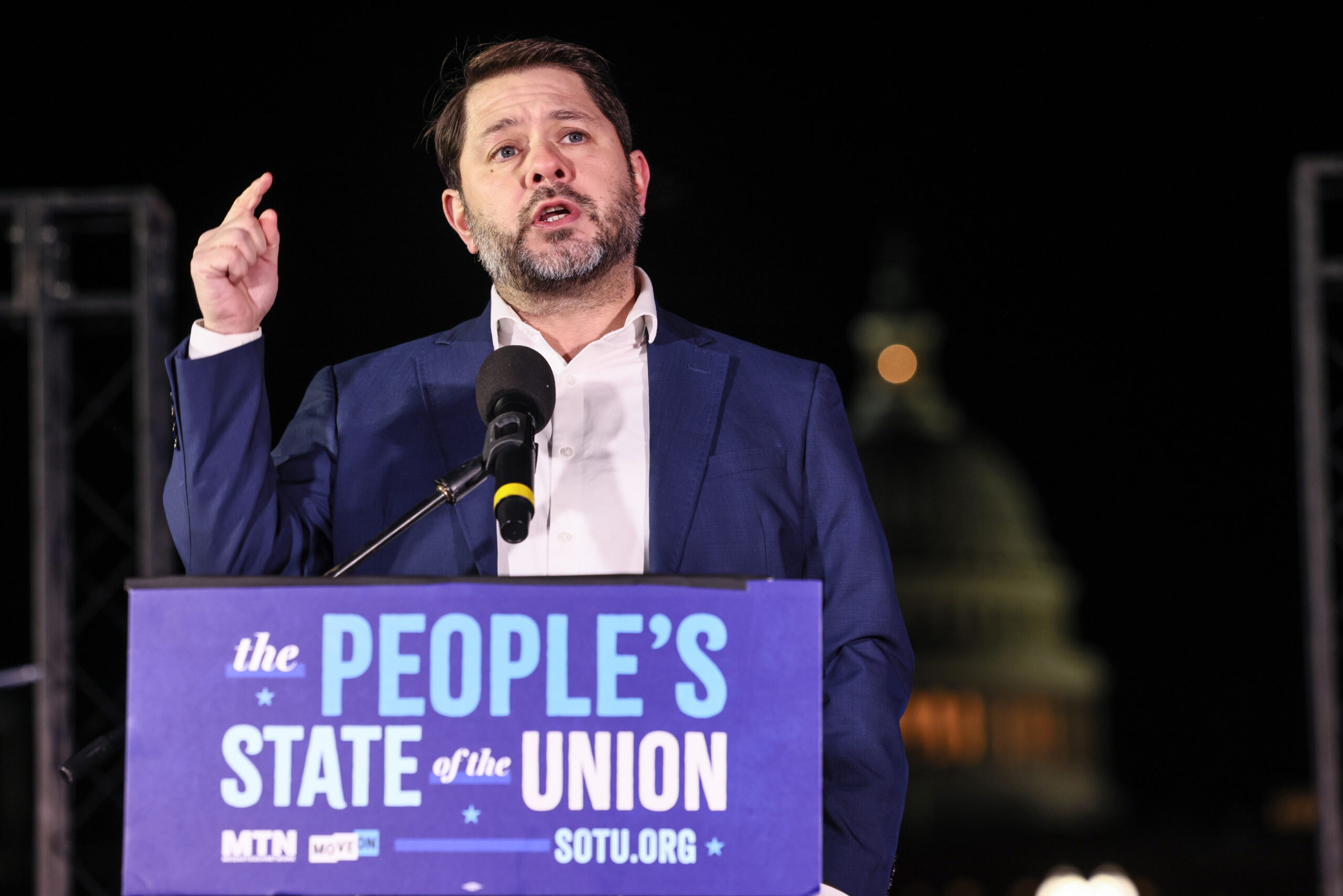
The Arizona senator said the former attorney general was “willing to sacrifice our democracy” to protect the institution of the Justice Department…
Read More
- ‘I just want to go home’: Despair settles over the Capitol as DHS deal hopes evaporate
- Schumer rolls out Democrats’ midterm energy pitch
- No plan B: Trump is flailing to find an off-ramp for the Iran war
- Jury finds Meta and YouTube liable in landmark social media trial, awards $6 million
- Democrat vows to turn ‘Epstein files into Epstein trials’ after release of new depositions

- Trump’s Justice Department agrees to financial settlement with Michael Flynn
- Ukrainian energy official: Lifting Russia oil sanctions is ‘wrong approach’
- Kash Patel’s girlfriend ignites conspiracy-based feud with MAGA influencers
- No plan B: Trump is flailing to find an off-ramp for the Iran war
- Arrington: Fraud cuts for war funding
-

 The Dictatorship1 year ago
Luigi Mangione acknowledges public support in first official statement since arrest
-

 Politics1 year ago
Former ‘Squad’ members launching ‘Bowman and Bush’ YouTube show
-

 Politics1 year ago
Former Kentucky AG Daniel Cameron launches Senate bid
-

 Politics1 year ago
Blue Light News’s Editorial Director Ryan Hutchins speaks at Blue Light News’s 2025 Governors Summit
-

 The Dictatorship7 months ago
Mike Johnson sums up the GOP’s arrogant position on military occupation with two words
-

 The Dictatorship1 year ago
Pete Hegseth’s tenure at the Pentagon goes from bad to worse
-
Uncategorized1 year ago
Bob Good to step down as Freedom Caucus chair this week
-

 Politics11 months ago
Democrat challenging Joni Ernst: I want to ‘tear down’ party, ‘build it back up’