
Congress
Expect a quieter Jan. 6 this time around — as long as Republicans avert a looming speakership crisis

Donald Trump’s victory has made Jan. 6 boring again.
Four years after a mob of Trump’s supporters stormed the Capitol to prevent Congress from certifying Joe Biden’s victory, Republicans and Democrats seem to agree they’ll give Trump the smooth, drama-free transfer of power he denied Democrats in 2020.
That’s despite the fact that many Democrats see Trump as an insurrectionist, ineligible to hold the presidency because of his role in creating the conditions that led to the attack four years earlier. Instead, top Democrats say they have no plans to stand in the way of Trump’s victory — and they’re not even sure their rank-and-file colleagues will make the token objections they’ve lodged in years past.
They also anticipate that Vice President Kamala Harris will lead the joint session of Congress to count Trump’s presidential electors precisely the way her predecessors have, taking no active role in the proceedings and tallying the results certified by the states. The result: a quick and simple transfer of power that will culminate on Jan. 20 when Trump takes the oath of office.
“I think you’re going to have a pretty sort of normal transfer, and I think we will respect the wishes of the American people … in contrast to what happened January 6, 2021,” said Rep. Joe Morelle (D-N.Y.), the top Democrat on the House committee tasked with overseeing elections. “I do feel like that’s worth saying over and over again.”
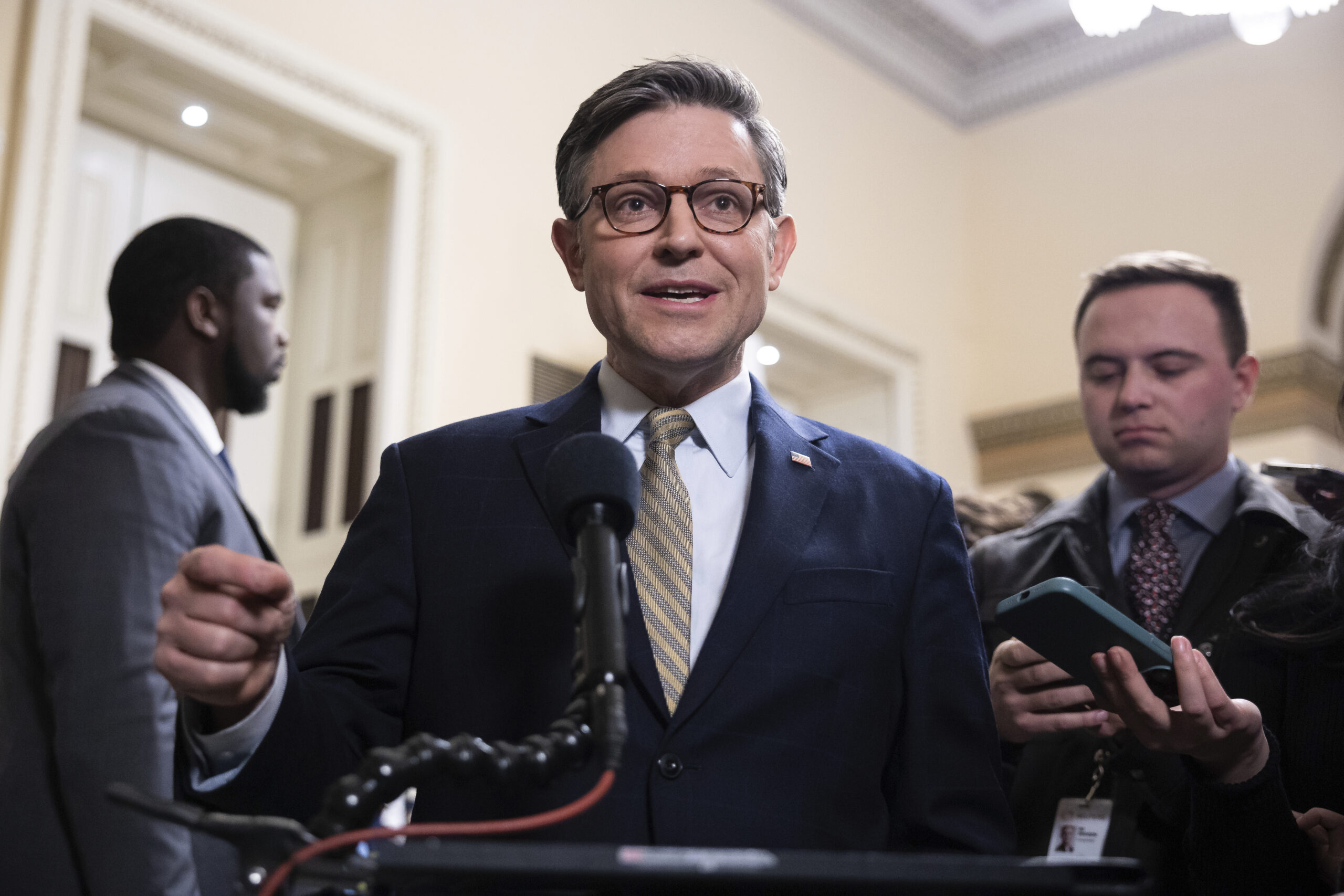
There is one potential crisis, attributable to Trump’s own party and the incoming president himself. After a spending fiasco last week, conservatives have expressed doubts that Mike Johnson should still be speaker, and Trump hasn’t weighed in to defend him. That House vote is scheduled to occur on Jan. 3, and a protracted battle could delay the certification of Trump’s win. Congress can’t do anything else until it elects a speaker.
Here’s a look at how the final stages of the presidential transition will play out once the new Congress convenes next month.
Before Jan. 6
Before Congress convenes to count electoral votes there are two crucial questions lawmakers must answer. The first: Who will be speaker of the House?
When the new Congress convenes on Jan. 3, their first job is to select a speaker, who can then swear in the other members and preside over the adoption of rules to govern the chamber. Until last week, Johnson appeared to be a shoo-in to win a full term, consolidating the support of his fractious conference, winning over detractors and lining up votes for what he hopes will be his first full term. But his stewardship of spending negotiations and an initial deal with Democrats led to a conservative revolt, with several openly calling for a new speaker. Trump also openly issued veiled threats about Johnson’s future as speaker.
If Democrats, as expected, unanimously back Leader Hakeem Jeffries, and former Rep. Matt Gaetz (R-Fla.) holds to his promise not to return to Congress, Johnson can only afford to have one Republican vote against him. That’s a suddenly realistic possibility — Rep. Thomas Massie (R-Ky.) has already vowed to oppose him, and several more are noncommittal.
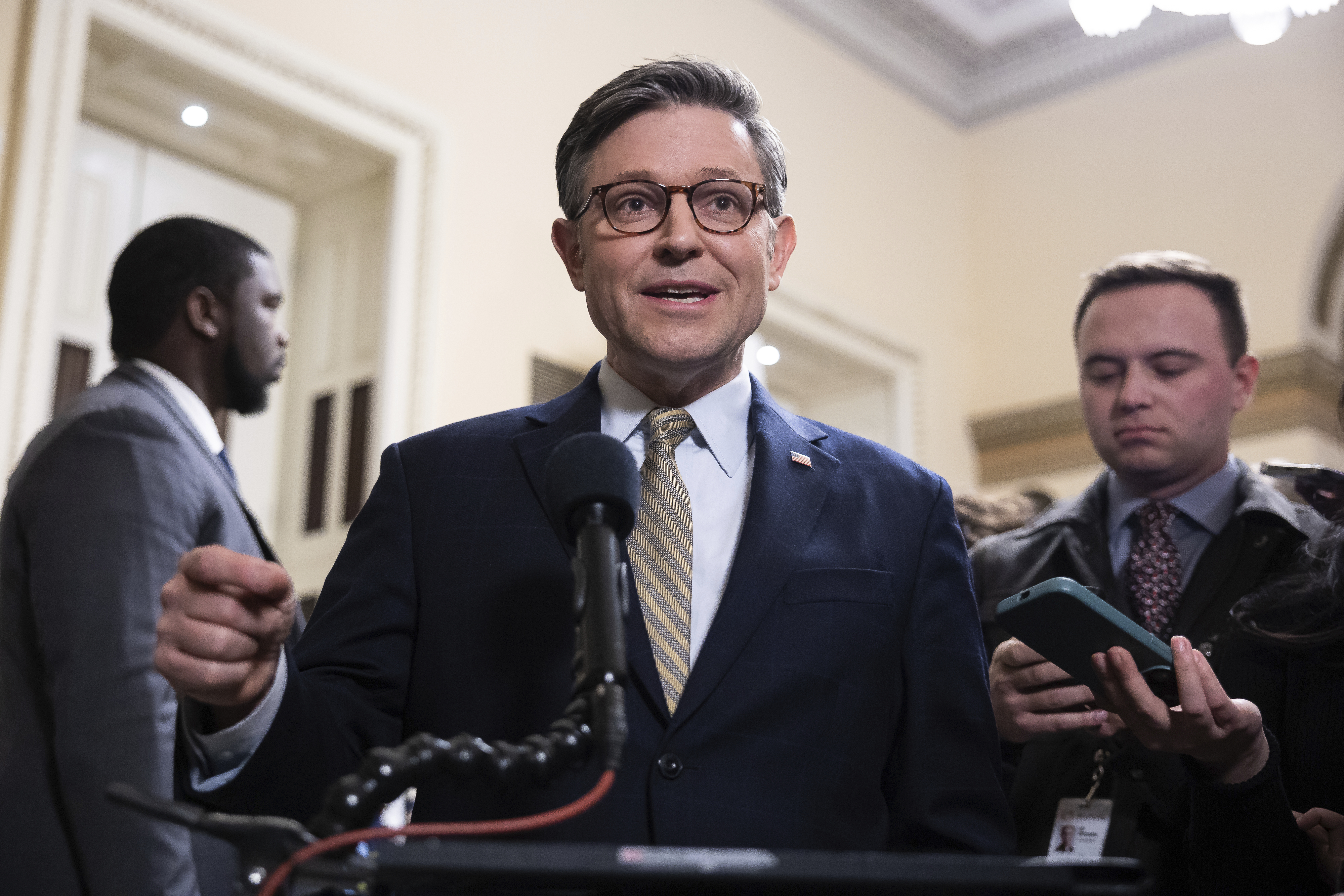
A battle for the speakership could take days, creating uncertainty about the House’s ability to count Electoral College votes. And there’s no road map for what to do if a protracted battle eclipses Jan. 6.
That leads to the second question: Could Congress change the date of the joint session? Lawmakers have the authority to pass a law changing the date from Jan. 6 — and there’s precedent for doing so in modern history. The branches could, of course, push the session back a few days to give the House breathing room to resolve a speaker fight.
Presuming the speakership is resolved, the House and Senate must agree on the procedures governing the joint session of Congress. For more than 100 years, this has been uncontroversial and Congress has approved rules governing the legislative branch, including the Electoral Count Act, a statute that has governed the joint session since 1887. Even in 2020, when Trump was contesting the results of the election, Congress adopted this resolution unanimously.
However, the fight that emerged in 2020 revealed that some Republican lawmakers do have doubts about the laws that govern the transfer of power. And Johnson himself has yet to clarify his own views on the Electoral Count Act — particularly since Biden signed significant amendments to it in 2022.
Though Republicans are unlikely to want to stoke uncertainty, given that their guy is about to take the oath of office, a fight over the Electoral Count Act could still emerge on Jan. 3.
Democratic objections
Republicans are fond of pointing out that Democrats have lodged objections to presidential electors in every race Republicans have won since 2000. However, Democrats have seen those objections as largely symbolic, without any endorsement from national leaders or party organizations.
This time, there may not even be a symbolic objection to Trump’s victory. Blue Light News spoke to the group of Democrats who challenged some of Trump’s electors in 2017, and none of them said they planned to mount a similar effort this time. They acknowledged that their 2017 votes were token statements that they did not expect to succeed, and said the events of the last four years underscored the need to show confidence in the transfer of power.
“I’m not intending to do that again, because I think that people don’t differentiate,” said Rep. Pramila Jayapal (D-Wash.). She added: “I think there was a clear difference between what we did and what he does.”
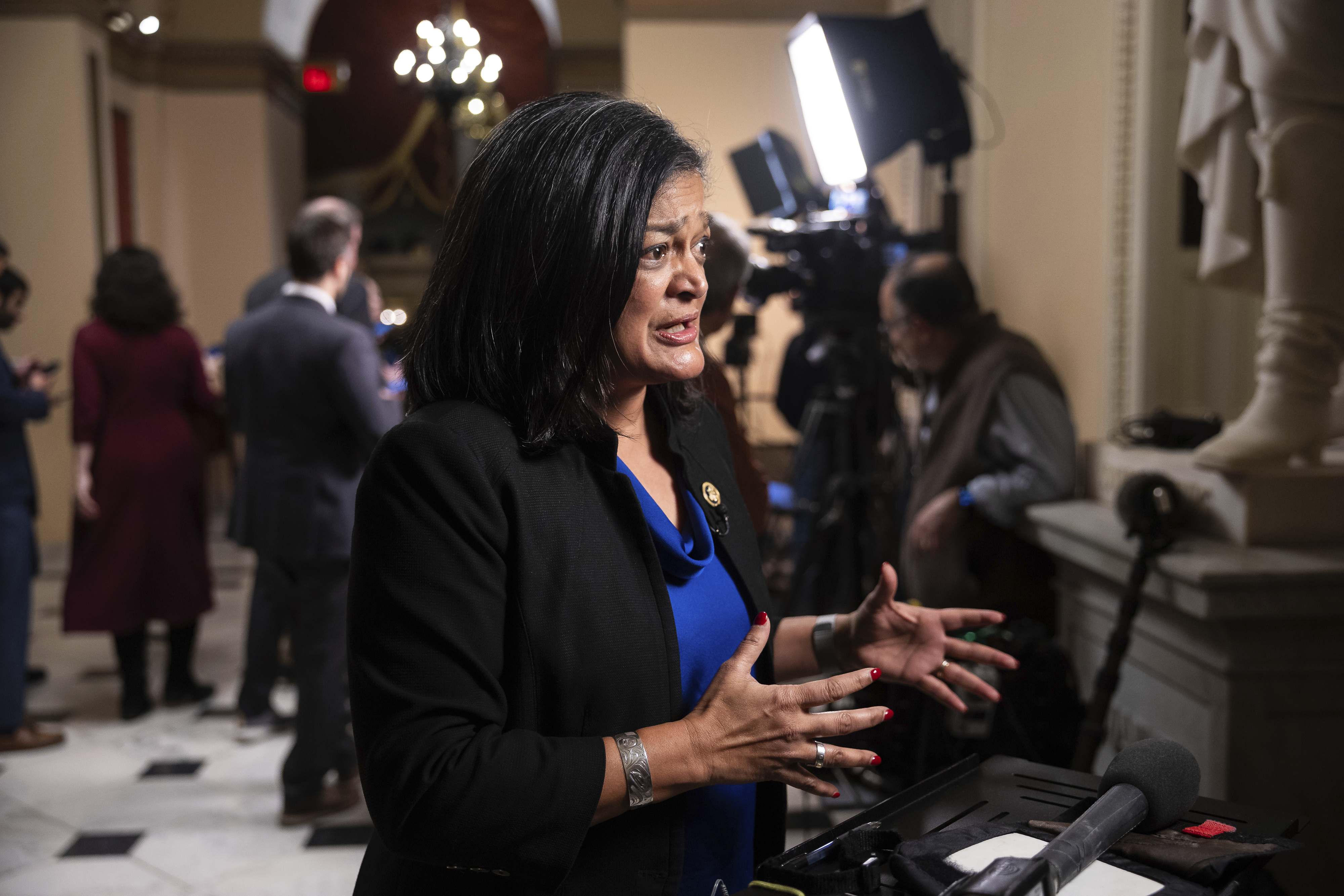
Rep. Jamie Raskin (D-Md.), who also lodged an objection in 2017, said he hadn’t heard of a single Democrat who planned to object this time and predicted that Democrats would be “constitutional patriots.”
“I have not actually heard of anybody who intends to vote no,” added Morelle, “and I would certainly discourage it.”
And if Democrats did mount challenges to Trump’s electoral votes, the updated Electoral Count Act made it significantly harder to force their colleagues to consider them.
In every previous joint session, it took objections from just one House member and one senator to trigger a lengthy debate and vote. But the revised law now requires 20 percent of each chamber — 87 House members and 20 senators — to sign challenges before they trigger further proceedings. It’s hard to imagine any potential challenge coming close to that threshold in 2025.
Kamala Harris presides
Harris will be presiding over the certification of her own defeat — a moment that is simultaneously uncomfortable and an ode to the peaceful transfer of power. She’s the third losing candidate to do so in recent history.
The vice president, who serves as president of the Senate, is constitutionally required to fulfill this role, with limited exceptions. In 2000, Al Gore brushed aside Democrats’ protests to certify George W. Bush as the victor. In 2016, Biden told a handful objecting Democrats that it “is over” and ushered in the first Trump presidency. And in 2020, Mike Pence resisted a crushing pressure campaign from Trump — and a violent riot — and followed in his predecessors’ footsteps.
Trump and a group of fringe attorneys argued that Pence could buck history and take control of the joint session, deciding which electoral votes to count or postponing the session altogether to give states a chance to reverse their certified results. Pence rejected this approach as unconstitutional, contending that the vice president’s role in the joint session is meant to be largely ceremonial.
Though some Trump allies still say the vice president has this authority, no one expects Harris to remotely entertain the idea — and Democrats have roundly dismissed it as a possibility.
Harris aides have said she intends to carry out her duties as all vice presidents have before her, in part because it is right and also because it’s the law. Indeed, lawmakers seem so certain that Jan. 6, 2025 will lack intrigue that they’ve largely treated it as an afterthought. Gone are the intensive strategy sessions and convoluted legal analyses aimed at pressuring the vice president to take an active role in the proceedings in order to reverse the outcome.
Security concerns
In 2021, the expectation of challenges to the election were high while the anticipation of violence at the Capitol was low. Those dynamics are reversed this time.
Despite the lack of drama, security agencies — the Secret Service, the Capitol Police, the D.C. police and others — are treating the event on par with the security needs of the Super Bowl. Already, there are signs around the Capitol of enhanced security measures, including surveillance towers set up in the vicinity.
And while protests are possible, there’s been no call by any national leaders to converge on Washington for the joint session or to challenge the outcome. That lack of organizing energy suggests the fervor of Trump supporters in 2021 simply won’t be replicated by Trump’s detractors.


Republicans have had to defer many of their legislative dreams, hoping the post-election release of political pressure could set up a productive “lame duck” session before a new Congress is seated.
Fat chance, many GOP lawmakers now say.
Beyond the uncertainties surrounding the midterms and a potential transition of power on Capitol Hill, members will return to Washington facing a considerable list of must-pass bipartisan bills but also potentially messy internal leadership fights, a foul national mood and a mere 24 legislative days to get anything done.
One thing on Republicans’ minds is whether some of their members even come back to vote.
“The question becomes: Who shows up for work after the elections?” Rep. Austin Scott (R-Ga.) said in an interview. “Attendance is an issue right now.”
There are some items, Scott added, that “ultimately … have to get done.” Those include an extension of government funding past Dec. 11 and the annual Pentagon policy bill. Major pieces of legislation to reauthorize farm, transportation and surveillance programs are also on deck. All are loaded with potential partisan flashpoints, however, and won’t be legislative chip shots.
Then there are pending bipartisan bills overhauling energy permitting and the college sports industry that many members are itching to get done this year. But many lawmakers fear those could easily get left behind — especially if Democrats can win control of either chamber and seek greater influence on the final products.
“What do you think?” an exasperated Sen. Thom Tillis (R-N.C.) said about the prospect for bipartisan accomplishments in the lame duck. “I mean, why? If you think about it, if Democrats win the House, why would they?”
Rep. Dan Newhouse (R-Wash.), who like Tillis is leaving Congress at the end of the year, echoed the belief that Democrats would “want to put their fingerprints more on things before they pass” in a majority-flips scenario.
Senate Minority Leader Chuck Schumer suggested as much in a recent interview: “The lame duck will be quite different if we win the Senate,” he said. “Same thing if they win the House, and same thing if we win both or neither.”
Then there are partisan GOP priorities that some Republicans are hoping to ram through in the final weeks of the year — especially if the party’s governing trifecta is about to end — such as enacting hundreds of millions of dollars in new defense funding as well as new voting restrictions.
While GOP leaders are leaving the door open to attempting to pass another bill through the party-line reconciliation process, there are no signs they are closer to having the necessary votes than they were this summer.
While some Republicans believe that losing a chamber would jump-start that process, others privately believe the exact opposite would happen, according to three GOP aides granted anonymity to speak candidly. There will be little incentive for lawmakers who just lost their seats — “free-range chickens,” some call them — to grind out a final legislative win, if they come back at all.
Senate Majority Leader John Thune last month admitted he is facing mathematical realities that make passing another reconciliation bill “difficult” even in a lame-duck session.
That likely spells doom for another GOP wish being bandied about for the post-midterms session: clearing a debt-limit increase through the end of President Donald Trump’s term. Thune has acknowledged that as a possibility multiple times since July, but several GOP senators are skeptical.
“I don’t like that idea,” said retiring Sen. Cynthia Lummis (R-Wyo.), who added she had to “hold my nose” in voting for the last debt-ceiling lift.
But other GOP leaders are professing more optimism about the post-midterm environment to overcome some long-standing roadblocks.
House Majority Leader Steve Scalise in an interview called it “an opportunity for everybody to focus on getting policy done because the election will be over.”
“I hope we get back to that, because it needs to happen,” he said.
But each piece of legislation still in limbo is riddled with thorny policy disputes. Senate Democrats blocked the defense bill amid a standoff over the Iran war and have objected to giving Trump back some surveillance powers. The farm bill, meanwhile, is mired in a fight over food assistance.
Thune has teed up an initial vote on the bipartisan permittingdeal, but Democrats continue to doubt whether Trump will live up to GOP negotiators’ clean energy commitments — and they could push for more concessions if they prevail in the midterms.
Even the must-do government funding bill is a potential minefield, with lawmakers widely expecting a punt until deeper into the holidays or even next year.
Democrats are fuming over the Trump administration’s recent decision to block roughly $1 billion in congressionally approved funding, which could complicate the dealmaking ahead of the deadline. That could make passage of the 12 annual spending bills, or a combined full-year “omnibus” package, impossible.
“I just don’t think we’ll get them done by the 11th,” Rep. Mike Simpson of Idaho, a senior GOP appropriator, said about the full-year bills. He predicted another short-term punt.
Beyond the policy disputes, there’s a host of other distractions leaders of both parties will be dealing with once they return to session Nov. 9.
Speaker Mike Johnson will immediately have to deal with a House vote on impeaching Defense Secretary Pete Hegseth forced by outgoing Rep. Thomas Massie (R-Ky.). With the Iran war weighing heavily on voters’ views of the GOP, some Republicans with an eye on the next election could decide to break ranks.
And though the elections will be over outside the Capitol, internal politicking could continue for weeks in both chambers.
A Democratic flip of the House could spark a potentially chaotic cascade of GOP leadership elections, especially with Johnson giving mixed signals about his intentions in that scenario. He broached the possibility he might not remain atop his conference in a Fox News interview last week, then said in a CBS News interview published Monday that he expected “my colleagues would ask me to continue leading this conference” even after a loss.
Thune says he is running again for GOP leader regardless of the election outcome, and no other senator has signaled they will challenge him. That hasn’t stopped some conservatives, in and out of the chamber, from questioning whether Trump will blame him if the majority is lost.
Sen. John Kennedy (R-La.) said the lame duck to-do list could ultimately come down to vibes.
“I know what they would like us to do and all that,” Kennedy said. “But you have no idea what the mood is going to be.”
President Donald Trump announced the next chief for the White House’s Capitol Hill strategy on Saturday night, picking Katie Bailey, a former Republican Hill staffer.
Bailey will replace James Braid in the role of director of the Office of Legislative Affairs, which oversees nominations and confirmations of Cabinet roles, relationships on Capitol Hill and the White House’s legislative priorities. Braid left the job in September.
Bailey has served as deputy director of the Office of Legislative Affairs since the beginning of the summer. She formerly worked for Republican Sen. Mike Braun of Indiana and former Sen. Tom Coburn of Oklahoma, and served in roles on multiple committees.
Trump commended Bailey for assisting with the confirmations of Homeland Security Secretary Markwayne Mullin, Director of National Intelligence Jay Clayton and Labor Secretary Keith Sonderling, saying she has “already delivered strong results.”
“After previously working on Capitol Hill, Katie understands how the Executive and Legislative Branches of Government can most effectively work together to achieve Great Success for the American People,” the president wrote in a social media post Saturday night.
Bailey takes over the role ahead of the midterm elections, which could alter the power dynamics in Washington substantially if Democrats seize control of either chamber of Congress. The result, which the White House has begun preparing for, could include congressional subpoenas, depositions and investigations, as happened during the latter half of Trump’s first term in office, when Democrats flipped the House.
Trump’s approval continues to sag amid soaring gas and diesel prices driven by the war with Iran, leaving Democrats bullish that the map will continue to grow for them.
SYRACUSE, New York — President Donald Trump came to New York on Friday to help a Republican win an uphill race for governor. But his visit was also a reminder of the complicated role he plays in his party’s fight to keep control of Congress.
Trump rallied alongside GOP gubernatorial nominee Bruce Blakeman, calling on New Yorkers to fire Gov. Kathy Hochul and, referring to the state attorney general, “her totally corrupt sidekick, Letitia ‘Peekaboo’ James.”
“Your city and state are dirty, filthy places, and everybody wants to leave,” he told some 5,000 attendees at a convention center in downtown Syracuse — which, he noted, was “a short distance from the beautiful shores of Lake America.”
“You gotta get your act together, and I tell you what, Bruce Blakeman will get your act together,” Trump said.
For Republicans, the president’s appearance underscored a political dilemma that extends beyond New York: Even as Trump increasingly appears to be a drag on their ticket, they need his loyal supporters to energize their base. While voters have soured on the president’s handling of the economy and costs, he remains a potent force in turning out MAGA voters — even in an otherwise Democratic-dominated state.
“The targeting of where the president goes is not a random exercise,” Marist University pollster Lee Miringoff said. “They’re looking to stir the base without stirring the opposition. They’re picking and choosing, that’s not uncommon. For him to come to New York to help the turnout upstate is a positive for the Republicans and his base.”
Blakeman, the Nassau County executive, hasn’t distanced himself from the president — nor have most of the top officials in New York’s GOP. Nearly every Republican running a competitive congressional race in this half of the state came to Friday’s rally, eager to make their presence known.
“I’m always happy to be with the president,” said Anthony Constantino, who’s running in a nearby red district that’s inched into toss-up territory. “He’s the leader of the free world, and I’m excited to have a great relation with him.”
Some GOP operatives, however, have quietly grumbled that their candidates need to start creating some distance from the president. Republicans from other parts of the state like Rep. Mike Lawler decided that campaigning in their districts was more valuable than trekking to be seen with Trump — as did several down-ballot candidates in Central New York. Democrats, notably, have been just as eager to highlight the visit.
“This is supposed to be a swing district. And the feedback I get is that the president is very unpopular,” said Democratic Rep. John Mannion, who represents Syracuse and the surrounding Central New York area. “He still certainly will have his core base of supporters, but I do think he’s lost support here compared to what he had around the 2024 election.”
Blakeman, for his part, isn’t worried about Trump’s drop in popularity.
“Kathy Hochul should be worried about her drop in popularity,” he said before taking the stage in Syracuse. “She’s the most unpopular governor in the history of the state of New York.”
Trump’s visit came against the backdrop of a darkening political environment for New York Republicans.
Immigration and Customs Enforcement shot a man in Manhattan on Thursday afternoon, stirring fresh condemnation of Trump’s aggressive deportation policies. New York City Mayor Zohran Mamdani, a democratic socialist who has a surprisingly warm relationship with the president, called on him to cease all ICE activity in the five boroughs. Hochul stressed that the shooting took place with a five-year-old child present and demanded that federal authorities “provide answers.”
Immigration is one of several areas where Blakeman has hewed close to the Trump wing of the party throughout his campaign.
“I’m outraged with Kathy Hochul for taking sides with somebody who was a convicted felon, someone who was an alleged drug dealer, a gang member,” he said Friday about the shooting in Manhattan.
While Trump’s speech repeatedly careened back to the rhetoric one could expect from any of his rallies — boasts about the stock market, complaints about ‘Dumocrats’ — he did manage to seamlessly blend almost all of Blakeman’s oft-used talking points into his stump speech.
“Since Hochul took office, she’s raised your utility rates 48 times, and energy prices in New York have skyrocketed 100 percent,” Trump said. “If Bruce Blakeman gets in, he will cut your electric bills by 70, 80, 90 percent.”
The climate outside of deep blue New York City is also turning increasingly hostile to the GOP. Constantino, who’s running to succeed Rep. Elise Stefanik in upstate New York, trails his Democratic foe Blake Gendebien by 4 points, a Siena Research Institute survey released Friday morning found. A Blue Light News poll showed that nationally one in four Trump voters believe Republican candidates should break from the president in order to win in November.
The wisdom of appearing with Trump has been debated by Republicans throughout the country at a time when gas prices are high and a foreign war drags on. And New York Democrats aren’t viewing the presidential visit as a concern.
Much of Hochul’s messaging this year has focused on making sure New Yorkers know Blakeman and Trump are friends. Her most-aired TV commercial features a puppeteer saying one Republican would do the other’s bidding.
“Puppets are my life. You tell them what to say, they say it,” the narrator says. “But that’s not what you want in a governor.”
Earlier in the day during an MSNOW interview, Hochul dismissed the rally.
“It’s obviously a very political event,” she said. “It seems like a last-ditch effort to breathe some life into a campaign that’s on life support.”
Despite his low approval ratings with voters, Trump’s visit stands to light up a Republican base that Blakeman will need to turn out next month to help him defeat Hochul.
Polling has shown the governor leading the GOP nominee by as much as 18 points in this deep blue state. Yet some Trump supporters maintain the president can help generate much-needed enthusiasm for Blakeman, especially in areas of upstate New York where the Long Island native is not well known.
“We actually have the ability to win these elections, but I just don’t see the enthusiasm out there,” Conservative Party Chair Gerard Kassar said. “Hochul has won the day as far as being a terrible governor, but now we’ve got to get our people out to vote.”
Winning is still a tall order for Blakeman — especially in a tough national political environment where polls show GOP candidates in red states like Texas, Ohio and Kansas struggling against Democratic challengers.
Republicans have not won statewide in New York since George Pataki secured a third term in 2002. Since then, the GOP has lost all levers of statewide power, and Trump’s tariffs as well as his decision to launch a war in Iran have not helped him fulfill his campaign pledge of addressing voters’ cost concerns.
The president’s political woes aren’t going unnoticed.
Privately, Republican operatives grumbled that the president’s visit put swing seat candidates in an uncomfortable spot.
“There’s a lot of commiserating between folks within the party structure — why is this happening? Why is he doing this?” said one Republican operative who was granted anonymity to freely discuss the dynamic. “Then you’ve got the blind loyalists who say, ‘Yay Trump’s coming’ — people who are too politically dumb to understand the ramifications of it.”
Yet the head of the Republican party kept his message very much in line with Hochul’s.
“Please pretend I’m on the ballot,” Trump told Central New Yorkers.
-

 Politics2 years ago
Former ‘Squad’ members launching ‘Bowman and Bush’ YouTube show
-
Uncategorized2 years ago
Bob Good to step down as Freedom Caucus chair this week
-

 The Josh Fourrier Show2 years ago
DOOMSDAY: Trump won, now what?
-

 The Dictatorship2 years ago
Pete Hegseth’s tenure at the Pentagon goes from bad to worse
-

 Politics2 years ago
Former Kentucky AG Daniel Cameron launches Senate bid
-

 The Dictatorship2 years ago
Luigi Mangione acknowledges public support in first official statement since arrest
-

 Politics2 years ago
Blue Light News’s Editorial Director Ryan Hutchins speaks at Blue Light News’s 2025 Governors Summit
-

 The Dictatorship1 year ago
Mike Johnson sums up the GOP’s arrogant position on military occupation with two words