
The Dictatorship
Dr. Oz’s plan to impose AI on Medicare patients is a recipe for disaster


When Daniel was consumed with severe and inexplicable pain for months, his physician prescribed an MRI. However, his health insurer required that it approve the test as well before he could undergo the procedure. When the insurer denied the prior authorization, that began his long journey to diagnose and treat his syringomyelia, or a cyst in his spinal column. For Daniel, it meant over a year of debilitating pain, weight loss, suicidal depression and dependence on opioids amid delayed diagnosis and treatment. And his repeated appeals of the denied authorization drained what little energy he had.
While writing my forthcoming book (on health insurance coverage delays and denials), I found that Daniel’s tragic experience is all too common. Of the 1,340 people I surveyed, 36% experienced at least one instance of coverage denial, often through prior authorization, that kept medical care out of reach. Prior authorization has been typically deployed by private health insurers, infuriating doctors and patients. Now, though, thanks to the Trump administration, Medicare beneficiaries will begin facing these obstacles to care as well.
Private insurers usually deploy prior authorization to limit low-value care and contain health care costs.
Starting next year, through its implementation of the Wasteful and Inappropriate Service Reduction (WISeR) Modelthe Centers for Medicare and Medicaid Services (CMS) will begin a pilot program that will import the prior authorization process to traditional Medicare plans in six states. The program will even employ artificial intelligence tools to decide whether those Medicare beneficiaries will receive the care physicians say they need.
Private insurers usually deploy prior authorization to limit low-value care and contain health care costs. Though the tactic was used sparingly in its early days, it is now applied to most higher-cost drugs and nearly all surgeries and procedures. While most prior authorizations are ultimately approved, they are a source of headaches and frustration among patients and physicians alike, sowing distrust in the health care system. Prior authorization creates delays and denials of health coverage — and the process of challenging denials is highly burdensome, especially for people who are already struggling with severe or even life-threatening health conditions.
Appealing a coverage denial demands a high degree of health insurance literacy and fortitude that most of us lack, especially in a health crisis. Coordinating between one’s physician and insurer, all while potentially going untreated, can lead patients such as Daniel to experience a sense of overwhelm and a loss of autonomy amid this navigation anxiety. It is little wonder why so few patients ultimately opt to appeal. In fact, among the 3.2 million denials of prior authorization rendered by Medicare Advantage plans in 2023, just 11.7% were appealed despite most appeals resulting in a reversal of the initial denial.
Thus, health care becomes rationed not through a final denial of coverage, but rather through accumulations of inconveniences as patients — especially those from marginalized backgrounds — struggle to navigate America’s labyrinthine health insurance bureaucracy. Perhaps not surprisingly, the use of prior authorization has effects that are not only pervasive, but also inequitable. My research has found that less affluent patients are less likely to appeal, and sicker patients and Black and Hispanic Medicaid patients are less likely to appeal successfully.
The roughly 33 million Americans in Medicare’s traditional fee-for-service plans have largely been able to evade these administrative burdens, as these plans use prior authorization very rarely, such as for durable medical equipment. On the other hand, 99% of Medicare Advantage beneficiaries have prior authorization requirements in their plans. But with the proposed changes under the Trump administration, the enrollees relying on traditional Medicare will get ensnared in red tape as well, likely leading to delayed or forgone care.
Health insurers’ reliance on AI to process claims has already faced legal challenges.
And remember, most of Medicare’s beneficiaries are 65 or older. Older adults tend to have lower health insurance literacyare more likely to have significant health challenges and more frequently suffer from cognitive decline, which makes navigating the complexities of these health insurance processes particularly onerous, if not infeasible.
CMS Director Dr. Mehmet Oz asserts that this pilot program is aimed at “crushing fraud, waste, and abuse.” But it will inevitably drive delays in care — and burdens of appealing — for seniors across the country. It will likewise exacerbate administrative burden for physicians, who must submit prior authorization documentation, conduct “peer to peer” reviews of denials, and craft appeal letters on behalf of their patients. In fact, quite apart from simply combating overprescribing, prior authorization-related burdens can actually lead to underprescribing to avoid subsequent delays or rejections of coverage.
What’s more, health insurers’ reliance on AI to process claims (including from Medicare Advantage beneficiaries) has already faced legal challenges. Lawsuits filed against UnitedHealthCignaand Humana challenge the deployment of AI programs to decide the amount of coverage that patients required, regardless of the recommendations of the treating physician. Despite the scrutiny in court, only a small minority of patients (usually more advantaged patients) appeal these prior authorization denials. In other words, the high rate at which these denials are reversed — as high as 90 percentaccording to the lawsuits — can be an acceptable cost to insurers if the process is so burdensome that few ever challenge the decisions in the first place.
Daniel ultimately received his spinal cord stimulator, but through his long-term suffering, he was left wondering what might have been absent his supportive family and team of physicians advocating for his access to care at each turn in the health insurance maze. Applying the tools of managed health care to seniors, who may face cognitive decline and worsened physical health, is a recipe for disaster in which, for far too many, health benefits will feel illusory. In a nation as wealthy as the United States, seniors’ epitaphs should not be at risk of reading, “Died of red tape.”
Miranda Yaver
Miranda Yaver is an assistant professor of health policy and management at the University of Pittsburgh and a health care fellow at the Roosevelt Institute.



Dr. Molly O’Shea has noticed growing skepticism about vaccines at both of her Michigan pediatric offices and says this week’s unprecedented and confusing changes to federal vaccine guidance will only make things worse.
One of her offices is in a Democratic area, where more of the parents she sees are opting for alternative schedules that spread out shots. The other is in a Republican area, where some parents have stopped immunizing their children altogether.
She and other doctors fear the new recommendations and the terminology around them will stoke vaccine hesitancy even more, pose challenges for pediatricians and parents that make it harder for kids to get shots, and ultimately lead to more illness and death.
The biggest change was to stop blanket recommendations for protection against six diseases and recommend those vaccines only for at-risk children or through something called “shared clinical decision-making” with a health care provider.
The phrase, experts say, is confusing and dangerous: “It sends a message to a parent that actually there’s only a rarefied group of people who really need the vaccine,” O’Shea said. “It’s creating an environment that puts a sense of uncertainty about the value and necessity or importance of the vaccines in that category.”
Health Secretary Robert F. Kennedy Jr.who helped lead the anti-vaccine movement for years, said in announcing the changes that they better align the U.S. with peer nations “while strengthening transparency and informed consent.”
But doctors say they are sowing doubt — the vaccines have been extensively studied and proven to be safe and effective at shielding kids from nasty diseases — at a time when childhood vaccination rates are already falling and some of those infectious diseases are spreading.
On Friday, the American Academy of Pediatrics and more than 200 medical, public health and patient advocacy groups sent a letter to Congress about the new childhood immunization schedule.
“We urge you to investigate why the schedule was changed, why credible scientific evidence was ignored, and why the committee charged with advising the HHS Secretary on immunizations did not discuss the schedule changes as a part of their public meeting process,” they wrote.
Many don’t know what ’shared decision-making’ means
O’Shea said she and other pediatricians discuss vaccines with parents at every visit where they are given. But that’s not necessarily “shared clinical decision-making,” which has a particular definition.
On its website, the Advisory Committee on Immunization Practices says: “Unlike routine, catch-up, and risk-based recommendations, shared clinical decision-making vaccinations are not recommended for everyone in a particular age group or everyone in an identifiable risk group. Rather, shared clinical decision-making recommendations are individually based and informed by a decision process between the health care provider and the patient or parent/guardian.”
In this context, health care providers include primary care physicians, specialists, physician assistants, nurse practitioners, registered nurses and pharmacists.
A pair of surveys conducted last year by the Annenberg Public Policy Center at the University of Pennsylvania suggested that many people don’t fully understand the concept, which came up last year when the federal government changed recommendations around COVID-19 vaccinations.
Only about 2 in 10 U.S. adults knew that one meaning behind shared decision-making is that “taking the vaccine may not be a good idea for everyone but would benefit some.” And only about one-third realized pharmacists count as health care providers to talk with during the process, even though they frequently administer vaccines.
As of this week, vaccines that protect against hepatitis A, hepatitis B, rotavirus, RSV, flu and meningococcal disease are no longer universally recommended for kids. RSV, hepatitis A, hepatitis B and meningococcal vaccines are recommended for certain high-risk populations; flu, rotavirus, hepatitis A, hepatitis B and meningococcal vaccines are recommended through shared decision-making — as is the COVID-19 vaccine, although that change was made last year.
Shortly after the federal announcement Monday, Dr. Steven Abelowitz heard from half a dozen parents. “It’s causing concern for us, but more importantly, concern for parents with kids, especially young kids, and confusion,” said Abelowitz, founder of Ocean Pediatrics in Orange County, California.
Though federal recommendations are not mandates — states have the authority to require vaccinations for schoolchildren — they can affect how easy it is for kids to get shots if doctors choose to follow them.
Under the new guidelines, O’Shea said, parents seeking shots in the shared decision-making category might no longer bring their kids in for a quick, vaccine-only appointment with staff. They’d sit down with a health care provider and discuss the vaccine. And it could be tougher to have a flu clinic, where parents drive up and kids get shots without seeing a doctor.
Staying the course as challenges mount
Still, doctors say they won’t let the changes stop them from helping children get the vaccines they need. Leading medical groups are sticking with prior vaccine recommendations. Many parents are, too.
Megan Landry, whose 4-year-old son Zackary is one of O’Shea’s patients, is among them.
“It’s my responsibility as a parent to protect my child’s health and well-being,” she said. “Vaccines are a really effective and well-studied way to do that.”
She plans to keep having the same conversations she’s always had with O’Shea before getting vaccines for Zackary.
“Relying on evidence and trusted medical guidance really helps me to make those decisions,” she said. “And for me, it’s not just a personal choice for my own son but a way to contribute to the health of everybody.”
But for other families, confidence about vaccines is waning as trust in science erodes. O’Shea lamented that parents are getting the message that they can’t trust medical experts.
“If I take my car to the mechanic, I don’t go do my own research ahead of time,” she said. “I go to a person I trust and I trust them to tell me what’s going on.”
Abelowitz, the California doctor, likened the latest federal move to pouring gasoline on a fire of mistrust that was already burning.
“We’re worried the fire’s out of control,” he said. “Already we’ve seen that with measles and pertussis, there are increased hospitalizations and even increasing deaths. So the way that I look at it — and my colleagues look at it — we’re basically regressing decades.”
___
The Associated Press Health and Science Department receives support from the Howard Hughes Medical Institute’s Department of Science Education and the Robert Wood Johnson Foundation. The AP is solely responsible for all content.

The U.S. has carried out “large-scale strikes” against multiple Islamic State targets in Syria along with partner forces, U.S. Central Command said on Saturday.
The attack is a part of an operation launched on Dec. 19, when U.S. forces struck “more than 70 targets” in central Syria as retaliation for the killing of three Americans by an ISIS gunman in early December.
“The strikes today targeted ISIS throughout Syria as part of our ongoing commitment to root out Islamic terrorism against our warfighters, prevent future attacks, and protect American and partner forces in the region,” CENTCOM said in a statement.
Tom Barrack, the Trump administration’s special envoy for Syria, announced on Saturday that he met with Syria’s new leadership in Damascus “to discuss recent developments in Aleppo and the broader path forward for Syria’s historic transition.”
The deadly attack in December marked the first fatalities of U.S. troops in the country since former President Bashar al-Assad was ousted last year. Three other U.S. service members were injured in the attack in December, and a state-run news agency reported that two members of the Syrian security forces were also wounded.
President Donald Trump said at the time that the attack by ISIS took place “in a very dangerous part of Syria, that is not fully controlled by them.” He also said Syrian President Ahmed al-Sharaa, whom he had met in November at the White House, was “extremely angry and disturbed by this attack.”
Defense Secretary Pete Hegseth said last month that the operation was “a declaration of vengeance” over the deaths of the American service members.
This is a developing story. Please check back for updates.
Clarissa-Jan Lim is a breaking news reporter for MS NOW. She was previously a senior reporter and editor at BuzzFeed News.
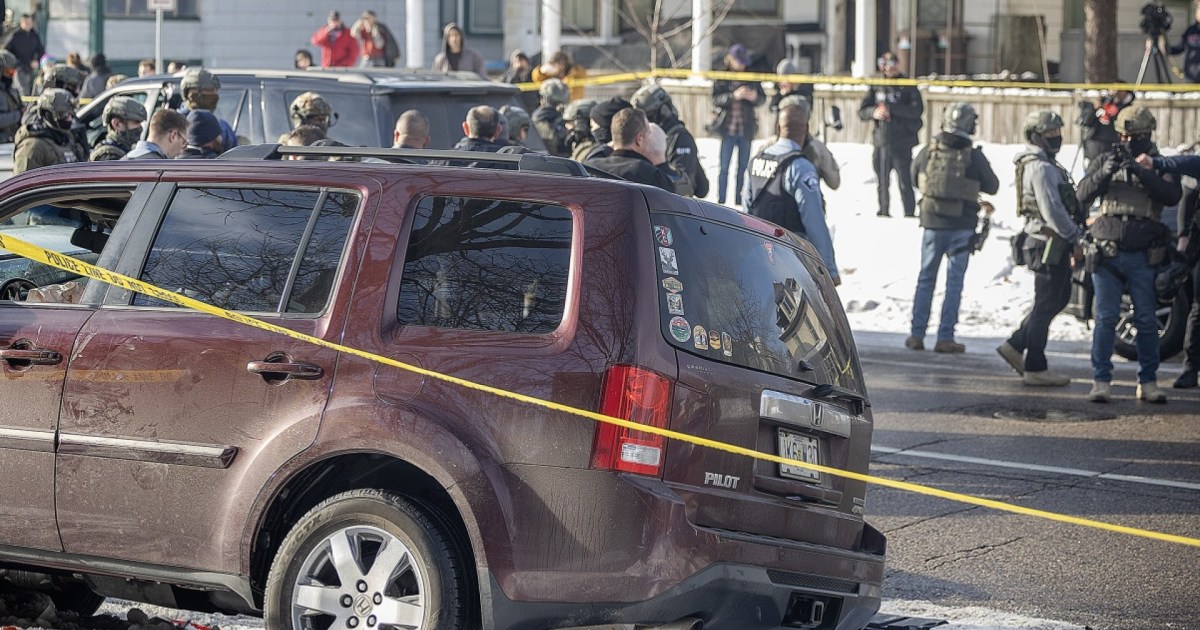
In the wake of Renee Nicole Good’s death, Americans are asking, with heightened urgency, what authority ICE and CBP agents have when they engage with U.S. citizens. And as with many areas of the law, the answer is largely, “It depends.”
Can ICE use deadly force on U.S. citizens – or ever?
When it comes to the use of force, and specifically, the use of firearms, ICE has its own specific policy that was last updated in 2023. That policy was filed in the Chicago-area litigation over ICE and CBP’s treatment of protesters, clergy, and journalists. (Interestingly, on ICE’s website, that same policy is almost entirely redacted.) This policy does not vary depending on the subject’s immigration or citizenship status. Here’s what it says:
First, the policy authorizes the use of force “only when no reasonably effective, safe, and feasible alternative appears to exist and may use only the level of force that is objectively reasonable in light of the totality of facts and circumstances confronting the officer at the time force is applied.” But the policy is equally clear that an officer does not have to meet force with equal or lesser force, does not have to wait for an attack before using force, and does not have any duty to retreat to avoid the reasonable use of force.
Second, where feasible and without creating any greater threat to his own safety or that of others, an ICE officer must attempt to “de-escalate by the use of communication or other techniques during an encounter to stabilize, slow, or reduce the intensity of a potentially violent situation without using physical force, or with a reduction in force.”
Third, ICE policy is also clear that officers have a “duty to intervene to prevent or stop a perceived use of excessive force” so long as it is safe to do so. It further states that a failure to intervene and/or report such incidents is itself misconduct — and potential grounds for discipline.
What’s the guidance if U.S. citizens are given orders by ICE?
Short of using force or deadly force, however, can ICE give orders to U.S. citizens? For example, it appears that ICE agents directed Renee Nicole Good to get out of her car shortly before she was killed.
ICE can give orders to U.S. citizens, but again, only in limited circumstances that are directly tied to the ICE agent’s immigration-related authority. For example, ICE can give orders to U.S. citizens — or even detain them temporarily — if they are obstructing or interfering with immigration enforcement activity.
These situations are often very subjective. U.S. citizens do have significantly more freedom in their interactions with ICE than non-citizens. For example, according to guidance issued by the ACLU and the City of New Yorkamong others, if ordered or detained by ICE, a U.S. citizen can ask, “Am I free to leave?” and they should then be allowed to leave on their own free will.
Can ICE agents search a car without a warrant?
ICE agents also have the authority to search a car without a warrant in limited scenarios. The Fourth Amendment includes the automobile exceptionwhich allows federal agents to search a vehicle without a warrant if there’s probable cause to believe there’s evidence to a crime or contraband. Because a car can be driven away quickly, it may not be practical to secure a warrant beforehand without jeopardizing the investigation.
But federal agents must have specific probable cause to search a car without a warrant. A hunch or a feeling that the car conceals evidence of illegal activity is not enough for a federal agent to search a car without a warrant. ICE does have broader authority to search vehicles within 100 miles of the U.S. border, but even so, these searches typically require probable cause. Notably, ICE cannot search a car without a warrant simply because they suspect someone may be an undocumented immigrant.
However, car searches are the only major exception. ICE officers require search warrants for all other searches. Without a warrant, both U.S. citizens and non-citizens can say, “I do not consent to a search,” according to guidance issued by immigration rights organizations.
What’s the guidance on U.S. citizens recording or taking photos of ICE during enforcement activities?
Civil liberties groups generally advise that under the First Amendment, U.S. citizens can record or take photos of ICE performing law enforcement activities in public places so long as the recording does not interfere with ICE activity, like an arrest. Bystanders are allowed by law to collect important information, including names and badge numbers of the ICE agent executing the immigration activity.
Some states, including Florida, Tennessee, and Louisiana, have enacted their own laws requiring observers — or anyone else — to move back 25 feet or more from law enforcement or other first responders upon their request. While other, similar laws passed by Arizona and Indiana have been struck down, the constitutionality of these states’ laws has not been determined.
Finally, citizens and non-citizens alike share one fundamental right when it comes to encounters with ICE, or any other law enforcement agency, for that matter: the right to remain silent.
Lisa Rubin is MS NOW’s senior legal reporter and a former litigator.
Fallon Gallagher is a legal affairs reporter for MS NOW.
- Changes to the US vaccine recommendations are sowing confusion and could harm kids

- The diseases RFK Jr. says children don’t need to be routinely vaccinated for
- Rep. Salazar touts Venezuela’s Machado before her visit
- Trump to be briefed on range of options in Iran
- Insurer CEOs testifying before House health subcommittee Jan. 22
- How John Thune is trying to save the Senate for Republicans

- House passes three-bill spending package with weeks left to avoid a shutdown
- Trump rages about Republicans backing war powers resolution: ‘Should never be elected to office again’
- The 5 Republicans who voted against Trump on Venezuela
- Rand Paul: Bombing Iran ‘is not the answer’
-

 The Dictatorship11 months ago
Luigi Mangione acknowledges public support in first official statement since arrest
-

 The Dictatorship4 months ago
Mike Johnson sums up the GOP’s arrogant position on military occupation with two words
-

 Politics11 months ago
Blue Light News’s Editorial Director Ryan Hutchins speaks at Blue Light News’s 2025 Governors Summit
-

 Politics11 months ago
Former ‘Squad’ members launching ‘Bowman and Bush’ YouTube show
-

 Politics11 months ago
Former Kentucky AG Daniel Cameron launches Senate bid
-

 The Dictatorship11 months ago
Pete Hegseth’s tenure at the Pentagon goes from bad to worse
-
Uncategorized1 year ago
Bob Good to step down as Freedom Caucus chair this week
-

 Politics9 months ago
Democrat challenging Joni Ernst: I want to ‘tear down’ party, ‘build it back up’