Connect with us

Politics

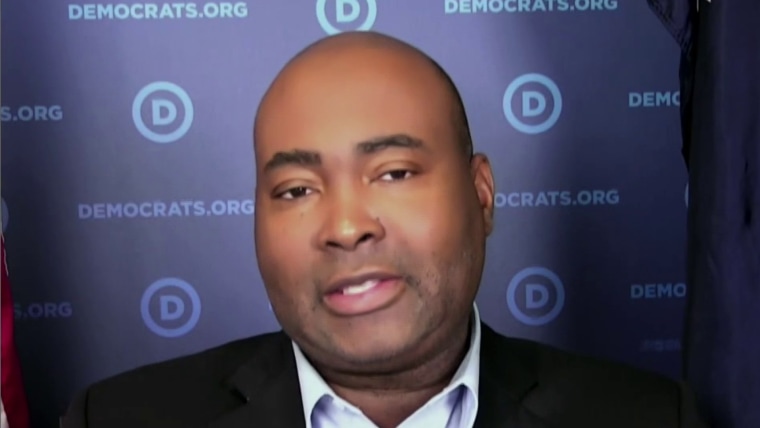
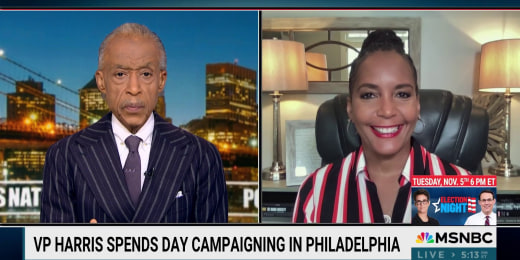
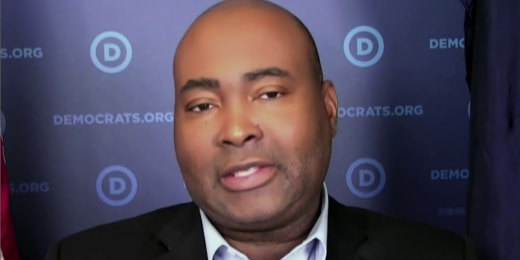
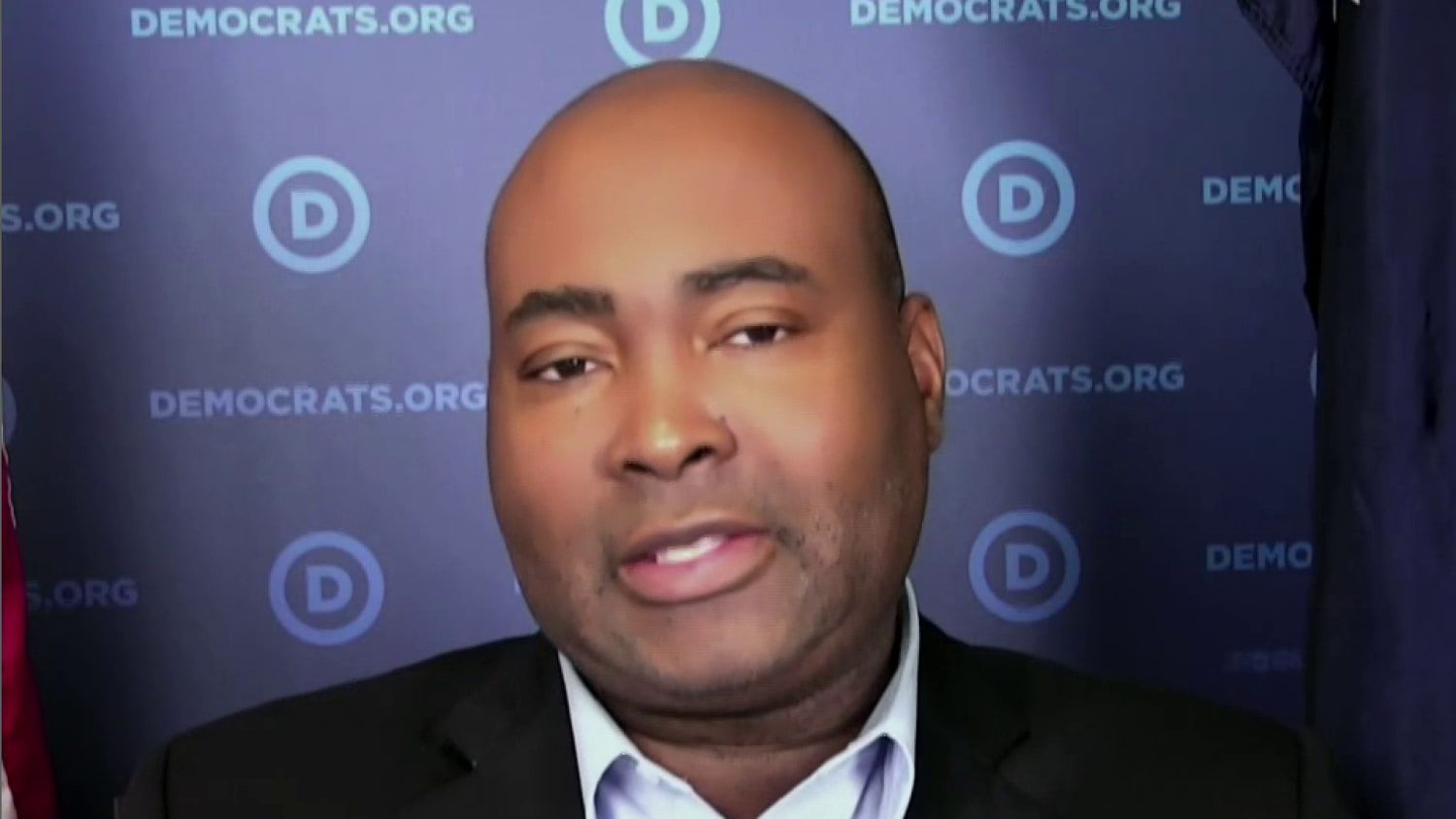
DNC Chair: Harris needs to ‘paint the contrast’ for the American people

Published

on

DNC Chair: Harris needs to ‘paint the contrast’ for the American people
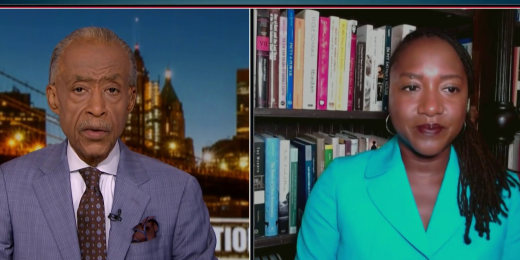
  • Rhode Island Senator’s Message to Democrats on being ready ‘for an absolute tsunami of corruption’

    07:57

  • Rosselló: ‘They felt disenfranchised, and they expected a response from the campaign’

    07:29

  • ‘We believe in democracy, not fascism,’ says NY Senate Majority Leader

    07:37

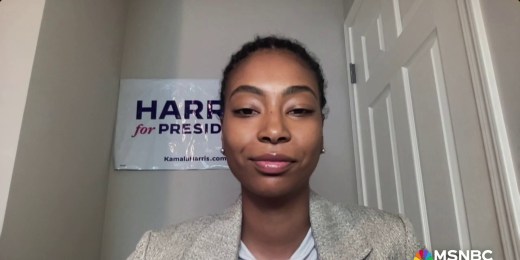
  • ‘For us to sit on the sidelines would really be a disgrace to their memories,’ says campaign advisor

    07:47

  • Harris contrasts ‘Trump sales tax’ with her plan for an ‘opportunity economy’

    04:36

  • Harris: Death of Yahya Sinwar has ‘removed an obstacle’ to peace

    01:25

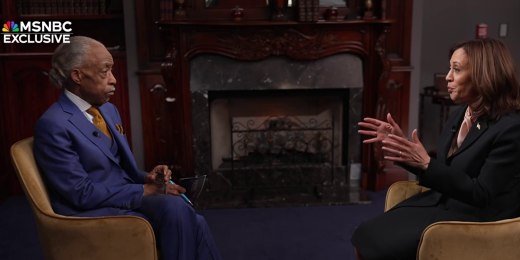
  • EXCLUSIVE: Vice President Kamala Harris on the stakes ahead of the final days of the election

    04:36

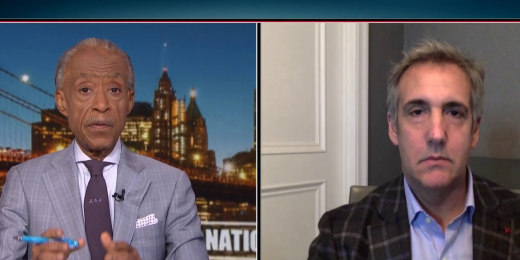
  • Cohen: ‘I don’t understand why they would even do this. Are they trying to be Michael Cohen?’

    08:02

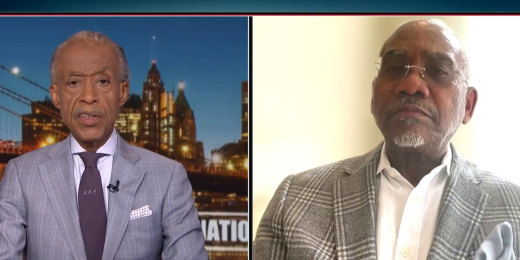
  • ‘The excitement continues to build’: Rep. Gregory Meeks on CBC’s launch of a national bus tour

    08:42

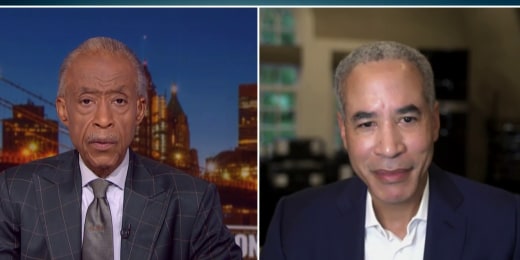
  • Black Economic Alliance Co-Chair discuss the group’s efforts to engage with black voters

    05:21

  • Harris Campaign Comm Director on the importance of reaching voters who will decide the ‘pathway’

    11:21

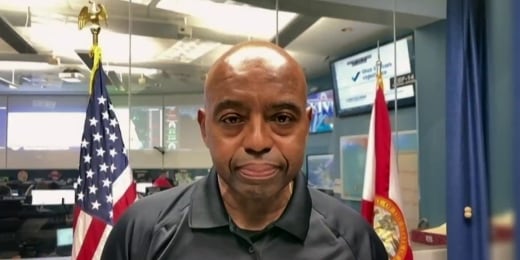
  • FEMA Regional Administrator provides an update on the aftermath of both Hurricanes in Florida

    05:03

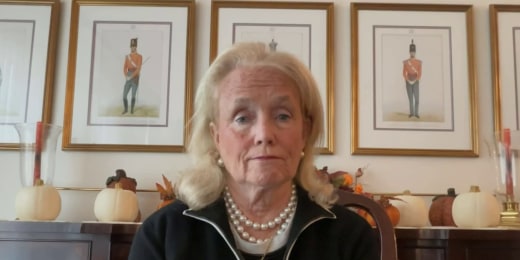
  • Rep. Debbie Dingell says Michigan can go to ‘either candidate’

    08:23

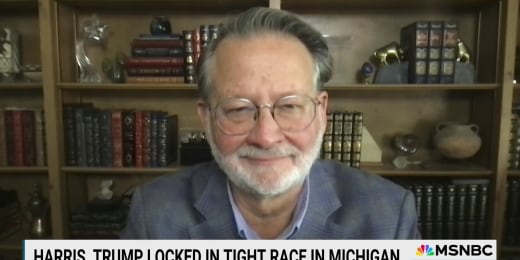
  • Sen. Gary Peters on Kamala Harris: ‘She can connect with people in a wonderful way’

    09:48

  • ‘We must not allow any bad actors to tear our democracy apart,’ says Georgia Congresswoman

    09:04

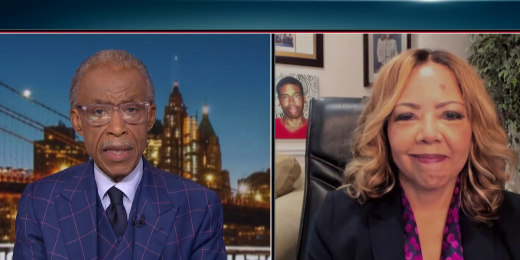
  • NAACP Legal Defense Fund President Expresses Confidence in Black Women’s Impact on Elections

    09:59

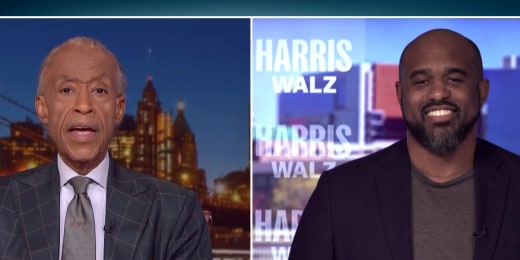
  • Harris-Walz Campaign Black Media Director on Harris’ Latest Launch of a HBCU Homecoming Tour

    07:24

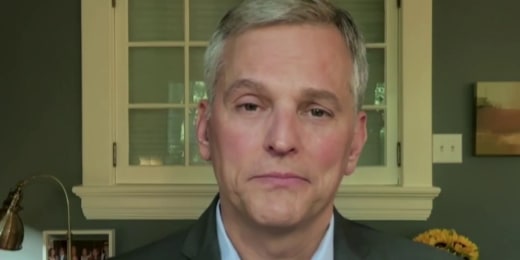
  • Josh Stein makes his case in high-stakes North Carolina gubernatorial race

    08:19

  • Now Playing

  • UP NEXT

    ‘He can try to distance himself from it, but his fingerprints are all over it,’ says SEIU President

    06:50

  • UP NEXT

    Rhode Island Senator’s Message to Democrats on being ready ‘for an absolute tsunami of corruption’

    07:57

  • Rosselló: ‘They felt disenfranchised, and they expected a response from the campaign’

    07:29

  • ‘We believe in democracy, not fascism,’ says NY Senate Majority Leader

    07:37

  • ‘For us to sit on the sidelines would really be a disgrace to their memories,’ says campaign advisor

    07:47

  • Harris contrasts ‘Trump sales tax’ with her plan for an ‘opportunity economy’

    04:36

  • Harris: Death of Yahya Sinwar has ‘removed an obstacle’ to peace

    01:25

Read More

Continue Reading
Click to comment

Leave a Reply

Your email address will not be published. Required fields are marked *

Politics

The Epstein scandal is taking down Europe’s political class. In the US, they’re getting a pass.

Published

on

Across the Atlantic, heads are rolling over the Jeffrey Epstein revelations.

In Norway, one prominent diplomat has already been suspended and a police investigation has been opened into a former prime minister. In the U.K., the former ambassador to the U.S. has been fired; on Tuesday, he resigned from the House of Lords. Police are reviewing reports he shared market-sensitive information with Epstein.

Andrew Mountbatten-Windsor, formerly known as Prince Andrew, was stripped of his royal titles and residence. A charity founded by his ex-wife Sarah Ferguson, the former Duchess of York, will shut down indefinitely following the release of emails where she called Epstein a “legend” and “the brother I have always wished for.”

But as Europe’s political class moves to clean up its mess and address its shame concerning ties with the convicted sex offender, it’s inadvertently highlighting something else — the comparative lack of accountability in the U.S.

No prominent politicians have taken a fall. Consequences have been limited. Wagons have been circled around the most prominent political figures whose names have surfaced in the legal document dumps.

In the U.K., former ambassador to the U.S. Peter Mandelson — who has said he was wrong to believe Epstein following his conviction and to continue his association with him afterwards — has emerged as a millstone around British Prime Minister Keir Starmer’s neck. While Starmer never actually met Epstein, some are calling for his resignation over his appointment of Mandelson. The prime minister publicly apologized Thursday to Epstein’s victims.

“I am sorry,” Starmer said. “Sorry for what was done to you, sorry that so many people with power failed you, sorry for having believed Mandelson’s lies and appointed him and sorry that even now you’re forced to watch this story unfold in public once again.”

It’s a different story in the U.S. Donald Trump’s Republican Party has largely averted its eyes or rallied to the president’s defense despite his documented ties to Epstein and the unverified additional allegations against the president that appeared last week.

Trump has denied wrongdoing in relation to the Epstein allegations, and no evidence has suggested that he took part in Epstein’s trafficking operation. The president also has maintained that he and Epstein had a falling out years ago.

Commerce Secretary Howard Lutnick remains unscathed in his Cabinet post. Lutnick said on a podcast last year that he was so disgusted by his neighbor Epstein in 2005 that he vowed to never be in the same room with him again. But when the Justice Department released more than three million pages of materials related to the late American financier last Friday, emails surfaced suggesting a closer relationship and that Lutnick had actually seen Epstein some years later on a trip to Epstein’s Caribbean island. A spokesperson said the Commerce secretary “had limited interactions with Mr. Epstein in the presence of his wife and has never been accused of wrongdoing.” So far, there are no signs it affected his standing in the Trump Cabinet.

Likewise, Goldman Sachs and its CEO David Solomon have stood shoulder-to-shoulder with the company’s general counsel Kathryn Ruemmler as she’s faced brutal headlines for months for her associations with Epstein, which include gifts of a $9,400 Hermes bag and a spa treatment at the Four Seasons Hotel in D.C. Solomon told the Wall Street Journal several weeks ago that Ruemmler, a former White House counsel to Barack Obama, “is widely respected and admired at the firm.”

Ruemmler has said she regrets “ever knowing him, and I have enormous sympathy for the victims of Epstein’s crimes.”

Even Dr. Peter Attia, the author and influential longevity researcher who is a contributor to CBS News, remains on the job despite his appearance in numerous emails with Epstein, where they discussed female genitalia and how Epstein’s life was “so outrageous.” In an email that he posted on X, Attia apologized and said he was not involved in any criminal activity, his interactions with Epstein had nothing to do with his sexual abuse or exploitation of anyone and that he was never on his plane or island, and never present at any sex parties.

Some see the relatively limited fallout — in a public arena where infidelity or even smoking marijuana were once enough to sink a career — as a reflection of the diminished standards of the Trump era, when the president’s own indiscretions and extreme polarization has led to a greater tolerance of the scent of scandal. They point to the Cabinet nominations of former Rep. Matt Gaetz of Florida and Defense Secretary Pete Hegseth, both of whom would have been unthinkable in the past given allegations about their involvement in sex crimes that both men have denied.

“Some of that has to do with the general chaos on this side of the pond where it’s a never ending stream of scandal emanating from 1600 Pennsylvania Avenue and Trump has set a tone of defiance on refusal to accept and feel any shame,” said Norm Eisen, a former U.S. ambassador to the Czech Republic who is now a top Trump critic and the founder of Democracy Defenders Action, a bipartisan group that tracks what it calls “autocratic” behavior by the administration. “Those who should feel shame are hunkering down instead.”

It’s true that several American figures linked to Epstein have been forced to step away from public life. They include former Treasury Secretary Larry Summers, who has said he is “deeply ashamed of my actions and recognize the pain they have caused,” and Paul Weiss chairman Brad Karp, who resigned as the law firm’s chair on Wednesday saying it’s in the best interest of the firm. David Ross, former director of the Whitney Museum of American Art, stepped down this week from his position at a Manhattan art school and said in a statement that he felt ashamed for falling for Epstein’s lies. But for many of the best-known elites who were in contact with the late convicted sex offender — including former Trump aide Steve Bannon and billionaire tech mogul Elon Musk — the only consequence has been the reputational hit.

“What matters is not release of some subset of the Epstein files, but rather the prosecution of those who committed heinous crimes with Epstein,” Musk wrote on X. “When there is at least one arrest, some justice will have been done. If not, this is all performative. Nothing but a distraction.”

Bannon has said little publicly about their relationship, but he did previously call for an independent investigation into the files.

Bannon, a frequent visitor to Epstein’s New York house, was planning a documentary to help revive Epstein’s image and even was texting documentary scheduling questions with Epstein the day he was arrested in 2019. Even so, there are few outward signs that the scandal has touched him: Bannon still does his “War Room” show on Rumble and his political musings are widely covered in the press.

It’s an approach in keeping with Trump’s own never-concede-an-inch style.

“We as Americans need to be looking at ourselves in the mirror. Why are we not having that same reaction [as Europe]?” said Rufus Gifford, a former Obama-appointed ambassador to Denmark. “Without a doubt how Trump has acted has filtered down to broader society. But I think the question that we have to ask is whether or not this existed before Trump, and Trump is just a symptom of that larger problem.”

Continue Reading

Politics

‘It’s pissing people off’: Centrist Democrats are livid with AIPAC after primary fiasco

Published

on

The American Israel Public Affairs Committee uncorked $2 million to try to sink a mainstream Democrat in a multi-candidate special House election primary in New Jersey — and it’s infuriating mainstream Democrats and some of the pro-Israel’s lobby’s supporters.

“It’s pissing people off,” said Steve Schale, a longtime Democratic strategist and former Obama campaign adviser, who described it as “maddening.”

The organization spent heavily through its super PAC, Unite Democracy Project, to attack former Rep. Tom Malinowski (D-N.J.), a pro-Israel moderate who would not support unconditional aid to Israel. In doing so, it provided an opening to Analilia Mejia, a progressive organizer backed by Bernie Sanders who has said Israel committed genocide in Gaza.

Malinowski, who has not conceded the race, now trails Mejia by around 500 votes, with some outstanding votes left to be counted for the affluent, suburban seat.

AIPAC’s interventions in the New Jersey special election for Democratic Gov. Mikie Sherrill’s House seat was the first test of the group’s muscle ahead of the 2026 primary season, when they are expected to spend millions on Democratic primaries across the country. AIPAC’s super PAC is expected to weigh in on House primaries, starting in Illinois’ April primaries. Democratic candidates and strategists are also bracing for them to potentially wade into contentious Senate primaries in Michigan and Minnesota.

And their first foray of 2026 backfired spectacularly.

Matt Bennett, the co-founder of the center-left think tank Third Way, called their efforts “one of the greatest own-goals in American political history,” and warned that “It hurt everybody in the moderate movement” as they head into a competitive primary season.

Even steadfast allies are frustrated. Rep. Brad Schneider (D-Ill.), a longtime AIPAC supporter, said its moves in the New Jersey primary, held Thursday, “raised eyebrows this morning.”

“There’s a chance that it’s not going to be a New Dem that’s in that seat,” Schneider said, referring to the New Democrat Coalition, the centrist caucus he leads in the House. “As we do the analysis, a lot of factors play into that, but certainly any group spending against a candidate that would’ve been a New Dem and instead electing a far-left candidate … Come on, guys, this is not what we were hoping for here.”

Former Rep. Steve Israel (D-N.Y.), another AIPAC supporter who led House Democrats’ campaign efforts in 2012 and 2014, said he “wasn’t privy to AIPAC’s strategy and I certainly wouldn’t have advised it,” but “they are not the first group to make a bet that didn’t pan out on election day.”

Malinowski said AIPAC’s attacks on him sent a clear message to “other mainstream Democrats.”

“They are now demanding 100 percent fealty,” Malinowski said. “On some level, they may have preferred to elect an anti-Israel progressive versus a mainstream Democrat, who departs from their hard line in a small way.”

A spokesperson for UDP said in a statement shared with Blue Light News: “The outcome in NJ-11 was an anticipated possibility, and our focus remains on who will serve the next full term in Congress.” The spokesperson added that UDP will “be closely monitoring dozens of primary races, including the June NJ-11 primary,” which will be held ahead of the November 2026 general election, “to help ensure pro-Israel candidates are elected to Congress.”

Progressives, meanwhile, took a victory lap. Justice Democrats communications director Usamah Andrabi said AIPAC’s spending in primaries “is becoming a kiss of death” because “of the work our movement has done to expose them.” Mejia told reporters on Friday that she’s “glad that New Jersey 11 voters got to see the terrible tactics so that we could reject it in the future” and denounced AIPAC’s heavy spending.

Much of UDP’s playbook in the New Jersey primary has been deployed by them before — attacking candidates on issues unrelated to Israel. The group hit Malinowski in TV ads for a 2019 vote he took, along with most House Democrats at the time, that, in part, provided funding to Immigration and Customs Enforcement. ICE funding is a particularly hot-button issue, after President Donald Trump’s immigration crackdown in Minnesota led to two fatal shootings of protesters by federal agents.

There are signs that AIPAC is already getting involved in Illinois. Two super PACs, Elect Chicago Women Now and Affordable Chicago Now, are now supporting three Democrats in House races with six-figure TV ad buys — which some of their primary opponents have publicly accused the groups of shell groups.

The super PACs were formed last month, so they have not yet been required to disclose any information yet with the Federal Elections Commission. UDP’s spokesperson did not respond to a request for comment on these super PACs.

“We’re bracing [for AIPAC’s spending], yes, and it is alarming in a cycle where five seats are open, which almost never happens in Illinois,” said a Democratic strategist working on Illinois races, granted anonymity to speak candidly. “AIPAC is actively trying to buy three or possibly four seats.”

The winner of Thursday’s special primary election in New Jersey will face Joe Hathaway, a Republican councilmember from Randolph, N.J., on April 16, to fill the remainder of Sherrill’s term. Then, Democrats will hold another primary on June 2.

Though some centrist Democrats fretted that Mejia’s potential victory could hurt their chances to hold on to the seat, pollster Patrick Murray said a Republican victory is highly unlikely, both in the special general election in April or in November.

“It’s just so anti-Trump now,” he said. “We saw in the 2025 general election that there was more motivation among Democrats than Republicans. And that mood still holds.”

Of the upcoming primary season, where dark money from an array of outside groups is expected to saturate Democratic primaries, Malinowski called it “a significant challenge to the Democratic Party that needs to be addressed.”

“My election was the beta test,” he said.

Madison Fernandez and Matt Friedman contributed reporting. 

Continue Reading

Politics

Trump’s shadow hangs over the Winter Olympics

Published

on

President Donald Trump won’t be representing the U.S. at the opening ceremony of the Italian Olympic Games in Milan’s famous San Siro Stadium. But his shadow will surely loom over the two-week-long sporting spectacle, which kicks off Friday.

The president’s repeated jabs at longtime partners, his inconsistent tariff policy and repeated plays for Greenland have shown just how much he’s shifted the traditional world order. The resulting international “rupture,” as described by Canadian Prime Minister Mark Carney in Davos last month, has turned beating the Americans in Italy from a crowning sporting achievement to an even greater moral imperative for the president’s rivals.

“This is life and death,” said Charlie Angus, a former member of Parliament in Canada with the New Democratic Party and prominent Trump critic. “If it’s the semifinals and we’re playing against the United States, it’s no longer a game. And that’s profound.”

The Trump administration has big plans for these Olympics, according to a State Department memo viewed by Blue Light News. It hopes to “promote the United States as a global leader in international sports” and build momentum for what the White House sees as a “Decade of Sport in America,” which will see the country host the Summer Olympics and Paralympics in 2028 and the Winter Olympics and Paralympics in 2034, as well as the FIFA World Cup this summer.

But a combative administration may well complicate matters.

He’s sending Vice President JD Vance, a longtime critic of Europe’s leaders, to lead the presidential delegation in Milan. Then there’s ICE. News that American federal immigration agents would be on the ground providing security during the games sparked widespread fury throughout the country.

Trump has also clashed with many of the countries vying to top the leaderboards in Milan. Since returning to the White House in January, he’s antagonized Norway, which took home the most medals in the 2022 Beijing Winter Olympics, over a perceived Nobel Peace Prize snub and clashed repeatedly with Canada, which finished fourth.

Italy goalie Gabriella Durante skates before a women's hockey game against France at the Milano Santagiulia ice hockey arena at the Milan Cortina Winter Olympics, in Milan, on Feb. 5, 2026.

“We’re looking at the world in a very different light,” Angus said. “And we’re looking at a next-door neighbor who makes increasingly unhinged threats towards us. So to go to international games and pretend that we’re all one happy family, well, that’s gone.”

Trump has also sparred with Emmanuel Macron, the president of France, (the 13th-place finisher in Beijing) and threatened a military incursion in pushing Denmark (a Scandinavian country which curiously hasn’t medaled in the Winter Olympics since 1998) to cede Greenland.

All while seeming to placate Russia, whose athletes competed under a neutral flag in 2022 due to doping sanctions and secured the second-most medals in the Beijing games, which ended just days before President Vladimir Putin invaded Ukraine.

The Olympics have long collided with geopolitics, from Russia’s ban in response to its war in Ukraine to South Africa’s 32-year-long exclusion as punishment for apartheid. And Beijing’s time in the limelight was marred by a U.S. diplomatic boycott over China’s treatment of its Uyghur population.

White House spokesperson Anna Kelly said Trump’s political agenda of putting America First is paying off.

“Fairer trade deals are leveling the playing field for our farmers and workers, NATO allies are taking greater responsibility for their own defense, and drugs and criminals are no longer entering our country,” she said. “Instead of taking bizarre vendettas against American athletes, foreign leaders should follow the President’s lead by ending unfettered migration, halting Green New Scam policies, and promoting peace through strength.”

When reached for comment, the State Department deferred to the White House about the political ramifications of the games. A State Department spokesperson also highlighted the role that its Diplomatic Security Service would serve as the security lead for Americans throughout Olympic and Paralympic competition.

Hockey, arguably one of the winter Olympic Games’ highest-profile sports, has already been roiled by Trump’s global agenda. Just look at last year’s 4 Nations Face-Off, which pitted the U.S. and Canada against each other in preliminary play and then again in the final.

Canadian fans booed the American national anthem mercilessly when the two sides faced off in Montreal. Trump called the U.S. locker room on the morning of the final and showered the Great North with incessant 51st state gibes, and then-Prime Minister Justin Trudeau responded boisterously when Canada won the championship in overtime.

“You can’t take our country — and you can’t take our game,” he wrote.

The American men’s team will play Denmark in Milan — fittingly — on Valentine’s Day, and could see the Canadians at the medal rounds.

“I’m sure they’ll concentrate on the events they compete in rather than get involved in politics,” Anders Vistisen, a member of the European Parliament from Denmark, said of his compatriots in a statement. “Maybe Trump’s antics will give them even more motivation? Who knows?”

Elsewhere in Italy, Americans Sean Doherty, Maxime Germain, Campbell Wright, and Paul Schommer will match up against 2022 champion Quentin Fillon Maillet from France in biathlon throughout the games. And Canadian short track speedskater and medal favorite William Dandjinou will look to hold off multiple Americans at the Milano Ice Skating Arena.

“With the current American president, no one knows what he will do or say tomorrow,” said legendary goaltender Dominik Hasek, a gold medalist with Czechia in the 1998 Nagano Games and a one-time rumored presidential candidate in his home nation. “If he doesn’t make negative comments about athletes from other countries in the coming weeks, everything will be fine. But that could change very quickly after one of his frequent hateful attacks.”

Hasek, a frequent critic of Putin’s war in Ukraine, said Trump “has antagonized most of the people of the democratic world with his attitudes and actions.”

“With the current American president, no one knows what he will do or say tomorrow,” said legendary goaltender Dominik Hasek, a Gold medalist with Czechia in the 1998 Nagano Games.

That doesn’t exactly scream “Faster, Higher, Stronger — Together,” the Olympic motto revamped by the IOC in 2021.

“It was personal,” Angus, the former Canadian lawmaker, said of the tense Canada-U.S. showdown in the 4 Nations Face-Off last year. “This was deeply personal. We were at the moment of people brawling in the stands, and that was because of Donald Trump and the constant insults. He turned that game into war.”

But now at the Olympics, the U.S. is just one of more than 90 nations competing. And Trump’s international critics say they’re determined to not let their anger with Trump ruin the games — if just not to give him the satisfaction.

“People are done with Donald Trump’s flagrant attempts to goad us and poke at us and insult us,” Angus said. “It’s like water off our back. We’re a much tougher people than we were last year.”

Nahal Toosi contributed to this report.

Continue Reading

Trending