
Congress
DeSantis: Florida should require congressional candidates to answer about stock trades

TALLAHASSEE, Florida — Gov. Ron DeSantis wants the state to take steps to discourage members of Congress from trading stocks, a topic that has seemingly divided Florida’s Hill delegation ahead of a potential vote in the House.
DeSantis, during an event in Clearwater with GOP Rep. Anna Paulina Luna, gave his full backing to Luna’s proposed ban on individual stock trading for members. But he also said he is seeking state legislation to require people running for Congress in Florida to disclose ahead of time whether they intend to trade stocks if they are elected.
During his press conference, DeSantis called individual stock trading a “bipartisan ailment,” adding, “We need to clean both houses up there.” He said members have either gotten windfalls — or avoided major losses — that defy normal investment patterns.
In a social media post, he added that “it is a farce how some members of Congress — including but not limited to Nancy Pelosi — suddenly become Warren Buffet on steroids when it comes to investment returns.”
DeSantis acknowledged the state has limited authority to place restrictions on Florida’s congressional delegation. But he wants to require candidates to answer a question about stock trading on forms that are submitted at the time they qualify for the ballot.
He said that would at least let voters know ahead of time what plan they to do. The governor added that such a requirement wouldn’t really work for state legislators because they are only on the job part-time and many work in the financial sector.
DeSantis also called on Florida’s congressional delegation to vote for Luna’s bill. Several Florida members signed on to a discharge petition, but it’s not clear if all 28 will ultimately support the legislation.
Luna said she’s spoken to House Speaker Mike Johnson and she anticipates that her bill will be taken up during the first three months of the year.
“It’s wrong and it needs to stop,” Luna said about individual stock trading.
DeSantis’ support for the measure is not a surprise given his ongoing criticism of Congress. He has also advocated for congressional term limits.
The governor made his stance amid the backdrop of 2026 elections, where the Republican front-runner for governor, Rep. Byron Donalds, has been dinged over his stock trading. Donalds has said previously that he relies on a financial adviser managing his IRA without his input and that brokers who work for congressional clients should be required to publicly submit notes that would show whether members are directing trades.
Donalds has been hit with ethics complaints alleging that he failed to disclose more than 100 stock trades in a timely fashion as required by federal law. He said during a radio interview in December that he would vote for Luna’s bill, even though he wants a carve-out to allow stock trades if it is done by a broker on behalf of a member.


As senators woke up Saturday with questions on President Donald Trump’s audacious decision to order the capture of Venezuelan leader Nicolás Maduro, one of their old colleagues was ready with answers.
Secretary of State Marco Rubio worked the phones in the wee hours of the morning and, in the days since, has played an outsize role in not only formulating the administration’s strategy in Venezuela but explaining it to skeptical lawmakers wary of a protracted military commitment.
That outreach has been to his former Republican colleagues as well as Democrats, including those who see him as a rare Trump official with whom they can maintain a trusted and respectful relationship amid profound policy disputes.
“Although I may disagree with him on a day-to-day or hour-to-hour basis … he has shown extraordinary competence,” Sen. Dick Durbin of Illinois, the No. 2 Democratic leader, said in an interview. “I voted for him in this position; I still have confidence in his abilities.”
Others said they respected his particular expertise on issues in Latin America while also raising doubts about the strategy for Venezuela he is laying out in public and in private briefings — which for now involves propping up interim president Delcy Rodriguez as a de facto U.S. puppet.
“You can talk to Marco about — ‘Tell us about Delcy.’ … He knows all of that, and he can give you a sense of who they are and what they’re up to,” said Sen. Tim Kaine (D-Va.), a former colleague on the Foreign Relations Committee.
Kaine complimented Rubio for putting a renewed focus on the Americas, while quickly adding that Trump’s self-proclaimed “Donroe doctrine” is the “wrong kind of attention.”
Rubio returned to his old stomping groups Wednesday as part of a delegation of senior Trump officials who briefed lawmakers on the weekend military operation. There his status as a figure of special consequence who has taken on increasingly significant roles in the administration was on display.
“He’s the one in the center — he’s the one that starts it, no notes,” Sen. John Barrasso (R-Wyo.), the No. 2 GOP leader, said in an interview describing the briefing. “To me, he’s a mature, experienced, reliable voice as secretary of State, and — specifically for this part of the world — he knows the issues, he knows the people, and that brings a lot.”
Also on display was Rubio’s membership in the rarefied club of senators and former senators.
He hugged and briefly huddled with Senate Minority Leader Chuck Schumer in view of dozens of reporters. A grinning Rubio came up to cameras afterward and joked to reporters, “I’m against everything he said.”
Schumer, who like most Democrats has been a persistent critic of the administration, offered no praise for Rubio but stopped short this week of disavowing his previous support for Rubio’s nomination as secretary. Asked Tuesday if he regretted his vote, the New York Democrat said he was “deeply, deeply disappointed in Marco Rubio even before Venezuela and even more so now.”
Rubio took in stride the criticism from Schumer and other Democrats that he and other Trump administration officials have not fully thought through their strategy.
“I used to be a senator, too — that’s what you always say when it’s the other party,” he told reporters Wednesday. “The bottom line is, we’ve gone into great detail with them about the planning.”
The Senate voted 99-0 hours after Trump’s Jan. 20 swearing-in to confirm Rubio — the only nominee who got through on Day 1.
At the time Democrats praised Rubio as a qualified foreign policy hand. They believed he shared some of their views and would work with them on key global matters such as helping Ukraine defeat Russia and strengthening the NATO alliance.
But since then, Rubio has rankled his former Democratic colleagues at times as he worked with Trump to upend America’s foreign aid infrastructure and back the president’s often erratic policy priorities — ranging from his attempts to force a peace deal in Ukraine to his ongoing push to take over Greenland.
Those tensions have at times spilled out into the public.
Sen. Chris Van Hollen (D-Md.) told Rubio during a committee hearing last year, “I have to tell you directly and personally that I regret voting for you for secretary of State.” Sen. Jacky Rosen (D-Nev.) said at the same hearing that she found “Senator Rubio to be a bipartisan pragmatic partner” but “I don’t recognize Secretary Rubio.”
That said, lines of communication have stayed open. Sen. Mark Warner (D-Va.), who worked closely with Rubio on the Intelligence Committee, bristled this week at the administration’s decision not to notify top congressional leaders about the Venezuela operation in advance. But he credited Rubio for reaching out soon after.
“My phone had been hacked a few months back, and I had a new number,” Warner said. “So he did try to reach me, but it was after the strikes had started.”
Rubio did manage to reach many of his former Republican colleagues — including Sen. Mike Lee of Utah, with whom he had sometimes clashed over national security issues when they served together.
As news of the U.S. raid began to trickle out, Lee posted to X shortly after 3 a.m. with a skeptical note: “I look forward to learning what, if anything, might constitutionally justify this action in the absence of a declaration of war or authorization for the use of military force.”
Less than two hours later, Lee posted again, saying he had spoken to Rubio: “This action likely falls within the president’s inherent authority under Article II of the Constitution to protect U.S. personnel from an actual or imminent attack. Thank you, @SecRubio, for keeping me apprised.”
Rubio also reached out to Senate Majority Leader John Thune and Speaker Mike Johnson soon after the operation launched, as well as chairs and members of key committees.
“He is a gift to America right now,” Johnson said Wednesday.
“All members are comfortable with him — certainly those that served with him, which is just about everyone here,” Barrasso said. He added that Rubio was confirmed unanimously “because people knew him and respected him.”
Democrats who worked with him in the Senate had a more nuanced assessment as they emerged Wednesday from their closed-door briefing with the Trump officials. They raised deep concerns over the administration’s strategy for Venezuela, but they also said they were in no way surprised by Rubio’s role in developing and promoting it given his long opposition to dictatorships in the region.
“Marco has been evangelical on Latin America for a long time, for a long time — I mean, he’s, you know, a pretty classic neocon who believes that America will generally be greeted as liberators,” said Sen. Chris Murphy (D-Conn.), another former Foreign Relations colleague. “I didn’t vote for him because I thought he was going to suddenly agree with me on the importance of military restraint overseas.”
Added Kaine, “At the end of the day, he’s going to do what Trump tells him to do.”
Meredith Lee Hill and Daniella Cheslow contributed to this report.
Maryland Rep. Steny Hoyer is set to announce his retirement from the House as soon as Thursday, capping off a decades-long career in Congress, according to two people who were granted anonymity to confirm the news ahead of a public announcement.
Hoyer, who represents a district stretching from the eastern Washington suburbs to southern Maryland, has served since 1981, rising up through the ranks to become the second-ranking House Democrat under Speaker Nancy Pelosi.
He stepped aside from his senior role after Democrats lost the House in 2022 as part of a broader changing of the guard but remained in Congress, retaking a senior post on the House Appropriations Committee.
Only two sitting House members — GOP Reps. Hal Rogers of Kentucky and Chris Smith of New Jersey — have served longer than Hoyer, and only by a few months.
Now 86, Hoyer remained circumspect about his plans to run for re-election. The decision comes as numerous senior Democrats are facing primaries from younger candidates or choosing not to run for reelection. Pelosi announced in October she plans to retire at the end of her term.
A Hoyer spokesperson did not immediately respond to a request for comment. His decision to step aside is likely to create a free-for-all for the deep-blue seat. One candidate, Harry Jarin, is already in the race after launching a primary in May that specifically targeted Hoyer’s age.
Jonathan Martin contributed to this report.
The House Oversight and Government Reform Committee will subpoena Les Wexner, the longtime friend and client of Jeffrey Epstein, along with two men who worked for the late convicted sex offender.
It was the culmination of a flurry of subpoena requests Wednesday from rank-and-file members of the panel, several of which were ultimately approved. The committee also voted to subpoena Darren Indyke and Richard Kahn — Epstein’s lawyer and accountant, respectively.
It shows how the House Oversight Committee could continue to find itself at the center of efforts to re-investigate the Epstein case as the Justice Department presides over a prolonged and rocky rollout of materials.
The successful motions, brought by the top Democrat on panel, California Rep. Robert Garcia, appeared to be the result of an agreement between Garcia and Rep. Anna Paulina Luna (R-Fla.), who also successfully moved to subpoena American businessman Neville Singham and journalist Seth Harp.
“There is probably no one more important as it relates to the financing and the work of this investigation, which both sides of the aisle are interested in,” Garcia said, of Wexner. “Public reporting has documented their longstanding ties. He should answer our questions in a non-partisan way to get the truth.”
Luna concurred: “I think that this is a sound motion for subpoena because Les Wexner has been named by victims and also, too, is in a number of documentaries,” she said and urged her colleagues to join her in supporting the effort.
In moving to subpoena Singham, Luna cited a letter signed by then-Sen. Marco Rubio, who now serves as Secretary of State, suggesting the entrepreneur may have been connected to activities that violated the Foreign Agents Registration Act. Luna also claimed Singham was funding groups that were adverse to American interests.
Rep. Dave Min (D-Calif.) questioned why Luna was making her motion at this time. Still, Garcia recommended lawmakers vote “yes” despite Min’s concerns, explaining “the representative made clear her support for the deposition that we’re going to have with Mr. Wexner.”
In an interview after the Wexner vote, Garcia said he did not negotiate the matter with Luna before the hearing.
“[Congress is] about compromise, and I think for us, the Les Wexner subpoena is at the center of this investigation,” he said.
Garcia also supported Luna’s motion to subpoena Harp, who has been accused of doxxing a Delta Force official involved in the operation to arrest Venezuelan President Nicolás Maduro.
Separately, the committee rejected a bid from Democrats to subpoena the Department of Homeland Security for records related to the Wednesday shooting of a woman in Minneapolis by an ICE agent.
The panel struck down an attempt from Rep. Ayanna Pressley (D-Mass.) to issue the subpoena at the end of an hours-long hearing around the welfare fraud scandal in Minnesota. Pressley requested “documents and footage” of the fatal incident.
Garcia said he was hopeful the panel would investigate the episode.
“We’re talking about Minnesota right now,” he said. “This was a killing by an ICE agent. There are videos that are now online. There’s testimony that’s being brought to light. It’s horrific. I encourage folks to watch those videos and see what’s happened for themselves.”
- Live updates: Minneapolis Public Schools cancels classes for the rest of the week

- Americans split on Trump’s action to remove Maduro: Poll

- Minneapolis mayor: DHS claim of domestic terrorism after woman’s death is ‘positively ridiculous’

- Spencer Pratt of ‘The Hills’ announces LA mayor run on Palisades fire anniversary

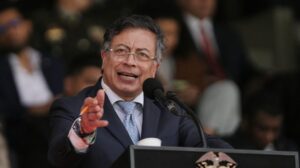
- Trump speaks with Colombia’s Petro days after Venezuela strikes
- Trump family crypto company applies for banking charter
- The clock is running out for SCOTUS to deliver the GOP a big 2026 redistricting win
- These nine Republicans back Democrats’ effort to revive ObamaCare subsidies

- Trump is right that an NFL team should hire John Harbaugh. But everybody knows that.

- Trumpism was always going to lead to a tragedy like the Minneapolis ICE shooting
-

 The Dictatorship11 months ago
Luigi Mangione acknowledges public support in first official statement since arrest
-

 Politics11 months ago
Blue Light News’s Editorial Director Ryan Hutchins speaks at Blue Light News’s 2025 Governors Summit
-

 The Dictatorship4 months ago
Mike Johnson sums up the GOP’s arrogant position on military occupation with two words
-

 Politics11 months ago
Former ‘Squad’ members launching ‘Bowman and Bush’ YouTube show
-

 Politics11 months ago
Former Kentucky AG Daniel Cameron launches Senate bid
-

 The Dictatorship11 months ago
Pete Hegseth’s tenure at the Pentagon goes from bad to worse
-
Uncategorized1 year ago
Bob Good to step down as Freedom Caucus chair this week
-

 Politics9 months ago
Democrat challenging Joni Ernst: I want to ‘tear down’ party, ‘build it back up’