
Politics
Department of Investigation eyes NYPD disability pensions

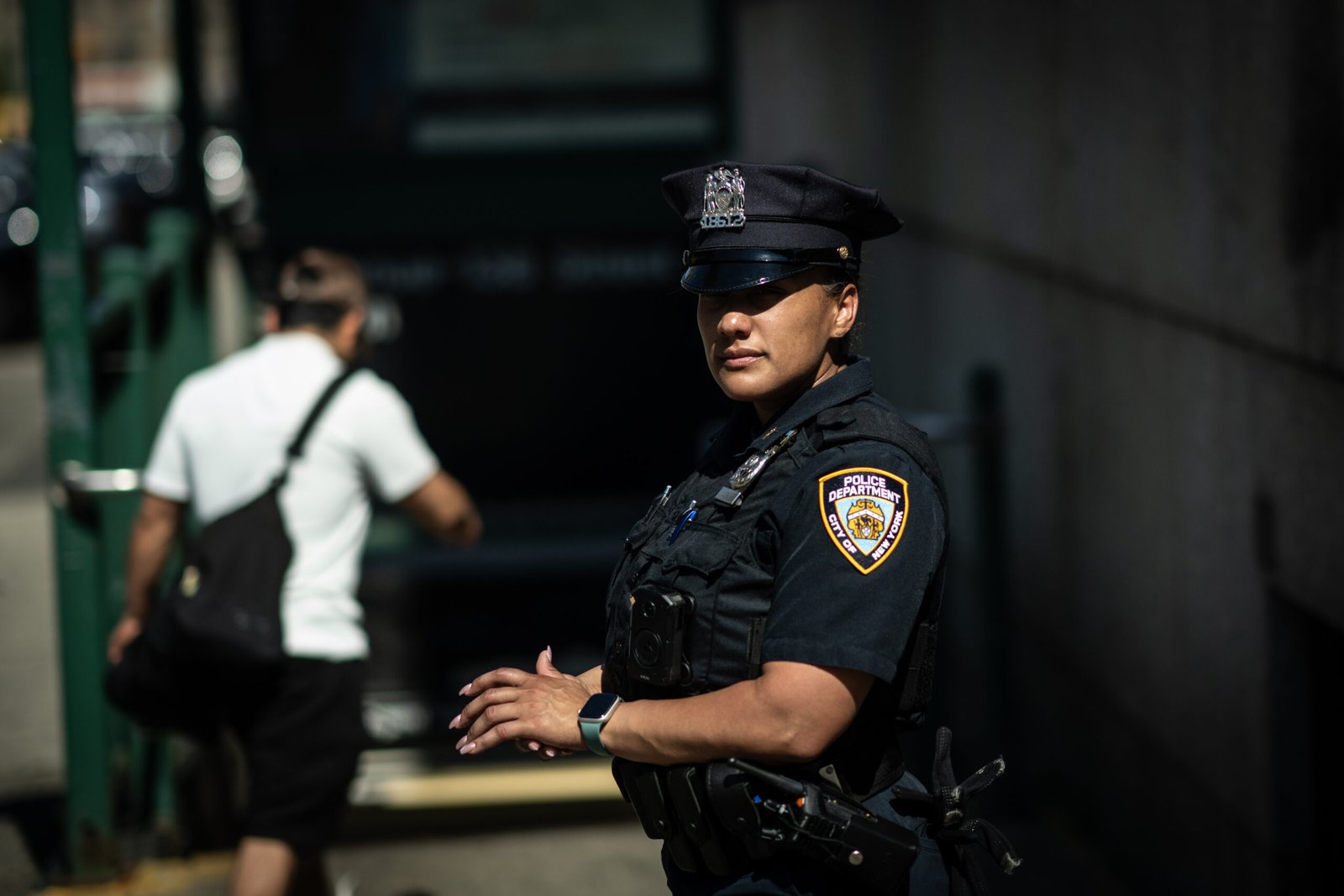
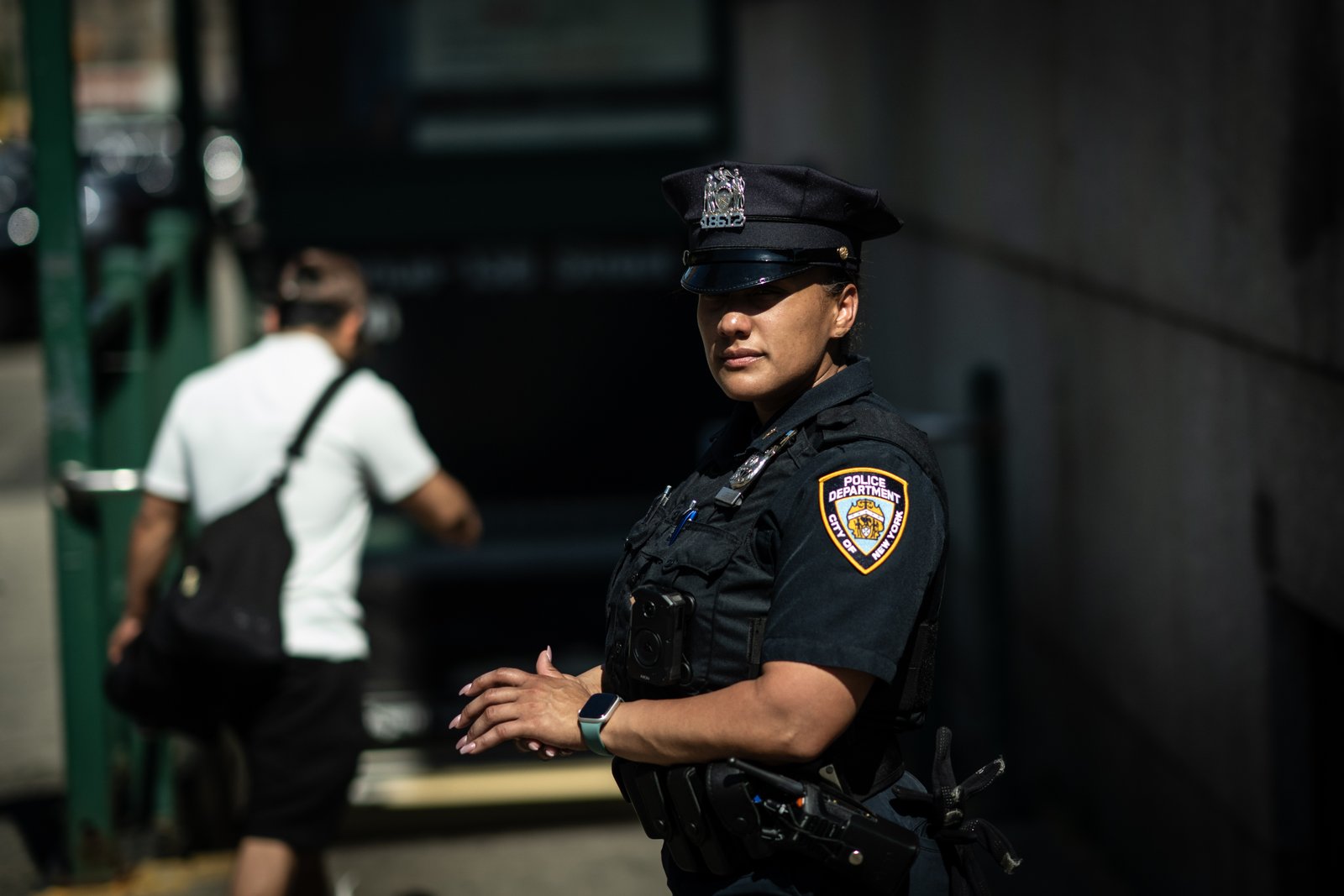
HELP! I’VE FALLEN AND I CAN GET UP: A report from the New York City Department of Investigation confirmed today what many political watchers have long suspected — that the city’s police pension system is ripe for abuse.
The Police Pension Fund doles out retirement payments to all NYPD officers and, in fiscal year 2025, paid $935 million to officers who qualified for accident disability retirement — meaning they were injured on the job and unable to perform their duties.
While DOI Commissioner Nadia Shihata said injured officers should be fairly compensated, her office found the pension system assigns this distinction — which boosts pension payments by 50% and allows officers to receive 75% of their average pay — without considering an officer’s specific job duties.
“No New Yorker wants to stand in the way of NYPD officers rightfully receiving accident benefits when they suffer injuries on the job and are unable to work,” Shihata said in a statement. “But the [Police Pension Fund’s] current administration of these benefits is vulnerable to misuse and does not employ standards consistent with those used in similar law enforcement retirement systems, such as the system for state police.”
Instead, the board has a single standard: whether an applicant can perform the general duties of a police officer, like subduing a suspect or operating a firearm — a threshold that makes less sense for officers with desk or administrative jobs.
The report specifically cited the case of former Chief of Department John Chell, who was awarded a $295,919 annual pension while serving as the NYPD’s highest-ranking uniformed officer under former Mayor Eric Adams. The huge sum came, in part, because of an ankle injury sustained in 2024. Chell was among several top Adams-era police officials who received lucrative payouts using this criteria, which the DOI report argued contributed to mistrust in the system and the belief that higher-ranking officers had an easier time securing disability pay. (The report did not make any assumptions about whether Chell would have been granted his pension under stricter criteria.)
DOI contends this standard incentivizes more people to claim a disability, citing a 2015 report that found 21% of NYPD employees retire on accident disability compared to 6% within the state system for police and firefighters, which has a more narrow criteria for awarding disability pay. Shihata even suggested that the pension board’s broad standard might not be legal, since courts have found, in the case of the state police pension rules, that job duty means what an officer actually does in practice.
Despite that, the board rejected a DOI recommendation to change the standard.
Notably, DOI pointed out in its report that two of the people on the medical board making the determinations are appointed by city agencies controlled by the mayor — which means Mayor Zohran Mamdani could push to overrule the board’s leadership.
City Hall did not respond to a question about whether he would do so.
The NYPD declined to comment, while the pension board did not respond. Chell could not be reached.
The pension system does include a safeguard to maximize city resources. The board is authorized to re-examine officers receiving disability pensions who aren’t yet of retirement age to see if their condition would allow them to work a different city job, even if it’s not in the NYPD. If they’re deemed able, then they’re primarily compensated with their pension money until they reach retirement age.
So is the pension system using this provision to examine the $100 million worth of annual pension payments doled out to NYPD officers who are under the retirement age, which the board is required by law to do?
In short, no.
Since 2019, the board has only reevaluated one pensioner, per the DOI report. And that person was found unable to do any other city work.
The report found examples indicating the board could be doing a more thorough job. DOI provided findings that suggest four officers under the retirement age are receiving disability pensions while engaging in activities like lifting weights, performing home renovations, playing competitive sports, doing pushups, instructing workout classes and, in one case, performing “complicated dance routines exhibiting a full range of arm motion.”
DOI recommended the board require officers receiving disability payments who are not yet of retirement age to periodically certify they still have a disability. The board rejected this recommendation, but agreed to create an online portal to gain input from the public on pensioners who may be healthy enough to work. It also agreed to reevaluate the four retirees flagged by DOI. — Joe Anuta
From the Capitol

META’S DAY IN COURT: New York’s top court opened its fall session this afternoon with a case that could have massive implications for the legal liability of social media companies and AI users.
Website owners are typically immune from liability for content created by third parties. But the families of the 2022 mass shooting in Buffalo are arguing that social media companies shouldn’t dodge responsibility for radicalizing Payton Gendron, the 18-year-old who drove across the state with the goal of killing Black people.
The state Court of Appeals is now deciding whether these families can proceed with a lawsuit against companies such as Meta, Google, Discord, Reddit, Amazon and 4Chan.
Gendron’s diaries and confessions show he was motivated by white supremacist material he encountered while addicted to social media. The families contend these companies are liable because they intentionally designed an addictive algorithm that destroyed his mental health while proactively steering him to pro-violence content.
“The social media companies had a role in causing the crime,” attorney Jennifer Bennett argued. “Heavy social media usage goes hand-in-hand with mass shootings.”
Meta attorney Eric Shumsky said the entire argument boiled down to an attempt to sue over the actual content the shooter saw, a type of claim his company is protected against.
“If the addiction were to cooking tutorials or cat videos or anything else, it would be an absolutely incoherent theory of liability,” Shumsky said.
Judges on the seven-person court panel acknowledged the possibility of significant repercussions no matter how they rule.
“Let’s say I can’t function, I can’t work anymore, because of my addiction to social media,” Judge Michael Garcia said while questioning the plaintiffs about how far reaching lawsuits might be under their theory. “It’s addictive, I can’t deal with people, I stay home, I can’t work.”
“That is a viable claim,” Bennett said. “The evidence is very strong that the social media companies made a product to have this effect.”
While questioning Meta, Chief Judge Rowan Wilson raised the possibility of troubling precedents if the court supports the idea of widespread immunity for app creators.
“I use AI to, let’s say, ‘design me an app to create the most harm possible to teenagers,’” Wilson said. “It’s my intent to create an app that selects content designed to destroy the mental health of teenagers … Am I liable?” — Bill Mahoney
EYES ON AI: Gov. Kathy Hochul chided the federal government today for not doing enough to address concerns about the existential threats artificial intelligence potentially poses.
“Understandably, Americans are concerned, as am I,” Hochul told reporters after an event Tuesday in Manhattan. “We have an obligation to ensure that technological progress does not come at our own peril. So while Washington refuses to act, here in New York, we’re stepping up.”
Hochul pointed to the landmark RAISE Act, which goes into effect in January, and a one-year data center moratorium, which she issued in July, as evidence that New York is acting aggressively. Her administration earlier today rolled out a framework for communities that want to host a data center to minimize detrimental effects on the area.
The governor added that she’ll find “additional actions that we can take at the state level to lead the way in the absence of leadership from Washington” — though she did not specify what that looks like.
While some in Washington are eager to implement restrictions to slow down AI, President Donald Trump has tried to shut down those efforts, calling the AI dooming a “HOAX.”
Hochul said she hasn’t had conversations with legislators in recent days regarding AI. — Madison Fernandez
FROM CITY HALL
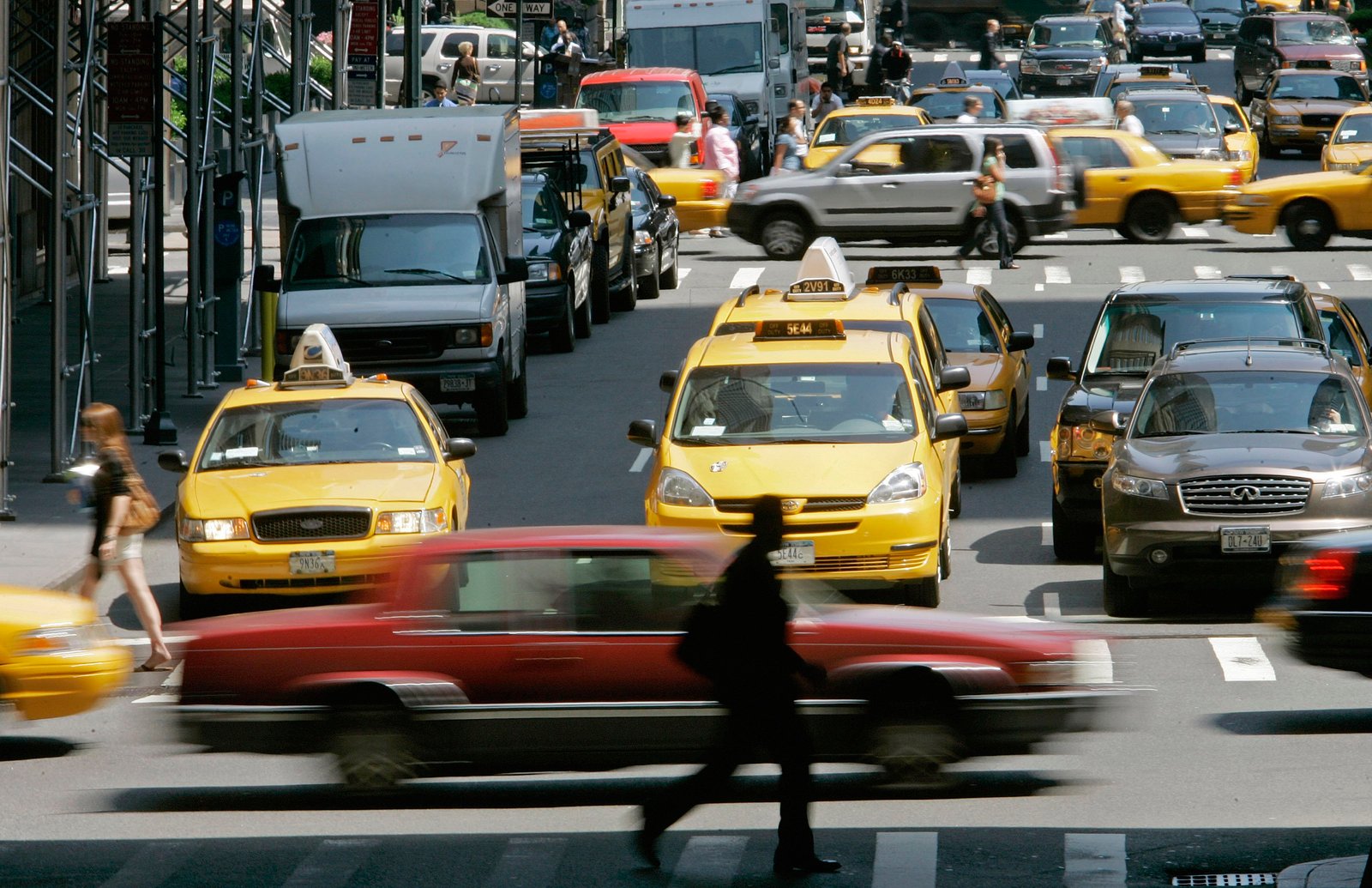
TO ENFORCE OR NOT TO ENFORCE — THAT’S THE QUESTION: Mamdani wouldn’t commit today to ordering the NYPD to step up enforcement of traffic violations in New York City — because he’s focused on “behavioral change,” not punishment.
The NYPD’s rate of issuing tickets to drivers who speed, blow through red lights, block bike lanes or otherwise break traffic laws remains far below pre-pandemic levels. And transit advocates, including left-leaning allies of Mamdani, say the police department must get back to issuing more violations, arguing that it’s critical to keeping city streets safe.
This afternoon, though, Mamdani declined repeatedly to say whether he will deliver such marching orders to the NYPD and suggested enforcement isn’t a key priority for him.
“Our goal here is not going to be measured in terms of the number of tickets that are issued or the violations, but rather behavioral change, and the NYPD is a partner in delivering that change,” Mamdani said, speaking at a press conference in Brooklyn held to unveil his new street safety plan, which contains ambitious proposals but is light on many implementation details.
How does the city change behaviors without stepping up enforcement, though? In response to that question, Mamdani suggested the answer could lie in developing more protected bus and bike lanes and otherwise redesigning streets to make them safer for pedestrians.
At the same time, Mamdani said he’s committed to “a continued partnership with the PD to use those tools of ticketing when any violation is present.”
“We’re going to be taking a hard look at how best we can change behavior that we’re seeing in violation of street safety laws, and then utilize that. That includes the PD,” he said.
The mayor’s comments came after Streetsblog reported the NYPD has shifted its traffic violation strategy to prioritize enforcement against scofflaws on e-bikes and other micromobility vehicles. That shift comes in spite of the fact that car drivers account for the vast majority of crashes and traffic deaths in the city, data shows. — Chris Sommerfeldt
FOILED ATTEMPT: The Manhattan Institute, a conservative think tank, is suing the Mamdani administration over its handling of Freedom of Information Law requests.
The think tank has been seeking records related to meetings between foreign dignitaries and Ana María Archila, commissioner of the Mayor’s Office of International Affairs. Archila has faced criticism for attempting to meet with an Iranian diplomat amid that country’s war with the U.S.
While the Adams administration provided tailored estimates for FOIL requests (but by no means fulfilled them in a timely manner), the institute found Mamdani’s City Hall team began giving out blanket six-month timetables for fulfilling requests.
“City Hall has turned FOIL into a six-month waiting room for everyone,” Manhattan Institute City Policy Analyst Santiago Vidal Calvo and General Counsel Cameron Macdonald wrote in explaining their suit, which was filed in Manhattan Supreme Court. “That is why we are suing.”
The city did not immediately respond to a request for comment about the lawsuit. — Joe Anuta
SCREENS IN SCHOOLS: The New York City public school system banned unfettered access to YouTube on school-issued devices for the current school year, the Department of Education revealed Tuesday.
The ban — which went into effect last week, ahead of the first day of school — comes amid calls from City Council members to limit the use of YouTube, personal devices and AI in the classroom.
“We heard everyone loud and clear,” DOE official Scott Strickland said at a Council hearing today. “As of Wednesday night at 5 p.m., we filtered YouTube out of all student devices. They shouldn’t be able to access it either on a Chromebook or an iPad both at school and at home.”
Council member Shekar Krishnan, who chairs the Council’s Oversight and Investigations Committee and was co-leading Tuesday’s hearing, said he was “very glad to hear” of the YouTube ban.
Educational videos embedded into Google Classroom for specific lessons will be exempt from the ban.
Earlier this month, Mamdani announced a year-long AI moratorium for students in grades 2-K through eighth grade. Hochul and lawmakers in Albany also rolled out a full-day “bell-to-bell” restriction on cellphone use during the school day last school year.
Ahead of this afternoon’s hearing, Krishnan and Council member Eric Dinowitz, who chairs the Education Committee, held a rally railing against screen-heavy classroom instruction and calling, among other things, for a YouTube ban.
“We will not let the greed of big technology companies get in the way of our children’s future and their education,” Krishnan said at the rally. — Molly Reinmann
IN OTHER NEWS
— DECLASSIFIED DOCS: Trump said he’d consider releasing classified documents related to 9/11 after victims’ families pleaded for clarity on Saudi Arabia’s involvement. (NY Post)
— TIED UP: Long Island Democratic House candidate Christopher Gallant acknowledged he posed in bondage gear for an ad campaign over a decade ago. (The New York Times)
— ICE ARRESTS: Police in the Westchester village of Port Chester have turned over more people with no criminal record to ICE than other local law enforcement agencies, despite assertions the police department would not cooperate with ICE. (NY Focus)
Missed this morning’s New York Playbook? We forgive you. Read it here.


WICHITA, Kansas — Roger Marshall was running behind.
The bus Kansas Republicans booked for a five-day barnstorming tour sat idling Tuesday morning, with other statewide candidates onboard. The tour was already a few minutes delayed as state party chair Danedri Herbert awaited word from the senator who some Republicans grumble isn’t campaigning hard enough as polls show him tied or trailing.
Finally, she got word: Marshall would ride separately.
As the bus reached its first stop in rural Newton, Marshall crept aboard — and was spotted by reporters doing so. He then joined the other candidates exiting to greet the crowd like he’d been there the whole time.
Marshall is playing catch-up as he races to avoid becoming the first person to lose a Senate contest to a Democrat in the state in nearly a century. He faces the most serious challenger for a Kansas senator in over a decade as his party stares down a grim environment under President Donald Trump’s second term.
National Republicans are pouring millions into the state to prop him up; national Democrats are responding in kind, and Democrat Adam Hamilton, a well-known United Methodist pastor, is suddenly flush with cash for the campaign’s homestretch.
But some Republicans think it’s already too late for Marshall.
“He took it way too much for granted,” said former Kansas Gov. Mike Hayden, a Republican who supported Marshall’s previous campaigns but is now publicly backing Hamilton. “He’s been almost invisible, except on national television. And there’s not a lot of love in Kansas for Washington D.C.”
National Republicans have privately urged Marshall to take his race more seriously on numerous occasions, according to a person familiar with the conversations who was granted anonymity to discuss them. Marshall, this person said, never appeared too worried about the race. Marshall’s latest Federal Election Commission report indicates this may be true. He raised just $866,000 for the third quarter to $9.9 million for Hamilton, and that filing did not appear to include any full-time payments to campaign staff.
Marshall’s team did not respond to requests for comment on this article.
One Republican strategist close to the White House, granted anonymity to speak candidly, acknowledged the race is an “uphill battle,” comparing Marshall to an “old athlete who, it takes them a lot longer to warm up to get ready for the game time, and they didn’t start that early enough.”
That strategist said that the remaining undecided voters are overwhelmingly Trump voters, and predicted they’d come home. Kansans “are mad at Republicans, but they just hate Democrats more,” the strategist said. “As much as DC Republicans are bedwetting, the ones actually working on the races are cognizant of this.”
As the race nears the homestretch, a deluge of bad press has dogged the senator: His campaign used pictures of a Kansas campground without permission and had to edit the ad; his team faces accusations of blurring the line between his official and campaign offices; his campaign reportedly didn’t pay a bill to a local bakery for six years until after the unpaid debt was made public (he apologized).
Two other stories landed the hardest.
The first focuses on a Florida property that he owns, raising questions about how much time he actually spends in Kansas. The second stems from a New York Times report that Marshall, an obstetrician-gynecologist who served two terms in the U.S. House, had allegedly taken legal action against hundreds of medical patients who didn’t pay their bills. Marshall has said he spends the bulk of his time in Washington or Kansas, calling the claims “bologna.” He called the Times’ report a “hit job by left media” and told Fox News he had “nothing else to do to with the process” after patients’ accounts went to collections.
At a Monday rally in the liberal college town of Lawrence, Hamilton told supporters that Kansans deserve a senator who isn’t just “showing up for photo ops” between “time with your family in Florida.”
“I want to know from Roger Marshall: What’s your plan when people … show up and they don’t have health insurance?” Hamilton said, standing on a hay bale in a shady park. “Is the plan we’re going to sue them? Then we’re going to have some of them arrested, and maybe a few of them put in jail?”
Hamilton’s campaign cut a face-to-camera ad with one of Marshall’s former patients, who said she was arrested when she was eight months pregnant because she missed a $50 payment to Marshall’s office. The Marshall campaign sent a cease-and-desist letter in response, saying the ad’s “message is false in every material respect,” and went up this week with its own ad of a former patient singing his praises.
National Republicans have swooped in to prop up Marshall with $11 million in planned spending in recent days. And he’s getting other reinforcements: Chris Grant, the stalwart Trump-world operative and veteran of previous Marshall campaigns, will take an expanded role on the senator’s team through Election Day, Axios first reported.
Marshall’s struggles are drawing unfavorable comparisons to the last Republican who needed to be bailed out to win a Senate race in the state.
“This race reminds me of Sen. Pat Roberts’ last race [in 2014], when he was accused of not maintaining a Kansas residence and campaigning poorly,” said one Kansas state GOP lawmaker, who was granted anonymity to speak openly.
But Republicans had a strong wind at their backs in 2014, sweeping nearly every Senate race that year; Roberts managed a 10-point win, similar to Marshall’s 11-point win in 2020. This time around, the national climate is blowing hard the other direction.
Kansas has been especially hard-hit by some of Trump’s policies. His tariffs and spiking fuel prices left the state’s row crop farmers struggling. A plan to import cheap foreign beef infuriated ranchers in a state that produces the second-most cattle annually. And his threats to cut off U.S. sales of Bombardier planes — a Canadian company whose U.S. headquarters are in Wichita — rattled the state’s robust aviation industry.
Marshall has recently shown signs he knows he’s in a fight. The normally strident MAGA backer broke with the president on the beef import plan and on a recent local immigration enforcement action, after ICE activity rattled some of his state’s agricultural towns.
He’s banking on the conservative nature of the state, working hard to paint Hamilton as a progressive who will fall in line behind Washington Democrats. “This guy is the most radical liberal Democrat in the history of Kansas to get through a primary,” Marshall said in an interview in Garden City. “He is this wolf in sheep’s clothing.”
At rallies in Newton, Hutchinson, Dodge City and Garden City, he warned that his election could decide which party controls the upper chamber. “If my opponent were elected, it would give Chuck Schumer and AOC control of the Senate,” he repeated. Recent Republican ads hit Hamilton as “woke” and “radical,” pointing to his past praise of the Black Lives Matter movement.
But as Marshall tagged along with the other GOP candidates for their barnstorming tour, holding mini-rallies across central and western Kansas on Tuesday, he was reminded how deep the anger at Washington runs right now — even in ruby-red Kansas.
In Dodge City, the self-described “cattle capital” of the country, some Republicans in the crowd grumbled about spiking fuel prices. In Newton, protesters screamed through Marshall’s speech, calling Republicans “fascists.” (“Quiet, Satan!” a disgruntled attendee retorted.) In Garden City, where ICE activity sent shockwaves last month, Marshall got an earful in a private meeting with local lawmakers over their frustration that immigration officers barged into town without coordinating with local law enforcement.
”I think the frustration is still there,” state Rep. Jason Goetz, a Republican who represents some of the cities affected by ICE enforcement.
There’s a belief among some Kansas Republicans that Marshall has thrown together so poor a campaign that if he wins, it won’t be of his own accord — it will be because of Ty Masterson, the Republican state Senate president running for governor who joined him on the bus tour and has polled a few points ahead of Marshall in most surveys.
Rep. Tim Huelskamp, a Kansas Republican who lost a U.S. House primary to Marshall in 2016, said Masterson is “going to pull everybody across the line,” a list that “absolutely” includes Marshall.
Patricia Woods, a Hutchinson resident, said at a rally that she is “100% behind Masterson.” When asked about Marshall, she said she is “kind of on the fence.”
Masterson, when asked about Marshall’s race, simply chuckled. “It’s more complicated than mine,” he said.
Adam Wren and Andrew Howard contributed reporting.
Haley Stevens is highly visible in the wake of her Senate primary loss: Meeting with the Dalai Lama, crashing “TMZ Live” with her new fiancee, getting spoofed on The Tonight Show with Jimmy Fallon.
One place she hasn’t been spotted: alongside her former rival Abdul El-Sayed.
Even though the representative quickly endorsed El-Sayed after their bruising Aug. 4 primary, she’s done little to help him since. That absence is becoming more conspicuous in the closing weeks of a crucial Senate contest, as some of her old supporters continue to vocally resist backing him.
In an interview, Stevens said El-Sayed is building a “new coalition” in the race against GOP former Rep. Mike Rogers — and suggested it’s not her place to push some of her more skeptical supporters into joining it.
When asked if she was encouraging her former donors to help El-Sayed, she said she believes her role this election is to “be part of the coordinated campaign, support where I can,” mentioning Michigan House races. When asked again if she would push donors to back him, she responded: “That’s Elissa’s thing,” referring to Sen. Elissa Slotkin (D-Mich.), who has been fundraising for El-Sayed. “I didn’t win a Senate primary,” she continued. “It’s not like a salty grapes deal or anything.”
Stevens said she’d checked in with El-Sayed’s team, but hadn’t met with the candidate himself recently because she’d been traveling.
“There’s changing dynamics, and there’s a new coalition that Abdul has built, and some people are a die-hard part of it, and some people are not. We’re seeing some constituent community pain coming out,” Stevens said, referencing resistance to El-Sayed among some Black and Jewish voters who backed her in the primary.
“Rogers is working the Black community harder and more successfully than we have ever seen a Republican do or at least that I can remember — ever,” Stevens said.
“But we’re also seeing Abdul go up to the UP [Upper Peninsula] and we’re seeing him fill venues in rural Michigan and it’s very real in terms of this coalition he’s built,” she added.
El-Sayed ran particularly strongly during the primary with young voters and in the state’s large Arab-American community, as well as in some rural, more populist parts of the state, and is working hard to expand that coalition in the general election.
Stevens’ remarks come as some of her former backers and financial boosters continue to publicly withhold support from El-Sayed and in some cases openly embrace his Republican rival. The ruptures are most visible among the Jewish and Black communities that largely broke for Stevens, and point to enduring friction within Michigan Democrats’ traditional coalition after a bitter primary that she could be in a unique position to mend.
Debbie Rosenman, the chair of Birmingham-Bloomfield Area Democratic Party Club in Stevens’ backyard and an El-Sayed supporter, said Stevens has been “absent” on the trail and said she was “very concerned” her coalition is not coalescing around El-Sayed.
“I feel that that could change with more of her public support,” Rosenman said.
El-Sayed’s campaign said the former rivals’ teams keep in close touch and noted several Stevens staffers joined the nominee’s team after the primary.
“The Abdul campaign is grateful for Congresswoman Stevens’ immediate and sustained support,” El-Sayed campaign spokesperson Roxie Richner said in a statement.
El-Sayed has worked to repair relationships with Black and Jewish leaders. He has endorsements from several of them and is campaigning with prominent Democrats from both communities, including former President Barack Obama and former Vice President Kamala Harris and Slotkin, who is Jewish. He has made more than two dozen visits to Black churches and participated in more than 100 events and meetings with Black leaders, according to his campaign. He has hired a liaison to the Jewish community, keeps in regular contact with Jewish leaders and has apologized for his controversial remark after a synagogue attack in West Bloomfield in the spring that “hurt people hurt people.”
“I take very seriously that I’m going to represent a large community of Jewish Michiganders, and I want them to know that I’m committed to their safety and their well being, even if there are points in foreign policy on which we might disagree,” El-Sayed said in an interview.
Not everyone has come around.
David Kramer, Stevens’ primary campaign chair and a vice chair of the Michigan Democratic Jewish Caucus who introduced Stevens to her fiance, is now working with Nonnegotiable Michigan, a group of Jewish leaders who have pledged to withhold their support from El-Sayed unless he adjusts his approach to Israel.
Kramer, a prominent Democratic fundraiser in the state who has also previously worked with Slotkin and Gov. Gretchen Whitmer, told Blue Light News he’s not tapping his donor network for the general election and estimated he’s left upward of seven figures on the table that he could have raised to boost El-Sayed.
Brian Hermelin, a normally Democratic donor who backed Stevens in the primary and leads the Jewish Federation of Detroit, co-hosted a fundraiser for Republican nominee Mike Rogers shortly after the primary that raised roughly $200,000.
Rogers’ campaign has attempted to capitalize on those cracks by launching a “Democrats for Mike Rogers” group and making overtures to Jewish and Black voters. Bobby Schostak, a former Michigan GOP chair who is serving as Rogers’ finance chair, estimated the Republican’s campaign has brought in roughly $3 million to $4 million since the primary from “nontraditional Republican donors” across the country, including Democrats.
“The Democratic Party is still divided,” said Democrat Mary Waters, a Black Detroit city councilor who’s met with both El-Sayed and Rogers but remains undecided. “People are still so torn about what it is that they want to do.”
Joe Tate, a Black state representative from Detroit who supported Stevens, acknowledged there has been some lingering apprehension around El-Sayed. But he said Stevens’ endorsement of El-Sayed helped convince him to back the candidate and predicted Democratic voters would largely stand by their party, too.
El-Sayed’s donor network may look different from Stevens’, but he’s still posted big numbers. He raised nearly $33 million from July through September, which included some raised before the Aug. 4 primary, compared to Rogers’ nearly $10 million, and has been outspending Rogers on the airwaves.
Some of El-Sayed’s prominent surrogates have also taken steps to court apprehensive Democrats. Jewish leaders like former Rep. Andy Levin, a former synagogue president who Stevens defeated in a 2022 primary, are holding house parties with voters coordinated by the grassroots group Michigan Jews for Democracy. Slotkin has privately pressed senators and donors to boost El-Sayed’s bid.
That includes hosting a fundraiser for El-Sayed in Washington, D.C., in late September with donors who she described as initially “skeptical” of the nominee.
“I talked to them about why I thought it was important and how I don’t agree with Abdul on everything … but we agree on the really important things, and that’s putting a check and balance on this president,” Slotkin told Blue Light News in a brief hallway interview on Capitol Hill the next day. “And they donated.”
Republican Senate candidates are hurting for cash.
Nearly every Democratic candidate in battleground Senate races outraised their GOP opponent from July through September. And in some cases, the disparities were stark.
- In Texas, Democrat James Talarico trounced Republican Ken Paxton $60.2 million to $10.2 million in their main campaign accounts.
- In Georgia, Democratic Sen. Jon Ossoff raised $33.1 million to Rep. Mike Collins’ nearly $2.8 million.
- In North Carolina, Democrat Roy Cooper raised $12.2 million to Michael Whatley’s $2.1 million.
- In Michigan, Democrat Abdul El-Sayed hauled in roughly $33 million to former Rep. Mike Rogers’ nearly $10 million.
- In Maine, Democrat Troy Jackson raised $20.5 million to GOP Sen. Susan Collins’ $5.2 million.
- In Ohio, Democratic former Sen. Sherrod Brown hauled in $23.1 million to GOP Sen. Jon Husted’s $4.8 million.
- In Iowa, Josh Turek raised $13.9 million to Republican Rep. Ashley Hinson’s nearly $3.3 million.
- In Alaska, Democratic former Rep. Mary Peltola raked in $17 million to GOP Sen. Dan Sullivan’s nearly $2.7 million.
- In New Hampshire, Democratic Rep. Chris Pappas brought in $8.1 million to Republican former Sen. John E. Sununu’s $1.5 million.
- And in Kansas, Democrat Adam Hamilton raised nearly $9.9 million to GOP Sen. Roger Marshall’s just $866,000.
Across those 10 Senate races, the Democratic campaigns raised more than five times as much as the Republican ones. Put another way: Talarico alone raised more than all those Republicans combined.
Marshall and Whatley each started October with less than $1 million left in the bank. Mike Collins wasn’t much better-positioned, entering the final weeks of the election with just over $1 million cash on hand.
These numbers do not include joint fundraising committees, which allow candidates to raise money and may have some more cash that has not yet been transferred to the campaigns.
Democrats have consistently outraised Republicans on the candidate level this cycle. But the yawning gaps heading into the midterm’s home stretch stand as the latest example of the deteriorating environment for the GOP.
And while GOP outside groups have significantly more money than Democrats, this candidate cash advantage matters because candidates get TV ads for much cheaper rates, letting their dollars stretch much farther.
To underscore how lopsided some of these figures are: At least half a dozen House Democratic challengers raised over $3 million in the third quarter — a sum higher than several GOP Senate incumbents.
There are some silver linings for the GOP.
In Minnesota, Republican Michele Tafoya raised $4.9 million to Democratic Lt. Gov. Peggy Flanagan’s $4.3 million. Tafoya started the month with $2.1 million to Flanagan’s $1.5 million.
Sullivan, Husted, Hinson, Rogers and Susan Collins all entered October with millions more in cash on hand than their Democratic opponents.
And Republicans are getting air cover from GOP super PACs bankrolled by billionaire Elon Musk and President Donald Trump’s MAGA Inc. that have pumped hundreds of millions of dollars into the midterms in recent weeks.
Musk was revealed on Thursday as the primary funder of Texas PAC, which has spent $131 million so far boosting Paxton and attacking Talarico. Musk gave $158 million to Senate Republicans’ super PAC arm last quarter, the filings showed, with the group in turn transferring the funds to the pro-Paxton PAC.
Republicans are also benefitting from a recent Supreme Court ruling that allows party committees to spend unlimited sums in coordination with candidates, allowing the National Republican Senatorial Committee to offset at least some of the differences.
Since the tranche of reports filed Thursday only cover until Sept. 30, the full scope of each candidates’ coffers is unknown.
But there are other signs that some are strapped for cash in the final sprint: Whatley has gone dark on television, a clear indication of him running low on funds even as his campaign insists it’s a temporary pause.
- Kansas Republicans fear Roger Marshall may be running out of time
- Internal FEMA memo reveals plans to curb states’ reliance on federal aid
- House Democrat introduces bipartisan bill to block Trump’s Russian diesel deal
- A vulnerable Republican takes on both parties over immigration
- RFK Jr. and his allies are standing by Russell Brand as the comedian’s rape trial begins
- Haley Stevens is everywhere — except on the trail for El-Sayed
- No one wants to be on the Senate Ethics Committee
- Senate Republicans are getting smoked in fundraising
- Inside the democratic socialists’ plan to shake up Congress

- Trump lashes out at Republicans as Ken Paxton struggles in Texas
-

 Politics2 years ago
Former ‘Squad’ members launching ‘Bowman and Bush’ YouTube show
-
Uncategorized2 years ago
Bob Good to step down as Freedom Caucus chair this week
-

 The Josh Fourrier Show2 years ago
DOOMSDAY: Trump won, now what?
-

 The Dictatorship2 years ago
Pete Hegseth’s tenure at the Pentagon goes from bad to worse
-

 Politics2 years ago
Former Kentucky AG Daniel Cameron launches Senate bid
-

 The Dictatorship2 years ago
Luigi Mangione acknowledges public support in first official statement since arrest
-

 Politics2 years ago
Blue Light News’s Editorial Director Ryan Hutchins speaks at Blue Light News’s 2025 Governors Summit
-

 The Dictatorship1 year ago
Mike Johnson sums up the GOP’s arrogant position on military occupation with two words