Politics
Democrats rethink their mail-voting strategy as voters grow wary

The Supreme Court blocked President Donald Trump’s effort to restrict mail voting. But for Democrats trying to turn out voters, the uncertainty seems harder to put to rest.
Fewer Democrats say they plan to vote by mail in November’s midterms than at the same point in 2024, according to a new NBC News poll, as a separate survey finds declining confidence that the Postal Service will deliver election mail on time. That represents an about-face for a party that has increasingly embraced mail voting since the 2020 pandemic election, forcing Democratic strategists to rethink how they get voters to the polls — and how to convince them their ballots will count.
Quentin James, founder and president of the Collective PAC, said his group is hearing concerns from Black voters about whether their mailed ballots will be secure and counted.
“I think there’s confusion,” James said. “We know that the president has spent six months talking about changing the rules regarding mail-in voting, and a lot of folks are concerned about their ballot being secure.”
That confusion comes as Democrats and voting groups weigh how to reassure voters after Trump’s latest effort to restrict mail voting. The president signed an executive order in March seeking to crack down on mail-in voting, citing unproven claims that the process is insecure and vulnerable to electoral fraud.
“The cheating on mail-in voting is legendary. It’s horrible what’s gone on,” Trump said during an Oval Office signing ceremony. “I think this will help a lot with elections.”
Still, the rules for mail ballots — at least nationally — will be effectively the same as 2024 after the Supreme Court rejected the Trump administration’s attempt to enforce the new mail-in ballot delivery regulations in a ruling earlier this month. The high court left in place a lower-court decision that blocked the U.S. Postal Service from implementing the new proposed requirements in the weeks before the midterm election.
Despite that, Democratic voters have signaled they are changing how they’ll vote.
In the NBC poll, 23% of registered Democrats said they plan to vote by mail, down from 34% in September 2024. Thirty-six percent said they plan to vote early in person, up from 30%, while another 36% expect to vote on Election Day.
A Marist poll found that 58% of registered voters were confident the Postal Service would deliver election-related mail to voters and election officials on time, down from 71% in October 2024. Marist also found that Democrats remain more likely than Republicans to plan to vote by mail or absentee ballot, 32% to 12%, respectively.
James said his organization has long encouraged early in-person voting through its Rides to Vote program, which provides transportation to voters without a vehicle. But despite the Supreme Court ruling, his organization is also encouraging people considering voting by mail to use a ride voucher to return their completed ballots directly to the required location.
“The bigger threat is confusion and fear,” he said. “That is the thing that a court case will not solve, and that’s what we’re really concerned about.”


In Maine, Secretary of State Shenna Bellows said municipal clerks have reported voters canceling absentee ballot requests, including requests to receive ballots automatically in future elections.
Bellows cautioned against a blanket message to vote in person. “We would discourage advocates from telling people not to vote by mail if, for those voters, that’s their only option,” said Bellows, a Democrat who ran this cycle for governor and in the rapid-fire Senate primary, pointing to older and disabled Mainers who rely on absentee voting.
Her office is instead urging voters to make a plan that works for them, return mailed ballots early and use Maine’s online absentee ballot tracking system to check whether a clerk has received and accepted them.
“Our public education efforts have been focused on encouraging voters to make a plan that’s right for them, and recognizing that they have the peace of mind of tracking their absentee ballot and the backup option of voting on Election Day if, for any reason, the ballot is delayed by the mail,” Bellows said.
Indivisible, one of the party’s largest grassroots groups, is mounting its own early-vote push and nudging people to cast their ballots early, regardless of how they vote. Co-founder Leah Greenberg said that the group is helping organize an Oct. 17 national day of action to encourage people to vote early under their states’ rules.
“So we were absolutely hearing concern,” Greenberg said. “But more importantly, what we’re hearing is people trying to figure out what they can do and how they can organize locally in order to protect elections.”
Greenberg said Indivisible is urging voters to get their ballots in early and emphasizing that a court rejected the administration’s attempt to restrict mail voting.
Still, the ruling hasn’t erased the uncertainty organizers say they are hearing from voters. Greenberg and James described a similar mix of relief and concern among voters.
“People are glad to hear it, but still wary,” Greenberg said.
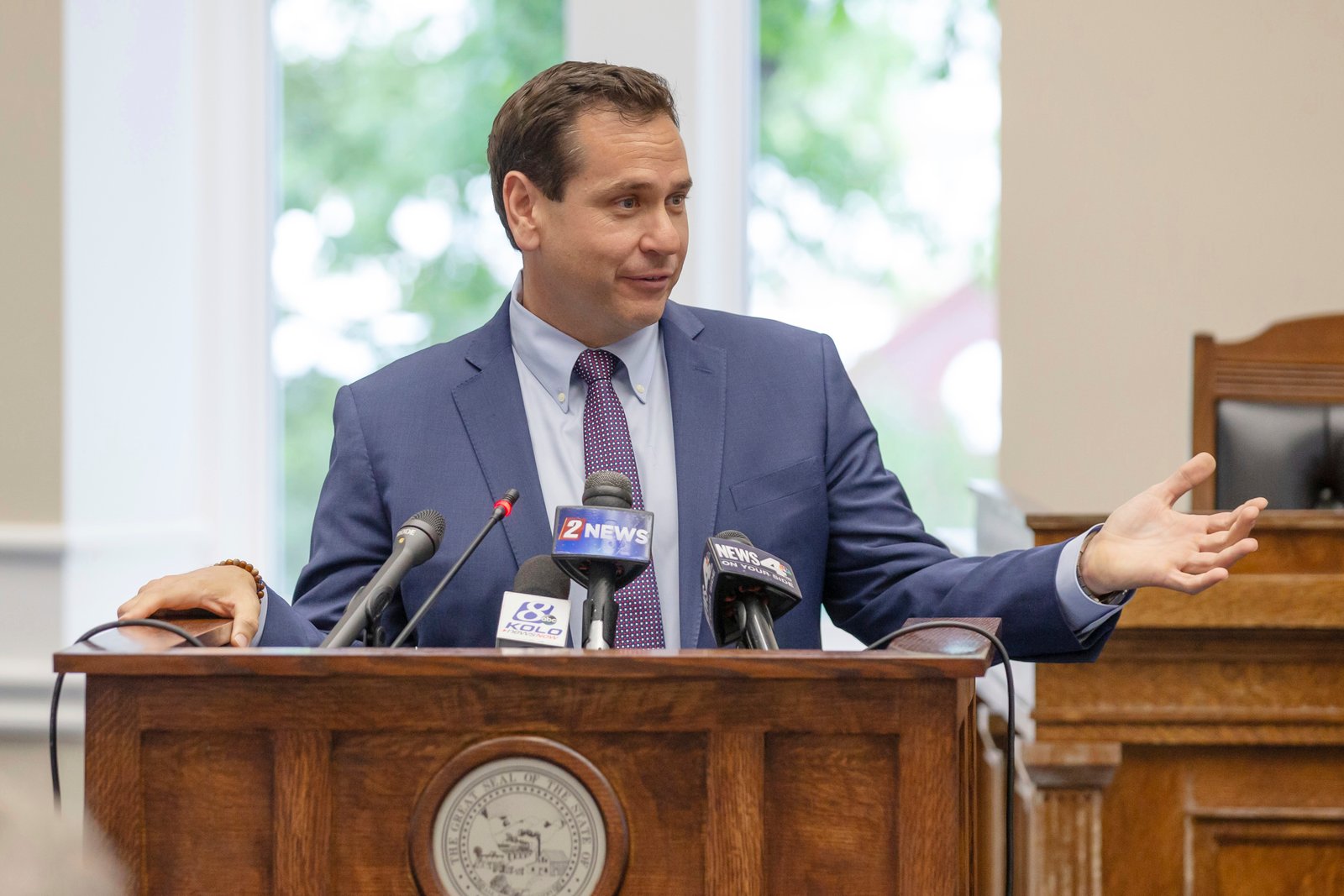

Democrats, including state election officials who oversee the process, are also looking for ways to boost confidence in the mail system. Nevada Secretary of State Francisco Aguilar has asked his state’s congressional delegation to arrange election observers at postal facilities handling Nevada’s ballots.
In letters to the state’s congressional delegation, Aguilar identified sites in Las Vegas and Reno, as well as facilities in West Sacramento, California, and Salt Lake City, Utah.
Aguilar said nearly 670,000 Nevadans voted by mail in 2024 and argued that having observers present could strengthen confidence in ballot handling. In an interview, he said observers would also signal to postal workers that they have support in the process.
“By having observers there, it gives them the support to say: ‘Hey, we got your back,’” Aguilar said. “We also want to be helpful if there are any concerns — we want to make sure that leadership knows we are not going to stay quiet. We’re going to be proactive. We’re going to be engaged and we’re going to hold them accountable when we need to hold them accountable.”
Aguilar said Rep. Susie Lee (D-Nev.) has requested observers following his letters. Lee’s office did not respond to a request for comment.
USPS said it had received correspondence regarding Aguilar’s request and was reviewing it. “The Postal Service has successfully delivered America’s election mail, and we are confident that we will do so again this year,” Nikolaj Hagen, a Postal Service spokesperson, said.
Hagen pointed to USPS figures showing it delivered 233.3 million pieces of election mail through Aug. 28 in fiscal year 2026, with 97.94% arriving on time. In the 2022 election, USPS handled 105.4 million ballots and delivered 99.93% of those sent by voters to election officials within seven days. In 2024, it handled 222.39 million pieces of ballot mail, with 99.88% delivered to officials within seven days.
Meanwhile, Bellows said Maine is taking a different approach. Local USPS representatives have proposed weekly meetings with her election staff, she said, and her office has relationships with workers at the state’s two distribution centers.
But she noted congressional observers could be useful in larger states where those relationships are less established.
“Maine is a small enough place where, if there were a problem, we would probably know very quickly through union representatives or simply word of mouth,” Bellows said, noting that congressional observers at postal locations could be particularly useful in places “where those relationships may not be as strong or well established.”