
Congress
Democrats go all in on unproven insider trading allegations as they target Trump’s tariffs

Congressional Democrats are raising increasingly pointed concerns about potential financial malfeasance by President Donald Trump and his allies surrounding his dramatic recent tariff moves, despite a lack of evidence of wrongdoing.
Senate Minority Leader Chuck Schumer on Friday joined the growing number of Democrats formally calling for investigations zeroing in on the wild swings in the stock market amid Trump’s escalating trade war. It’s one of the central messages the party has coalesced around in the 48 hours since Trump partially reversed his implementation of sweeping trade barriers.
Trump on Wednesday morning posted to Truth Social that it was a “GREAT TIME TO BUY” despite the chaos within the financial markets. Hours later, Trump announced he was pausing the most sweeping global tariffs for 90 days, causing a temporary but dramatic stock market rally.
Some Democrats quickly questioned whether there was financial gain to be had amid the market whiplash, though no evidence has emerged of insider trading or other wrongdoing, and top party leaders have now followed suit.
In the latest salvo, Schumer joined Sens. Elizabeth Warren (D-Mass.), Mark Kelly (D-Ariz.), Ruben Gallego (D-Ariz.), Adam Schiff (D-Calif.), Ron Wyden (D-Ore.) and Schumer in requesting SEC Chair Paul Atkins to launch an investigation into where Trump or those around him “engaged in insider trading, market manipulation, or other securities laws violations.”
“It is unconscionable that as American families are concerned about their financial security during this economic crisis entirely manufactured by the President, insiders may have actively profited from the market volatility and potentially perpetrated financial fraud on the American public,” the senators said in the letter.
The White House accused Democrats of “playing partisan games instead of celebrating President Trump’s decisive action yesterday to finally corner China,” according to a statement from spokesperson Kush Desai provided to media organizations. Trump, he added, was seeking “to reassure the markets and Americans about their economic security in the face of nonstop media fearmongering.”
In a separate letter Friday, Schumer, Schiff, Warren and Wyden sent a letter requesting state attorneys general also launch investigations into any potential violations of state laws, including by members of Congress.
“We do not make this request lightly. No one — not even a president — is above the law. … Any proven misconduct must be prosecuted and punished to the fullest extent permitted by the laws of your states,” they added.
The senators’ actions followed two days of increasingly strident reactions from top House Democrats.
“We need to get to the bottom of the possible stock manipulation unfolding before the American people — including what, if any, advance knowledge members of the House Republican Conference had of Trump’s decision to pause the reckless tariffs he put in place,” House Minority Leader Hakeem Jeffries told reporters Thursday.
As the minority party in both chambers, there aren’t many options available for Democrats to force an investigation —- they don’t hold committee gavels, and they have limited avenues for getting legislation considered.
Rep. Alexandria Ocasio-Cortez (D-N.Y.) said she and her colleagues were discussing “several options” including a discharge petition to force a vote on a congressional stock trading ban, though that effort faces an uphill climb after previous attempts to ban congressional stock trading have fizzled out.
The disclosure of lawmakers’ stock trades has presented a perennial ethics issue for members of Congress. Any trades that happened around the tariff-induced market swings must be publicly disclosed through congressional ethics authorities by May 15.


Senate Republicans are growing anxious about the midterms.
They once felt like they had a glidepath to keep or even grow their majority in November, unlike in the House, where GOP control is razor-thin and members have become increasingly on edge about Democrats returning to power.
But the mood is shifting, according to interviews with 10 GOP senators and aides, as the U.S. engages in open-ended war in the Middle East, rising oil prices threaten to slow the economy and President Donald Trump stokes intra-party divisions over an elections overhaul bill known as the SAVE America Act.
Some GOP senators are now openly predicting a tough battle to hold onto control as their party struggles to keep the focus on affordability policies that lawmakers want to make the centerpiece of their midterm campaign. The Senate passed a major housing bill this week but it faces an uncertain future in the House. Trump himself told Republican lawmakers Monday that housing is not a top concern for voters.
“I’m glad I’m not on the ballot,” Sen. Kevin Cramer (R-N.D.), a close Trump ally, said in an interview when asked how he was feeling about the November elections.
Republican senators are warning that the party writ large needs to hammer home cost-of-living measures — despite apparent disinterest and distractions from Trump, who they hope will lean into the housing bill fight. Recent polls have shown the Iran conflict and the resulting rise in prices are major worries for voters, even as the president downplays affordability concerns.
“Energy prices are high. Everything’s high,” said Sen. Josh Hawley (R-Mo.), another Trump ally. He added that Republicans should “take some votes to lower the costs.”
Democrats have to net four seats to win back control of the Senate — a tall order that still gives Republicans an inherent edge. But Republicans are playing defense in Maine and North Carolina, the two races widely viewed as the most likely flips, and they’re facing a messy Trump-fueled primary in Texas. Republicans view Michigan and Georgia as potential pick-ups, though Democrats think they’ve also been able to put states like Ohio and Alaska in play through strong candidate recruitment.
Asked about Trump’s claim that the party will be in trouble if it doesn’t pass the SAVE America Act, Senate Majority Leader John Thune told reporters this week that he believed the election is instead “going to be about the economy, and that’s why I think we’re focused on that.”
He also said that midterms are “always a little dicey” during the second term of a presidential administration.
But under pressure from Trump and a fervent base, Thune is teeing up what will likely be a multi-week debate on what the president calls his “No. 1 priority” — the SAVE America Act legislation that would institute tough new citizenship and photo ID requirements in order to cast a ballot. Trump wants to expand this legislation even further to prohibit gender-affirming surgery for children and restrict mail-in voting.
The bill lacks the votes for Senate passage, yet Thune and his conference are being lobbied hard by the right flank to revamp or eliminate the filibuster as a means of jamming the legislation through — a strategy that also doesn’t have the votes.
This intra-party tension is on full display in Texas, where Sen. John Cornyn is facing a May runoff against Texas Attorney General and MAGA favorite Ken Paxton. The elections bill has taken centerstage as Cornyn and Paxton vie for Trump’s endorsement, with Cornyn this week throwing his support behind scrapping the filibuster to pass the legislation.
Trump’s pressure campaign over the bill, including his decision to use the Texas race to make a play for its passage, has privately infuriated a broad swath of Senate Republicans, according to two people granted anonymity to speak candidly.
Republicans have privately conveyed to Trump that the voting measure can’t pass, while Thune has also publicly warned against linking a possible Cornyn endorsement to the bill.
Trump, however, told Fox News Radio Friday that he still intends to endorse in the race, but the “main thing I have to do is find out who’s going to get the SAVE America Act approved.” Senate Republicans are fearful that if Cornyn fails to win his runoff, the best-case scenario will cost the party hundreds of millions of dollars to defend against Democratic nominee James Talarico.
The election bill fight has spilled beyond Texas, as GOP senators are being flooded with public warnings from high-profile figures on the right that voters won’t turn out in the midterms or donate money unless the legislation passes. Trump has said passing the bill will “guarantee the midterms.”
White House spokesperson Olivia Wales said in a statement Friday that Trump “is the unequivocal leader of the Republican party, and he is committed to maintaining Republicans’ majority in Congress to continue delivering wins for the American people.”
“It’s clear that he has delivered for Americans with a secure border, cooling inflation, working-class tax cuts, new trade deals, new drug pricing deals and trillions in investments,” Wales added. “The White House is keen to tout these victories in the months ahead as we continue to work to Make America Great Again.”
In the meantime, recent polls show that it’s the unfolding Iran conflict and cost-of-living issues that voters care most about.
Just over half of voters oppose military action against Iran, compared to 40 percent who support it, according to a Quinnipiac University poll released this week. Nearly three-fourths said they were either very or somewhat concerned the war in the Middle East will lead to higher oil and gas prices.
In contrast, a Marist Poll also released this week found that 59 percent of Americans, when asked to consider November’s elections, said they wanted to ensure that everyone who wants to vote can do so — compared to 41 percent, who said their priority was making sure that no one who is ineligible can vote.
Sen. Ron Johnson (R-Wis.) said in an interview that he gives the president credit for making a “tough decision” on Iran but that “it’s not going to be necessarily good for the midterms.”
“Do I feel confident? I never feel confident,” he said. “It’s going to be a tough midterm.”
Sen. Shelley Moore Capito (R-W.Va.) when speaking to reporters this week urged patience on rising gasoline prices but acknowledged if they persist into the summer, “that’s always bad.”
Sen. Rand Paul (R-Ky.), one of the GOP conference’s louder Trump critics, was more blunt during a Fox News interview this week, saying it could be a “disastrous election” for the party if the war drags on. Trump announced Friday evening that the U.S. military had carried out a major bombing operation in an apparent attempt to pressure Iran into reopening the Strait of Hormuz, a waterway which carries roughly 20 percent of the world’s oil.
Retiring Sen. Thom Tillis (R-N.C.), whose state is very much in play with his exit, said he’s seeing parallels to 2018, when Democrats won the House amid deep dissatisfaction with Republican leaders on Capitol Hill and in the Trump White House.
Tillis, who frequently vocalizes the concerns many of his colleagues express privately, said some Republicans have asked him, “‘why are you saying this out loud?’”
“Democrats are going to … take advantage of the increase in energy and drive the affordability message and we’ve got to have an answer for affordability,” he explained.
“We’ve just got to be realistic about it,” Tillis added. “We’ve got a voter enthusiasm gap that we need to address.”
Top Democrats and White House officials are nowhere near close to a breakthrough in negotiations to end the Homeland Security shutdown as the funding lapse is due to hit its one-month mark Saturday and real pain begins.
It’s been more than two weeks since the White House laid out its latest proposal for restoring full Department of Homeland Security operations alongside changes to the Trump administration’s immigration enforcement tactics, and Democrats have yet to send a formal counteroffer in the negotiations spurred by the fatal shootings by federal agents in January of two U.S. citizens in Minnesota.
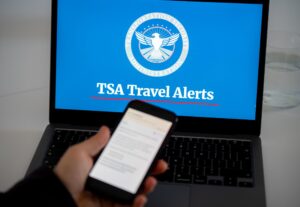
TSA screeners are now missing their first full paychecks of the shutdown, which could lead to more agents skipping work or quitting — and exacerbate already-lengthy wait times at airport security checkpoints throughout the country. Republicans think this could be the breaking point where Democrats relent.
“I’m hopeful that as you see these problems at the airports, that the public will start talking to Democrats,” said Sen. John Hoeven (R-N.D.).
But Democrats have a legislative rebuttal: Bills that would fully fund TSA and other parts of DHS that are casualties of the larger immigration standoff. Republicans have repeatedly objected over the last two weeks when Democrats asked for votes on those bills on the Senate floor.
“Who’s standing in the way? America, look at it,” Senate Minority Leader Chuck Schumer said in a floor speech Thursday. “We’re not putting any preconditions on funding TSA; the Republicans are.”
The Trump administration remains in “frequent” communication with senior Democratic lawmakers, according to one senior White House official granted anonymity to discuss private conversations. Another White House official said the president’s team “remains interested in continuing conversations with Democrats about ways to end this shutdown” but that “Democrats, regrettably, have chosen to punish the American people.”
Yet since the DHS shutdown began Feb. 14, Democrats on Capitol Hill say the administration has been unwilling to make any significant changes to its immigration enforcement tactics, while Republicans insist that the White House has in fact offered Democrats a deal they would be foolish not to take. Amid finger-pointing and deep distrust, there’s no sign the impasse will anytime soon.
On both sides, negotiators have been careful not to divulge the details of the offers each party is representing very differently. Senate Appropriations Chair Susan Collins (R-Maine) said in an interview this week that she “would like to see the Democrats actually read what the White House sent. It is an eminently reasonable proposal.”
The Senate’s top Democratic appropriator, Washington Sen. Patty Murray, suggested Thursday this wasn’t the case. She also said that while people outside the negotiations are “guessing” at the contents of the recent White House framework, ultimately “words matter.”
“You can have money for body cameras, but not require them — two very different things,” she said of GOP claims about what has been proposed. “I don’t want to characterize anything.”
Democrats are demanding new policies that would prohibit federal immigration agents from wearing masks, require officers to display identification and ensure that agents would be barred from detaining people in certain places, such as churches and schools. Democrats also aren’t budging on the demand that ICE obtain judicial warrants for making arrests.
Growing impatient as the shutdown stretches on, several Republican senators have tried to start up negotiations with their Democratic counterparts, despite GOP leaders initially deferring to the White House to handle dealmaking with the minority party.
Democrats have largely rebuffed those entreaties, however, arguing such talks could result in giving ground to congressional Republicans only to then see the White House renege on commitments. Democrats are especially worried about being railroaded by Stephen Miller, White House deputy chief of staff for policy and the architect of President Donald Trump’s hard-line immigration agenda.
“Things go back to the White House, and Stephen Miller, who’s an extremist, says ‘no,’” Sen. Jeanne Shaheen (D-N.H.) said in an interview.
Shaheen and other lawmakers have suggested it could be helpful for the White House to deputize a lead negotiator — but not Miller.
“Stephen Miller has a view that is outside of the American mainstream, and so it’s gonna be hard,” said Sen. Brian Schatz (D-Hawaii) in an interview. “If Susie Wiles were in charge of the discussion, that would be a different conversation.”
Wiles, who has served as White House chief of staff for more than a year, is involved in the talks, according to one senior White House official. But that official said talks toward a DHS funding deal are also led by Trump himself and a team headed by James Blair, White House deputy chief of staff for legislative, political and public affairs.
“There’s no blueprint to this,” the official said of the ongoing talks. “There’s multiple people working on it.”
In the days following the U.S.-Israel strikes on Iran, Republicans cited an increased risk of terrorist attacks in calling on Democrats to vote for restoring full DHS operations. But the argument did not shake loose any additional Democratic support, including on Thursday when Senate Majority Leader John Thune forced a procedural vote on the House-passed DHS funding bill.
A more tangible pressure point than a theoretical attack on U.S. soil could be further disruption to civilian air travel. The longer a shutdown goes on, the more disgruntled TSA agents will become, since they are forced to work without pay. TSA divulged this week that about 300 security screeners have quit since funding lapsed last month — and the workforce is poised to miss a full paycheck for the first time this shutdown.
In Denver, airport officials asked the public this week to donate $10 and $20 gift cards to help TSA agents pay for groceries and gas.
“When the pain goes from the poor TSA agents — who deserve to be paid, and whose families deserve to have them paid — when that pain gets translated to travelers, it gets worse,” Sen. Kevin Cramer (R-N.D.) said in an interview. “And that’s what we sure hope we can avoid in the next few days or week or two.”
While security lines grow longer at U.S. airports, news coverage of ICE and CBP agents detaining people in the interior of the country has declined.
“The further and further that we get away from January and the events that occurred in January, then the less and less leverage Democrats are going to have — and the more you may have issues at airports,” said a person close to the White House. “That’s going to put pressure on Democrats.”
At the same time, the Trump administration has stemmed the impact of the shutdown on most of the DHS workforce by bankrolling paychecks with money from the party-line tax and spending package Republicans enacted last summer. That includes pay for law enforcement officers at the Secret Service and active duty members of the Coast Guard.
DHS can also sustain work at ICE and CBP with the more than $100 billion Republicans delivered for those agencies within the party-line legislation last year.
“Democrats aren’t even shutting down what they have a problem with,” said another person close to the White House. “For the defenders of government workers and minorities, I think it’s wild that Democrats are withholding paychecks from TSA.”
Furthermore, Trump administration officials contend that the law does not allow funding from the GOP megabill to be used for TSA paychecks.
“Only way to get TSA paid is for Democrats to vote to reopen the government and not hold this key funding hostage,” said a senior administration official not authorized to speak publicly about interpretation of the law.
Stewart Verdery, who served as a DHS assistant secretary under former President George W. Bush, said he would be surprised if the Trump administration tried to find a way to pay TSA agents as the lapse drags on.
“TSA agents not getting paid is a very visible signal of the situation Democrats are creating,” Verdery said. “And I’m not sure why you’d want to solve it yourself.”
Beyond the Trump administration, congressional Republicans have also been unwilling to alleviate that pressure point by funding TSA and other DHS operations while leaving ICE and Customs and Border Protection hanging. Increasingly, Democrats are continuing to showcase that GOP resistance.
“If we can’t move forward funding the entire department, sitting down and negotiating in good faith — which you’ve had plenty of time to do already — we should be able to come together to pay the hardworking staff of one of its most essential components: TSA,” Sen. Jacky Rosen (D-Nev.) said on the floor this week.
“Talk is easy,” she continued, questioning whether GOP senators would “back up what they say with their vote.” Republicans objected.
Eli Stokols contributed to this report.
The House Ethics Committee named members to the investigative subcommittee that will probe allegations against embattled Rep. Tony Gonzales (R-Texas), who allegedly had an affair with a staffer who later died by suicide.
The panel will be chaired by Rep. Michael Guest (R-Miss.) and include Reps. Deborah Ross (D-N.C.), Ashley Hinson (R-Iowa) and Greg Stanton (D-Ariz.).
Gonzales recently announced he would not seek reelection, after House GOP leadership urged him to abandon his bid.
- ‘One Battle After Another’ wins best picture at 98th Academy Awards

- ‘Sinners’ gives the Mississippi Delta’s hoodoo culture the reverence it deserves

- ‘F1’ got people to the theaters — its best picture nod won’t get them to watch the Oscars
- Airline CEOs call on Congress to fund DHS amid travel nightmares
- Iran war rages with no end in sight and global economy on the brink
- The National Park Service race to rewrite history becomes a slog
- The Trump health policy both parties are bullish on
- Energy Secretary Chris Wright says Iran war will likely end in weeks
- John Thune says he’s ready to take the filibuster heat
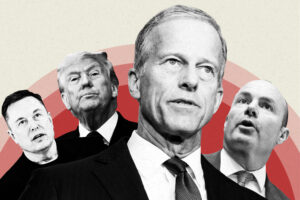
- Trump says his bill would ‘guarantee the midterms.’ House Republicans are moving on.
-

 The Dictatorship1 year ago
Luigi Mangione acknowledges public support in first official statement since arrest
-

 Politics1 year ago
Former ‘Squad’ members launching ‘Bowman and Bush’ YouTube show
-

 Politics1 year ago
Blue Light News’s Editorial Director Ryan Hutchins speaks at Blue Light News’s 2025 Governors Summit
-

 Politics1 year ago
Former Kentucky AG Daniel Cameron launches Senate bid
-

 The Dictatorship6 months ago
Mike Johnson sums up the GOP’s arrogant position on military occupation with two words
-

 The Dictatorship1 year ago
Pete Hegseth’s tenure at the Pentagon goes from bad to worse
-

 Politics11 months ago
Democrat challenging Joni Ernst: I want to ‘tear down’ party, ‘build it back up’
-
Uncategorized1 year ago
Bob Good to step down as Freedom Caucus chair this week