
Politics
Democrats eye state supreme court races — this year and beyond

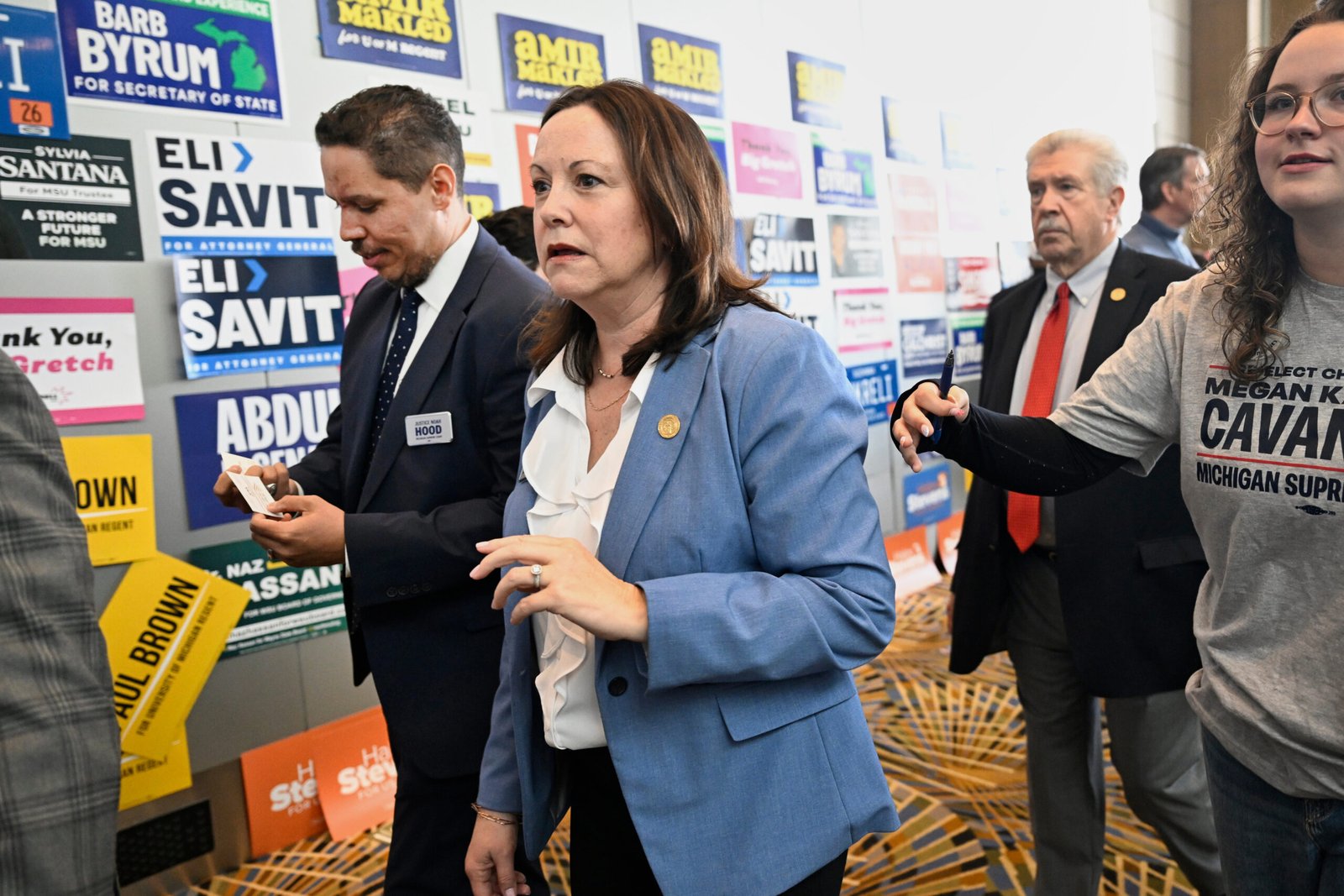
Liberal groups have spent millions in a handful of battleground state supreme court races ahead of Tuesday’s elections, looking to lay the groundwork for Democrats to win control of more courts ahead of a crucial redistricting cycle.
At the center of the fight are races for Republican-majority state supreme courts in North Carolina and Ohio, where this year’s results could set the stage for Democrats to flip the makeup of the benches in 2028. National groups are also spending to defend the liberal majority on Michigan’s court and on an open seat in Montana, where voters will also decide whether judicial elections remain nonpartisan.
The investments are yet another reflection of how state supreme court elections have become national political battlegrounds. The high court justices have become arbiters of major disputes, from abortion rights to election integrity and redistricting. Those who win in the coming cycles will likely preside over challenges to congressional and legislative maps that are drawn in a handful of states after the midterm election — and then nationwide after the 2030 census.
Nowhere are the contests more heated than in North Carolina.
Democrats’ defense of a seat currently held by Anita Earls is “step No. 2” to flip the North Carolina Supreme Court, said Anderson Clayton, the state’s Democratic Party chair. “In 2028, we’re looking at being able to take three Republican seats on that court.”
Democrats lost four seats on the state supreme court in the 2020 and 2022 elections, and the Republican majority cleared the way for a Republican-led gerrymandering in 2023.
Clayton said her group has spent more than $1 million on the state supreme court race. Earls has also drawn support from national Democrats like Pete Buttigieg and Maryland Gov. Wes Moore.
“If we had won a state Supreme Court race then in 2020 in our state, Hakeem Jeffries would be speaker of the House right now,” said Clayton, adding that her group is trying to build the foundation for congressional majorities “in 2032 and beyond.”
The ACLU is among the groups making long-term investments in state supreme court races. It has poured $8 million into state supreme court races in North Carolina, Michigan and Montana this year, in addition to Georgia and Wisconsin races earlier this year, said Deirdre Schifeling, the group’s chief political and advocacy officer, making it one of the top spenders in these contests.
The ACLU’s multi-cycle strategy to build “pro-civil rights, civil liberties majorities” is also targeting Arizona, Pennsylvania, Kentucky and Ohio, Schifeling said. The group already set aside resources for supreme court races in Wisconsin and Pennsylvania in 2027 and will begin fundraising for the 2028 races early next year.
More than $14 million has been spent on television ads in North Carolina, Michigan, Ohio and Montana, most of it benefiting Democratic and liberal-leaning candidates, according to estimates from the liberal-leaning Brennan Center for Justice. Most of the liberal candidates have also outraised their conservative competitors.
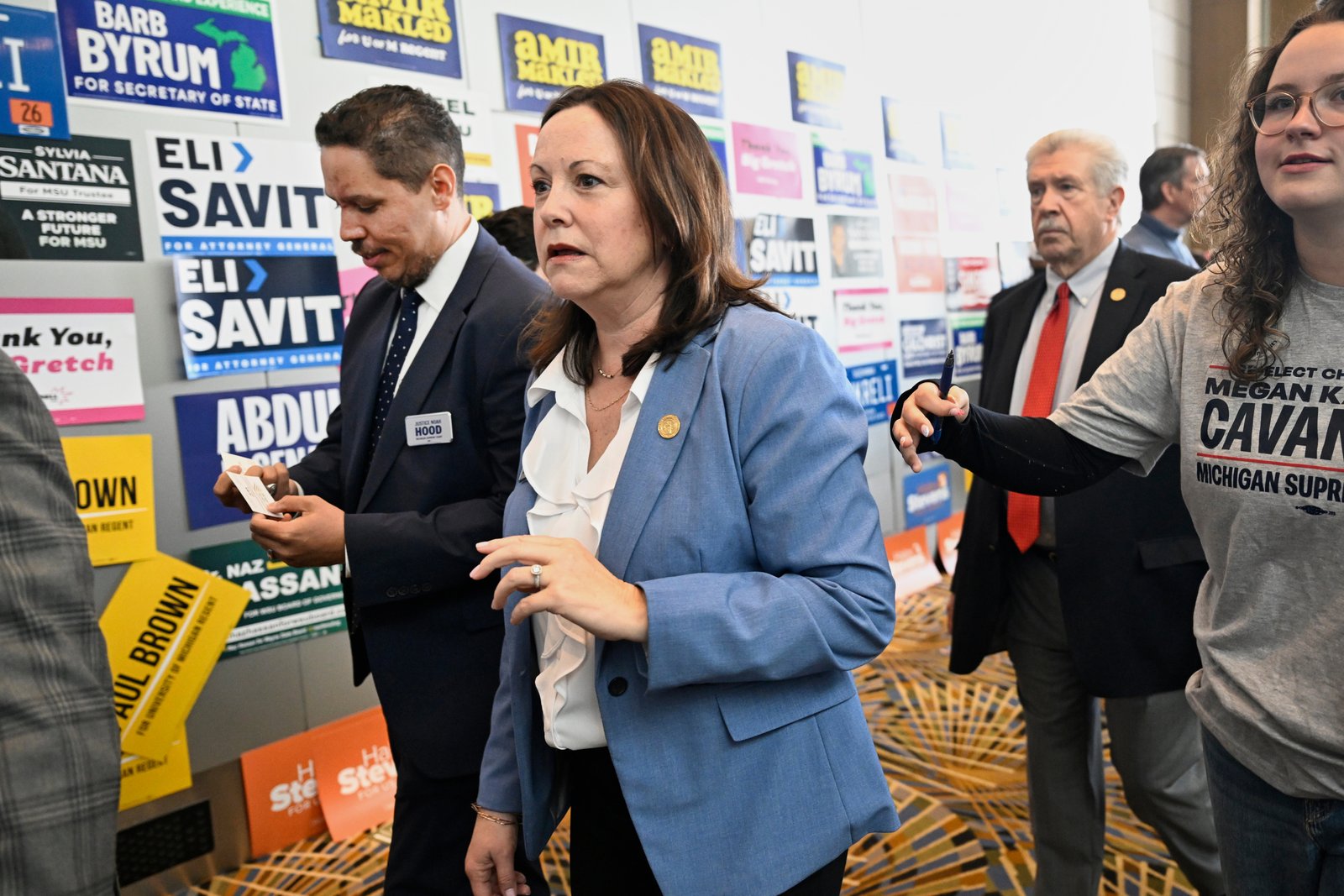
By contrast, the electoral headwinds have forced Republicans to defend statewide offices and state legislatures they currently control, leaving fewer resources for the judicial races.
Republican-aligned groups like the Republican State Leadership Committee — the party’s chief downballot campaign organization — have largely stayed on the sidelines this cycle after warning for months they were being swamped by Democrats. The organization’s judicial affiliate reported more than $5 million in expenditures across 2024 and 2025.
“Democrats understand what is at stake, and have dumped massive amounts of resources into these contests,” said RSLC President Edith Jorge-Tuñón in a statement. “The RSLC is fighting back with smart and targeted spending because the investments we make today will determine whether we are positioned to protect our majorities, compete in the next redistricting cycle, and secure Republican victories for years to come.”
The National Democratic Redistricting Committee — the party’s main redistricting-focused group — declined to discuss this year’s total spending in judicial races this year, but NDRC President John Bisognano said in a statement that “the upcoming 2026 and 2028 state supreme court elections are critical to the long-term fight to protect democracy.”
And those involved in supreme court fights said they believed spending will only increase down the road, particularly from major industry players.
“I think that the money flowing into those races from external interests tells the tale of what big money, big pharma, big data recognize about the next areas that they can seek to leverage and control to their benefit,” said Tish Gotell Faulks, the state courts director at the liberal Alliance for Justice Action. “Those interests are now turning to the state courts and seeking to capture those courts as well.”


Democratic Rep. Haley Stevens endorsed Republican Mike Rogers in the Michigan Senate race on Sunday — a stunning break with her party that derails Democrats’ attempts to create a united front for Abdul El-Sayed.
Her endorsement comes just a few days after she said she was going to vote for El-Sayed.
The two former primary rivals have been locked in a public, escalating feud over El-Sayed’s and his allies’ criticism of Israel.
“Abdul said that I was no longer welcome in his campaign and that I should stay away. And he’s right,” Stevens said in a video posted to social media on Sunday after she appeared at a Detroit church alongside Rogers.
“And that’s why I am endorsing Mike Rogers for the United States Senate today,” she said. “I don’t belong in Abdul’s campaign.”
For Democrats, the size of their victory matters.
Progressives and moderates have been sparring all cycle over who will get to claim credit if they win on Tuesday. A new POLITICO Poll shows that the bigger the win, the more Democrats appear inclined to see it as a mandate to run more progressive candidates.
A smaller-than-expected victory next week would leave the party — and voters — torn over which direction to go.
The results reveal that the midterm election will have major implications over the next stage of the Democratic Party war over their identity — and could give progressives fresh ammunition ahead of a critical 2028 presidential race. Party insiders are closely watching contests where that infighting has been on display: From Abdul El-Sayed’s battle for Michigan Senate and Troy Jackson’s for Maine Senate, to Randy Villegas’ House race in California and Manny Rutinel’s in Colorado.
More than a dozen Democratic Party operatives and strategists said in interviews that both factions are already preparing to see a blue wave as validation of its own approach. Top super PACs and campaign firms are finishing strategy memos and finalizing lineups for a slate of post-election conferences where they intend to claim their way is the party’s future.
“You know what they say: Victory has a thousand mothers, right?” said Oliver Libby, the Democratic author behind the book “Strong Floor, No Ceiling,” which became a rallying cry for House Minority Leader Hakeem Jeffries this cycle.
The survey, conducted by PF Global, found Democrats are nearly evenly split over what a smaller-than-expected victory next week would mean for future elections: 37% said it would signal a need to run more progressive candidates in the next election, while 35% said it would show the party should run more moderates. Another 28% said they didn’t know.
Those divisions largely fall along ideological lines. Among self-identified progressives, 52% said a smaller-than-expected victory would show that Democrats should run more progressive candidates. Meanwhile, a 45% plurality of self-identified moderates said that the same result would be evidence that the party should nominate more moderates, while just 28% percent said to run more progressives.
But if Democrats sweep key races — presented in the survey as a “large victory” — both progressives and moderates move toward running more progressive candidates in the next election. A majority of self-identified progressives — 61% — said it would show that the party should run more progressive candidates, while 35% of self-identified moderates agreed (compared with the 28% who said this for a smaller margin of victory).
A majority of Democratic midterm voters, including majorities of both self-identified progressives and moderates, also said a large victory would mean the party has a winning strategy for the 2028 presidential election, according to the poll.
“If Democrats had half a brain cell, they would look for the things that those two movements have in common,” said Chuck Rocha, a veteran Democratic strategist who has advised prominent candidates in both camps. “Whoever can combine these two things is who’s going to end up being somebody who is going to be a stalwart in ‘28.”
Progressives are eager for Tuesday’s results to bolster their argument that the party should move further to the left and that their candidates can win in competitive general elections. They’ve spent years feeling like they were being discounted by the party’s establishment wing, which was convinced that only more moderate candidates could cut into Trump’s coalition.
Progressives have cast a slate of battleground House and Senate races where their candidates felled more moderate primary rivals as major proof points — none more so than El-Sayed in purple Michigan’s marquee Senate race. A victory there, they say, could help springboard some of their biggest stars, like Reps. Alexandria Ocasio-Cortez (D-N.Y.) and Ro Khanna (D-Calif.), for presidential bids. Both representatives and a slate of other progressive surrogates up through Sen. Bernie Sanders (I-Vt.) have hit the trail to help.
“Our North Star in 2026 is to prove the concept that bold, shake up the system economic fighters can win anywhere, including purple and red areas, as a prelude to the presidential election in 2028,” said Adam Green, co-founder of the Progressive Change Campaign Committee. “We think we will have plenty to work with after the election. For us, Abdul is Exhibit A.”
PCCC is drafting a memo touting what it predicts as “two common themes in election winners: Outsiders and economic fighters who challenge corporate power,” according to a draft viewed by Blue Light News.
Moderates, meanwhile, are poised to point to results as evidence that building broad coalitions can help Democrats compete in Republican strongholds.
“The interpretation game is already under way,” said Matt Bennett, co-founder of the centrist think-tank Third Way, which has been conducting advertising analysis and polling the electorate, with plans to release its findings after Election Day. “[Progressives] are going to cherry pick the couple of races that they win, and they are going to say, therefore … everybody should go to the left.”
A memo from The Bench — a Democratic organization that supports candidates with real-world experience, such as teachers, nurses or veterans — touts recruits like James Talarico in Texas and Adam Hamilton in Kansas as evidence of the strength of its approach working. Public polling shows Talarico and Hamilton in a competitive position in once-solid safe red states.
“While much of the Democratic establishment was busy studying how to talk to working people, our answer was simpler: Run them,” the memo released this week reads.
“I saw Democrats, a lot of people in the 2020 primary, adopt positions that were just electoral poison,” said Democratic strategist Lis Smith, an architect of Pete Buttigieg’s 2020 presidential campaign who is a senior adviser to The Bench and works with The Bench’s sister organization, Majority Democrats. “You had Democrats say decriminalize border crossing, defund the police, and things like that. And we just can’t go back there as a party. We’re not going to be a majority party if we go down that road again.”
A new memo obtained by Blue Light News from Blue Dog PAC, a moderate Democratic group chaired by Rep. Adam Gray (D-Calif.), already makes the case that there was a “Blue Dog overperformance in 2024 and the Trump era.” It points to over a dozen House races the group is involved in that were initially rated as “Solid Republican” or “Likely Republican” by the Cook Political Report, and are finishing the cycle in the “Lean Republican,” “Toss Up” and “Lean Democratic” columns.
But some Democrats say that all this focus on who won the progressive-moderate fight is missing the point entirely.
“Actually doing something if we do win majorities, that’s more important than a bunch of memos saying we’re the reason we won,” said Bill Neidhardt, who worked on Bernie Sanders’ 2020 presidential campaign and is now advising Will Lawrence, who’s running for Michigan’s 7th District, and working to boost El-Sayed.
“Whether one super PAC says to the other super PAC, ‘We’re the better super PAC’ — I just think if that’s what victory looks like to you in 2026, you’re going to set the Democrats up to lose in 2028,” he added.
- Democrats eye state supreme court races — this year and beyond

- The trust-busters going after CVS are Republicans
- New York Republicans bet anger at Albany can blunt a Trump backlash
- Shapiro’s strategy for tackling measles outbreak: Don’t listen to RFK Jr.
- Democratic Rep. Haley Stevens endorses Republican Mike Rogers for Michigan Senate
- Chris Murphy is hospitalized after stroke
- November 2026
- Why a MAHA mom who loves RFK Jr. is backing Democrats who don’t
- Progressives and moderate Dems are already jockeying to claim credit for Tuesday
- Raphael Warnock is ‘nauseously optimistic’ about Dem’s midterm chances

-

 Politics2 years ago
Former ‘Squad’ members launching ‘Bowman and Bush’ YouTube show
-
Uncategorized2 years ago
Bob Good to step down as Freedom Caucus chair this week
-

 The Josh Fourrier Show2 years ago
DOOMSDAY: Trump won, now what?
-

 Politics1 year ago
John Legend advises Trump to drop the ‘dictator s‑‑‑’ if he wants Nobel Peace Prize
-

 The Dictatorship2 years ago
Pete Hegseth’s tenure at the Pentagon goes from bad to worse
-

 Politics2 years ago
Former Kentucky AG Daniel Cameron launches Senate bid
-

 The Dictatorship2 years ago
Luigi Mangione acknowledges public support in first official statement since arrest
-

 Politics2 years ago
Blue Light News’s Editorial Director Ryan Hutchins speaks at Blue Light News’s 2025 Governors Summit