
Politics
Democratic panic runs much deeper than Kamala Harris’ polls

There is one question that dominates every political conversation and every group chat in Democratic enclaves across America, and it’s not “Will Kamala Harris win the election?” It’s “How is Donald Trump this close to winning?”
Some of this concern is typical in every modern election. Republicans radiate confidence while Democrats fret. Political science also provides a simple answer to Trump’s continued popularity. We live in a narrowly divided country where Republicans traditionally vote for Republican candidates — and the same goes for Democrats. Every modern election is relatively close. Incumbent parties around the world and across the political spectrum have struggled after the pandemic and related inflation increases.
For many Democrats, Trump’s continued viability as a presidential candidate speaks to something more fundamental and concerning.
Emotionally, however, this is hardly a satisfactory answer. For many Democrats, Trump’s continued viability as a presidential candidate speaks to something more fundamental and concerning: How can someone as odious and malignant as Trump maintain so much popular support?
It’s not just that Trump’s four years in office were defined by unimaginable incompetence, venality, chaos and cruelty. It’s not just that he is a convicted felon who spurred an insurrection and still refuses to accept the results of the 2020 election. It’s not just that many Democrats can’t comprehend why anyone would want to return to those days.
The larger and more disquieting issue is the campaign Trump is running right now: one that is as vile and as openly racist as any campaign in perhaps all of American history — and that includes his previous runs for the White House.
Virtually Trump’s entire message to voters this year is about the alleged threat represented by immigrants — both legal and illegal. A recent review of his speeches by Blue Light News summarized them this way: “Trump has demonized minority groups and used increasingly dark, graphic imagery to talk about migrants in every one of his speeches since the Sept. 10 presidential debate.”
More than ever, Trump’s rhetoric is steeped in racism, xenophobia and dehumanization. He routinely calls immigrants “vermin” and says they are “poisoning the blood” of the country. He claims they are “stone-cold killers,” “animals” and “the worst people” who will “cut your throat.” (This is, unsurprisingly, not true. Crime rates among immigrants are lower than those among native-born Americans.) Last week in Colorado, he called migrants from Latin America, Congo and the Middle East “the most violent people on Earth.” He also accused Harris of importing “an army of illegal alien gang members and migrant criminals from the dungeons of the Third World … to prey upon innocent American citizens.” He’s even suggested that nonwhite immigrants have “bad genes” that make them genetically inferior.
This is fascist rhetoric. More specifically, it’s Nazi rhetoric. But the crowds at Trump’s rallies aren’t horrified by such language. They lap it up.
Is this really what America has become?
Trump is openly trafficking in racial fear and paying little political price for doing so. The centerpiece of Trump’s immigration policy is a call for massive detention camps and the mass deportation of illegal migrants. At this summer’s Republican National Convention, the GOP printed up and distributed thousands of signs to the assembled delegates that read “Mass Deportation Now.” Trump has even suggested that migrants who are in the country legally must be deported — like the Haitian migrants in Springfield, Ohio, whom he has repeatedly and falsely accused of eating dogs and cats.
There are surely voters who take Trump seriously but not literally — and refuse to believe he will follow through on his rhetoric. But when Trump was president, his administration initiated a policy of forcibly separating young children from their parents as a tool for deterring illegal immigration. And even if Trump doesn’t mean it now, why would these voters want to associate themselves with language not dissimilar from actual Nazis?
It’s not just Trump’s language about immigrants that is so troubling. I’m old enough to remember when George H.W. Bush calling his opponents “bozos” in 1992 was considered untoward. Hillary Clinton was vilified for referring to half of Trump’s supporters as “deplorable.” Now, Trump regularly refers to his political opponents as “an enemy within.” He has talked about taking “retribution” against Democrats, whom he calls “evil.” In recent days, he’s even suggested he would unleash the U.S. military on his political rivals.
Trump’s ability to carry out such threats might be constrained by the courts and even the military’s own unwillingness to conduct illegal domestic operations. But that hardly seems like a risk worth taking.
Yet the bigger danger of a Trump campaign is that so many Americans will go to the polls and validate Trump’s bigotry, violent rhetoric and divisiveness. For more than a few Democrats, the lack of political backlash from comments that would spell the end of any other presidential campaign is, as much as the tight polling margin, what has made this presidential campaign so uniquely unsettling. Is this really what America has become?
Many Democrats would have viewed the election of John McCain in 2008 or Mitt Romney in 2012 as disastrous events, but hardly ones that made them question the sustainability of the American experiment in representative democracy. A Trump victory would represent something very different — the endorsement of a national ethos that runs utterly contrary to the arc of modern American history, which has imperfectly bent toward justice.
Even if Trump loses, he will still likely get 45%-47% of the popular vote. How does America move forward when so many of our fellow citizens embrace a candidate and a message so fundamentally un-American? Defeating Trump is obviously essential, but as this presidential election, like the two before it, has made clear, America is a very different place than many of us imagined.

Michael A. Cohen is a columnist for BLN and a Senior Fellow and co-director of the Afghanistan Assumptions Project at the Center for Strategic Studies at the Fletcher School, Tufts University. He writes the political newsletter Truth and Consequences. He has been a columnist at The Boston Globe, The Guardian and Foreign Policy, and he is the author of three books, the most recent being “Clear and Present Safety: The World Has Never Been Better and Why That Matters to Americans.”


President Donald Trump has invited a group of GOP lawmakers including Republicans in competitive races to dine with him Wednesday night at the White House as many in the party press the president to unleash his massive war chest ahead of the November elections, according to four people with direct knowledge of the matter.
The White House plans to hold the dinner in the Rose Garden, according to two of the people who know about the invitation. The people were granted anonymity to discuss private planning. Some House Republicans in tough races were sent invitations, including Reps. Derrick Van Orden (R-Wis.) and Tom Barrett (R-Mich.), who are planning to attend, along with a wider group of GOP lawmakers and senators.
“Of course,” Van Orden said when asked if he would go to the dinner.
The White House invited at least several dozen lawmakers, according to two people familiar with the invitation list. The dinner also comes ahead of next week’s GOP midterm convention in Dallas, though attendance from Republican lawmakers is expected to be mixed. Barrett, for example, said in an interview Tuesday he is not planning to attend the convention and will instead campaign and spend time with his family. A White House spokesperson did not immediately respond to a request for comment.
Trump’s political operation, MAGA Inc., has spent little of its $400 million war chest to help GOP lawmakers. But he recently helped boost Sen. Darline Graham over the line in her heated primary.
Senate Republicans are eager for him to start spending for Ken Paxton in Texas as he has thus far been outspent on the airwaves by Democrat James Talarico and his allies.
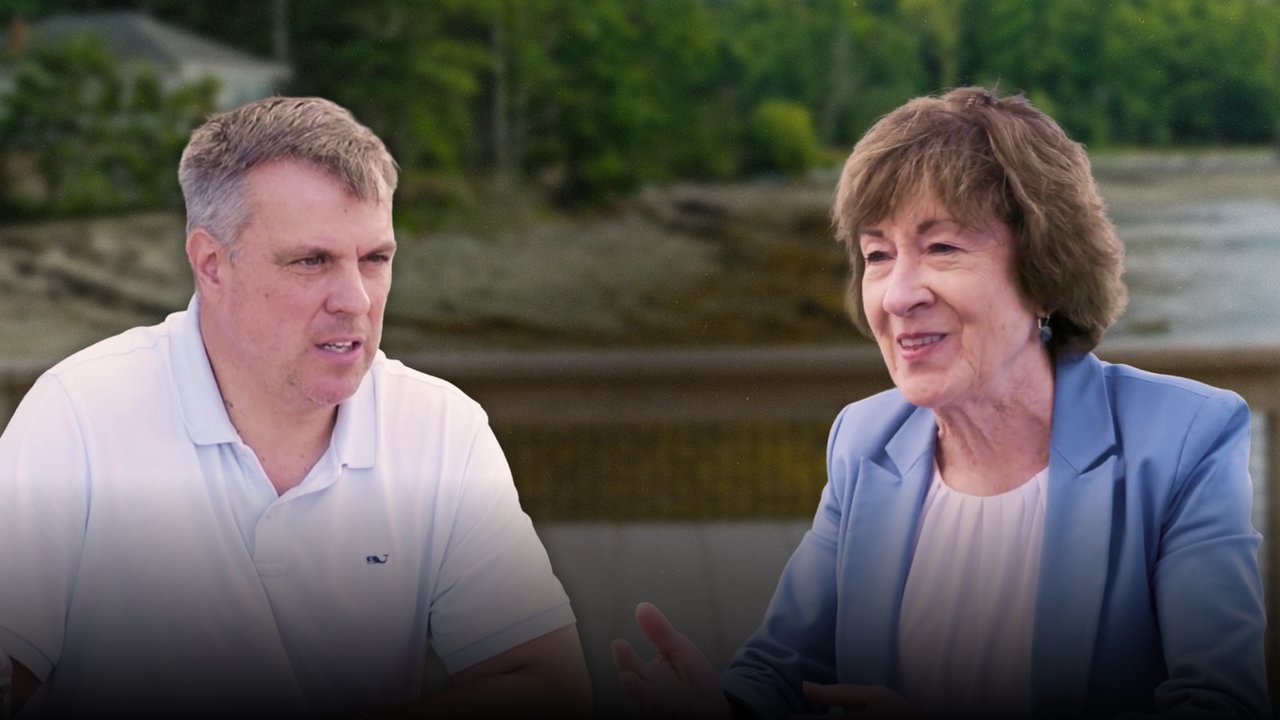
Susan Collins on Trump, tariffs and her fight for Maine
lead image
LAS VEGAS — Vice President JD Vance tried to make inroads with Jewish Republicans. Not everyone is sold.
Vance’s closed-door speech at the Republican Jewish Coalition’s annual leadership summit Monday night went a long way in alleviating top pro-Israel donors’ concerns about his support for the U.S.-Israeli relationship, and it cemented their view that Vance would be a preferable choice to whomever the Democratic Party nominee is in 2028.
But some attendees still have questions for Vance — particularly around his relationship with conservative pundit Tucker Carlson, who has long drawn ire from the Republican Jewish leaders for his criticism of Israel and outraged many when he hosted the antisemite Nick Fuentes for a lengthy podcast interview last year.
“He allayed a lot of concern, but he failed to address his relationship with Tucker Carlson, and that left a lot of people wondering why,” said Josh Katzen, a real estate developer and member of the RJC board, speaking in his personal capacity.
Vance, the current front-runner for the Republican nomination in 2028, has long faced skepticism from Jewish Republicans who question his commitment to the U.S.-Israeli relationship and his response to antisemitism within the GOP. In his speech Monday, he took both issues head-on, and largely appeased the skeptical crowd with his answers, declaring that “Jew-hatred is corrosive to the soul” and saying Republicans need to articulate to young Americans why an alliance with Israel is in the best interest of the U.S.
But his meandering response to a question about Carlson and other podcasters left some in attendance yearning for more.
“A few names: Tucker Carlson, Megyn Kelly, Joe Rogan, Nick Fuentes. They have platformed antisemites,” former Sen. Norm Coleman (R-Minn.), the RJC’s board chair, asked Vance. “How do you draw the line, in terms of … the platforms that you appear on?
“I recognize a lot of people in this room may disagree with things that Tucker Carlson or Megyn Kelly or Joe Rogan have said,” Vance said, before pivoting to discuss Rogan and Fuentes, saying those are “two very, very different categories of people” and suggesting people like Rogan should be reasoned with, even when there are disagreements.
The answer was not sufficient to some, who wonder about his longtime relationship with Carlson. Vance was a regular on Carlson’s Fox News show and creditedCarlson for helping carry him to victory in his 2022 U.S. Senate primary in Ohio. In 2024, Carlson pushed for Trump to pick Vance as his running mate.
“JD Vance allying himself with an individual who has called for Trump’s immediate removal from office will make it harder for many of us Jewish conservatives to consider his candidacy,” said Shabbos Kestenbaum, a pro-Israel campus activist who spoke at the Republican National Convention in 2024 and spoke at last year’s RJC conference. “We hope this issue is resolved quickly so we can focus on policy, not personality.”
Eric Levine, a major GOP donor and member of the RJC board, said Vance could’ve had “an incredible Sister Souljah moment” if he took on Carlson.
“In my view, on the issue of Jews and Israel, there is no difference between Hasan Piker, Zohran Mamdani, Abdul El-Sayed and the DSA writ large on the one hand and Tucker Carlson, Nick Fuentes, Marjorie Taylor Green and neo-Nazis on the other hand,” said Levine, speaking in his personal capacity. “That is why I wish the vice president had unambiguously separated himself and condemned Tucker by name.”
Conservative radio host Sid Rosenberg also wasn’t satisfied. Just hours after urging RJC attendees in a speech onstage to “give Vance a chance,” he was critical of how Vance handled that opportunity.
“He had a chance to hammer @TuckerCarlson and @megynkelly but instead spent all his time defending @joerogan over Nick Fuentes,” Rosenberg wrote on X. “Look, he’s still better than any Democrat candidate but I don’t think he wowed the STRONG Jews in the room tonight.”
Carlson, in a text message, said, “An organization that promotes and defends genocide is continuing to insist that they’re the real victims? I can’t imagine who buys this nonsense anymore.”
Human rights groups have accused Israel of genocide over its conduct in the war in Gaza, which the country’s leaders vehemently deny. Vance’s office did not respond to a request for comment for this story.
An individual close to Vance, granted anonymity to describe sentiment within the vice president’s orbit, said there was no illusion Vance would win over every person in attendance, “or that every single person would love every single answer.”
“The goal was to lower the temperature, extend an olive branch, and make clear that the vice president is an ally, not an enemy,” the person said, arguing that goal was “achieved.”
Sam Markstein, spokesperson for the RJC, emphasized that the organization is a coalition.
“There will always be many opinions within the organization,” Markstein said. “In an hour when too many public figures are walking away from the Jewish community and the U.S.-Israel relationship, the Republican Jewish Coalition will always stand with the leaders who show up. Vice President JD Vance shows up — and received multiple standing ovations with thunderous applause.”
Vance, who was elected to the Senate in 2022, faces a fundamental disadvantage among potential Republican 2028ers: He’s still a relative newcomer to the Republican political scene.
Others, like Secretary of State Marco Rubio and Sen. Ted Cruz (R-Texas), have developed relationships with pro-Israel Republicans in both the Jewish and evangelical Christian communities for years, going well back before their respective 2016 presidential runs. Rubio has pushed to revoke visas from individuals accused of promoting antisemitism or supporting terrorism. Cruz has publicly sparred with Carlson, criticizing him of antisemitism. A Cruz-aligned nonprofit recently launched to take on right-wing antisemitism.
Vance’s speech was his first at an RJC leadership summit, though he attended in 2022. It was the first time since 2019 a sitting president or vice president attended the conference, which draws some of the country’s most influential Republican donors.
Not being a favorite among RJC leaders wasn’t an impediment to Donald Trump’s political outsider 2016 presidential bid. During that campaign, he was accused of invoking antisemitic stereotypes during a speech to the RJC and in a social media post. But upon taking office, he formed a strong relationship with Israeli Prime Minister Benjamin Netanyahu, culminating in the Abraham Accords and moving the U.S. embassy from Tel Aviv to Jerusalem. Speakers at the RJC’s two-day summit this week frequently referred to Trump as the most pro-Israel president in U.S. history.
But Rubio and Cruz have been fixtures at past iterations of the RJC’s annual leadership summit, and they maintain strong ties with the group’s leadership. (None have announced whether they’ll seek the presidential nomination, though Rubio has stated he will not run if Vance does.)
Many attendees said Rubio is still the favorite amongst the crowd.
“Every time Marco Rubio’s name is mentioned in this conference, there’s a spontaneous round of applause,” said Katzen, the RJC board member. Indeed, when Rosenberg urged attendees to welcome Vance in a speech Monday, he mentioned the hypothetical, “If Marco Rubio was here tonight—” and was drowned out by applause.
Should Rubio not run for the nomination against Vance, other observers think Cruz will have the inside lane among the RJC crowd.
“Ted Cruz is loved here, and he deserves to be loved here,” said Levine, prior to Vance’s speech. “Look, if it’s Cruz and Vance, I expect that this crowd would be 90 percent Cruz.”
Ari Fleischer, an RJC board member and a former White House press secretary, said Vance made inroads — but building a relationship with the pro-Israel community takes time.
“It’s fair to say hearts and minds are changing, but I think it’s also fair to say that when you come before the Republican Jewish Coalition, it’s like when you come to New Hampshire to campaign,” Fleischer said. “After the third or fourth time, we let you know how you’re doing.”
- No immediate plans to punish rogue House Democrats for bailing out GOP
- Thune: Data centers should be ‘self-sufficient’
- Mike Johnson says he has ‘no plans’ to campaign with Max Miller
- Introducing Rep. Aisha Wahab
- Trump invites battleground Republicans to Rose Garden dinner
- Capitol agenda: GOP does Dallas? Not so much
- Republicans struggle for footing on data center response ahead of midterms
- Susan Collins on Trump, tariffs and her fight for Maine

- Hospitals say coming Trump administration rules are worse than GOP’s Medicaid cuts
- Congress warms to Trump’s Hollywood tax credit effort
-

 Politics2 years ago
Former ‘Squad’ members launching ‘Bowman and Bush’ YouTube show
-
Uncategorized2 years ago
Bob Good to step down as Freedom Caucus chair this week
-

 Politics2 years ago
Former Kentucky AG Daniel Cameron launches Senate bid
-

 The Dictatorship2 years ago
Luigi Mangione acknowledges public support in first official statement since arrest
-

 The Josh Fourrier Show2 years ago
DOOMSDAY: Trump won, now what?
-

 Politics2 years ago
Blue Light News’s Editorial Director Ryan Hutchins speaks at Blue Light News’s 2025 Governors Summit
-

 The Dictatorship2 years ago
Pete Hegseth’s tenure at the Pentagon goes from bad to worse
-

 The Dictatorship12 months ago
Mike Johnson sums up the GOP’s arrogant position on military occupation with two words