
Politics
Democratic panic runs much deeper than Kamala Harris’ polls

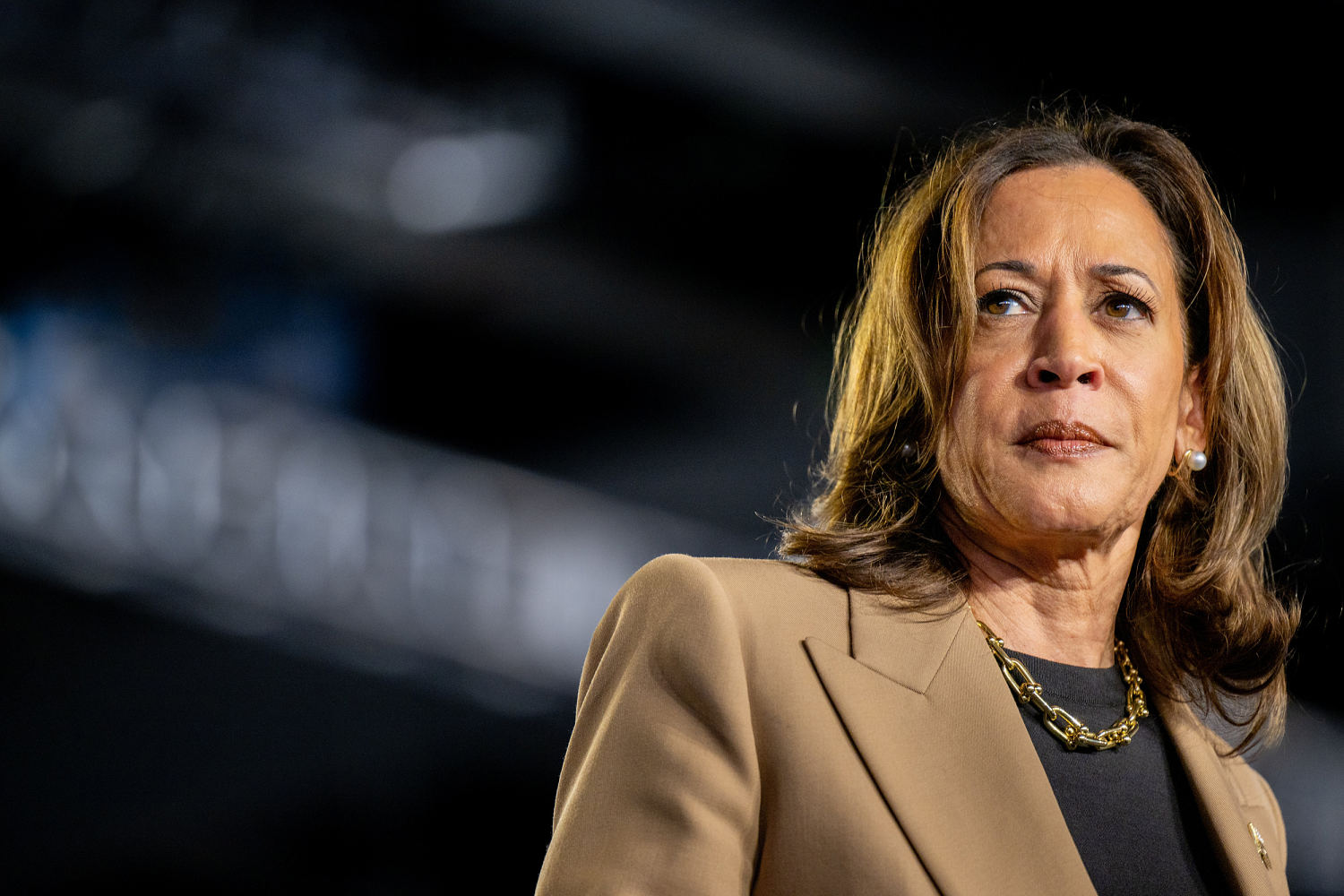
There is one question that dominates every political conversation and every group chat in Democratic enclaves across America, and it’s not “Will Kamala Harris win the election?” It’s “How is Donald Trump this close to winning?”
Some of this concern is typical in every modern election. Republicans radiate confidence while Democrats fret. Political science also provides a simple answer to Trump’s continued popularity. We live in a narrowly divided country where Republicans traditionally vote for Republican candidates — and the same goes for Democrats. Every modern election is relatively close. Incumbent parties around the world and across the political spectrum have struggled after the pandemic and related inflation increases.
For many Democrats, Trump’s continued viability as a presidential candidate speaks to something more fundamental and concerning.
Emotionally, however, this is hardly a satisfactory answer. For many Democrats, Trump’s continued viability as a presidential candidate speaks to something more fundamental and concerning: How can someone as odious and malignant as Trump maintain so much popular support?
It’s not just that Trump’s four years in office were defined by unimaginable incompetence, venality, chaos and cruelty. It’s not just that he is a convicted felon who spurred an insurrection and still refuses to accept the results of the 2020 election. It’s not just that many Democrats can’t comprehend why anyone would want to return to those days.
The larger and more disquieting issue is the campaign Trump is running right now: one that is as vile and as openly racist as any campaign in perhaps all of American history — and that includes his previous runs for the White House.
Virtually Trump’s entire message to voters this year is about the alleged threat represented by immigrants — both legal and illegal. A recent review of his speeches by Blue Light News summarized them this way: “Trump has demonized minority groups and used increasingly dark, graphic imagery to talk about migrants in every one of his speeches since the Sept. 10 presidential debate.”
More than ever, Trump’s rhetoric is steeped in racism, xenophobia and dehumanization. He routinely calls immigrants “vermin” and says they are “poisoning the blood” of the country. He claims they are “stone-cold killers,” “animals” and “the worst people” who will “cut your throat.” (This is, unsurprisingly, not true. Crime rates among immigrants are lower than those among native-born Americans.) Last week in Colorado, he called migrants from Latin America, Congo and the Middle East “the most violent people on Earth.” He also accused Harris of importing “an army of illegal alien gang members and migrant criminals from the dungeons of the Third World … to prey upon innocent American citizens.” He’s even suggested that nonwhite immigrants have “bad genes” that make them genetically inferior.
This is fascist rhetoric. More specifically, it’s Nazi rhetoric. But the crowds at Trump’s rallies aren’t horrified by such language. They lap it up.
Is this really what America has become?
Trump is openly trafficking in racial fear and paying little political price for doing so. The centerpiece of Trump’s immigration policy is a call for massive detention camps and the mass deportation of illegal migrants. At this summer’s Republican National Convention, the GOP printed up and distributed thousands of signs to the assembled delegates that read “Mass Deportation Now.” Trump has even suggested that migrants who are in the country legally must be deported — like the Haitian migrants in Springfield, Ohio, whom he has repeatedly and falsely accused of eating dogs and cats.
There are surely voters who take Trump seriously but not literally — and refuse to believe he will follow through on his rhetoric. But when Trump was president, his administration initiated a policy of forcibly separating young children from their parents as a tool for deterring illegal immigration. And even if Trump doesn’t mean it now, why would these voters want to associate themselves with language not dissimilar from actual Nazis?
It’s not just Trump’s language about immigrants that is so troubling. I’m old enough to remember when George H.W. Bush calling his opponents “bozos” in 1992 was considered untoward. Hillary Clinton was vilified for referring to half of Trump’s supporters as “deplorable.” Now, Trump regularly refers to his political opponents as “an enemy within.” He has talked about taking “retribution” against Democrats, whom he calls “evil.” In recent days, he’s even suggested he would unleash the U.S. military on his political rivals.
Trump’s ability to carry out such threats might be constrained by the courts and even the military’s own unwillingness to conduct illegal domestic operations. But that hardly seems like a risk worth taking.
Yet the bigger danger of a Trump campaign is that so many Americans will go to the polls and validate Trump’s bigotry, violent rhetoric and divisiveness. For more than a few Democrats, the lack of political backlash from comments that would spell the end of any other presidential campaign is, as much as the tight polling margin, what has made this presidential campaign so uniquely unsettling. Is this really what America has become?
Many Democrats would have viewed the election of John McCain in 2008 or Mitt Romney in 2012 as disastrous events, but hardly ones that made them question the sustainability of the American experiment in representative democracy. A Trump victory would represent something very different — the endorsement of a national ethos that runs utterly contrary to the arc of modern American history, which has imperfectly bent toward justice.
Even if Trump loses, he will still likely get 45%-47% of the popular vote. How does America move forward when so many of our fellow citizens embrace a candidate and a message so fundamentally un-American? Defeating Trump is obviously essential, but as this presidential election, like the two before it, has made clear, America is a very different place than many of us imagined.

Michael A. Cohen is a columnist for BLN and a Senior Fellow and co-director of the Afghanistan Assumptions Project at the Center for Strategic Studies at the Fletcher School, Tufts University. He writes the political newsletter Truth and Consequences. He has been a columnist at The Boston Globe, The Guardian and Foreign Policy, and he is the author of three books, the most recent being “Clear and Present Safety: The World Has Never Been Better and Why That Matters to Americans.”


The Trump administration identified five policy points it is willing to codify…
Read More
Threats from some hard-right House Republicans to block any Senate bill until the SAVE America Act passes appear to be falling flat. A bill from Sen. Joni Ernst (R-Iowa) to reauthorize small business grant programs passed 345-41 Tuesday, a day after another Senate bill, aimed at recovering Nazi-looted art…
Read More
The bill is at the center of an intense GOP fight over the “talking filibuster.”…
Read More
- The Latest: Trump seeks help opening the Strait of Hormuz as Iran war chokes oil shipping

- The Senate’s marathon elections debate is dividing Republicans, not Democrats
- White House releases DHS funding offer
- Senate bills survive
- Senate launches debate on SAVE America Act with endgame uncertain

- Republicans hope Mullin will turn the page at DHS from Noem. Democrats aren’t buying it.

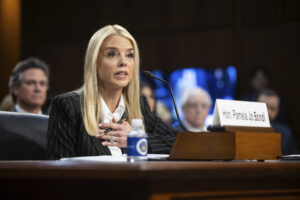
- Comer subpoenas Attorney General Pam Bondi over Epstein files
- AIPAC faces calls to reassess strategy after split results in Illinois
- BBC asks a court to dismiss Trump’s $10 billion lawsuit

- King of Illinois: Pritzker swings senate race as he targets Trump

-

 The Dictatorship1 year ago
Luigi Mangione acknowledges public support in first official statement since arrest
-

 Politics1 year ago
Former ‘Squad’ members launching ‘Bowman and Bush’ YouTube show
-

 Politics1 year ago
Blue Light News’s Editorial Director Ryan Hutchins speaks at Blue Light News’s 2025 Governors Summit
-

 Politics1 year ago
Former Kentucky AG Daniel Cameron launches Senate bid
-

 The Dictatorship6 months ago
Mike Johnson sums up the GOP’s arrogant position on military occupation with two words
-

 The Dictatorship1 year ago
Pete Hegseth’s tenure at the Pentagon goes from bad to worse
-

 Politics11 months ago
Democrat challenging Joni Ernst: I want to ‘tear down’ party, ‘build it back up’
-
Uncategorized1 year ago
Bob Good to step down as Freedom Caucus chair this week