
The Dictatorship
Democratic-led states sue Trump administration over $600M in health cuts



Four Democratic-led states that have become frequent targets of President Donald Trump sued Wednesday to try to block his administration from cutting off hundreds of millions in public health grants.
The Department of Health and Human Services told Congress on Monday that it planned to withhold about $600 million in grant funding allocated to the four states: California, Colorado, Illinois and Minnesota. Their attorneys general argue the cuts are backlash for the states’ opposition to Trump’s immigration crackdown.
The lawsuit says the cuts violate the Constitution by imposing retroactive conditions on funding and asks a federal court in Illinois to block them from taking effect.
Some grants could be terminated as soon as Thursday, and others in the coming weeks, Colorado Attorney General Phil Weiser said.
Health officials have said the grants — several focused on LGBTQ+ people and communities of color — are “inconsistent with agency priorities” as the Trump administration has shifted away from supporting programs for specific populations. The Centers for Disease Control and Prevention revised its priorities in September, dubbing health equity an “ideologically-laden” concept that “has undermined core American values.”
Health department officials did not immediately respond to requests for comment on the lawsuit.
The administration also plans to pull hundreds of millions in transportation funding from the same four states.
Courts have temporarily blocked similar efforts by the administration to restrict federal funds.
A judge last week ruled that, for now, the administration cannot cut off billions in child care subsidies and other social service programs for lower-income people in those four states plus New York.
Several of the largest planned health funding cuts are to programs aimed at preventing the spread of HIV and other sexually transmitted infections in Chicago and Los Angeles, with a focus on adolescents, ethnic minorities and gay men.
Illinois Gov. JB Pritzker called the funding cuts “a slap in the face” to public health leaders who have stepped up as the Trump administration “takes a sledgehammer to public health infrastructure.”
The administration is also targeting a $7.2 million grant for the Chicago-based American Medical Association, noting its support for gender-affirming care for minors, which a Trump executive order opposes.
Other grants help the states track disease outbreaks and collect public health data that the CDC also uses.
California faces the largest share of the planned cuts, which Attorney General Rob Bonta said will “irreparably harm” public health in the state.
“President Trump is resorting to a familiar playbook. He is using federal funding to compel states and jurisdictions to follow his agenda,” Bonta said. “Those efforts have all previously failed, and we expect that to happen once again.”


The Dictatorship
Canadian Prime Minister Carney secures a majority government with special election wins
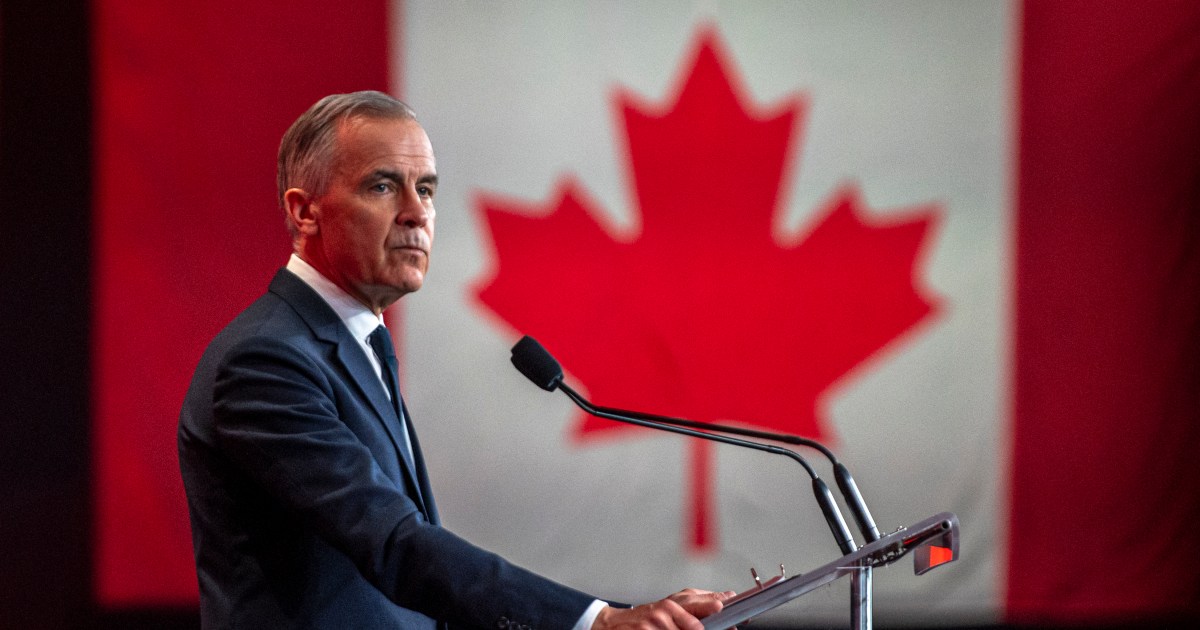
TORONTO (AP) — Canadian Prime Minister Mark Carney secured a majority government with special election wins Monday night, allowing his Liberals to pass legislation without the support of opposition parties.
Voters cast ballots for three vacant seats of the 343 districts represented in Parliament. Liberal candidate Danielle Martin won the election for the Toronto district of University Rosedale and Liberal Doly Begum won the Toronto district of Scarborough Southwest. The result for a Quebec district was expected later.
The Liberal party could stay in power until 2029 after Monday’s results.
Carney won Canada’s electionlast year fueled by public anger over U.S. President Donald Trump’s annexation threats, and he has vowed to reduce Canada’s reliance on the U.S.
Since then, five defectionsfrom opposition parties, including four from the main opposition Conservative party, put Carney’s Liberals on the cusp of the majority with 171 members of Parliament in the House of Commons.
One of those defectors referenced Carney’s speech at the World Economic Forumin Davos, Switzerland, as helping his decision. In the speech, Carney condemned economic coercion by great powers against smaller countries and received widespread praise for his remarks.
Carney, former head of the Bank of England as well as Canada’s central bank, has moved the Liberals to the center-right since replacing Justin Trudeauas prime minister in 2025.
“Congratulations to Danielle Martin, new Member of Parliament for University-Rosedale,” Carney posted on social media. “Danielle has spent her career building better public health care for Torontonians and all Canadians. Now she’s bringing her experience and determination to the House of Commons, and our country will be stronger for it.”
Daniel Béland, a political science professor at McGill University in Montreal, said the Liberals also had a shot at winning in the seat in Quebec.
Béland said the deterioration of Canada-U.S. relations under the second Trump presidency has convinced many Canadians, including people who do not identify as Liberal, to rally behind the prime minister.
“Carney has thus far proved that he is an astute politician, despite the fact that he only formally entered the political arena in January of last year,” Béland said.
“The Davos speech has certainly helped boost Carney’s support at home, and he is now significantly more popular than when he became prime minister nearly 13 months ago.”
Carney’s majority and the recent defections are another blow to Conservative leader Pierre Poilievre, who lost the previous national election last year and even his own seat in Parliament. He has since rejoined Parliament.
Poilievre won a party leadership reviewearlier this year, but continues to have problems controlling his lawmakers.
ByKnow Your Value staff
Knowing your value starts with taking ownership of your health.
That’s why Know Your Value and its founder Mika Brzezinski is partnering with the Environmental Working Group for an Earth Day event on April 22nd in Los Angeles.
We’re bringing together leading voices in environmental and women’s health for a conversation about knowing – and owning – our value…as women, movement creators and champions of environmental health.
Brzezinski recently spoke to Mark Abrials, chief marketing and sustainability officer – and co-founder at “Avocado green mattress” – one of our event sponsors – about the role companies play in advancing environmental and social responsibility.
“For Avocado … Earth Day is every day. I mean, Earth Day is built into our DNA ,” said Abrials. “I think it’s a time for consumers to just maybe reflect upon the products that they do bring into their house and maybe use it as an opportunity to dig deeper into how they’re made, how materials are sourced, because that has a direct impact on your own personal health, but also the health of the planet.”
You can watch the entire interview below:


Know Your Value staff
Strongman rule often appears unbeatable at the ballot box, but the defeat of Hungarian Prime Minister Viktor Orbán on Sunday shows even entrenched systems can be challenged with the right strategy.
Peter Hungariandisrupted Orbán’s 16-year tenure with the support of a broad, unlikely coalition united by three core messages: Orbán must go, corruption must end and Hungary must align with the West rather than Russia. He also emphasized national sovereignty and strict border control, defying easy ideological categorization.
Péter Magyar disrupted Orbán’s 16-year tenure with the support of a broad, unlikely coalition united by three core messages: Orbán must go, corruption must end and Hungary must align with the West rather than Russia.
Magyar, the ex-husband of Orbán’s former justice minister, drew on personal knowledge of the government’s inner workings and crafted a bold, patriotic campaign. His social media strategy centered on a relatable persona. This winning combination goes a long way toward reshaping what effective opposition can look like.
For years, the “Orbán playbook” served as a manual for capturing power through elections — and then systematically dismantling checks and balances, hollowing out independent institutions, and consolidating control over the media and business sphere. Now, Hungary’s politics may be offering a different kind of playbook: one for how to bring down a strongman. Three points are particularly notable.

Change can come from within
It is tempting to view everyone inside an illiberal system as complicit. But such systems are often most vulnerable to those who understand them intimately. After 16 years of failed opposition efforts, Magyar became an effective challenger thanks in part to his insider knowledge — rather than outsider credentials.
Consider: His rise began just two years ago with a Facebook post and a viral interview exposing corruption in the Orbán regime. A meteoric ascent followed. Magyar drew on his insider understanding of how Orbán’s government exerts control over business, education, the judiciary and the media. He named methods and perpetrators with a precision, and a sense of humor, that few outsiders could match, while sharply criticizing the opposition for its weakness and lack of political imagination. This positioning — outside the regime yet deeply familiar with it, and distinct from an ineffective opposition — created a powerful advantage, one that appealed to an electorate in search of change.
Patriotism must be contested, not conceded
This point resonated with Hungarians and could be equally resonant among many Americans. Orbán consolidated power not only through his control of institutions but also by monopolizing national identity. His long-standing strategy has been to frame patriotism as the exclusive domain of his political camp — and the left, to its detriment, largely ceded the point.
Along came Magyar, whose surname literally means “Hungarian,” with several methods for reversing this dynamic. From the prominent use of the national flag at campaign events to his cross-country tour in a flatbed truck decorated in the tricolor, his campaign reclaimed patriotism, visually and rhetorically, as a shared national identity rather than a partisan weapon. He gave speeches urging citizens to “take back” their country “step by step, brick by brick,” making clear with both symbols and words that patriotism is not the property of any single party.
Crucially, Magyar has avoided issues that could fracture his diverse coalition. He has largely steered clear of culture-war flashpoints, including the 2025 Pride parade in Budapest, which was banned by Orbán but more widely attended than ever. By staying laser-focused on regime change, anti-corruption and Western orientation, especially toward the European Union and NATO, he has maintained a fragile but expansive alliance across urban and rural divides and across ideological lines.
Many Hungarian voters may not support Magyar enthusiastically — but enough were eager for change that they were willing to support his campaign.
Charm matters
In a media environment where many of us pay more attention to personality than to institutions, values and factsMagyar’s energetic and athletic persona and willingness to show vulnerability at times contrasted with Orbán’s carefully curated and inherently insulated image. Social media does not simply compare ideas; it stages a continuous visual contest of bodies, lifestyles and vitality. Even Orbán’s formidable propaganda apparatus has struggled against a challenger who appeared unscripted and dynamic, which resonated as authentic.
Magyar’s ability to withstand constant propaganda attacks with a small but agile communications team, combining start-up-style social media tactics with large-scale, well-produced public events, further reinforced perceptions of him as a resilient political challenger.
Orbán’s long-standing strategy has been to frame patriotism as the exclusive domain of his political camp — and the left, to its detriment, largely ceded the point.
Even moments that would be vulnerabilities in traditional politics, such as outbursts of anger or bouts of passionate partying, ultimately contributed to his appeal as a flawed but driven figure — a Hungarian determined to bring change to his beloved country. Magyar emerged as a folk hero, set against an entrenched incumbent who appeared overweight, both politically and physically. The contest became, in part, one of masculinity; and here, too, the 45-year-old, more athletic Magyar claimed the advantage — even though 62-year-old Orbán has long cultivated an image as a sports enthusiast, especially in soccer.
As opposition movements across democracies struggle against entrenched populist leaders, Hungary’s election outcome offers cautions and insights. Success may depend less on ideological purity than on strategic adaptability. An electorate’s openness to unconventional figures, especially those who make an effective argument to reclaim patriotism, can allow for the construction of cross-ideological coalitions. Leaders must also project authenticity, particularly on social media. A broad, inclusive coalition united around change may be enough to upend even entrenched incumbents, leaving the harder questions of how to govern for the days that follow.
Julia Sonnevend is a sociology professor and co-director of the Center for the American Experience at The New School in New York City. She is the author of “Charm: How Magnetic Personalities Shape Global Politics.” She grew up in Budapest, Hungary.
- Tony Gonzales says he will resign from House

- Tony Gonzales eyed for expulsion vote after Swalwell resignation
- House Ethics opens Eric Swalwell investigation
- Trump’s decision to blockade Iran ups the ante on prices
- Canadian Prime Minister Carney secures a majority government with special election wins
- Earth Day: Why sustainability and transparency matter more than ever
- Viktor Orbán’s loss in Hungary shows how a strongman can be defeated
- Rep. Eric Swalwell to resign from Congress after news of sexual misconduct probe

- Rep. Tony Gonzales says he plans to retire from Congress
- More Americans doubt vaccine safety than trust it, Blue Light News Poll finds
-

 Politics1 year ago
Former ‘Squad’ members launching ‘Bowman and Bush’ YouTube show
-

 The Dictatorship1 year ago
Luigi Mangione acknowledges public support in first official statement since arrest
-

 Politics1 year ago
Former Kentucky AG Daniel Cameron launches Senate bid
-

 The Dictatorship1 year ago
Pete Hegseth’s tenure at the Pentagon goes from bad to worse
-

 Politics1 year ago
Blue Light News’s Editorial Director Ryan Hutchins speaks at Blue Light News’s 2025 Governors Summit
-

 The Dictatorship7 months ago
Mike Johnson sums up the GOP’s arrogant position on military occupation with two words
-
Uncategorized1 year ago
Bob Good to step down as Freedom Caucus chair this week
-

 The Josh Fourrier Show1 year ago
DOOMSDAY: Trump won, now what?