
Congress
Darline Graham is sworn in to her brother’s Senate seat

Darline Graham has officially filled the South Carolina Senate seat left vacant by the death of her brother, Sen. Lindsey Graham.
Sen. Chuck Grassley (R-Iowa) swore Graham in just after 2:30 p.m. Tuesday on the Senate floor amid applause from colleagues and staff. Graham was escorted on the floor by Sens. Tim Scott (S.C.) and Katie Britt (Ala.). She shook Grassley’s hand but did not make a separate speech.
Republicans’ swift move to fill the late senator’s seat maintains the party’s already slim margin in the chamber as it tries to advance priorities before August recess.
Graham — who makes history as the first woman to represent South Carolina in the Senate — is not a politician and little is known about her policy stances. She previously headed up the South Carolina Commission for the Blind, which connects people who are blind or have low vision to resources in the state.
Senate Majority Leader John Thune signaled Tuesday Graham could choose to stay on her brother’s committees after his sudden death. The late Graham served on Senate Budget, Judiciary, Appropriations and Environment and Public Works.
“We’ll figure out which of his committees she wants to stay on, and then we’ll go from there,” Thune told reporters.
Republicans close to the Graham family said despite the fact that her career has mostly unfolded outside of political offices, she has much in common with her late brother.
Scott Farmer, a longtime former campaign manager for her brother, said Graham’s work over the past several years has focused on streamlining work at the agency and protecting taxpayer dollars.
Farmer, who had a meeting with Graham Monday, said she shares her brother’s views “on most topics” and that both had a sense of loyalty and fiscal conservatism.
“She’s less of an extrovert than Senator Graham, but they’re both strongly grounded and opinionated,” Farmer added.
Kevin Bishop, who served as late senator’s communications director for over 25 years until 2024, said in an interview people will be “pleasantly surprised” at her similarities with her brother.
Bishop said she closely followed his work and had been involved in his campaigns so “this is not going to be a babe-in-the-woods kind of thing.”
Many Republicans Monday said they hadn’t yet met Graham’s sister but a handful, including Sens. Roger Marshall (Kansas) and Mike Rounds (S.D.) and South Carolina Reps. Joe Wilson and Sheri Biggs, said they knew her and believed she’s a good fit to carry out his legacy.
Wilson and Rep. Jim Clyburn (D-S.C.) were present on the Senate floor for Graham’s swearing in.
“She’s going to do exactly what Lindsey would have wanted her to do, and I’ve got no doubt about that,” said a person close to the Graham family, granted anonymity to speak candidly.
“She is her own person, and certainly has lived as private a life as she can, being a sister to Lindsey Graham. But … they’re cut from the same cloth.”
Graham is set to serve the remainder of her brother’s term, and an Aug. 11 primary election is underway to select a Republican candidate to run for the seat in the next Congress.


Lawmakers are under pressure to pass legislation to address the threats from advanced artificial intelligence, but many have serious doubts they have the capacity to regulate the technology’s explosive growth.
Few are expecting lawmakers themselves — some of whom still proudly use flip phones — to become AI experts overnight. But while even congressional Luddites acknowledge there is urgency for Capitol Hill to quickly expand its expertise in tech policy to help with legislating, regulating and conducting effective oversight, there’s no consensus yet on how to achieve it.
“We need to dramatically increase the base knowledge of Congress if we’re going to legislate meaningfully,” Rep. Sam Liccardo (D-Calif.) said in a recent interview.
Congress already has a long track record of lagging behind as technological innovations transform the world beyond Washington: It has adopted a largely hands-off approach to regulating the Internet as it integrated into everyday life in the past 40 years, relying instead on existing laws that govern other industries and taking smaller piecemeal bites.
The challenging political environment won’t help speed things along now: Democrats are split over whether the answer is to put guardrails on the AI industry or ban “superintelligence” entirely, while many Republicans — including President Donald Trump — warn that any regulation would stifle innovation and cede ground to China.
Some members consider themselves fluent in AI policy, including several who have joined working groups on AI policy. Reps. Jay Obernolte (R-Calif.) and Don Beyer (D-Va.) have pursued masters degrees in AI and machine learning, in addition to many others who are self-taught.
The “overwhelming number” of lawmakers have some idea of what AI is and what it is capable of, Rep. Valerie Foushee (D-N.C.), co-chair of a House Democratic commission on AI policy, said in a recent interview. But, she added, “None of us can say that we understand where it’s going.”
The larger concern is at the staff level — putting people with real expertise around the rank-and-file members who don’t have the bandwidth or interest in educating themselves on the frontier of the industry. Aides who do specialize in tech policy often get lured to the industry with huge salaries that can be hard to resist.
That’s where Travis Moore, a former congressional staffer, has spent more than a decade trying to help.
In 2015, Moore left his post as legislative director for Rep. Henry Waxman (D-Calif.) and founded TechCongress, a nonprofit that places technology experts in member and committee offices. The hope is that those offices will be convinced to hire those fellows full-time — or at least recognize the need to secure in-house tech policy expertise.
“You should have a technologist at the table to at least mitigate the unknown unknowns,” Moore said, regardless of what members themselves know about technology.
As AI has boomed, so has demand for TechCongress’ fellows: In the last two years, Moore has fielded more than 1,200 applications for about 36 fellowship slots through the program, which does not accept funding from corporations or tech companies.
Of nearly 130 fellows selected through the program since its founding, Moore said 32 were later hired full-time. Two-thirds of all the fellows have pursued careers in public service, either on Capitol Hill or other government roles.
Rep. Lori Trahan (D-Mass.), one of the leaders on AI policy on Capitol Hill, is among the offices that currently employs a TechCongress fellow. The House Judiciary Committee, the House Foreign Affairs Committee and Sen. Brian Schatz (D-Hawaii) also host fellows.
Moore says his initiative has shown there are plenty of people who want to work on Capitol Hill to help inform some of the most pressing issues of the moment — even when more lucrative salaries in the private sector beckon.
“The constraint is not talent supply,” Moore said in an interview. Rather, he said, it’s a matter of “Congress’s will and capacity to absorb that talent.”
Some on Capitol Hill are advocating for an in-house hub — something like the long-defunct Office of Technology Assessment, which helped Congress understand emerging technology and its social and policy implications from 1972 until it was scrapped in 1995.
Rep. Mark Takano (D-Calif.) has long championed efforts to revive the OTA for years and expects to reintroduce his legislation restoring the office in the coming weeks with bipartisan backing, spokesperson Austin Clark said.
Not everybody buys into the theory that staffing will solve the problem. Some conservatives, in particular, have seized on the lack of member expertise to argue for a hands-off approach to regulation.
“We don’t understand it well enough,” Sen. Cynthia Lummis (R-Wyo.), who has repeatedly brought in technology experts through the TechCongress fellowship, told reporters this month. “You can’t address it based on what policymakers know about it on a one-size-fits-all universal basis. … We don’t have the expertise to do it.”
“Do you really trust the members of Congress, who barely understand AI, to write the regulations around something?” added Rep. Eric Burlison (R-Mo.) in an interview last month.
Others don’t see a hopeless cause, but a convenient excuse.
“I understand it’s hard, but lots of things we do here are hard,” Sen. Chris Murphy (D-Conn.) said in an interview, noting that lawmakers have had to bone up quickly on everything from nuclear energy policy to complex weapons systems and advances in health care, like biologic drugs.
“I just think the industry wants us to believe that there’s seven people who understand this, and that’s just not true,” Murphy said, accusing some of his colleagues of “just throwing shit up against the wall to try to figure out how to justify doing nothing.”
A few members on both sides of the aisle have taken educating their colleagues into their own hands. Obernotle says he helped tutor more than two dozen House members through the bipartisan AI working group he chaired in the previous Congress.
Liccardo, who represents parts of Silicon Valley, recounted how he has brought in experts to brief lawmakers — including huge AI industry figures like Sam Altman of OpenAI, Dario Amodei of Anthropic and Jensen Huang of Nvidia — only to struggle to convince members to attend.
“We have had challenges in the past trying to get folks’ attention to the issues,” he said. “We have a lot of work to do, I’ll just say, to get everybody up to speed.”
Riley Rogerson, Jordain Carney and Mia McCarthy contributed to this report.
Retiring Nevada Republican Rep. Mark Amodei said he won’t vote for the Trump-endorsed GOP candidate vying to replace him amid a string of stolen valor and other accusations — and warned that the once-safe Republican seat President Donald Trump won by 14 points is at risk of flipping blue on Election Day.
Amodei said in an interview Saturday he would “absolutely not” vote for businessperson David Flippo in Nevada’s 2nd District. “I think the seat’s at risk,” he added, citing a string of stolen valor and financial allegations against Flippo.
“You say, well, the president endorsed him,” Amodei added. “It’s like, well whoever was advising the president on, ‘Hey, this would be a good place for you to go ahead and weigh in,’ gave him awful advice. The vetting process — quote unquote — must have been nearly non-existent.”
Amodei specifically cited a series of allegations against Flippo as disqualifying, for reportedly lying about his military service and also failing to file financial disclosures on time.
“It’s just one thing after another. The stolen valor accusations — all that. But you’re just sitting here going, ‘What the heck?’” Amodei said. Flippo has said apparent exaggerations about his military service on campaign materials were mistakes by his staff and others. Still, GOP officials have been weighing whether Trump should campaign in the region to help boost Flippo before Election Day, according to two people with knowledge of the matter. The district has never been represented by a Democrat.
Amodei said he plans to vote early in the coming days and “is looking seriously” at casting his ballot for the independent candidate.
Amid the deteriorating landscape, national Republicans are increasingly wary about Republicans like Flippo holding onto seats in once-safe red districts. Trump won the Northern Nevada seat that encompasses Reno and nearby rural counties by double digits in 2024 and Amodei has held it for 15 years.
On paper, Democrats should have no business playing there. And, national Republicans are still bullish on their chances of holding onto the seat, arguing it’s safer than other red districts they’re more worried about. But Republicans have watched Democrat Teresa Benitez-Thompson, a former Nevada Assembly majority leader, make the race much tighter than comfortable.
Limited general election polls have Flippo either up or trailing by several points. The Trump-aligned MAGA Inc. super PAC just dropped its first spending into the district in recent days, looking to boost Flippo who has self-funded a large part of his campaign.
Nevada Republicans — once bullish about flipping the Las Vegas-area 1st and 3rd Districts — are now paying increasing attention to Amodei’s Northern Nevada district. The economic headwinds that have hit farm states across the country have slammed Nevada’s so-called cattle counties, and demographic change in Reno has favored Democrats in recent years.
Amodei, who has refused to endorse Flippo, views him as entirely the wrong candidate for the district. Flippo is “somebody who air drops into the district,” Amodei said, “announces their intent, pulls out of another district in Las Vegas, within hours of when I said, ‘Hey, I think the time is right for me to retire.’” Amodei also questioned Flippo’s delays in filing his financial disclosures.
“It’s the cynical attitude towards the process to me that has just been staggering in terms of the end justifies the means,” Amodei added.
Amodei said he believes Republicans still have a shot at holding onto their House majority, and he’s told Speaker Mike Johnson he “sincerely” wants the Louisiana Republican to stay on as speaker next Congress.
But Amodei warned the larger landscape for House Republicans has turned darker, compared to a year ago when Republicans “were feeling pretty good, and the winds were at our back.”
“It’s gone,” he said, adding “the mood of the country right now does not feel warm.”
“There’s absolutely no, ‘Yeah, I’d rather be us than them,’” Amodei said. “It’s like everybody better button up their chin strap and be ready to play through the fourth quarter.”
Samuel Benson contributed to this report.
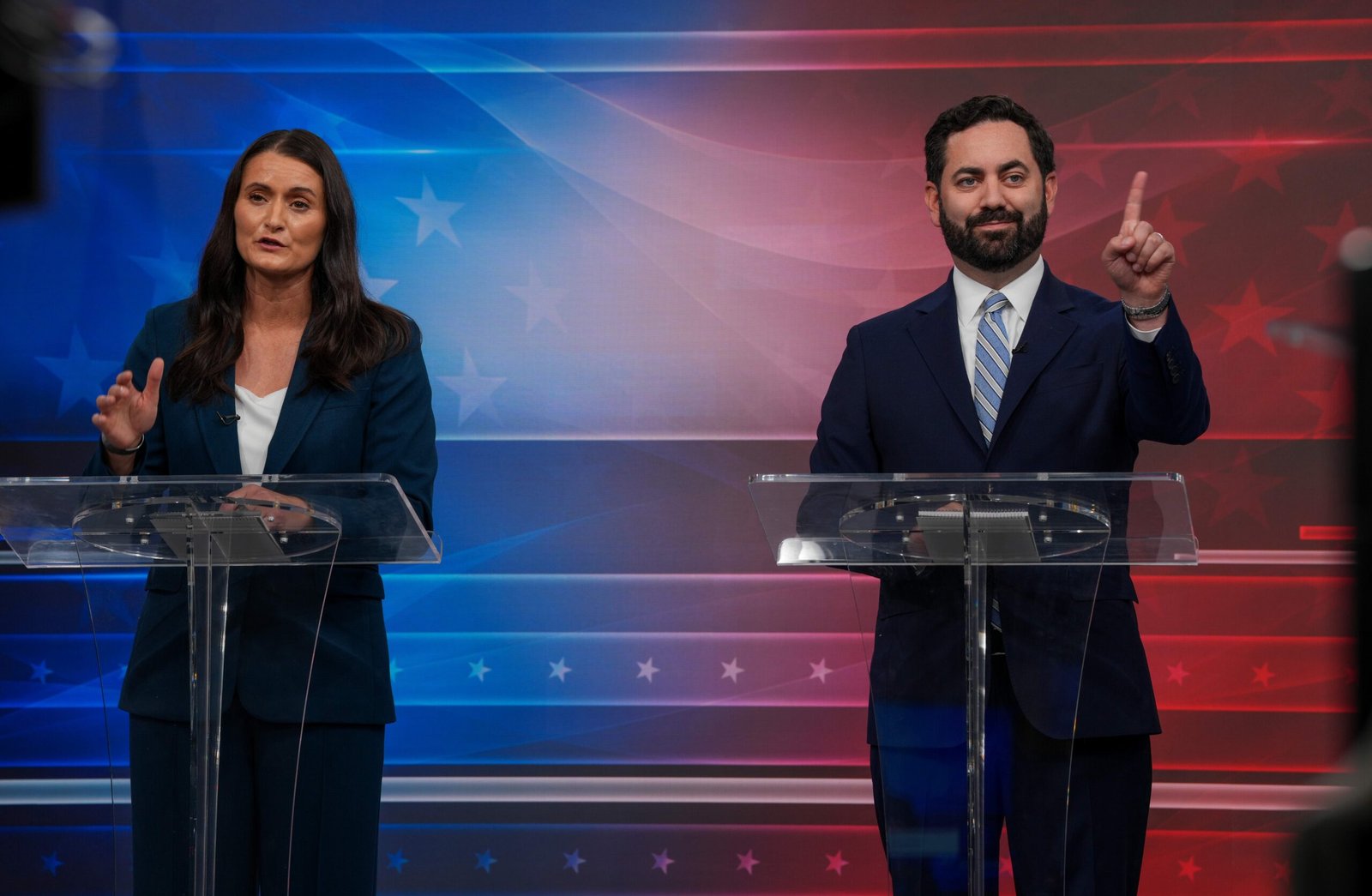
NEW YORK — One of the most vulnerable Republicans in the House is running on immigration — and taking on both parties over it.
Rep. Mike Lawler is hammering Democrats over “sanctuary” policies while criticizing the Trump administration’s aggressive — and at times lethal — immigration enforcement tactics.
“Renee Good and Alex Pretti should not be dead. But neither should Sheridan Gorman, and neither should Laken Riley, and neither should the thousands of people who have been murdered by people who are in our country illegally and committing crimes,” Lawler said at a candidate forum earlier this month. “So yes, ICE needs reforms, but you know what? Sanctuary jurisdictions should not exist. Criminals should be deported.”
Lawler is betting his self-described “common sense” approach can win him a third term in a suburban Hudson Valley district Kamala Harris carried in 2024. His race against Democrat Cait Conley, an Army veteran and first-time candidate, could help determine control of the House.
Immigration has helped Republicans win elections, but broad dissatisfaction with President Donald Trump’s policies has made it a less certain advantage this year. Lawler is pressing it anyway.
He’s run paid media on the topic and held multiple events decrying Democrats’ immigration policies. In a recent interview with a panel of local reporters, he even brought it up himself: “We did not touch on immigration, and I want to raise this because this is a real problem,” he said.
“Fundamentally, when you look at the challenge, I think most people want common sense, not extremism, on the issue of immigration,” Lawler told reporters after a debate with Conley earlier this week.
Whether that emphasis matches voters’ priorities is another question. A recent Emerson College poll found immigration ranked far behind the economy and threats to democracy among the district’s most important issues. And Trump, whose approval ratings are abysmal in New York state, is often at the center of the immigration debate.
Lawler has been able to criticize Trump without drawing the backlash other Republicans have faced. He repeatedly highlights his fight with the president to raise the cap for the state and local tax deduction, which Trump ended up praising him for at a rally earlier this year.
Other Republicans who’ve sought to create distance with the president haven’t fared nearly as well. Rep. María Elvira Salazar is just one. Trump eviscerated the Florida Republican after she released a campaign ad challenging his immigration crackdown.
Yet even Lawler’s leverage with Trump has limits.
He’s highlighted his support for extending Temporary Protected Status, or TPS, for Haitians, thousands of whom live in his district. When the Trump administration announced it would be ending those protections for Haitians earlier this year, Lawler made his opposition known, warning it was not safe to send people back to the country.
He said he’s been working on individual cases to support Haitians in his district. Jean Bernard Charles, who lives in Rockland County, told Blue Light News that Lawler’s office was helpful in getting his wife to the country and he recommended his friends facing the same situation to go to the office for help.
Lawler also cosponsored legislation to extend TPS, which is stalled in the Senate. He argued that he’s fulfilled his role by passing a bill through the House and has blamed Senate Minority Leader Chuck Schumer for not moving it along. (In response, Schumer’s office said in a statement that the leader “moved to extend Haitian TPS on the Senate floor by unanimous consent and was blocked by Senate Republicans and President Trump, who Lawler constantly supports.”)
“I’ve explained this to the White House, repeatedly, that ending TPS was a stupid decision,” Lawler said at the forum. “I am opposed to it, and I will continue to fight back against it.”
The administration hasn’t budged, though. Community leaders in Rockland County, where the district’s Haitian community is based, say many immigrants are too scared to leave their homes. Some are growing frustrated that more isn’t being done.
“If there was the help, our folks would not be wearing ankle monitors,” said Nicole Hines, the NAACP’s mid-Hudson and Westchester regional director.
Renold Julien, the executive director of Konbit Neg Lakay, a Haitian community center in Lawler’s district, pointed to Lawler’s close relationship with Trump, including the president coming to the district earlier this year and Lawler appearing at a meeting at the White House with Jewish leaders, some of whom are from the district.
“I feel bad for Mike Lawler,” Julien said. “Friends don’t treat friends like that. … His friend Donald Trump is doing his best to create a problem between him and the dark-skinned immigrants here of Rockland.”
Conley has also questioned his work regarding Haitian TPS.
“He can have enough capital to get Donald Trump to fly out here and visit the district in May, to go to Dallas at Trump’s midterm convention and be a keynote speaker, but he can’t get Donald Trump to actually take care of people in the Hudson Valley and protect our Haitian community by extending TPS?” she asked.
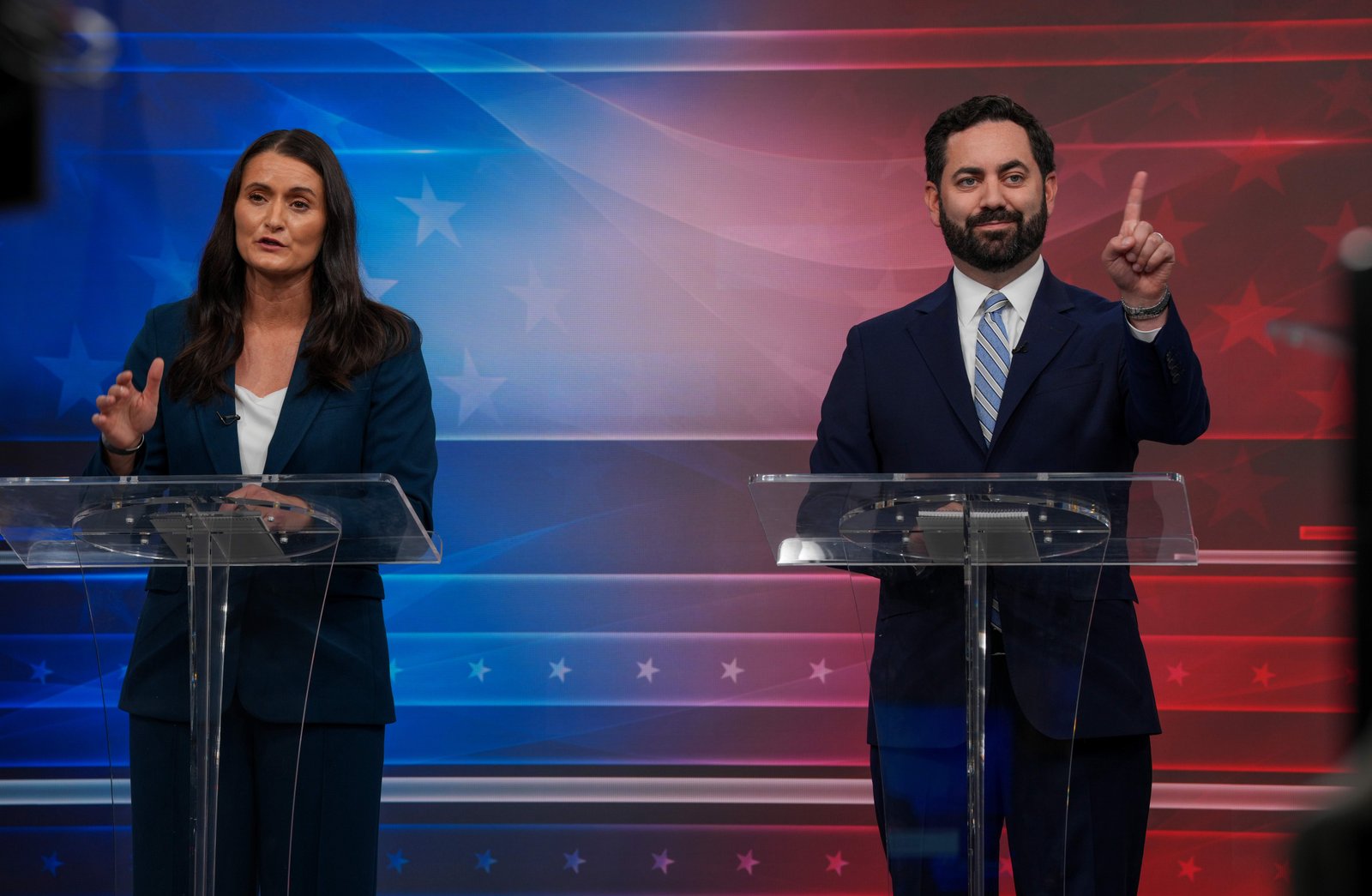
When asked how she would advocate for Haitians if she wins — especially since she won’t have Trump’s ear like Lawler does — Conley said she thinks Democrats will win the Senate, clearing the way for the bill to extend TPS to get to the president’s desk.
Lawler has repeatedly bashed Democratic Gov. Kathy Hochul’s recent law that ended cooperation between local police departments and Immigration and Customs Enforcement on civil immigration cases, and questioned why the state is not honoring the Department of Homeland Security’s detainer requests, as the agency has stated. The parents of Sheridan Gorman — a teenager from Lawler’s district who was killed earlier this year in Chicago, allegedly by a Venezuelan living in the U.S. illegally — have appeared on the trail with him a handful of times to criticize Democrats’ immigration policies.
“The sanctuary policies being pushed by Kathy Hochul and Democrats killed our daughter,” Jessica Gorman, Sheridan’s mother, said in an advertisement for Lawler. At an event last week, she accused Hochul and Conley of not caring about protecting families.
Hochul has waved off such criticisms, saying that law enforcement is still permitted to work with federal officials to remove violent criminals.
Even if immigration isn’t voters’ top concern, it’s a topic Lawler can own, said Sarah Chamberlain, the head of the Republican Main Street Partnership, of which Lawler is a member. The economy is a harder sell to frustrated voters, she added. Focusing on Hochul’s policy also taps into her middling popularity as she runs for reelection. Hochul’s opponent, Bruce Blakeman, has similarly been hammering the issue.
“He’s been extremely successful finding middle ground on it,” Chamberlain said of Lawler, praising his focus on deporting immigrants who have committed crimes and noting the district’s proximity to New York City. “He uniquely can do it because it’s very specific to his district and to where he lives. Some other members couldn’t be doing it the same way.”
Not everyone is convinced his approach will work.
“Mike Lawler is reading the tea leaves and realizing what we have been saying is true — that the vast majority of Americans across this country and in this state are against Donald Trump’s mass deportation agenda,” said Murad Awawdeh, president and CEO of NYIC Action, the political arm of the nonprofit New York Immigration Coalition. “While he may be doing a couple of vibes-oriented things to illustrate he’s not 100 percent MAGA and mass deportation, his actions actually speak louder than his words.”
Awawdeh said that even though Lawler has made some moves on Haitian TPS, that “doesn’t erase the horrors that he’s cosigned to date” in supporting increased funding for ICE. And while Lawler does back the Dignity Act — the bipartisan immigration reform bill that would create a vehicle for potentially millions of immigrants who entered the country unlawfully to gain work permits and remain in the U.S. legally — some immigrant advocates argue it doesn’t go far enough in creating a pathway to citizenship. The bill has yet to reach the House floor for a vote.
“Immigrant families are not props for his moderate image,” Awawdeh said.
When asked if he thinks his immigration message is getting muddled, Lawler said he has “never wavered in my position” and that most Americans “want the border secure, they want criminals deported and they want cashless bail gone.”
Lawler has sought to cast Conley as too weak on the border and crime, pointing to her support for revoking partnerships between local police and ICE, known as 287(g) agreements.
Conley told Blue Light News she’s in favor of getting rid of those agreements because she wants “our local cops to be focused on protecting our local communities, not doing the federal government’s job.” While she said former President Joe Biden messed up border security, she criticized ICE under Trump for “violence against American citizens” and not “prioritizing violent criminals.” She said she does not support cashless bail, which Lawler has repeatedly pointed to as a catalyst of crime, along with sanctuary policies.
Conley, though, has focused more of her energy on voters’ top concern this cycle: affordability. She said she hears concerns about paying bills and affording gas and health care more frequently on the trail, as opposed to immigration. She accused Lawler of using the issue as a “distraction” to “shift focus away from where he is failing our communities.”
Mike Madrid, a Republican political consultant, said it’s commendable that Lawler is finding balance on the issue but “the problem is no one’s making their voting decision based on this” and it “doesn’t cut through the headwinds on the economy.”
Lawler thinks voters are picking up on the nuance.
“I’ve been leading on this issue for years, saying that the immigration system needs to be reformed,” he told Blue Light News after a recent press conference slamming Hochul’s law. “These things are not in conflict. It’s recognizing how complex our immigration system is, but it’s also having common sense and applying it.”
- Wanted: Tech experts to help Congress regulate AI
- Wright defends Trump’s Russian diesel deal as ‘carrot’ for peace
- Democrats’ Tejano star sings to swing South Texas

- Warnock wants Democrats to focus on the South. He’s starting in Mississippi.
- Retiring GOP congressmember will ‘absolutely not’ vote for successor in at-risk seat
- Sullivan walks the line with Trump in Alaska Senate race
- Trump is hitting the campaign trail. But he’s missing from GOP ads.
- Kansas Republicans fear Roger Marshall may be running out of time
- Internal FEMA memo reveals plans to curb states’ reliance on federal aid
- House Democrat introduces bipartisan bill to block Trump’s Russian diesel deal
-

 Politics2 years ago
Former ‘Squad’ members launching ‘Bowman and Bush’ YouTube show
-
Uncategorized2 years ago
Bob Good to step down as Freedom Caucus chair this week
-

 The Josh Fourrier Show2 years ago
DOOMSDAY: Trump won, now what?
-

 The Dictatorship2 years ago
Pete Hegseth’s tenure at the Pentagon goes from bad to worse
-

 Politics2 years ago
Former Kentucky AG Daniel Cameron launches Senate bid
-

 The Dictatorship2 years ago
Luigi Mangione acknowledges public support in first official statement since arrest
-

 Politics2 years ago
Blue Light News’s Editorial Director Ryan Hutchins speaks at Blue Light News’s 2025 Governors Summit
-

 The Dictatorship1 year ago
Mike Johnson sums up the GOP’s arrogant position on military occupation with two words