
Politics
Blue states race to stymie Trump’s mass deportation plans

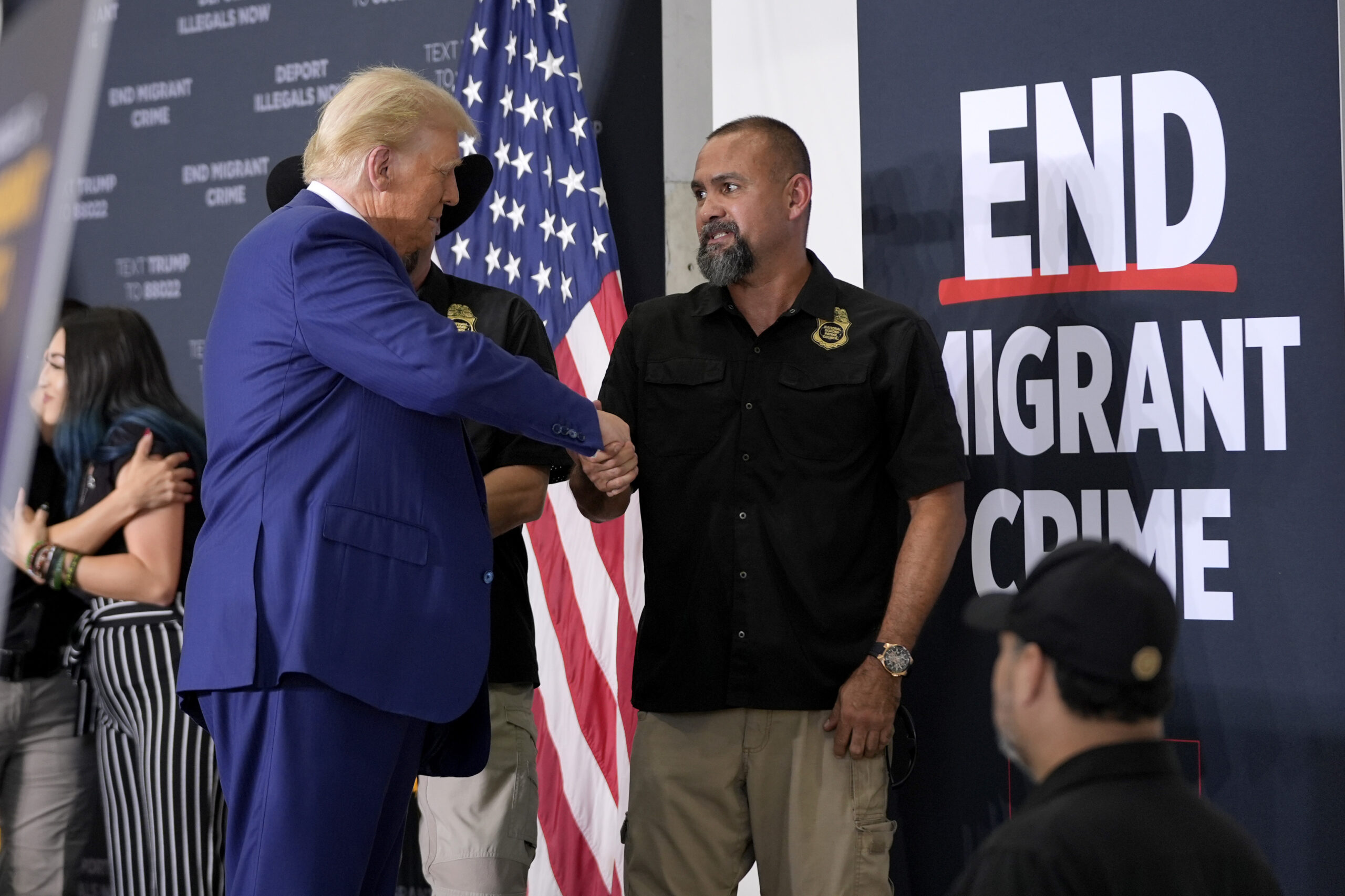
Democratic attorneys general are preparing a raft of legal actions to prevent Donald Trump from carrying out mass deportations of undocumented immigrants, setting the stage for a series of showdowns over one of his central campaign pledges.
In interviews with Blue Light News, six leading blue-state prosecutors said they are girding to take Trump to court over misusing military troops on domestic soil, attempting to commandeer local or state law enforcement to do the job of the federal government and denying people’s constitutional right to due process.
The attorneys general also said they would move to challenge Trump if he tries to federalize the National Guard — or attempts to direct active-duty military units or National Guard troops from red states into blue states. They are bracing to push back against his administration sending immigration agents into schools and hospitals to target vulnerable populations.
And they are preparing to fight Trump over withholding federal funding from local law enforcement agencies in an attempt to induce them into carrying out deportations, as he did unsuccessfully in his first term.
The attorneys’ preparations underscore the depth of concern among blue-state leaders about Trump’s deportation plans and foreshadow the major role state prosecutors will continue to play in shaping the country’s immigration policy. Following a rash of red-state challenges to President Joe Biden’s immigration agenda over the last four years, it’s now blue-state attorneys who are positioned to set off another round of legal clashes — this time intended to stymie Trump on his signature issue.
“There are ways to [handle immigration] that are in line with American values and conform to American law. But they don’t seem to be interested in pursuing that,” New Mexico Attorney General Raúl Torrez, a former federal prosecutor who has experience in immigration enforcement, said of Trump and his allies. “And that’s where someone like me has an important role to play.”
MOVES AND COUNTERMOVES
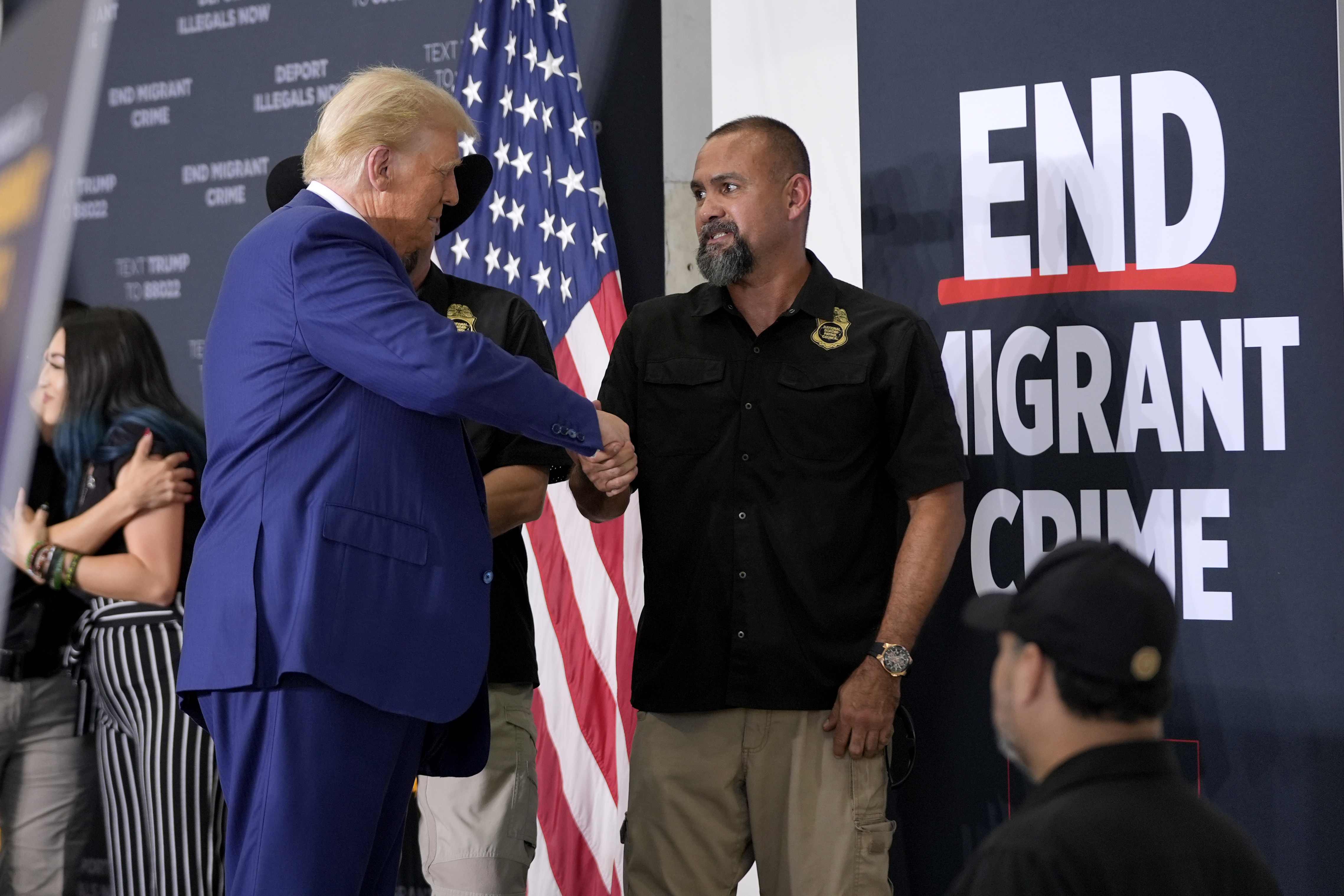
While some have dismissed Trump’s pledge to carry out the largest deportation in American history as infeasible, Democratic attorneys general are taking the incoming president at his word. They are preparing briefs and analyses and even identifying courts in which to file their lawsuits as they brace for him to begin rounding up undocumented immigrants, who number some 11 million, en masse.
It is setting up a legal chess match between a president-elect looking for new ways to press the limits of executive power and a cadre of state prosecutors already familiar with his playbook and adapting to changes in his approach. And it is unfolding amid broader shifts in the politics of border security.
The incoming president’s policy team is already thinking about how to craft executive actions aimed to withstand the legal challenges from groups and state prosecutors — all in hopes of avoiding an early defeat like the one that shuttered his 2017 travel ban targeting majority-Muslim nations.
But each step Trump takes during his transition — stacking his Cabinet with immigration hardliners who have pledged to carry out his calls for large-scale deportations, and confirming he intends to both declare a national emergency and use the military in some form to aid his plans — gives Democrats more clues about how to attempt to block his efforts once he takes office.
Trump pledged on the campaign trail to invoke the Alien Enemies Act of 1798 to expedite the removal of immigrant gang members. He is expected to end parole for people from Cuba, Haiti, Nicaragua and Venezuela, and deactivate a mobile phone application called CBP One that migrants could use to set up appointments to seek asylum.
His border-czar-in-waiting, former acting Immigration and Customs Enforcement director Tom Homan, has vowed to ramp up workplace raids. His incoming deputy chief of policy, Stephen Miller, has spoken of deputizing the National Guard as immigration enforcement officers and even sending troops across state lines to circumvent any resistance efforts. While federal law largely prohibits using military forces for domestic law enforcement, Miller last year identified a workaround — the clause in the so-called Insurrection Act that gives the president power to deploy the military on domestic soil in times of turmoil.
And on Monday, Trump confirmed in a social media post that he intends to declare a national emergency and marshal military assets to help execute deportations.
State prosecutors argued in interviews that those plans are on shaky legal ground. And talk of using the military has already spurred policy divides between the incoming president and Republican lawmakers, with libertarian-leaning GOP Sen. Rand Paul (R-Ky.) saying this week that Trump’s plan to carry out mass deportations with the military’s help would be a “huge mistake” — an early sign that Democrats might have some allies on this front.
“I don’t think the theories that they have comport with federal laws, so there would be a direct challenge to the legal basis the president would use to deploy the United States military,” Torrez said.
“Separate and apart from the legal arguments that we would be advancing in court, I think there’s a broader context that most Americans are simply not comfortable and do not support utilizing military assets in that way,” Torrez added.
WHERE TO PUSH BACK — OR NOT

Attorneys general aren’t planning to stand in the way of lawful immigration enforcement. In many cases they will work with federal authorities to address public safety threats and to help catch and deport criminals — as they have in the past. And even as they prepare for what they cast as potential overreach from a second Trump administration, they note that their next steps largely depend on how the president-elect implements his plans, which is difficult to predict.
Trump’s advisers have suggested the Republican administration will take a more “targeted” approach to deportations, starting with those who are known or suspected national security threats and who have criminal records. But attorneys general are skeptical he will stick to that. And they are fearful he could begin targeting both undocumented immigrants who have been in the country for a decade or more and have established roots, or those who entered the country through legal pathways — scenarios they warn could lead to family separation and cause chaos in some communities.
“If he’s going to want to achieve that type of scale, the largest deportation in U.S. history, as he says, by definition he’s going to have to target people who are lawfully here and … go after American citizens,” New Jersey Attorney General Matthew Platkin said. “And we’re not going to stand for that.”
Trump pledged on the campaign trail to begin his deportation push in Aurora, Colorado, the Denver suburb he routinely depicted — despite pushback from locals — as a “war zone” that had been “invaded and conquered” by members of the Venezuelan gang Tren de Aragua. Phil Weiser, the state’s attorney general, said he will be “laser-focused” on determining whether Trump’s immigration officials are denying people due process — a move he called “unAmerican.”
Attorneys general from Colorado to California are also preparing for repeat battles over federal funding. Trump threatened throughout his first term to withhold funding from states and cities with so-called sanctuary policies that limit local law enforcement’s interactions with federal immigration authorities. His administration also attempted to attach immigration-enforcement conditions to grants for local law enforcement — and lost in court.
“We won’t take that lying down, just as we didn’t last time,” California Attorney General Rob Bonta said.
In response to a request for comment for this story, Steven Cheung, Trump’s communications director, said in a statement that the president-elect has “nominated the most highly qualified and experienced attorneys to lead the Department of Justice” and “focus on enforcing the rule of law.”
Democratic prosecutors’ resistance will extend beyond the courtroom. Advocacy groups such as the ACLU are already pushing attorneys general to use other tools at their disposal — such as issuing guidance to state and local agencies about how to handle immigration requests from the federal government — to attempt to slow implementation of Trump’s immigration actions.
And attorneys general are already embarking on a messaging campaign both against Trump’s broad characterizations of migrants as “blood thirsty” criminals and in support of immigrants who are contributing to local communities. They are also joining other Democratic leaders in starting to cast Trump’s deportation plans as potentially harmful for the economy he has pledged to improve, drawing a direct line between the immigrant workforce that helps drive the nation’s agriculture industry and higher prices at the grocery store.
Trump has created the narrative “that every immigrant who is here in, say, Massachusetts, or this country, illegally is committing crimes,” said the state’s attorney general, Andrea Campbell. “It’s just not true.”
Shia Kapos and Josh Gerstein contributed to this report.



Stephen A. Smith on Trump, Democrats and the politics of chaos
lead image
Elon Musk’s super PAC disclosed its first independent expenditures of the 2026 general election in a filing released late Wednesday, detailing roughly $800,000 across key House and Senate races.
Musk’s America PAC targeted several key Senate contests, including races in Texas, Maine, Ohio, New Hampshire, Iowa, Michigan and Alaska.
The largest amount went to Texas — over $247,000 — where Republicans are expected to deploy a wave of party resources to bolster Attorney General Ken Paxton against Democrat James Talarico.
Musk’s super PAC also put nearly $90,000 into eight House races:
Rep. Derrick Van Orden in Wisconsin; Rep. Mike Lawler in New York; Rep. Jen Kiggans in Virginia; Rep. Tom Kean Jr. in New Jersey; Rep. Scott Perry in Pennsylvania; Rep. Rob Bresnahan in Pennsylvania; Rep. Ryan Mackenzie in Pennsylvania; and Scott Singer in Florida.
The independent expenditures — Musk’s first of the general election — were disclosed days after he met with Speaker Mike Johnson in Texas last week.
Republicans already hold a significant fundraising advantage over Democrats, buoyed by President Donald Trump’s roughly $400 million in his MAGA Inc. super PAC. Trump is under growing pressure from Republicans to tap into that money as the midterms near. A major investment from Musk would further widen the GOP’s financial edge heading into November.
Musk has reportedly considered spending at least $100 million for the GOP through America PAC to help Republicans in this year’s midterms, but the full scope of that effort remains unclear.
A spokesperson for America PAC declined to comment.
Musk spent roughly $290 million to support Trump and the GOP during the 2024 cycle, predominantly through his super PAC, making him the largest individual donor to any political committee that cycle, before he took on a major role in the White House’s DOGE effort.
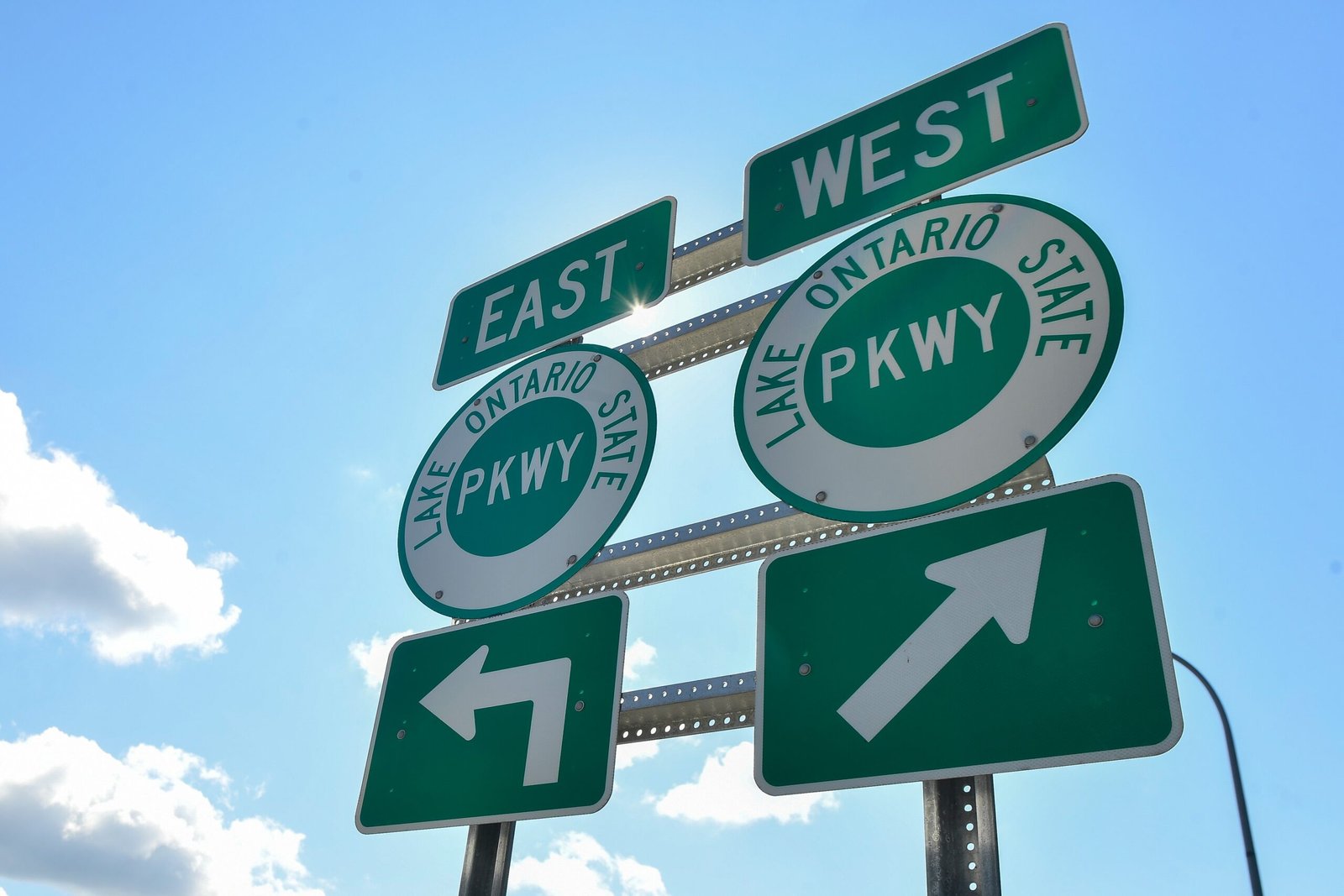
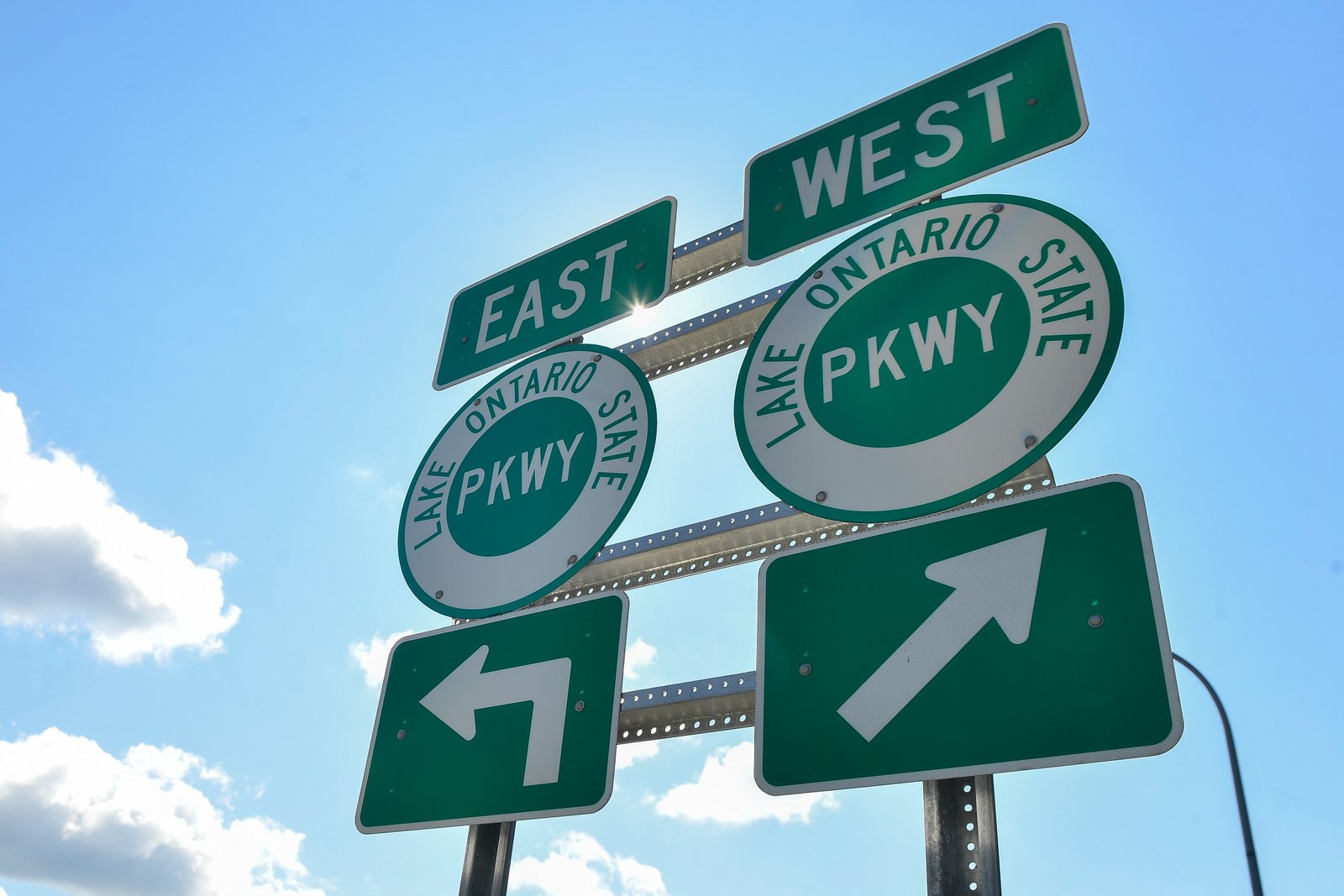
Robert Corradino has never lived anywhere but Oswego, New York. As the only commercial port city on the southeastern shore of Lake Ontario, everything bears the lake’s name — the streets, the convention center, the historic fort.
And in his first term as mayor, Corradino — a Republican who said he previously voted for President Donald Trump — said he worries that a distant political feud is threatening to erase part of his city’s history.
In the days following Trump’s executive order renaming Lake Ontario to Lake America, Corradino and other mayors in upstate New York said Trump’s decision is “regrettable” and could upset voters in the region — and even further impact an economy so closely tied to the U.S.’s relationship with Canada.
“The water is part of our identity,” Corradino said. “Not only our identity, but the economy and the history of the lake is tied to the city.”
Oswego, a city of 17,000, is split between Democrats and Republicans, Corradino said. However, the larger Oswego County is one of the reddest in the state and 61 percent of its voters went for Trump in the 2024 election.
Yet on Monday, several Oswego County legislators from both parties approved a resolution rejecting the new name, out of concern for the cost of the rebrand on taxpayers and businesses. The resolution said it does not intend to diminish the authority of the federal government, rather it aims to “recognize the longstanding historical and regional significance of the name Lake Ontario.”
Last Thursday night, at Oswego’s weekly summer concert series, Corradino said everyone he interacted with said they didn’t support the name change and they weren’t sure why it was happening. The general sentiment, he said, was frustration.
Asked about the issues Oswego residents actually care about, Corradino said his constituents are concerned about less immigration enforcement and the war with Iran.
“In general the consensus I see is it just seems like the country is heading in a direction that we’re not all happy about,” Corradino said.
The pushback is not isolated to Oswego. Hours after Trump signed the executive order, New York Gov. Kathy Hochul, a Democrat who runs the only state that borders Lake Ontario, said in a post to social media, “New York won’t be calling it that.”
And there’s been mixed adaptation nationally — similar to when Trump dictated that the Gulf of Mexico now go by Gulf of America.
On Saturday, Google Maps, which uses the U.S. Geographic Names Information System that comes from official government sources, officially changed the name. Map users on the American side will see “Lake America” while users in Canada will see “Lake Ontario.” For users outside of both the U.S. and Canada, they will see both names. Apple Maps followed suit, using the same naming approach as Google.
But MapQuest — the once-dominant mapping service of the 1990s and early 2000s — rocketed up app stores after refusing to use Lake America.
Long before the lake was renamed, Alex Morgia — a Democrat and mayor of Sackets Harbor, N.Y. — said his community has been grappling with the deteriorating relations between the U.S. and Canada.
Sackets Harbor, located along the eastern shores of Lake Ontario, is home to a number of Canadian residents. A village of 1,400 people, it was a major military outpost and naval command center during the War of 1812, when the U.S. clashed with British and Canadian forces.
Since 1971, the village has hosted the Can-Am festival to commemorate the village’s Canadian-American heritage.
The festival “reminds everyone that it’s not very nice to be at odds with your neighbor,” Morgia said. “Having good relationships with your international neighbors is important, particularly for people that live along the border on either side.”
Last year’s festival was the first time residents began making floats of maple leaves and Canadian flags to protest the Trump administration’s calls to make Canada the “51st state” and to remind Sackets Harbor residents that there were Canadian citizens among them, Morgia said.
This year, as Trump has continued to roll out tariffs against Canadian products, and relations with Canadian Prime Minister Mark Carney continued to worsen, Morgia joked that the theme for this year’s parade should’ve been “we’re sorry.”
The overall atmosphere at this year’s parade in July was “somber,” Morgia said.
“I kind of hoped that the Canadian issue had gone by the wayside, but you know [Trump] seems to bring it up when he needs to,” Morgia said.
Sackets Harbor is split between Democrats and Republicans, Morgia said. Jefferson County, which encompasses Sackets Harbor, overwhelmingly supported Trump in the 2024 election with 61 percent of its vote.
“It’s a three-hour drive to Montreal, a two-hour drive to Toronto and a six-hour drive to New York City,” Morgia said. “The biggest metropolitan cities near us are Canadian, and a lot of North Country businesses and people rely on the southern part of Canada. … I’m hopeful that voters will think about that at the polls in November and in 2028.”
In the village of Sodus Point, N.Y. — which is located along the southern border of the Great Lake — Republican Mayor Pat Nolan said he’s disappointed by the name-change as “Ontario” is rooted in the Indigenous history of the region.
The name Ontario, is largely believed to come from Iroquoian roots, meaning “beautiful lake” or “sparkling water,” according to the Canadian government. The Canadian province of Ontario, is named after the lake.
A village of 1,000 people, Sodus Point is located in Wayne County, where Trump received 61 percent of the vote in 2024. Nolan was elected in a write-in campaign last year.
“My hope is that, rather than allowing this decision to become another wedge that further divides people,” Nolan wrote in an email, “it can encourage a broader discussion about the history of this great body of water, the Indigenous people who first gave it its name and the generations of communities that have grown along its shores.”
- Stephen A. Smith on Trump, Democrats and the politics of chaos

- Elon Musk unleashes first wave of spending on key races in the midterms
- House Democrats watch closely as Hakeem Jeffries vows to rein in rogue members
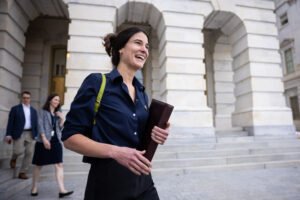
- These mayors live along Lake America’s shores. But they won’t be calling it that.

- Markwayne Mullin safe after Coast Guard jet makes emergency landing due to engine failure
- White House pushes companies to ditch Macron’s space summit
- Tillis renews calls for Hegseth’s ouster
- No immediate plans to punish rogue House Democrats for bailing out GOP
- Thune: Data centers should be ‘self-sufficient’
- Mike Johnson says he has ‘no plans’ to campaign with Max Miller
-

 Politics2 years ago
Former ‘Squad’ members launching ‘Bowman and Bush’ YouTube show
-
Uncategorized2 years ago
Bob Good to step down as Freedom Caucus chair this week
-

 Politics2 years ago
Former Kentucky AG Daniel Cameron launches Senate bid
-

 The Dictatorship2 years ago
Luigi Mangione acknowledges public support in first official statement since arrest
-

 The Josh Fourrier Show2 years ago
DOOMSDAY: Trump won, now what?
-

 The Dictatorship2 years ago
Pete Hegseth’s tenure at the Pentagon goes from bad to worse
-

 Politics2 years ago
Blue Light News’s Editorial Director Ryan Hutchins speaks at Blue Light News’s 2025 Governors Summit
-

 The Dictatorship12 months ago
Mike Johnson sums up the GOP’s arrogant position on military occupation with two words