
Congress
After McCarthy ouster, GOP to consider new requirement for House leadership elections

House Republicans are set to consider a variety of new internal rules proposals this week, including some proposals that tie back to the ouster of former Speaker Kevin McCarthy.
While there is a broader push to amend the one-member threshold needed to trigger a motion to vacate, there are also some GOP members aiming to make internal changes to their party’s leadership election moving forward. Republicans from the various corners of the conference have put forward their proposals for the 119th Congress, which will be considered this week when the party votes on its new rules package Thursday.
Rep. Brian Mast (R-Fla.) put forward a rules amendment that would require someone running for any leadership spot to have to resign from their present leadership post to seek another, the Florida conservative confirmed to Blue Light News this weekend.
If this proposed rules change had been in effect last October during the speakership race, it would’ve meant that a series of members who ran to replace former Speaker Kevin McCarthy would’ve needed to step down from leadership before seeking the top spot. They include Majority Leader Steve Scalise (R-La.), Majority Whip Tom Emmer (R-Minn.), Republican Policy Chair Gary Palmer (R-Ala.), and even now Speaker Mike Johnson, who was then the GOP conference vice chair.
The proposal would offer more opportunities for Republicans to move up the ladder, but risk stunting those with strong leadership ambitions.
Mast described it as a lesson learned from the speakership election that ensued after McCarthy’s ouster — and one he wants to fix for the future. At the time of the speakership elections last year, he criticized the party’s leadership: “I can tell you in this moment. … I would not support any member of our current leadership … Leaders lead. And that’s not taking place,” he told CBS News at the time.
The full list of amendments that directly relate to the GOP conference, which were due Thursday evening, has yet to be reported. But centrists also filed an amendment setting internal repercussions for Republicans who oppose a procedural vote that allows the party to bring a GOP bill to the House floor for a vote, which comes after multiple instances of conservatives blocking bills from even getting proper consideration — and thus sinking leadership policy priorities under both McCarthy and Johnson.
There are also discussions about changing the discharge petition, as POLITICO first reported.
There are several broader rules discussions underway including some that impact how the floor is governed. That includes a push by some to make it harder to attempt to oust a speaker.
While the majority of Republicans despise the tool that allowed Rep. Matt Gaetz (R-Fla.) to lead a small cadre of Republicans in ousting McCarthy against the wishes of most in the GOP conference last October, there are some conservatives in the party who are expected to fiercely fight to keep the threshold. And thin vote margins could scramble plans to adjust it.
Jordain Carney contributed to this report.


Conservative lawmakers are throwing up roadblocks to a GOP-only immigration enforcement funding plan. But party leaders are hitting the gas anyway, hoping to quickly flatten any skeptics as they race to meet a June 1 deadline set by President Donald Trump.
At stake is the final endgame of the 58-day-and-counting Department of Homeland Security shutdown. The Senate has passed the biggest piece of the funding puzzle, and top GOP leaders are now embarking on the multistep budget reconciliation process to sidestep Democratic opposition and fund enforcement agencies for the rest of Trump’s term.
Senate Majority Leader John Thune said Monday he would pursue an “anorexic” bill narrowly focused on Immigration and Customs Enforcement and Border Patrol. Republicans hope that will allow them to skip months of agonizing infighting — as they endured before enacting last year’s tax-cuts-focused megabill.
Still, some agony looms.
Sen. Rick Scott (R-Fla.) insisted Monday on spending cuts to offset the new enforcement funding. Sen. Tommy Tuberville (R-Ala.) said he wants to include money for the military and other GOP priorities. Sen. John Kennedy (R-La.) argued parts of a hot-button GOP elections bill should be in the mix. And across the Capitol, the House’s right flank insisted Republicans fund all of DHS through the party-line process — not just ICE and Border Patrol.
Thune and Speaker Mike Johnson are expected to discuss the path forward during their private weekly meeting Tuesday. The House is stalling for now on the bipartisan Senate-passed bill that would fund the bulk of DHS, waiting for progress on the second bill under discussion.
Even Kennedy, who said it was a “mistake” not to include parts of the SAVE America Act in any upcoming reconciliation measure, warned Thune against expanding its scope.
“If he starts making deals with individual senators … then he’ll have an avalanche on his hands,” he said. “I know a number of senators who will take a run at Thune and say, ‘Look, you’ll only get my vote if you include my stuff in it.’ Well, if he starts that, then I’ve got some of my own stuff.”
The ultimatums could start pouring in as soon as the Senate GOP’s closed-door Tuesday lunch, when Thune and Senate Budget Chair Lindsey Graham (R-S.C.) will get the chance to talk through the plan with their colleagues.
The first step will be for Republicans to take up a budget resolution — a fiscal blueprint for the party-line legislation, which Graham’s committee could release as soon as Tuesday. That blueprint is expected to task the Senate Judiciary Committee and Homeland Security and Governmental Affairs Committee with drafting legislation that would fund immigration enforcement agencies for the rest of Trump’s term.
Typically reconciliation bills include at least some attempt to offset new spending with other savings or revenue. But GOP leaders are ready to argue that won’t be necessary in this instance since it involves funding that would have gone through the appropriations process — had Democrats not insisted on enforcement policy restrictions after federal agents shot and killed two Minneapolis residents in January.
Thune also warned Monday that expanding the bill by instructing additional committees — such as the Finance panel, which deals with taxes and federal health programs — would expose Republican senators to politically tough votes that could threaten the overall package. Any amendment that is germane to a reconciliation bill and under the jurisdiction of the instructed committees is eligible for a simple-majority vote — and the minority party aims to use those “vote-a-ramas” to put the majority on the spot.
“It gets really complicated procedurally, politically, and so, you know, to execute on it — to do it with any speed — you’ve got [to] keep it really tight,” Thune said.
In a sign of just how fast Senate Republicans want to move, Graham is expected to skip a committee vote on the fiscal blueprint for the reconciliation bill, according to three people granted anonymity to describe private planning. While Graham indicated Monday he still hasn’t made a final decision, going straight to the floor would deny Budget committee members, including Scott and Kennedy, a first bite at making any potential changes.
Instead, Republicans are aiming to bring the budget resolution straight to the floor as soon as next week. That would give the House time to adopt it before both chambers are scheduled for a recess in early May, though it’s possible that timeline could slip — especially if Republicans also struggle to meet an April 20 deadline to extend a key surveillance program.
To get the budget blueprint or the subsequent reconciliation bill through the Senate, Thune can lose as many as three GOP senators, with Vice President JD Vance breaking a possible tie.
Republicans are closely watching one of their own committee chairs who will be tasked with helping write the bill, Sen. Rand Paul of Kentucky. He didn’t say how he would handle the budget resolution Monday but told reporters that he generally supports “spending less money, not more.”
Besides the grumbling from fiscal hawks, there are also Republican senators who are skeptical of any new reconciliation bill — especially appropriators concerned that the party-line approach is encroaching on their bipartisan turf.
But GOP leaders are cautiously hopeful they will be able to move quickly after months of sparring with Democrats over immigration enforcement policy frustrated many in their ranks. Senate Appropriations Chair Susan Collins (R-Maine) told reporters Monday her panel has been giving “technical assistance” to Graham’s panel while lamenting the breakdown in the appropriations process.
“It obviously would have been better if we came up with a bipartisan compromise to finish up the one remaining bill,” Collins said.
But the bigger threat could be in the House, where Republicans have an even tinier majority and a more rambunctious band of ultraconservative lawmakers.
One of their ringleaders, Rep. Chip Roy of Texas, reacted negatively to Thune’s “anorexic” vision for the funding bill Monday. He suggested funding all of DHS through a party-line reconciliation bill, not just ICE and Border Patrol.
“Well – he isn’t the only voice in this, is he?” Roy wrote on X. “We should move other priorities with ALL of DHS… we’re running out of time to deliver and to clean up these repeated swamp messes.”
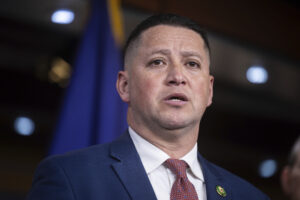
Rep. Tony Gonzales said he plans to resign from the House Tuesday, weeks after the Texas Republican admitted to having an affair with a staff member.
“There is a season for everything and God has a plan for us all,” he said in a statement on X. “When Congress returns tomorrow, I will file my retirement from office. It has been my privilege to serve the great people of Texas.”
The Texas Republican, who previously announced he would not seek reelection due to the allegations, said he would resign outright just over an hour after Democratic Rep. Eric Swalwell of California announced he would leave his seat amid his own allegations of sexual misconduct with staff.
Gonzales is facing an Ethics Committee investigation into the alleged violations, which will be closed upon his resignation. He admitted last month to having an affair with staffer Regina Santos-Aviles, who later died by suicide.
Republican leaders previously called on Gonzales to suspend his campaign, which was headed toward a runoff against conservative influencer Brandon Herrera. But in what was widely viewed as recognition of the GOP’s tiny House margin, they had not called on him to resign while they awaited the Ethics investigation to play out.
Had he not announced his resignation, Gonzales would have faced an bipartisan expulsion effort later this week.
Rep. Tony Gonzales, who has admitted to having an affair with one of his own staffers, is set to face an expulsion vote later this week despite the decision of another embattled House member to resign.
Some House members believed the Texas Republican should be sent packing alongside California Democrat Eric Swalwell, who stands accused of sexually assaulting a staff member — accusations he has denied.
Now that Swalwell has announced he intends to resign, members of both parties say they will still seek Gonzales’ expulsion this week.
Rep. Anna Paulina Luna (R-Fla.), who was preparing to lead an expulsion effort against Swalwell, said in an interview she would still vote to expel Gonzales: “He should resign. But he probably won’t.”
Rep. Teresa Leger Fernandez (D-N.M.) plans to unveil an expulsion resolution targeting Gonzales Tuesday, according to a person granted anonymity to discuss her plans.
Speaker Mike Johnson has previously called for ethics investigations to play out in the Gonzales case, but that was before he admitted to the affair with staffer Regina Santos-Aviles, who later died by suicide, and announced he would not seek reelection.
A independent congressional investigation separately found “substantial reason to believe” Gonzales had violated House rules with the relationship. An official Ethics Committee investigation is pending.
- House Ethics opens Eric Swalwell investigation

- Fuller’s swearing-in
- House Dems plan for Thursday Iran vote
- Greene: ‘More members’ of Congress guilty of conduct ‘similar’ to allegations against Swalwell, Gonzales

- US military says 2 killed in Eastern Pacific boat strike

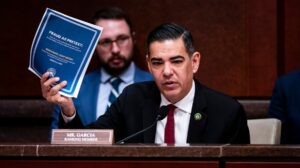
- Garcia threatens Bondi with contempt on Tuesday
- Joe Biden to deliver remarks alongside portrait unveiling at alma mater Syracuse University
- Vance says ‘ball is in the Iranian court’

- Tony Gonzales says he will resign from House

- Tony Gonzales eyed for expulsion vote after Swalwell resignation
-

 Politics1 year ago
Former ‘Squad’ members launching ‘Bowman and Bush’ YouTube show
-

 The Dictatorship1 year ago
Luigi Mangione acknowledges public support in first official statement since arrest
-

 Politics1 year ago
Former Kentucky AG Daniel Cameron launches Senate bid
-

 The Dictatorship1 year ago
Pete Hegseth’s tenure at the Pentagon goes from bad to worse
-

 Politics1 year ago
Blue Light News’s Editorial Director Ryan Hutchins speaks at Blue Light News’s 2025 Governors Summit
-

 The Dictatorship7 months ago
Mike Johnson sums up the GOP’s arrogant position on military occupation with two words
-
Uncategorized1 year ago
Bob Good to step down as Freedom Caucus chair this week
-

 The Josh Fourrier Show1 year ago
DOOMSDAY: Trump won, now what?