
Politics
A running list of all the people Trump has picked to serve in his administration

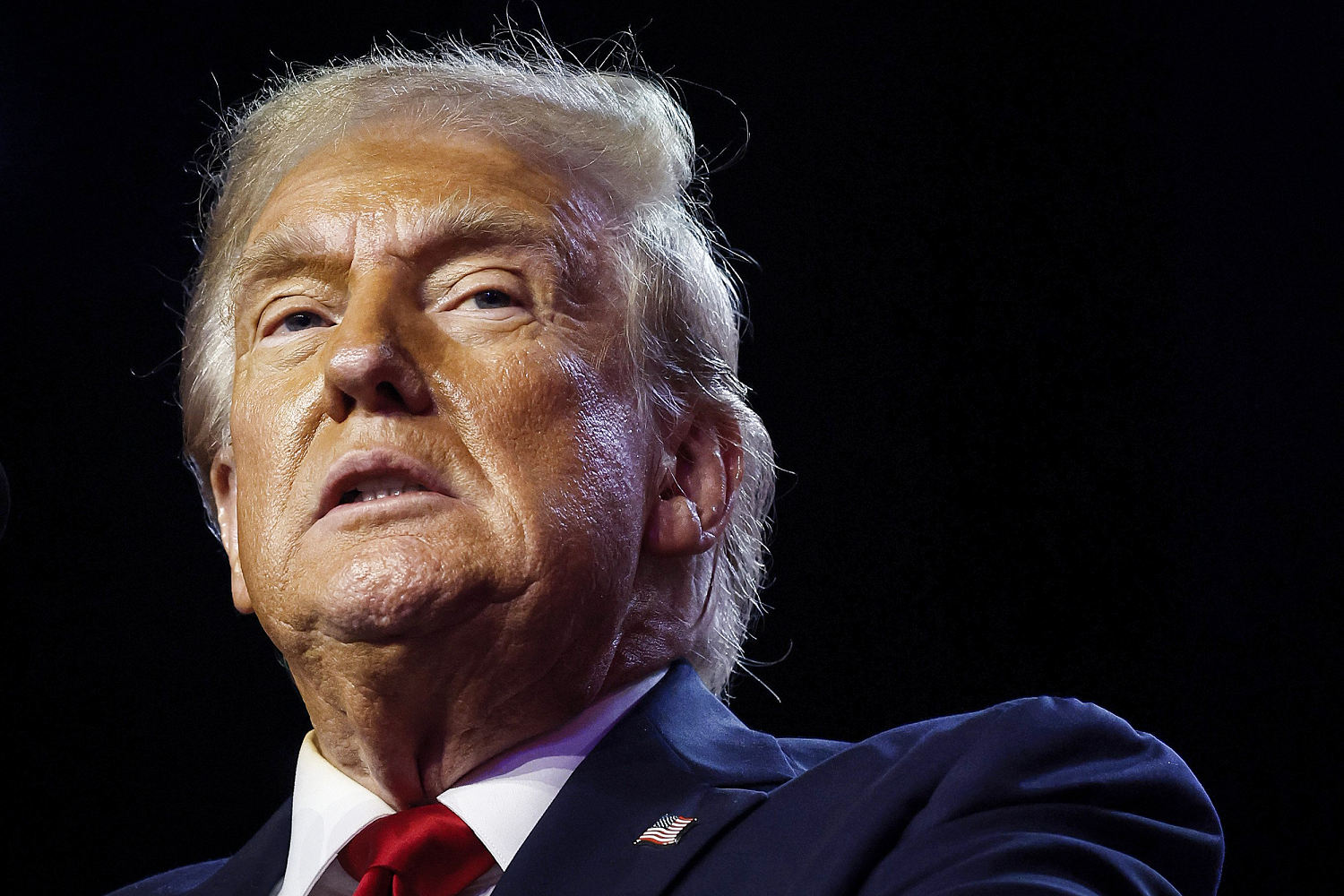
President-elect Donald Trump has been rolling out staffing decisions for his incoming administration, naming some of his top allies to prominent positions in his Cabinet and beyond.
With a slew of dramatic changes expected in his second termTrump will rely on his band of loyalists to carry out his agenda. Here are all the staffing announcements Trump has made for his second term so far.
Susie Wiles, White House chief of staff
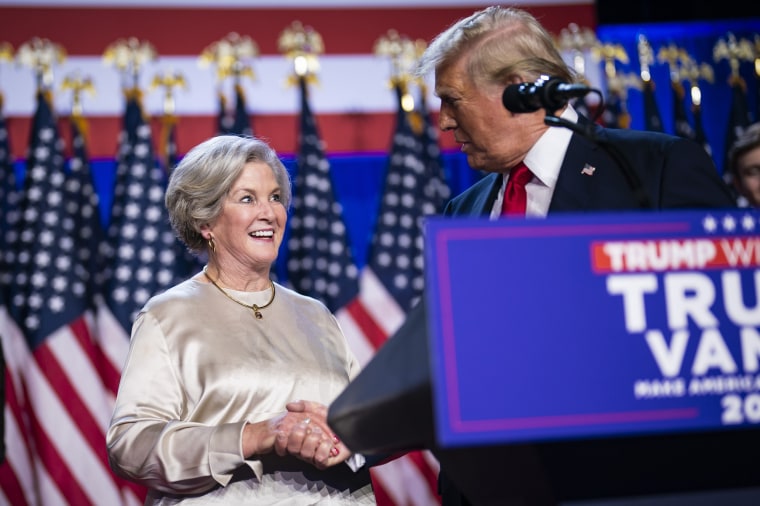
Wiles, who worked on all three of Trump’s presidential campaigns, will be the first woman to hold the position in the Oval Office. But it is a notoriously challenging role under Trump, who cycled through four chiefs of staff in his first term.
Wiles, the 67-year-old daughter of the late NFL legend Pat Summerall, is the only campaign manager to have lasted an entire Trump campaign, according to The New York Times.
Stephen Miller, deputy White House chief of staff for policy
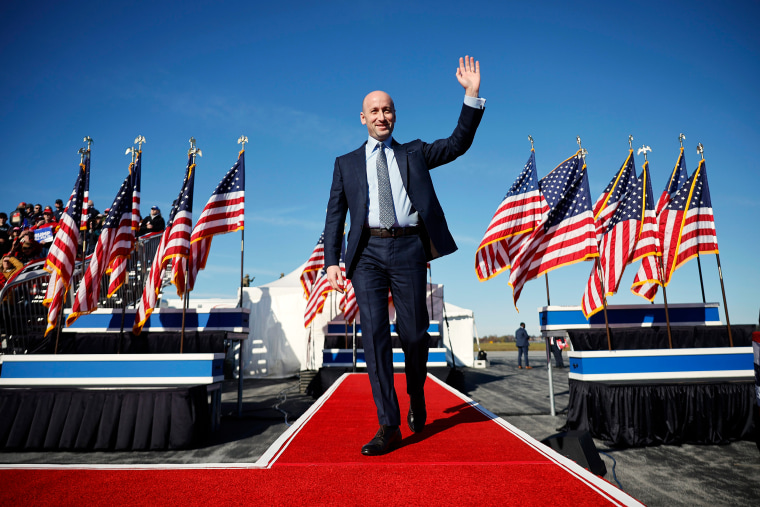
Trump is expected to announce Miller as his deputy chief of staff for policywhich would likely task an immigration hardliner to the job of implementing Trump’s mass deportation plan.
Trump’s team did not immediately respond to NBC News’ request for confirmation, but JD Vance, the vice president-elect, appeared to confirm BLN’s reporting of the news in a post on X on Monday.
Miller served as a senior White House adviser in the first Trump administration. He’s widely considered to be one of the chief architects of the first Trump administration’s Muslim travel banwhich sought to restrict U.S. travel and immigration from several countries with large Muslim populations.
Rep. Mike Waltz, national security adviser
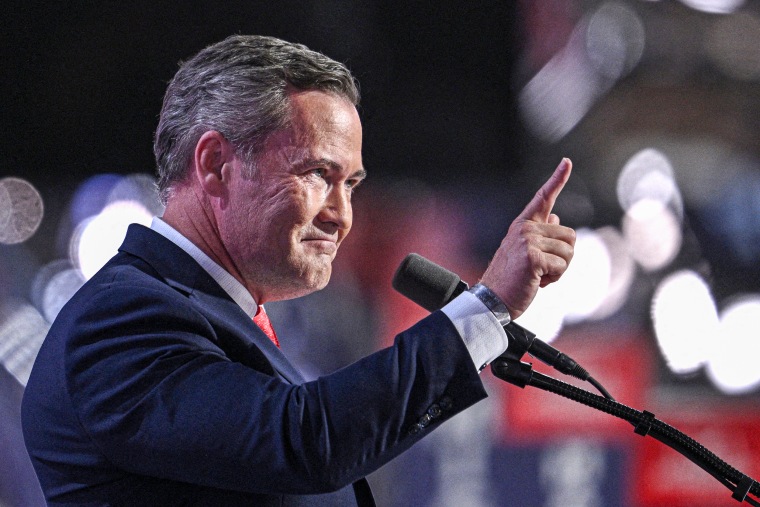
Waltz, a Florida Republican, is a Trump loyalist who has echoed Trump’s complaint about a “woke” military. He is a member of the House Armed Services, Intelligence and Foreign Affairs Committees. He also served in the Defense Department during the George W. Bush administration and was a counter-terrorism adviser to then-Vice President Dick Cheney.
Waltz is widely seen as hawkish on China. A member of the House’s China Task Force, he has argued that the U.S. is not sufficiently prepared for a conflict in the Indo-Pacific region.
The highly influential role does not require Senate confirmation.
Tom Homan, border czar
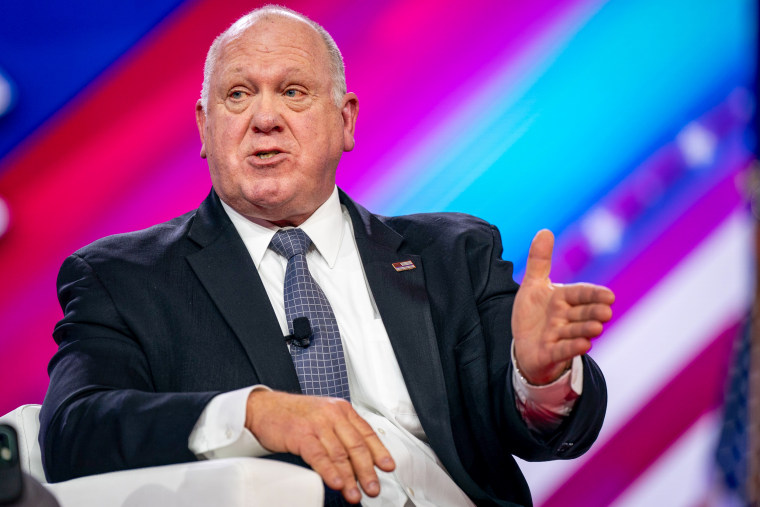
Homan, a former acting director of U.S. Immigration and Customs Enforcement under Trump, will play a major role in carrying out the president-elect’s hardline immigration agenda.
Trump has repeatedly said on the campaign trail that he would enact “the largest deportation program in American history,” a plan that would pose monumental logistical, financial and personnel challenges. Trump told NBC News last week that there would be no “price tag” on his mass deportation plan.
Earlier this year, Homan said if Trump wins the election, he’d be on Trump’s “heels” and “run the biggest deportation operation this country’s ever seen.” Speaking to Fox News on Sunday, Homan — who was significantly involved in the first Trump administration’s family separation policy — said ICE would implement Trump’s deportation program in a “humane manner.”
Rep. Lee Zeldin, Environmental Protection Agency administrator
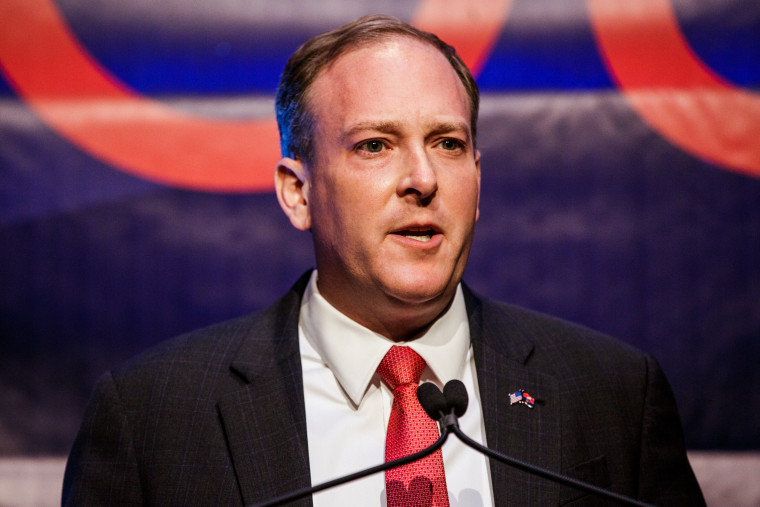
In a statement released on Nov. 11, Trump said he will appoint Zeldin, a New York Republican, to lead the EPA.
“He will ensure fair and swift deregulatory decisions that will be enacted in a way to unleash the power of American businesses, while at the same time maintaining the highest environmental standards, including the cleanest air and water on the planet,” Trump said in his statement.
The president-elect has vowed to roll back President Joe Biden’s climate regulation policies, and he has said he will withdraw the U.S. from the Paris climate agreement. Zeldin has little experience with environmental regulationbut he has similarly criticized Biden’s climate policies and voted against the Paris accords in the House.
Rep. Elise Stefanik, U.S. ambassador to the United Nations
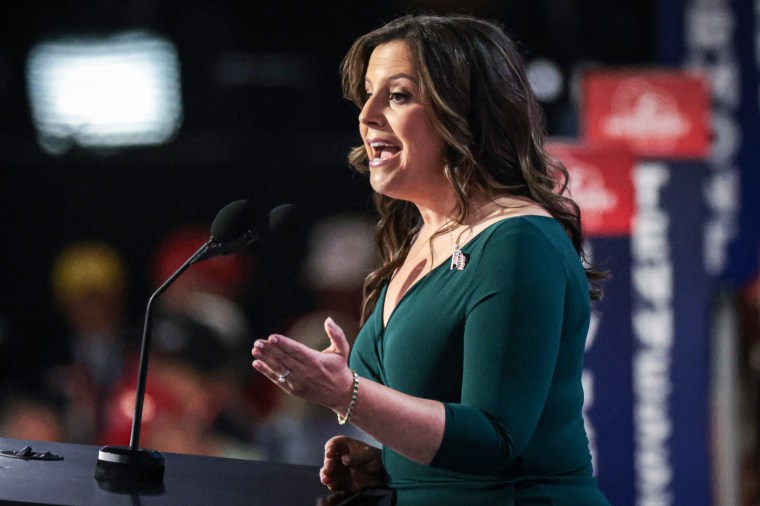
Stefanik, one of Trump’s staunchest allies in the House, will be nominated as United Nations ambassador.
As my colleague Hayes Brown has pointed out, the New York Republican has little diplomatic experience other than her vocal support for Israel in Congress. She has also criticized the U.N. over the organization’s opposition to Israel’s brutal military campaign in Gaza.
Mike Huckabee, U.S. ambassador to Israel
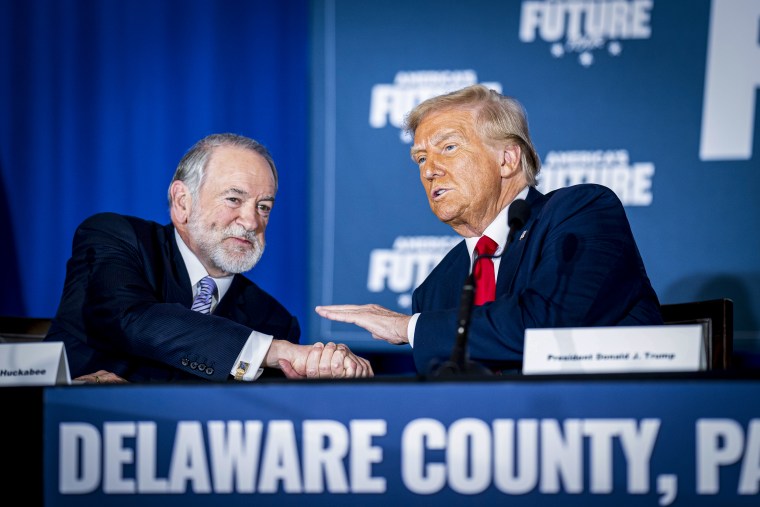
Trump announced on Tuesday that he will appoint Huckabee, the former governor of Arkansas, as ambassador to Israel. “He loves Israel, and the people of Israel, and likewise, the people of Israel love him,” Trump said in a statement. “Mike will work tirelessly to bring about Peace in the Middle East!”
Huckabee has been a vocal defender of Israel’s war on Hamas. He has also advocated against a ceasefire deal between Israel and Hamas, saying that Israel should “eradicate them.”
Steven Witkoff, special envoy to the Middle East
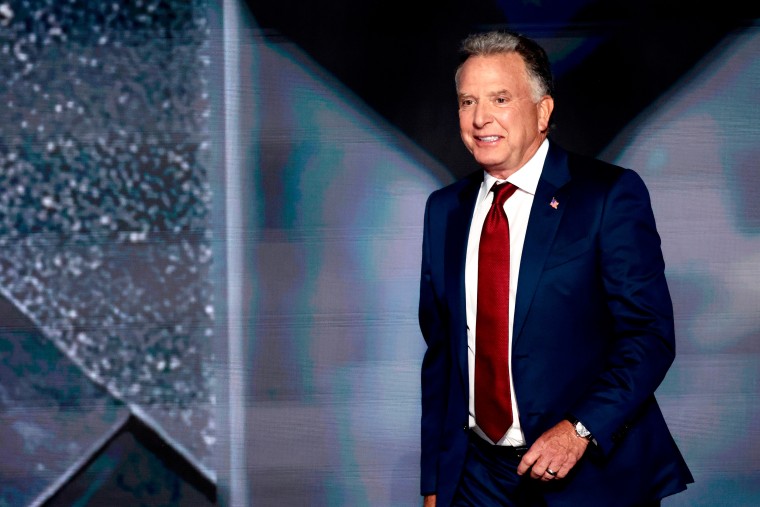
Trump picked Witkoff, a New York real estate investor and golf buddy of the president-electto serve as his special envoy to the Middle East.
“Steve is a Highly Respected Leader in Business and Philanthropy, who has made every project and community he has been involved with stronger and more prosperous,” Trump said in a statement announcing his selection.
Witkoff, who is Jewish, helped recruit pro-Israel donors to Trump’s campaign. “I personally received and helped secure large Jewish donors,” he told The Bulwark in May, adding: “[A]nd I’m not talking four-figure donations. I’m talking six-figure and seven-figure donations.”
He is also co-chairing Trump’s inaugural committee alongside former Sen. Kelly Loeffler of Georgia, the Trump campaign has said.
John Ratcliffe, CIA director
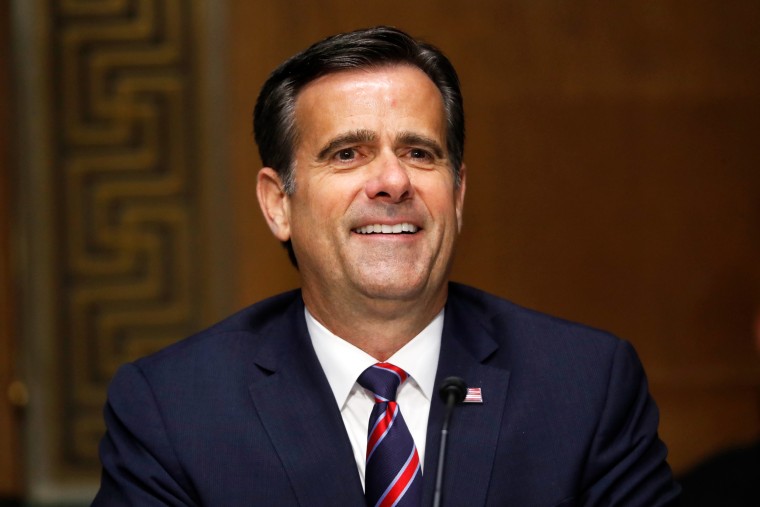
Trump tapped Ratcliffewho served as the director of national intelligence during Trump’s first term, to serve as the head of the CIA in his second administration.
Critics accused Ratcliffe, a former congressman from Texas, of politicizing national intelligence during his time as the DNI.
He is currently a co-chair of the Center for American Security at the Trump-aligned group America First Policy Institute.
Pete Hegseth, Defense secretary
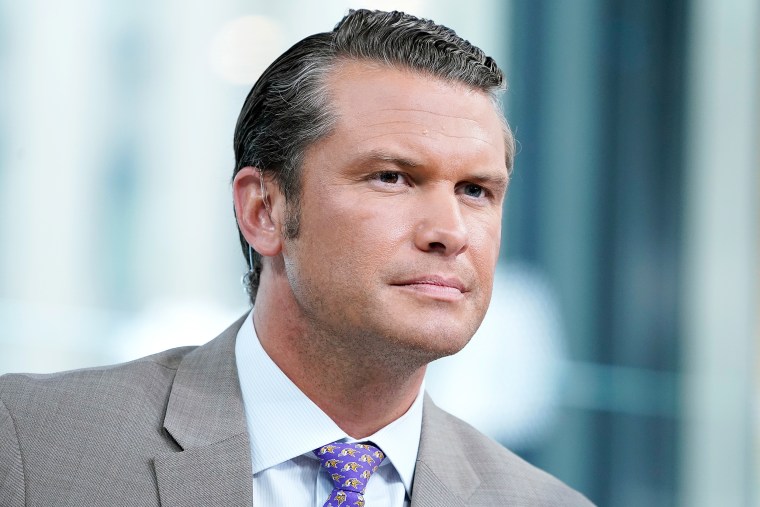
Trump nominated Hegseth, a Fox News host and Army veteran, to lead the Defense Department.
“With Pete at the helm, America’s enemies are on notice — Our Military will be Great Again, and America will Never Back Down,” Trump said in a statement. He continued: “Nobody fights harder for the Troops, and Pete will be a courageous and patriotic champion of our ‘Peace through Strength’ policy.
The 44-year-old Minnesota native has falsely claimed Democrats created variants of the Covid-19 virus for political purposes.
This is a developing story. Check back for updates.


Politics
Political operatives with Trump ties raked in millions of dollars in commissions from DHS ad campaign
Two companies with ties to veteran political operatives received at least $23 million in commissions for their role in the controversial Department of Homeland Security ad campaign that helped lead to Secretary Kristi Noem’s ouster.
One of the firms, Safe America Media, received at least $15.2 million and was formed last February just a few days before it was awarded the limited-bid contract to work on the overall $220 million, taxpayer-funded ad campaign, according to an internal DHS memo and three people familiar with the contracts who were granted anonymity because they weren’t authorized to speak publicly about the contracts. Safe America Media was run by Republican operatives Mike McElwain and Patrick McCarthy, who have ties to a firm that did extensive media buying on President Donald Trump’s 2024 campaign.
The second firm, People Who Think, received at least $7.7 million from its 10 percent commission on a portion of the $220 million, according to the memo, which was written by DHS Deputy Under Secretary for Management Paul Stackhouse, and reviewed by Blue Light News. People Who Think was co-founded by Jay Connaughton, who did work for Trump’s 2016 campaign and has reportedly worked for other conservative politicians and causes.
The March 3 DHS memo noted there was only a “limited competition” for the awarded contracts because of the “urgent and compelling need” for the ad campaign. It also stated that People Who Think’s 10 percent commission for international advertising and Safe America Media’s 12 percent commission for domestic advertising was below the industry norm of 15 percent.
Besides military recruiting efforts and Covid-19-related campaigns, the DHS ads were the most expensive U.S. government marketing campaign in the last 10 years, Bloomberg reported.
The information about the contracts add new details to the ongoing fallout over DHS’s $220 million ad campaign, which included a video of a cowboy-hat clad Noem riding a horse at Mount Rushmore. It also highlights how political operatives were awarded contracts worth millions of dollars with seemingly little oversight or guardrails — including from President Donald Trump, who White House officials have said did not sign off on the ad campaign.
The ads became a sore spot within the White House, including with Trump, because they fed into a perception that Noem used her position to set herself up for a future political run.
“Safe America Media submitted a proposal for and was awarded a contract to support DHS’s nationwide public awareness campaign, and committed substantial resources to meet an accelerated timeline on budget,” Safe America Media lawyer Joseph Folio said in a statement to Blue Light News. “We look forward to providing additional information to address inaccuracies in the public reporting and ensure the record accurately reflects the scope and context of that work.” It’s unclear what he is referring to and a spokesperson didn’t respond to a follow-up question.
McCarthy, McElwain and Connaughton didn’t respond to requests for comment and People Who Think could not be reached for comment. A spokesperson for DHS declined to comment.
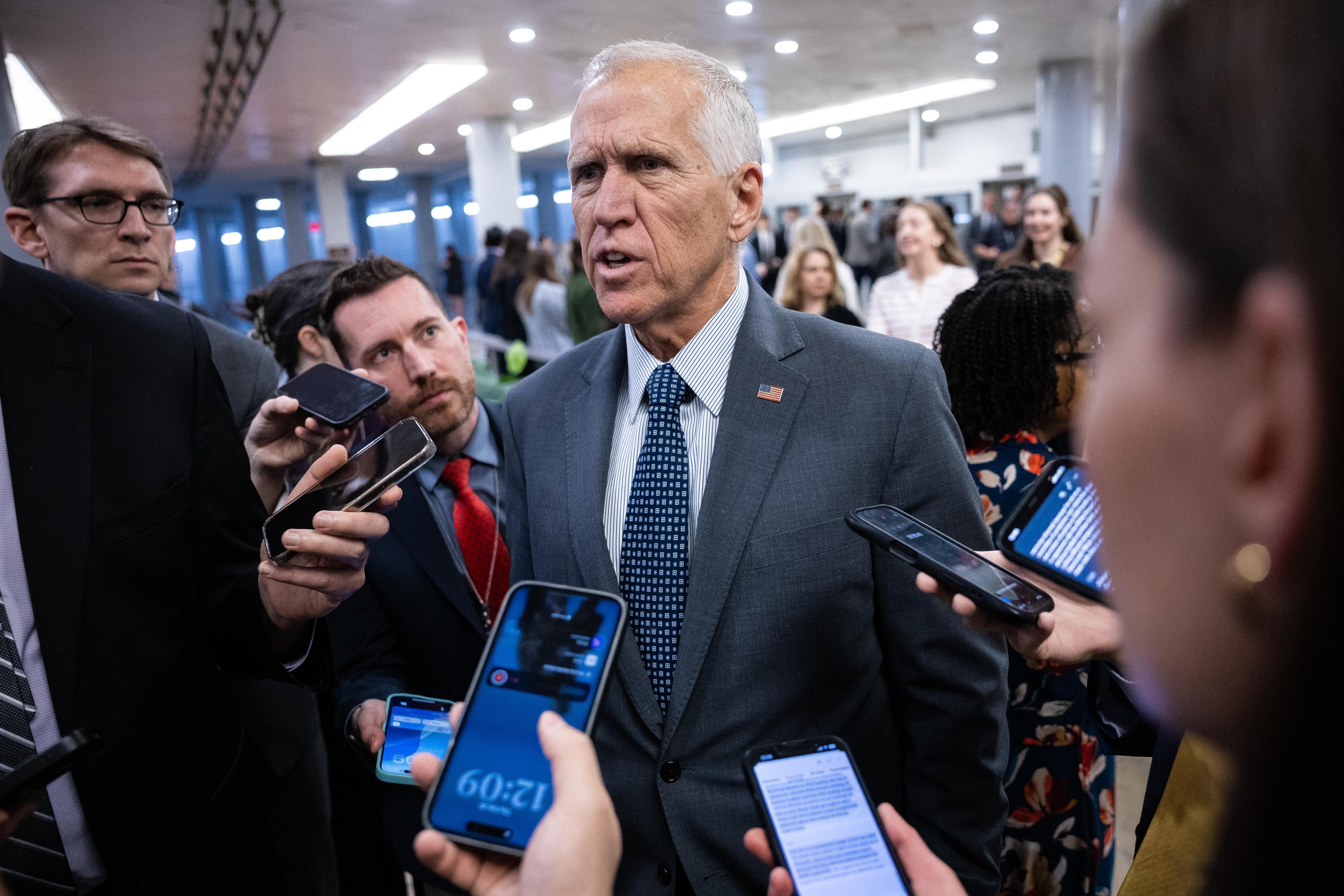
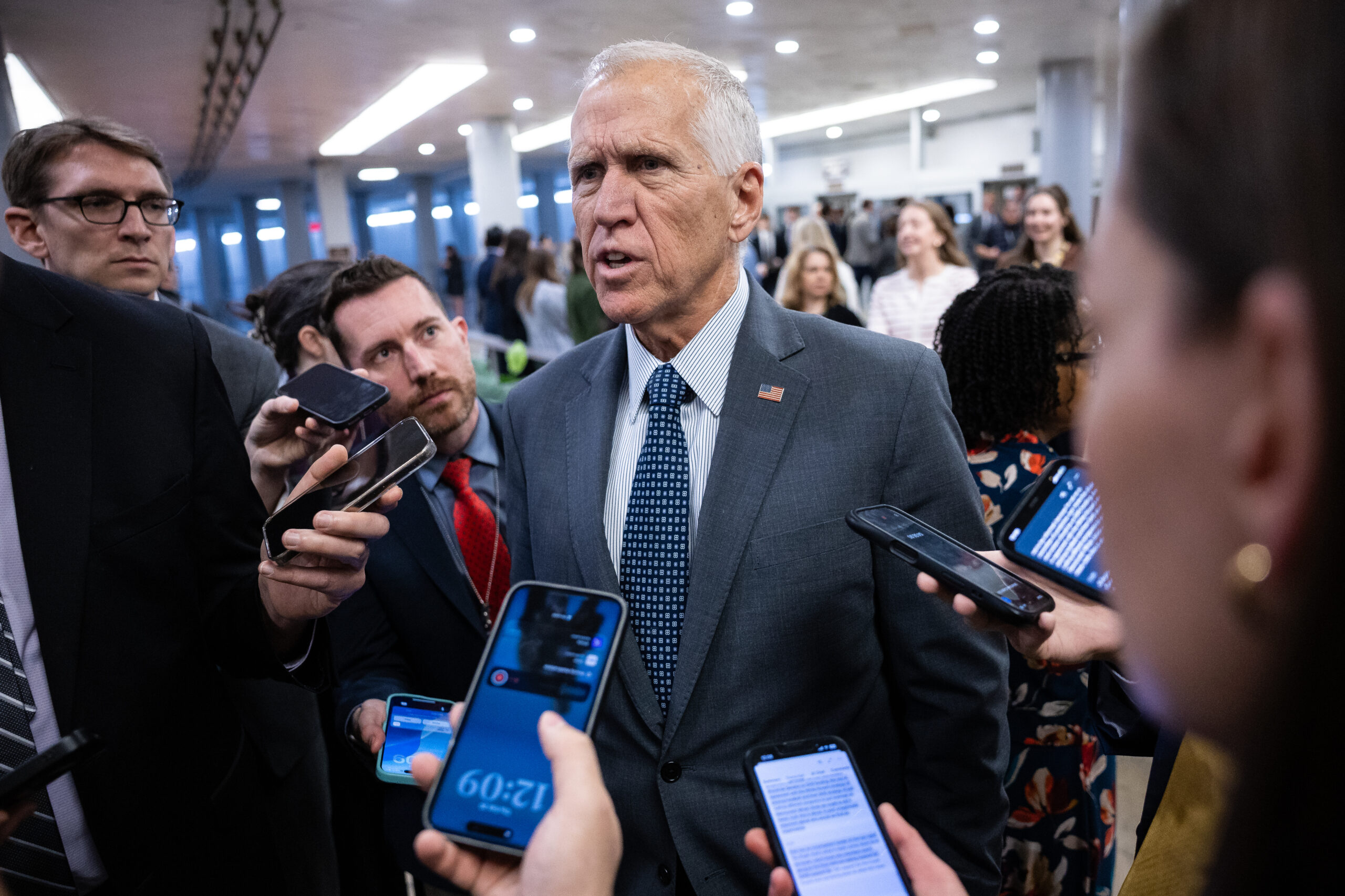
Republican Sens. Thom Tillis of North Carolina and John Kennedy of Louisiana, along with Democrats, grilled Noem when she testified before Congress in early March about the DHS ad campaign. At one point during the hearing, a clearly frustrated Tillis threatened to halt all Senate business if Noem refused to provide information about immigration enforcement in his home state, while Kennedy probed Noem about the ads and derided them for only being “effective in your name recognition.”
Noem has defended the campaign by saying the ads helped encourage two million immigrants to self-deport and thus saved billions of dollars.
Noem was also asked during the hearing about the Strategy Group,which worked to make some of the ads for Safe America Media. The Strategy Group is run by Ben Yoho, the husband of Noem’s former right-hand communications aide Tricia McLaughlin. McLaughlin has said she recused herself from the campaign, and DHS general counsel James Percival has backed her up publicly on questions about the matter and said she was not involved in selecting subcontractors.
In a response to inquiries from Sens. Richard Blumenthal (D-Conn.) and Peter Welch (D-Vt.), both members of the Senate Homeland Security Committee, Yoho said his company was only hired as a subcontractor by Safe America Media for ad production worth $226,000.
Asked about his role in this ad campaign, Yoho referred Blue Light News to the letter.
Welch’s office told Blue Light News that they have talked with legal representatives for People Who Think and Safe America Media but have not yet received responses to their questions. They said they expect to hear from them soon.
Safe America Media LLC placed some of the DHS ads through Strategic Media Services Inc., which received more than $269 million from Trump’s campaign in 2024, according to FEC records. SMS used the same office address on corporate registrations between 2013 and 2021 as Designated Market Media Inc., which McElwain is the president of.
SMS didn’t respond to a request for comment.
Congressional Black Caucus members, after a stinging loss in the Illinois Democratic Senate primary, are training their ire on Gov. JB Pritzker — and saying it’s on him to rehabilitate the relationship.
After Pritzker’s outsized financial support for Lt. Gov. Juliana Stratton helped lift her to victory, lawmakers vented frustrations that his money unfairly tilted the race in her favor and away from their candidate, Rep. Robin Kelly, a CBC member who finished a distant third. And as Pritzker eyes a 2028 presidential bid, some members, cognizant that the path to winning the Democratic Party’s nomination will run through the caucus, signaled they won’t forget that he crossed them this round.
“He has to justify what he did,” said Rep. Bennie Thompson (D-Miss.). “I’m sure at some point if he decides to run, he’ll have to come with that justification. As to whether or not it has merit or not, remains to be seen.”
Pritzker’s money helped put Stratton on the path to becoming just the sixth Black senator in U.S. history. But by boxing out Kelly, he frayed his relationship with the caucus, which holds significant sway over which candidates break through with Black voters — a large and powerful voting bloc the billionaire governor will need if he chooses to run for the White House.
“Keep in mind, the Democratic candidate for president that prevails has to go through [the CBC],” said Rep. Joyce Beatty (D-Ohio). “The CBC is very strategic and so if there is an issue … we will lay out our framework for what it will take” to get our endorsement, she added.
Many top CBC officials are in no rush to make the first move to mend fences.
“We don’t need to reach out to the governor,” said Rep. Gregory Meeks (D-N.Y.) who chairs the Congressional Black Caucus PAC, adding that the group is focused on midterm races and delivering House Minority Leader Hakeem Jeffries the speaker’s gavel.
“Others are going to have to reach out to us,” he said of Pritzker. “Those conversations happen when those conversations happen.”
Pritzker’s political arm issued a statement in response saying he was “proud” to support Stratton, Illinois’ first Black lieutenant governor: “With only six black women having served in the U.S. Senate throughout its history, Gov. Pritzker supported his partner in governance because he’s worked side by side with her for almost a decade and knows she will deliver for the people of Illinois,” Jordan Abudayyeh, Pritzker’s spokesperson, said.
His team did not address questions about CBC members’ concerns, but did point to Rep. Jim Clyburn, the powerful South Carolina Democrat, saying ahead of the election that Pritzker was “free to support” anyone.
Clyburn on Wednesday told Blue Light News he would “expect” for Pritzker to support his No. 2 and that he was not focused on 2028.
Still, lawmakers’ veiled threats lay bare the difficulties Pritzker could face beyond Tuesday’s primary. And they underscore the duality the CBC is navigating as high-profile defeats of their members in Illinois and Texas raise questions about their political influence — even as they celebrate Stratton’s victory.
In interviews with more than a dozen CBC members on Wednesday, they made clear their irritation is not with Stratton, who many said will be welcomed into the caucus if she wins as expected in November. Their indignation rests solely with Pritzker, who they accused of playing kingmaker by pouring millions of dollars into propping up Stratton.
Tensions flared between the powerful legislative voting bloc and the billionaire governor in early March. CBC Chair Yvette Clarke lashed out at Pritzker, saying she was “beyond frustrated” with the governor for “tipping the scales” a nod to his funneling of $5 million from his super PAC to help catapult Stratton into contention with Rep. Raja Krishnamoorthi, who for much of the primary was leading in the polls and started with a massive cash advantage.
Many CBC members, and Clarke specifically, took Pritzker’s presence in the race as a snub to Kelly, who had a long-standing beef with Pritzker after he worked to oust her as chair of the Illinois Democratic Party in 2022. While both Kelly and Pritzker were said to have moved beyond it, the Senate campaign reopened old wounds.
Clarke issued a statement — some 12 hours after the Illinois Senate primary was called — to congratulate Stratton on her victory, calling it “a significant moment for Illinois and the nation that calls for unity” before pivoting to praise Kelly.
The CBC chair on Wednesday said she and Pritzker had not spoken.
“I’m sure there’ll be a moment where we’ll have a conversation,” Clarke said. When asked if she felt like she needed to initiate a conversation with the governor, she responded tersely. “No, I don’t.”
Former Illinois Sen. Carol Moseley Braun, the first Black woman elected to the body in U.S. history, endorsed Stratton in the race. She took issue with CBC members’ intense focus on the governor’s role in the process instead of the historic outcome, and said the group seemed more focused on backing its own than expanding Black representation.
“To weigh in on this race was just backwards,” she told Blue Light News. “[Kelly] was a member of the caucus and so it’s understandable on that level. But at the same time, Juliana deserved at least something from that group.”
Many current CBC members refrained from attacking Pritzker directly, however — another sign of the complex politics at play. Congressional Democrats want Pritzker’s billions to help bankroll their bid to retake control of the House and make Jeffries, the minority leader and New York Democrat, the first Black speaker. They’ve already been working him behind the scenes.
“I’ve already reached out to Governor Pritzker,” said Rep. Steven Horsford (D-Nev.), a former CBC chair. “I’ve talked to him this morning, in fact, and I’ll talk to him in the weeks and months to come, because I have one objective: to win this House, to help win the Senate, and to make sure we end the chaos that’s coming out of this administration.”
Others took pains to separate their evaluation of Pritzker’s role in propelling Stratton to victory from any campaign he may run in 2028, suggesting they were willing to reset the relationship.
“You will still have to show your bona fides, and you still will have to make your case as to why the CBC and Black people should take you into consideration. So we have reset it,” Rep. Sydney Kamlager-Dove (D-Calif.) said. “Good for him, for her, but that has no bearing on the 2028 race.”
Shia Kapos contributed to this report.

NEW YORK (AP) — A federal judge on Tuesday ordered the Trump administration to restore the government-run Voice of America’s operations after it had effectively been shut down a year ago, putting hundreds of employees who have been on administrative leave back to work.
U.S. District Court Judge Royce C. Lamberth gave the U.S. Agency for Global Media a week to put together a plan for putting Voice of America on the air. It has been operating with a skeleton staff since President Donald Trump issued an executive order to shut it down.
A week ago, Lamberth said Kari Lake, who had been Trump’s choice to lead the agency, did not have the legal authority to do what she had done at Voice of America. In Tuesday’s decision, Lamberth ruled on the actions she had taken to respond to Trump’s order, essentially shelving 1,042 of VOA’s 1,147 employees.
“Defendants have provided nothing approaching a principled basis for their decision,” Lamberth wrote.
There was no immediate comment on the decision by the agency overseeing Voice of America. Lake had denounced Lamberth’s March 7 ruling, saying it would be appealed. Since then, Trump nominated Sarah Rogers, the undersecretary of state for public diplomacy, to run USAGM. That requires Senate approval, a step that was not taken with Lake.
Patsy Widakuswara, Voice of America’s White House bureau chief and a plaintiff in the lawsuit to restore it, said she is deeply grateful for the decision.
“We are eager to begin repairing the damage Kari Lake has inflicted on our agency and our colleagues, to return to our congressional mandate, and to rebuild the trust of the global audience we have been unable to serve for the past year,” she said.
“We know the road to restoring VOA’s operations and reputation will be long and difficult,” she said. “We hope the American people will continue to support our mission to produce journalism, not propaganda.”
Voice of America has transmitted news coverage to countries around the world since its formation in World War II, often in countries with no tradition of a free press. Before Trump’s executive order, VOA had operated in 49 different languages, broadcasting to 362 million people.
-

 The Dictatorship1 year ago
Luigi Mangione acknowledges public support in first official statement since arrest
-

 Politics1 year ago
Former ‘Squad’ members launching ‘Bowman and Bush’ YouTube show
-

 Politics1 year ago
Blue Light News’s Editorial Director Ryan Hutchins speaks at Blue Light News’s 2025 Governors Summit
-

 Politics1 year ago
Former Kentucky AG Daniel Cameron launches Senate bid
-

 The Dictatorship6 months ago
Mike Johnson sums up the GOP’s arrogant position on military occupation with two words
-

 The Dictatorship1 year ago
Pete Hegseth’s tenure at the Pentagon goes from bad to worse
-
Uncategorized1 year ago
Bob Good to step down as Freedom Caucus chair this week
-

 Politics11 months ago
Democrat challenging Joni Ernst: I want to ‘tear down’ party, ‘build it back up’