
Politics
A rare Mamdani-Menin alliance


DAYS THE BUDGET IS LATE: 28
WITH FRIENDS LIKE THESE: Mayor Zohran Mamdani and Council Speaker Julie Menin have been at loggerheads over how to close New York City’s multibillion-dollar budget gap.
Mamdani has maintained the deep deficit can only be plugged if the state raises taxes on millionaires and large corporations. Menin has countered that the gap can be addressed by trimming municipal bloat — a proposal Mamdani panned as “unrealistic” just weeks ago.
Today brought a major deescalation: The two leaders joined forces to call on Gov. Kathy Hochul and state lawmakers to scale back a tax credit largely benefitting millionaires. Doing so would generate $1 billion in new revenue for the city, a windfall that could go a long way in helping the city balance its books, Menin and Mamdani said at a joint press conference.
“We are standing together today, we will stand together again,” Mamdani said, appearing alongside Menin in the City Hall Rotunda. “If we were to reduce this tax credit by just a quarter, as the speaker said, we would be talking about raising nearly $1 billion in additional revenue that would be critical in our city’s ability to balance this budget.”
Hochul, who’s still grappling with a state budget that’s now nearly a month late, immediately threw cold water on the new push from Mamdani and Menin, putting a dent in their unusual alliance.
“It’s not happening. We’re not changing the PTET,” Hochul told reporters in Albany later in the day, using an acronym for the Pass-Through Entity Tax credit eyed for reform by Mamdani and Menin.
In slamming the door on the proposal, Hochul is leaving Menin and Mamdani without a clear path forward on how to fill the city’s budget hole. The governor’s opposition to the tax credit push also creates an unusual new front in the negotiations on this year’s overdue state budget, with Mamdani and Menin on one side and Hochul on the other.
The fraught dynamic comes at a politically delicate time for the Buffalo-born governor, who is gearing up for a reelection bid and will need deep blue New York City if she wants to cruise to a second full term. Being at odds with Mamdani, who draws support from a fervent left-leaning base, would complicate Hochul’s political standing with many Democratic voters.
Mamdani and Menin made the joint plea for the tax credit changes in tandem while announcing they had agreed to push back the release of the mayor’s executive budget proposal until May 12, a deal first reported by POLITICO on Monday night.
The executive spending plan, which forms the basis for the final stretch of negotiations before the mayor and the Council must finalize a city budget by July 1, is technically due this Friday.
But as the state budget is now nearly a month late with its own budget, Mamdani and Menin are agreeing to delay the executive plan’s release in hopes that Albany will have its fiscal outlay in order by May 12. Without knowing how much revenue will flow to the city from the state, Mamdani and Menin both said there will be holes in the city’s spending plan that would be hard to reconcile.
Read the full story from Chris and Nick in Blue Light News.
FROM CITY HALL

SHELTER MOVES: A man died by suicide after he was abruptly moved out of a shelter as part of Mayor Mamdani’s plan to close the long-decaying Bellevue intake center on East 30th Street in Manhattan.
Mamdani announced the closure plan on March 5, kicking off a weeks-long rush to clear out two East Village shelters and convert them into intake centers for homeless men and adult families requesting beds. Mamdani said the move was a proactive measure based on expert guidance, noting the Bellevue intake center’s state of “severe disrepair.”
Advocates who work with homeless New Yorkers warned that the relocations posed serious health risks if not done in a careful and coordinated way.
Then Steven Rosa — who was moved from an East Village shelter with on-site behavioral health services to a hotel-turned-shelter in Brownsville, Brooklyn — seemingly fell through the cracks.
Rosa’s family told Blue Light News his depression worsened after the move, and he started spending much of his time alone in his hotel room. He was found dead in early April.
“We are saddened by this tragic loss, and our hearts are with this individual’s family and loved ones during this difficult time,” a spokesperson for Comptroller Mark Levine’s office said in response to Blue Light News’s reporting. “The deployment of care and support for vulnerable New Yorkers is extremely delicate and our office had raised concerns with the City about the effect changes may have on New Yorkers. We are seeking to better understand the circumstances surrounding this tragedy.”
A Department of Social Services spokesperson called Rosa’s death a “heartbreaking tragedy” but said the agency cannot comment specifically on his case due to client confidentiality.
“We continue to build on our efforts to assess potential risk factors — which might not be evident based on self-reported information and case history available to the agency — while strengthening connections to healthcare for all clients,” DSS spokesperson Neha Sharma said in a statement.
The new intake sites were supposed to open on May 1, but the timeline is in flux due to pending litigation. — Maya Kaufman
HIGH STAKES: There was a woman in candy stripes on a stilt. There was Assemblymember Stacey Pheffer Amato wearing her lucky shoes. There was Nas doing shoutouts to Resorts World during a rendition of his 1996 hit, “If I Ruled the World.”
All of this at 9:30 this morning for a ribbon cutting at New York City’s first full-fledged casino.
Resorts World is the first of three newly licensed casinos to have live table games as it begins a massive expansion of its existing gambling facility at the Aqueduct racetrack in Queens.
Boosters hail the economic opportunity from the coming overhaul, which would add a new resort and make the casino among the largest in the world. The company has also promised $2 billion in community benefits that local leaders have high hopes for.
“I have to allude to the fact that we lost a 15-year-old, Jaden Pierre, in this community,” Borough President Donovan Richards said during his remarks at the ribbon cutting. “So these benefits are largely not just about benefits for this site, it’s about the lives that this site will save.”
Resorts World was a surprise winner of a casino license following a years-long process. Proposals from Bally’s in the Bronx and billionaire Mets owner Steve Cohen also were awarded licenses in December.
Amato, who chaired a community advisory board that tested local support for the casino, began wearing a pair of shoes studded with baubles and fake diamonds during the process. She wore the same pair to the opening of the casino, which she already visits regularly.
Other speakers, like Richards and City Council Member Ty Hankerson, made a point of saying they don’t gamble, but that they want the casino to do well.
Former Council Speaker Adrienne Adams — who is running for lieutenant governor on Hochul’s ticket — said Resorts World first approached her about building a gaming facility at Aqueduct 15 years ago, when she was working for the NAACP. She said it took a while for the civil rights group to trust Resorts World but she now views the company as an “amazing” partner who has been held accountable to its community and its promises.
The head of Genting — Resorts World’s Malaysian parent company — came to do the ribbon cutting.
“Our planned expansion will bring a world-class integrated resort to this site, and when it is complete, New York will have something no other city in America can match,” Genting chair KT Kim said.
From closer to home, Nasir Jones, the New York rapper known as Nas, wore a tuxedo to help roll the ceremonial first dice.
Resorts World’s parent company has a history of late or overbudget projects, which even the body that recommended it received a license warned about, but it has some advantages: It’s open now, years before the two others will be. It also has pledged an enormous share of its revenue to the state.
It also outlasted other bidders, most notably a trio of developers who wanted to put casinos in Manhattan, including Caesars’ plan to have a gaming emporium in Times Square. Ironically, one of the older slot machine rooms at Resorts World is called Time Square Casino – and it’s the only one in New York for the foreseeable future. – Ry Rivard
From the Capitol

CLIMATE TANGO CONTINUES: The debate over changes to weaken New York’s 2019 climate law appears to be moving toward an end. Gov. Kathy Hochul’s latest proposal is for emissions reduction regulations by 2028 with an interim flexible target in 2040 and keeping the firm 2050 mandate.
“It is certainly better than it was,” said Senate Majority Leader Andrea Stewart-Cousins on Tuesday. “We’re trying to work on an entire package. … It is a huge push to make sure that we do not lose ground that we should not cede while we are waiting for the promulgation” of the regulations.
Stewart-Cousins said that rebates to help New Yorkers with high energy bills and proposals to accelerate solar investments were on the table as part of the discussions.
Hochul’s proposal includes the controversial accounting change long sought by the governor that would essentially require less aggressive action to reduce fossil fuel use, particularly natural gas, according to four people familiar with the agreement.
Some Democratic lawmakers remain dissatisfied with the proposal, and environmental groups like Food and Water Watch and New York Communities for Change are calling for them to vote no on any budget that includes changes to the climate law.
“I don’t really understand why we have to compromise so much when the entire environmental advocacy community is saying that’s a bad idea,” said Democratic Assemblymember Linda Rosenthal. “We passed the climate law. We don’t want to roll it back so dramatically.”
Hochul on Tuesday declined to commit to providing estimates of how much her proposal would cost businesses and households. She’s raised concerns about the cost of abruptly implementing a cap-and-trade program to meet the near term 2030 deadline in the climate law.
Her push to update the law would moot that target and the lawsuit over regulations to achieve it brought by environmental advocates. Hochul originally championed “cap and invest” in 2023 but has soured on the program.
“I don’t know if there will be cap and invest,” the governor said. “If there’s cap and invest, is it capped cap and invest? Is it set at a certain number? All that is unknown right now. All I know is that to give some breathing room for New York families and business I have to have a longer runway.”
The governor’s proposal currently under discussion would specify cap and invest would be part of the regulations due in 2028, according to the people familiar with the discussions. — Marie J. French
HOOD IN THE HOOD: Madison County Sheriff Todd Hood pledged to be an active lieutenant governor if elected on Republican Bruce Blakeman’s ticket this fall.
“I’m definitely not a sit-in-the-office kind of guy,” Hood said.
There’s been a split in visions for the office in recent decades – with some candidates characterizing the role as a cheerleader for the governor, and others saying it should be an independent office. Hood falls in the former category, saying his job would be to help Blakeman succeed at lower taxes and heating costs.
The Republican was at the Capitol as part of the NY Sheriffs’ Association lobby day, where he railed against Hochul’s plan to ban 287-g cooperation agreements with ICE, saying that “cutting off communication between agencies makes everyone less safe and reverses post-9/11 progress.”
Like his ticket-mate, the sheriff took a tough-on-crime approach.
“There are tons of false allegations against police,” he said when asked about a Hochul-backed plan to let New Yorkers sue ICE agents who infringe on their rights. “That’s what I’ve seen the most of in my career, are lies.”
Hood also downplayed the uproar over the recent killings of Renee Good — saying she was using her vehicle as “a deadly instrument” — and Alex Pretti by federal agents in Minneapolis.
“Yeah, you’re fighting with a police officer with a loaded firearm on you and that weapon is discovered – that’s bad things,” he said of Pretti. — Bill Mahoney
RFK JR. BEWARE: The state Assembly is pushing back against federal policy changes to vaccine recommendations with a package of six bills that would strengthen the state’s laws surrounding immunization.
Lawmaker says the package of bills is aimed at countering efforts by Health and Human Services Secretary Robert F. Kennedy Jr. to roll back immunization recommendations issued by the federal government.
The package includes legislation that would allow the state Department of Health to recommend vaccine schedules for New Yorkers using longstanding medical standards and taking into consideration recommendations from the American Academy of Family Physicians, a private professional association not beholden to recommendations made at the federal level. The state previously relied on the Advisory Committee on Immunization Practices, a federal panel responsible for making vaccine recommendations that Kennedy attempted to overhaul in an effort to install his allies before a judge blocked the appointees.
“Vaccines are foundational to public health and have long been a trusted and effective bulwark against harmful and deadly diseases, especially for our most vulnerable populations,” Speaker Carl Heastie said in a statement. “New York will stand on the side of proven science as attacks on lifesaving immunizations continue from the federal administration place our residents at risk. This legislation puts the health and well-being of New Yorkers first and ensures that these vital resources remain accessible for our communities.”
The package also includes legislation that would require college students to be immunized for Hepatitis B, a bill that would set immunization mandates for children attending summer camps and a bill that would require health insurance coverage for vaccines without cost-sharing.
An additional measure was passed that would create liability protections for health care providers administering vaccines that follow state and local guidance, a protection that could become key if providers’ actions are alleged to contradict federal guidance. — Katelyn Cordero
CAR WARS: Hochul wants to address how car insurance companies set rates for premiums — potentially a key provision that would help resolve a major sticking point in the ongoing state budget talks.
“Yes, we are looking closely at how insurance companies set their rates and what criteria they use,” Hochul told reporters Tuesday. “So there’s two sides of the equation. One is I want to make sure that some of the drivers of why we have such high insurance premiums in the state are addressed, but also the insurance companies, we’re taking a close look at their practices as well. “
POLITICO reported Monday that Hochul and state lawmakers have discussed addressing so-called flex increases that car insurance companies use to raise premiums.
Read more from Blue Light News Pro’s Nick Reisman here.
IN OTHER NEWS
— NEVER THE SAME: Timothy Brown, the man police beat in a Brooklyn liquor store, which went viral on social media, is suing New York City for $100 million in damages, saying he will never recover from the incident. (Gothamist)
— NEW PROTOCOLS: The New York Police Department has stalled or rejected policy changes recommended by the Department of Investigations regarding its controversial gang-database, which critics argue is used to target Black and Hispanic youth. (THE CITY)
— GETTING PERSONAL: Citadel CEO Ken Griffin will meet with Hochul to discuss New York City’s direction following a quarrel with Mamdani after the mayor announced a proposed new tax on pricey second-homes in front of the billionaire’s Manhattan penthouse. (Bloomberg)
Missed this morning’s New York Playbook? We forgive you. Read it here.


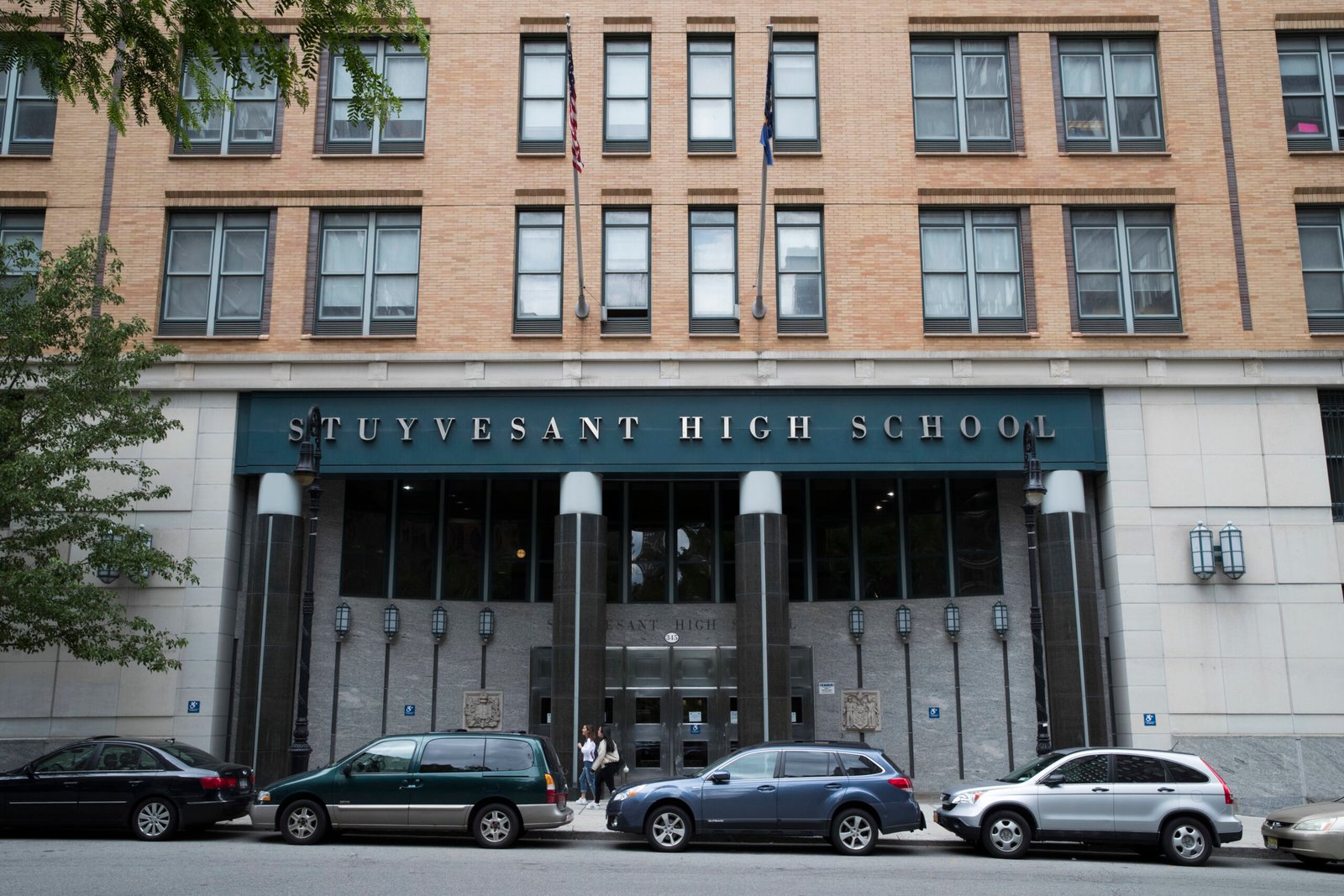
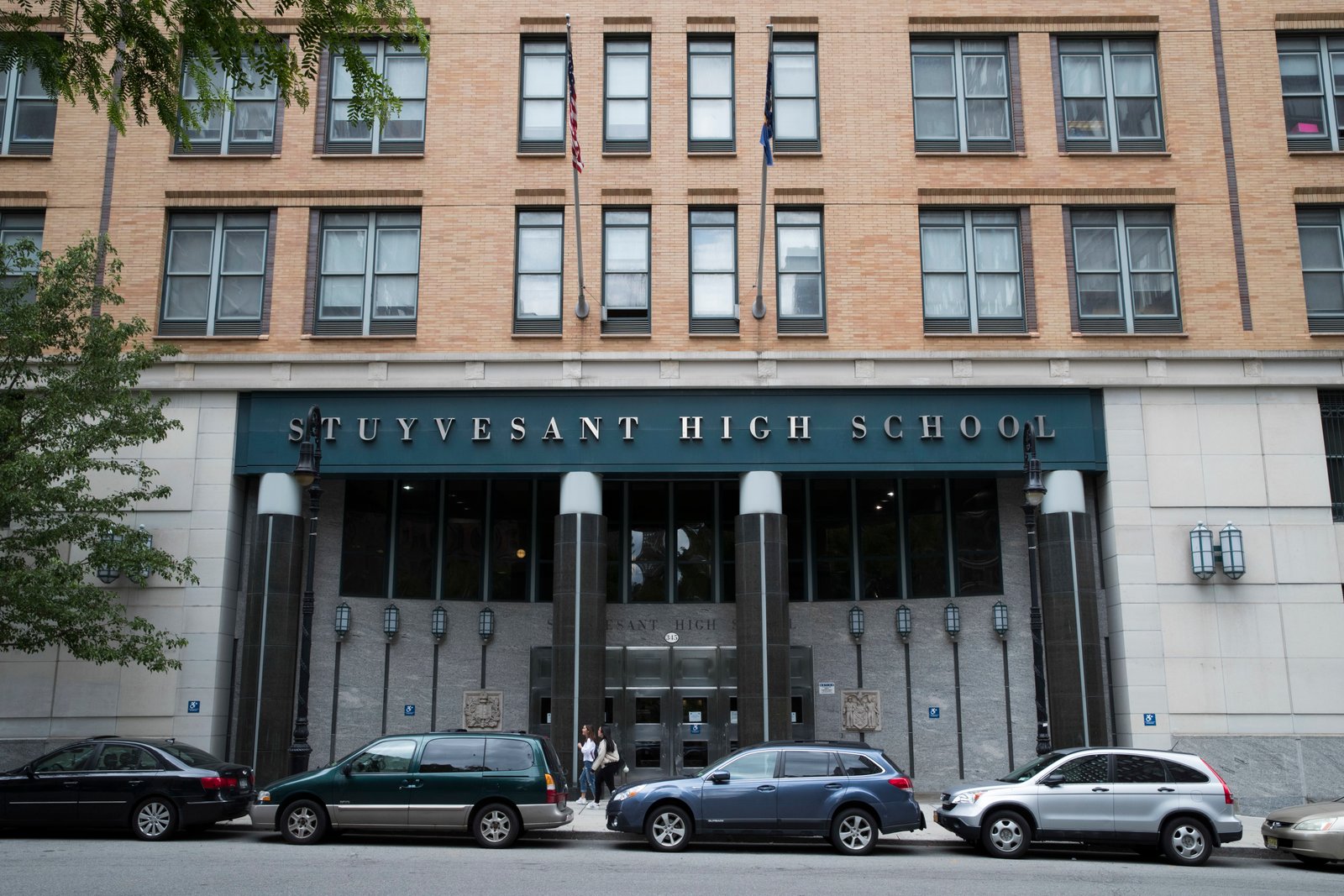
INTIFADA FLARE UP: One of New York City’s most prestigious public high schools is facing backlash because a school-based socialist youth group co-signed a social media post declaring “Intifada Until Victory!”
The Young Democratic Socialists of America chapter of Stuyvesant High School — along with YDSA chapters at Hunter College, the New School, City College and Lehman College — all signed onto an Oct. 8 Instagram post that accused the Democratic Socialists of America’s New York City chapter of silencing student activists who wanted to protest Mayor Zohran Mamdani over Israel.
The groups accused the democratic socialist mayor of betraying the Palestinian cause and blasted his decision to keep NYPD Commissioner Jessica Tisch in her position, referring to her as a “Zionist billionaire.”
The term intifada — which refers to violent uprisings against Jews in Israel — is viewed by many Jews as a call to violence against them.
Moshe Spern, president of United Jewish Teachers — an advocacy group representing Jewish teachers and students across the city — is demanding the posts be removed immediately and that the YDSA group provide a public apology to the school community.
“NYC public schools have seen hundreds of antisemitic and anti-Israel incidents since October 7, 2023,” he wrote in an email yesterday to Stuyvesant Principal Seung Yu and New York City Schools Chancellor Kamar Samuels. “When a school-recognized club amplifies this rhetoric, it risks contributing to a hostile environment.”
In the missive, Spern invoked Title VI — the federal law that bans discrimination based on race, shared ancestry and national origin — and demanded a review of the YDSA chapter’s charter, faculty adviser and recent activities for compliance.
Spern also cited a chancellor’s regulation that states that student clubs operate under the principal’s supervision and must remain consistent with the school’s educational goals.
Yu did not respond to requests for comment. Mamdani’s Department of Education also did not respond to Playbook.
Spern told Playbook today that he has yet to receive a response from Yu.
“To flat out ignore it is extremely irresponsible,” he said.
The NYC-DSA defended the organization.
“We support the right to organize,” NYC-DSA co-Chair Gustavo Gordillo said in a statement. “NYC-DSA did not organize or endorse this particular rally, but red scare tactics have never been effective tools for engaging with student movements.”
The social media uproar is the latest flashpoint in ongoing tensions in the city over Hamas’ Oct. 7, 2023, attack on Israel and the war that followed.
Mamdani, a longtime critic of Israel, was reluctant to condemn the term “globalize the intifada” on the campaign trail last year before finally saying he will not use the term. He also drew bipartisan backlash over his statement marking the third anniversary of the attack. Israeli Prime Minister Benjamin Netanyahu labeled the mayor an antisemite, which Mamdani has denied.
Mamdani, though, has also simultaneously faced backlash from pro-Palestinian activists who accused him of betraying the Palestinian cause by retaining Tisch, who’s Jewish and a self-described Zionist. Those critics have also criticized him for not doing enough to prevent local synagogues from holding events that promote land sales in Israel, some of them in the occupied West Bank. — Madina Touré
From the Capitol

Q’S LATEST: Gov. Kathy Hochul has a 55-41 lead over Republican challenger Bruce Blakeman, a Quinnipiac University poll released this afternoon found.
That 14-point advantage is narrower than the 19-point lead Quinnipiac gave Hochul last month. But it’s more in line with the numbers from other pollsters: Marist found Hochul up by 11 two weeks ago, Emerson had Hochul up 12 in early October, and Siena measured her lead at 9 points last month.
Despite Hochul’s lead, the Q Poll concluded Blakeman has an enthusiasm advantage. A total of 65% of his backers were “very enthusiastic” to support him, while only 33% of Hochul’s supporters said the same. — Bill Mahoney
FROM THE CAMPAIGN TRAIL

LANDER DETAINED: Democratic congressional candidate Brad Lander was detained today by Israeli security officials while harvesting olives in the West Bank.
Lander, a self-described liberal Zionist and critic of Israel, said he went to the West Bank as part of the “Protect the Harvest” coalition to support Palestinians gathering crops.
Rabbi Jill Jacobs, CEO of T’ruah, a progressive rabbinical organization, said she was also detained Wednesday, along with “approximately 80 American, Israeli, and international volunteers providing a protective presence for Palestinian farmers.” According to a press release from T’ruah, there were “approximately two hours of peaceful harvesting” until “Israeli forces declared the area a closed military zone” and detained them to transport them to a police station, despite the volunteers agreeing to leave.
An Israeli military official told Blue Light News that officers from the Israel Defense Forces and Border Police, along with local police, arrived at the scene because Palestinians did not submit a request to coordinate harvesting in that area, which is required ahead of time. The official added that the farm in question “requires only a small number of harvesters to collect its produce” and “the security establishment views the arrival of dozens of activists as an act intended solely to provoke, which undermines the harvesting process.”
Lander was released “once the matter was brought to our attention” that he is a congressional candidate, the official said.
Lander confirmed in a social media post that he was released with a “warning” because of his “public profile.”
Read more from Madison Fernandez in Blue Light News.
IN OTHER NEWS
— MUSK: Elon Musk has spent more than $500,000 to support Rep. Mike Lawler’s reelection bid against Democratic challenger Cait Conley. (Gothamist)
— STOP: New York City deployed 600 red light cameras to intersections, the maximum number allowed under state law. (New York Daily News)
— MEASLES: In the wake of a measles crisis, the state Health Department remains locked in a court battle with Amish schools over religious vaccine exemptions. (The New York Times)
Missed this morning’s New York Playbook? We forgive you. Read it here.
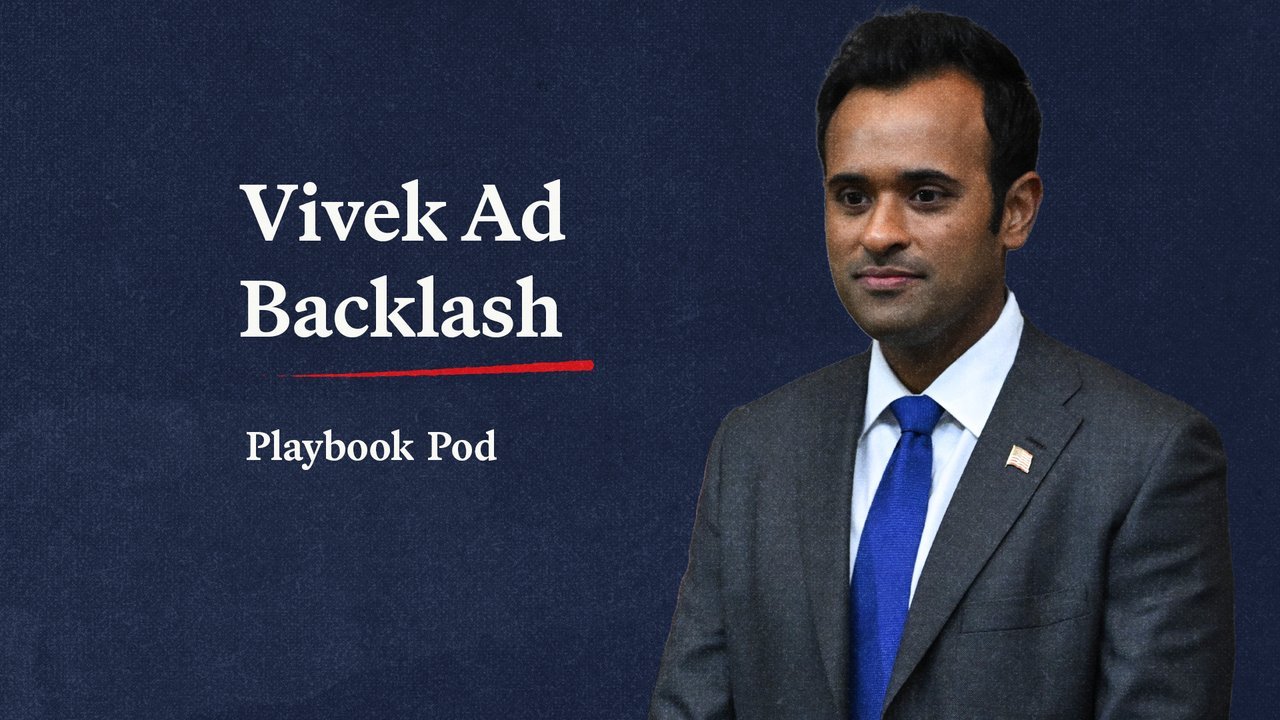
The GOP has a midterm messaging problem. Ramaswamy isn’t helping
lead image
Republicans are banking on a massive cash edge to help save their majority in Congress. But they are losing much of that advantage in an important arena: broadcast TV ads.
Republicans have spent $677 million on those ads across 10 key Senate battleground states, compared to $479 million by the Democrats. But the GOP’s money isn’t going nearly as far because they’re more dependent on outside groups that pay much higher rates than candidates.
The disparity has helped Democrats stay in the fight for Senate control amid an onslaught of GOP outside spending.
In Ohio’s Senate race, Republican groups make up 63% of the $218 million spent. But in spite of their nearly two-to-one spending advantage, they make up just over half of ads that are on the airwaves, according to data from the tracking service AdImpact. In Texas, Republicans have outspent Democrats by a three-to-one margin, but have aired just 58% of the ads. And in Michigan, the GOP accounts for 60% of the spending but just over half of the ads.
A large part of this discrepancy comes down to the mechanics of broadcast advertising. Candidates, and now political parties thanks to a recent Supreme Court ruling, are entitled to significantly lower rates. That has allowed Democratic candidates — who have posted bonkers fundraising hauls — to offset much of the GOP advantage in super PACs. Republican Senate candidates, on the other hand, struggled overall with their fundraising. And some GOP outside groups bought their ad time later, when it was even more expensive.
“There are limitations to the impact of ‘big money’ in politics,” said Sean Cooksey, a Republican former FEC commissioner. “It’s a good demonstration of the economics of campaign fundraising. Hard dollars really just go so much further.”
The disparity also shows “the Republican overreliance on outside groups,” said Ian Russell, a Democratic admaker.
“You get an eye-popping dollar amount, but it doesn’t actually translate into as many spots as you would think relative to a well-financed candidate,” Russell said. “[Republicans] were just hoping that they could spend their way out of everything that was going wrong for them. But the problem is, their issues run much deeper than a few ad buys can fix. Especially when you’ve got monster fundraising hauls from the Democratic side.”
Republicans in House and Senate races have long been more dependent on outside groups and megadonors, and for multiple cycles have seen their cash advantage undercut by fundraising strength from individual Democratic candidates. But that trend is particularly pronounced this year given the combination of Republican super PAC money and their candidates’ struggles.
In 2024, Republican outside groups spent only about 15% more than Democrats on TV ads across House and Senate general election contests, according to a Blue Light News analysis of AdImpact data. This cycle, GOP outside groups have spent 7% more.
In a few states, the discrepancy between dollars and airtime is less stark. Republicans account for 60% of the spending in Maine’s Senate race and an equal percentage of the ads, according to AdImpact. That’s in part because Sen. Susan Collins has outraised her Democratic opponent Troy Jackson over the whole cycle, although Jackson, who didn’t launch his campaign until July, raised far more in the third quarter.
The numbers show the shifting dynamics of campaign strategy after the Supreme Court opened the floodgates to more spending from parties by granting them the lower advertising rate.
Republicans have been faster to take advantage of the new rules: Major coordinated spending efforts from the NRSC and RNC have helped their side significantly this cycle.
Republicans have far outspent Democrats on Senate party-coordinated Senate advertising, $90 million to $34.6 million across TV, radio and digital ads, according to data from AdImpact.
“If I were the leader of either party, I would say you shouldn’t give a dollar, you shouldn’t give a single penny to these super PACs until you’ve maxed out to the party committee,” Cooksey said.
Some Republicans say that strategic errors have contributed to erasing their cash edge. A number of GOP strategists have also privately griped that MAGA Inc. — one of the major outside groups backing their candidates — bought TV airtime too late, forcing them to pay even higher rates and further draining resources and increasing the price of reaching voters. Republicans fretted for months about whether Trump’s well-financed super PAC, MAGA Inc., would get involved. The group has since spent heavily, but only launched its first general election ad buys in September.
“There is no question MAGA Inc. should have bought ads earlier in the cycle,” said one national GOP operative who was granted anonymity to discuss party strategy, noting that rates across the country increase as Election Day nears. Other top GOP outside groups, like the Senate Leadership Fund and the Congressional Leadership Fund, made their early advertising reservations much earlier in the cycle than MAGA Inc.
Trump allies waved away that criticism. A person familiar with the Trump operation’s midterm planning, granted anonymity to discuss strategy, said it’s “indisputable that the spending from the Trump political effort has kept us competitive in many Senate races.”
MAGA Inc. declined to comment.
Still, GOP outside groups are utilizing their cash advantage in some underappreciated ways.
Republican super PACs have massively outspent their Democratic counterparts on mail — roughly $157 million to $35 million for the general election — according to a Blue Light News analysis of independent expenditure filings submitted to the Federal Election Commission. That’s led by a whopping $44 million in spending on mail across 24 races from the Trump-aligned No Going Back PAC, along with $23.8 million across 20 races from Elon Musk’s America PAC.
GOP-aligned super PACs have also spent more than Democratic ones on phone calls and text messages, the data shows.
- NYC high school faces backlash over ‘intifada’ post
- Trump releases heating oil to the northeast to reduce surging prices
- Sen. Whitehouse says wind attacks threaten permitting deal
- The other Michigan race corporate America is watching
- Scalise heads to Florida to boost several GOP candidates
- ‘Very limited choice’: Data centers confront new constraints
- The GOP has a midterm messaging problem. Ramaswamy isn’t helping
- This member is so frustrated with Congress he wants voters to sidestep it
- Capitol agenda: The unknowns of a Sherrod Brown return
- Rick Jackson is Georgia Republicans’ best hope. Donald Trump may get in the way.
-

 Politics2 years ago
Former ‘Squad’ members launching ‘Bowman and Bush’ YouTube show
-
Uncategorized2 years ago
Bob Good to step down as Freedom Caucus chair this week
-

 The Josh Fourrier Show2 years ago
DOOMSDAY: Trump won, now what?
-

 The Dictatorship2 years ago
Pete Hegseth’s tenure at the Pentagon goes from bad to worse
-

 Politics2 years ago
Former Kentucky AG Daniel Cameron launches Senate bid
-

 The Dictatorship2 years ago
Luigi Mangione acknowledges public support in first official statement since arrest
-

 Politics2 years ago
Blue Light News’s Editorial Director Ryan Hutchins speaks at Blue Light News’s 2025 Governors Summit
-

 Politics1 year ago
John Legend advises Trump to drop the ‘dictator s‑‑‑’ if he wants Nobel Peace Prize