
The Dictatorship
A father and son and a man who tried to save his home are among the L.A. wildfire victims

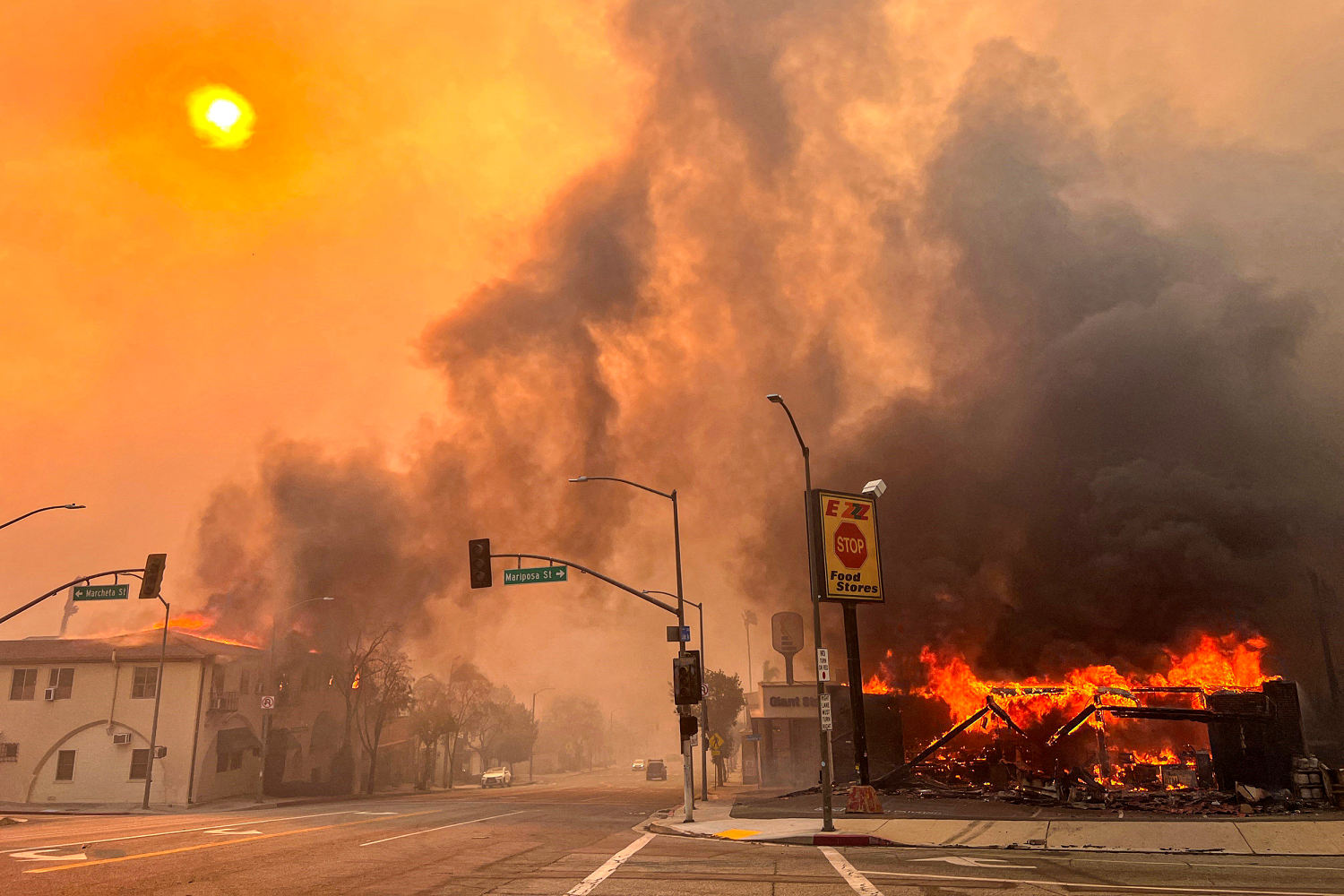
As wildfires continue to tear through the Los Angeles areaofficials said that at least 11 people have died, though the actual death toll remains unknown.
Some of the victims have been identified by family members, neighbors and friends. Among them are a father and son who were waiting to be evacuated, as well as residents who had weathered past wildfires and wanted to stay behind to protect their homes.
Here’s what we know about the victims so far.
Anthony and Justin Mitchell
A father and son died in their Altadena home on Wednesday, family members said.
Anthony Mitchell Jr. told The New York Times that his father, a 67-year-old amputee who used a wheelchair, called him early on Wednesday to say that he was waiting for Anthony’s brother, Justin, who has cerebral palsy and did not walk, to be evacuated. That night, both of them were found dead.
Mitchell said his father did not want to leave Justin behind. “He probably could have gotten himself out, but he wasn’t going to leave my brother,” he told NBC News. “He really loved his kids.”
Mitchell described his father as a family man who considered his family as his legacy. “He said, ‘Money don’t matter, property don’t matter. My kids and my family are my treasure,’” Mitchell told NBC News.
Mitchell said his brother Justin was a “sweet kid.” In an interview with The Washington PostJustin’s half sister, Hajime White, said authorities told them that their father was found by Justin’s bedside.
People with disabilities are disproportionately affected by natural disasters. A 2019 state audit found that California emergency officials had continued to overlook people with disabilities and other vulnerable residents when preparing for disasters like wildfires. Victims of the deadly Camp Fire in 2018, for example, were mostly older or disabled.
Rodney Nickerson
Nickerson, 82, did not want to leave the home he lived in for decades and reassured family members and neighbors that he would be fine, his daughter Kimiko Nickerson told KTLA.
Her father had experienced other fires before, she said. “He said that he was going to gather up his stuff, but he said he was going to stay here, too,” she added. “He said that he felt this was going to pass over and that he would be here.”
Nickerson’s son, Eric Nickerson, told the New York Times his father was a retired aerospace engineer for Lockheed Martin and an active deacon at his church.
Victor Shaw
Shaw, 66, lived with his sister in the home that he grew up in. His sister, Shari Shaw, told KTLA that she tried to get him to evacuate with her Tuesday night as the Eaton Fire closed in, but that he was determined to stay behind and protect their home from the fire.
Shaw’s friend Al Tanner told KTLA that they found his burned body at the side of the road with a garden hose. “It looks like he was trying to save the home that his parents had for almost 55 years,” Tanner said.
Erliene Louise Kelley
Briana Navarro told NBC News that her 83-year-old grandmother, who had experienced a previous major wildfire, decided to stay behind when her family evacuated.
“My husband, he’s not from out here, so he kind of was looking at it a little different than we were,” Navarro said. “We asked [my grandmother] … and she’s like, ‘No, no I’m fine. You guys go ahead.’”
Kelley was a familiar face in the neighborhood, Navarro said. Terry Pyburn, a neighbor, described Kelley to the Times as an “angel” who was “so, so, so sweet.”
Randall Miod
Friends and family confirmed that Miod, a surfer and well-known figure in Malibu, died in the Palisades Fire.
Miod, 55, loved living a simple life in Malibu, in a house he called “the Crab Shack,” his friend Corina Cline told The Washington Post. His house burned down, and a cousin said that authorities found remains they believed to be Miod’s in the home, the Post reported.
Rory Callum Sykes
Sykes, a former child actor from Australia, died on his family’s Malibu estate on Wednesday, his mother, Shelley Sykes, wrote in a post on X.
According to the post, she could not put out the cinders on the roof of his cottage because of a lack of water.
Sykes, who was born blind and had cerebral palsy, starred in the British TV show “Kiddy Kapers.”
“He overcame so much with surgeries & therapies to regain his sight & to be able to learn to walk,” his mother wrote. “Despite the pain, he still enthused about traveling the world with me from Africa to Antarctica.”
This is a developing story. Check back for updates.


The Dictatorship
Airstrikes on Iran kill more than 25 as Trump’s deadline to open Strait of Hormuz looms
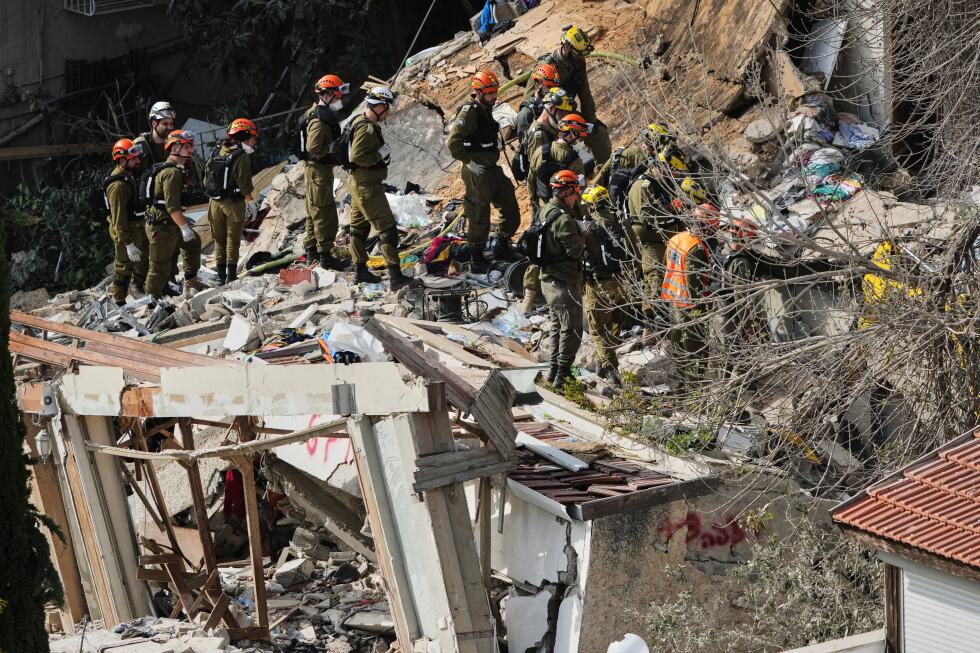
TEHRAN, Iran (AP) — U.S. President Donald Trump expanded his threat against Iran to include all power plants and bridges Monday as his ultimatum to make a deal ticked closer, after Tehran rejected a 45-day ceasefire proposal and said it wants a permanent end to the war.
“The entire country can be taken out in one night, and that night might be tomorrow night,” Trump said. He suggested that his Tuesday 8 p.m. EDT deadline was final, saying he’d already given Iran enough extensions.
The U.S. has told Iran to open the crucial Strait of Hormuz to all shipping traffic or see power plants and bridges wiped out, sparking warnings about possible war crimes.
Israel piled on pressure by attacking a major petrochemical plant and killing the intelligence chief for the paramilitary Revolutionary Guard.
Tehran with its rejection conveyed its own, 10-point plant to end the fighting through Pakistan, a key mediator, Iran’s state-run IRNA news agency said.
“We only accept an end of the war with guarantees that we won’t be attacked again,” Mojtaba Ferdousi Pour, head of Iran’s diplomatic mission in Cairo, told The Associated Press. He said Iran no longer trusts the Trump administration after the U.S. bombed the Islamic Republic twice during previous rounds of talks.
A regional official involved in talks said efforts had not collapsed. “We are still talking to both sides,” he said, speaking on condition of anonymity to discuss closed-door diplomacy.
AP AUDIO: Israel hits Iranian petrochemical plant in massive gas field as Trump deadline approaches
AP correspondent Charles de Ledesma reports a leading Tehran university has come under attack.
And even Trump said negotiations with Iran continued.
Activists reported a new wave of strikes on Tehran early Tuesday. Israel claimed credit but offered no immediate details on what had been targeted.
Meanwhile, Japan said Tuesday a Japanese national who had been detained in Iran since January has been released on bail.
Chief Cabinet Secretary Minoru Kihara told reporters in Tokyo that his release was confirmed Monday and that Japan is demanding a full release from Iranian authorities. He said the Japanese ambassador to Iran met the person released and that he was in good health without providing further details.
The person released is believed to be a journalist at Japan’s NHK public television. Another Japanese national, who was detained in Iran last June, was released and returned to Japan in March.
Trump says Iranians ‘willing to suffer’ for freedom
Trump has issued ultimatums to Iran before, only to find ways to back off. But he was more explicit this time on plans to follow through.
“Every bridge in Iran will be decimated by 12 o’clock tomorrow night,” he said, and all power plants will be “burning, exploding and never to be used again.”
Asked if he was concerned about accusations of war crimes, Trump responded, “No, not at all.” He suggested that Iranians want the U.S. to carry out its threats because it could lead to the end of their current leadership.
Iranian citizens are “willing to suffer,” he said, “in order to have freedom.” But there has been no sign of an uprising in Iran as residents shelter from bombardment.
International warnings piled up against expanded strikes. “Any attack on civilian infrastructure is a violation of international law and a very clear one,” United Nations spokesperson Stephane Dujarric later told journalists.
Egyptian, Pakistani and Turkish mediators had sent Iranian Foreign Minister Abbas Araghchi and U.S. Mideast envoy Steve Witkoff a proposal calling for the ceasefire and the reopening of the Strait of Hormuz, two Mideast officials told the AP. The officials spoke on condition of anonymity to discuss the private negotiations.
Iranian and Omani officials also were working on a mechanism for administrating the strait, through which a fifth of the world’s oil is shipped in peacetime. Iran’s grip on it has shaken the world economy.
Tehran has refused to let U.S. and Israeli vessels through after they started the war on Feb. 28.
Iran’s new supreme leader makes rare statement
Israel struck a key petrochemical plant in the South Pars natural gas field, saying it was aimed at eliminating a major source of revenue for Iran. The field, the world’s largest, is shared with Qatar and is Iran’s biggest source of domestic energy for its 93 million people.
The strike appeared to be separate from Trump’s threats. An earlier Israeli attack there in March prompted Iran to target energy infrastructure in other Middle East countries, a major escalation.
Israel also killed the head of intelligence for Iran’s paramilitary Revolutionary Guard, Maj. Gen. Majid Khademi, according to Iranian state media. And Israel said it killed the leader of the Revolutionary Guard’s undercover unit in its expeditionary Quds Force, Asghar Bakeri.
“We will continue to hunt them down one by one,” Israeli Defense Minister Israel Katz said of top Iranian officials.
New Supreme Leader Mojtaba Khamenei, who still has not been seen or heard in public, issued a rare statement expressing condolences over Khademi. Israeli strikes have killed dozens of top Iranian leaders, including Khamenei’s father.
Israel’s military also said it struck three Tehran airports overnight — Bahram, Mehrabad and Azmayesh — hitting dozens of helicopters and aircraft it said belonged to the Iranian Air Force.
A Tehran resident said “constantly there is the sound of bombs, air defenses, drones,” speaking on condition of anonymity for her safety. Another detailed taking sleeping pills to get through nightly bombardments, and said people worry about power, gas and water cuts.
Airstrikes kill at least 29 across Iran
Smoke rose near Tehran’s Azadi Square after an airstrike hit the grounds of the Sharif University of Technology. Multiple countries have sanctioned the university for its work with the military, particularly on Iran’s ballistic missile program.
Authorities and Iranian state media reported at least 29 people killed across the country by strikes.
In Lebanon, where Israel has launched air attacks and a ground invasion that it says target the Iran-linked Hezbollah militia, an airstrike hit an apartment in Ain Saadeh, a predominately Christian town east of Beirut. It killed an official in the Lebanese Forces, a Christian political party strongly opposed to Hezbollah, his wife and another woman.
More than 1,900 people have been killed in Iran since the war began, but the government has not updated the toll for days.
More than 1,400 people have been killed in Lebanon and more than 1 million people have been displaced. Eleven Israeli soldiers have died there.
In Gulf Arab states and the occupied West Bank, more than two dozen people have died, while 23 have been reported dead in Israel and 13 U.S. service members have been killed.
___
Weissert reported from Washington, Magdy from Cairo and Gambrell from Dubai, United Arab Emirates. Munir Ahmed in Islamabad, Isabel DeBre in Ain Saadeh, Lebanon, Edith M. Lederer at the United Nations, Amir-Hussein Radjy in Cairo and Josh Boak and Michelle L. Price in Washington contributed to this story.
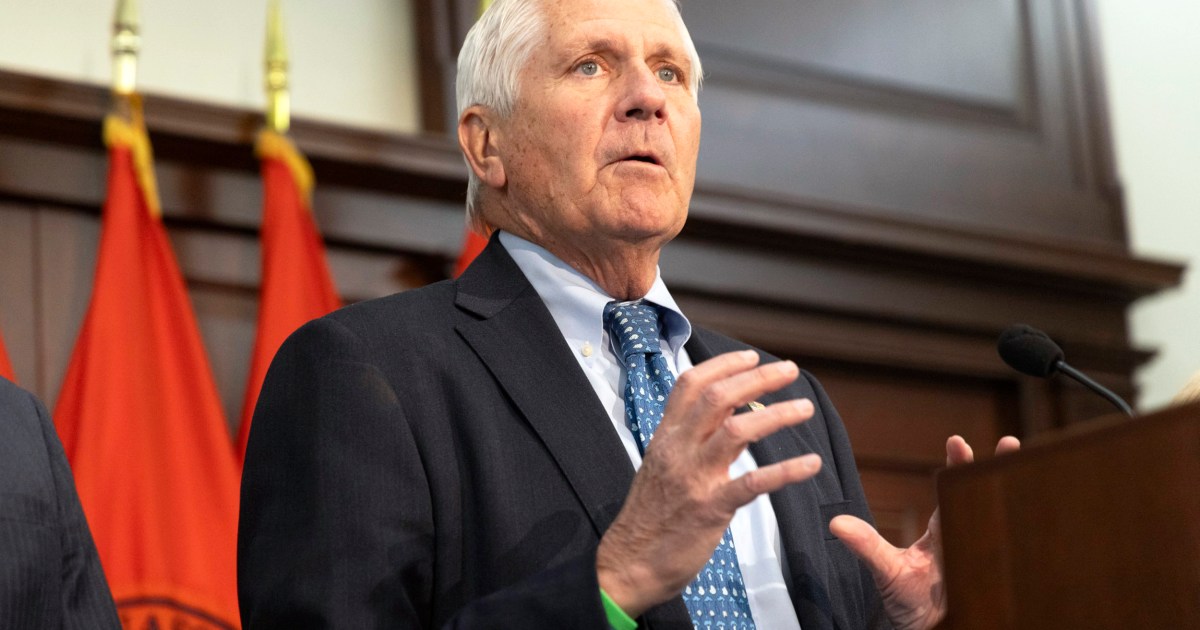
The identities of several members of the militia created by New York GOP gubernatorial candidate Bruce Blakeman have reportedly been revealed.
Blakeman’s quest to stand up a force of armed and deputized citizens in his capacity as Nassau County executive — to help with purported “emergencies” — has garnered comparisons to Nazi brownshirts. The Long Island militia has also been likened to the Ku Klux Klan and slave patrols during the era of chattel slavery, both of which deployed militias filled with civilians to terrorize Black people.
A onetime umbrella-holder for Donald Trump and a devout MAGA loyalist, Blakeman has said he will never disagree with Trump in public. He also has said that his militia of “special deputies” — which could be unleashed at his whim — might be used to quell civil rights demonstrationssaying it would be available “if there was a riot.”

Democrats have sounded the alarm that some of the militia members were unqualified and, in some cases, had run into issues with the law themselves. Such fears were seemingly confirmed by a recent court filing by Democrats who are suing to thwart the militia, as reported by Newsday.
The list of deputies includes Zachary Cohen, a nephew of Blakeman’s who, according to Newsday, “has no law enforcement or military experience.”
Per Newsday:
According to the documents, Zachary Cohen obtained his pistol license in the spring of 2024 but is without law enforcement or military experience. His résumé indicated he manages his family’s real estate portfolio as president and CEO of AMZ Management in Rutherford, New Jersey.
Cohen writes in his cover letter: ‘I am extremely interested in serving my community and following in the footsteps of my Uncle Bruce Blakeman.’
Cohen could end up working alongside a former New York Police Department officer whose manhandling of a suspect led to a massive civil settlement by New York City in 1995. (The officer was acquitted of assault.)
In the application Donald Alesi submitted to join the volunteer program he touted his decorated service with the FBI and the NYPD’s narcotics division, recently released court documents show. Omitted are dozens of allegations and complaints throughout his time as an officer in the 1980s and 1990s, including having been one of two Brooklyn officers charged with assaulting the driver of a passenger van, leaving the man paralyzed from the neck down.
While Alesi and the other officer were acquitted in the criminal case, the city paid a $16.6 million civil settlement, according to news reports. Newsday found the information in a search of police misconduct records using Alesi’s name.
Newsday did not obtain comment from Cohen or Alesi. When asked for comment on the names being released, a Blakeman spokesperson told Newsday that the judge in the case had ties to Democrats and should recuse himself.
The list reportedly includes a bunch of other people whose expertise on matters of law enforcement is questionable — to say the least. For example, there are several registered gun owners listed, including a former team dentist for the NHL’s New York Islanders, a former member of Blakeman’s transition team and a tractor-trailer driver.
A dentist. A truck driver. A Blue Light News. Sounds like a fine group of people if you’re looking to haul cargo, write a press release or replace a cavity. But nothing about this bunch of gun-toting volunteers suggests they have any competency more useful in this case than their willingness to take orders at the behest of a Trump sycophant.
Ja’han Jones is an MS NOW opinion blogger. He previously wrote The ReidOut Blog.
Today’s edition of quick hits.
* An understandable reaction: “During his press briefing today, Stéphane Dujarric, spokesperson for United Nations Secretary-General António Guterres, reacted to Trump’s Easter Sunday post threatening to destroy bridges and power plants if Iran doesn’t make a deal soon. ‘We were alarmed by the rhetoric, seen in that social media post that threatened American attacks on power plants, bridges and other infrastructure should Iran not agree to a deal,’ Dujarric said.”
* Crisis conditions in Lebanon: “More than 1.1 million people, which is more than 20% of Lebanon’s population, are now displaced within the country’s borders as Israel continues its military offensive, the U.N. said in a report today. A third of those affected are children.”
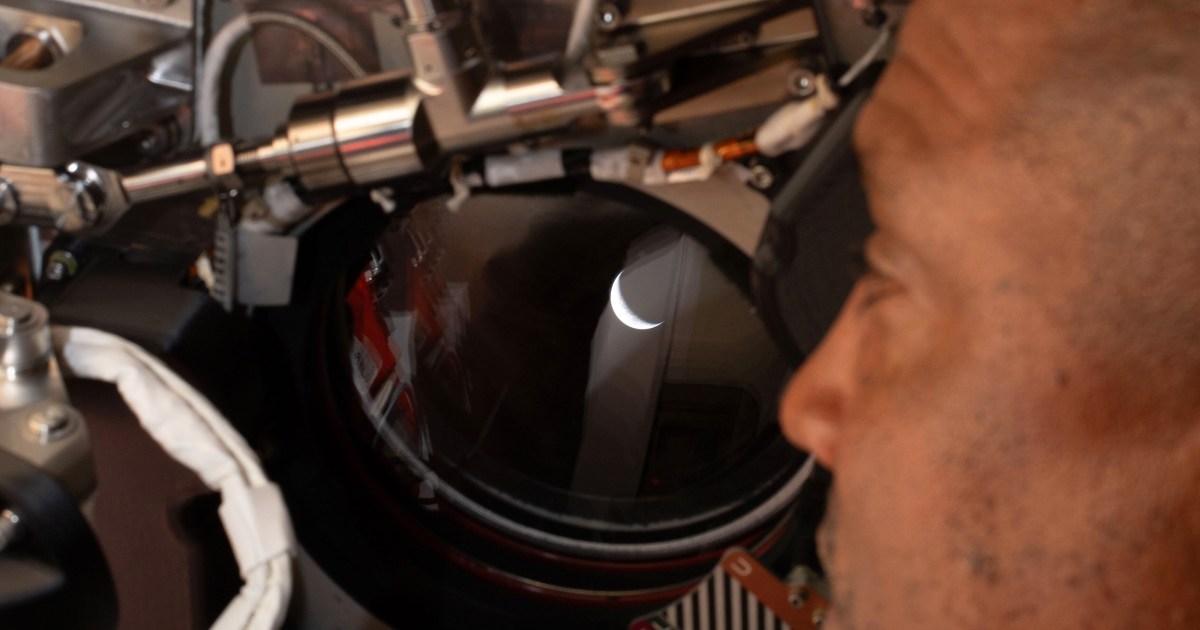
* Artemis II: “NASA’s Artemis II mission made history on Monday by sending humans farther from Earth than ever before.”
* Keep an eye on this one: “Almost immediately after an immigration agent shot and wounded a Venezuelan immigrant in Minneapolis this winter, the federal government cast the injured man as an attempted murderer and the agent as the victim of a brutal beating. That version of events began unraveling when prosecutors dropped felony charges against the injured man, Julio C. Sosa-Celis, and one of his housemates, Alfredo A. Aljorna, who had fled from immigration agents. Yet video footage of the shooting, newly obtained by The New York Times, raises questions about why it took weeks for the government’s case to fall apart.”
* The latest on the Bannon case: “The Supreme Court on Monday granted the Trump Justice Department’s request to vacate an appeals court ruling against Steve Bannon, after the Department of Justice told the high court that it wants to dismiss the matter that was brought against the Donald Trump ally during the Biden administration.”
* U.S. marshals waived training rules? “Members of Elon Musk’s private security team were deputized as federal agents last year even though some of the billionaire’s guards lacked the required training and law enforcement experience, according to newly released government emails.”
* It’s not at all clear why anyone would follow this executive order as binding: “President Donald Trump has signed a second executive order aimed at fixing college sports, this time laying out specific transfer and eligibility rules, limiting how athletes can be compensated for their name, image and likeness and threatening schools that violate rules with financial penalties, the White House announced Friday.”
* Noted without comment: “Just a few months after opening, the controversial Trump Truth Store in [Chicago suburb] Crystal Lake has temporarily shut down, citing a drop in sales amid the ongoing Iran war.”
See you tomorrow.
Steve Benen is a producer for “The Rachel Maddow Show,” the editor of MaddowBlog and an MS NOW political contributor. He’s also the bestselling author of “Ministry of Truth: Democracy, Reality, and the Republicans’ War on the Recent Past.”
- Republican Clay Fuller wins special election to replace Marjorie Taylor Greene
- Michigan Senate candidate El-Sayed declines to disavow Hasan Piker’s past comments
- Congress is absent as Trump threatens Iranians ‘will die’
- Why Hungary’s energy policy is less MAGA than JD Vance might think
- Airstrikes on Iran kill more than 25 as Trump’s deadline to open Strait of Hormuz looms
- Bill Gates to testify before House Oversight in Epstein probe
- ‘Vile on every level’: Tucker Carlson rips Donald Trump over Easter Sunday ‘f-word’ post
- Education Department rescinds previous Title IX agreements with schools over gender identity
- Trump suggests US could charge toll for Strait of Hormuz passage
- Trump brushes off questions about potential war crimes in Iran
-

 The Dictatorship1 year ago
Luigi Mangione acknowledges public support in first official statement since arrest
-

 Politics1 year ago
Former ‘Squad’ members launching ‘Bowman and Bush’ YouTube show
-

 Politics1 year ago
Former Kentucky AG Daniel Cameron launches Senate bid
-

 The Dictatorship1 year ago
Pete Hegseth’s tenure at the Pentagon goes from bad to worse
-

 Politics1 year ago
Blue Light News’s Editorial Director Ryan Hutchins speaks at Blue Light News’s 2025 Governors Summit
-

 The Dictatorship7 months ago
Mike Johnson sums up the GOP’s arrogant position on military occupation with two words
-
Uncategorized1 year ago
Bob Good to step down as Freedom Caucus chair this week
-

 Politics12 months ago
Democrat challenging Joni Ernst: I want to ‘tear down’ party, ‘build it back up’