
Politics
Elon Musk goes on a warpath against Trump and the GOP

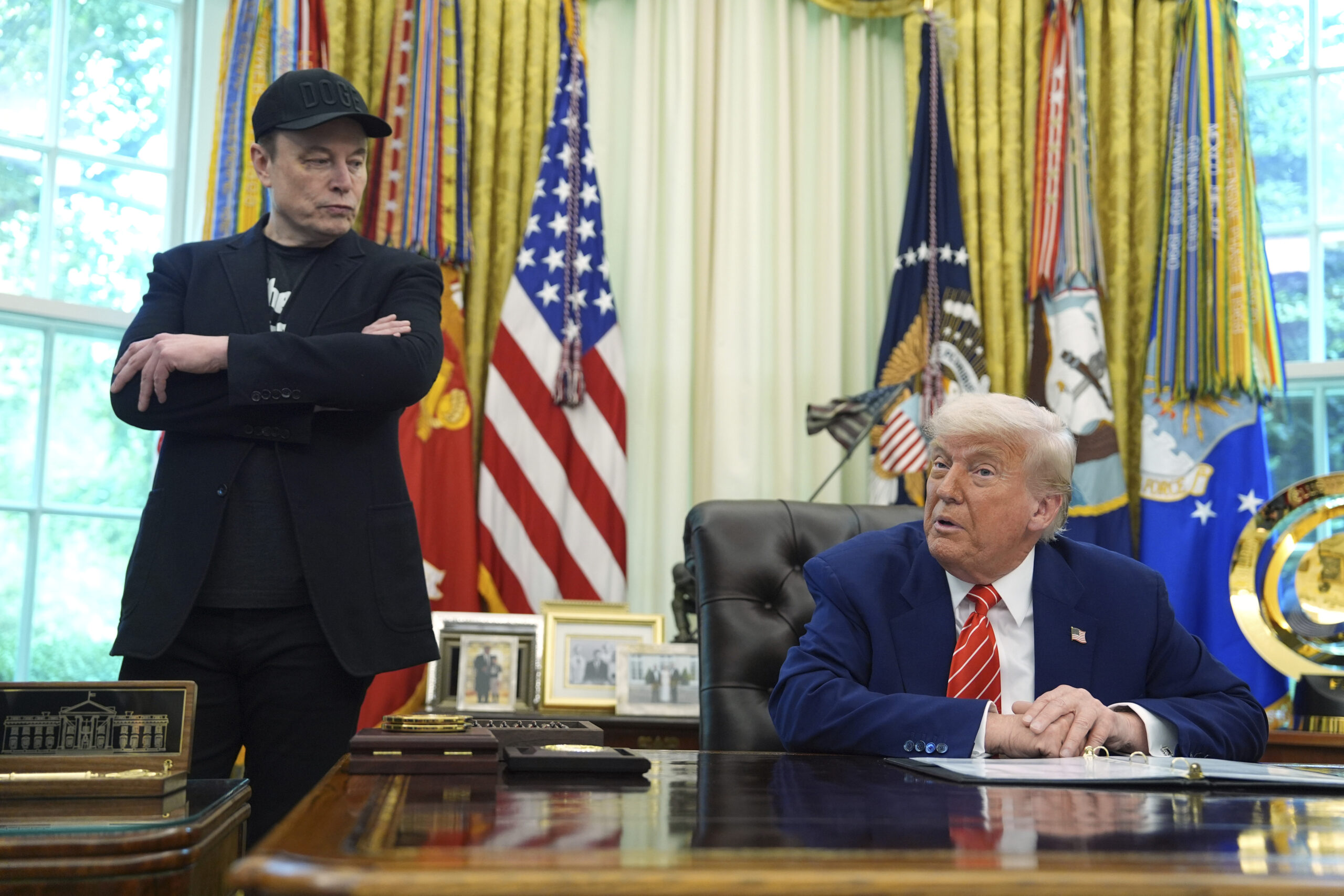
Elon Musk just launched a war against the GOP. Now the party’s hopes of holding onto power are at stake.
Musk has gone from helping Republicans take total control of Washington — spending nearly $300 million to become the single biggest known donor last year — to attacking the highest-ranking leaders of the party and daring the rank and file to cross him.
“Trump has 3.5 years left as President, but I will be around for 40+ years,” Musk said on X.
The post was an unambiguous warning from the world’s richest man, who has the power to single-handedly reshape elections with his wealth. It was not long ago that Republicans hoped Musk could pour cash into their efforts to help maintain control of Washington. Instead, he’s becoming their public adversary.
Musk spent Thursday online attacking President Donald Trump over Republicans’ massive tax-and-spending bill, which Musk says does not cut enough government spending.
He’d already threatened to challenge Republicans who support the megabill; on Thursday, he blasted House Speaker Mike Johnson and Senate Majority Leader John Thune, took credit for Republicans winning trifecta control in November, and floated the idea of launching a third party.
“This is a massive crack in the MAGA coalition,” said Matthew Bartlett, a Republican strategist and a former Trump administration appointee. “This town is historically built on Republican versus Democrat, and this seems to be crazy versus crazy. It is asymmetric and it seems, for the first time, President Trump seems to be out-crazied.”
Just a few weeks ago, Republicans were still praising Musk for his financial backing in the 2024 election as they hoped he’d make a graceful return to the private sector after overseeing the administration’s program to slash federal spending. Less than one week ago, Musk was in the Oval Office with Trump commemorating his time in administration as a special government employee.
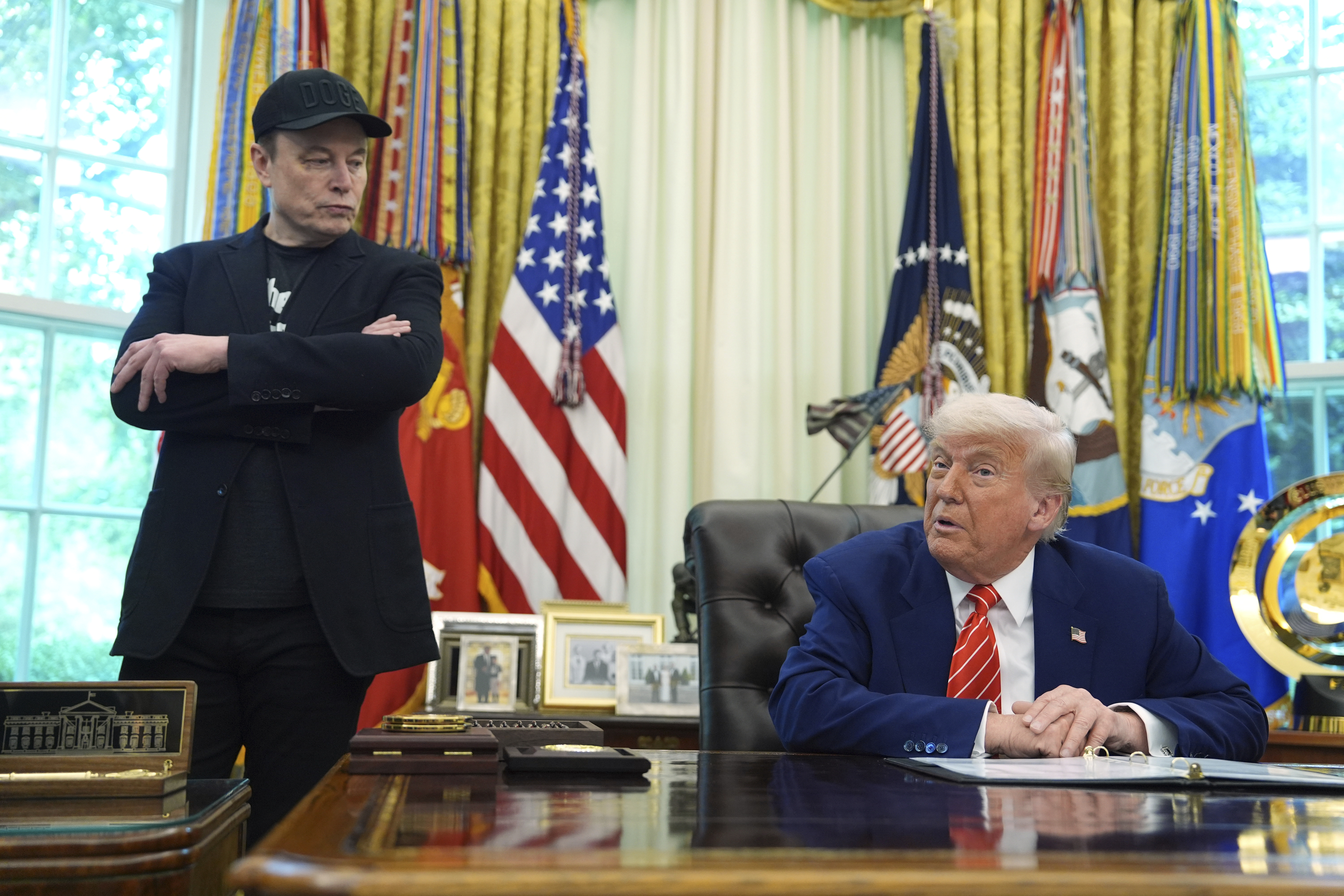
But that polite departure, it quickly became evident, was not going to happen.
“Elon was ‘wearing thin,’ I asked him to leave,” Trump wrote on Truth Social, blaming Musk’s anger on the megabill’s removal of electric vehicle tax credits. “He just went CRAZY!”
As Musk’s drama engulfed the party Thursday, Republicans in Congress mostly tried to avoid getting caught in the crossfire. Key GOP lawmakers in both chambers worked to downplay the potential effects on both the party’s domestic policy package and on the GOP’s midterms posture.
Rep. Richard Hudson (R-N.C.), who leads the House GOP campaign arm, told reporters Thursday that he hopes the spat will “blow over.” Before the breakup went nuclear, Hudson had said in a brief interview Wednesday evening that Musk has “been a friend and he’s just wrong about this bill.”
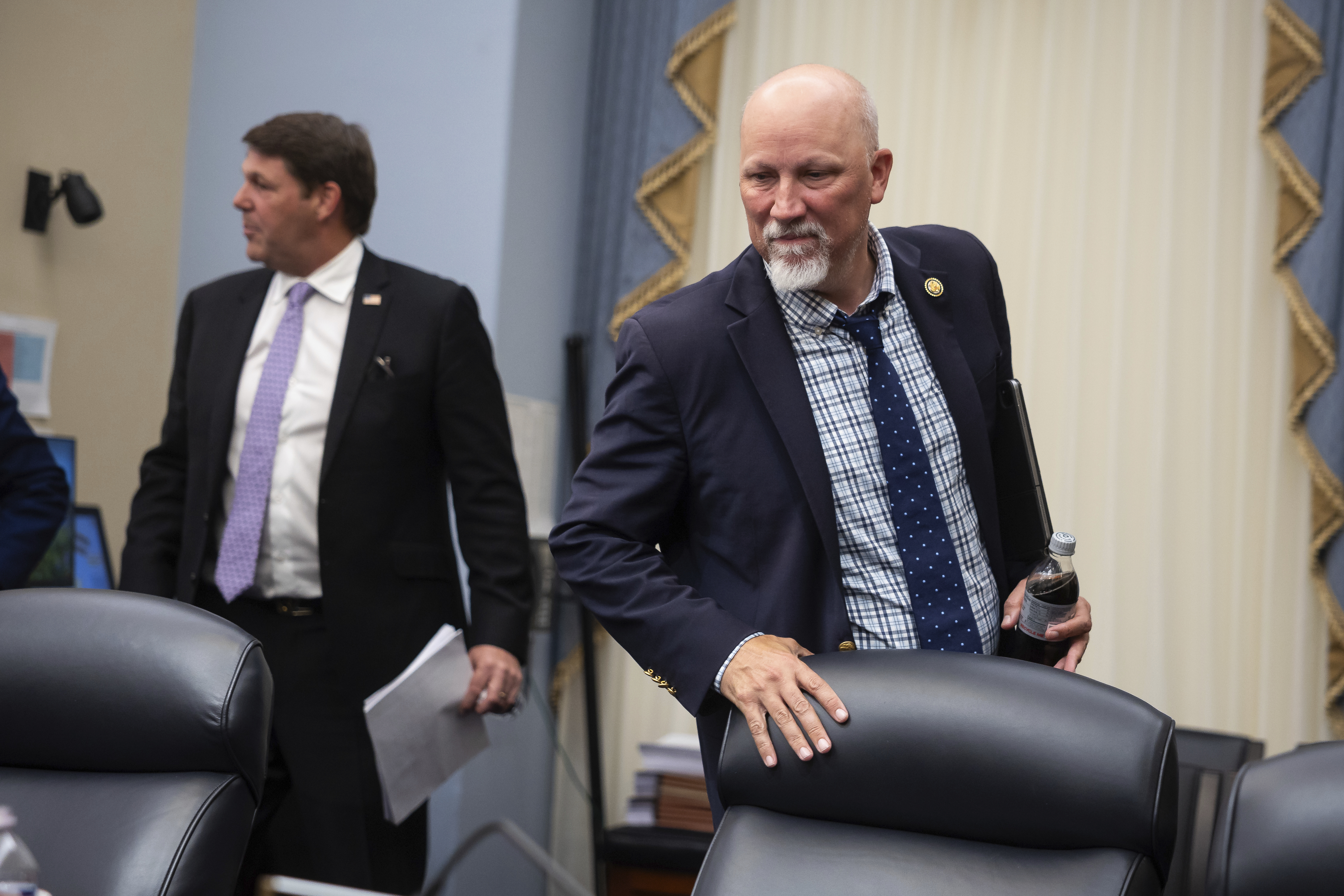
Even fiscal hard-liners who have embraced some of Musk’s talking points about the bill tried to avoid getting drawn into the fracas. Rep. Chip Roy (R-Texas), who at one point threatened to tank the megabill for not being fiscally conservative enough, said, “Elon crossed the line today … we’ll let those guys go play it out.”
“I don’t disagree with him about our need to find more spending cuts,” Roy added, but Musk needs to “keep it in the lines.”
Another hard-liner, Rep. Tim Burchett (R-Tenn.), said he believes Musk is losing sway within MAGA. Musk is “just another shiny object,” he said, “and we’ll deal with it.”
But Musk appeared intent on turning his opposition to the legislation into a civil war for the party. He amplified two Kentucky Republicans, Rep. Thomas Massie and Sen. Rand Paul, who have been thorns in the side of Trump and GOP leaders trying to pass the bill.
Even though Musk brought massive financial backing, he has also at times been an electoral problem for Republicans. His popularity has fallen below Trump’s, and his biggest political effort this year — the Wisconsin Supreme Court race — ended with the conservative candidate losing by almost 10 points.
“Elon couldn’t buy a Wisconsin Supreme Court seat. You really think that people are gonna be afraid of this money?” said a person close to the White House, granted anonymity to discuss the dynamics.
As Musk’s popularity faded, Republicans wondered how long his relationship with Trump could endure. On Thursday, Musk severed ties.
He took shot after shot at Trump, accusing him of lying, replying “yes” to a post suggesting he should be impeached, and accusing him of having a cozy relationship with the deceased Jeffrey Epstein, who had been accused of sex trafficking.
“What a predictable shitshow,” said a person who has been in the room with both Musk and Trump. “Trump is a liar, and it was obvious Elon would not be able to go along with his incessant lying forever.”
A nervous Republican Party is now scrambling to figure out what the electoral fallout will look like, starting with next year’s midterms.
Already, two of Trump’s top campaign operatives, Chris LaCivita and Tony Fabrizio had signed up to work with Musk’s Building America’s Future PAC. But Musk’s scorched-earth strategy could create dueling allegiances.
Privately, some Republicans are arguing they had already been preparing for next year’s elections without Musk’s money, and complained that America PAC — the tech billionaire’s super PAC — didn’t spend its money effectively in House races last year.
America PAC spent $19.2 million backing GOP candidates across 18 battleground House races last year, according to data from the Federal Election Commission. Republicans won 10 of those elections. But those were among the highest-profile and most expensive races in the country, and Musk’s group accounted for only 12 percent of Republican outside spending in them. It wasn’t even the biggest GOP spender — that was still the Congressional Leadership Fund, the primary super PAC affiliated with House Republicans.
“What Elon has is money, and if he’s not going to put $100 million in the [midterms], that’s a hole that has to be filled,” said Chris Mottola, a GOP media consultant. “On the other hand, there was a question about how effective the money was that he spent, because he spent it the way he wanted to.”
Over the last few months, Musk has floated the idea of getting involved in the midterms, but he’s also claimed he would step back from political spending. If Musk is going to go all-in against the party, he’s going to need more than money.
“Are there enough good Republican operatives out there to go achieve this mission for Elon Musk when it means going up against the president?” said a former RNC official, granted anonymity to discuss the situation candidly. “Everybody’s got a price, but I don’t think they are rushing to go help Elon further divide the Republican Party ahead of the midterms.”
Lisa Kashinsky, Jessica Piper, Holly Otterbein, Dasha Burns, Nicholas Wu, Sophia Cai, Jordain Carney and Meredith Lee Hill contributed to this report.


Leaders of the U.S. Hispanic Business Council knew it would be hard to get Ken Paxton to show up to their Senate town hall event. So, they turned to an unexpected ally: Sen. Ted Cruz.
Javier Palomarez, the council’s president and CEO, needed help since his own background – as both a Democrat and longtime ally of Paxton’s rival in the primary, Sen. John Cornyn – wouldn’t appeal to the Texas attorney general.
Cruz, however, was eager to step in. Soon, Palomarez was discussing logistics for the town hall with Paxton’s team; Paxton joined the event last week.
“We needed to find common ground and people that he trusted, that I trusted … and that clearly was Ted Cruz,” Palomarez said. “I don’t agree with Ted on a litany of shit, but at the end of the day, the guy’s always been a good partner to me and to the small business community.”
Cruz’s involvement hints at the significant behind-the-scenes role he is playing in this year’s high-stakes Texas Senate race — part-time adviser, part-time bundler, full-time believer that Paxton will pull out a win and keep Cruz from representing Texas alongside a Democrat.
Paxton’s inner circle is dotted with longtime Cruz allies, and Cruz’s aid could further cement his position as a Texas kingmaker in retiring GOP Sen. John Cornyn’s absence, earn new allies and boost his national profile ahead of a potential 2028 presidential bid. But if Paxton fails, it could be a black eye for Cruz.
“It is absolutely critical that Texas stay red, that Republicans keep a majority in the U.S. Senate and the House, and that we elect Ken Paxton instead of James Talarico,” Cruz said in an interview. “And so I am all in.”
Paxton’s campaign declined to comment for this story.
For decades, Cornyn has been the gatekeeper to Texas’ GOP donor class. But his loss has put Cruz even more at the center of Texas’ deep-pocketed donor community, letting him flex muscles first developed during his 2016 presidential run as Paxton tries to hold off Talarico and his fundraising machine. Paxton raised $18 million in the last quarter, some of those donations coming from first-time donors introduced to him by Cruz.
“Ted doesn’t go through a meeting in Texas where he’s not telling donors they’ve got to get on board,” said one person close to both Cruz and Paxton, granted anonymity to discuss private conversations.
Cruz has regularly campaigned alongside Paxton and frequently jabs Talarico on his popular podcast. His super PAC has gone on air with anti-Talarico advertising. And in addition to greasing the rails with his big-money donors in the Lone Star State, he’s acting as an informal adviser, regularly speaking withPaxton, according to two people familiar with their conversations.The political orbits of Cruz and Paxton have significant overlap. Axiom Strategies — the GOP firm run by Jeff Roe, who led Cruz’s 2016 presidential campaign — has long worked with both men. Nick Maddux, senior adviser to the Paxton campaign, was a key staffer in Cruz’s 2018 and 2024 reelection efforts. Sam Cooper, a longtime Cruz adviser, is now a senior strategist for the pro-Paxton Lone Star Liberty PAC.
Cruz stayed neutral during the messy primary between Cornyn and Paxton. He came off the sidelines after the runoff.
“Ted was one of the first ones that understood that, hey, this guy just got hit with $200 million of negative advertising. He’s running against an opponent who’s going to be well-funded,” said Cooper. “He’s going to need some help.”
Within a week of Paxton’s primary runoff victory in May, Cruz emceed a Washington fundraiser for Paxton, urging attendees to come together and support the Republican nominee. Days later, Cruz joined Paxton for a Texas fly-around, stopping in Dallas, Houston and Midland all in one day, to meet with donors. Cruz said they secured $3 million in donations on that day.
Cruz has presented himself as an emissary between more traditional GOP donors and Paxton’s hardline MAGA world.
“The case I’ve been making to donors who previously supported John Cornyn is, at this point, it’s a binary choice, and I think the choice is very clear,” Cruz said, noting he’s had “hundreds of conversations” with donors. “Many, if not most, of the longtime Paxton donors are also supporters of mine, but many, if not most, of the longtime Cornyn donors are supporters of mine, as well. And so I do think I’m able to bridge those two worlds.”
But Cruz’s involvement also carries some risk. Paxton is trailing in most recent polls, and Democrats are increasingly hopeful this is the cycle they finally flip a Texas Senate seat. If Paxton goes down, he could stifle Cruz’s momentum ahead of 2028, when other Republican hopefuls may attempt to lay the blame at Cruz’s feet.
“This is smart on Ted’s part,” said one longtime Texas Republican strategist not affiliated with either man, granted anonymity to speak openly. “It cements him with Paxton supporters as being the guy who stood up for him, and it allows him to expand his reach and have a greater claim on having a unified Texas behind him if he makes a run in 2028.”
If Paxton loses, “he put his best foot forward, and it’s going to be Paxton’s fault that he lost, not Ted Cruz’s,” the person said.
Cruz’s super PAC, Truth and Courage, was one of the first to go up backing Paxton, reserving over $2 million on air with an anti-Talarico ad, according to data from tracking firm AdImpact — though that spend has since been swamped by major buys from the Senate Leadership Fund’s PAC and other pro-Republican groups.
Cruz has hosted or participated in several fundraisers for Paxton, both in person and on Zoom. One of them — a fundraiser hosted by Cruz’s PAC on the sidelines of the Republican midterm convention, a confab Paxton later said “dropped our numbers” — featured dozens of donors crammed into an apartment in a glitzy uptown Dallas high-rise, in such close quarters that some of Paxton’s staffers were relegated to work on the balcony.
“It was incredibly well attended,” recalled Rep. Randy Fine (R-Florida), who spoke at the fundraiser. “You couldn’t move.”
AI safety groups aren’t buying OpenAI CEO Sam Altman’s shifting stance on political spending in the midterms.
They’re wary of his concession that campaign cash from industry-aligned groups, like the OpenAI-aligned Leading the Future super PAC, may have inadvertently backfired. Instead, they’re pushing for stronger commitments to downsize the flood of money — and for candidates to reject any support from pro-AI groups.
“I won’t believe that they are actually changing their strategy, or their goals I should say, unless and until they do,” said Democratic New York assemblymember Alex Bores, who emerged as a key voice among AI regulation advocates after Leading the Future and other groups spent $8 million to tank his House campaign. He launched a $30 million effort to unify Democrats on AI policy last month.
Altman’s stark acknowledgement to Blue Light News follows a New York Times report that revealed OpenAI President Greg Brockman backed out of injecting more cash into Leading the Future earlier this summer, calling the super PAC’s efforts a “distraction” from the company’s mission. The pause is notable as Americans grow increasingly anxious about the risks the technology poses, and lawmakers scramble to figure out how to approach the emerging tech.
Still, some critics are not taking Altman’s concession or Brockman’s pullback as a sign of a fundamental change in the industry’s campaign strategy — at least not yet.
“What I read it as is they are no longer — or Greg Brockman in particular is not — going to fund Leading the Future,” said Bores. “Does that mean that the industry is not going to spend hundreds of millions of dollars trying to influence policy and get benefits on their way? No.”
Bores insisted that candidates should think twice before accepting financial support from Leading the Future specifically: “An elected official of either party taking money from Leading the Future should be viewed with incredible suspect.”
Guardrails Alliance political director Charlie Blaettler agreed, saying OpenAI leadership deciding to distance themselves from Leading the Future should be the final straw for Democrats backed by the group.
“If it’s too toxic for Sam Altman and Greg Brockman, why are Democrats still taking their money?” he said.
Leading the Future and rival super PAC network Public First — which advocates for AI regulation and is largely funded by OpenAI competitor Anthropic — together spent over $70 million through super PACs this cycle, according to FEC data.
Other pro-regulation advocates have jumped in with their own political spending, with groups like the Guardrails Alliance — a nonprofit and super PAC that launched in June — raising $5 million and spending hundreds of thousands of dollars to support Bores. Some of Guardrails Alliance’s money came from OpenAI employees pushing back against Leading the Future, which is funded in large part by OpenAI president Brockman, his wife Anna, early OpenAI investors Marc Andreessen and Ben Horowitz, and their venture capital firm a16z. They have contributed a combined $75 million to Leading the Future.
Leading the Future and a16z declined to comment.
Some Democrats who were backed in their primaries by Leading the Future — like Reps. Ritchie Torres and Joe Morelle of New York and Jared Moskowitz of Florida — declined to say whether they would disavow the Leading the Future cash that boosted them in their races.
“An outside AI PAC spent money in the 4th district during the primary, but they didn’t donate directly to my campaign,” Rep. Val Hoyle (D-Ore.), who was backed by a nearly $300,000 investment from Leading the Future, said in a statement to Blue Light News.
She did not address whether she would disavow the group and its spending: “I’ve been working with labor leaders and advocates to put workers first when it comes to AI. We need clear federal guardrails to protect workers, safeguard our planet, prevent utility rate spikes and give consumers a voice.”
Even if candidates decide to further distance themselves from the industry’s spending, some pro-guardrails advocates said the onus still lies with figures like Altman to put a stop to — or significantly decrease — the influx of money altogether.
“[Altman was] basically saying, ‘These are the rules of the game, and I can’t really change them, and it’s not in my job description,’” said Brendan Steinhauser, who leads AI safety group The Alliance for Secure AI Action. “Of course he’s saying that, but they could do a unilateral disarmament or encourage the other labs to stop giving, and maybe it’d be just like pacing the frontier — maybe people could pace political giving.”
Former Democratic Rep. Brad Carson, who co-founded Public First, said he would be open to engaging in talks with Leading the Future about pacing or scaling back the industry’s political spending — but only if so-called AI “accelerationists” are serious about backing off. He called out Andreessen and Horowitz who have emerged as the biggest known spenders in this year’s midterm elections and were early investors in OpenAI.
“As long as these accelerationists have a desire to spend tens and tens, if not hundreds of millions of dollars, there is probably a need for a Public First,” said Carson, who also leads the nonprofit group Americans for Responsible Innovation. “So even if Brockman drops out, Andreessen and Horowitz can just drop another 50 million if they felt like it, and I wouldn’t want to be disarmed against that.”
Brendan Bordelon contributed to this report.
Former President Barack Obama will campaign in Detroit with Michigan Democrats later this month, giving the party a high-profile boost ahead of the start of the state’s early voting period.
Obama is set to join Democratic Senate nominee Abdul El-Sayed, gubernatorial nominee Jocelyn Benson and other candidates on Oct. 24, the state party announced Monday.
“It is my honor and privilege to announce that President @BarackObama is joining us on the trail in Detroit on Saturday, October 24,” El-Sayed wrote on social media. “Get. Ready.”
The event comes 10 days before Election Day, with Democrats defending an open Senate seat and the governor’s office.
El-Sayed faces Republican former Rep. Mike Rogers in the race to succeed retiring Democratic Sen. Gary Peters. Benson, Michigan’s secretary of state, faces Republican Rep. John James in the open governor’s race.
Since leaving the White House, Obama has remained one of the party’s most popular figures, both nationally and among the party grassroots. He has campaigned in past cycles, but he’s made few public stops on the trail this year.
He previously campaigned in Texas with Democratic Senate nominee James Talarico and gubernatorial nominee Gina Hinojosa, and appeared in a campaign ad with Iowa Senate nominee Josh Turek.
The former president is also set to headline a Washington-area fundraiser Wednesday for the Democratic Senatorial Campaign Committee, his first with the party’s Senate campaign arm this election cycle.
-

 Politics2 years ago
Former ‘Squad’ members launching ‘Bowman and Bush’ YouTube show
-
Uncategorized2 years ago
Bob Good to step down as Freedom Caucus chair this week
-

 The Josh Fourrier Show2 years ago
DOOMSDAY: Trump won, now what?
-

 The Dictatorship2 years ago
Pete Hegseth’s tenure at the Pentagon goes from bad to worse
-

 Politics2 years ago
Former Kentucky AG Daniel Cameron launches Senate bid
-

 The Dictatorship2 years ago
Luigi Mangione acknowledges public support in first official statement since arrest
-

 Politics2 years ago
Blue Light News’s Editorial Director Ryan Hutchins speaks at Blue Light News’s 2025 Governors Summit
-

 The Dictatorship1 year ago
Mike Johnson sums up the GOP’s arrogant position on military occupation with two words