
Congress
Shutdown threatens ‘chaos’ for Trump’s transition and inauguration

The collapse of Congress’ spending negotiations is throwing the presidential transition and preparations for President-elect Donald Trump’s second inauguration into chaos as Washington stares down the prospect of a government shutdown just after midnight Friday.
Federal agencies only this week began briefing the Trump transition’s “landing teams,” which began their work more than a month later than their predecessors. Now, if Congress can’t cut a deal in the next couple days, those agencies could be forced to furlough much of the staff doing that work and shut down the government offices where it’s taking place — impeding the incoming officials’ access to documents and further slowing down already-delayed preparations to take over the federal government next month.
Trump and his team are already in the “danger zone” on transition and inauguration planning because they opted to use private emails and devices, rejected federal cybersecurity support, and are working out of Mar-a-Lago, Trump’s Florida club, said Ann O’Leary, who led Hillary Clinton’s 2016 transition preparations.
“At a minimum, a shutdown of the government is going to certainly add to the chaos and the vulnerability to the U.S. government,” she added.
An OMB spokesperson warned Blue Light News that such a lapse “would disrupt a wide range of activities associated with the orderly transition of power,” but declined to specify what programs and personnel would be impacted.
Agency staff are similarly in the dark. Federal staff received guidance from their leadership Thursday on what the shutdown would entail but it did not include information about how it would impact their work with the Trump transition, one State Department official, not authorized to speak on the record, told Blue Light News.
The Trump transition did not respond to a request for comment.
Congress this week appeared poised to avert a shutdown with passage of a bipartisan continuing resolution that extended government funding into next year and reauthorized an array of lapsed health, agriculture and other programs. But Trump’s team, led by Elon Musk, derailed the negotiations in the past 48 hours, announcing their opposition to the bill on social media and pushing GOP leaders to demand more concessions — including a temporary or permanent lifting of the debt ceiling. That has thrown Republican congressional leadership into a tailspin as Friday’s deadline to fund the government draws near.
In the event of a government shutdown, most federal workers would not only be barred from meeting with Trump transition officials in-person but also from communicating with them via phone or email from home. Some workers can avoid such furloughs by being designated “essential” under the Antideficiency Act. But Seth Harris, a former acting Labor Secretary who has worked on three Democratic presidential transitions, told Blue Light News that most transition activities likely wouldn’t qualify, other than some staff who work on national security.
“It creates yet another barrier to a smooth transition,” said Democratic health policy consultant Chris Jennings, who served on transition teams for Presidents Bill Clinton, Barack Obama and Joe Biden. “It delays their ability to effectively evaluate the dynamics on the ground, and it probably slows them down, in terms of both policy and personnel reviews, right before they’re trying to make their final high level appointments and develop their first series of executive orders and actions that they wish to take.”
Few expect a shutdown — if it happens — to stretch until Inauguration Day on Jan. 20, but lawmakers and veterans of past transitions say even a short-term disruption could impact prep work that has already begun.
On Capitol Hill on Thursday, Reps. Rosa DeLauro (D-Conn.) and Steve Cohen (D-Tenn.) were among those raising concerns that a shutdown would impact the ability of the federal government to adequately staff Trump’s swearing in at the Capitol next month.
“There was money in there for planning the inauguration,” DeLauro said of the derailed bipartisan package that would have extended government funding until March. “Now money may not be there.”
Adrienne Elrod, the head of talent and external relations for Biden’s 2021 Presidential Inaugural Committee, said furloughs could stymie nearly every facet of the massive event.
“Who’s going to hand out the tickets to the inauguration to congressional offices? Who in the congressional offices are going to hand out tickets to the inauguration to constituents?” she asked. “The people escorting individuals who will be on the stage for the swearing in — who will be doing that, who will be facilitating that process? … Are there going to be enough Capitol Police officers there to provide the ample security that will be necessary for the swearing in? Will there be people there to work with their performers, and who’s speaking?”
John Goheen, the spokesperson for the National Guard Association, told Blue Light News that while the “full-time uniformed people” who typically help provide security at the inauguration are usually not impacted by government shutdowns, the staff who work on logistics behind the scenes could be.
“The National Guard is already very involved in putting together plans,” he said. “That includes deciding which units to deploy to secure the inauguration, reaching out to particular states and saying, ‘We need this and this and this’ — that all started weeks ago. You need to give states and individual soldiers and airmen adequate warning.”
Beyond the inauguration, O’Leary said the delays in the transition due to a potential shutdown and lack of cooperation with the federal government could pose grave security risks to the nation. The 9/11 Commission report, she noted, found that delays in the 2000 presidential transition due to the Bush v. Gore Supreme Court case “delayed the national security appointments and national security information being shared in a timely manner.”
The national security risk is “not just speculation,” O’Leary said. “It is documented that this has happened in the past and we need to make sure it doesn’t happen again.”
Myah Ward, Adam Cancryn and Nick Niedzwiadek contributed to this report.


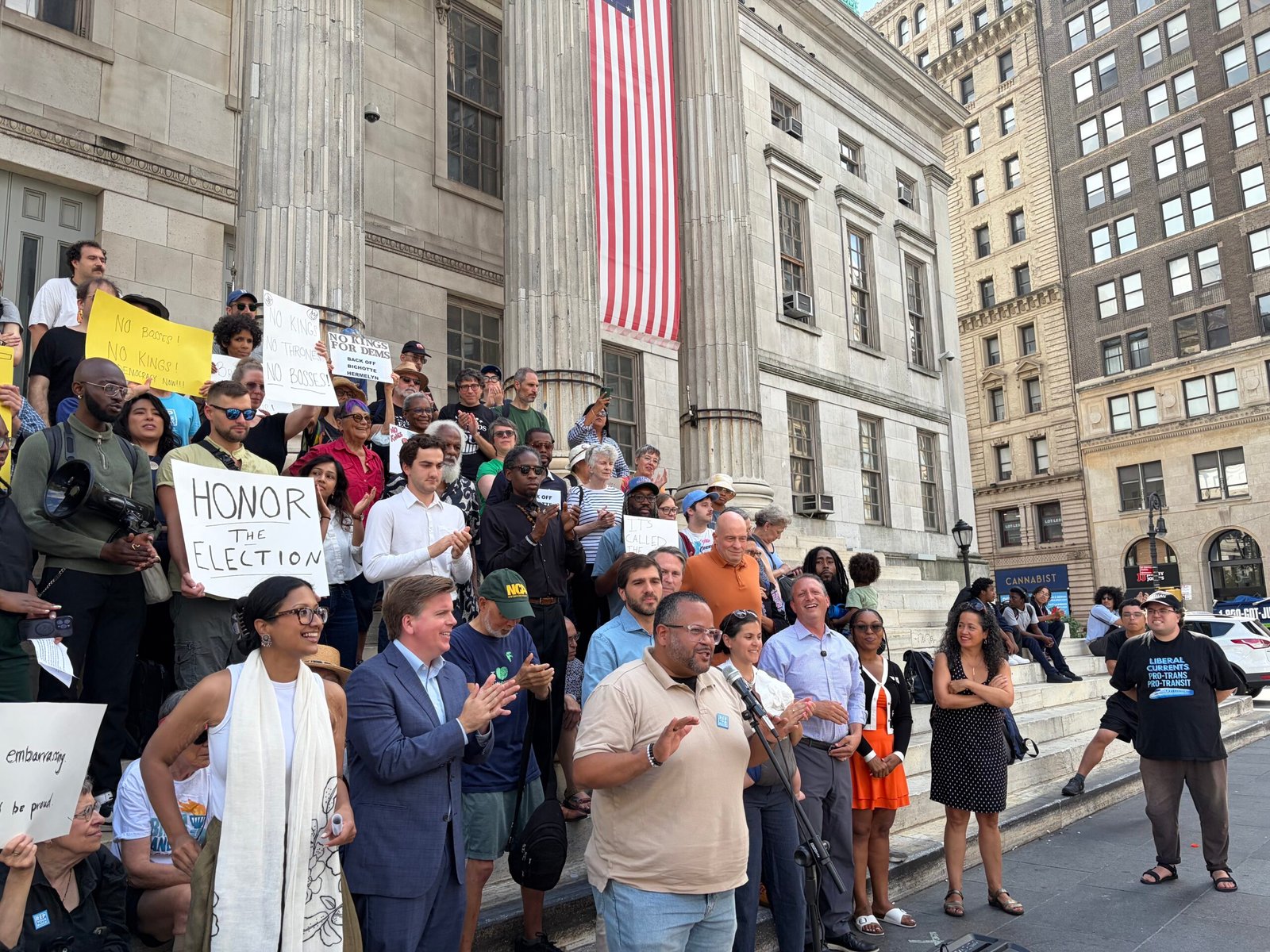
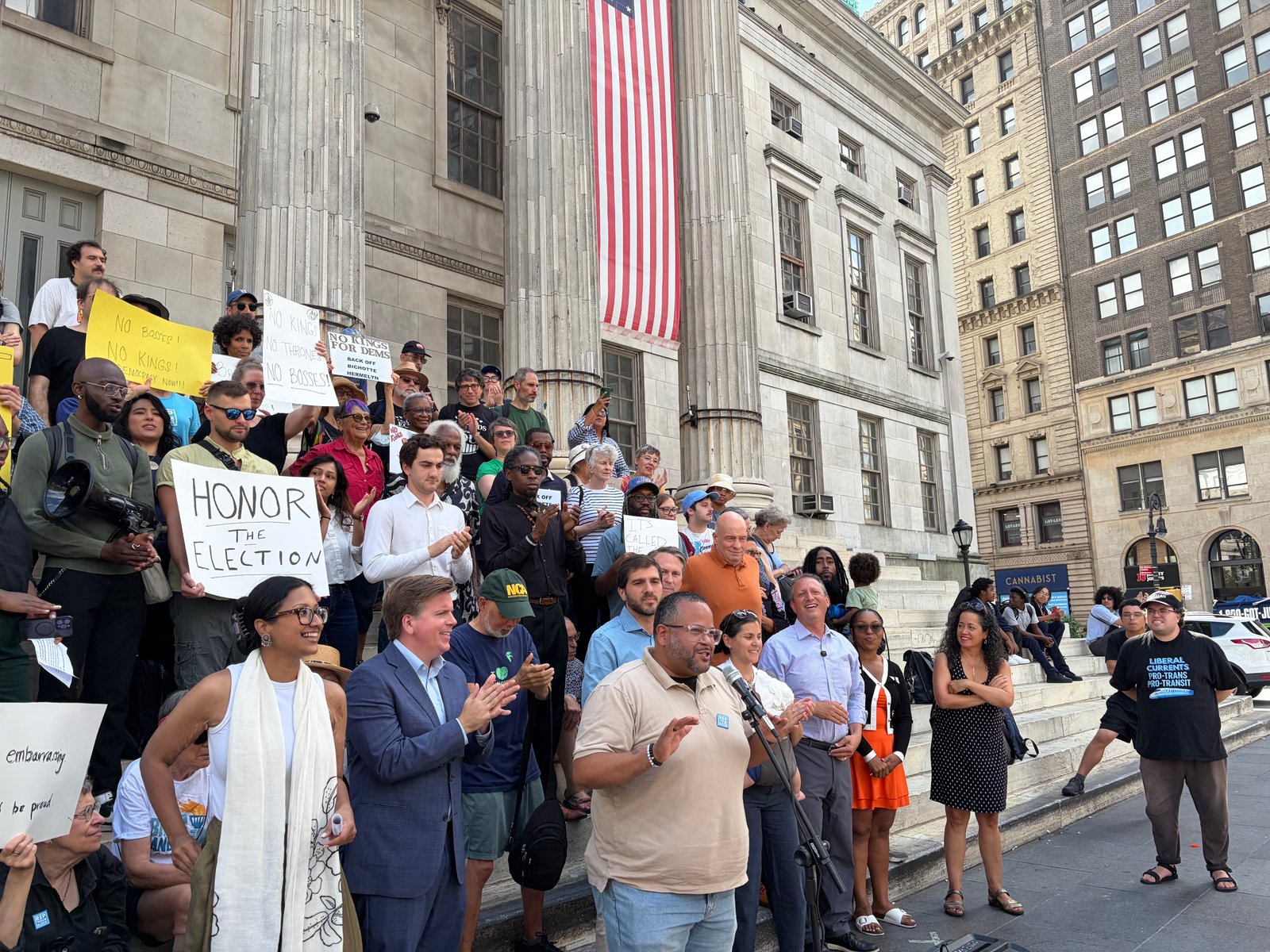
NEW YORK — Democrats are at war in Brooklyn over a maneuver some inside the party have called “corrupt,” a “power-grab” and even “fascist.” And they’re not talking about Republicans.
With weeks to go before the midterm elections, an intraparty feud is on full display among Democrats jockeying for control of the party apparatus in one of the bluest, most populous counties in the country. And some in the party worry the quarrel is exposing the limits of the party’s two most powerful politicians: Senate Minority Leader Chuck Schumer and House Minority Leader Hakeem Jeffries, both Brooklynites.
“It is not great if you’re a powerful national Democrat and you can’t stop what is functionally a coup d’etat from happening in the county party in your own backyard,” said Democratic strategist Jon Paul Lupo, noting that the Brooklyn contretemps “definitely has repercussions” and an “impact on their standing among Democrats.”
“There’s a huge incentive to try and fix it,” he added.
Controversies are by no means foreign to the Brooklyn Democratic Party. But this fight has drawn in some of New York’s biggest political names as they lambast its chair, state Assemblymember Rodneyse Bichotte Hermelyn. In the weeks before a contested leadership election, she moved to change the makeup of the organization by expanding its executive committee, claiming it would promote inclusivity. Her critics insist it’s really just a play to boost her dwindling support ahead of the vote.
Democrats across the ideological spectrum — including Gov. Kathy Hochul, New York City Mayor Zohran Mamdani and state Democratic Party Chair Jay Jacobs, as well as Schumer and Jeffries — came out against the move. Schumer warned such a change “sends the wrong message when we need to rally voters for the November election.”
But even the widespread criticism wasn’t enough to stop her proposed changes. A vote to implement them was held last month and narrowly passed, 21 to 19 with one abstention.
In the wake of that vote, leaders aligned with Brooklyn Can’t Wait, the self-described reformer group that claimed they had enough support to unseat Bichotte Hermelyn, are wondering if Schumer and Jeffries could be doing more to support them.
Julio Peña III — Brooklyn Can’t Wait’s pick to challenge Bichotte Hermelyn for chair — told Blue Light News last week he appreciated Schumer and Jeffries coming out publicly against Bichotte Hermelyn’s maneuver, but said he has not spoken with either.
“I do think this does not send a good message that this power grab from straight out of the Republican playbook is happening in our own backyard in Brooklyn,” he said. “We would love if they can have conversations with either … individual district leaders, or the party chair, and just say like, ‘This needs to stop.’ We’re hopeful that that can still happen.”
When asked if he thinks they would have sway, he replied: “I would hope so.”
Chi Ossé, a progressive New York City Council member who briefly considered a primary challenge against Jeffries last year, wrote on social media that “a simple call or text to a couple of these district leaders” from Jeffries and Schumer “would’ve changed the results.”
“Either they don’t care about this affront to our democracy happening in their own backyard or people don’t take their leadership seriously,” he said.
The collective pushback is uncommon in a local battle — a reality Democratic strategist Evan Stavisky said highlights how this isn’t a “run-of-the-mill fight in Brooklyn.”
But both Schumer and Jeffries have more pressing priorities to deal with beyond Brooklyn. Control of Congress tops that list.
“Anything aside from that mission, no matter how important it is, has to take a backseat,” Stavisky said. “That’s why it’s remarkable [Jeffries] and Sen. Schumer both opined on this. Their job has to be winning tough races outside of the city of New York and outside the state of New York.”
When asked if Jeffries plans to get further involved in the Brooklyn battle, spokesperson Justin Chermol said the minority leader’s focus is on the midterms.
“Leader Jeffries has publicly and privately made clear that he opposes the Kings County Democratic Party rule change,” he said in a statement last week. “With 60 days left until the midterms, he is focused on battling Republicans, fighting for an Affordable America and taking back control of the United States House of Representatives so we can end this national nightmare.”
Schumer’s office did not respond to a request for comment.
Democrats are clear-eyed that what’s going on with their county party is a mess — and want to move on so they can focus on the midterms. But some pushed back on the idea that either Jeffries or Schumer should get further involved, arguing that issuing a statement was enough.
Lupe Todd-Medina, a political consultant and longtime Jeffries ally, contended that for some of Jeffries’ critics, no matter what he does, “it’s not enough.”
She questioned when he would even have the time to make calls to district leaders on this: “He’s got a lot going on,” she said. “You’re talking about a hyperlocal position.”
The fight is playing out in court. After the reformers unsuccessfully sought legal action in state Supreme Court to stop the rule-change vote, they sued again. That suit argues outgoing county committee members should not have been allowed to participate, and that if they were excluded, the amendments would have failed.
A ruling is still pending after a hearing Tuesday.
Bichotte Hermelyn has argued it was fair game to amend the county party’s internal rules and leadership structure — and she’s taking the drama in stride on social media. In a video posted last week, she questioned the outrage over “more people” being involved in the committee, insisted they “didn’t undo any election” and mocked her opponents, saying they had “been out-organized again.”
In between cuts of her eating a Haitian beef patty, Bichotte Hermelyn, the first Haitian-American woman elected to the state Assembly from New York City, said, “Melting down over a harmless rule change, but Haitians are being fired. That didn’t deserve a statement?”
The reference was to how, after the Trump administration ended temporary protected status for Haitians, Mamdani fired municipal employees who had the status. Bichotte Hermelyn wrote an op-ed questioning the move. The mayor said the city kept people on the payroll as long as legally possible.
A spokesperson for the Brooklyn Democratic Party did not respond to questions directed at Bichotte Hermelyn regarding communications with Schumer and Jeffries, or the court fight.
Amid all the division, some have floated the idea of a consensus candidate. But Peña said he doesn’t think the 22 district leaders supporting him will flip. (Twenty-two votes would constitute a majority under the original structure of the committee, but not after Bichotte Hermelyn’s changes.)
While Jeffries and Schumer spoke out against the changes, neither have explicitly put their weight behind either candidate.
A Brooklyn Democratic insider, granted anonymity to speak candidly, said it’s a “big mistake” to assume that Jeffries has a “magical allegiance to anyone.”
“It is not his responsibility to manage anyone’s campaign,” that person said. “It’s lazy for anyone to expect him to clean up messes.”
Frank Seddio, a former Brooklyn party head who’s now a district leader and helped orchestrate the latest rule changes, said he hasn’t heard from Jeffries or his team and that he doesn’t believe any other party members have either.
“I guess he’s staying out of it,” Seddio said. “It’s not his business … although he’s certainly someone I admire and respect and one of the most important people in the United States.”
The Brooklyn Democratic Party hasn’t been an integral organization to campaigning. In fact, some Democrats have accused Bichotte Hermelyn of actively helping Republican opponents and waging a legal battle to remove district leader candidates aligned with Brooklyn Can’t Wait from the ballot. But the party does have power in nominating judicial candidates, a process Peña and his allies say they want to make more transparent.
Bichotte Hermelyn has served as chair since 2020. The leadership vote that will decide her fate has yet to be scheduled, but party rules dictate that vote must take place by Oct. 6.
If she remains in her role, Lupo warned, it could become fodder for Republican attacks about the “evil specter of corrupt New York Democrats in Brooklyn.”
“It’s not like Hakeem Jeffries did this or Chuck Schumer did this,” he said. “It’s very different from Trump’s active interference in democracy, but it can be weaponized by Republicans if it goes through.”
Much of the concern is likely to quiet down if Democrats do retake Congress — and Schumer and Jeffries claim the highest leadership positions. But if they don’t, critics, especially from the left flank of the party, are likely to get even louder.
The latter scenario would make having a cohesive county party even more critical, said Basil Smikle, a former executive director of the New York Democratic Party.
“It does create vulnerability depending on what happens to Democrats nationally at the end of the cycle,” Smikle said. “There’ll be questions about Hakeem’s leadership and Chuck’s leadership. … If you don’t have a strong county organization pushing those voices back, those detractors back, that creates real vulnerability.”
Chris Sommerfeldt contributed to this report.
Republicans are hoping President Donald Trump won’t make this week’s GOP midterm convention all about himself.
The president — with his approval rating at record lows for his time in office amid the conflict in Iran, trade wars and inflation — is slated to be at the center of the two-day spectacle in Dallas beginning Wednesday.
GOP lawmakers, candidates, donors and party officials said in interviews they are counting on Trump to draw a contrast with Democrats rather than prosecute his personal grievances.
Rep. Riley Moore said in an interview the event is a “scene-setter” that should stay laser-focused on “what’s on the line” for voters in the election:
— GOP WINS: Republicans are eager for fresh promotion of the tax cuts in last year’s “One Big Beautiful Bill”, even if some don’t think Trump is the right spokesperson.
Though the first national TV ads funded by the president’s cash-rich political operation place him at the center, one touting provisions in the megabill was more up congressional Republicans’ alley. Several are hoping for that kind of focus at the convention.
“It’s incredibly important that we highlight what we’ve accomplished,” said Rep. Derrick Van Orden. “That’s the perfect venue for that.”
— DINGING DEMS: One consensus message Republicans want the convention oriented around is the choice between their legislative record and a Democratic Party they argue has moved way too far left.
“You’ve got Republicans that are campaigning on commonsense ideas. You’ve got Democrats that are being drawn to the absolute most extreme left of their party,” said Rep. Brian Jack, a deputy chair of the House GOP campaign arm. “So I expect each night to see that on full display.”
“The Democratic Party has taken a turn for the worse recently,” added Rep. Nick LaLota. “America needs to be quite aware of that as they make their decision here in November.”
LaLota is just one of scores of Republican members who are choosing not to travel to the convention — which has a price tag of $25,000 and up for lawmakers attending. Some of those Republicans said they have scheduling conflicts or simply want to campaign back home.
But they still have an interest in how the event goes off and what impression it gives voters.
“I’m going to look forward to listening to it on the radio as I’m driving down the road, going from one spot in my district to another,” Rep. Morgan Griffith said.
What else we’re watching:
— TRAHAN BYPASSES LEADERSHIP BID FOR AI —- Rep. Lori Trahan’s decision last week to forgo a leadership bid and instead focus on developing artificial intelligence policy surprised some of her colleagues. But in an interview Friday, Trahan brushed off the idea that efforts to broker a bipartisan AI deal thwarted her run to serve as Democrats’ vice chair. Instead, she said her work in the complex policy space had drummed up support from many House Democrats, but she ultimately wants to prioritize regulating the issue next year.
— ROUNDS AIDE’S SIDE GIG RAISES EYEBROWS — A senior staffer for Sen. Mike Rounds has quietly worked as a lobbyist for Meta and other high-profile clients. The unusual agreement for Robert Skjonsberg, who has worked for Rounds for over a decade, has raised questions from watchdog groups about ethics and possible conflicts of interest. Rounds spokesperson Dezmond Ward told Blue Light News his office’s general counsel consulted with the Senate’s ethics panel, “which provided guidance to make certain there was and is no conflict of interest.”
Mia McCarthy, Riley Rogerson, Kelsey Brugger and Jacob Wendler contributed to this report.
President Donald Trump will be at the center of this week’s GOP midterm convention. Many of his fellow Republicans are hoping he doesn’t make it all about him.
The parade of lawmakers, candidates, donors and party officials now headed to Dallas for the two-day spectacle are counting on Trump to make a compelling pitch on the national stage before voters hit the polls.
According to interviews with dozens of Republicans, they are largely hoping for a two-pronged approach aimed at getting the president’s committed supporters off the sidelines: a focus on what they call Democrats’ extreme positions and the accomplishments of the Republican Congress — most of which are now more than a year old.
“Communism vs. common sense,” Rep. Riley Moore (R-W.Va.) said in an interview, calling the event a “scene-setter” that should stay laser-focused on “what’s on the line” for voters in the election.
Republicans have reasons to be wary. Trump’s approval ratings are at record lows for his time in office, and many swing-district GOP lawmakers are torn between running from an unpopular president and alienating his base of committed supporters.
There is little evidence Trump is content to let rank-and-file Republicans run away from him. The first pair of national midterm ads funded by his cash-rich political operation put Trump at the very center.
One ad begins with businessman Dana White extolling Trump as “the toughest, most resilient person that I’ve ever met.”
The other is more up congressional Republicans’ alley, with a Trump voiceover running through a litany of tax cuts included in last year’s “One Big Beautiful Bill.”
Even if not all agree Trump is the party’s best spokesperson at this point, they are eager to see a new effort to promote the tax cuts, which were enacted in July 2025, and want to see them touted anew in Dallas.
“It’s incredibly important that we highlight what we’ve accomplished,” Rep. Derrick Van Orden (R-Wis.) said in an interview. “That’s the perfect venue for that.”
“It’s a great opportunity for us to brag about what the Republican Party has done the last year and a half,” added Rep. Craig Goldman (R-Texas). “So certainly talking about the One Big Beautiful Bill.”
While Van Orden and Goldman are attending the convention, which kicks off Wednesday and ends Thursday, many other lawmakers and candidates are staying back in their districts. Some of those Republicans said they have scheduling conflicts or simply want to campaign back home.
But there are also qualms about Trump’s obsession with priorities that many of them consider off-message ahead of the midterms — such as pressuring Congress to take up the GOP elections bill known as the SAVE America Act.
As GOP lawmakers begged Trump to get serious about tackling the high cost of living, the president has instead openly scoffed at “affordability” as an issue concocted by Democrats to hurt Republicans.
He refused for months to help pass a major legislative package over the summer designed to help lower housing costs, and his trade wars and ongoing conflict with Iran have contributed to persistent inflation. A recent import deal designed to address rising beef prices came at the cost of upsetting American cattlemen.
Speaker Mike Johnson brushed off a question last week about the risk of having candidates show up at a Trump-focused event given his disapproval ratings.
“It was the president’s idea, which is why he’s getting credit for it, and it’s rightfully so,” Johnson said. “I think it’s going to be an extraordinary opportunity for us to get a couple of nights on national television to talk about our extraordinary record of achievement.”
Other Republicans said the president was well positioned to send a message of “promises made, promises kept.”
“Politics 101 is just telling folks what you’re going to do, and then come to Washington and do it, and then go back and tell them what you did,” said Rep. Mark Harris (R-N.C.). “When you look at President Trump’s agenda, securing the border, we’ve done that. That he wanted to make the tax cuts permanent, we’ve done that.”
“Peace through strength — and I think we have moved in that direction,” he added. “Obviously, we got detoured to this journey over in Iran.”
If there is one consensus message Republicans want the convention oriented around, it’s the choice between the legislative record Trump will be touting and a Democratic Party that they argue has moved way too far to the left — especially as progressive candidates, some of them democratic socialists, continue to win key primaries.
Rep. Brian Jack (R-Ga.), a deputy chair of the House GOP campaign arm, said “you’re going to see on full display each night a contrast that we’ve never seen before in politics.”
“You’ve got Republicans that are campaigning on commonsense ideas. You’ve got Democrats that are being drawn to the absolute most extreme left of their party,” he said. “So I expect each night to see that on full display.”
RNC national press secretary Natalie Baldassarre also said in a statement that the event would “put front and center Democrats’ desire to abolish police and prisons, raise costs, and strip away our freedoms,” while also promoting “Republicans’ historic achievements.”
“The Democratic Party has taken a turn for the worse recently,” added Rep. Nick LaLota (R-N.Y.), who is in a competitive race and not attending the convention. “America needs to be quite aware of that as they make their decision here in November.”
LaLota is just one of scores of Republican members who are choosing not to travel to the convention — which has a price tag of $25,000 and up for lawmakers attending — but who have an interest in how the event goes off and what impression it gives voters.
Rep. Morgan Griffith (R-Va.) called the midterm convention — the first held since Democrats did them in the late 1970s and early 1980s — “an interesting concept” and said he would be paying close attention to the size of the television audience. But he said he would be back in his safe red district campaigning.
“I’m going to look forward to listening to it on the radio as I’m driving down the road, going from one spot in my district to another,” he said.
Jordain Carney and Meredith Lee Hill contributed to this report.
- Louisiana’s abortion pill case could wipe out access in blue states
- Schumer and Jeffries opposed a Brooklyn power play. It happened anyway.

- Stefany Shaheen, daughter of Sen. Jeanne Shaheen, wins New Hampshire House primary
- Supreme Court rejects bid to revive Missouri’s pro-GOP redistricting before midterms
- Capitol agenda: Republicans hope Trump won’t dominate Dallas
- The House Democrat who’s making AI regulation her No. 1 priority
- Republicans are hoping ‘Trump-a-palooza’ isn’t only about Trump
- Kathy Hochul is trying to hold the center in a disruptive political age
- Gavin Newsom’s first 2028 test: This fall, in Nevada
- Sen. Kennedy rails against AI developers as ‘high IQ stupid people’
-

 Politics2 years ago
Former ‘Squad’ members launching ‘Bowman and Bush’ YouTube show
-
Uncategorized2 years ago
Bob Good to step down as Freedom Caucus chair this week
-

 Politics2 years ago
Former Kentucky AG Daniel Cameron launches Senate bid
-

 The Josh Fourrier Show2 years ago
DOOMSDAY: Trump won, now what?
-

 The Dictatorship2 years ago
Luigi Mangione acknowledges public support in first official statement since arrest
-

 The Dictatorship2 years ago
Pete Hegseth’s tenure at the Pentagon goes from bad to worse
-

 Politics2 years ago
Blue Light News’s Editorial Director Ryan Hutchins speaks at Blue Light News’s 2025 Governors Summit
-

 The Dictatorship12 months ago
Mike Johnson sums up the GOP’s arrogant position on military occupation with two words