
Politics
Conservative Catholics hope to wield new influence in Trump’s second administration

Joe Biden will leave the White House in January as only the second Catholic to occupy it. But a number of Catholics are expected to soon fill the ranks of Donald Trump’s administration.
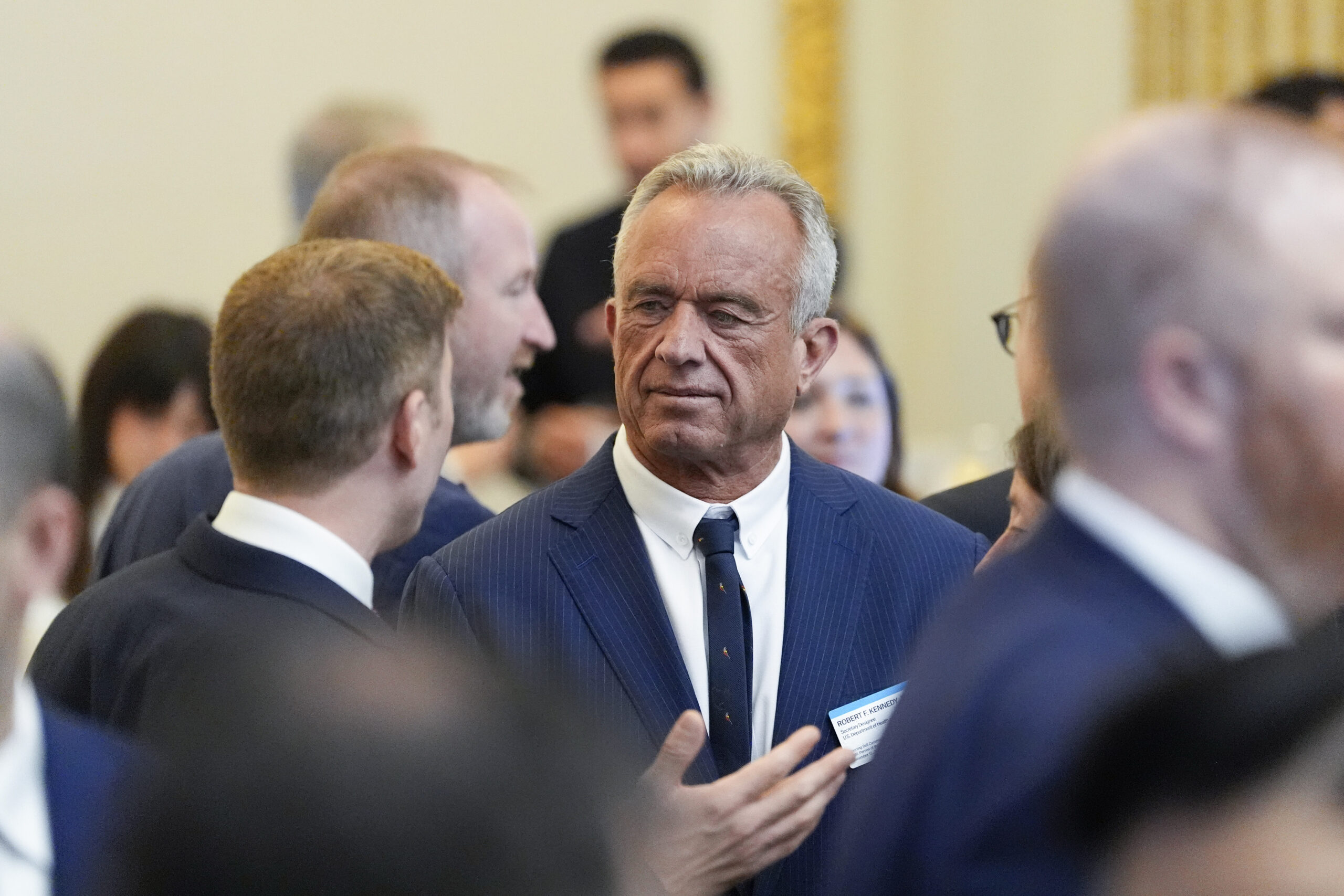
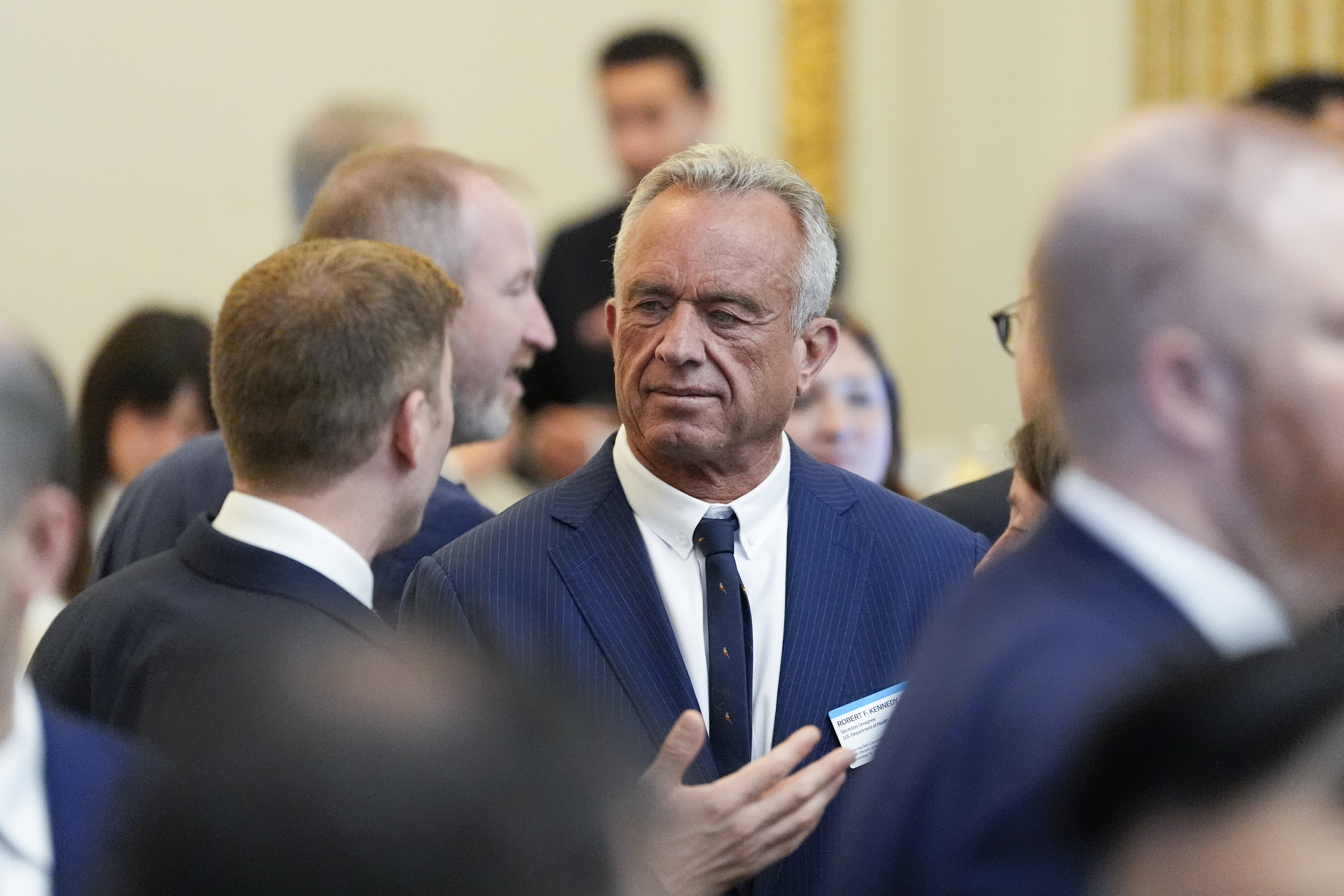
Trump, who was raised as a Presbyterian but now considers himself non-denominational, has nominated at least a dozen Catholics to top positions in his administration, including his own vice president JD Vance, a Catholic convert, and Robert F. Kennedy Jr., his pick for Health and Human Services Secretary. Their faith could play a direct role in shaping public policy, from pro-union policies and new tariffs to expanding the child tax credit and more tightly regulating the food and drug industries — and also help carve a new path forward for the Republican Party.
In interviews, several conservative practicing Catholic leaders said they see a close alignment between many of Trump’s second-term policy priorities and a conservative read of Catholic social teaching, which goes far beyond abortion. It’s also focused on promoting marriage and having children, giving parents wide discretion on everything from school content to health care and empowering non-governmental institutions like churches and nonprofit organizations for social support.
“No one’s walking into the administration ready to mount a crusade or anything,” said Rachel Bovard, vice president of programs at the Conservative Partnership Institute, a Trump-aligned think tank. But “there’s a very specific sort of Catholic paradigm that you may begin to see.”
It comes after decades of influence of a more individualistic evangelical Protestantism on the Republican Party that, among other things, strongly embraced individual liberty and free market capitalism.
“The market is not an end unto itself. The market has a purpose — and that is to create a free and flourishing society. If the family is not doing well, society is not doing well. We need to make sure our public policy is helping family to function,” Bovard added.
A spokesperson for the Trump transition did not respond to a request for comment.
In his nearly decade of political prominence, Trump has already dramatically reshaped the GOP, and it’s clear that the Republican Party’s future likely won’t be found in Ronald Reagan’s three-legged stool of conservatism, which was fiscally conservative, socially conservative and hawkish.
Where Republicans have long been skeptical of government intervention, some in the party increasingly see the government as a tool to reshape social policy. Republicans who long embraced “pro-life” policies, like restricting abortion access and supporting crisis pregnancy centers, are now leaning into a broader set of what they call pro-family policies that range from tax policies encouraging people to get married and have children to restrictions on kids accessing online porn. They are also now starting to turn a skeptical eye toward big businesses, including Big Pharma, Big Ag and Big Tech.
“I think President Trump has put together a very pro-family platform that wants to return the family to the center of public policy again. Obviously, I think that’s very Catholic. I don’t think he’s trying to be very Catholic,” said Terry Schilling, president of the American Principles Project. “It just so happens to coincide with Catholic principles and Catholic teaching.”
This is, of course, not the progressive-leaning Catholicism of Biden, Nancy Pelosi and other prominent Democrats, which has honed in on social justice, climate change and health care access among its top causes. Their definition of Catholicism would bristle at the idea of turning away migrants or curtailing Medicaid access.
Catholics are the largest group of Christians worldwide, and Catholics from both parties have long held prominent positions not only in the White House but across Washington. Six of them sit on the nine-member U.S. Supreme Court; they make up a quarter of Congress, where they are overrepresented compared to the American population; and Biden appointed a similarly sizable number of Catholics to his Cabinet.
But conservative Catholic leaders see in the GOP’s embrace of populism a turn toward what they call a common-good conservatism that is less focused on individual rights and more focused on families and the community. It trades a pro-business focus for a “pro-family” one. And it’s one they see non-Catholics leaning into. Trump, in a recent interview with TIME Magazine, declared that the GOP has “become the party of common sense.”
“What does Catholic social teaching say about these things? Well, it says the aim of politics is the common good,” said Brian Burch, president of the conservative Catholic Vote. “And right now we have a huge swath of our population, especially families, that are not flourishing.”
Trump’s performance with Catholics is only getting better — likely due in part to his dramatic improvement among Latino voters. This year, he won 59 percent of the Catholic vote, a group he carried with 50 percent support in 2016 and that Biden won with 52 percent in 2020, according to BLN exit polling.
Some conservative Catholics are particularly intrigued by Kennedy, whose uncle, John F. Kennedy, was the nation’s first Catholic president. While Kennedy comes from a storied Democratic family, and himself was a registered Democrat until 2023, some of them see his concerns that food and drug companies are profiting off of sick people aligning with Catholic social teaching’s concerns around human dignity and respect, even as some of them have concerns about his shifting views on abortion.
“Bobby has talked about the commoditization of the human person, whether it’s their sickness and their health — it’s just another vaccine away from managing. Or Big Food and Big Government and Big Pharma have colluded in a way to manage people as commodities, and they’re kind of cogs in a globalist machine that we just need to manage with medicine, technology and science,” said Burch, who is close to Kennedy. “And for Catholics, we say, well, wait, no there’s something much richer and deeper and more profound about what it means to be human that we need to recapture.”
Other Catholics that Trump has nominated to his Cabinet include Marco Rubio as secretary of State, Lori Chavez-DeRemer as Labor secretary, Sean Duffy as Transportation secretary, Linda McMahon as Education secretary, Elise Stefanik as United Nations ambassador, Kelly Loeffler as SBA administrator and John Ratcliffe as CIA director.
The party’s lean toward these parts of Catholicism comes as the country grapples with high rates of income inequality, and two generations confront the reality that middle-class goals like buying a house and having kids feel increasingly out of reach. It also comes amid a growing societal discussion over gender roles, stagnating birth rates and the ubiquity of technology, social media and artificial intelligence in people, and particularly kids’, everyday lives.
Leading the charge is Vance, whose conversion as an adult to a postliberal strain of Catholicism underpins his approach to policy making. While the George W. Bush era saw an attempt to marry conservatism to certain kinds of Catholic social teaching — government intervention to meet the needs of the poor, and support for human rights abroad — it fell by the wayside as the Tea Party wave took over the Party.
Now, “in Vance, you have a figure who is trying to apply Catholic social teaching in a deeper, different way than we’ve seen before,” said Ramesh Ponnuru, a senior fellow at the American Enterprise Institute. “It’s just a general kind of attempt to reorient Republican economics toward families and a little bit less toward business.”
This conservative view of Catholic social teaching lines up in many ways with the party’s shifting views on a number of issues, like labor unions and trade policy. Vance, who joined a United Auto Workers picket line last year, has voiced familiarity with Pope Leo XIII’s 1901 encyclical on Christian democracy, in which he wrote that “it is only by the labor of working men that States grow rich.” Rubio has previously referenced the text in his own argument in support of labor unions, as has Robert Lighthizer, who was Trump’s trade chief during the first administration, in his arguments against “the orthodoxies of free trade religion.” (Lighthizer is unlikely to return to a Trump administration, but his close aide was chosen to be the U.S. trade representative.)

It also speaks to an increasing interest within the GOP in using the government to incentivize family creation, as countries in Europe, like Italy, Greece, Hungary and Russia, have tried to do, though so far with little success. Trump has said he wants a “significant” expansion of the child tax credit — Vance has suggested increasing it to $5,000 per child — and also promised to make in vitro fertilization available to Americans free of charge. (That policy does, however, conflict with the official Catholic Church’s position against IVF, which opposes it.)
It’s a push that comes also as there is growing movement within the anti-abortion movement to focus on these and other “pro-family” policies instead of new abortion restrictions, as much of the country remains broadly supportive of some level of abortion access.
“We’re going to be talking about [IVF],” Trump recently told NBC News’ Kristen Welker. “We’ll be submitting in either the first or second package to Congress the extension of the tax cuts. So that might very well be in there, or it’ll come sometime after that.”
Still, progressive Catholics are skeptical about the extent to which the GOP will actually prioritize these policies, when Trump has promised in his first 100 days to focus on extending tax cuts, taking action on the border, and addressing crime in cities. And it’s unlikely big business, long allied with the Republican Party, will roll over easily.
“When you look at what the Republicans are talking about, they’re talking a whole lot more about cutting social provision than they are expanding it,” said E.J. Dionne, a senior fellow at the Brookings Institution who has focused on Catholic engagement in the political arena. “The dominant strain in the party is still far more pro-business, anti-government, libertarian.”
And progressive and some conservative Catholics agree that the administration’s hardline approach to immigration is likely to rankle U.S. bishops, who are already wary of Trump’s “mass deportation” proposal.
“When you’re looking at their first priority,” Dionne added, “it’s not family policy.”


Democrats may be discovering the political power of calling something rigged.
They’re leaning hard into anti-corruption messaging in the final weeks of the campaign as new research suggests that linking corruption to Americans’ economic struggles can boost Democrats into the home stretch.
Messaging from Democrats that tied corruption to housing, health care and the cost of living increased voter support for Democratic congressional candidates by about 3 percentage points, according to a national survey last month conducted by Blue Rose Research and Democratic-aligned Winning Jobs Narrative Action, which was obtained by POLITICO.
The findings align with a shift in how Democrats are talking about corruption — and help explain why that message has exploded on the campaign trail. From Sen. Jon Ossoff in Georgia to James Talarico in Texas and Abdul El-Sayed in Michigan, Democrats have zeroed in on a common argument: Washington is rigged to benefit the wealthy at the expense of everyday Americans.
“We have a corruption crisis in this country, and it is leading to an affordability crisis,” Iowa Democratic state Rep. Josh Turek said during his Senate debate against Rep. Ashley Hinson last week.
It’s a message that is reverberating across campaigns. In a recent presentation delivered to Democratic groups on Capitol Hill, longtime Democratic strategist Jesse Ferguson offered a succinct playbook: “Corruption is why your costs are high,” according to the presentation viewed by Blue Light News.
His presentation also encouraged Democrats to lead with the acknowledgement that costs are high and then go into corruption, acknowledge that it happens across parties and avoid making President Donald Trump the sole focus of their attacks. “Trump works as an example of corruption that raises costs, not as the whole case,” the presentation said.
Since April, Democratic candidates and outside groups in House and Senate races have spent roughly $104 million on advertising mentioning corruption, according to ad tracking firm AdImpact. Republicans, meanwhile, have spent $36 million across House and Senate campaigns over the same period.
“It’s not just like, ‘oh, look at what’s happening with the ballroom,’ or ‘boy, Donald Trump’s made a lot of money on crypto,’” Democratic strategist Chris Meagher said. “You have to be able to tie it to the impact on people’s lives.”
“The narrative works best when it’s an outsider candidate who is linking a rigged economy to a rigged political system,” longtime Democratic pollster Celinda Lake said of the anti-corruption messaging.
Running against corruption is not new. But as Democrats looked for a way out of the political wilderness after 2024, they began turning a familiar attack — anti-corruption — into a broader message tied to voters’ economic pain. What once was an attack largely focused on Trump has become a more expansive argument for candidates trying to connect it to why Americans are struggling financially, potentially providing a blueprint for the party beyond November.
“Democrats used to talk about corruption as a crime. Now corruption is the explanation for costs,” Ferguson, the Democratic strategist, said.
The issue — and messaging around it — is also coming to the fore in a cycle when anger over the suppression of Epstein files hit a fever pitch and public pressure to ban Congress from trading stocks continues to mount.
And it’s not just the research by Blue Rose that shows the potential potency of that message.
In another recent survey from the Democratic group Navigator Research, obtained by Blue Light News, the vast majority of Americans — both Democrats and Republicans — say corruption is driving up their costs. That same survey of registered voters, conducted in August, found majorities, including roughly a quarter of Republicans, say Trump is bringing more corruption to Washington than fixing it.
And new results from the nonpartisan Center Square’s Voter Voice Poll, conducted this month by Noble Predictive Insights and shared first with Blue Light News, show 10% of voters ranking government corruption as the second most important issue facing Americans, tied with the economy and jobs, and only behind inflation and price increases.
In some instances, Democrats have wrested the word “rigged” away from Trump who has used it in the context of unproven election fraud and turned it into a mobilizing political talking point. That’s a departure from March 2024 when Democrats criticized then Rep. Katie Porter for accusing special interests of spending money to “rig” the California Senate race after she lost in the state’s primary. But now some Democrats are embracing that language as a way to rail against what they see as a corrupt system.
“They’re rigging the rules to benefit their wealthy donors and corporate special interests,” former Ohio Democratic Sen. Sherrod Brown said in a message to supporters announcing the launch of his campaign to return to office.
But the corruption resonates across parties. Republicans who spoke with Blue Light News said Democrats do not own the issue — voters everywhere are animated by it. While polling shows that voters in both major parties believe the government is corrupt, Republicans accuse Democrats of lacking credibility on the issue.
“Americans have been disgusted by the level of self-serving corruption that spread like herpes through the slimy politicians who run the Democrat Party, and now they’re suddenly changing their tune because it’s an election year,” National Republican Congressional Committee spokesperson Mike Marinella said in a statement. “Voters see through the facade, and they know Republicans are cleaning up the rot left behind by Democrat leaders.”
On the Senate side, National Republican Senatorial Committee spokesperson Bernadette Breslin pointed Blue Light News to a poll in Minnesota — a rare offensive opportunity for Senate Republicans this cycle — that shows there are just about as many voters who blame Democratic Gov. Tim Walz for widespread fraud of federally-funded government programs in the state as there are who blame the criminals. Walz’s lieutenant governor, Peggy Flanagan, is running for Senate against Republican Michele Tafoya, and corruption under Democratic rule is a key theme for Republicans in the race.
“The overwhelming majority of Minnesotans blame the Walz-Flanagan administration — and the criminals it aided and abetted — for plundering their hard-earned taxpayer dollars,” Breslin said. “They’ll vote for Michele Tafoya to right the ship this November.”
Steve Pierce, executive director at Winning Jobs Narrative Action, said one of the biggest shifts for Democrats this cycle on corruption has been a move away from a message largely rooted in concerns over democratic norms, which have struggled to break through in a way that moves voters in past cycles.
“You’ve seen Democrats, rather than connecting corruption to democracy, connecting it to affordability, connecting it to the top concern that voters have,” said Pierce. “It’s connecting it in a way that’s meaningful to voters around the things that they are thinking about every day.”
The anti-corruption message has played out across the country, and as an explanation for frustration against different economic pain points, including rising electric bills and local data center projects.
A recent memo on data centers from House Majority PAC, the main super PAC working to elect House Democrats, noted the “message environment in the 2026 election cycle has been dominated by costs, with an important secondary theme around corruption that began to emerge last year.” The group’s spokesperson, CJ Warnke, told Blue Light News that “every single poll and every single focus group shows affordability to be voters’ number one issue, and they specifically point to corrupt politicians as being responsible for driving up prices.”
Next month’s midterms will offer the clearest test yet of whether Democrats can turn this message into votes. But Democratic operatives increasingly see anti-corruption messaging as more than just a short-term political weapon — as long as they try to do something about it if they win control next year.
“I think the thing for Democrats, if they do want to keep it on the radar heading into 2028, and I think they should because I think it is a really potent issue for them, they are going to have to also deliver on it,” said Pierce.
“They have to be able to show up to get caught trying,” he said.
MAGA Inc. is planning to trim the map in a homestretch bid to cling to power in November.
The President Donald Trump-aligned super PAC, with several hundred million dollars still in the bank, is planning a series of major money moves coordinated with other leading GOP super PACs in the final three weeks before Election Day. The push includes cutting off spending to a group of less attainable House races, piling in money to shore up others and training its focus on key Senate seats to salvage Republicans’ Senate majority.
Ohio, Alaska and Iowa are the Senate races that Trump officials view as increasingly critical to keep their majority in the chamber, according to three GOP officials familiar with MAGA Inc.’s strategy, granted anonymity to candidly assess the midterms.
One of the people said MAGA Inc. and a leading House GOP super PAC would pull spending out of Michigan’s 8th District by the middle of this week. The move effectively acknowledges Democratic Rep. Kristen McDonald Rivet’s strength over GOP challenger Tom Smith. They have similar plans for a group of other House races in the coming days that are trending away from Republicans.
The official stressed the tacking would amount to “re-allocating, not cutting” the total planned spend.
MAGA Inc. and its affiliates are still competing in all of the Senate battlegrounds, including Texas, where they expected to add at least $5 million and potentially more in the coming days, according to the official.
For the Senate, winning two out of those three states of Ohio, Alaska and Iowa would make it “hard” for Democrats to take the Senate, one of the senior GOP officials projected, adding that a three-state sweep would decisively put it out of reach for Democrats. That, however, would require Republicans to win Texas and a handful of other at-risk red states, while also flipping Michigan or another blue state. The same senior Republican official said there’s confidence GOP Rep. Ashley Hinson “probably pulls through” in the Iowa Senate race.
Texas, however, remains a massive headache for Republicans — and the GOP official is pointing to Ken Paxton as the problem.
The senior Republican official said MAGA Inc. would do what it can to help candidates and vowed to “unload the tank” — a promise the group has been making for months even as it’s only spent more than half of the half-a-billion-dollar war chest with three weeks to go.
But the onus for standing up a winning campaign is shifting. Ultimately, the official said, “it’s up to the candidates, not the outside groups” to “bring it home and have a reason to get a few more points of swing voters their way.” They also need to maximize their votes with Republicans, this person said.
“Over the next week to 10 days you will see a lot of moves — a lot of coordinated moves — that are around trimming the map for the home stretch,” the senior GOP official familiar with MAGA Inc.’s plans said. “It’ll be all over the place. It’ll just just be moving on from districts that we don’t think it’s the right time for, and piling in further on ones we think it is the right time for.”
That would force top House GOP groups to decide whether to shift their own cash to take over key spending from MAGA Inc. as they work to defend a host of once-safely red House seats Trump won by more than 10 points in 2024 that are now at risk. That includes key districts across the Midwest, North Carolina, Nevada, along with a seat in Kentucky, which Trump won by 15 points.
In Ohio, where Trump is traveling for a rally on Monday, Republicans have privately worried about GOP Sen. Jon Husted for months. The former lieutenant governor, who was appointed to serve out Vice President JD Vance’s Senate term, has been trailing former Democratic Sen. Sherrod Brown in public and private polling for months. The top Senate GOP super PAC, Senate Leadership Fund, has unloaded close to $100 million in Ohio and a slew of outside groups have joined, making it one of the most expensive Senate contests in the country. Just in the last week, Husted notched his first narrow lead over Brown in one recent poll.
“We want a maximum spend,” Ohio GOP Chair Alex Triantafilou, who played host to Vance on Friday in Lima and will reprise that role as the president lands in Youngstown, said in an interview. “We want as much attention. I mean, the president’s coming, the vice president. Look, I’m the chair of the Republican Party — I want full resources in this state. We welcome it very much.”
And while Texas has emerged as an unexpectedly expensive headache for Republicans, another GOP operative familiar with MAGA Inc.’s thinking suggested Ohio could end up costing Republicans more spending from all sides, despite its smaller size.
Democrats see the same final battlefield taking shape. Senate Majority PAC, the top Democratic-aliied PAC, is injecting $2.5 million in Iowa and $7 million in Ohio for television ads, according to plans shared first with Blue Light News, “injecting new resources to help close the gap in those battleground states,” a spokesperson said. They’ll also continue to back aggressive digital campaigns in each state. This comes on the heels of SMP dropping $5 million in Kansas.
Beyond Ohio, other senior Republicans are busy trying to staunch the bleeding in red states across the map.
Top Senate GOP groups have already cut off spending in North Carolina, where Republicans are struggling to defend a GOP-held seat. They have also pulled some money back in Georgia but are still planning to unload millions more in the Peach State.
Senate Leadership Fund expects to keep spending broadly across the map in the final weeks. The group plans to pour even more money into Texas as a potential lifeline to Paxton, hitting a total of nearly $200 million. They’re also dropping dough in Kansas to defend Sen. Roger Marshall, whose tough race against Democrat Adam Hamilton blindsided top Republicans in the final weeks, along with a crop of other endangered GOP incumbents, according to two Republicans with direct knowledge of the plans. And, SLF is expected to keep unloading money into the Michigan Senate race, which Senate Republicans view as their top flip opportunity.
The senior GOP official familiar with MAGA Inc.’s strategy defended the group’s spending decisions, despite waves of criticism from some Republicans who wanted it to unleash all its $400-million-plus war chest, and sooner. So far, MAGA Inc. and its affiliates have spent just over $200 million this cycle, including future ad reservations, according to data from AdImpact.
The cash the wider MAGA Inc. operation deployed last month, which was close to $100 million, shielded candidates from further losses as the environment worsened for Republicans, the official argued.
“The money’s working,” the official said. “The money stopped everybody from getting killed in September when the environment rapidly deteriorated further. The money held the line.”
The campaigns that received the September spending were able to “stay afloat,” one of the other officials said. “There are more candidates in a position that they can still win their race today that wouldn’t have been had that not happened.”
Many of those GOP candidates, however, privately argue it was Trump’s poor approval rating and his decisions around the ongoing war with Iran, tariffs and sky-high fuel prices that are sparking voter backlash.
It was during that September panic that GOP officials became increasingly worried about the growing map.
At one point, Trump officials believed they may need to start intervening to boost even Sen. Ashley Moody in ruby-red Florida as warning signs shot up across the Sunshine State, according to two Trump officials with direct knowledge of the matter.
But recent internal polling for Moody has turned a corner, alleviating many of those concerns and prompting Trump officials to stand by plans for the president to visit the state — but more as a way to boost Rep. Byron Donalds, who is running for governor, and several key House races that Republicans are worried about, according to the people.
Jessica Piper contributed to this report.
Under the political radar, the country’s food stamps program is undergoing a slow-motion transformation. The ramifications could bubble up into the midterms.
Changes to the Supplemental Nutrition Assistance Program from Republicans’ One Big Beautiful Bill Act are rolling out in phases, from tougher work requirements to restrictions on non-citizens. Food stamp rolls already shrank by more than 5 million people nationwide as of this summer, as the hardest-hit state, Arizona, saw an outright majority of its food stamp recipients lose benefits.
The latest alteration clicked into place Oct. 1, when the share of administrative costs states and counties have to pay rose to 75% from 50%. An even bigger financial shift looms in a year, when states with high payment error rates will have to assume some benefit costs for the first time, a scenario that’s already rippling through state and local budget planning.
It all adds up to a new era in federal-state relations — and in the size and nature of the welfare state.
In a year when affordability worries top voters’ priority lists and grocery prices strain their wallets, Democrats think the SNAP shift gives them an opening to make Republicans pay politically after the GOP used social safety net cuts to food aid and Medicaid to help pay for last year’s tax cuts.
“People are getting kicked off these programs at the very moment they’re going to the polls to vote,” House Agriculture ranking member Angie Craig (D-Minn.) said. “I sure wouldn’t want to be a Republican headed into the November ballot.”
But Republicans think they have a compelling story to tell voters, trying to right-size a program that spends millions of dollars on erroneous payments. The SNAP changes align with the Trump administration’s broader push to crack down on fraud and make the government smaller or more efficient. Implementing stricter work requirements for welfare often polls well, and trying to move people toward work gets at the root causes of poverty, they argue.
“The premise is simple: Let’s make sure that this program is preserved for those truly in need, and that we aren’t squandering taxpayer dollars,” a senior USDA official told Playbook in an interview. “And let’s make sure that if folks are able-bodied, they are work training or volunteering for 20 hours per week.”
That doesn’t mean Republicans in competitive races are putting SNAP and Medicaid cuts front and center on the campaign trail. When they tout last year’s megalaw, new tax breaks typically lead the messaging. And 10 frontline GOP House campaigns didn’t respond to requests for interviews about how they can win on SNAP.
At the state and county level, some governments are scrambling to prepare for a massive cost shift, hitting at the same time as significant Medicaid changes. The resulting bureaucratic jumble has contributed to some of the SNAP losses this year, as recipients struggled to get through overtaxed call centers, some states cut staff, and others tightened their processes.
“It really sets up a change in the federal responsibility, and I view it as a slippery slope,” warned Barbara Guinn, New York’s commissioner of the Office of Temporary and Disability Assistance. Her state is staring down a possible $1 billion added burden next year, though they’re advocating for a repeal of the benefits change. “Once they implement any kind of cost shift, I think it will be easier for them to take similar actions in the future.”
Whether to delay next year’s cost shift has already generated tensions over the farm bill in the Senate, where Democrats are demanding a longer postponement than Republicans’ offer of one year. Some Minnesota counties are considering significant property tax increases to pay for the extra costs, Craig said: “We’re going to be pushing hard for a two-year delay — at the request of, frankly, many of my Republican county commissioners, not just Democrats.”
Conservatives see the new calculus as a long overdue change to improve efficiency and incentivize program integrity. Improper payment rates are high in many states (though they comprise both over-payments and under-payments, and error rates are different from fraud). Those that reduce errors enough won’t have to take on paying the benefits. And even opponents of the changes think lower error rates are a worthy goal. SNAP rolls often ebb and flow with the economy, and the recent drop could reflect the job market pulling people out of need — or the removal of people who shouldn’t have been getting food stamps in the first place.
“There needs to be some level of accountability,” the USDA official said. States with high error rates “need to start to have skin in the game.”
But at a time when many households are already squeezed by inflation, the SNAP changes have correlated with higher numbers of Americans turning to charities to ward off hunger. The surge in people losing food aid came more quickly than expected. The unemployment rate hasn’t meaningfully changed. And the vast majority of large food banks in a recent NBC survey said they were grappling with higher demand, in part due to food stamp changes. Another rule kicking in the day after the midterms could lead to many retailers being bumped out of SNAP as places where low-income people can use their benefits.
For state governments, a set of sweeping operational changes are now underway to conform to new policy demands, often requiring more money or staffing at already under-resourced offices. And the budgetary stakes to get error rates lower are sky-high.
“It’s a really complicated, nuanced and confusing time for states who are trying to administer SNAP,” said Lauren Kallins, a senior legislative director at the nonpartisan National Conference of State Legislatures, which has advocated for a delay in the benefits costs shift.
-

 Politics2 years ago
Former ‘Squad’ members launching ‘Bowman and Bush’ YouTube show
-
Uncategorized2 years ago
Bob Good to step down as Freedom Caucus chair this week
-

 The Josh Fourrier Show2 years ago
DOOMSDAY: Trump won, now what?
-

 The Dictatorship2 years ago
Pete Hegseth’s tenure at the Pentagon goes from bad to worse
-

 Politics2 years ago
Former Kentucky AG Daniel Cameron launches Senate bid
-

 The Dictatorship2 years ago
Luigi Mangione acknowledges public support in first official statement since arrest
-

 Politics2 years ago
Blue Light News’s Editorial Director Ryan Hutchins speaks at Blue Light News’s 2025 Governors Summit
-

 The Dictatorship1 year ago
Mike Johnson sums up the GOP’s arrogant position on military occupation with two words