
Congress
Child safety advocates blast White House talks that let tech CEOs sidestep hearing

The family whose son inspired legislation to crack down on the exploitation of children on social media is condemning a White House intervention that secured administration support for a child online safety package — while allowing Meta and Google to send lower-level executives to testify before the Senate Judiciary Committee in place of their CEOs.
“It was our understanding that this legislation was never intended to become a political bargaining chip,” Tania and Tim Woods wrote in a Wednesday letter obtained by Blue Light News sent to Senate Judiciary Chair Chuck Grassley (R-Iowa), ranking member Dick Durbin (D-Ill.), other members of the committee and the White House. “It was created because children have died.”
James Woods, for whom the James T. Woods Act was named, was a 17-year-old Instagram user who died by suicide after being sexually extorted on the platform. His parents, Tania and Tim Woods, have since campaigned for tougher laws to prevent and penalize exploitation of children online — like the legislative package pending before the Judiciary Committee that would strengthen sentencing and criminal laws to help law enforcement prosecute individuals and groups that manipulate children on the internet.
Grassley has been working hard to advance the package, while also calling on the CEOs of Meta, Google, TikTok and Snap to testify before his committee about child online safety practices, among other topics.
But, after Meta representatives met with White House staff to express concerns about the hearing, the administration brokered a deal with Grassley that allowed lower-level executives at Meta and Google to testify in place of their CEOs in exchange for White House support of the James T. Woods Act, five people with knowledge of the events previously told Blue Light News.
Calling on Meta CEO Mark Zuckerberg to appear before the committee, Tania and Tim Woods criticized the deal in their letter Wednesday, calling it “devastating for families like ours because it suggests that access and influence may carry more weight than the lives of children.”
“Mark Zuckerberg should not be negotiating the future of child safety legislation,” they wrote. “He should be answering for the role Meta has played in exposing children to predators and for the countless opportunities the company has had to make its platforms safer.”
Grassley’s Press Secretary Hannah Akey in a statement said the committee chair has worked hard with impacted families, law enforcement and child safety organizations to draft legislation to combat online child exploitation.
“The James T. Woods Act is a hugely bipartisan and widely supported bill that tackles disgusting crimes harming children nationwide … [Grassley] will continue his ongoing investigations of Big Tech, while also passing laws that will protect children across America,” Akey added.
Meta, Durbin and the White House did not immediately respond to a request for comment.


Democrats’ money machine is on its way to Mississippi.
Senate Majority PAC is putting an initial $1.2 million on television statewide through Election Day to boost Scott Colom, the group announced Tuesday — another plunge into deep-red territory for Democrats as they take advantage of a dismal environment for Republicans.
Colom, a local prosecutor, has gained on GOP Sen. Cindy Hyde-Smith in recent public polling, and has started to gain the attention of national Democrats. Some Senators, including Georgia Sen. Raphael Warnock and Arizona Sen. Ruben Gallego, have pushed for more party investment in the race, which they believe in the right environment could flip a traditionally red seat.
But until now, Democrats said their resources were stretched too thin across a widening map that would allow them to play in the Magnolia State.
SMP is launching its first ad Wednesday attacking Hyde-Smith as a “do-nothing” senator and is planning a digital program as well. Lauren French, a spokesperson for SMP, said in a statement that “it is clear Colom is running a competitive race that has put Hyde-Smith on her heels.”
Hyde-Smith’s campaign downplayed the race’s competitiveness while tying Colom to Senate Minority Leader Chuck Schumer.
“It took Chuck Schumer and his Super PACs thirteen months to run a single ad for Scott Colom,” Hyde-Smith campaign spokesperson Nathan Calvert said in a statement. “Chuck knows what Mississippians know, Scott Colom is too liberal, supports transgender surgeries for children, men in women’s restrooms and locker rooms, open borders, and higher taxes. Team Cindy is confident that voters will reject this radical agenda at the ballot box on November 3rd.”
Colom’s campaign didn’t immediately reply to a request for comment.
Other national Democrats have started paying attention to the race too, with several set to descend on Mississippi ahead of Election Day. Former Vice President Kamala Harris will campaign alongside Colom later this week, and former Secretary of Transportation Pete Buttigieg will hit the trail next week.
The state has the highest proportion of Black people in the nation, giving Democrats a high base of support in most elections — and has long left Democrats dreaming they could win statewide, having invested some resources in recent Senate and governor’s races over the past decade. Hyde-Smith did not top 55% of the vote in either of her previous elections, and Colom has seized on an interview clip when she was asked about the high price of beef: “You know, you have so many proteins to choose from.”.
Still, despite the overall positive environment for the party, flipping the seat remains a steep uphill battle. Republicans control all levers of state government, and Trump handily won by 24 points in 2024. The last time Mississippians elected a Democrat statewide was 2015, and the last time the state sent a Democrat to the Senate was 1982.
SMP’s investment in Mississippi follows multimillion-dollar dives into Kansas and Texas that collectively show how far the Senate map has shifted onto red turf in the midterm’s closing weeks. The Chuck Schumer-aligned group has also cut back on spending on television in North Carolina and Georgia in recent weeks amid increasingly bullish outlooks for Democrats Roy Cooper and Sen. Jon Ossoff, respectively.
House Democrats’ campaign arm is launching its first ad buy against seven-term GOP Rep. Mike Turner in his western Ohio district as they seek to turn up the pressure on Republicans in once-safe red seats.
The DCCC is dropping separate six-figure buys on two coordinated television ads boosting challenger Kristina Knickerbocker, spokesperson Riya Vashi said — a remarkable investment considering Turner won in 2024 by over 18 percentage points, overperforming President Donald Trump.
Ohio adopted a new redistricted congressional map last year that was expected to favor Republicans. Turner’s 10th District voted for Trump by 6 points in 2024; under the new lines it would have been closer to 8 points.
The first ad airing this week opens with a woman saying, “It’s time we had someone in Congress who actually stands up for us” as Knickerbocker jogs through a neighborhood.
Democrats are eyeing Turner’s Dayton-area seat as a reach opportunity. A new internal DCCC poll of 535 likely general election voters reviewed by Blue Light News shows Knickerbocker running three percentage points ahead of Turner. Polling from this summer showed Turner leading the race.
Another Democratic group, House Majority PAC, has already poured more than a million dollars into the race against Turner and has reservations planned through Nov. 3. Knickerbocker is not on the DCCC’s “Red to Blue” roster of candidates who get the bulk of its resources.
“Alarm bells should be ringing for Mike Turner,” Vashi said in a statement. “Kristina Knickerbocker has the momentum in this race, and the DCCC will make sure every voter in this district knows exactly how Turner has betrayed them.”
But the NRCC has been spending in the district for several weeks to boost Turner. House Republican campaign operatives are so far dismissing efforts to flip the seat.
NRCC spokesperson Zach Bannon called Turner “a life-long Ohioan who has a record of cutting taxes, lowering costs, and making Ohio streets safer.”
“While Congressman Turner delivers commonsense conservative wins, out of touch Democrat Kristina Knickerbocker supports a radical far-left agenda,” Bannon said. “This November, Ohioans will reject liberal Knickerbocker and send Congressman Mike Turner back to Congress.”
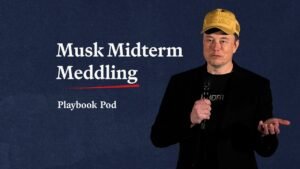
Elon Musk is facing a gauntlet of Democratic oversight.
Democrats have long eyed investigating the world’s richest man and the GOP’s top donor. They may get their chance if they win back congressional power in November, and senior members are mulling how a range of panels could target Musk and a huge swath of his businesses.
Their list of potential probes is growing.
Some members are eager to dig into Musk’s possible role last week in throttling crucial internet access to the Ukrainian military as President Donald Trump seeks to pressure the country into cutting a peace deal with Russia.
“What happens when one guy gets a giant contract from the government and then uses it to do something that shuts down communication in a war that has been extremely important to the United States to support Ukraine?” Rep. Pramila Jayapal said in an interview.
The incident is one of a glut of alleged conflicts of interests members cited as ripe for oversight, as Musk’s companies like SpaceX and Tesla rake in multi-billion dollar federal contracts and subsidies.
“The sheer number of conflicts of interest are astounding,” top Space, Science and Technology Democrat Rep. Zoe Lofgren said.
Spokespeople for Musk did not respond to multiple requests for comment.
Members of House Oversight and other panels also want to examine Musk’s role in eliminating over 250,000 federal jobs during his time at DOGE, withholding congressionally appropriated money and accessing sensitive government data.
“Congress must demand a full accounting of the damage Mr. Musk and DOGE caused, and we will not let anyone obstruct our oversight,” House Foreign Affairs ranking member Rep. Greg Meeks said in a statement Monday, referring to the so-called Department of Government Efficiency Musk headed last year.
Meeks named Musk’s part in “the cruel dismantling of USAID” as a prime target for his panel next year.
Some Democrats are not waiting for gavels: House Homeland Security Democrats demanded last month Musk testify under oath about a watchdog report claiming DOGE overstated its savings. And Ways and Means Democrats called for an investigation into the group’s alleged data theft from Social Security records.
But even members on panels with less obvious ties to the tech mogul are eyeing targets. Rep. Maxine Dexter, who sits on Natural Resources and Veterans Affairs, said she sees Musk among “the well-connected billionaire, trillionaires who have seen government contracts as a way to subsidize their own company’s research, development, and bottom line.”
“We need to shut that down,” she said.
What else we’re watching:
— MEET TRUMP’S HILL LIAISON: Katie Bailey is poised to run point between the White House and a chaotic Congress — especially if Democrats prevail in the midterms. Trump’s pick for the new director of the Office of Legislative Affairs is a longtime former congressional aide with wide-ranging experience in oversight and investigations. Her first task will be helping navigate a fast-moving, high-stakes “lame duck” legislative session, where lawmakers rush to pass outstanding bills and avoid a government shutdown. James Braid, who previously held the role before announcing his departure in August, said in an interview that Bailey is up for that task.
— GOP TRIES TO SPARE UKRAINE FROM TRUMP: Republican lawmakers are scrambling to find a way to stop Trump from cozying up to Russia and dismissing Ukraine — but they’re running low on options. All of it comes in response to the president’s decisions to purchase Russian diesel, waive sanctions on Moscow and potentially stop sharing intelligence with Ukraine. Lawmakers are also frustrated with days of unexplained disruptions in Kyiv’s U.S.-controlled satellite defenses. The disparate responses reflect an undercurrent of Republican angst about an administration that has largely ignored Congress on Ukraine and foreign policy more broadly — and the lack of a coordinated response from the legislative branch. They underscore just how little power Trump’s own party has had in reining in his attacks on longstanding allied relationships.
Riley Rogerson, Chris Marquette, Adam Wren, Mia McCarthy, Mark Satter and Leo Shane III contributed to this report.
- Senate Democrats start spending in Mississippi
- Poll: Voters see Republicans as the party of Big Tech tax breaks
- Two Dans, four choices, one big headache for GOP in Alaska Senate race
- Democrats’ Musk-ask questions
- DCCC launches ads against Mike Turner in red Ohio district
- Capitol agenda: Dem gavels are coming for Elon Musk
- Pritzker’s big spending for Black and Hispanic candidates is drawing notice
- The ‘Congress addict’ serving as Trump’s fixer on Capitol Hill
- Elon Musk is in Democrats’ oversight crosshairs
- GOP lawmakers scramble to spare Ukraine from Trump
-

 Politics2 years ago
Former ‘Squad’ members launching ‘Bowman and Bush’ YouTube show
-
Uncategorized2 years ago
Bob Good to step down as Freedom Caucus chair this week
-

 The Josh Fourrier Show2 years ago
DOOMSDAY: Trump won, now what?
-

 The Dictatorship2 years ago
Pete Hegseth’s tenure at the Pentagon goes from bad to worse
-

 Politics2 years ago
Former Kentucky AG Daniel Cameron launches Senate bid
-

 The Dictatorship2 years ago
Luigi Mangione acknowledges public support in first official statement since arrest
-

 Politics2 years ago
Blue Light News’s Editorial Director Ryan Hutchins speaks at Blue Light News’s 2025 Governors Summit
-

 Politics1 year ago
John Legend advises Trump to drop the ‘dictator s‑‑‑’ if he wants Nobel Peace Prize