
Congress
‘I’ve been taking a ton of risk’: Inside Jim Himes’ mission to save a key spy authority

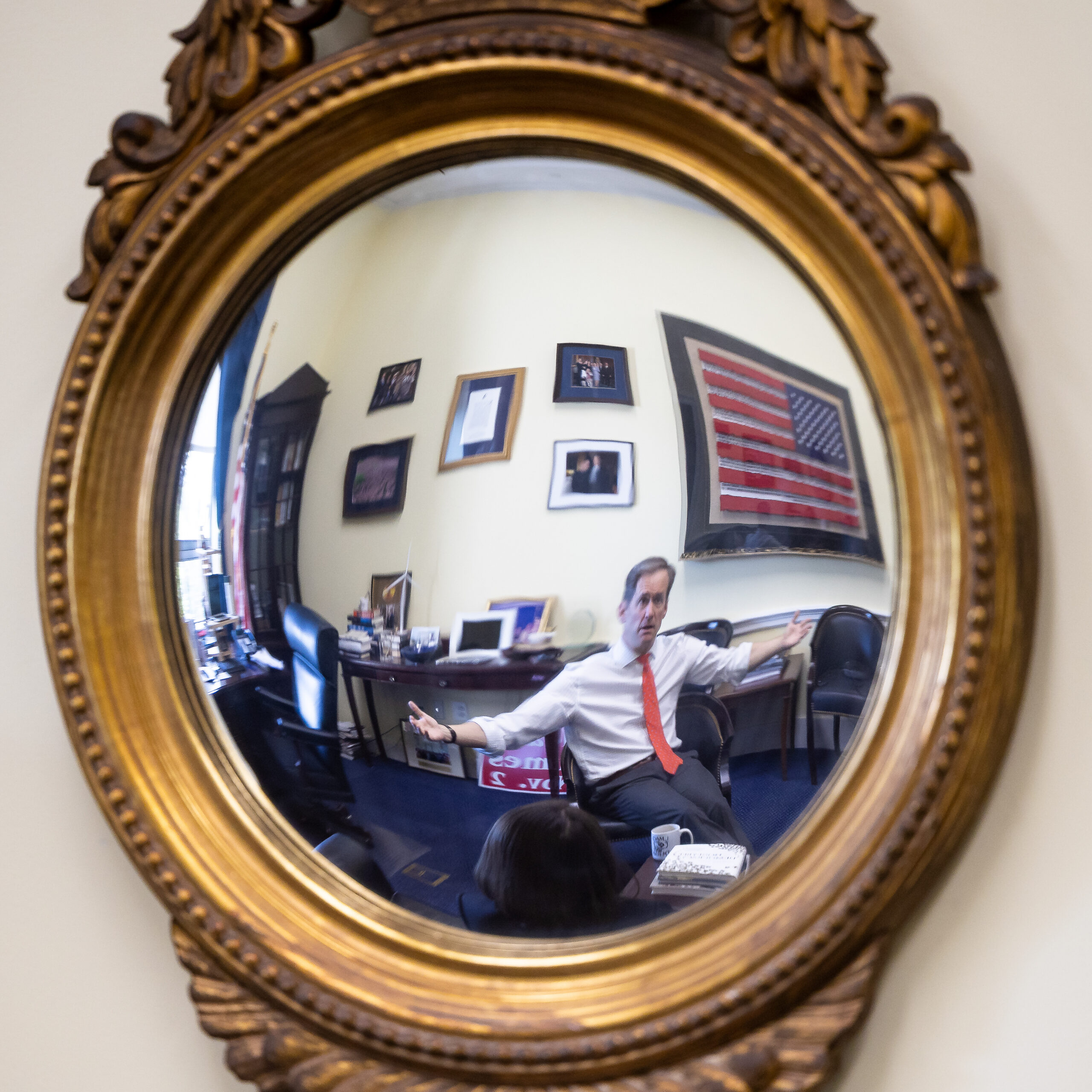
Jim Himes wants to reauthorize a controversial surveillance law. He knows it comes with big risks.
The top Democrat on the House Intelligence Committee has been seeking a bipartisan deal to extend Section 702 of the Foreign Intelligence Surveillance Act while Republicans are busy fighting among themselves over how to prevent the government spy power from expiring April 30.
Fearing a lapse would be an existential crisis, he’s been empowered by House Minority Leader Hakeem Jeffries to share his perspective with fellow Democrats who are skeptical of reauthorizing Section 702 without guardrails to protect Americans from being targeted by the Trump administration. And despite his own preferences for modifying the spy authority, he’s facing criticism from progressives in his district for being open to a clean extension.
Himes has also been talking to the White House — but often finds himself out of the loop of negotiations with House Republican leaders, who are more focused on trying to squeeze a deal through their ultrathin margins than find common ground with Democrats.
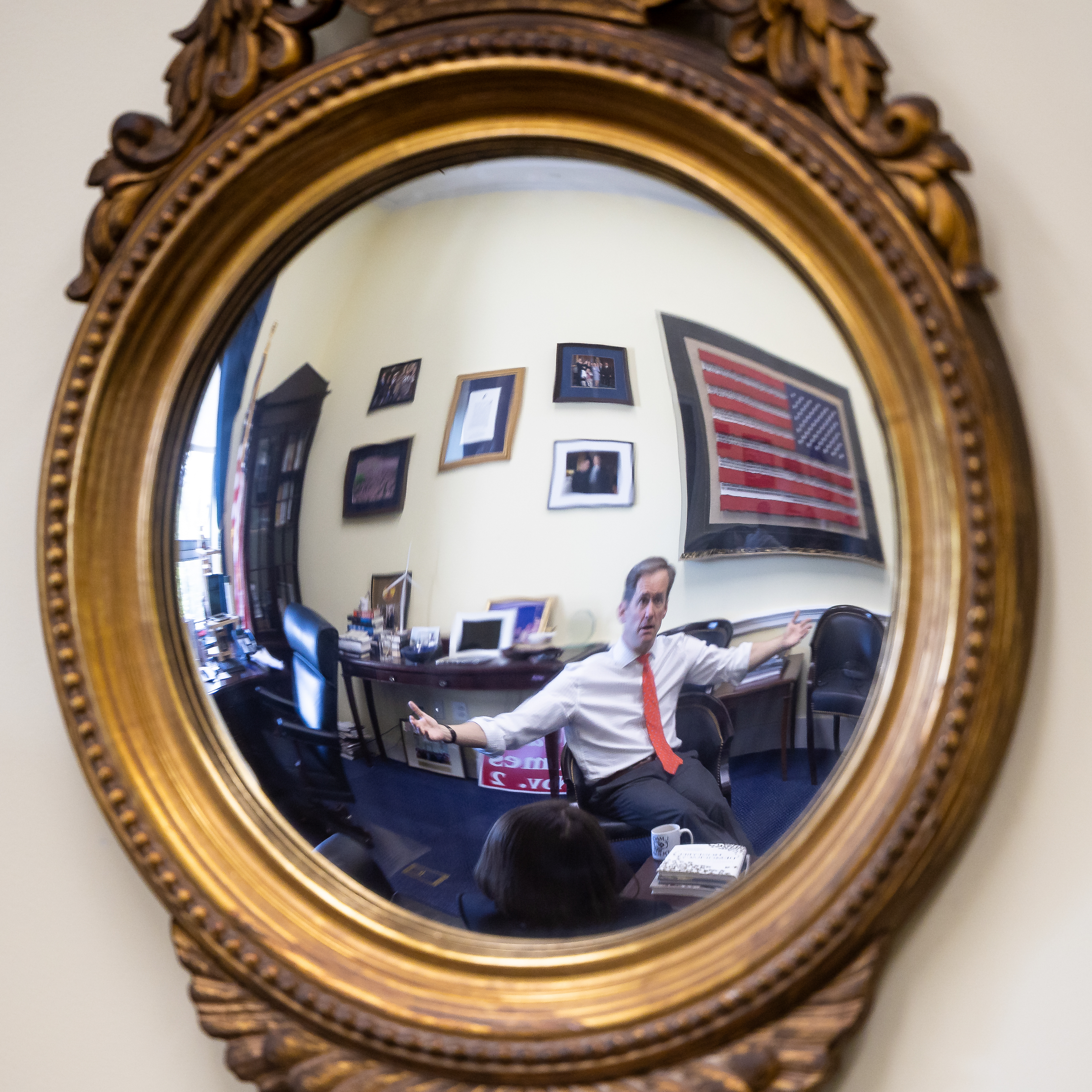
“There’s been a shit ton of outreach to me” on this issue, Himes, of Connecticut, said in a lengthy interview in his Capitol Hill office Thursday. “None of it has been, ‘Come to this room to negotiate this deal today.’”
The stakes are high for Himes as he navigates the difficult politics around a surveillance law viewed with deep suspicion by many progressives and conservatives. And in attempting to broker cross-party consensus around the spy law, he has embarked on a potentially thankless mission.
He’s challenging Republicans’ appetite for bipartisan dealmaking in the Trump era — and so far, he’s being largely ignored by the GOP leaders. He’s also testing whether Democrats would attach their names to any legislation that gives even the appearance of emboldening an administration they view as corrupt — and it’s getting more difficult by the day.
“I’ve been taking a ton of risk, I’ve been doing a ton of explanations,” Himes said later Thursday.
If he succeeds in stitching together some fractured coalition to extend Section 702 with meaningful guardrails, he will have pulled off a feat of political compromise rarely seen these days. But if he is unable to help land a deal and must instead back a clean extension in the interest of protecting national security, he will undoubtedly take fresh heat from progressives, perhaps in the form of a credible primary challenger.
One long-shot candidate looking to unseat Himes in the Democratic primary based on the incumbent’s FISA stance — Joseph Perez-Caputo, a local activist — has been leading constituent protests against the lawmaker back home.
“We’ve kind of watched in abject horror,” Perez-Caputo said in an interview of Himes’ scramble to land a Section 702 agreement.
A new letter from half a dozen groups in Connecticut, shared first with Blue Light News, is calling on Himes to step down as the Intelligence Committee’s ranking member, saying he has “betrayed” obligations to his constituents and the Constitution — including by “actively lobbying other Democrats and Republicans to support the administration’s FISA agenda.”

Himes is cognizant of the dynamics, recalling that he got his “head blown off” by frustrated participants during a demonstration in his district last month, adding, “there’s an immense amount of misinformation out there that needs to be addressed.”
Ultimately, Himes says, he’s driven in this fight by a sense of duty. Over the course of the Thursday interview, he insisted — repeatedly — that he prefers extending the spy authority with policy changes, like seeking judicial review for searches under the program, to continuing on with the status quo.
Rather, Himes explained, his perch on the Intelligence panel uniquely positions him to understand the scope and stakes of a Section 702 expiration. And if it were to come down to a choice between passing a clean extension or letting the program expire, a lapse would be a nonstarter.
“Three months from now, if FISA 702 is dark and there’s a bomb in Grand Central, there will be very little doubt in my mind … that that occurred because we shut down our most important counterintelligence,” Himes said.
“So I don’t blame them,” he added of those members who would prefer the program lapse than support a clean extension. “But I just see with some granularity — actually, more granularity than pretty much anybody around here — what the risks are that we face.”
Despite Himes’ entreaties, many House Democrats remain skeptical. Rep. Stephen Lynch of Massachusetts said in an interview Thursday he will vote against a reauthorization for the first time in his 25-year tenure in the House if the legislation does not institute new guardrails on warrantless government surveillance.

Congressional Progressive Caucus Chair Rep. Greg Casar (D-Texas) said he respects Himes and appreciates that he has attended caucus meetings to share his perspective on the issue. But, he said in an interview, the decision was an easy one: “We should unify now to say, ‘No, Trump does not use power responsibly.’”
Himes said his senior role on the House Intelligence Committee means he’s inclined to never trust any administration — and he “particularly” doesn’t trust this one. But he emphasized he has not, in his role on the panel, ever been presented with any evidence that President Donald Trump or senior White House officials have sought to interfere with Americans’ privacy.
“In the last 14 months,” he said, “there has not been a single example of their attempt to abuse this database. I am conscious of something that is hard to get people to understand, which is, there is no program that is more overseen than this one. None.”
Rep. Gregory Meeks of New York, the top Democrat on the Foreign Affairs Committee who is also privy to classified information not shared with the majority of his colleagues, had a similar point of view.
“I don’t want it to be on my conscience that something happens that we could have stopped,” Meeks said in an interview. “That’s the responsibility that Jim has and the burden at times of being the ranking member, and the former chair, of Intel.”
Some Republicans downplayed Himes’ role in the FISA talks as GOP leaders go down a partisan path. House Intelligence Chair Rick Crawford questioned how much Himes is backchanneling with Republicans, while noting he considers the ranking member a friend.
“We try to be considerate of him and his concerns, and I think he extends me that courtesy as well,” the Arkansas Republican said in an interview Thursday. “So we have a good working relationship. And I think that’s helpful.”
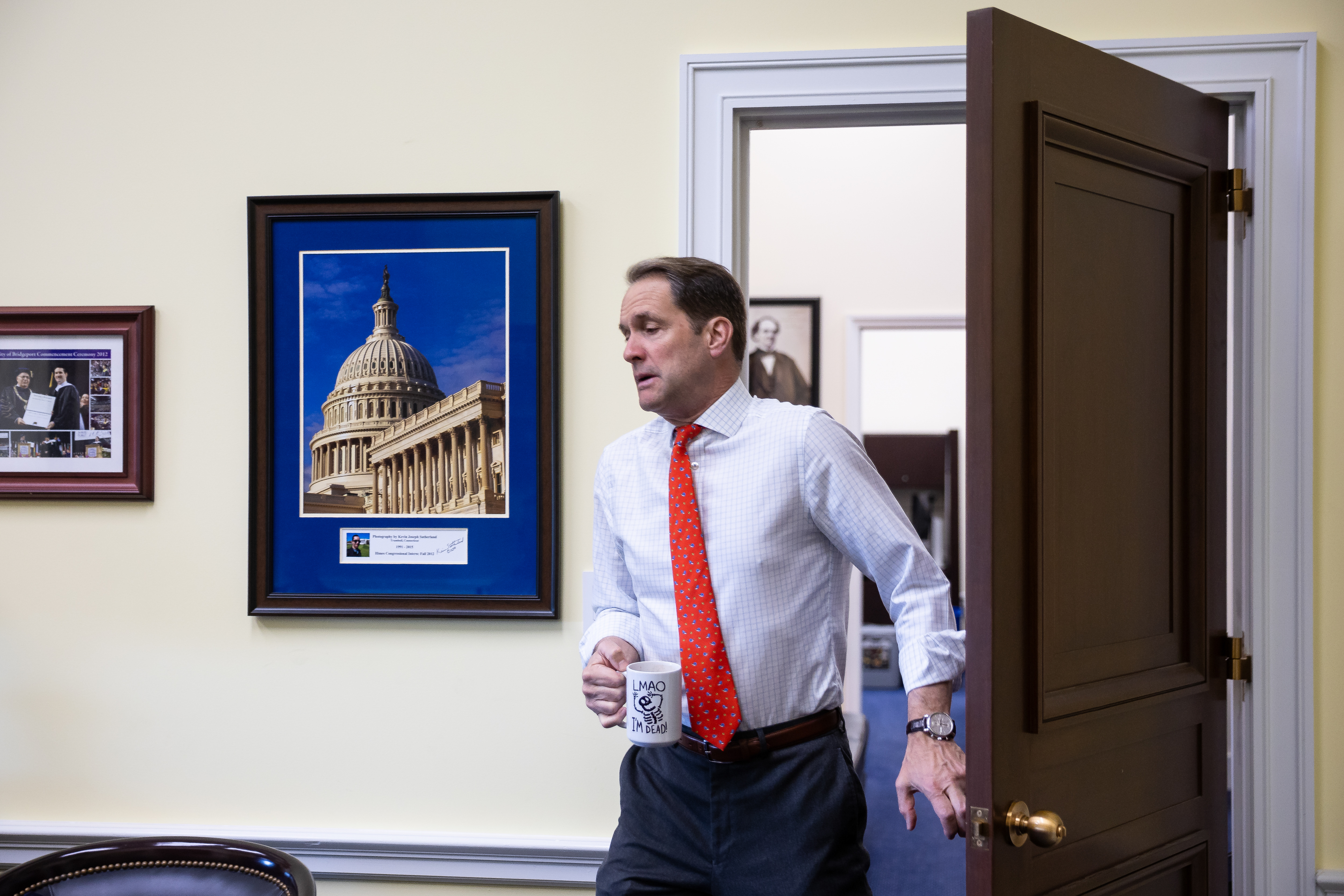
As the April 30 deadline to extend the FISA spy authority draws nearer, Himes is continuing to make the rounds with colleagues of both parties but also think strategically about what could pass the House, and how.
He and the senior House Judiciary Democrat, Rep. Jamie Raskin of Maryland, have been workshopping possible backup plans with policy changes that could attract more Democratic support in case Republicans fail to pass their partisan bill.
He’s now also interested in finding a set of reforms that could get the support of a two-thirds majority of the House so that the legislation could advance under an expedited floor procedure known as a suspension, which doesn’t first require clearing a party-line “rule” vote.
Himes said there was a “real opportunity” to pass a bill under suspension last week, when Speaker Mike Johnson instead attempted, unsuccessfully, to pass an 18-month extension bill through the regular order process in the middle of the night. But Johnson’s failure, Himes continued, only emboldened Democrats to stand back and watch the GOP flounder.
Calling himself an “emissary” during that overnight vote, Himes was frank: “A bunch of members at two in the morning, watching the speaker fall flat on his face, does not help me.”


DALLAS — Republicans used their midterm convention this week to ask voters to preserve their congressional majorities and let them “finish the job.”
But with few consensus legislative goals, it’s far from clear what job they want to finish.
The two-day convention here centered on painting Democrats as an increasingly socialist party that American voters cannot trust with power while highlighting the GOP’s one major victory on Capitol Hill under President Donald Trump’s second term: the year-old tax-cut package known as the “big, beautiful bill.”
In contrast, there was little talk from the podium of what Republicans might seek to pass with a continued trifecta, and members interviewed on the sidelines shared differing visions of what specific legislation the GOP should pursue in the last two years of Trump’s presidency.
The one concrete proposal on offer — Trump’s promise Wednesday of a $5,000 “dividend” for every American adult — blindsided GOP congressional leaders and generated immediate internal dissension.
Asked about his party’s legislative plans, Rep. Chuck Fleischmann of Tennessee said Republicans would “certainly continue the agenda that we’ve done and that we fulfill to the American people.”
“Accentuate all the positives, minimize all the negatives,” said Rep. Dan Meuser of Pennsylvania, responding to the same question. He added he would like to see “more domestic energy production” and tackling fraud in government programs.
Several others said they want to build on last year’s GOP megabill, pursuing more tax cuts and, echoing Meuser, eliminating wasteful spending in government. Some said they hoped to pursue new health care and immigration policies.
“We’ll continue to work with President Trump, making sure the border stays secure,” Judiciary Chair Jim Jordan of Ohio said in an interview. “I think we can do more on the tax code, dealing with keeping taxes low for families. Certainly … things cost too much for families. We understand it now.”
Specifics, however, were scarce.
Fleischmann said Republicans have “a good roadmap in place,” but when pressed on what that roadmap entails, he resorted to broad strokes — “to make sure that America stays strong, that defense gets funded, that we make sure that we fulfill our proper domestic obligations.”
Rather than rally around Trump’s promise of $5,000 checks if Republicans are returned to power in Congress, many GOP members — caught by surprise — said they needed more information about the proposal or simply declined to comment. Once mentioned by the president, the proposal was barely mentioned again on the convention stage.
Trump said in a CBS News interview Thursday that he believed he might not need Congress to authorize the dividend checks — a claim some Republicans quickly pushed back on.
The reality is, the narrow House and Senate majorities the GOP now holds have been barely capable of legislating as it is. And while leaders in both chambers play up the possibility of expanding those majorities in November, that would require overcoming historical precedent and many Republicans’ private expectations they will be lucky to hold on to any majority at all.
Both chambers return Monday for what could be a brief pre-election session, with little expectation that serious legislating will get done. House Republicans have sent several partisan bills to the Senate, but they are being blocked by Democratic filibusters. Plans for a new budget reconciliation bill that could skirt Democratic opposition has stalled, meanwhile, due to internal GOP divides.
The lack of action in the Senate has fueled anger from Trump and his loyalists in Congress and in the GOP voter base — much of it trained on Senate Majority Leader John Thune, who has repeatedly said he simply does not have the votes to eliminate the filibuster and enact the stalled bills.
That has not appeased angry conservatives — Thune was booed at the convention Wednesday — and a continued GOP trifecta would almost certainly continue to be marked by interchamber tensions — even with turnover in the party ranks.
“Given the current dynamic, we have got to have a serious come-to-Jesus conversation with Majority Leader Thune,” Rep. Chip Roy of Texas said at the convention, demanding the Senate “tweak the filibuster rules” and “call the question” on key bills.
Even on an issue where there is general agreement among Republicans that something should be done — such as immigration — internal disagreements have kept the party from acting.
Jordan, for instance, said he would like to codify tough border security policies backed by Trump. But some more moderate Republicans are hoping for a more comprehensive bill that also addresses legal immigration programs, such as those allowing for guest agricultural workers and high-skilled labor.
Meuser is among those wanting a broader bill — one, he said, that is “not amnesty, but a truly comprehensive, smart plan for illegal immigration.”
Speaker Mike Johnson did not mention immigration legislation or any other specific agenda items in his remarks to the convention Thursday. He instead outlined the House’s achievements under Trump and said voters need to stay the course.
“We’ve succeeded in so many ways, but it takes more than just 20 months to fix the total disaster that we were handed and to turn the ship of state around,” he said. “We know the job isn’t finished yet, but we are all in this together.”
Echoing many other convention speakers, Johnson focused on the threats posed by Democrats: “The alternative is to turn the reins over right now to the radical Marxists who are planning to dramatically grow the government, raise your taxes, drive costs through the roof, and rob you of your freedom.”
But some worried that message might not be sufficient — especially after Democrats’ 2024 message focused largely on preventing another Trump presidency rather than pointing to affirmative plans to tackle rising prices and other key voter concerns.
Roy is not on the ballot this fall after losing a primary for Texas attorney general, but he is helping to campaign for other Republicans. He, too, said his message is that GOP candidates “need to be able to finish the job” and cited an “enormous amount of good work” — listing as examples the Laken Riley Act, a small-bore immigration bill that passed early in Trump’s second term, and federal spending cuts embedded in the megabill.
As for the rest of the GOP messaging, Roy added, “Right now, I would argue we’re focused a little bit too much on how crazy they are instead of talking about all the great stuff we’ve done.”
House lawmakers are set to vote on the sweeping Russia sanctions bill that senators overwhelmingly voted to approve in August, but now faces a tough test in the House where Democrats fear the bill will give President Donald Trump too much tariff power.
The Senate-passed and White House-backed measure is finally getting consideration from the House, after GOP leaders omitted it from their agenda when lawmakers returned from August recess. Many House Democrats — including Minority Leader Hakeem Jeffries — have voiced opposition for fear that it would give Trump expansive and risky new tariff authorities.
House GOP enthusiasm for the measure has also been tepid, after a boost following the sudden death of its champion, Sen. Lindsey Graham, wore off.
The House Rules Committee scheduled a meeting to consider the bill Monday afternoon.
Advocates of the legislation argue the bill would give Trump the tools he needs to pressure Russian leader Vladimir Putin to end the war on Ukraine. The bill would issue mandatory sanctions on Russian leadership and its energy sector — as well as collaborators in Moscow’s defense industry and so-called shadow fleet.
But it would also give Trump the ability to hit top buyers of Russian oil with 100% tariffs, a move that Democrats say is dangerous given the White House’s eagerness to slap tariffs on U.S. friends and foes alike.
“Donald Trump already has ample authority to impose sanctions on the companies, individuals, and vessels propping up a Russian war machine that continues its deadly attacks on Ukraine,” Reps. Gregory Meeks (D-N.Y.) and Richard Neal (D-Mass.) wrote in a joint statement with Democratic Rep. Don Beyer of Virginia and Sens. Ron Wyden (D-Ore.) and Elizabeth Warren (D-Mass.) earlier this month. “Congress does not need to greenlight new tariff authority for the President to impose those sanctions on Russia today.”
Backers of the bill were quick to encourage its passage after the vote was announced on Friday.
“Great news that the House will vote on the much-needed Russia sanctions bill,” Senate Foreign Relations ranking member Jeanne Shaheen (D-N.H.) wrote on social media. “Ukrainian civilians continue to be killed by Putin’s war machine, and this bill hits the Kremlin’s coffers hard. Now is the time to pass it and force Putin to the negotiating table.”
The measure passed in an 86-11 vote in the Senate in August.
House GOP leaders have picked Tuesday as the day to vote on legislation intended to shield Americans from the potential costs associated with the data center boom, according to two people granted anonymity to share private scheduling plans.
The upcoming floor action comes after a healthy number of vulnerable Republicans signed onto the measure in recent days, a sign that fears about the issue’s political volatility ahead of the midterms are continuing to grow as voters complain about rising energy prices as a result of data center proliferation.
The bipartisan Ratepayer Protection Act, which aims to compel tech companies to pay for the infrastructure associated with data center development, passed unanimously out of the House Energy and Commerce Committee this summer. Senior Republicans, however, said last week they were still weighing whether to bring the bill to the floor before the House recesses until after the November elections.
The decision to proceed this coming week signals that pressure has been building on leaders to act, underscored by the at least five House GOP frontliners who have signed on as cosponsors since September 1: Reps. Bill Huizenga and Tom Barrett of Michigan, David Valadao of California, Jen Kiggans of Virginia and Mónica de la Cruz of Texas.
Valadao, in an interview a week before he signed on as a cosponsor, called such measures “fine” but balked at the idea House Democratic leaders were trying to politicize data centers right before an election.
“Obviously it has to be addressed — making sure that we’re protecting our natural resources like water in my district,” he said. “Obviously, with California and their regulatory process, they’ve made energy more expensive than anywhere else in the country. So those are major concerns that need to be addressed, and I think those pieces of legislation will make sense.”
But, he added, allowing Democrats “to turn this into a political issue, I would say, is pretty irresponsible.”
The total number of cosponsors on the bill, championed by Reps. Gabe Evans (R-Colo.) and Kathy Castor (D-Fla.), to 42 Democrats and Republicans combined.
The Tuesday vote will take place under an expedited procedure that requires a two-thirds majority of those present and voting to secure passage.
Mia McCarthy and Amelia Davidson contributed to this report.
- GOP anxiety grows over North Carolina Senate race
- Convention puts GOP’s reality on display: Midterm policy agenda is skimpy
- At 9/11 ceremony, Giuliani and Mamdani … shake hands?

- Court deals first blow to Trump’s coal rescue campaign
- House sets vote on Russia sanctions bill
- House eyes Tuesday vote on bill to curb data center costs
- This climate problem isn’t on the UN agenda — data centers
- Democrats revamp their midterm playbook for GOP’s anti-trans attacks
- Capitol agenda: Trump tells Republicans to vote or ‘go to hell’
- Rand Paul and his staff travel by private jet with taxpayer dollars while preaching fiscal restraint
-

 Politics2 years ago
Former ‘Squad’ members launching ‘Bowman and Bush’ YouTube show
-
Uncategorized2 years ago
Bob Good to step down as Freedom Caucus chair this week
-

 Politics2 years ago
Former Kentucky AG Daniel Cameron launches Senate bid
-

 The Dictatorship2 years ago
Luigi Mangione acknowledges public support in first official statement since arrest
-

 The Josh Fourrier Show2 years ago
DOOMSDAY: Trump won, now what?
-

 The Dictatorship2 years ago
Pete Hegseth’s tenure at the Pentagon goes from bad to worse
-

 Politics2 years ago
Blue Light News’s Editorial Director Ryan Hutchins speaks at Blue Light News’s 2025 Governors Summit
-

 The Dictatorship1 year ago
Mike Johnson sums up the GOP’s arrogant position on military occupation with two words