
Politics
Democrats’ divide over Israel erupts after attacks on Iran

The United States’ attack on Iran is stirring up an already-roiling Democratic debate over Israel, just as primary season kicks off.
The joint U.S.-Israel military operation has put the countries’ relationship squarely at the center of the national political debate — and the role of its big-spending allies like the American Israel Public Affairs Committee, which praised President Donald Trump’s strikes, front-and-center in the Democratic primaries where the group is spending.
A heated House race in North Carolina whose election is Tuesday, several contests in Illinois two weeks later and an already stormy Michigan Senate primary have been impacted by tensions over Israel’s war in Gaza and fury over heavy spending by pro-Israel organizations.
“Palestine has become a litmus test in the party,” said Matt Duss, a former foreign policy adviser to Sen. Bernie Sanders (I-Vt.) and executive vice president at the progressive think tank Center for International Policy. “You see this in both the Michigan and Illinois primaries, where candidates are being pushed to acknowledge that Gaza is a genocide and to pledge not to take AIPAC donations. That was definitely going to continue as we move toward the 2028 presidential primary. This war [in Iran] will amplify it even more.”
AIPAC’s involvement has already upended multiple elections in Illinois, where groups aligned with the lobbying group have spent close to $14 million on four House races ahead of the state’s mid-March primary. In Tuesday’s North Carolina primaries, Israel has been a hot topic in Democratic Rep. Valerie Foushee’s reelection bid. And Middle Eastern politics loom large in Michigan’s blockbuster three-way Democratic Senate race, where there have already been sharp divisions between the candidates over Israel. Elected officials and operatives there have been fretting for months about how AIPAC could turn the race on its head and pave a way for a Republican victory for the first time since 1994.
“The war [in Iran] accentuates the risk that AIPAC’s intervention will result in electing the most anti-war, anti-Israel progressive of the available candidates in some of these districts — just as it did in mine,” said former Rep. Tom Malinowski (D-N.J.), who recently lost a hotly contested House primary to now-Rep. Analilia Mejia, a much sharper critic of Israel, after AIPAC spent more than $2 million against him in a failed bid to elevate a more unabashedly pro-Israel candidate.
AIPAC isn’t backing down. In a statement Saturday, the group hailed the U.S.-Israel-led strikes as “decisive action against the terror-supporting regime in Iran.” Its super PAC, United Democracy Project, had nearly $100 million in the bank at the end of January and plans to be active in dozens of races this year, including both Democratic and Republican primaries.
“Anti-Israel candidates should be on notice that we are looking closely at their races,” United Democracy Project spokesperson Patrick Dorton said in an interview. “Our goal is to elect the biggest possible bipartisan pro Israel majority in Congress, no matter which party is in control, and we are singularly focused in this election year on electing a pro-Israel majority in Congress.”
Maurice Mitchell, national director of the Working Families Party, said that Democrats are “gonna have to answer for” AIPAC support in primaries. “Any of those Democrats that take AIPAC money, they’re going to have a reckoning,” he said. “How can they stand for peace and the billionaire backers that are supporting them are advocating for this war?”
The Iran strikes did not initially split Democrats as deeply as Israel’s war in Gaza has over the past few years, with most in the party accusing Trump of embroiling the Middle East in conflict, even as disagreements emerged on what comes next.
“I don’t think anyone wants to be seen on the side of Iran, and I think Democrats are generally united on the idea that the president needs to explain to the American people, what the strategy is, what the endgame is,” said Brian Romick, president of Democratic Majority for Israel, a group that supports pro-Israel Democrats.
Several Democratic strategists said it’s too early to predict how much Iran will be on voters’ minds over the next few months, let alone for the next presidential election.
“We know Trump ran against wars just such as these, and the close collaboration with Israel on it may play into ongoing debates in the primary,” David Axelrod, a longtime Democratic strategist, wrote in a text. “But the unknown is the length and level of loss this will entail. The longer, the more costly, the deeper the debate will be.
In Illinois, AIPAC-aligned groups have already spent heavily
Perhaps nowhere on the map does Iran loom larger than in Illinois, whose March 17 primary is just weeks away.
Democratic strategists in the state expect the attacks on Iran to call attention to the role of Congress and the broader implications of partnering with Israel.
“Now this isn’t just about Israel and Gaza,” said an Illinois political consultant granted anonymity because they’re working on multiple local campaigns. “This is about standing with Israel to wage a broad war in the Middle East that has a lot more ramifications.”
An AIPAC-aligned super PAC has already spent more than $1 million supporting state Sen. Laura Fine and attacking one of her top primary opponents, Evanston Mayor Daniel Biss, in the race to replace retiring Rep. Jan Schakowsky.
Biss and Fine’s other opponents have criticized AIPAC involvement in the race. He issued a lengthy statement Saturday slamming Trump and Netanyahu for “pushing America into another reckless and illegal regime change war.”
A separate AIPAC-linked group is set to target progressive activist and digital strategist Kat Abughazaleh, who is Palestinian American.
In an interview, Abughazaleh said Iran will be a crucial focus in her race’s closing weeks.
“We will be talking about it very vocally and often because this is very much a topic on people’s minds,” she said. “ People care about this for a lot of reasons, whether it’s our tax dollars, whether it’s because you have family in Iran, whether you’re just horrified by the humanitarian implications of these strikes, or because you’re very afraid of a forever war that you may be moved into against your will.”
War in Iran isn’t the same issue as Israel’s war in Gaza, and in the first hours after Trump launched the operation, Democrats were much more unified in their opposition — including Democrats who have AIPAC’s support.
After the attack, Fine posted on X calling for Trump’s impeachment, warning that he “is leading us into another military conflict to distract from his own failures that puts American lives at risk and threatens to send the Middle East into further chaos.”
Congressional candidates Donna Miller in the 2nd District and Melissa Conyears-Ervin in the 7th, who are supported by AIPAC-aligned committees, respectively called the attacks “reckless” and “immoral” in separate statements. And Melissa Bean, who has support from an AIPAC-aligned group in the 8th District, said “Congress has the sole power to authorize acts of war.”
North Carolina presents an early test
Tuesday’s primaries in North Carolina will give an early indication of how Democratic primary voters may be considering Israel.
Rep. Valerie Foushee (D-N.C.) was first elected to the seat in 2022 with AIPAC help — its super PAC spent more than $2.1 million to boost her to victory. But in 2025, Fousheesaid she would no longer accept the pro-Israel group’s money.
“Check my voting record to see how I have voted and what I have voted for as it relates to the people of Gaza,” she said at a town hall in August.
Dorton, the spokesperson for the AIPAC-aligned super PAC, said Foushee “rejected AIPAC support and we are not involved in or participating in any way in this race.”
But Foushee’s primary opponent, Durham County Commissioner Nida Allam, has attacked Foushee for being insufficiently tough on Israel. A new super PAC created to push back against AIPAC from the left has spent heavily in support of Allam.
Trump’s “illegal and reckless war” in Iran “will inevitably be on voters’ minds as they head to the ballot box on Tuesday,” Allam, North Carolina’s first Muslim woman elected official, said in a statement.
Foushee was also quick to condemn Trump’s “illegal war with Iran.” In a statement, she said her “record and support for legislation to stop arms sales to Israel speaks for itself.”
“It is clear to me and my constituents that the Netanyahu government’s indiscriminate killing of Palestinians cannot continue,” she continued.
Israel was already a major topic in Michigan
The Gaza conflict has already been a major issue in the three-way Democratic battle to succeed retiring Sen. Gary Peters in battleground Michigan, a state with the highest percent of Arab-American residents in the country. More than 100,000 people voted “uncommitted” instead of backing then-President Joe Biden in the 2024 primary over his administration’s support of Israel.
Layla Elabed, one of the founders of the Uncommitted movement who now leads the progressive Arab Americans for Progress, said Democrats “do not want to see their dollars continuing to fund Israel’s genocide and now a war on Iran, especially without congressional approval.”
She said Trump’s Iran attack underscores that Democrats need candidates who “stand up to pro-war lobbies like AIPAC, who have poured money from right-wing MAGA donors into our Democratic primaries here in Michigan.”
Rep. Haley Stevens, who has been supported by AIPAC in the past, said in a statement that Trump “has once again put Americans in harm’s way without consulting Congress,” but warned that a nuclear Iran “would bring even more violence and chaos to the Middle East and the entire world.”
Her foes in the August primary took a different approach. State Sen. Mallory McMorrow said the president “has chosen a war overseas at the expense of everyone back home;” physician Abdul El-Sayed, the most progressive candidate in the field, declared “this war must end” and Trump “must be held accountable.”
Brakkton Booker contributed to this article.


Bill Cassidy on vaccines, RFK Jr. and the fight for public trust
lead image
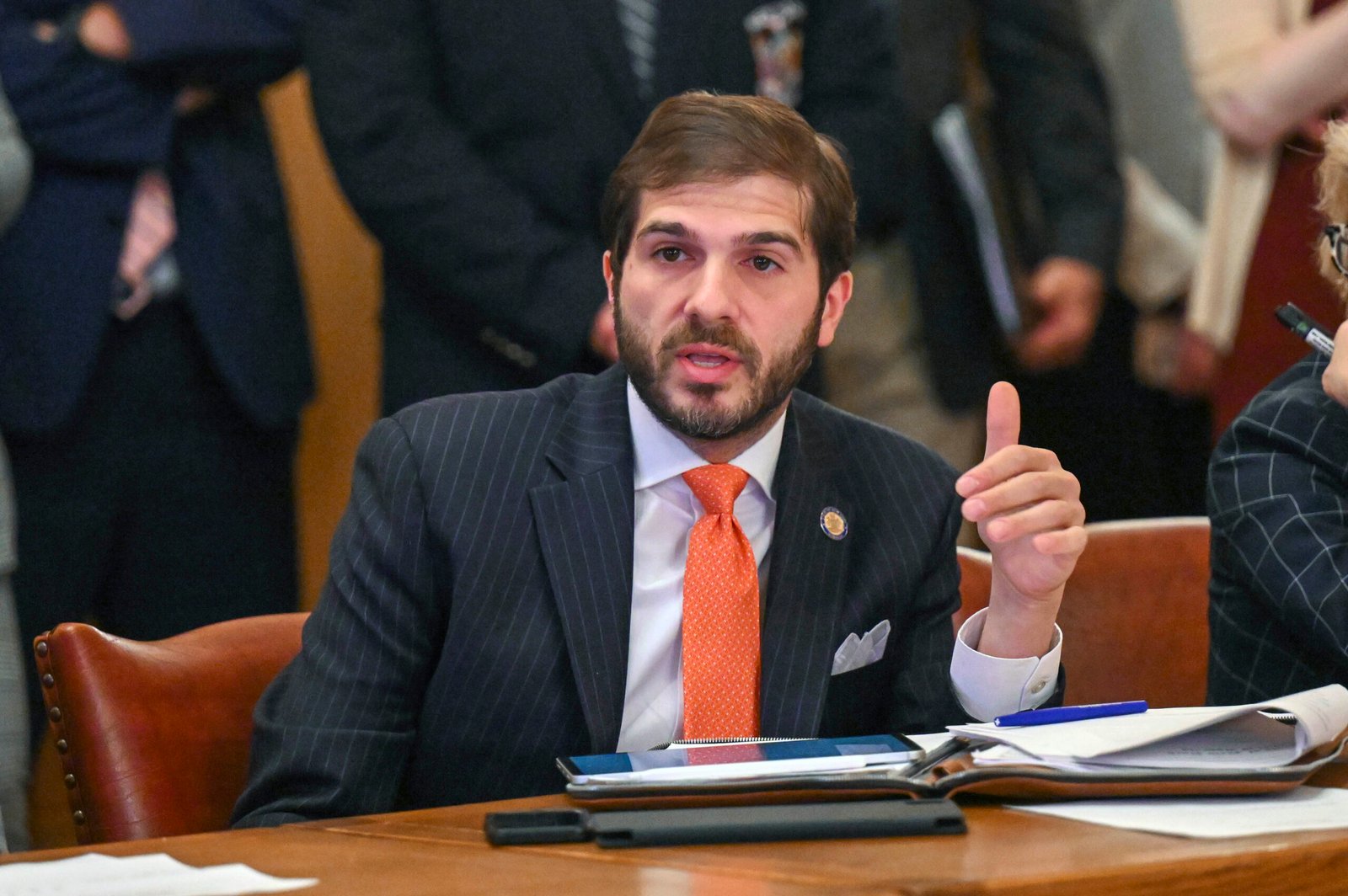
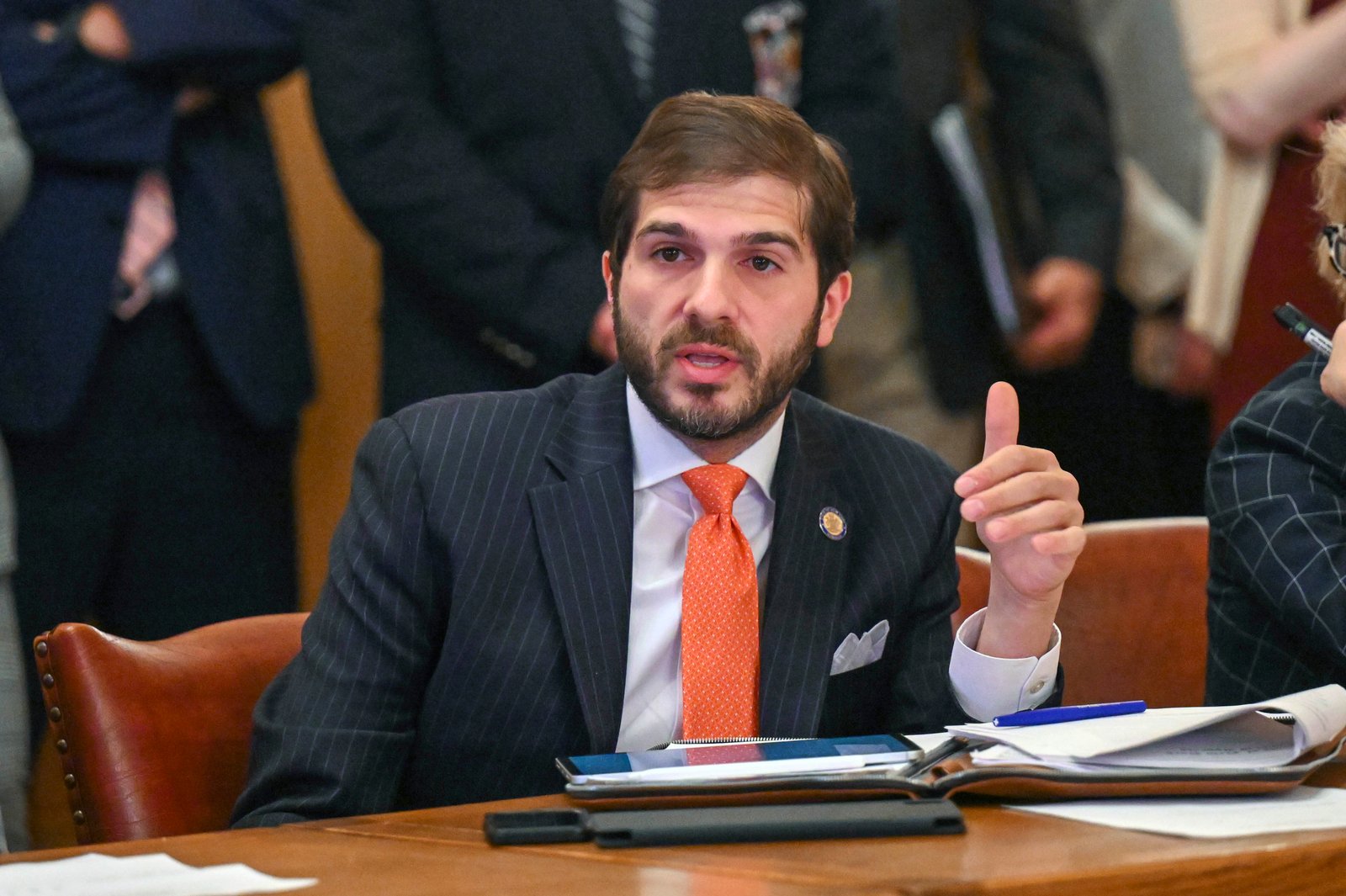
AI BILLS BILLS BILLS: One of the architects of New York’s pioneering legislation to put guardrails around artificial intelligence says ominous warnings from industry leaders prove states need to act aggressively.
“I’m very rarely one to say, ‘I told you so’ or ‘We told you so,’ But this is exactly … the things we had warned about,” said Democratic state Sen. Andrew Gounardes, who sponsored the RAISE Act.
The law is slated to take effect in January, requires the largest AI companies to report safety incidents to the state and establishes penalties for violations. New York lawmakers passed that bill last year, despite pushback from industry lobbyists. But now leading AI executives are ramping up warnings about the risks of their technology.
“These are the exact same concerns that we were flagging: biological weapons, nuclear weapons, catastrophic harms,” Gounardes said in an interview with Playbook. “Not only were we right, but some of the very same people that were telling us that we were wrong are now the ones saying that we need to be doing these things.”
President Donald Trump has dismissed AI safety concerns as a “HOAX” and Congress appears unlikely to act on the issue anytime soon.
So lawmakers in New York and other states are weighing how they can respond. California Gov. Gavin Newsom has floated the idea of a special session devoted to the issue, but New York’s Legislature isn’t slated to return to Albany until January.
Gounardes said he’s had an increasing amount of engagement with AI safety advocates, industry experts and others in recent weeks.
He’s focused on two bills he’s sponsoring — one requiring third-party safety audits, similar to a measure enacted in Illinois, and another strengthening safety reporting requirements.
“They’re good bills, they’re important bills, they should pass as is. But I think we can go further,” Gounardes said.
There’s a clear appetite among other key policymakers to pass more measures to bolster protections for New Yorkers.
Gov. Kathy Hochul told reporters Tuesday she’ll be looking for additional action the state can take to reduce AI safety risks.
State Sen. Kristen Gonzalez, chair of the Internet and Technology committee, said she plans to push for a “rights-based” framework and focus on potentially high risk uses of AI. Her bills for next year include a data privacy measure and the New York AI Act, which seeks to address concerns about algorithmic bias in employment, courts, finance and other contexts.
That measure also includes whistleblower protections for employees of AI companies. New York Attorney General Letitia James today urged AI workers to report safety risks or violations of current state laws, offering an anonymous tip line.
Gonzalez also has a bill pending on Hochul’s desk that would regulate AI chatbots and assign liability to companies who develop them.
“There are so many bills, and together, if we were to pass all of these that track out liability, we would be able to actually start fighting these companies, not just through slowing their development … but also mitigating more in court and having a foundation to claim damages,” she said. — Marie J. French
From the Capitol

MERGER WATCH: The state Public Health and Health Planning Council voted today to approve a merger between NYC Health + Hospitals and Maimonides Health, a private hospital in Brooklyn.
“We all need to get behind this and make it work,” PHHPC member Ann Monroe said during today’s meeting.
The merger was set into motion last year, after Hochul awarded $2.2 billion from the state-funded Safety Net Transformation Program to facilitate the deal. Maimonides has for years relied on substantial state support to keep its doors open, and state health officials expressed optimism that the combination would stabilize the hospital’s finances.
The transaction was expected to close by April 1, but a judge ruled earlier this year that NYC Health + Hospitals and Maimonides first needed to obtain PHHPC’s approval.
Read the full story from Blue Light News Pro’s Maya Kaufman
FROM CITY HALL

PENSION PADDING: Several top officials from former Mayor Eric Adams’ administration are raking in inflated NYPD pensions that should be lowered, a report from New York City’s corruption watchdog recommended Thursday.
The Department of Investigation report revolves around the use of so-called 821 waivers under the Adams administration.
The waivers allow NYPD employees to be “on loan” to other agencies, including the mayor’s office, so they can maintain a police title that comes with pension benefits while working in another capacity.
In its report, DOI found the NYPD documented the waivers in an inconsistent way during Adams’ tenure, resulting in the city’s Police Pension Fund awarding overly large retirement benefits to former cops who served in top roles under Adams. But the watchdog agency determined the NYPD wasn’t squarely to blame for this, given that the pension fund also seemingly ignored 821 restrictions “in a manner inconsistent with the law.”
The DOI findings come after a string of corruption scandals roiled the Adams administration and the NYPD. Adams himself faced federal corruption charges in 2024 before President Donald Trump’s Department of Justice stepped in to spare the former mayor from prosecution.
The DOI’s latest findings don’t allege criminal wrongdoing, but the report lays out a number of recommendations for how the NYPD and the pension fund can prevent similar missteps. It also calls for all the allegedly inflated retirement benefits to be recalculated so the former cops in question aren’t getting taxpayer-funded benefits that are overly generous.
Among the former NYPD cops who netted padded pensions are Kaz Daughtry, who served as Adams’ deputy mayor for public safety; Louis Molina, Adams’ commissioner of correction and citywide administrative services; and Juanita Holmes, Adams’ probation commissioner.
“NYPD officials were treated inconsistently and some received a higher pension than they would otherwise have been eligible for, with taxpayers footing the bill,” Department of Investigation Commissioner Nadia Shihata said. “Those pensions should be recalculated and adjusted properly.”
Read the full story from Chris Sommerfeldt in Blue Light News.
PREDICTED PROTESTS: NYPD Commissioner Jessica Tisch said today she expects “multiple protests every day” next week as the city hosts the United Nations General Assembly.
No credible security threats have been identified, she noted, though the department will remain on high alert.
“The NYPD, as you know, handles thousands of protests and demonstrations each year, and there is no organization better trained to facilitate First Amendment activity,” Tisch said at a press conference with Mayor Zohran Mamdani. “Every year around the UN General Assembly time, we do see an uptick in the amount of protest activity, and this year I do not expect to be any different.”
The NYPD did not provide specific details on the number of protest permits filed or the exact number of demonstrations expected.
Some of the largest and most tumultuous protests are expected to take place ahead of Israeli Prime Minister Benjamin Netanyahu’s speech on Sept. 24.
Despite his strident anti-Israel rhetoric, Mamdani plans to skip next week’s protests, Chris Sommerfeldt first reported yesterday. When asked why he’s staying away, Mamdani cited a desire to focus on New Yorkers’ day-to-day transportation concerns during the assembly, which will cause significant traffic disruptions and road closures in Midtown.
Mamdani will not skip the UN proceedings altogether, though. He said he’s in the process of setting up meetings with foreign officials in town for the assembly, but did not elaborate on which ones. His press team did not immediately share any further details either. — Molly Reinmann
IN OTHER NEWS
— POINTING FINGERS: Some City Council members blamed Mamdani for a crime spike in the Bronx. (New York Post)
— SURVEILLANCE AND MURDER: Federal prosecutors accused five men of being part of a Kremlin-orchestrated network that planned to assassinate Russian dissidents and others in the United States and abroad. (The New York Times)
— DATA CENTER DIVIDE: Despite hesitating on the issue himself, Rep. Mike Lawler launched a seven-figure ad campaign attacking his Democratic challenger, Cait Conley, for her position on data centers. (New York Focus)
Missed this morning’s New York Playbook? We forgive you. Read it here.
Democratic consultants are privately encouraging their battleground candidates to avoid talking about AI regulations out of fear that powerful tech groups will unleash a tidal wave of spending against them ahead of November.
That guidance came from strategists in three separate top-tier House races, according to people involved in those races, who were granted anonymity to discuss internal conversations. And it follows a surge in AI panic on Capitol Hill as industry leaders warn about existential threats posed by their rapidly developing technology.
Voters are increasingly worried about AI: About two-thirds of Americans say there’s a risk advanced AI could destroy humanity in a new Blue Light News Poll. President Donald Trump has called that concern a “hoax,” leaving an opening for Democrats to seize on the issue. But they still are grappling with how hard to go after big tech.
Senior Democrats and candidates are worried that if they go too hard in criticizing AI, industry-affiliated super PACs could drop millions more dollars against them, according to interviews with more than a dozen Democratic lawmakers and strategists. They are especially worried about a slate of competitive races, including Reps. Don Davis in North Carolina, Marcy Kaptur in Ohio, Henry Cuellar in Texas and a handful of South Texas and Pennsylvania races, getting hit with even more spending on topics like AI.
The party is already struggling to keep up in the outside spending battle as Trump and his allies including Elon Musk, a major AI investor, flood the airwaves, though Musk’s spending isn’t primarily driven by AI concerns.
“We do need to be able to make sure that we’re regulating [AI] and addressing those real fears,” said one senior Democratic strategist working on Senate campaigns, who was granted anonymity to candidly discuss strategy. But “we don’t want AI money coming in.”
“Like any industry, there should be a conversation about guardrails,” said Cuellar, who is trying to hold onto a GOP-leaning South Texas seat. “But, every member needs to make their own decision based on their district and beliefs.”
Rep. Pramila Jayapal, the former Progressive Caucus chair, said she was also worried that pro-AI groups will start targeting key Democrats.
“You know, these AI groups — they come out and they say that they’re concerned, that they want regulation. But then they spend huge amounts of money on defeating anybody who wants legislative regulation,” Jayapal said in an interview.
With AI regulation on congressional Democrats’ agenda if they take power next year, Jayapal said AI groups will be “spending for candidates that they can count on to just allow them to write the bill.”
Some top Democratic candidates and their campaigns are quietly trying to avoid crossing any red lines for tech super PACs — even as it’s unclear exactly what those lines would be, after Musk and two of the biggest AI CEOs called for more regulation on the technology last week.
Democrats are especially wary of Leading the Future, a pro-AI industry super PAC that spent over $25 million in primary races this year and is backed by investors and executives of OpenAI. The rival super PAC network, Public First Action, pushes for AI regulation and is funded by OpenAI’s chief competitor, Anthropic.
Asked by Blue Light News, Leading the Future declined to name a specific policy on AI it opposes.
“The only people that have both threatened and carried out spending and intimidation tactics against Democratic members of Congress over their positions on AI are Public First and other groups funded by Anthropic and effective altruists,” said Leading the Future spokesperson Josh Vlasto. “Our agenda is and has always been Congress passing a strong and smart national regulation which has broad and building support in Congress and across the country.”
On Wednesday, Leading the Future launched its first round of ads in the general election through its Republican PAC. The group is spending $2 million to boost GOP Senate candidates Julia Letlow in Louisiana, Sen. Cindy Hyde-Smith in Mississippi, Sen. Darline Graham in South Carolina and Sen. Mike Rounds in South Dakota — four Republicans in marginally competitive races that are unlikely to determine Senate control.
The two AI groups have been at odds. They spent in different primary races and went up against each other in the primary for retiring Rep. Jerry Nadler’s seat, where state Assemblymember Alex Bores’ AI-centered campaign ignited a spending war. A person familiar with Leading the Future’s strategy, who was granted anonymity to discuss internal deliberations, told Blue Light News in June that the group was unlikely to target another candidate this year with the kind of multi-million dollar negative ad deluge it dumped on Bores, and a person close to the group said that hasn’t changed. Democrats believe the groups could battle against each other again in key races.
Brad Carson, the co-founder of Public First Action, said the network will “absolutely” get involved in the general election.
Public First Action uses two “litmus tests” to weigh whether or not to jump into races, Carson said. If someone seeking office shows “strong support for export controls and strong opposition to the preemption of state laws regarding AI, absent a federal framework,” then they are a prime candidate to receive the group’s support.
And if a candidate were to hold the opposite position — opposition to export controls and support for the preemption of state laws — his group would be inclined to jump in and spend against them.
“It’s really about finding the people who want to step out and be heroes for you,” Carson said.
On Wednesday, Anthropic’s policy chief Sarah Heck said at Blue Light News’s Decoded summit that the United States “needs to stay in the lead on AI” over China, arguing “you can’t do safety from second place.” She agreed AI firms can’t be left on their own to ensure safety within their own companies, but declined to endorse bipartisan legislation for external regulation.
Some Democrats want to go hard on regulating AI in spite of the risk of antagonizing pro-industry groups.
Abdul El-Sayed, Democrats’ Senate nominee in Michigan, previously called for a regulatory crackdown on AI and is now advocating for a “full pause at the frontier of research.” He told Blue Light News in an interview on Wednesday that he’d “rather be on the truth than dodge [AI industry] money.”
Still, El-Sayed hasn’t committed to running ads on the issue. Battleground Democratic Reps. Susie Lee (Nev.) and Greg Landsman (Ohio) also told Blue Light News they weren’t planning ads on AI safeguards, even as they advocate for more regulations. It’s a sign that even as voters concerns’ rise about the technology, it’s not yet become a top issue for the November election.
Meanwhile, Republicans are hoping that the AI super PACs might come in and help boost them in other states — like Georgia, where Democratic Sen. Jon Ossoff has been aggressive in criticizing the industry, or Texas, where the GOP nominee, Attorney General Ken Paxton, has been slightly behind in most recent polls.“We could use the help in some races like that,” said one GOP senator, granted anonymity to candidly discuss the internal conversations.
- Capitol agenda: High costs hound GOP as House exits
- Republicans wanted to run against Mamdani. They’re running against Hochul instead.
- Bill Cassidy slams RFK Jr. over measles outbreaks but demurs on confirmation vote
- Senate roadblock sparks new competition over data center bills
- Economic nerves emerge as House Republicans call it quits till Election Day
- Bill Cassidy on vaccines, RFK Jr. and the fight for public trust
- Urgent motion filed to stop carving of Trump’s name into US Institute of Peace building
- ‘We told you so’: Key New York lawmaker calls for more AI rules
- Republicans give Warsh room on interest rates
- US, in controversial deal, agrees to sell F-35s to Saudi Arabia
-

 Politics2 years ago
Former ‘Squad’ members launching ‘Bowman and Bush’ YouTube show
-
Uncategorized2 years ago
Bob Good to step down as Freedom Caucus chair this week
-

 Politics2 years ago
Former Kentucky AG Daniel Cameron launches Senate bid
-

 The Josh Fourrier Show2 years ago
DOOMSDAY: Trump won, now what?
-

 The Dictatorship2 years ago
Luigi Mangione acknowledges public support in first official statement since arrest
-

 The Dictatorship2 years ago
Pete Hegseth’s tenure at the Pentagon goes from bad to worse
-

 Politics2 years ago
Blue Light News’s Editorial Director Ryan Hutchins speaks at Blue Light News’s 2025 Governors Summit
-

 The Dictatorship1 year ago
Mike Johnson sums up the GOP’s arrogant position on military occupation with two words