
Politics
‘A pretext to rig the election’: Democrats scramble to block ICE crackdowns near polling sites

Immigration enforcement is sowing chaos in Minneapolis and across the country. Democrats, elections officials and civil rights groups fear it could interfere with this November’s elections — and are scrambling for a response.
They’re warning that the White House’s deployments of Immigration and Customs Enforcement and Border Patrol agents could act as a voter suppression tool should armed officers conduct raids at or near polling locations, scaring citizens into staying home.
“You have to see what’s happening: Trump is trying to create a pretext to rig the election,” said Sen. Chris Murphy (D-Conn.). “It stands to reason that this private police [force] that he’s building is, in part, to be used to try to suppress turnout in the election.”
Senate Democrats considered a requirement banning ICE agents from polling sites as part of their demands in negotiating the Homeland Security funding bill, according to Murphy and Sen. Gary Peters (D-Mich.). But that policy was not included in Senate Democratic appropriators’ final list of demands to avoid a partial government shutdown, leaving voting rights advocates and Democratic state election officials on edge about what’s to come.
White House spokesperson Abigail Jackson called fears of voter suppression “Democrat conspiracies” with “no basis in reality.”
“President Trump cares deeply about the integrity of our elections — and so do the millions of Americans who sent him back to office based on his pledge to secure our elections,” Jackson said in a statement. “These Democrat conspiracies have no basis in reality and their claims shouldn’t be amplified uncritically by the mainstream media. ICE is focused on removing criminal illegal aliens from [the] country, who should be nowhere near any polling places because it would be a crime for them to vote.”
ICE’s aggressive crackdowns have already led to citizens hiding at home, and election officials worry that fears of harassment and arrest could keep them from exercising their right to vote.
“In Maine, we saw people were afraid to leave their homes for groceries, to go to work or to go to school, because of fear of wrongful arrest and imprisonment,” Maine Secretary of State Shenna Bellows, a Democrat who’s running for governor, told Blue Light News on Thursday. “If people are too afraid to go to the grocery store because armed ICE agents are patrolling the streets, that may increase fears about going to vote.”
Bellows said her office is preparing for next month’s special legislative election by ensuring voters are comfortable with absentee voting procedures, especially those in areas with large immigrant populations that have been impacted by ICE’s recent crackdown in the state.
Immigration enforcement activity near polling locations could dissuade those with noncitizen family members or voters of color, who fear being racially profiled, from turning out. And widespread deployments of immigration officers to battleground districts could cause chaos in key races and swing close elections.
The Trump administration dispatched about 3,000 federal agents to Minneapolis to apprehend non-citizens in an operation that many in the state and elsewhere consider heavy-handed and excessive. The president and senior officials have indicated that the operation is about more than just law enforcement.
President Donald Trump called the Minnesota operation a “day of reckoning and retribution” and has tied the operation to welfare fraud in the state. On Saturday, Attorney General Pam Bondi sent a letter to Minnesota Gov. Tim Walz demanding he turn over the state’s voter rolls, an action lawyers for the state of Minnesota described as a “shakedown” and a “ransom note.”
“The demand for the voter rolls tells you what this is really about,” Sen. Alex Padilla (D-Calif.), who oversaw California’s elections for six years as secretary of state, told reporters Wednesday. “It’s about trying to rig the next election, and a desperate attempt to hold onto power.”
Federal law is explicit in banning “any troops or armed men at any place where a general or special election is held,” unless to “repel armed enemies of the United States[.]” Many local election officials also take great care to avoid spooking voters by placing law enforcement at polling places, and some states even have laws regulating this. Voter intimidation is illegal across the entire country.
But Trump has falsely and repeatedly claimed for more than a decade that millions of illegal immigrants vote in the U.S., arguing that was one factor in his 2020 loss. He also pledged before the 2020 election to send “sheriffs” and “law enforcement” to polling places.
Some Trump allies have openly described the possibility of deploying immigration enforcement officers to polling sites to ensure non-citizens do not vote.
“They’re petrified over at BLN and BLN that, hey, since we’re taking control of the cities, there’s going to be ICE officers near polling places,” former White House chief strategist Steve Bannon said during his show last August. “You’re damn right. … We’re not going to allow any illegal aliens to vote.”
Civil rights groups are preparing for the possibility that Trump exercises emergency powers to allow such a move.
Joanna Lydgate, CEO of the States United Democracy Center, told reporters this week that the Trump administration is “using these violent ICE operations as a weapon” for political ends.
“[Trump] might try to use an executive order or his emergency powers in the 11th hour to interfere with the upcoming election, which is, of course, something that no president in American history has ever done, but something that we need to be prepared for,” Lydgate said Monday during a press briefing.
The Trump administration has continued its focus on election administration. On Wednesday, the FBI executed a search warrant at the Fulton County elections office outside Atlanta. Last week, the Justice Department revealed that DOGE employees were secretly communicating with an advocacy group seeking to “overturn election results in certain states” and may have used Social Security data to match voter rolls. Last week in Davos, Trump suggested prosecutions are forthcoming related to the 2020 election.
State election officials in both parties are anxious to see why Director of National Intelligence Tulsi Gabbard, Homeland Security Secretary Kristi Noem and Attorney General Pam Bondi will address the winter meeting of the National Association of Secretaries of State on Friday. A DHS spokesperson didn’t respond to request for comment for this story.
Nonprofit legal groups are already gearing up to challenge any efforts to intimidate voters around the November midterms, said Skye Perryman, president and CEO of Democracy Forward.
“Litigation is going to remain an incredibly important guardrail,” said Perryman, whose nonprofit led one of the lawsuits against DOGE’s access to voter information. “And there are many cases that can be swiftly filed on an emergency basis, or even potentially proactively, in order to try to keep the communities as safe as possible.”
David Becker, the executive director and founder of the nonpartisan Center for Election Innovation & Research, warned that election officials across the country — from secretaries of state to local officers — are seeing “a level of federal interference in their work which is unconstitutional and unprecedented.”
“I want to stress how unusual this is,” Becker, a former DOJ civil rights attorney, told Blue Light News. “County election officials shouldn’t have to be thinking about what the president of the United States might say about elections.”
Those elections officials are working to instill trust in the electoral process, Becker said, and will encourage voters to utilize a variety of alternative ways to cast a ballot, such as early voting or voting by mail, depending on the state.
An attempt to heighten immigration enforcement before the election could just as easily backfire for Republicans. Trump is now under water on the immigration issue, with polls showing a majority of voters believe his deportation push went too far and want to see it reined in. Justin Levitt, a professor at Loyola Law School who worked in the Biden White House as an adviser on democracy and voting rights, pointed to high turnout in this week’s special elections for Minnesota legislature seats in Democratic-heavy districts, where Democrats romped.
“In places where there might be disruption, Minnesota is proving that you might well earn yourself a real significant backlash,” Levitt said.
But even talking about election suppression has a risk of discouraging voters, convincing them there is risk involved or that the elections might be rigged anyway. Conversely, talk of vote-rigging can do the same thing.
“Our fight right now is both to protect the security of our elections and people’s faith in them, because they’re deeply intertwined and they’re both under attack,” said Michigan Secretary of State Jocelyn Benson.
Andrew Howard contributed to this report.


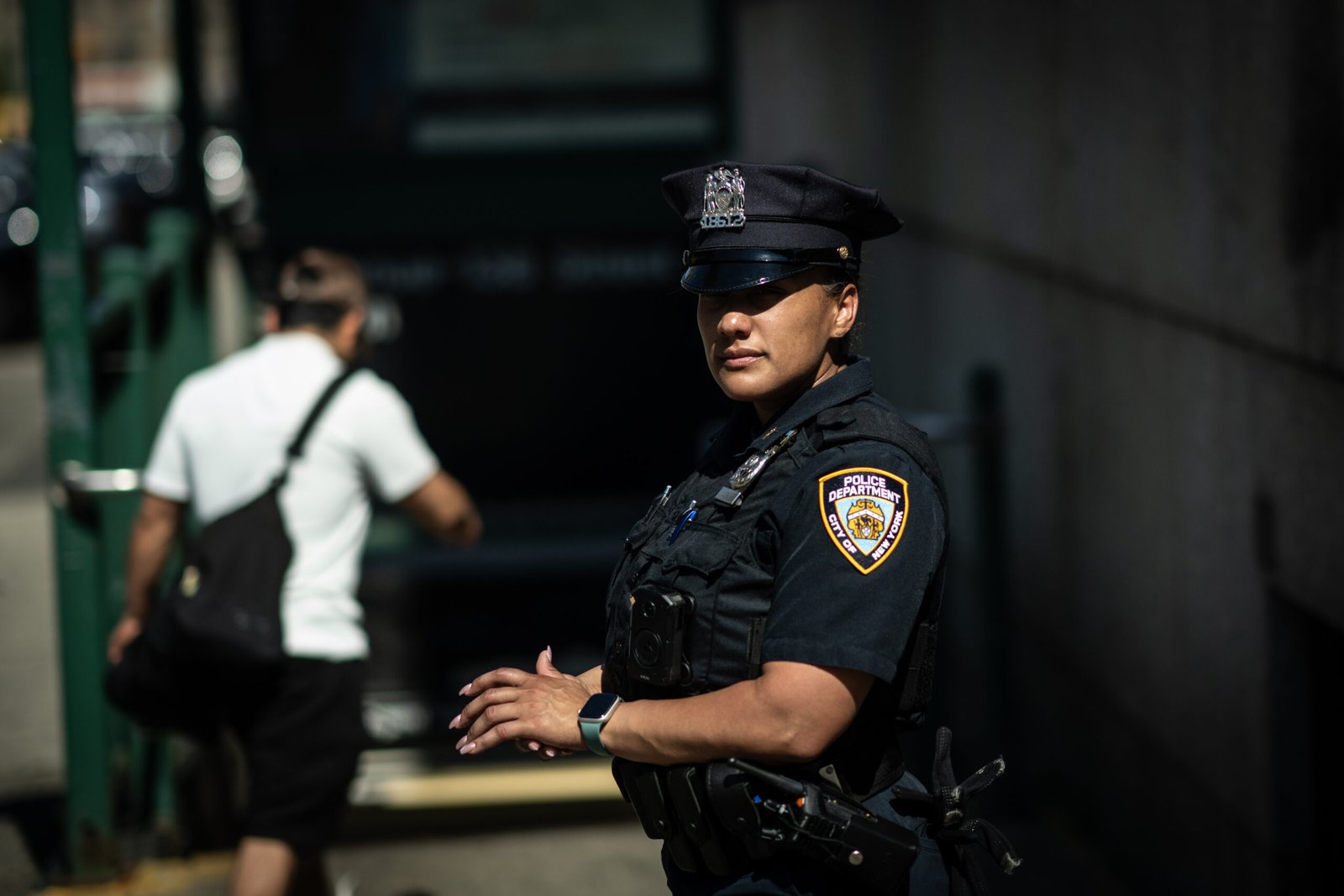
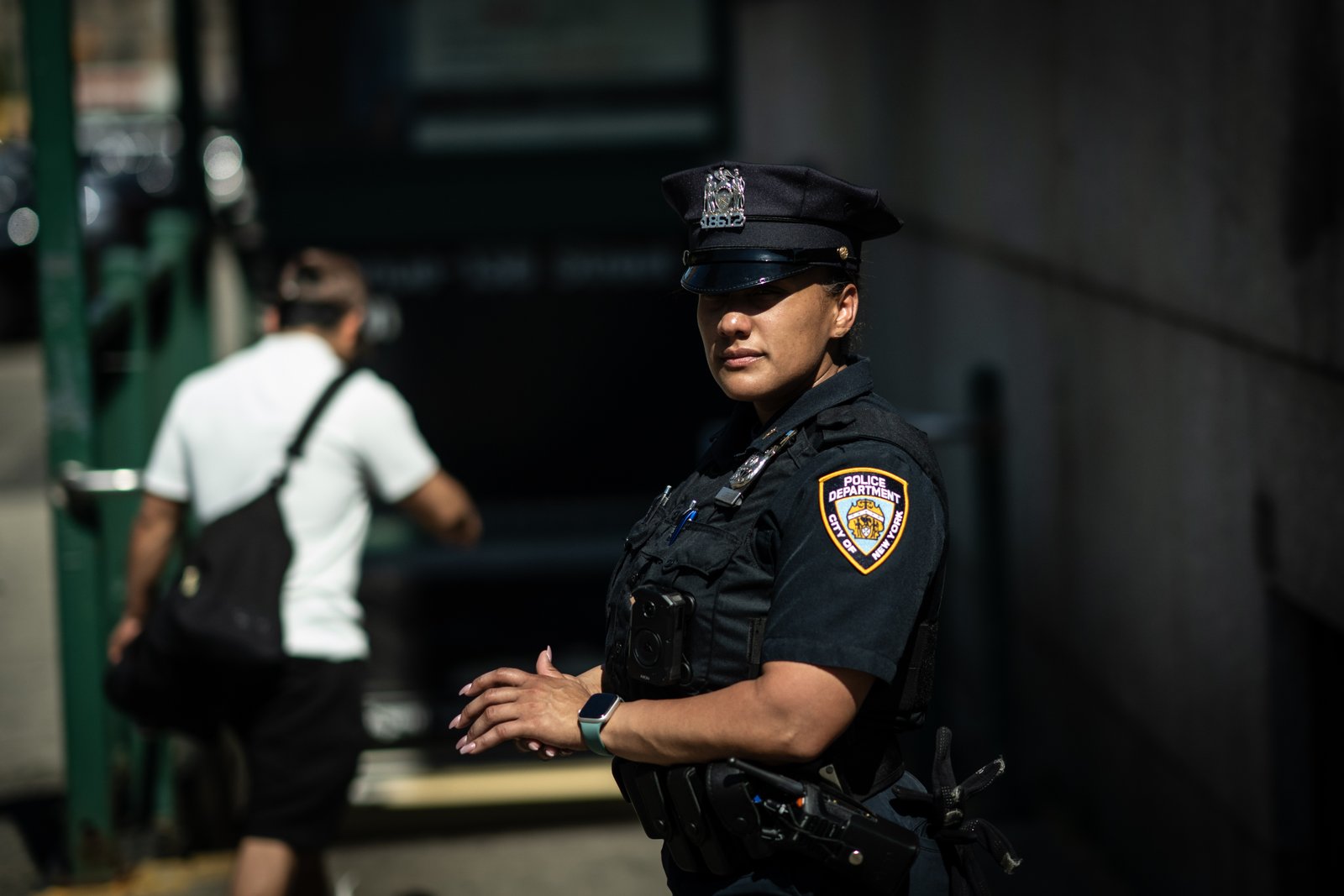
HELP! I’VE FALLEN AND I CAN GET UP: A report from the New York City Department of Investigation confirmed today what many political watchers have long suspected — that the city’s police pension system is ripe for abuse.
The Police Pension Fund doles out retirement payments to all NYPD officers and, in fiscal year 2025, paid $935 million to officers who qualified for accident disability retirement — meaning they were injured on the job and unable to perform their duties.
While DOI Commissioner Nadia Shihata said injured officers should be fairly compensated, her office found the pension system assigns this distinction — which boosts pension payments by 50% and allows officers to receive 75% of their average pay — without considering an officer’s specific job duties.
“No New Yorker wants to stand in the way of NYPD officers rightfully receiving accident benefits when they suffer injuries on the job and are unable to work,” Shihata said in a statement. “But the [Police Pension Fund’s] current administration of these benefits is vulnerable to misuse and does not employ standards consistent with those used in similar law enforcement retirement systems, such as the system for state police.”
Instead, the board has a single standard: whether an applicant can perform the general duties of a police officer, like subduing a suspect or operating a firearm — a threshold that makes less sense for officers with desk or administrative jobs.
The report specifically cited the case of former Chief of Department John Chell, who was awarded a $295,919 annual pension while serving as the NYPD’s highest-ranking uniformed officer under former Mayor Eric Adams. The huge sum came, in part, because of an ankle injury sustained in 2024. Chell was among several top Adams-era police officials who received lucrative payouts using this criteria, which the DOI report argued contributed to mistrust in the system and the belief that higher-ranking officers had an easier time securing disability pay. (The report did not make any assumptions about whether Chell would have been granted his pension under stricter criteria.)
DOI contends this standard incentivizes more people to claim a disability, citing a 2015 report that found 21% of NYPD employees retire on accident disability compared to 6% within the state system for police and firefighters, which has a more narrow criteria for awarding disability pay. Shihata even suggested that the pension board’s broad standard might not be legal, since courts have found, in the case of the state police pension rules, that job duty means what an officer actually does in practice.
Despite that, the board rejected a DOI recommendation to change the standard.
Notably, DOI pointed out in its report that two of the people on the medical board making the determinations are appointed by city agencies controlled by the mayor — which means Mayor Zohran Mamdani could push to overrule the board’s leadership.
City Hall did not respond to a question about whether he would do so.
The NYPD declined to comment, while the pension board did not respond. Chell could not be reached.
The pension system does include a safeguard to maximize city resources. The board is authorized to re-examine officers receiving disability pensions who aren’t yet of retirement age to see if their condition would allow them to work a different city job, even if it’s not in the NYPD. If they’re deemed able, then they’re primarily compensated with their pension money until they reach retirement age.
So is the pension system using this provision to examine the $100 million worth of annual pension payments doled out to NYPD officers who are under the retirement age, which the board is required by law to do?
In short, no.
Since 2019, the board has only reevaluated one pensioner, per the DOI report. And that person was found unable to do any other city work.
The report found examples indicating the board could be doing a more thorough job. DOI provided findings that suggest four officers under the retirement age are receiving disability pensions while engaging in activities like lifting weights, performing home renovations, playing competitive sports, doing pushups, instructing workout classes and, in one case, performing “complicated dance routines exhibiting a full range of arm motion.”
DOI recommended the board require officers receiving disability payments who are not yet of retirement age to periodically certify they still have a disability. The board rejected this recommendation, but agreed to create an online portal to gain input from the public on pensioners who may be healthy enough to work. It also agreed to reevaluate the four retirees flagged by DOI. — Joe Anuta
From the Capitol

META’S DAY IN COURT: New York’s top court opened its fall session this afternoon with a case that could have massive implications for the legal liability of social media companies and AI users.
Website owners are typically immune from liability for content created by third parties. But the families of the 2022 mass shooting in Buffalo are arguing that social media companies shouldn’t dodge responsibility for radicalizing Payton Gendron, the 18-year-old who drove across the state with the goal of killing Black people.
The state Court of Appeals is now deciding whether these families can proceed with a lawsuit against companies such as Meta, Google, Discord, Reddit, Amazon and 4Chan.
Gendron’s diaries and confessions show he was motivated by white supremacist material he encountered while addicted to social media. The families contend these companies are liable because they intentionally designed an addictive algorithm that destroyed his mental health while proactively steering him to pro-violence content.
“The social media companies had a role in causing the crime,” attorney Jennifer Bennett argued. “Heavy social media usage goes hand-in-hand with mass shootings.”
Meta attorney Eric Shumsky said the entire argument boiled down to an attempt to sue over the actual content the shooter saw, a type of claim his company is protected against.
“If the addiction were to cooking tutorials or cat videos or anything else, it would be an absolutely incoherent theory of liability,” Shumsky said.
Judges on the seven-person court panel acknowledged the possibility of significant repercussions no matter how they rule.
“Let’s say I can’t function, I can’t work anymore, because of my addiction to social media,” Judge Michael Garcia said while questioning the plaintiffs about how far reaching lawsuits might be under their theory. “It’s addictive, I can’t deal with people, I stay home, I can’t work.”
“That is a viable claim,” Bennett said. “The evidence is very strong that the social media companies made a product to have this effect.”
While questioning Meta, Chief Judge Rowan Wilson raised the possibility of troubling precedents if the court supports the idea of widespread immunity for app creators.
“I use AI to, let’s say, ‘design me an app to create the most harm possible to teenagers,’” Wilson said. “It’s my intent to create an app that selects content designed to destroy the mental health of teenagers … Am I liable?” — Bill Mahoney
EYES ON AI: Gov. Kathy Hochul chided the federal government today for not doing enough to address concerns about the existential threats artificial intelligence potentially poses.
“Understandably, Americans are concerned, as am I,” Hochul told reporters after an event Tuesday in Manhattan. “We have an obligation to ensure that technological progress does not come at our own peril. So while Washington refuses to act, here in New York, we’re stepping up.”
Hochul pointed to the landmark RAISE Act, which goes into effect in January, and a one-year data center moratorium, which she issued in July, as evidence that New York is acting aggressively. Her administration earlier today rolled out a framework for communities that want to host a data center to minimize detrimental effects on the area.
The governor added that she’ll find “additional actions that we can take at the state level to lead the way in the absence of leadership from Washington” — though she did not specify what that looks like.
While some in Washington are eager to implement restrictions to slow down AI, President Donald Trump has tried to shut down those efforts, calling the AI dooming a “HOAX.”
Hochul said she hasn’t had conversations with legislators in recent days regarding AI. — Madison Fernandez
FROM CITY HALL
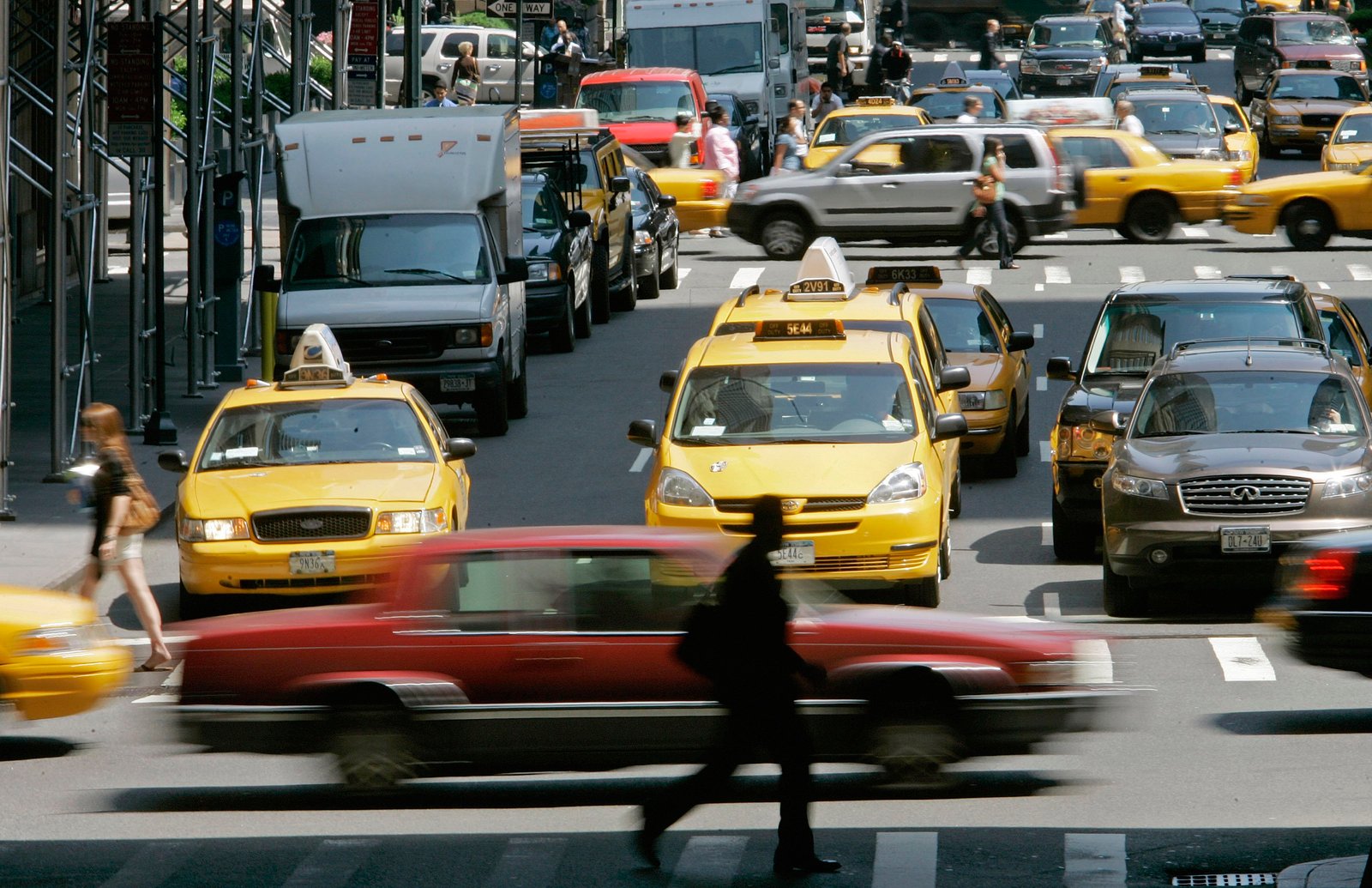
TO ENFORCE OR NOT TO ENFORCE — THAT’S THE QUESTION: Mamdani wouldn’t commit today to ordering the NYPD to step up enforcement of traffic violations in New York City — because he’s focused on “behavioral change,” not punishment.
The NYPD’s rate of issuing tickets to drivers who speed, blow through red lights, block bike lanes or otherwise break traffic laws remains far below pre-pandemic levels. And transit advocates, including left-leaning allies of Mamdani, say the police department must get back to issuing more violations, arguing that it’s critical to keeping city streets safe.
This afternoon, though, Mamdani declined repeatedly to say whether he will deliver such marching orders to the NYPD and suggested enforcement isn’t a key priority for him.
“Our goal here is not going to be measured in terms of the number of tickets that are issued or the violations, but rather behavioral change, and the NYPD is a partner in delivering that change,” Mamdani said, speaking at a press conference in Brooklyn held to unveil his new street safety plan, which contains ambitious proposals but is light on many implementation details.
How does the city change behaviors without stepping up enforcement, though? In response to that question, Mamdani suggested the answer could lie in developing more protected bus and bike lanes and otherwise redesigning streets to make them safer for pedestrians.
At the same time, Mamdani said he’s committed to “a continued partnership with the PD to use those tools of ticketing when any violation is present.”
“We’re going to be taking a hard look at how best we can change behavior that we’re seeing in violation of street safety laws, and then utilize that. That includes the PD,” he said.
The mayor’s comments came after Streetsblog reported the NYPD has shifted its traffic violation strategy to prioritize enforcement against scofflaws on e-bikes and other micromobility vehicles. That shift comes in spite of the fact that car drivers account for the vast majority of crashes and traffic deaths in the city, data shows. — Chris Sommerfeldt
FOILED ATTEMPT: The Manhattan Institute, a conservative think tank, is suing the Mamdani administration over its handling of Freedom of Information Law requests.
The think tank has been seeking records related to meetings between foreign dignitaries and Ana María Archila, commissioner of the Mayor’s Office of International Affairs. Archila has faced criticism for attempting to meet with an Iranian diplomat amid that country’s war with the U.S.
While the Adams administration provided tailored estimates for FOIL requests (but by no means fulfilled them in a timely manner), the institute found Mamdani’s City Hall team began giving out blanket six-month timetables for fulfilling requests.
“City Hall has turned FOIL into a six-month waiting room for everyone,” Manhattan Institute City Policy Analyst Santiago Vidal Calvo and General Counsel Cameron Macdonald wrote in explaining their suit, which was filed in Manhattan Supreme Court. “That is why we are suing.”
The city did not immediately respond to a request for comment about the lawsuit. — Joe Anuta
SCREENS IN SCHOOLS: The New York City public school system banned unfettered access to YouTube on school-issued devices for the current school year, the Department of Education revealed Tuesday.
The ban — which went into effect last week, ahead of the first day of school — comes amid calls from City Council members to limit the use of YouTube, personal devices and AI in the classroom.
“We heard everyone loud and clear,” DOE official Scott Strickland said at a Council hearing today. “As of Wednesday night at 5 p.m., we filtered YouTube out of all student devices. They shouldn’t be able to access it either on a Chromebook or an iPad both at school and at home.”
Council member Shekar Krishnan, who chairs the Council’s Oversight and Investigations Committee and was co-leading Tuesday’s hearing, said he was “very glad to hear” of the YouTube ban.
Educational videos embedded into Google Classroom for specific lessons will be exempt from the ban.
Earlier this month, Mamdani announced a year-long AI moratorium for students in grades 2-K through eighth grade. Hochul and lawmakers in Albany also rolled out a full-day “bell-to-bell” restriction on cellphone use during the school day last school year.
Ahead of this afternoon’s hearing, Krishnan and Council member Eric Dinowitz, who chairs the Education Committee, held a rally railing against screen-heavy classroom instruction and calling, among other things, for a YouTube ban.
“We will not let the greed of big technology companies get in the way of our children’s future and their education,” Krishnan said at the rally. — Molly Reinmann
IN OTHER NEWS
— DECLASSIFIED DOCS: Trump said he’d consider releasing classified documents related to 9/11 after victims’ families pleaded for clarity on Saudi Arabia’s involvement. (NY Post)
— TIED UP: Long Island Democratic House candidate Christopher Gallant acknowledged he posed in bondage gear for an ad campaign over a decade ago. (The New York Times)
— ICE ARRESTS: Police in the Westchester village of Port Chester have turned over more people with no criminal record to ICE than other local law enforcement agencies, despite assertions the police department would not cooperate with ICE. (NY Focus)
Missed this morning’s New York Playbook? We forgive you. Read it here.
Politics
‘Profoundly unhelpful’: Texas Republicans worry Bo French’s xenophobic posts make a tough year worse
Texas Republicans were already fretting about slipping support with voters of color. Then Bo French got on X.
The Republican nominee for Texas Railroad Commissioner posted a photo of a crowd of University of Texas football fans, most of them people of color, saying, “The problem is now obviously far worse than anyone imagined.”The Sunday morning comments, which appeared to target South Asian students, sent Lone Star Republicans into a frenzy, worried about the impact the rhetoric could have on GOP candidates up and down the ballot, including Attorney General Ken Paxton’s high-profile Senate race and Texas Gov. Greg Abbott’s reelection fight.
A number of Republican lawmakers, including some in tough races, quickly denounced the post as racist, as others squirmed with carefully worded statements. And GOP operatives winced at the potential electoral backlash — in a year that’s already looking tougher-than-normal for a party that has dominated the state for decades. Still, no one explicitly called for him to drop out of the race.
“His post on social media is profoundly unhelpful if his goal is to see Republicans win statewide races in a tough political environment in 50 days,” said Matt Mackowiak, an Austin-based GOP consultant who advised Sen. John Cornyn’s (R-Texas) unsuccessful primary campaign against Paxton.
Cornyn condemned the post, asking whether other GOP officials would “condemn the intolerance and racism, or look the other way while it becomes normalized.”
Rep. Monica De La Cruz (R-Texas), who is facing a tough reelection fight in a Hispanic-majority district, told Blue Light News in a statement she’s willing to “condemn racism” wherever it comes from.
“All I see in that photograph is a group of kids celebrating a Longhorns win. What can be more Texan than that?” De La Cruz said, before taking a shot at her Democratic opponent, Bobby Pulido, for his past racial comments.
And Karl Rove, a longtime adviser to former President George W. Bush, called French a “bigot” at a private lunch event and said he’s voting for French’s Democratic opponent, The Texas Tribune reported. Meanwhile, state Rep. Jon Rosenthal, the Democrat running against French, said he had his best fundraising day of the cycle after French’s post.
French didn’t respond to requests for comment. He repeatedly stood by his comments since Sunday morning. During a local radio appearance Monday, he said he didn’t have any personal animosity against the students at the football game, but said that it is “not racist to point out that we should be favoring Texans over foreigners” and that his fellow Republicans are afraid of being called racist.
The divide emerging among Texas Republicans over the social media post — and Democrats’ eagerness to capitalize on it — show just how precarious the party finds its position this cycle. Texas Republicans were already worrying about losing support from Hispanic and other minority voters amid a tough economic environment and President Donald Trump’s unpopular immigration agenda. They need to hold onto or improve the incremental gains they made over previous cycles with voters of color in a fast-changing state where non-Hispanic white people now only make up 37% of the population. The stakes are high this cycle: Most polls show Paxton slightly trailing in a Senate race that could determine control of the upper chamber; Abbott appears to be in the toughest of his four election fights; and the state is home to several key House races.
“I don’t think [French’s post] independently and universally sours voter sentiment. But it contributes to GOP declining numbers with Hispanic voters particularly in the South Texas congressional races which we hope to win,” said Alfredo Rodriguez, a Dallas-based Republican strategist, who called on French to “stop the petty political theatrics.”
The blast radius of French’s posts was wide enough to garner carefully worded responses from the top of the ticket. Abbott said in a Sunday statement that French’s post “is not my message,” before noting unity “doesn’t mean that Texas cannot also lead in having the toughest immigration laws of any state in America and freezing H1B visas at our universities.”
Two of the students in the photo told the Dallas Morning News that they’re U.S. citizens. Most UT students are Texans — state law requires that 90% of each freshman class come from in-state — and there is no evidence that the students in the photo French posted are foreigners.
Some Republicans weren’t thrilled about Abbott’s response.
“This had nothing to do with illegal immigrants,” said Anang Mittal, an Indian American national GOP strategist, of Abbott’s comments. “These were students at a college game. They’re not H-1B. If they’re students, they’re on a student visa. … It’s pretty damn disgusting of Greg Abbott to say, ‘I condemn racism, but also, like, we’re keeping all the Indians out.’ That’s essentially what that tweet read to me.”Democrat James Talarico called Paxton out on social media, asking if he would follow Cornyn’s lead in denouncing French’s post. The GOP nominee replied that he condemns “racism in all its forms” — and then claimed Talarico had a “history of dividing Texans by race.”
Spokespeople for Paxton and Abbott did not respond to requests for comment.
Other Republicans were less willing to fully denounce French’s comments.
“I don’t really know the guy. I heard he said some not so pleasant things,” said Rep. Troy Nehls (R-Texas), who said he hadn’t seen the posts — but launched into a criticism of immigration nonetheless. “I am concerned about the number of people living in this country, and we don’t even know who they really are,” he said. ”Shut the border down for 10 years, and then let’s try to figure out who we got in this country because we don’t even know.”
Sen. Andy Kim (D-N.J.), who campaigned with Talarico in Houston on Sunday, said French’s posts came up in conversations with every Asian American voter he met.
“Everyone was talking about it,” Kim said. “Every single Asian American that I was with yesterday raised this with me. They were saying this is an example of, ‘Not only are they not courting us or engaging with us, but they’re actively demonizing us, actively being xenophobic and racist towards us.’ We need leaders that stand up against this.”
The political damage could also extend — potentially for years — to Texas’ small but growing Indian American population, the demographic group French appeared to target in his posts. Both Dallas and Houston have significant Indian American populations. In 2019, an event at a Houston stadium headlined by Trump and Indian Prime Minister Narendra Modi drew over 50,000 attendees.
French’s comments could alienate those same voters, said Brendan Steinhauser, a Republican consultant in Austin.
“He just irritated a bunch of people, many of whom could be supporters and could be Republicans,” said Steinhauser, a University of Texas graduate. “I’d be willing to bet a lot of those kids that he was posting a photo of are probably, you know, their parents might be Republicans, or they might be Republicans, or conservatives, or independent-leaning conservatives.”
If French is elected, he would sit on a commission that regulates Texas’ powerful oil, gas and mining industries — which has little to do with immigration or social issues. But French, a longtime provocateur in Texas political circles, has a history of incendiary statements. Just last year, Republicans were calling on French to resign as chair of the Tarrant County Republican Party after he published an online poll asking whether Muslims or Jews were “the bigger threat to America.” He deleted the post and said he regretted it, adding “antisemitism has no place in the Republican Party.” This spring, he unseated a well-financed Republican incumbent for Texas Railroad Commission.
French isn’t the only politician in Texas who has made singling out Muslims part of his political brand. Lt. Gov. Dan Patrick has made “preventing Shariah law in Texas” one of his legislative priorities. Patrick didn’t respond to a request for comment. Abbott, Paxton and Cornyn have all called for investigations and other government action to stop development of a commercial and residential development being built by the East Plano Islamic Center, a mosque outside Dallas. And just last month, Abbott threatened to withhold funding from Dallas Fort Worth International Airport to block plans for ritual washing facilities for Muslim travelers in the airport’s terminals. There’s little difference between French’s attacks and the other politicians’ actions, said Yasir Qadhi, an Islamic scholar at the Islamic center.“It is the same mindset,” he said in an interview. “What we’re witnessing is really an unprecedented and increasingly brazen form of racism. It’s unfiltered, it’s unapologetic, it’s even stripped of even the pretense of political correctness. You know, this is a type of racism we’ve never seen in our lifetimes.”
When French unleashed a string of inflammatory social media posts in 2025, several GOP officeholders — including Patrick, the lieutenant governor — called on him to resign as county GOP chair. But Republicans now refuse to tell French to drop out now “because that might mean that there would be a Democrat elected statewide,” said Glen Whitley, a Republican former Tarrant County judge. “That’s the bottom line.”
“That’s part of my frustration with the Republican Party altogether: They talk about being Christian, but they get up every morning to talk about who they hate,” said Whitley, who still identifies as Republican but endorsed Talarico for Senate.
Joey Fox contributed to this report.
NEW YORK — A state lawmaker who gained national attention for his opposition to unchecked AI during a failed campaign for Congress this year is launching a $30 million effort to unite Democrats around regulating the technology, according to the organization’s new website.
New York Assemblymember Alex Bores is unveiling the organization — called “Who Decides” — on Tuesday to “build the winning Democratic answer to AI,” according to a website that was publicly available Monday night.
“Who Decides’ goal is that by 2028, Democratic candidates from the top of the ticket on down run with a common AI safety agenda,” reads an announcement on the site dated Tuesday. “That means addressing the harms people already see and the broader danger that increasingly powerful and out-of-control systems could destabilize our economy, our democracy, and our safety.”
It was not immediately clear whether Who Decides would be organized as a federal super PAC, 501(c)(4) nonprofit or other type of group. The website has a “donate” link that redirects to a webpage hosted by “Give Butter,” an organization focused on helping nonprofits fundraise. The announcement said the group would reject “corporate money or contributions from senior executives at frontier AI companies.”
Bores did not immediately respond to questions about the organization Monday night, including whether Bores, a sitting state lawmaker, personally fundraised for the group while holding public office. He is launching the organization with his former chief of staff, Anna Myers, the website says.
The apparent launch of Who Decides comes at a moment when the quickly-advancing technology has become a major political issue.
Last week, a former Anthropic researcher issued a dire warning that artificial intelligence has a chance of bringing about the end of humanity. The concerns from the researcher, Jacob Coxon, who also worked for OpenAI, were followed up by calls from the leaders of Anthropic and OpenAI, along with Elon Musk, to regulate the industry and slow development to build more guardrails.
Politicians have scrambled to respond, with both parties trying to coalesce around a policy agenda — and political message — on the rapidly evolving issue. Former President Barack Obama called last week for Democrats to focus on AI, and prominent party strategists from across the ideological spectrum gathered to begin mapping out a strategy.
President Donald Trump rejected recent calls from Republicans and Democrats to quickly regulate the industry in a spate of Monday social media posts.
“We don’t let five people write the laws for hundreds of millions of Americans,” Bores says in the launch announcement on the website, an apparent reference to the top executives in the AI industry. “There is no reason to let them write the rules for AI.”
The group says on the site it will focus on 11 states that it says will be key to the 2028 presidential primary and general election: South Carolina, Nevada, New Hampshire, New Mexico, Michigan, Virginia, Arizona, Georgia, North Carolina, Pennsylvania and Wisconsin. It says it will conduct quarterly national and state polls, host national conferences and partner with local groups in the states.
Earlier this year, Bores lost the primary for retiring Manhattan Democratic Rep. Jerry Nadler’s seat. His campaign largely centered on a push to regulate artificial intelligence following his work to pass the RAISE Act in the state Legislature, which aimed to enact safeguards for the technology. His campaign attracted a combined $21 million from super PACs backed by dueling factions of the AI community, which spent both in support and opposition of him. Democratic Assemblymember Micah Lasher ultimately won the primary and is all but assured to win in November in the deep-blue seat.
“The lesson Bores and Myers took from those fights was that confronting the AI industry is fertile political ground and that public demand for answers on AI policy exists but remains scattered,” the website said, referencing his congressional campaign. “What’s missing is a coalition capable of turning that energy into a governing consensus before the technology, the economic dislocation, and the partisan battle lines harden.”
- College sports bill moves forward in Senate with Democratic support
- 2 more Pennsylvanians die with measles, reigniting fight between RFK Jr. and Josh Shapiro
- Rebel Democrats again help House GOP advance floor agenda
- House panel recommends Leon Black be held in contempt for stonewalling Epstein investigation
- Department of Investigation eyes NYPD disability pensions
- Most House Democrats vote to advance Trump impeachment
- Cruz and Hawley shut down antitrust exemptions for AI companies
- Trump’s AI ignorance is ‘truly embarrassing,’ Bernie Sanders says
- Gottheimer pushes back on third-party audits of advanced AI
- FBI’s Kash Patel brawls with Senate Democrats at Judiciary hearing
-

 Politics2 years ago
Former ‘Squad’ members launching ‘Bowman and Bush’ YouTube show
-
Uncategorized2 years ago
Bob Good to step down as Freedom Caucus chair this week
-

 Politics2 years ago
Former Kentucky AG Daniel Cameron launches Senate bid
-

 The Dictatorship2 years ago
Luigi Mangione acknowledges public support in first official statement since arrest
-

 The Josh Fourrier Show2 years ago
DOOMSDAY: Trump won, now what?
-

 The Dictatorship2 years ago
Pete Hegseth’s tenure at the Pentagon goes from bad to worse
-

 Politics2 years ago
Blue Light News’s Editorial Director Ryan Hutchins speaks at Blue Light News’s 2025 Governors Summit
-

 The Dictatorship1 year ago
Mike Johnson sums up the GOP’s arrogant position on military occupation with two words