
Politics
Ethanol, amendment disputes in GOP holdup minibus funding bill

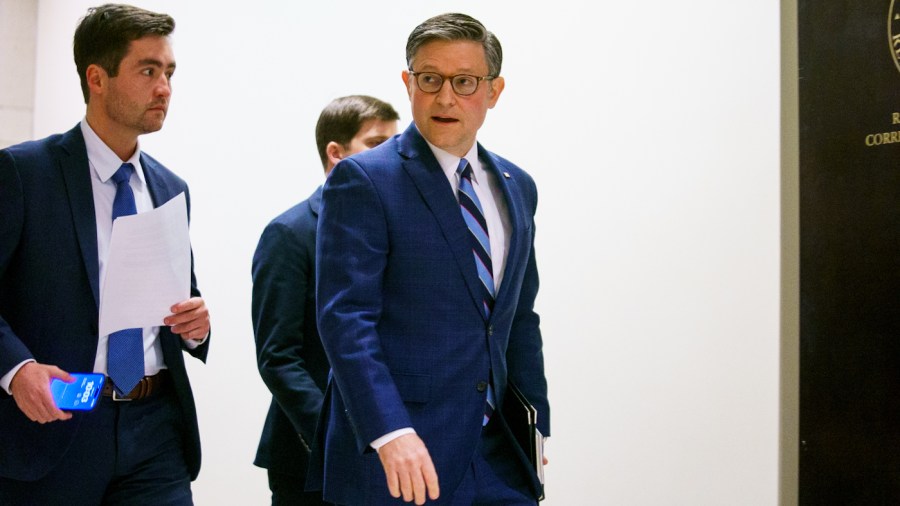
Republican disputes over year-round ethanol sales and other proposed amendments delayed advancement of a package government funding bill on Wednesday. The House Rules Committee ended an extended recess on Wednesday evening as Republicans who control the panel considered which amendments to make in order on bills to fund the departments of Defense…
Read More


Voters are perfectly fine supporting candidates who aren’t white men.
But they do show small preferences for candidates who are younger and Christian, according to new results from The POLITICO Poll. And voters were most likely to penalize transgender candidates in hypothetical matchups, though Democrats were more likely to support them than GOP voters were.
The results cast a new light on a simmering, yearslong public conversation within both parties about what it means to be electable and whether putting forward candidates of varying backgrounds is too politically risky in a close election environment. It’s a debate that defined the last open Democratic presidential primary in 2020 and is poised to play a role in 2028 too.
Democrats have largely focused their debates on whether voters would accept a person of color or a woman, particularly after President Donald Trump defeated Hillary Clinton in 2016 and Kamala Harris in 2024 — while losing to Joe Biden in 2020. But the poll results suggest the characteristics voters care most about are different, shaped by frustrations over aging politicians and both new and old culture wars.
“The American people, I believe, think about identity way less than the average political consultant does,” said Mike Nellis, a longtime Democratic digital strategist who advised Harris’ 2020 presidential campaign. “Obviously there are factors in society that make it harder for women and people of color to get elected, but there are plenty of incredibly talented people out there who are capable of getting over the hump on that.”
To test whether demographic characteristics make a candidate more or less electable, Blue Light News’s polling partner, Public First, showed thousands of respondents a series of head-to-head matchups. In each case, respondents were given basic information about the candidate’s demographics, such as their race, age and gender; their career, with titles such as doctor, attorney general or CEO; and a single-sentence description of their political alignment, either as a progressive or moderate Democratic, independent, or moderate or MAGA Republican.
Respondents then picked which candidate they would prefer, and the results overwhelmingly showed voters cared the most about a candidate’s political ideology. But respondents also revealed more subtle patterns in their preferences.
Voters across both parties were more likely to reject older candidates in favor of younger ones. Republicans in particular favored candidates who were described as Christian or regular churchgoers, even when controlling for the candidates’ politics. GOP respondents picked candidates described as regularly attending a church just under 9% more often than candidates who did not have any faith.
That means that even though Republican respondents usually picked the GOP candidate in head-to-head matchups, for example, they were more likely to cross over and support an independent or Democratic candidate when that candidate was described as Christian.
The results on sexual orientation were more complicated: When candidates were described as “gay,” they were picked about 10% less often across all voters. But when the candidate descriptions describe the candidate as a man married to his husband — without a label for sexual orientation — respondents did not pick them less often in a statistically significant manner.
Voters were less likely to pick transgender candidates, with Democratic voters about 5% less likely while GOP voters were 17% less likely, all else held equal.
The age results were a strong signal that voters want a new generation of candidates after the last presidential cycle was driven by concerns about Biden’s age, fueling a slew of intergenerational primary contests this year and leading major Democratic voices to publicly call for a younger candidate for 2028. Trump is now 80, and Republicans have faced their own conversations about aging politicians, as Sen. Mitch McConnell (R-Ky.) faced serious health challenges earlier this year.
Amanda Litman, co-founder of Run For Something, which recruits candidates under the age of 40, said when the group started its work nearly a decade ago, younger people were often seen as “risky bets” electorally.
“Now I think people are starting to see that that is not true. Voters will judge people one by one,” Litman said. “They’re also really hungry for change and really hungry for someone who didn’t get us into this mess.”
The poll found candidates over the age of 70 were nearly 10% less likely to be picked than candidates under the age of 50, with Democrats slightly more likely than Republicans to disfavor a candidate due to age.
Notably, The Blue Light News Poll didn’t find differences based on a candidate’s race or gender overall, outside of gender identity. That has long been a topic of debate among Democrats thinking about winning the presidency.
When Harris replaced Biden on the top of Democrats’ ticket in 2024, few questioned that she would choose a white man as her running mate. Since her loss, some Democrats have argued that a white male candidate might be the best path forward for the party in 2028.
Harris also wrote in her memoir about the campaign that she thought picking former Transportation Secretary Pete Buttigieg as her running mate would have been “too risky” because he is gay, and that he otherwise would have been her ideal partner.
But Buttigieg, who is contemplating running for president in 2028, recently argued that the country is ready for a gay president, saying he wouldn’t have launched a bid in 2020 otherwise.
“What’s on people’s minds isn’t about you, your identity as a candidate,” he told NBC News last weekend. “It’s about them. It’s about their lives.”
Politics
Farm-state Republicans are having a cow over Trump’s beef imports as Election Day approaches
Farm-state Republicans don’t support President Donald Trump’s move to import cheap beef — but they’re still getting grilled for it.
Trump’s plan to combat sky-high beef prices by introducing discounted, tariff-free foreign beef has been widely condemned by ag-state Republicans who are concerned it will undercut the domestic beef industry and hurt ranchers, a normally reliable constituency.
And their opponents see an opening to paint Republicans as unconcerned about voters’ pocketbook concerns.
“Our ranchers and our farmers keep getting kicked in the teeth, and we have politicians that keep telling us that everything’s great, that we’re the hottest country,” Dan Osborn, an independent running for Senate in Nebraska, said in an interview. “And to be quite frank, I’m pretty pissed off about it.”
Osborn’s state is one of the top four top cattle-producing states — along with Texas, Kansas and Iowa — all of which have more-competitive-than-expected Senate races this cycle. And Trump’s controversial plan to remove tariffs from 300,000 metric tons of imported beef, sold at 25 percent below current market prices, is doing Republicans no favors.
Osborn’s campaign went on air with a pun-filled ad this week in which he says the import plan is “selling out American farmers and ranchers,” and blasts Congress for being “too chicken to stand up to the corporations who bought them off.” The campaign says it plans to spend at least six figures airing the spot. It’s the first major spending from a campaign focused on the beef import plan. But it plays into a larger economic argument Democrats are pushing to break through with farmers and ranchers: Trump and Republicans have turned their backs on rural America, as a worsening farm crisis and spiking fuel and fertilizer prices pinch agricultural communities.
“It’s part of a wider frustration,” said an adviser to one of the farm-state GOP senators, granted anonymity to speak openly. “I don’t think it sways anyone’s vote, but it isn’t a great look. … It isn’t fun for me to read the headline. It’s frustrating.”
Sen. Pete Ricketts (R-Neb.), Osborn’s opponent, said in a statement he has a record of standing for his state’s agriculture community, “no matter who is president — from fighting Biden’s 30×30 plan to opposing this beef import plan.”
“Ranchers know the difference between a senator who delivers and a candidate reading a script his socialist ad agency wrote,” Ricketts said.
Farm-state Democrats and independents believe beef imports provide a window to speak to rural voters who have skewed red for decades but suddenly look more competitive amid Trump’s plunging political standing. A strategist working on Osborn’s campaign, granted anonymity to discuss strategy, said Osborn’s ad “codes as non-partisan in a way that running ads about taxes or healthcare doesn’t.”
Trump’s overall unpopularity is hurting Republicans across the map, but this policy could be especially problematic in a quartet of once-sleeper Senate races that could hand Democrats control of the upper chamber.
Spokespeople for the GOP nominees in Iowa and Kansas declined to discuss the issue, pointing to their candidates’ statements in August, when Trump’s plan was announced: Rep. Ashley Hinson (R-Iowa) called Trump’s plan a “bad idea,” while Sen. Roger Marshall (R-Kansas) said the priority should be growing the U.S. cattle herd, “not flooding the market with imports.”
Last week, during a debate at the Kansas State Fair, Democratic nominee Adam Hamilton slammed the import plan as “a slap in the face of all of our cattle ranchers,” earning a raucous response from fair-goers, and hit Marshall for “tepidly respond[ing] to it as opposed to shouting like hell that this is not okay.”
In Iowa’s agriculture-heavy first district, Democrats have been on the air since June with an ad hammering Rep. Mariannette Miller-Meeks for record-high beef prices” and other cost-of-living increases under the Trump administration. The Republicans who were already getting hammered for high prices before now are now hobbled by a proposed remedy — one that has infuriated their own base.
When asked how Republicans should message the beef plan back home, Sen. John Boozman (R-Ark.), chair of the Senate Agriculture Committee, acknowledged there’s “certainly a lot of concern amongst our cattle producers.”
“I think they understand what’s going on. They’re just not pleased with it,” Boozman said. “We’re in contact with the administration, a lot of members are in contact, helping them understand the unintended consequences of it. We’d like to lower prices, but again, we don’t want the unintended consequence of lowering cattle futures significantly.”
That leaves ranchers worried that the import plan will undercut their struggling industry.
“President Trump wants to lower the price of beef, I think that’s where it’s coming from,” said Ben Menges, a cattle rancher in Arizona’s battleground 6th District. “The best way that President Trump can do that is by lowering the cost of fuel, not by importing a bunch of beef.”
Some Republicans have looked to turn the conversation into a culture war issue — hitting their opponents for past stances on meat consumption or veganism.
Vice President JD Vance, during a visit to Iowa Friday — which Hinson did not attend — slammed Hamilton, the pastor-turned-Democratic nominee for Senate in Kansas, for having a “kind of a ‘gee whiz, I’m a nice pastor’ vibe” who tells his congregation to “repent for their white privilege while eating beef.”
It’s an attack Marshall made at last week’s debate, hitting Hamilton for a sermon he delivered on climate change and the impact of meat consumption.
“I think the senator needs to repent for not standing up for the beef industry,” responded Hamilton.
-

 Politics2 years ago
Former ‘Squad’ members launching ‘Bowman and Bush’ YouTube show
-
Uncategorized2 years ago
Bob Good to step down as Freedom Caucus chair this week
-

 Politics2 years ago
Former Kentucky AG Daniel Cameron launches Senate bid
-

 The Josh Fourrier Show2 years ago
DOOMSDAY: Trump won, now what?
-

 The Dictatorship2 years ago
Luigi Mangione acknowledges public support in first official statement since arrest
-

 The Dictatorship2 years ago
Pete Hegseth’s tenure at the Pentagon goes from bad to worse
-

 Politics2 years ago
Blue Light News’s Editorial Director Ryan Hutchins speaks at Blue Light News’s 2025 Governors Summit
-

 The Dictatorship1 year ago
Mike Johnson sums up the GOP’s arrogant position on military occupation with two words